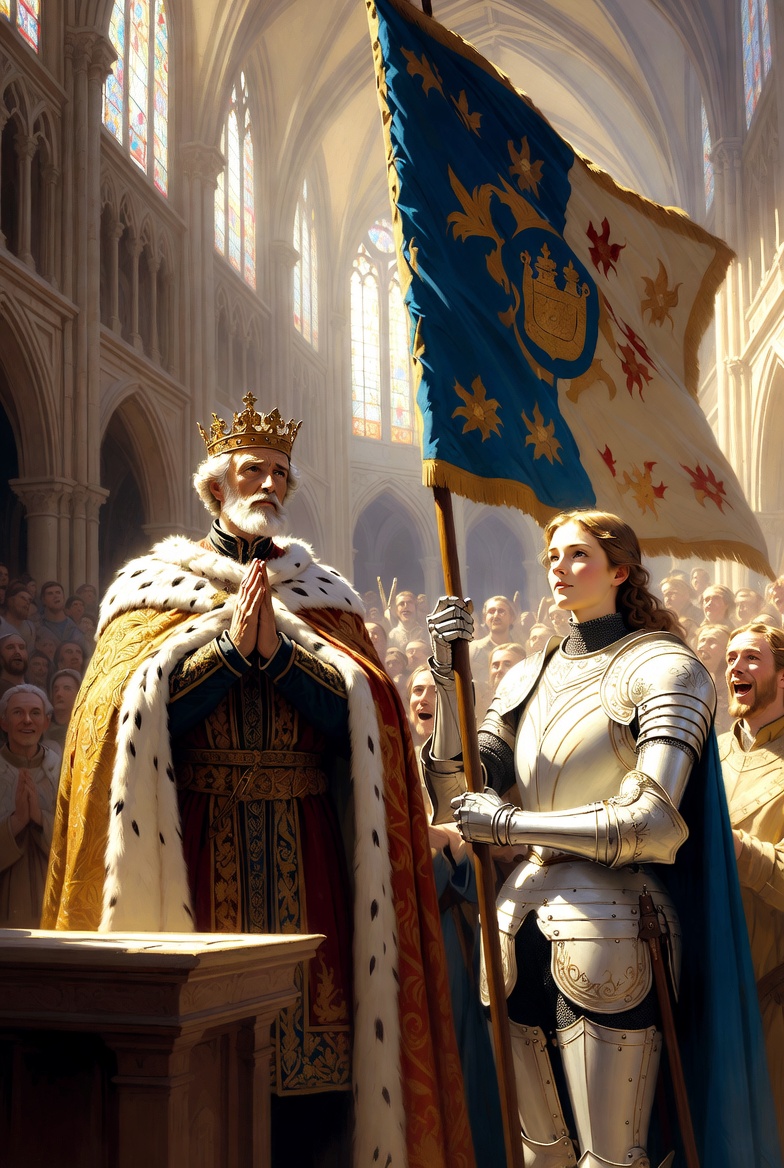
Picture this: it’s May 8, 1429. A ragtag French army stands in battle formation on the north bank of the Loire River outside the city of Orléans. Across from them, the supposedly invincible English forces—veterans of decades of war, armed with longbows that had shredded French knights at Agincourt and Crécy—line up ready for what could be the final death blow to French resistance. The English have been besieging Orléans for seven grueling months. The city is starving, its walls crumbling, its defenders exhausted. Surrender seems inevitable. Then something ridiculous happens. The English don’t charge. They don’t even fight. They pack up their tents, spike their cannons, burn their outworks, and march away. No heroic last stand. No glorious English victory. Just retreat. Why? Because a teenage girl in white armor, waving a banner no one had ever seen before, spent the previous nine days doing the impossible: turning a demoralized mob into a force that made the English believe God Himself had switched sides.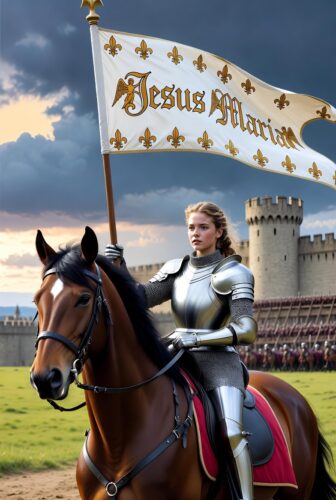 That girl was Joan of Arc—Jeanne la Pucelle, the Maid—and the lifting of the Siege of Orléans on May 8, 1429, wasn’t just a footnote in the Hundred Years’ War. It was the military and psychological turning point that saved France from becoming a permanent English province, paved the way for a French king’s coronation, and eventually helped end a conflict that had dragged on for nearly a century. Today, almost 600 years later, the story still feels like a fever dream: an illiterate farm girl from a tiny village hears saints telling her to kick the English out of France, convinces skeptical generals and a doubtful prince, rides into a besieged city, gets an arrow to the neck, keeps fighting, and forces one of the era’s most professional armies to slink off without a Sunday showdown. It’s equal parts miracle, military genius, and medieval reality-TV chaos. And while 90% of what follows is pure, gritty historical deep-dive—because this day deserves the full unfiltered chronicle—the last stretch turns that outcome into something ruthlessly practical for your own life. No crystals. No vision boards. No “manifest your siege-lifting energy.” Just a battle-tested, quick protocol that borrows Joan’s playbook to dismantle whatever personal Orléans is currently starving your momentum.
To understand why May 8, 1429, mattered so much, we have to rewind the tape on the Hundred Years’ War—the sprawling, bloody mess that wasn’t actually one war but a series of overlapping conflicts, dynastic claims, and opportunistic land grabs between the Plantagenet kings of England and the Valois kings of France. It kicked off in 1337 when Edward III of England, who held huge territories in France through marriage and conquest, decided he had a better claim to the French throne than the current occupant. English armies, backed by devastating longbowmen and professional mercenaries, rolled over French feudal levies at battles like Crécy (1346) and Poitiers (1356). By the early 1400s, the English held half of France outright or through their Burgundian allies. The French crown was in chaos. King Charles VI had gone mad—literally believing he was made of glass and refusing to bathe. His son, the Dauphin Charles VII, was a weak, indecisive 26-year-old hiding in the south, mocked as the “King of Bourges” because that was about all he controlled. English regent John, Duke of Bedford, and his brother the Duke of Gloucester were methodically carving up the rest.
Enter Orléans in 1428. The city sat on the Loire River like a cork in a bottle. Whoever held it controlled access between northern and southern France. If the English took it, the Dauphin’s remaining territory would be sliced in two, and the game would be over. Thomas Montacute, Earl of Salisbury—the English commander known for his battlefield brilliance—launched the siege on October 12, 1428. He quickly seized key forts on the south bank of the Loire, including the critical bridgehead at Les Tourelles. Salisbury himself was killed by a cannon shot (or, depending on the chronicler, a stone from a mangonel) on November 3, but his successor, William de la Pole, Earl of Suffolk, and hard-charging captains like John Talbot and Thomas Scales kept the pressure on. They built a ring of wooden and earthen bastilles—fortified camps and siege works—around the city. The English didn’t have enough men for a full encirclement (maybe 5,000–7,000 at peak against a city of 30,000 civilians and defenders), but they controlled the river and the supply lines. Inside Orléans, food ran low, disease spread, and morale plummeted. A failed French supply convoy led to the humiliating “Battle of the Herrings” on February 12, 1429—named because the English were escorting barrels of salted fish when the French attacked and got slaughtered. By late April, the defenders under Jean d’Orléans (the Bastard of Orléans, later Count of Dunois) were negotiating surrender terms.
That girl was Joan of Arc—Jeanne la Pucelle, the Maid—and the lifting of the Siege of Orléans on May 8, 1429, wasn’t just a footnote in the Hundred Years’ War. It was the military and psychological turning point that saved France from becoming a permanent English province, paved the way for a French king’s coronation, and eventually helped end a conflict that had dragged on for nearly a century. Today, almost 600 years later, the story still feels like a fever dream: an illiterate farm girl from a tiny village hears saints telling her to kick the English out of France, convinces skeptical generals and a doubtful prince, rides into a besieged city, gets an arrow to the neck, keeps fighting, and forces one of the era’s most professional armies to slink off without a Sunday showdown. It’s equal parts miracle, military genius, and medieval reality-TV chaos. And while 90% of what follows is pure, gritty historical deep-dive—because this day deserves the full unfiltered chronicle—the last stretch turns that outcome into something ruthlessly practical for your own life. No crystals. No vision boards. No “manifest your siege-lifting energy.” Just a battle-tested, quick protocol that borrows Joan’s playbook to dismantle whatever personal Orléans is currently starving your momentum.
To understand why May 8, 1429, mattered so much, we have to rewind the tape on the Hundred Years’ War—the sprawling, bloody mess that wasn’t actually one war but a series of overlapping conflicts, dynastic claims, and opportunistic land grabs between the Plantagenet kings of England and the Valois kings of France. It kicked off in 1337 when Edward III of England, who held huge territories in France through marriage and conquest, decided he had a better claim to the French throne than the current occupant. English armies, backed by devastating longbowmen and professional mercenaries, rolled over French feudal levies at battles like Crécy (1346) and Poitiers (1356). By the early 1400s, the English held half of France outright or through their Burgundian allies. The French crown was in chaos. King Charles VI had gone mad—literally believing he was made of glass and refusing to bathe. His son, the Dauphin Charles VII, was a weak, indecisive 26-year-old hiding in the south, mocked as the “King of Bourges” because that was about all he controlled. English regent John, Duke of Bedford, and his brother the Duke of Gloucester were methodically carving up the rest.
Enter Orléans in 1428. The city sat on the Loire River like a cork in a bottle. Whoever held it controlled access between northern and southern France. If the English took it, the Dauphin’s remaining territory would be sliced in two, and the game would be over. Thomas Montacute, Earl of Salisbury—the English commander known for his battlefield brilliance—launched the siege on October 12, 1428. He quickly seized key forts on the south bank of the Loire, including the critical bridgehead at Les Tourelles. Salisbury himself was killed by a cannon shot (or, depending on the chronicler, a stone from a mangonel) on November 3, but his successor, William de la Pole, Earl of Suffolk, and hard-charging captains like John Talbot and Thomas Scales kept the pressure on. They built a ring of wooden and earthen bastilles—fortified camps and siege works—around the city. The English didn’t have enough men for a full encirclement (maybe 5,000–7,000 at peak against a city of 30,000 civilians and defenders), but they controlled the river and the supply lines. Inside Orléans, food ran low, disease spread, and morale plummeted. A failed French supply convoy led to the humiliating “Battle of the Herrings” on February 12, 1429—named because the English were escorting barrels of salted fish when the French attacked and got slaughtered. By late April, the defenders under Jean d’Orléans (the Bastard of Orléans, later Count of Dunois) were negotiating surrender terms.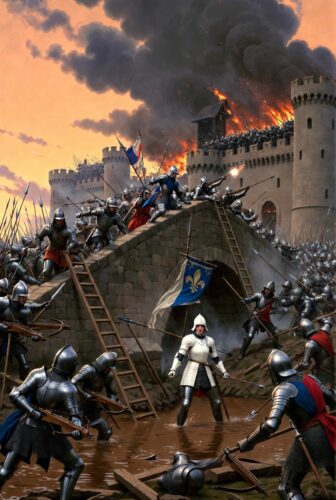 Meanwhile, in the tiny village of Domrémy on the border between Champagne and Lorraine, a 17-year-old peasant girl named Jeanne was having visions. Born around 1412 to Jacques d’Arc, a prosperous farmer and village headman, and Isabelle Romée, Joan grew up in a region loyal to the Armagnac (pro-Valois) faction amid constant Burgundian raids. At 13 she began hearing voices—first Saint Michael the Archangel, then Saints Catherine of Alexandria and Margaret of Antioch—commanding her to “go to France” and “lift the siege of Orléans” and “take the Dauphin to Reims to be crowned.” These weren’t vague feelings; Joan described them as clear, human-like figures speaking in French, often triggered by church bells. She swore a vow of virginity to them and began dressing in men’s clothing for practicality when traveling. The local commander, Robert de Baudricourt at Vaucouleurs, laughed her off twice. But after English advances and a Burgundian raid that burned part of Domrémy, he finally relented in February 1429. Joan, accompanied by a small escort including Jean de Metz and Bertrand de Poulengy, rode 300 miles to Chinon in men’s clothes, cutting her hair short like a page.
The Dauphin’s court was a snake pit of skepticism, spies, and defeatism. Charles VII disguised himself among his courtiers to test her; Joan walked straight to him and delivered her message. Theologians at Poitiers grilled her for three weeks on doctrine and found her orthodox (though they couldn’t verify the divine source). Ladies examined her and confirmed her virginity—crucial because medieval prophecy spoke of a “virgin from the marches of Lorraine” who would save France. Charles gave her armor (white, at her request), a sword she claimed was buried behind the altar at Sainte-Catherine-de-Fierbois (it was), and a massive banner of white silk embroidered with fleur-de-lis, the words “Jesus Maria,” and images of God and angels. She dictated a blunt letter to the English: “King of England, and you, Duke of Bedford, who call yourself Regent of the Kingdom of France… surrender to the Maid sent by God.” They called her a witch and ignored it.
Joan joined the relief army assembling at Blois. On April 29, 1429, she entered Orléans through the Burgundy Gate with supplies and a small escort, the main army following later. The citizens went wild—torchlit processions, bells ringing, priests chanting. Joan immediately imposed discipline: no swearing, no prostitutes in camp, mandatory confession before battle. On May 4, French forces under Dunois launched an assault on the English bastille at Saint-Loup east of the city. Joan, who had been resting, woke to the sound of fighting, grabbed her banner, and rode out. Her presence electrified the troops. The bastille fell by evening—first major French success in months. English losses were heavy; French morale skyrocketed.
May 5 was quiet—Ascension Day, a religious pause. On May 6, Joan pushed for attacks on the south-bank forts. The French took Les Augustins after fierce fighting. May 7 was the decisive day: assault on Les Tourelles, the fortified bridgehead that commanded the river crossing. Joan planted her banner in the ditch and led from the front. An English arrow struck her in the neck between shoulder and collarbone. She pulled it out herself, refused to leave, and returned to the fight after a brief rest and prayer. By evening the French had stormed the fort, crossed the bridge (which the English had partially destroyed), and the English commander Glasdale drowned trying to flee. The English south-bank positions collapsed.
Dawn on May 8, 1429. The remaining English forces on the north bank—under Suffolk and Talbot—formed up for battle near the Church of Saint Laurent. The French, now reinforced, lined up opposite them. For an hour the two armies stared each other down. Then the English did the unthinkable: they dismantled their remaining bastilles, set fires, and marched north toward Meung and Beaugency. Joan reportedly forbade pursuit because it was Sunday—a holy day. The siege was over. Chroniclers on both sides called it miraculous. The Journal du Siège d’Orléans, written by an eyewitness in the city, records the English “departed in great haste and disorder.” French casualties for the entire relief operation were astonishingly low—perhaps a few hundred. English losses were higher, but the real damage was psychological. The aura of English invincibility evaporated.
The aftermath cascaded like dominoes. Joan immediately urged the Dauphin to exploit the victory. In the Loire Campaign of June 1429 she helped capture Jargeau, Meung, Beaugency, and routed the English at the Battle of Patay—where Talbot was taken prisoner after his archers were overrun in under an hour. By July 17 Charles VII was crowned at Reims Cathedral with Joan standing beside him in armor, banner in hand. The coronation legitimized the Valois line and shattered English claims. Though Joan was captured at Compiègne in 1430, sold to the English, tried for heresy and witchcraft in a politically rigged court, and burned at Rouen in 1431, her legacy endured. The war dragged on until 1453, but the momentum from Orléans was irreversible. France survived as an independent kingdom. Joan was declared innocent in a 1456 retrial, canonized in 1920, and remains the only person ever made a saint for winning a war.
Meanwhile, in the tiny village of Domrémy on the border between Champagne and Lorraine, a 17-year-old peasant girl named Jeanne was having visions. Born around 1412 to Jacques d’Arc, a prosperous farmer and village headman, and Isabelle Romée, Joan grew up in a region loyal to the Armagnac (pro-Valois) faction amid constant Burgundian raids. At 13 she began hearing voices—first Saint Michael the Archangel, then Saints Catherine of Alexandria and Margaret of Antioch—commanding her to “go to France” and “lift the siege of Orléans” and “take the Dauphin to Reims to be crowned.” These weren’t vague feelings; Joan described them as clear, human-like figures speaking in French, often triggered by church bells. She swore a vow of virginity to them and began dressing in men’s clothing for practicality when traveling. The local commander, Robert de Baudricourt at Vaucouleurs, laughed her off twice. But after English advances and a Burgundian raid that burned part of Domrémy, he finally relented in February 1429. Joan, accompanied by a small escort including Jean de Metz and Bertrand de Poulengy, rode 300 miles to Chinon in men’s clothes, cutting her hair short like a page.
The Dauphin’s court was a snake pit of skepticism, spies, and defeatism. Charles VII disguised himself among his courtiers to test her; Joan walked straight to him and delivered her message. Theologians at Poitiers grilled her for three weeks on doctrine and found her orthodox (though they couldn’t verify the divine source). Ladies examined her and confirmed her virginity—crucial because medieval prophecy spoke of a “virgin from the marches of Lorraine” who would save France. Charles gave her armor (white, at her request), a sword she claimed was buried behind the altar at Sainte-Catherine-de-Fierbois (it was), and a massive banner of white silk embroidered with fleur-de-lis, the words “Jesus Maria,” and images of God and angels. She dictated a blunt letter to the English: “King of England, and you, Duke of Bedford, who call yourself Regent of the Kingdom of France… surrender to the Maid sent by God.” They called her a witch and ignored it.
Joan joined the relief army assembling at Blois. On April 29, 1429, she entered Orléans through the Burgundy Gate with supplies and a small escort, the main army following later. The citizens went wild—torchlit processions, bells ringing, priests chanting. Joan immediately imposed discipline: no swearing, no prostitutes in camp, mandatory confession before battle. On May 4, French forces under Dunois launched an assault on the English bastille at Saint-Loup east of the city. Joan, who had been resting, woke to the sound of fighting, grabbed her banner, and rode out. Her presence electrified the troops. The bastille fell by evening—first major French success in months. English losses were heavy; French morale skyrocketed.
May 5 was quiet—Ascension Day, a religious pause. On May 6, Joan pushed for attacks on the south-bank forts. The French took Les Augustins after fierce fighting. May 7 was the decisive day: assault on Les Tourelles, the fortified bridgehead that commanded the river crossing. Joan planted her banner in the ditch and led from the front. An English arrow struck her in the neck between shoulder and collarbone. She pulled it out herself, refused to leave, and returned to the fight after a brief rest and prayer. By evening the French had stormed the fort, crossed the bridge (which the English had partially destroyed), and the English commander Glasdale drowned trying to flee. The English south-bank positions collapsed.
Dawn on May 8, 1429. The remaining English forces on the north bank—under Suffolk and Talbot—formed up for battle near the Church of Saint Laurent. The French, now reinforced, lined up opposite them. For an hour the two armies stared each other down. Then the English did the unthinkable: they dismantled their remaining bastilles, set fires, and marched north toward Meung and Beaugency. Joan reportedly forbade pursuit because it was Sunday—a holy day. The siege was over. Chroniclers on both sides called it miraculous. The Journal du Siège d’Orléans, written by an eyewitness in the city, records the English “departed in great haste and disorder.” French casualties for the entire relief operation were astonishingly low—perhaps a few hundred. English losses were higher, but the real damage was psychological. The aura of English invincibility evaporated.
The aftermath cascaded like dominoes. Joan immediately urged the Dauphin to exploit the victory. In the Loire Campaign of June 1429 she helped capture Jargeau, Meung, Beaugency, and routed the English at the Battle of Patay—where Talbot was taken prisoner after his archers were overrun in under an hour. By July 17 Charles VII was crowned at Reims Cathedral with Joan standing beside him in armor, banner in hand. The coronation legitimized the Valois line and shattered English claims. Though Joan was captured at Compiègne in 1430, sold to the English, tried for heresy and witchcraft in a politically rigged court, and burned at Rouen in 1431, her legacy endured. The war dragged on until 1453, but the momentum from Orléans was irreversible. France survived as an independent kingdom. Joan was declared innocent in a 1456 retrial, canonized in 1920, and remains the only person ever made a saint for winning a war.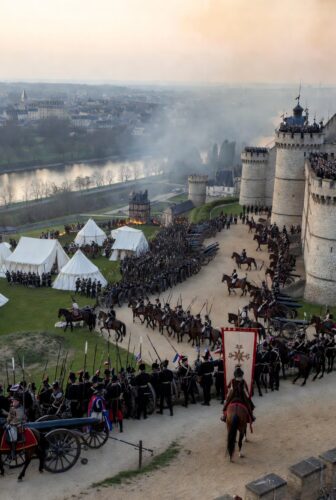 The details make the story even richer. Medieval siege warfare was brutal and technical: miners digging under walls, trebuchets hurling stones, early cannons (the French had some at Orléans) belching smoke, crossbowmen and longbowmen exchanging volleys. Inside the city, civilians ate horses, rats, and boiled leather. Outside, English soldiers lived in muddy camps plagued by dysentery. Joan’s leadership style was a masterclass in morale: she led from the front but never killed (her sword was for show; she carried her banner as a rallying point). She wept over dead enemies and insisted on treating prisoners humanely. English propaganda painted her as a cross-dressing sorceress in league with demons; French sources described her as pious, humble, and tactically sharp. Modern historians debate whether her visions were divine, psychological, or even epileptic, but the trial records and contemporary chronicles leave no doubt she believed them with iron conviction—and that belief infected everyone around her.
The Hundred Years’ War wasn’t glamorous knights in shining armor; it was muddy, disease-ridden, economically ruinous, and politically treacherous. Alliances flipped (Burgundy switched sides later), taxes funded endless campaigns, and peasants suffered most. Orléans itself was a microcosm: a prosperous river port reduced to desperation. Joan’s intervention wasn’t magic—it was timing, charisma, and relentless pressure on the English weak points (their overextended supply lines and shaken confidence). On May 8 the English commander Suffolk reportedly said something to the effect that fighting a girl blessed by God was pointless. Whether he actually said it or not, the retreat spoke louder than any speech.
Now, fast-forward to your life in 2026. You’re not defending a medieval city against longbowmen, but you probably have your own Orléans: that stalled career project, that toxic relationship pattern, that health goal that feels besieged by excuses, that creative dream surrounded by doubt-bastilles. The outcome of May 8, 1429, proves that impossible sieges can be lifted not by waiting for rescue but by one person with a clear mission, a visible symbol, and the willingness to take the arrow and keep charging. The English didn’t lose because their bows suddenly failed; they lost because French will—ignited by one unlikely leader—became unbreakable. You can weaponize the same dynamic today without needing saints or armor.
Here’s where the history stops being a dusty textbook and becomes your unfair advantage. The rest of this piece distills the May 8 outcome into something no other self-help system online is running: **the Orléans Liberation Protocol**—a detailed, quick, 7-day tactical system modeled on Joan’s nine-day relief operation but compressed and stripped of mysticism. It’s not about “believing in yourself.” It’s about scouting the terrain, forging a banner, rallying outsiders, storming the key fort, enduring the wound, declaring victory on your own terms, and chaining the win into the next campaign. It’s ruthlessly specific, militarily structured, and designed to feel like you’re actually leading troops instead of scrolling inspirational quotes.
The details make the story even richer. Medieval siege warfare was brutal and technical: miners digging under walls, trebuchets hurling stones, early cannons (the French had some at Orléans) belching smoke, crossbowmen and longbowmen exchanging volleys. Inside the city, civilians ate horses, rats, and boiled leather. Outside, English soldiers lived in muddy camps plagued by dysentery. Joan’s leadership style was a masterclass in morale: she led from the front but never killed (her sword was for show; she carried her banner as a rallying point). She wept over dead enemies and insisted on treating prisoners humanely. English propaganda painted her as a cross-dressing sorceress in league with demons; French sources described her as pious, humble, and tactically sharp. Modern historians debate whether her visions were divine, psychological, or even epileptic, but the trial records and contemporary chronicles leave no doubt she believed them with iron conviction—and that belief infected everyone around her.
The Hundred Years’ War wasn’t glamorous knights in shining armor; it was muddy, disease-ridden, economically ruinous, and politically treacherous. Alliances flipped (Burgundy switched sides later), taxes funded endless campaigns, and peasants suffered most. Orléans itself was a microcosm: a prosperous river port reduced to desperation. Joan’s intervention wasn’t magic—it was timing, charisma, and relentless pressure on the English weak points (their overextended supply lines and shaken confidence). On May 8 the English commander Suffolk reportedly said something to the effect that fighting a girl blessed by God was pointless. Whether he actually said it or not, the retreat spoke louder than any speech.
Now, fast-forward to your life in 2026. You’re not defending a medieval city against longbowmen, but you probably have your own Orléans: that stalled career project, that toxic relationship pattern, that health goal that feels besieged by excuses, that creative dream surrounded by doubt-bastilles. The outcome of May 8, 1429, proves that impossible sieges can be lifted not by waiting for rescue but by one person with a clear mission, a visible symbol, and the willingness to take the arrow and keep charging. The English didn’t lose because their bows suddenly failed; they lost because French will—ignited by one unlikely leader—became unbreakable. You can weaponize the same dynamic today without needing saints or armor.
Here’s where the history stops being a dusty textbook and becomes your unfair advantage. The rest of this piece distills the May 8 outcome into something no other self-help system online is running: **the Orléans Liberation Protocol**—a detailed, quick, 7-day tactical system modeled on Joan’s nine-day relief operation but compressed and stripped of mysticism. It’s not about “believing in yourself.” It’s about scouting the terrain, forging a banner, rallying outsiders, storming the key fort, enduring the wound, declaring victory on your own terms, and chaining the win into the next campaign. It’s ruthlessly specific, militarily structured, and designed to feel like you’re actually leading troops instead of scrolling inspirational quotes.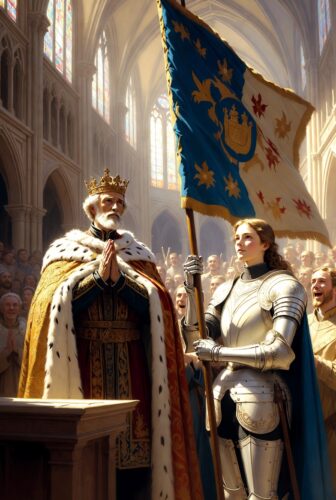 **Day 1 – Identify Your Orléans and the Key Bastille:** Joan arrived knowing exactly what the target was. Spend one focused hour listing every area where you feel besieged (finances, health, relationships, work). Pick the single central “Les Tourelles”—the one fort whose fall would collapse the whole siege. Be brutally concrete: not “get fit” but “run a 5K without stopping by June 1.” Write it on a physical index card you carry everywhere.
**Day 2 – Forge Your Banner:** Joan designed her own white silk standard with Jesus, Mary, and fleur-de-lis. Create a one-page visual “banner” (not a mood board— a single sheet with your mission statement, three non-negotiable rules like “no swearing at setbacks,” and a symbol that means something to you). Post it where you’ll see it first thing every morning. This is your public declaration; Joan waved hers in the trench under fire.
**Day 3 – Recruit Your Unlikely Allies:** Joan convinced skeptical soldiers and nobles. Identify three people outside your usual circle (a mentor who’s been blunt with you, a colleague in a different department, even an online contact) and ask them for one specific resource or accountability check-in. Tell them the mission bluntly, the way Joan dictated letters to kings. No vague asks— “I need you to review my pitch deck by Friday.”
**Day 4-5 – Storm the Outer Forts (Small Victories):** Joan took Saint-Loup first to build momentum. Execute two small, winnable actions against peripheral obstacles (e.g., delete distracting apps, make one scary phone call). Celebrate publicly like the citizens of Orléans did—tell someone what you accomplished.
**Day 6 – Assault the Main Tourelles and Take the Arrow:** This is the big push on your central goal. Schedule the hardest single task (workout, confrontation, submission). When resistance hits—because it will—use Joan’s technique: pause, reframe the pain as proof you’re on the right battlefield, then return to the fight within 30 minutes. Track it in a simple log: “Wound: criticism from boss. Response: revised the section anyway.”
**Day 1 – Identify Your Orléans and the Key Bastille:** Joan arrived knowing exactly what the target was. Spend one focused hour listing every area where you feel besieged (finances, health, relationships, work). Pick the single central “Les Tourelles”—the one fort whose fall would collapse the whole siege. Be brutally concrete: not “get fit” but “run a 5K without stopping by June 1.” Write it on a physical index card you carry everywhere.
**Day 2 – Forge Your Banner:** Joan designed her own white silk standard with Jesus, Mary, and fleur-de-lis. Create a one-page visual “banner” (not a mood board— a single sheet with your mission statement, three non-negotiable rules like “no swearing at setbacks,” and a symbol that means something to you). Post it where you’ll see it first thing every morning. This is your public declaration; Joan waved hers in the trench under fire.
**Day 3 – Recruit Your Unlikely Allies:** Joan convinced skeptical soldiers and nobles. Identify three people outside your usual circle (a mentor who’s been blunt with you, a colleague in a different department, even an online contact) and ask them for one specific resource or accountability check-in. Tell them the mission bluntly, the way Joan dictated letters to kings. No vague asks— “I need you to review my pitch deck by Friday.”
**Day 4-5 – Storm the Outer Forts (Small Victories):** Joan took Saint-Loup first to build momentum. Execute two small, winnable actions against peripheral obstacles (e.g., delete distracting apps, make one scary phone call). Celebrate publicly like the citizens of Orléans did—tell someone what you accomplished.
**Day 6 – Assault the Main Tourelles and Take the Arrow:** This is the big push on your central goal. Schedule the hardest single task (workout, confrontation, submission). When resistance hits—because it will—use Joan’s technique: pause, reframe the pain as proof you’re on the right battlefield, then return to the fight within 30 minutes. Track it in a simple log: “Wound: criticism from boss. Response: revised the section anyway.” **Day 7 – Declare the Siege Lifted and Forbid Pursuit on Sunday:** On the final day, stand down from the main effort. Review what worked. Physically remove one visible symbol of the old siege (archive the failure folder, delete the toxic contact). Then, like Joan refusing to attack on the Sabbath, enforce a deliberate rest day—no grinding, just reflection on how the momentum now points toward your “Reims” (the bigger coronation goal, like a promotion or completed project). Write one sentence: “The siege is lifted because…”
Repeat the protocol cyclically for new sieges. It works because it mirrors the historical sequence: clear target, visible symbol, external buy-in, momentum through small wins, decisive strike, resilience under fire, and strategic pause. No other self-help plan borrows medieval command structure this literally or compresses it into seven days with zero fluff. Joan didn’t wait for perfect conditions or majority approval; she acted on conviction and forced reality to catch up. You don’t need divine voices—just the same tactical clarity.
The men and women who lived through May 8, 1429, didn’t know they were witnessing the beginning of the end of English dominance in France. They just knew a girl with a banner changed everything. Six centuries later, the lesson is simpler and more personal: your personal sieges—those long, grinding stalemates that make you feel like the Dauphin hiding in Bourges—can end the moment you decide to ride in, banner high, and start storming forts. History shows it doesn’t take an army or a miracle. It takes one person willing to hear the call, endure the arrow, and refuse to accept the status quo. On May 8, 1429, the English marched away. Today, your obstacles can do the same. Grab your banner. The siege is waiting.
**Day 7 – Declare the Siege Lifted and Forbid Pursuit on Sunday:** On the final day, stand down from the main effort. Review what worked. Physically remove one visible symbol of the old siege (archive the failure folder, delete the toxic contact). Then, like Joan refusing to attack on the Sabbath, enforce a deliberate rest day—no grinding, just reflection on how the momentum now points toward your “Reims” (the bigger coronation goal, like a promotion or completed project). Write one sentence: “The siege is lifted because…”
Repeat the protocol cyclically for new sieges. It works because it mirrors the historical sequence: clear target, visible symbol, external buy-in, momentum through small wins, decisive strike, resilience under fire, and strategic pause. No other self-help plan borrows medieval command structure this literally or compresses it into seven days with zero fluff. Joan didn’t wait for perfect conditions or majority approval; she acted on conviction and forced reality to catch up. You don’t need divine voices—just the same tactical clarity.
The men and women who lived through May 8, 1429, didn’t know they were witnessing the beginning of the end of English dominance in France. They just knew a girl with a banner changed everything. Six centuries later, the lesson is simpler and more personal: your personal sieges—those long, grinding stalemates that make you feel like the Dauphin hiding in Bourges—can end the moment you decide to ride in, banner high, and start storming forts. History shows it doesn’t take an army or a miracle. It takes one person willing to hear the call, endure the arrow, and refuse to accept the status quo. On May 8, 1429, the English marched away. Today, your obstacles can do the same. Grab your banner. The siege is waiting.