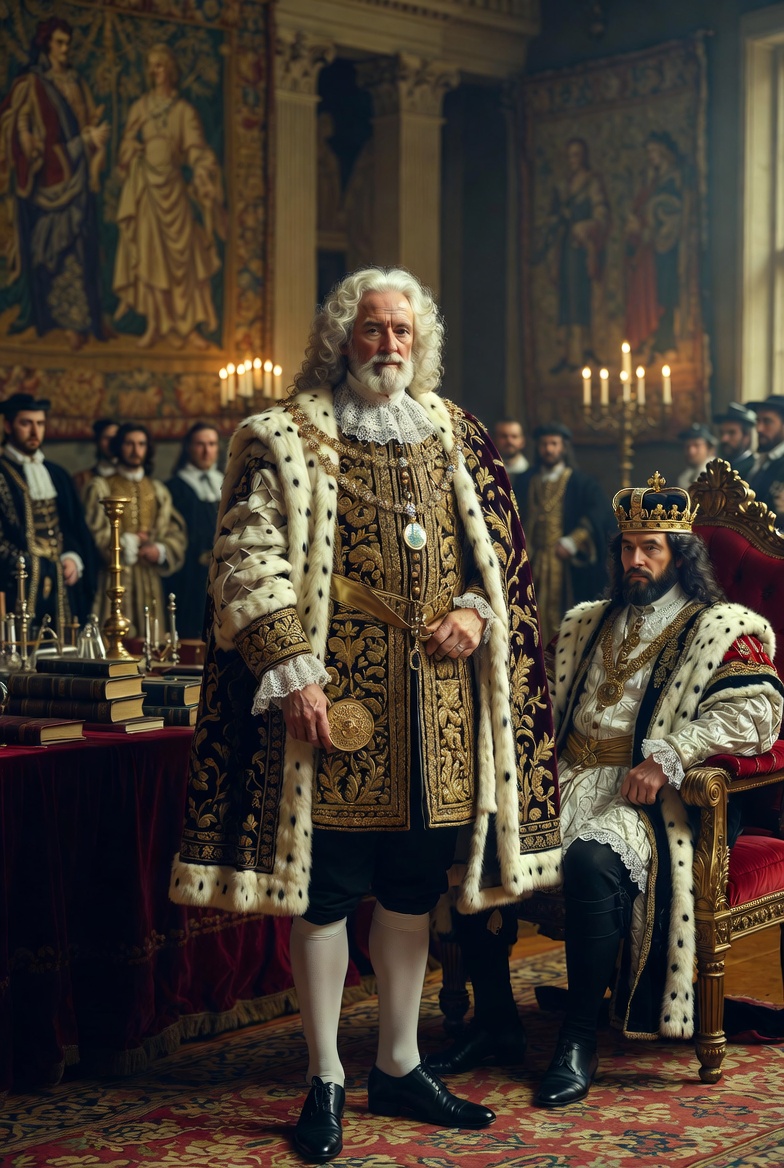
On May 3, 1621, in the echoing halls of the English House of Lords, Sir Francis Bacon—Lord Chancellor of England, knight, viscount, philosopher, and one of the most powerful men in the realm—stood accused, confessed, and was sentenced in a single, swift parliamentary gut-punch. No dramatic trial by combat. No fiery speech from the dock. Just a quiet admission of guilt for corruption, a £40,000 fine (roughly £8 million in today’s money), a brief stint in the Tower of London, and a lifetime ban from court, Parliament, and any public office. The man who had spent decades climbing the greasy pole of Jacobean politics was, in one afternoon, kicked off it entirely.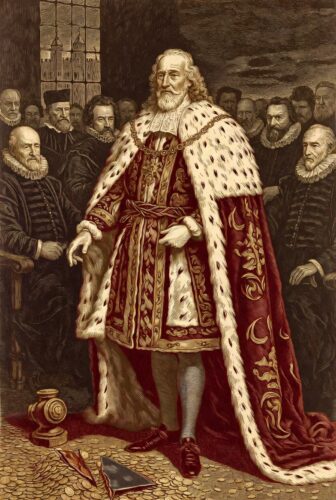 England in 1621 was a powder keg of royal extravagance, parliamentary resentment, and court intrigue under King James I. The monarch loved peace, pageantry, and his handsome Scottish favorites—especially George Villiers, the Duke of Buckingham. Parliament, meanwhile, was in a reformist mood, sniffing out monopolies, patents, and judicial bribes like hounds on a scent. Bacon, at the peak of his career as the kingdom’s top legal mind and keeper of the Great Seal, found himself squarely in the crosshairs. It was a perfect storm of envy, politics, and his own casual attitude toward the “gifts” that greased the wheels of justice in those days. Yet from this very public humiliation emerged something far greater: the intellectual groundwork for the modern scientific method, empiricism, and a personal example of radical reinvention that still whispers to anyone who has ever watched their career implode.
To understand why May 3, 1621, matters—and why it still delivers a motivational thunderbolt four centuries later—we must rewind through Bacon’s extraordinary, flawed, and wildly entertaining life. Born on January 22, 1561, at York House on the Strand in London, Francis was the second son of Sir Nicholas Bacon, Lord Keeper of the Great Seal under Queen Elizabeth I, and Anne Cooke Bacon, a formidable intellectual whose sister had married William Cecil, Lord Burghley—the queen’s chief advisor. The family was steeped in Renaissance humanism, Protestant zeal, and ruthless ambition. Young Francis, frail and bookish, was educated at home before being shipped off at age twelve to Trinity College, Cambridge, alongside his brother Anthony. There, under the watchful eye of tutor John Whitgift (future Archbishop of Canterbury), he devoured Latin, logic, and the medieval curriculum—but quickly grew disillusioned with Aristotle’s deductive approach. “The syllogism is not the instrument of discovery,” he would later scoff. He wanted evidence, experiment, and raw observation. Even as a teenager, he met Queen Elizabeth herself, who playfully dubbed him “the young lord keeper.” The nickname stuck in his mind like a prophecy.
By 1576, the Bacon brothers were admitted to Gray’s Inn to study law. Francis soon embarked on a grand tour of Europe with diplomat Sir Amias Paulet, soaking up French court life in Blois, Poitiers, and Tours, then Italy and Spain. He studied languages, statecraft, and civil law while running errands for the queen. When his father died suddenly in 1579, leaving the family in debt, Francis returned to Gray’s Inn, took up residence, and began the long, grinding ascent through the legal and political ranks. He entered Parliament in 1581 as MP for Bossiney, then bounced through seats in Melcombe, Taunton, Liverpool, Middlesex, Ipswich, and finally Cambridge University. He became a bencher in 1586, a reader in 1587, and secured the lucrative reversion of the Clerkship of the Star Chamber (worth £1,600 a year when it finally paid out in 1608).
England in 1621 was a powder keg of royal extravagance, parliamentary resentment, and court intrigue under King James I. The monarch loved peace, pageantry, and his handsome Scottish favorites—especially George Villiers, the Duke of Buckingham. Parliament, meanwhile, was in a reformist mood, sniffing out monopolies, patents, and judicial bribes like hounds on a scent. Bacon, at the peak of his career as the kingdom’s top legal mind and keeper of the Great Seal, found himself squarely in the crosshairs. It was a perfect storm of envy, politics, and his own casual attitude toward the “gifts” that greased the wheels of justice in those days. Yet from this very public humiliation emerged something far greater: the intellectual groundwork for the modern scientific method, empiricism, and a personal example of radical reinvention that still whispers to anyone who has ever watched their career implode.
To understand why May 3, 1621, matters—and why it still delivers a motivational thunderbolt four centuries later—we must rewind through Bacon’s extraordinary, flawed, and wildly entertaining life. Born on January 22, 1561, at York House on the Strand in London, Francis was the second son of Sir Nicholas Bacon, Lord Keeper of the Great Seal under Queen Elizabeth I, and Anne Cooke Bacon, a formidable intellectual whose sister had married William Cecil, Lord Burghley—the queen’s chief advisor. The family was steeped in Renaissance humanism, Protestant zeal, and ruthless ambition. Young Francis, frail and bookish, was educated at home before being shipped off at age twelve to Trinity College, Cambridge, alongside his brother Anthony. There, under the watchful eye of tutor John Whitgift (future Archbishop of Canterbury), he devoured Latin, logic, and the medieval curriculum—but quickly grew disillusioned with Aristotle’s deductive approach. “The syllogism is not the instrument of discovery,” he would later scoff. He wanted evidence, experiment, and raw observation. Even as a teenager, he met Queen Elizabeth herself, who playfully dubbed him “the young lord keeper.” The nickname stuck in his mind like a prophecy.
By 1576, the Bacon brothers were admitted to Gray’s Inn to study law. Francis soon embarked on a grand tour of Europe with diplomat Sir Amias Paulet, soaking up French court life in Blois, Poitiers, and Tours, then Italy and Spain. He studied languages, statecraft, and civil law while running errands for the queen. When his father died suddenly in 1579, leaving the family in debt, Francis returned to Gray’s Inn, took up residence, and began the long, grinding ascent through the legal and political ranks. He entered Parliament in 1581 as MP for Bossiney, then bounced through seats in Melcombe, Taunton, Liverpool, Middlesex, Ipswich, and finally Cambridge University. He became a bencher in 1586, a reader in 1587, and secured the lucrative reversion of the Clerkship of the Star Chamber (worth £1,600 a year when it finally paid out in 1608). Bacon’s early parliamentary speeches showed flashes of brilliance and Puritan sympathy. He criticized the harsh suppression of Puritans and urged the execution of Mary, Queen of Scots. Through his uncle Burghley he angled for court preferment, but Elizabeth was stingy with her favors. He allied himself with the dashing Robert Devereux, Earl of Essex, advising him on military and political matters and penning tracts like *Certain Observations Made upon a Libel* in 1592. When Essex fell from grace in 1601 and was executed for rebellion, Bacon—ever the survivor—helped prosecute his former patron and wrote the official government account justifying the treason charges. It was a ruthless but pragmatic move that kept him in the game.
The real rocket fuel came with James I’s accession in 1603. Bacon was knighted almost immediately. He married the fourteen-year-old Alice Barnham in 1606 (after a failed courtship of the wealthy widow Elizabeth Hatton, who instead wed his rival Edward Coke). Promotions rained down: Solicitor General in 1607, Attorney General in 1613, Lord Keeper in 1617, and finally Lord Chancellor and Baron Verulam in 1618. By 1621 he was Viscount St Alban. He mediated between crown and Parliament, pushed for the union of England and Scotland, advocated Irish colonization, and even helped certify controversial patents for gold and silver thread monopolies. He prosecuted high-profile cases, including the poisoning scandal involving the Earl and Countess of Somerset. He staged lavish masques and lived like a Renaissance prince—Gorhambury House expanded into a showplace of gardens, fountains, and philosophical walks.
But cracks were forming. Bacon’s household was notoriously expensive. He borrowed heavily. Enemies multiplied. Chief among them was Sir Edward Coke, the crusty, brilliant common-law jurist whom Bacon had bested for the Attorney Generalship years earlier. Coke never forgot. In the Parliament of 1621, amid a broader crackdown on monopolies and corruption, a committee of grievances began investigating judicial bribes. Bacon had accepted “gifts” from litigants—sometimes before, sometimes after judgments. In an era when judges were poorly paid and presents were routine, this was hardly unique. Bacon himself had ruled against some gift-givers. But Parliament smelled blood. Twenty-three specific charges piled up, ranging from bribes in the cases of Edward Egerton and William Bradley to more serious allegations tied to the monopolies Bacon had helped certify.
Bacon, ill and politically isolated, initially tried to defend himself. In a letter to the king he protested his “clean hands and clean heart.” To Buckingham he wrote with characteristic wit: “I know I have clean hands and a clean heart, and I hope a clean house for friends or servants; but Job himself, or whoever was the justest judge, by such hunting for matters against him as hath been used against me, may for a time seem foul.” Yet the pressure mounted. On April 20, 1621, he submitted a general confession to the Lords: he had taken gifts, but never let them sway his judgment. The Lords sent a committee to verify. Bacon’s reply became legendary: “My lords, it is my act, my hand, and my heart; I beseech your lordships to be merciful to a broken reed.”
Bacon’s early parliamentary speeches showed flashes of brilliance and Puritan sympathy. He criticized the harsh suppression of Puritans and urged the execution of Mary, Queen of Scots. Through his uncle Burghley he angled for court preferment, but Elizabeth was stingy with her favors. He allied himself with the dashing Robert Devereux, Earl of Essex, advising him on military and political matters and penning tracts like *Certain Observations Made upon a Libel* in 1592. When Essex fell from grace in 1601 and was executed for rebellion, Bacon—ever the survivor—helped prosecute his former patron and wrote the official government account justifying the treason charges. It was a ruthless but pragmatic move that kept him in the game.
The real rocket fuel came with James I’s accession in 1603. Bacon was knighted almost immediately. He married the fourteen-year-old Alice Barnham in 1606 (after a failed courtship of the wealthy widow Elizabeth Hatton, who instead wed his rival Edward Coke). Promotions rained down: Solicitor General in 1607, Attorney General in 1613, Lord Keeper in 1617, and finally Lord Chancellor and Baron Verulam in 1618. By 1621 he was Viscount St Alban. He mediated between crown and Parliament, pushed for the union of England and Scotland, advocated Irish colonization, and even helped certify controversial patents for gold and silver thread monopolies. He prosecuted high-profile cases, including the poisoning scandal involving the Earl and Countess of Somerset. He staged lavish masques and lived like a Renaissance prince—Gorhambury House expanded into a showplace of gardens, fountains, and philosophical walks.
But cracks were forming. Bacon’s household was notoriously expensive. He borrowed heavily. Enemies multiplied. Chief among them was Sir Edward Coke, the crusty, brilliant common-law jurist whom Bacon had bested for the Attorney Generalship years earlier. Coke never forgot. In the Parliament of 1621, amid a broader crackdown on monopolies and corruption, a committee of grievances began investigating judicial bribes. Bacon had accepted “gifts” from litigants—sometimes before, sometimes after judgments. In an era when judges were poorly paid and presents were routine, this was hardly unique. Bacon himself had ruled against some gift-givers. But Parliament smelled blood. Twenty-three specific charges piled up, ranging from bribes in the cases of Edward Egerton and William Bradley to more serious allegations tied to the monopolies Bacon had helped certify.
Bacon, ill and politically isolated, initially tried to defend himself. In a letter to the king he protested his “clean hands and clean heart.” To Buckingham he wrote with characteristic wit: “I know I have clean hands and a clean heart, and I hope a clean house for friends or servants; but Job himself, or whoever was the justest judge, by such hunting for matters against him as hath been used against me, may for a time seem foul.” Yet the pressure mounted. On April 20, 1621, he submitted a general confession to the Lords: he had taken gifts, but never let them sway his judgment. The Lords sent a committee to verify. Bacon’s reply became legendary: “My lords, it is my act, my hand, and my heart; I beseech your lordships to be merciful to a broken reed.” The sentence came down on May 3, 1621. Imprisonment in the Tower during the king’s pleasure. A £40,000 fine. Permanent exclusion from Parliament, court, and all public office. No degradation of his titles, but the political career was over. King James, ever fond of his brilliant servant, soon remitted most of the fine and limited the Tower stay to just a few days (some accounts say four). Bacon was released but ordered to retire to Gorhambury until further notice. He never held office again.
Here is where the story turns from tragedy to triumph—and where the real historical meat gets delicious. Stripped of power, Bacon did not sulk or scheme for revenge. He retreated to his books, his gardens, and his laboratory. He had already published *Novum Organum* in 1620, the second part of his grand *Instauratio Magna*—a revolutionary call to scrap Aristotelian deduction in favor of inductive reasoning based on careful observation and experiment. Now, freed from the daily grind of seals and star chambers, he doubled down. In 1623 he expanded *The Advancement of Learning* into the Latin *De Augmentis Scientiarum*, laying out a complete reform of human knowledge. He drafted *New Atlantis*, a utopian vision of a scientific research institute called Salomon’s House, where teams of investigators would pool data, test hypotheses, and serve the public good. He wrote essays, histories, and natural histories—*Sylva Sylvarum* collected thousands of observations on everything from magnetism to the preservation of meat.
His famous death in 1626 perfectly encapsulated the man. On a freezing April day, Bacon was riding near Highgate when the idea struck him: could snow preserve flesh as salt did? He stopped at a poor woman’s house, bought a chicken, had it stuffed with snow, and promptly caught a violent chill. He died of pneumonia at Arundel House on April 9, dictating a final letter comparing himself to Pliny the Elder, who perished investigating Vesuvius. John Aubrey later recorded the tale with relish: the father of the scientific method literally killed himself experimenting on a supermarket chicken. Witty to the end.
Bacon left behind debts and no direct heirs—his titles died with him—but his ideas ignited the Scientific Revolution. The Royal Society, founded in 1660, took his inductive method as gospel. Voltaire hailed him as the father of the modern scientific spirit. His “idols of the mind”—the biases that distort clear thinking (idols of the tribe, the cave, the marketplace, and the theatre)—remain a masterclass in intellectual hygiene. He coined “knowledge is power” and insisted truth emerges not from authority but from disciplined experiment. The very parliamentary disgrace that ended his political life gave the world its first systematic blueprint for empirical inquiry.
The sentence came down on May 3, 1621. Imprisonment in the Tower during the king’s pleasure. A £40,000 fine. Permanent exclusion from Parliament, court, and all public office. No degradation of his titles, but the political career was over. King James, ever fond of his brilliant servant, soon remitted most of the fine and limited the Tower stay to just a few days (some accounts say four). Bacon was released but ordered to retire to Gorhambury until further notice. He never held office again.
Here is where the story turns from tragedy to triumph—and where the real historical meat gets delicious. Stripped of power, Bacon did not sulk or scheme for revenge. He retreated to his books, his gardens, and his laboratory. He had already published *Novum Organum* in 1620, the second part of his grand *Instauratio Magna*—a revolutionary call to scrap Aristotelian deduction in favor of inductive reasoning based on careful observation and experiment. Now, freed from the daily grind of seals and star chambers, he doubled down. In 1623 he expanded *The Advancement of Learning* into the Latin *De Augmentis Scientiarum*, laying out a complete reform of human knowledge. He drafted *New Atlantis*, a utopian vision of a scientific research institute called Salomon’s House, where teams of investigators would pool data, test hypotheses, and serve the public good. He wrote essays, histories, and natural histories—*Sylva Sylvarum* collected thousands of observations on everything from magnetism to the preservation of meat.
His famous death in 1626 perfectly encapsulated the man. On a freezing April day, Bacon was riding near Highgate when the idea struck him: could snow preserve flesh as salt did? He stopped at a poor woman’s house, bought a chicken, had it stuffed with snow, and promptly caught a violent chill. He died of pneumonia at Arundel House on April 9, dictating a final letter comparing himself to Pliny the Elder, who perished investigating Vesuvius. John Aubrey later recorded the tale with relish: the father of the scientific method literally killed himself experimenting on a supermarket chicken. Witty to the end.
Bacon left behind debts and no direct heirs—his titles died with him—but his ideas ignited the Scientific Revolution. The Royal Society, founded in 1660, took his inductive method as gospel. Voltaire hailed him as the father of the modern scientific spirit. His “idols of the mind”—the biases that distort clear thinking (idols of the tribe, the cave, the marketplace, and the theatre)—remain a masterclass in intellectual hygiene. He coined “knowledge is power” and insisted truth emerges not from authority but from disciplined experiment. The very parliamentary disgrace that ended his political life gave the world its first systematic blueprint for empirical inquiry.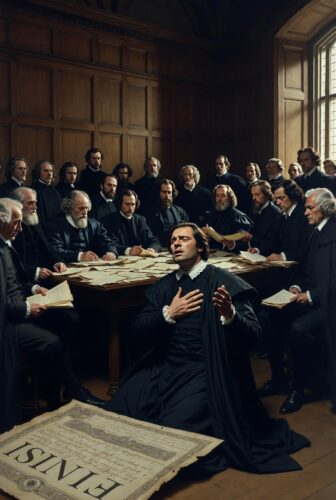 And that, four hundred years later, is the gift of May 3, 1621. Bacon’s fall was not the end of a career; it was the launchpad for a legacy. He owned the mess, accepted the consequences without endless excuses, and redirected his ferocious intellect toward something bigger than himself. No self-pity. No conspiracy theories. Just a clean pivot from power to purpose.
Now imagine applying that same ruthless honesty and scientific pivot to your own life today. The outcome of Bacon’s disgrace—freedom from office, forced reflection, explosive creative output—translates directly into personal superpowers that most modern self-help gurus never touch because they’re too busy selling vision boards and morning routines. Here are the razor-sharp ways this historical fact equips you to win:
- When a career “scandal” or public mistake lands (a lost promotion, a blown deadline, a social media backlash), you confess it immediately like Bacon did—no lawyerly spin, no victim narrative—cutting the “Tower time” from months of rumination to days of decisive action.
- You treat every failure as raw data for induction: instead of wallowing, you catalog the exact conditions that caused it (your personal “idols of the cave”) and run one tiny controlled experiment the next week to test a fix.
- You banish yourself from the old role (quit the toxic committee, delete the draining app, resign the volunteer gig) the way Bacon was barred from court—creating literal space for your *Novum Organum Personale* to emerge.
- You build your own “Salomon’s House” of knowledge: a private notebook where you log observations about money, relationships, health, and work without judgment, then distill patterns into actionable laws of your own life.
- You weaponize wit and brevity in apologies and pivots, turning potential humiliation into memorable, disarming stories that make people root for your comeback instead of gossiping behind your back.
- You stop chasing titles and start chasing verifiable results—knowledge truly becomes your power, immune to parliamentary votes or office politics.
- You accept that some fines (financial hits, reputational dents) get remitted by time and effort, but only if you retire gracefully from the old game first.
The unique, lightning-fast plan that no other self-help corner of the internet offers—because it’s ripped straight from Bacon’s own playbook and engineered for 2026 realities—is the **Baconian 72-Hour Reckoning and Inductive Pivot**. It’s not a 90-day transformation. It’s not affirmations or gratitude lists. It’s a surgical, empirical strike you can execute this weekend and repeat whenever life hands you another May 3.
**Day 1 (The Confession – 2 hours max):** Grab a blank notebook. Write the unvarnished truth of your current mess in one paragraph—no excuses, no “but they…”. Title it “My Act, My Hand, My Heart.” List every bribe you ever paid yourself (procrastination rewards, comfort purchases, ego strokes). Burn or delete the draft afterward. The ritual forces ownership without public humiliation.
**Day 2 (The Banishment – 1 hour):** Physically remove yourself from the scene of the crime. Delete the group chat, archive the project folder, cancel the subscription, or take the afternoon off work. Bacon was ordered to Gorhambury; you order yourself to a coffee shop you’ve never visited. While there, write three “idols” that blinded you—specific biases, people, or systems—and one observable fact about each.
And that, four hundred years later, is the gift of May 3, 1621. Bacon’s fall was not the end of a career; it was the launchpad for a legacy. He owned the mess, accepted the consequences without endless excuses, and redirected his ferocious intellect toward something bigger than himself. No self-pity. No conspiracy theories. Just a clean pivot from power to purpose.
Now imagine applying that same ruthless honesty and scientific pivot to your own life today. The outcome of Bacon’s disgrace—freedom from office, forced reflection, explosive creative output—translates directly into personal superpowers that most modern self-help gurus never touch because they’re too busy selling vision boards and morning routines. Here are the razor-sharp ways this historical fact equips you to win:
- When a career “scandal” or public mistake lands (a lost promotion, a blown deadline, a social media backlash), you confess it immediately like Bacon did—no lawyerly spin, no victim narrative—cutting the “Tower time” from months of rumination to days of decisive action.
- You treat every failure as raw data for induction: instead of wallowing, you catalog the exact conditions that caused it (your personal “idols of the cave”) and run one tiny controlled experiment the next week to test a fix.
- You banish yourself from the old role (quit the toxic committee, delete the draining app, resign the volunteer gig) the way Bacon was barred from court—creating literal space for your *Novum Organum Personale* to emerge.
- You build your own “Salomon’s House” of knowledge: a private notebook where you log observations about money, relationships, health, and work without judgment, then distill patterns into actionable laws of your own life.
- You weaponize wit and brevity in apologies and pivots, turning potential humiliation into memorable, disarming stories that make people root for your comeback instead of gossiping behind your back.
- You stop chasing titles and start chasing verifiable results—knowledge truly becomes your power, immune to parliamentary votes or office politics.
- You accept that some fines (financial hits, reputational dents) get remitted by time and effort, but only if you retire gracefully from the old game first.
The unique, lightning-fast plan that no other self-help corner of the internet offers—because it’s ripped straight from Bacon’s own playbook and engineered for 2026 realities—is the **Baconian 72-Hour Reckoning and Inductive Pivot**. It’s not a 90-day transformation. It’s not affirmations or gratitude lists. It’s a surgical, empirical strike you can execute this weekend and repeat whenever life hands you another May 3.
**Day 1 (The Confession – 2 hours max):** Grab a blank notebook. Write the unvarnished truth of your current mess in one paragraph—no excuses, no “but they…”. Title it “My Act, My Hand, My Heart.” List every bribe you ever paid yourself (procrastination rewards, comfort purchases, ego strokes). Burn or delete the draft afterward. The ritual forces ownership without public humiliation.
**Day 2 (The Banishment – 1 hour):** Physically remove yourself from the scene of the crime. Delete the group chat, archive the project folder, cancel the subscription, or take the afternoon off work. Bacon was ordered to Gorhambury; you order yourself to a coffee shop you’ve never visited. While there, write three “idols” that blinded you—specific biases, people, or systems—and one observable fact about each. **Day 3 (The Induction Launch – 90 minutes):** Hypothesize one tiny, measurable experiment. Example: “If I log every expense for seven days and review patterns nightly, I will spot the hidden £200/month leak.” Run it immediately. Record baseline data. Set a calendar reminder for Day 10 to measure results. That single inductive loop becomes your personal *Novum Organum*—repeatable, falsifiable, and infinitely scalable to health, relationships, or side hustles.
Total time investment: under five hours. Cost: zero. Results: a documented, scientific pivot that turns any professional carcass into fertilizer for the next empire. Do it once and you’ll never again fear a “May 3” moment—because you’ll already know the script: confess, banish, experiment, repeat. Bacon did it with quill and snow; you do it with a notebook and brutal honesty. Four centuries later, the Chancellor’s chicken still tastes like victory.
The May 3, 1621 sentencing was never meant to be a footnote. It was the spark that lit the scientific age—and the quiet blueprint for anyone smart enough to turn their own public or private disgrace into private, unstoppable momentum. History doesn’t repeat, but the pattern does: fall hard, confess cleanly, then build something the world still quotes four hundred years later. Your move.
**Day 3 (The Induction Launch – 90 minutes):** Hypothesize one tiny, measurable experiment. Example: “If I log every expense for seven days and review patterns nightly, I will spot the hidden £200/month leak.” Run it immediately. Record baseline data. Set a calendar reminder for Day 10 to measure results. That single inductive loop becomes your personal *Novum Organum*—repeatable, falsifiable, and infinitely scalable to health, relationships, or side hustles.
Total time investment: under five hours. Cost: zero. Results: a documented, scientific pivot that turns any professional carcass into fertilizer for the next empire. Do it once and you’ll never again fear a “May 3” moment—because you’ll already know the script: confess, banish, experiment, repeat. Bacon did it with quill and snow; you do it with a notebook and brutal honesty. Four centuries later, the Chancellor’s chicken still tastes like victory.
The May 3, 1621 sentencing was never meant to be a footnote. It was the spark that lit the scientific age—and the quiet blueprint for anyone smart enough to turn their own public or private disgrace into private, unstoppable momentum. History doesn’t repeat, but the pattern does: fall hard, confess cleanly, then build something the world still quotes four hundred years later. Your move.