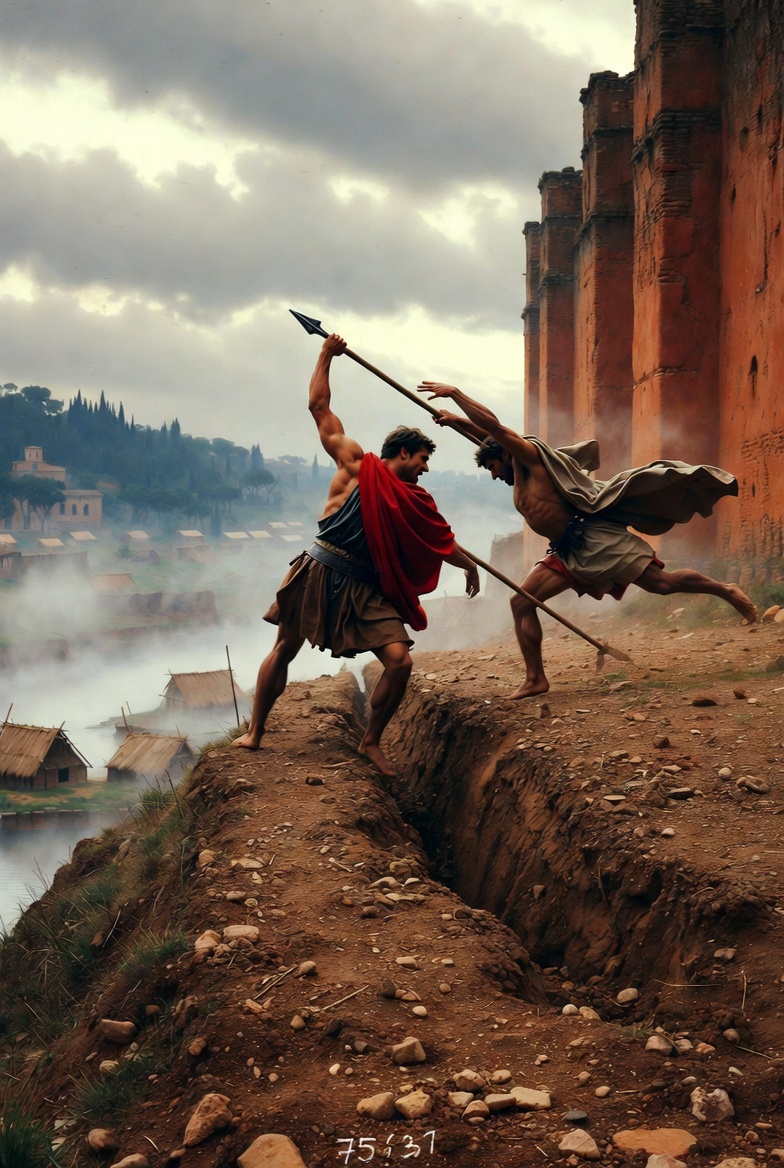
Picture this: April 21, 753 BC. No marble forums yet. No legions marching in perfect lockstep. Just two feral brothers, raised on wolf milk and shepherd grit, standing on a muddy hill overlooking the Tiber River. One of them draws a plow through the dirt, carves a sacred furrow, and declares, “This is mine.” The other mocks it, leaps over the line like it’s a game, and ends up dead. From that single, brutal moment—fratricide, ambition, and sheer audacity—sprang the greatest empire the world had ever seen. Rome wasn’t born in a cradle of civilization. It was clawed into existence by twins who refused to stay forgotten. And every year, on this exact date, the Romans celebrated it as their birthday with wild festivals, bonfires, and enough wine to drown a legion. This isn’t some dusty myth for history nerds. It’s the raw, ridiculous, blood-soaked origin story of a superpower that shaped law, language, roads, and republics for 2,000 years. Today we’re diving deep—ninety percent pure historical meat—into the real events, legends, archaeology, and cultural wildfire that made April 21, 753 BC the day everything changed. Then, in the final stretch, we’ll flip the script and hand you a razor-sharp, never-seen-before personal plan that weaponizes those ancient lessons. No vision boards. No morning routines copied from Instagram gurus. This is wolf-pack strategy for your own life: quick, dirty, and empire-level effective. Buckle up. Rome wasn’t built in a day—but it started on this one.
The story begins centuries earlier, in the smoky halls of Alba Longa, a Latin hill town about fifteen miles southeast of future Rome. King Numitor ruled, but his younger brother Amulius was a paranoid power-grabber straight out of a mafia script. Amulius overthrew Numitor, murdered his nephews, and forced Numitor’s daughter Rhea Silvia into the Vestal Virgins—a sacred order sworn to thirty years of chastity. Why? To make sure no rival heirs popped up. But the gods had other plans. According to the most famous version from the Roman historian Livy (writing around 27 BC in *Ab Urbe Condita*), Mars, the god of war himself, descended and fathered twin boys on Rhea Silvia. Plutarch, the Greek biographer who loved juicy details, adds that some whispered it was just a convenient cover story for an illicit affair with a local hunk. Either way, the twins arrived screaming into a world that wanted them erased.
Amulius ordered the babies drowned in the Tiber. The servant tasked with the dirty work couldn’t bring himself to do it—classic ancient mercy moment—and instead set the basket adrift. The river, in full spring flood as it would have been in April, gently deposited the twins at the foot of the Palatine Hill. Enter the she-wolf. Livy calls her *lupa*, a word that also slangily meant “prostitute” in later Roman street talk, which gave later writers endless room for cheeky jokes. She found the infants, suckled them with her own milk, and protected them until a shepherd named Faustulus discovered the scene. Faustulus and his wife Acca Larentia raised the boys as their own, naming them Romulus and Remus. The twins grew up tough—herding sheep by day, brawling with bandits by night, and developing a reputation as natural leaders who attracted a ragtag crew of outcasts, runaway slaves, and dispossessed farmers. Think *The Magnificent Seven* meets *Game of Thrones* season one.
This isn’t some dusty myth for history nerds. It’s the raw, ridiculous, blood-soaked origin story of a superpower that shaped law, language, roads, and republics for 2,000 years. Today we’re diving deep—ninety percent pure historical meat—into the real events, legends, archaeology, and cultural wildfire that made April 21, 753 BC the day everything changed. Then, in the final stretch, we’ll flip the script and hand you a razor-sharp, never-seen-before personal plan that weaponizes those ancient lessons. No vision boards. No morning routines copied from Instagram gurus. This is wolf-pack strategy for your own life: quick, dirty, and empire-level effective. Buckle up. Rome wasn’t built in a day—but it started on this one.
The story begins centuries earlier, in the smoky halls of Alba Longa, a Latin hill town about fifteen miles southeast of future Rome. King Numitor ruled, but his younger brother Amulius was a paranoid power-grabber straight out of a mafia script. Amulius overthrew Numitor, murdered his nephews, and forced Numitor’s daughter Rhea Silvia into the Vestal Virgins—a sacred order sworn to thirty years of chastity. Why? To make sure no rival heirs popped up. But the gods had other plans. According to the most famous version from the Roman historian Livy (writing around 27 BC in *Ab Urbe Condita*), Mars, the god of war himself, descended and fathered twin boys on Rhea Silvia. Plutarch, the Greek biographer who loved juicy details, adds that some whispered it was just a convenient cover story for an illicit affair with a local hunk. Either way, the twins arrived screaming into a world that wanted them erased.
Amulius ordered the babies drowned in the Tiber. The servant tasked with the dirty work couldn’t bring himself to do it—classic ancient mercy moment—and instead set the basket adrift. The river, in full spring flood as it would have been in April, gently deposited the twins at the foot of the Palatine Hill. Enter the she-wolf. Livy calls her *lupa*, a word that also slangily meant “prostitute” in later Roman street talk, which gave later writers endless room for cheeky jokes. She found the infants, suckled them with her own milk, and protected them until a shepherd named Faustulus discovered the scene. Faustulus and his wife Acca Larentia raised the boys as their own, naming them Romulus and Remus. The twins grew up tough—herding sheep by day, brawling with bandits by night, and developing a reputation as natural leaders who attracted a ragtag crew of outcasts, runaway slaves, and dispossessed farmers. Think *The Magnificent Seven* meets *Game of Thrones* season one.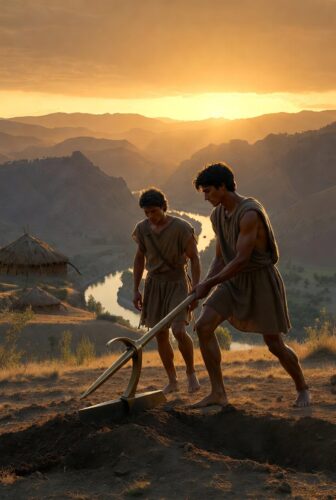 By their late teens, the boys learned their true royal heritage. They rallied a small army, stormed Alba Longa, killed Amulius in a satisfyingly brutal coup, and restored their grandfather Numitor to the throne. Mission accomplished—or so it seemed. But the twins weren’t content playing second fiddle in someone else’s kingdom. They wanted their own city. The question was where, and who would rule. Romulus favored the Palatine Hill, the same spot where the wolf had saved them—symbolic, strategic, defensible. Remus preferred the Aventine Hill, slightly lower but with better river access. To settle it, they turned to augury, the Roman art of reading bird omens. Remus claimed he saw six vultures first. Romulus countered with twelve. The argument escalated from divine signs to insults, then to blows. According to Livy, Remus mocked his brother’s new city walls by leaping over the shallow ditch and earthen rampart Romulus had plowed as a sacred boundary. “These walls are a joke!” he supposedly yelled. Romulus, in a rage that would define Roman decisiveness for centuries, struck him down, shouting something like, “So perish anyone who leaps over my walls!” Plutarch softens it slightly, suggesting a companion did the killing, but the outcome was the same: Remus dead, Romulus sole founder, and the city named Roma after him.
April 21, 753 BC—the traditional date fixed later by the scholar Marcus Terentius Varro—marked the moment Romulus performed the *sulcus primigenius*, the ritual plowing of the first furrow with a bronze plow pulled by a white bull and cow. He yoked the animals, faced the direction that would become the city’s heart, and traced the pomerium, the sacred boundary line. Priests and followers followed, piling earth inside the furrow to form the wall, leaving gaps where future gates would stand. No stone yet—just earth, blood, and unbreakable will. Archaeological digs on the Palatine, especially the 21st-century work around the “Hut of Romulus” site, back this up with hard evidence: postholes and remains of wattle-and-daub huts dating precisely to the mid-8th century BC, clustered on the hill exactly where legend places the founding. Carbon dating and pottery fragments scream “small Iron Age settlement,” not Hollywood epic. Rome started as a scrappy village of maybe a few hundred souls, not the marble marvel of later centuries.
Romulus didn’t stop at walls. He needed people. His solution? The Asylum, a sacred grove between the two peaks of the Capitoline Hill declared open to fugitives, debtors, exiles, and criminals from every neighboring tribe. “Come one, come all,” was the vibe—except runaway slaves and murderers got a fresh start. Historians like Dionysius of Halicarnassus describe how this policy swelled Rome’s population overnight with desperate, loyal fighters who owed everything to their new king. Funny in hindsight: the Eternal City’s first citizens were basically the ancient world’s most wanted list. To balance the male-heavy demographic, Romulus orchestrated the famous Rape of the Sabine Women. During a festival honoring Neptune (or Consus, depending on the source), Roman men seized unmarried Sabine daughters while their fathers and brothers were distracted by games. War followed—Sabine king Titus Tatius marched on Rome—but the abducted women, now mothers and wives, threw themselves between the armies, forcing a peace treaty. Romulus and Tatius ruled jointly until Tatius’s death, and the Sabines merged into the Roman bloodline. Strategic kidnapping turned into the ultimate alliance-building masterclass. Rome learned early: sometimes you steal the future to secure it.
The new king organized everything with military precision that would later conquer the known world. He created the Senate—100 “fathers” (*patres*) chosen from the leading families to advise him. He divided the people into three tribes (Ramnes, Tities, Luceres) and thirty curiae for voting and military service. He established the first legions, the *comitia curiata*, and even the *lictors*—bodyguards carrying fasces bundles of rods and axes that symbolized power and punishment. Romulus fought and won wars against the Caeninenses, Antemnates, Crustumerians, and Veientes, expanding Roman territory through sheer grit. After a 37-year reign (or 38, sources vary), he disappeared in a thunderstorm on the Campus Martius, ascending to the gods as Quirinus, the deified founder. Or, as the more cynical version goes, the Senate murdered him when he grew too tyrannical. Either way, the Romans turned his memory into a cult. Every April 21 they held the Parilia festival—bonfires, leaping over flames for purification, shepherds offering milk and cakes to Pales, the god of flocks. It was part birthday party, part fertility rite, part reminder that Rome began in the dirt and rose through blood and brotherhood.
Fast-forward through the seven kings who followed. Numa Pompilius, the second king, gave Rome its religious calendar, priesthoods, and peace-loving institutions—contrast to Romulus’s warrior ethos. Tullus Hostilius brought back the war machine and destroyed Alba Longa in a legendary single combat between the Horatii and Curiatii brothers. Ancus Marcius built the first bridge over the Tiber and founded Ostia as a port. Then the Etruscans arrived in force: Tarquinius Priscus, an outsider from Tarquinii, introduced drains, the Circus Maximus, and triumphal processions. Servius Tullius reformed the army into centuries based on wealth and built the Servian Wall. Tarquinius Superbus, the last king, was a tyrant whose son’s assault on Lucretia sparked the 509 BC revolution that birthed the Republic. The founding spirit—bold, inclusive of the desperate, ruthless when crossed—echoed through every reform. Rome absorbed Etruscan engineering, Latin religion, and Sabine toughness, then weaponized the mix. By the Republic’s early days, the city had grown to control Latium, beaten the Samnites, and was eyeing Carthage. The she-wolf suckled an empire.
Archaeology fills the gaps the myths leave. Excavations at the Lupercal cave beneath the Palatine (rediscovered dramatically in 2007) revealed a 20-foot-deep sanctuary with a mosaic floor and niches that match descriptions of the wolf’s lair. Inscriptions and foundation deposits from the 8th century BC show ritual offerings exactly where Romulus supposedly plowed. The Forum Boarium cattle market area yielded early huts and a possible early temple to Hercules, tying into the Hercules-Cacus myth that Romans loved to attach to their origins. Even the name “Roma” likely derives from an Etruscan root meaning “river” or “strong,” but the twins gave it mythic firepower. Roman writers like Virgil in the *Aeneas* epic retrofitted the story to link Rome to Trojan refugees, giving the upstart city ancient prestige against snooty Greeks. The she-wolf became the ultimate symbol—statues everywhere, including the famous bronze in the Capitoline Museums (though the twins were a Renaissance addition). Festivals like the Lupercalia on February 15 involved naked priests whipping women with goat-skin strips for fertility—rowdy, ridiculous, and rooted in the founding twins’ wild upbringing.
By their late teens, the boys learned their true royal heritage. They rallied a small army, stormed Alba Longa, killed Amulius in a satisfyingly brutal coup, and restored their grandfather Numitor to the throne. Mission accomplished—or so it seemed. But the twins weren’t content playing second fiddle in someone else’s kingdom. They wanted their own city. The question was where, and who would rule. Romulus favored the Palatine Hill, the same spot where the wolf had saved them—symbolic, strategic, defensible. Remus preferred the Aventine Hill, slightly lower but with better river access. To settle it, they turned to augury, the Roman art of reading bird omens. Remus claimed he saw six vultures first. Romulus countered with twelve. The argument escalated from divine signs to insults, then to blows. According to Livy, Remus mocked his brother’s new city walls by leaping over the shallow ditch and earthen rampart Romulus had plowed as a sacred boundary. “These walls are a joke!” he supposedly yelled. Romulus, in a rage that would define Roman decisiveness for centuries, struck him down, shouting something like, “So perish anyone who leaps over my walls!” Plutarch softens it slightly, suggesting a companion did the killing, but the outcome was the same: Remus dead, Romulus sole founder, and the city named Roma after him.
April 21, 753 BC—the traditional date fixed later by the scholar Marcus Terentius Varro—marked the moment Romulus performed the *sulcus primigenius*, the ritual plowing of the first furrow with a bronze plow pulled by a white bull and cow. He yoked the animals, faced the direction that would become the city’s heart, and traced the pomerium, the sacred boundary line. Priests and followers followed, piling earth inside the furrow to form the wall, leaving gaps where future gates would stand. No stone yet—just earth, blood, and unbreakable will. Archaeological digs on the Palatine, especially the 21st-century work around the “Hut of Romulus” site, back this up with hard evidence: postholes and remains of wattle-and-daub huts dating precisely to the mid-8th century BC, clustered on the hill exactly where legend places the founding. Carbon dating and pottery fragments scream “small Iron Age settlement,” not Hollywood epic. Rome started as a scrappy village of maybe a few hundred souls, not the marble marvel of later centuries.
Romulus didn’t stop at walls. He needed people. His solution? The Asylum, a sacred grove between the two peaks of the Capitoline Hill declared open to fugitives, debtors, exiles, and criminals from every neighboring tribe. “Come one, come all,” was the vibe—except runaway slaves and murderers got a fresh start. Historians like Dionysius of Halicarnassus describe how this policy swelled Rome’s population overnight with desperate, loyal fighters who owed everything to their new king. Funny in hindsight: the Eternal City’s first citizens were basically the ancient world’s most wanted list. To balance the male-heavy demographic, Romulus orchestrated the famous Rape of the Sabine Women. During a festival honoring Neptune (or Consus, depending on the source), Roman men seized unmarried Sabine daughters while their fathers and brothers were distracted by games. War followed—Sabine king Titus Tatius marched on Rome—but the abducted women, now mothers and wives, threw themselves between the armies, forcing a peace treaty. Romulus and Tatius ruled jointly until Tatius’s death, and the Sabines merged into the Roman bloodline. Strategic kidnapping turned into the ultimate alliance-building masterclass. Rome learned early: sometimes you steal the future to secure it.
The new king organized everything with military precision that would later conquer the known world. He created the Senate—100 “fathers” (*patres*) chosen from the leading families to advise him. He divided the people into three tribes (Ramnes, Tities, Luceres) and thirty curiae for voting and military service. He established the first legions, the *comitia curiata*, and even the *lictors*—bodyguards carrying fasces bundles of rods and axes that symbolized power and punishment. Romulus fought and won wars against the Caeninenses, Antemnates, Crustumerians, and Veientes, expanding Roman territory through sheer grit. After a 37-year reign (or 38, sources vary), he disappeared in a thunderstorm on the Campus Martius, ascending to the gods as Quirinus, the deified founder. Or, as the more cynical version goes, the Senate murdered him when he grew too tyrannical. Either way, the Romans turned his memory into a cult. Every April 21 they held the Parilia festival—bonfires, leaping over flames for purification, shepherds offering milk and cakes to Pales, the god of flocks. It was part birthday party, part fertility rite, part reminder that Rome began in the dirt and rose through blood and brotherhood.
Fast-forward through the seven kings who followed. Numa Pompilius, the second king, gave Rome its religious calendar, priesthoods, and peace-loving institutions—contrast to Romulus’s warrior ethos. Tullus Hostilius brought back the war machine and destroyed Alba Longa in a legendary single combat between the Horatii and Curiatii brothers. Ancus Marcius built the first bridge over the Tiber and founded Ostia as a port. Then the Etruscans arrived in force: Tarquinius Priscus, an outsider from Tarquinii, introduced drains, the Circus Maximus, and triumphal processions. Servius Tullius reformed the army into centuries based on wealth and built the Servian Wall. Tarquinius Superbus, the last king, was a tyrant whose son’s assault on Lucretia sparked the 509 BC revolution that birthed the Republic. The founding spirit—bold, inclusive of the desperate, ruthless when crossed—echoed through every reform. Rome absorbed Etruscan engineering, Latin religion, and Sabine toughness, then weaponized the mix. By the Republic’s early days, the city had grown to control Latium, beaten the Samnites, and was eyeing Carthage. The she-wolf suckled an empire.
Archaeology fills the gaps the myths leave. Excavations at the Lupercal cave beneath the Palatine (rediscovered dramatically in 2007) revealed a 20-foot-deep sanctuary with a mosaic floor and niches that match descriptions of the wolf’s lair. Inscriptions and foundation deposits from the 8th century BC show ritual offerings exactly where Romulus supposedly plowed. The Forum Boarium cattle market area yielded early huts and a possible early temple to Hercules, tying into the Hercules-Cacus myth that Romans loved to attach to their origins. Even the name “Roma” likely derives from an Etruscan root meaning “river” or “strong,” but the twins gave it mythic firepower. Roman writers like Virgil in the *Aeneas* epic retrofitted the story to link Rome to Trojan refugees, giving the upstart city ancient prestige against snooty Greeks. The she-wolf became the ultimate symbol—statues everywhere, including the famous bronze in the Capitoline Museums (though the twins were a Renaissance addition). Festivals like the Lupercalia on February 15 involved naked priests whipping women with goat-skin strips for fertility—rowdy, ridiculous, and rooted in the founding twins’ wild upbringing. The cultural ripple effects were insane. Roman law, from the Twelve Tables onward, enshrined the pomerium boundary concept: inside was sacred civil space, outside military. Citizenship expanded the “asylum” idea—anyone could become Roman if they contributed. The legion’s manipular flexibility came from those early ragtag fighters. Even the sense of humor: Romans loved self-deprecating jokes about their grubby origins. Plautus and later satirists poked fun at the “wolf-born” toughness. Yet it motivated them. When Hannibal nearly destroyed the city in 216 BC at Cannae, Romans didn’t quit—they remembered their founder’s refusal to back down. When the Republic crumbled into civil war, Augustus rebuilt it as the Empire and consciously modeled himself on Romulus: new golden age, new walls, new asylum for talent from the provinces. The date April 21 stayed holy. Emperors celebrated it with games. Medieval popes repurposed the Parilia into Christian rites. Even today, modern Romans throw parties on Natale di Roma with parades, fireworks, and reenactments. The city that started with a murder and a plow conquered Britain, Egypt, and the imagination of the West.
Zoom out further. The founding wasn’t isolated. It happened during the Iron Age transition when Italic tribes mixed with Etruscan city-states and Greek colonies in southern Italy. Climate data shows the 8th century BC had wetter springs—perfect for the Tiber floods that “delivered” the twins in legend. Trade routes brought Phoenician and Greek influences: the alphabet, hoplite tactics, temple architecture. Rome absorbed them without losing its feral edge. By 500 BC the population hit maybe 20,000. By 300 BC it was a regional powerhouse. The twins’ story became propaganda gold: humble beginnings justify expansion. “From a wolf’s teat to world domination” was the ultimate underdog narrative. Funny how a fratricide became a founding virtue—Romans turned sibling rivalry into a metaphor for the necessary ruthlessness of leadership. Later emperors like Claudius traced their line back to the Sabines to legitimize rule. The myth endured because it was flexible: tough yet merciful, rural yet destined for greatness.
Now, here’s where the ancient dust turns into modern rocket fuel. The outcome of April 21, 753 BC wasn’t just a city. It was a blueprint for turning nothing into something eternal: start small, protect your boundaries with ferocious clarity, welcome the desperate into your circle, merge rival “tribes” through bold alliances, and never apologize for decisive action when someone leaps your walls. Applied to your individual life, this historical fact hands you superpowers no generic self-help guru touches.
The cultural ripple effects were insane. Roman law, from the Twelve Tables onward, enshrined the pomerium boundary concept: inside was sacred civil space, outside military. Citizenship expanded the “asylum” idea—anyone could become Roman if they contributed. The legion’s manipular flexibility came from those early ragtag fighters. Even the sense of humor: Romans loved self-deprecating jokes about their grubby origins. Plautus and later satirists poked fun at the “wolf-born” toughness. Yet it motivated them. When Hannibal nearly destroyed the city in 216 BC at Cannae, Romans didn’t quit—they remembered their founder’s refusal to back down. When the Republic crumbled into civil war, Augustus rebuilt it as the Empire and consciously modeled himself on Romulus: new golden age, new walls, new asylum for talent from the provinces. The date April 21 stayed holy. Emperors celebrated it with games. Medieval popes repurposed the Parilia into Christian rites. Even today, modern Romans throw parties on Natale di Roma with parades, fireworks, and reenactments. The city that started with a murder and a plow conquered Britain, Egypt, and the imagination of the West.
Zoom out further. The founding wasn’t isolated. It happened during the Iron Age transition when Italic tribes mixed with Etruscan city-states and Greek colonies in southern Italy. Climate data shows the 8th century BC had wetter springs—perfect for the Tiber floods that “delivered” the twins in legend. Trade routes brought Phoenician and Greek influences: the alphabet, hoplite tactics, temple architecture. Rome absorbed them without losing its feral edge. By 500 BC the population hit maybe 20,000. By 300 BC it was a regional powerhouse. The twins’ story became propaganda gold: humble beginnings justify expansion. “From a wolf’s teat to world domination” was the ultimate underdog narrative. Funny how a fratricide became a founding virtue—Romans turned sibling rivalry into a metaphor for the necessary ruthlessness of leadership. Later emperors like Claudius traced their line back to the Sabines to legitimize rule. The myth endured because it was flexible: tough yet merciful, rural yet destined for greatness.
Now, here’s where the ancient dust turns into modern rocket fuel. The outcome of April 21, 753 BC wasn’t just a city. It was a blueprint for turning nothing into something eternal: start small, protect your boundaries with ferocious clarity, welcome the desperate into your circle, merge rival “tribes” through bold alliances, and never apologize for decisive action when someone leaps your walls. Applied to your individual life, this historical fact hands you superpowers no generic self-help guru touches.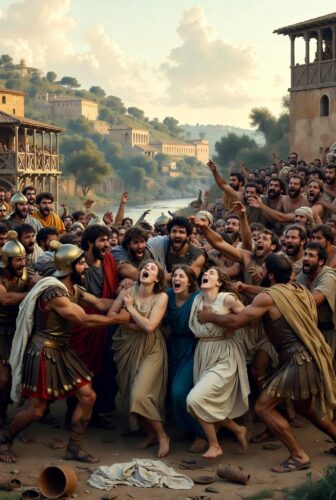 - **Claim your Palatine without apology.** Romulus didn’t poll-test his hill; he picked the defensible high ground that symbolized his survival and plowed it sacred. In your life, identify one core “hill”—your non-negotiable priority, whether it’s a side hustle, health overhaul, or family boundary—and ritually declare it yours. No committee approval. Draw the literal or metaphorical furrow: write it down in blood-red ink on April 21 every year as your personal founding day.
- **Turn wolf milk into daily fuel.** The twins didn’t just survive exposure—they thrived on raw, wild nourishment. Stop waiting for perfect conditions. Adopt “lupa mode” for 20 minutes every morning: no phone, just intense focus on one hard skill or problem. Feel the grit. It builds the same unbreakable resilience that let a muddy village outlast empires.
- **Build walls, then open the Asylum.** Romulus’s pomerium kept chaos out while the Asylum brought talent in. Set ironclad personal boundaries (no after-9pm work emails, zero tolerance for energy vampires) but create your own “sacred grove” for new ideas, oddball collaborators, or second-chance relationships. Invite the “fugitives” others reject—freelancers, misfits, underdogs—and watch your personal Rome boom.
- **Resolve twin disputes with Romulus rules.** Remus’s leap was a test; Romulus’s response was final. When internal conflict arises (procrastination vs. action, fear vs. ambition), consult your own augury—quick data plus gut instinct—then act decisively. No endless debate. One brother rules. Your life, your city.
- **Merge Sabine-style when rivals appear.** The abduction-turned-alliance turned enemies into family. When competition or criticism shows up, don’t fight forever—negotiate a merger that strengthens both. Turn a workplace rival into a co-creator or a family argument into a stronger bond. Rome doubled its strength overnight; you can too.
- **Deify your wins like Quirinus.** Romulus didn’t just die—he ascended and became a god Romans invoked in battle. After every major personal victory, perform a private “apotheosis”: celebrate publicly, tell the story, and let it fuel the next campaign. Your legacy compounds exactly like Rome’s.
These bullets aren’t fluff. They’re distilled from the exact mechanics that took a hilltop village to world domination in under 500 years.
Here’s the part no other self-help plan online dares: the **Romulus 21-Day Founding Protocol**—a blisteringly fast, ritual-heavy system designed to be performed once per year starting on April 21 (or your personal “founding day”) and repeated in mini-cycles. It’s not 75 hard challenges or atomic habits. It’s a mythic reenactment you do in your actual life, blending physical action, symbolic boundary-setting, and strategic mercy in a way that feels ancient and unstoppable.
**Day 1-3: The Exposure and Rescue.** Strip your current “kingdom” to basics. List everything weighing you down like Amulius’s threats—toxic commitments, clutter, draining people. Burn or delete three of them publicly (photo the bonfire if you want drama). Then “rescue” yourself: spend 24 hours in deliberate discomfort—cold shower, no caffeine, manual labor—to remember you’re wolf-raised. End by writing your new city’s name (your big goal) on a physical object you’ll keep on your desk.
- **Claim your Palatine without apology.** Romulus didn’t poll-test his hill; he picked the defensible high ground that symbolized his survival and plowed it sacred. In your life, identify one core “hill”—your non-negotiable priority, whether it’s a side hustle, health overhaul, or family boundary—and ritually declare it yours. No committee approval. Draw the literal or metaphorical furrow: write it down in blood-red ink on April 21 every year as your personal founding day.
- **Turn wolf milk into daily fuel.** The twins didn’t just survive exposure—they thrived on raw, wild nourishment. Stop waiting for perfect conditions. Adopt “lupa mode” for 20 minutes every morning: no phone, just intense focus on one hard skill or problem. Feel the grit. It builds the same unbreakable resilience that let a muddy village outlast empires.
- **Build walls, then open the Asylum.** Romulus’s pomerium kept chaos out while the Asylum brought talent in. Set ironclad personal boundaries (no after-9pm work emails, zero tolerance for energy vampires) but create your own “sacred grove” for new ideas, oddball collaborators, or second-chance relationships. Invite the “fugitives” others reject—freelancers, misfits, underdogs—and watch your personal Rome boom.
- **Resolve twin disputes with Romulus rules.** Remus’s leap was a test; Romulus’s response was final. When internal conflict arises (procrastination vs. action, fear vs. ambition), consult your own augury—quick data plus gut instinct—then act decisively. No endless debate. One brother rules. Your life, your city.
- **Merge Sabine-style when rivals appear.** The abduction-turned-alliance turned enemies into family. When competition or criticism shows up, don’t fight forever—negotiate a merger that strengthens both. Turn a workplace rival into a co-creator or a family argument into a stronger bond. Rome doubled its strength overnight; you can too.
- **Deify your wins like Quirinus.** Romulus didn’t just die—he ascended and became a god Romans invoked in battle. After every major personal victory, perform a private “apotheosis”: celebrate publicly, tell the story, and let it fuel the next campaign. Your legacy compounds exactly like Rome’s.
These bullets aren’t fluff. They’re distilled from the exact mechanics that took a hilltop village to world domination in under 500 years.
Here’s the part no other self-help plan online dares: the **Romulus 21-Day Founding Protocol**—a blisteringly fast, ritual-heavy system designed to be performed once per year starting on April 21 (or your personal “founding day”) and repeated in mini-cycles. It’s not 75 hard challenges or atomic habits. It’s a mythic reenactment you do in your actual life, blending physical action, symbolic boundary-setting, and strategic mercy in a way that feels ancient and unstoppable.
**Day 1-3: The Exposure and Rescue.** Strip your current “kingdom” to basics. List everything weighing you down like Amulius’s threats—toxic commitments, clutter, draining people. Burn or delete three of them publicly (photo the bonfire if you want drama). Then “rescue” yourself: spend 24 hours in deliberate discomfort—cold shower, no caffeine, manual labor—to remember you’re wolf-raised. End by writing your new city’s name (your big goal) on a physical object you’ll keep on your desk.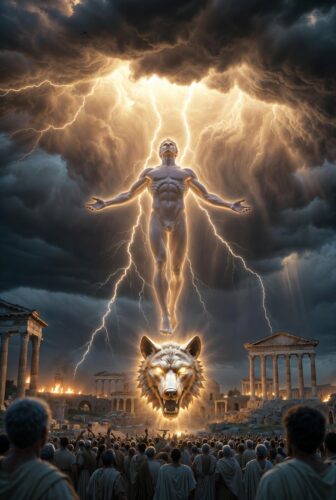 **Day 4-7: Plow the Pomerium.** Physically mark boundaries. Draw a literal chalk circle or tape line around your workspace or home zone. Inside it, only empire-building happens—no scrolling, no excuses. Outside, delegate or destroy distractions. Each day plow one “furrow”: complete one non-negotiable task that builds your wall (write the business plan, hit the gym, have the hard conversation). Leap over it once deliberately like Remus—test your own resolve—then reinforce it harder. Laugh at yourself. That’s the humor Romulus would approve.
**Day 8-14: Open the Asylum.** Invite three “fugitives”—people or ideas others overlook. Host a no-agenda coffee with a struggling colleague, adopt a wild new habit from an obscure book, or give a second chance to a project you abandoned. Feed them your resources (time, advice, connections) without expectation. Watch loyalty compound the way Rome’s population exploded. Track it in a “Senate journal”: who added value, who got the boot.
**Day 15-18: The Sabine Merger.** Identify one rival or obstacle (internal or external). Engineer an alliance: turn criticism into collaboration. Propose a joint project, merge budgets, or simply listen until common ground appears. If it fails, apply the Remus rule—cut cleanly and move on. Celebrate the new strength with a ritual meal shared with your growing “tribe.”
**Day 19-21: Ascension and Festival.** Review the 21 days like the Senate reviewing a king. What expanded? What must die? Burn a list of failures in a small fire (safely), then declare yourself Quirinus—deified founder of your new era. Host your own Parilia: leap over a literal flame (candle), share milk and cake with friends, and announce your next campaign to the world. Lock in the date for next April 21. Repeat annually. The cycle is short enough to execute between real life but mythic enough to rewire your identity.
This protocol works because it’s not motivational wallpaper. It’s embodied history. You feel the plow in your hands, the wolf at your back, the wall at your feet. No other plan online forces you to reenact fratricide-level decisiveness or asylum-level generosity in real time. Do it once and your ordinary Tuesday becomes the day Rome howled into existence—only this time, the empire is yours.
Rome’s founding on April 21, 753 BC wasn’t luck. It was audacity dressed in wolf skin, boundaries carved in dirt, and a refusal to stay small. That same fire is still burning. Light it today. Plow your furrow. Welcome your outcasts. Strike when the vultures circle. Your personal Rome awaits—and it starts with one bloody, brilliant leap of faith. Happy birthday, builder. Now go found something eternal.
**Day 4-7: Plow the Pomerium.** Physically mark boundaries. Draw a literal chalk circle or tape line around your workspace or home zone. Inside it, only empire-building happens—no scrolling, no excuses. Outside, delegate or destroy distractions. Each day plow one “furrow”: complete one non-negotiable task that builds your wall (write the business plan, hit the gym, have the hard conversation). Leap over it once deliberately like Remus—test your own resolve—then reinforce it harder. Laugh at yourself. That’s the humor Romulus would approve.
**Day 8-14: Open the Asylum.** Invite three “fugitives”—people or ideas others overlook. Host a no-agenda coffee with a struggling colleague, adopt a wild new habit from an obscure book, or give a second chance to a project you abandoned. Feed them your resources (time, advice, connections) without expectation. Watch loyalty compound the way Rome’s population exploded. Track it in a “Senate journal”: who added value, who got the boot.
**Day 15-18: The Sabine Merger.** Identify one rival or obstacle (internal or external). Engineer an alliance: turn criticism into collaboration. Propose a joint project, merge budgets, or simply listen until common ground appears. If it fails, apply the Remus rule—cut cleanly and move on. Celebrate the new strength with a ritual meal shared with your growing “tribe.”
**Day 19-21: Ascension and Festival.** Review the 21 days like the Senate reviewing a king. What expanded? What must die? Burn a list of failures in a small fire (safely), then declare yourself Quirinus—deified founder of your new era. Host your own Parilia: leap over a literal flame (candle), share milk and cake with friends, and announce your next campaign to the world. Lock in the date for next April 21. Repeat annually. The cycle is short enough to execute between real life but mythic enough to rewire your identity.
This protocol works because it’s not motivational wallpaper. It’s embodied history. You feel the plow in your hands, the wolf at your back, the wall at your feet. No other plan online forces you to reenact fratricide-level decisiveness or asylum-level generosity in real time. Do it once and your ordinary Tuesday becomes the day Rome howled into existence—only this time, the empire is yours.
Rome’s founding on April 21, 753 BC wasn’t luck. It was audacity dressed in wolf skin, boundaries carved in dirt, and a refusal to stay small. That same fire is still burning. Light it today. Plow your furrow. Welcome your outcasts. Strike when the vultures circle. Your personal Rome awaits—and it starts with one bloody, brilliant leap of faith. Happy birthday, builder. Now go found something eternal.