On a spring day in 133 BC, high on the acropolis of Pergamon in what is now western Turkey, a 37-year-old king named Attalus III drew his last breath. No epic battle claimed him. No palace intrigue or battlefield glory marked his passing. Instead, this ruler—more famous in his lifetime for tending poisonous plants in royal gardens than for leading armies—left behind a document that would ripple across the Mediterranean world for centuries. In his will, Attalus bequeathed his entire kingdom, its treasury, its cities, its ports, its army, and its vast cultural treasures straight to the Roman Republic. The date was April 18, 133 BC. Rome, already a rising superpower in the west, suddenly found itself heir to one of the richest Hellenistic realms in the east. What followed was a wild saga of diplomacy, revolt, cultural fusion, and political upheaval that helped shape the Roman Empire we remember today.
This wasn't just a royal handover; it was a bizarre, almost comedic pivot in ancient history. While other kings clung desperately to power through wars and marriages, Attalus III essentially said, "Take it all—I'm out." The decision was random in its timing, specific in its legal precision, and profoundly significant. It ended the independent Attalid dynasty that had ruled Pergamon for nearly 150 years, accelerated Rome's eastward expansion, flooded the Republic with wealth that fueled (and fractured) its politics, and sparked one of the earliest recorded social revolts in Asia Minor complete with utopian promises of freedom from slavery. Yet for all its drama, this story remains one of history's quieter gems—overlooked in favor of flashier Roman conquests or Greek golden ages, but packed with lessons on vision, eccentricity, and letting go that still hit hard today.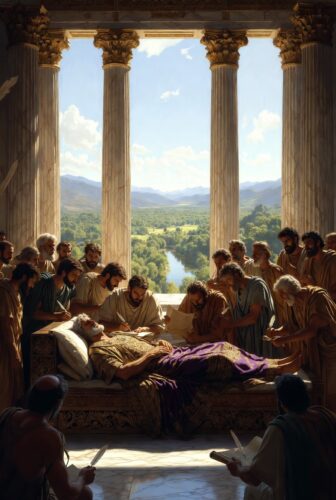 To understand why April 18, 133 BC mattered so much, we have to rewind to the chaotic aftermath of Alexander the Great's death in 323 BC. The vast empire Alexander carved from Greece to India splintered among his generals into rival Hellenistic kingdoms. In the power vacuum, a shrewd officer named Philetaerus seized control of a small fortress town called Pergamon around 281 BC. He had inherited a massive war chest—9,000 talents of silver and gold—from the defeated Lysimachus, one of Alexander's successors. Philetaerus used that fortune wisely: he played the major powers (Seleucids in Syria, Ptolemies in Egypt, and later Rome) against each other, paid for defenses, and slowly built a mini-empire centered on Pergamon's dramatic hilltop acropolis overlooking the Caicus River plain.
The Attalid dynasty he founded was a masterclass in Hellenistic survival. Unlike the bombastic Seleucids or the flashy Ptolemies, the Attalids positioned themselves as cultured benefactors and clever diplomats. Philetaerus's nephew Eumenes I expanded territory through smart alliances. Then came Attalus I (r. 241–197 BC), the dynasty's breakout star. He earned the title "Soter" (Savior) by smashing the invading Galatians—Celtic tribes terrorizing Asia Minor—in a series of brutal campaigns. Pergamon's sculptors immortalized the victories in the famous "Dying Gaul" statues: writhing, noble barbarians captured in marble with raw Hellenistic emotion—twisted bodies, anguished faces, the very opposite of serene classical calm. Attalus I also began the dynasty's love affair with monumental art and learning.
The real golden age arrived under Eumenes II (r. 197–159 BC), Attalus III's father. After siding with Rome against the Seleucid king Antiochus III in the Roman-Syrian War (192–188 BC), Eumenes reaped massive rewards: territory doubled, tribute flowed in, and Pergamon became the cultural capital of western Asia Minor. He poured wealth into the acropolis like a Hellenistic Silicon Valley founder funding a campus. The result? One of the ancient world's most spectacular urban showcases. A 10,000-seat theater carved into the hillside offered panoramic views over the plain—performances of Sophocles or Euripides under the open sky. Temples to Athena, Zeus, and Dionysus gleamed with marble. But the crown jewels were the Library of Pergamon and the Great Altar.
The library, built by Eumenes II, was no dusty archive—it was a rival to Alexandria's legendary collection. At its peak, it housed up to 200,000 scrolls. Scholars from across the Greek world flocked there to study philosophy, science, medicine, and literature. The rivalry with Egypt's Ptolemies got so intense that King Ptolemy V reportedly banned papyrus exports to starve Pergamon's scribes. The Attalids didn't panic. They innovated. Artisans perfected a new writing material from treated animal skins—durable, flexible, and locally sourced. We call it parchment today, but the Romans named it *pergamenum* after the city. This wasn't just a workaround; it revolutionized knowledge preservation. Parchment lasted longer than brittle papyrus, could be written on both sides, and bound into codices (early books) instead of cumbersome rolls. The library's collection included works by Aristotle, Homer commentaries, and medical texts that influenced later Roman and Byzantine science. It was encyclopedic in ambition—cataloging, copying, and debating everything from botany to astronomy.
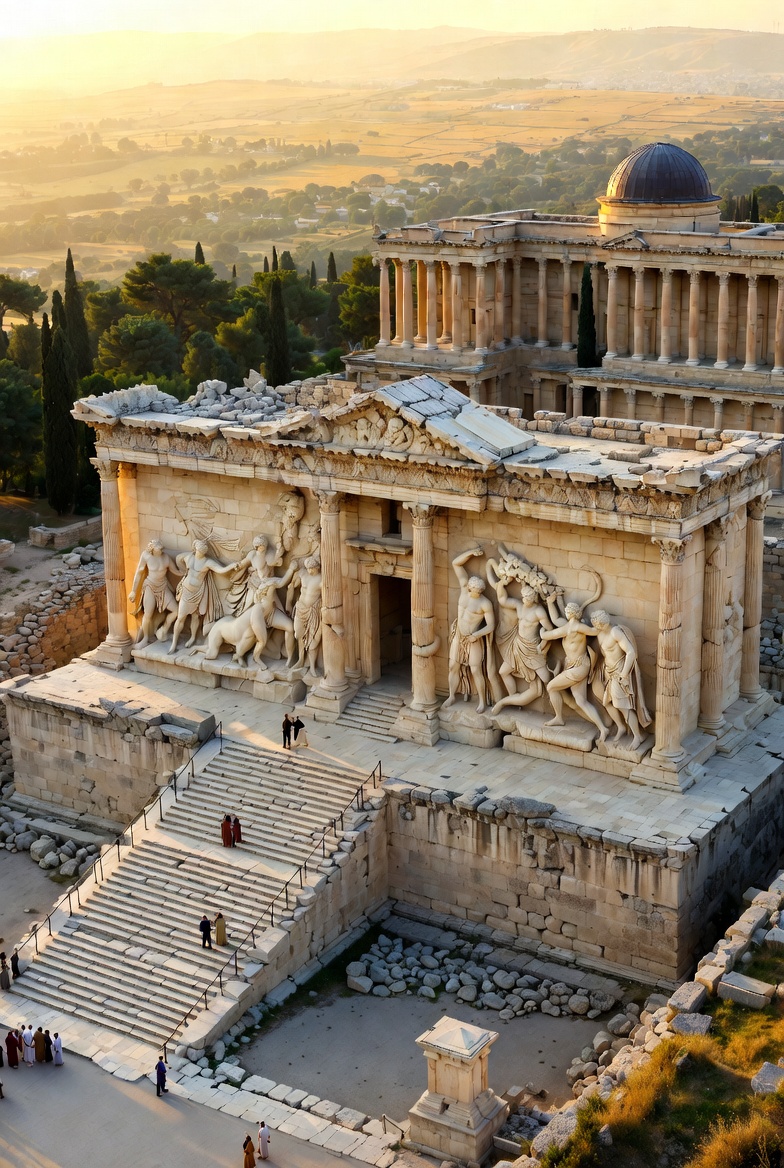
Then there was the Great Altar of Zeus, perhaps the dynasty's most jaw-dropping creation. Commissioned around 180–160 BC (likely by Eumenes II to celebrate victories over the Galatians and Seleucids), this 35-by-33-meter marble masterpiece sat on a massive podium approached by a wide staircase. Its 120-meter-long frieze depicted the gigantomachy—the cosmic battle between the Olympian gods and the giants—in explosive Hellenistic style. Gods and monsters twist in dynamic combat: Athena drags a giant by the hair while Nike crowns her; Zeus hurls thunderbolts; serpents coil around victims. The sculptures weren't stiff and idealized like earlier Greek art—they were baroque, emotional, almost cinematic. Fragments of this altar were excavated in the 19th century and shipped to Berlin, where they still awe visitors in the Pergamon Museum. It wasn't just decoration; it was propaganda. The Attalids claimed descent from Telephus (son of Heracles), linking their rule to mythic heroes and positioning Pergamon as a new Troy or Athens in the east.
To understand why April 18, 133 BC mattered so much, we have to rewind to the chaotic aftermath of Alexander the Great's death in 323 BC. The vast empire Alexander carved from Greece to India splintered among his generals into rival Hellenistic kingdoms. In the power vacuum, a shrewd officer named Philetaerus seized control of a small fortress town called Pergamon around 281 BC. He had inherited a massive war chest—9,000 talents of silver and gold—from the defeated Lysimachus, one of Alexander's successors. Philetaerus used that fortune wisely: he played the major powers (Seleucids in Syria, Ptolemies in Egypt, and later Rome) against each other, paid for defenses, and slowly built a mini-empire centered on Pergamon's dramatic hilltop acropolis overlooking the Caicus River plain.
The Attalid dynasty he founded was a masterclass in Hellenistic survival. Unlike the bombastic Seleucids or the flashy Ptolemies, the Attalids positioned themselves as cultured benefactors and clever diplomats. Philetaerus's nephew Eumenes I expanded territory through smart alliances. Then came Attalus I (r. 241–197 BC), the dynasty's breakout star. He earned the title "Soter" (Savior) by smashing the invading Galatians—Celtic tribes terrorizing Asia Minor—in a series of brutal campaigns. Pergamon's sculptors immortalized the victories in the famous "Dying Gaul" statues: writhing, noble barbarians captured in marble with raw Hellenistic emotion—twisted bodies, anguished faces, the very opposite of serene classical calm. Attalus I also began the dynasty's love affair with monumental art and learning.
The real golden age arrived under Eumenes II (r. 197–159 BC), Attalus III's father. After siding with Rome against the Seleucid king Antiochus III in the Roman-Syrian War (192–188 BC), Eumenes reaped massive rewards: territory doubled, tribute flowed in, and Pergamon became the cultural capital of western Asia Minor. He poured wealth into the acropolis like a Hellenistic Silicon Valley founder funding a campus. The result? One of the ancient world's most spectacular urban showcases. A 10,000-seat theater carved into the hillside offered panoramic views over the plain—performances of Sophocles or Euripides under the open sky. Temples to Athena, Zeus, and Dionysus gleamed with marble. But the crown jewels were the Library of Pergamon and the Great Altar.
The library, built by Eumenes II, was no dusty archive—it was a rival to Alexandria's legendary collection. At its peak, it housed up to 200,000 scrolls. Scholars from across the Greek world flocked there to study philosophy, science, medicine, and literature. The rivalry with Egypt's Ptolemies got so intense that King Ptolemy V reportedly banned papyrus exports to starve Pergamon's scribes. The Attalids didn't panic. They innovated. Artisans perfected a new writing material from treated animal skins—durable, flexible, and locally sourced. We call it parchment today, but the Romans named it *pergamenum* after the city. This wasn't just a workaround; it revolutionized knowledge preservation. Parchment lasted longer than brittle papyrus, could be written on both sides, and bound into codices (early books) instead of cumbersome rolls. The library's collection included works by Aristotle, Homer commentaries, and medical texts that influenced later Roman and Byzantine science. It was encyclopedic in ambition—cataloging, copying, and debating everything from botany to astronomy.
Then there was the Great Altar of Zeus, perhaps the dynasty's most jaw-dropping creation. Commissioned around 180–160 BC (likely by Eumenes II to celebrate victories over the Galatians and Seleucids), this 35-by-33-meter marble masterpiece sat on a massive podium approached by a wide staircase. Its 120-meter-long frieze depicted the gigantomachy—the cosmic battle between the Olympian gods and the giants—in explosive Hellenistic style. Gods and monsters twist in dynamic combat: Athena drags a giant by the hair while Nike crowns her; Zeus hurls thunderbolts; serpents coil around victims. The sculptures weren't stiff and idealized like earlier Greek art—they were baroque, emotional, almost cinematic. Fragments of this altar were excavated in the 19th century and shipped to Berlin, where they still awe visitors in the Pergamon Museum. It wasn't just decoration; it was propaganda. The Attalids claimed descent from Telephus (son of Heracles), linking their rule to mythic heroes and positioning Pergamon as a new Troy or Athens in the east.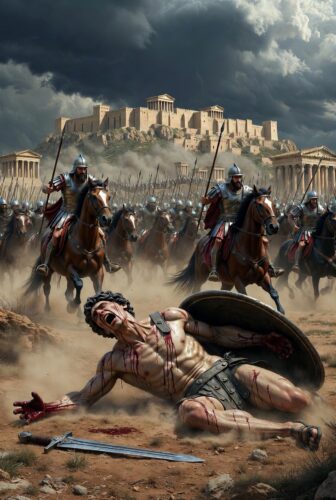 By the time Attalus III inherited the throne in 138 BC (succeeding his uncle Attalus II), Pergamon was at its zenith: wealthy, cultured, fortified, and diplomatically tight with Rome. But Attalus III was... different. Ancient sources (often biased Roman or later Greek writers like Justin, Plutarch, and Diodorus) paint him as eccentric at best, tyrannical or even mad at worst. He showed little interest in the usual kingly pursuits—conquests, grand public works, or court pageantry. Instead, he retreated into the palace and royal gardens, becoming the ancient world's premier royal botanist and toxicologist.
Attalus cultivated both harmless medicinal herbs and deadly poisons: henbane, hellebore, hemlock, aconite, thornapple, and more. He experimented obsessively—testing extracts on animals, criminals (according to some accounts), and even himself in tiny doses to develop antidotes. These "Attalids" (as the remedies were called) gained fame across the Mediterranean. Court poet Nicander of Colophon documented the work in his poems *Theriaca* and *Alexipharmaca*, cataloging poisons from plants and animals (including the bizarre sea hare, a toxic slug-like creature). Attalus also dabbled in sculpture, casting bronze and modeling wax figures. He reportedly spent hours staring at a statue of his mother, earning the epithet Philometor ("mother-lover"). One story claims he stood so long in the sun before her monument that he suffered heatstroke.
Was he crazy? Sources exaggerate for drama—Roman historians loved depicting eastern kings as decadent or unhinged to justify their own conquests. More likely, Attalus was a reclusive scholar-king in an era when Hellenistic monarchs were expected to be warrior-diplomats. He neglected governance somewhat, focusing on science and art. No major wars marred his short five-year reign. He had no legitimate heirs. And perhaps sensing Rome's inevitable shadow—Pergamon had long been a client state—he made a calculated, radical choice. On his deathbed around April 18, 133 BC, he dictated a will leaving the entire kingdom to "the Senate and People of Rome." The treasury, royal estates, cities (with some exceptions for free Greek poleis and temples), and even personal property went to the Republic. It was a bequest without precedent in scale.
By the time Attalus III inherited the throne in 138 BC (succeeding his uncle Attalus II), Pergamon was at its zenith: wealthy, cultured, fortified, and diplomatically tight with Rome. But Attalus III was... different. Ancient sources (often biased Roman or later Greek writers like Justin, Plutarch, and Diodorus) paint him as eccentric at best, tyrannical or even mad at worst. He showed little interest in the usual kingly pursuits—conquests, grand public works, or court pageantry. Instead, he retreated into the palace and royal gardens, becoming the ancient world's premier royal botanist and toxicologist.
Attalus cultivated both harmless medicinal herbs and deadly poisons: henbane, hellebore, hemlock, aconite, thornapple, and more. He experimented obsessively—testing extracts on animals, criminals (according to some accounts), and even himself in tiny doses to develop antidotes. These "Attalids" (as the remedies were called) gained fame across the Mediterranean. Court poet Nicander of Colophon documented the work in his poems *Theriaca* and *Alexipharmaca*, cataloging poisons from plants and animals (including the bizarre sea hare, a toxic slug-like creature). Attalus also dabbled in sculpture, casting bronze and modeling wax figures. He reportedly spent hours staring at a statue of his mother, earning the epithet Philometor ("mother-lover"). One story claims he stood so long in the sun before her monument that he suffered heatstroke.
Was he crazy? Sources exaggerate for drama—Roman historians loved depicting eastern kings as decadent or unhinged to justify their own conquests. More likely, Attalus was a reclusive scholar-king in an era when Hellenistic monarchs were expected to be warrior-diplomats. He neglected governance somewhat, focusing on science and art. No major wars marred his short five-year reign. He had no legitimate heirs. And perhaps sensing Rome's inevitable shadow—Pergamon had long been a client state—he made a calculated, radical choice. On his deathbed around April 18, 133 BC, he dictated a will leaving the entire kingdom to "the Senate and People of Rome." The treasury, royal estates, cities (with some exceptions for free Greek poleis and temples), and even personal property went to the Republic. It was a bequest without precedent in scale.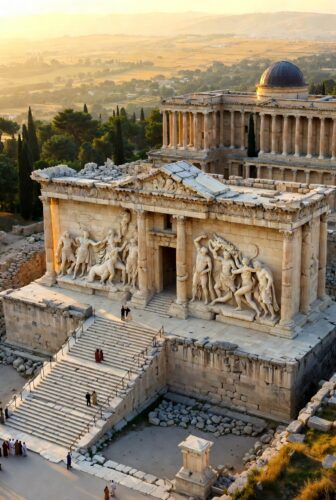 Why? Historians debate. Some say Attalus feared internal strife or invasion by neighbors like Bithynia or Pontus. By handing it to powerful Rome, he avoided bloodshed and preserved his people's stability under a stronger protector. Others speculate eccentricity or even a quiet admiration for Roman order after years of alliance. Whatever the motive, the will arrived in Rome via envoy Eudemus just as the city boiled with its own crises. Tribune Tiberius Gracchus, pushing radical land reforms to help impoverished citizens, seized on the Attalid treasure as funding. The Senate hesitated—Rome had never annexed a Hellenistic kingdom outright—but the wealth was too tempting. They accepted.
What happened next was pure chaos and high-stakes drama. Almost immediately, a pretender named Aristonicus (likely an illegitimate half-brother of Attalus, son of Eumenes II by a concubine) rose up. He proclaimed himself King Eumenes III, rallied the disaffected—slaves, peasants, the poor—and promised a utopian "City of the Sun" (Heliopolis) where slavery would end and equality reign. It was one of the earliest recorded social revolts blending Hellenistic philosophy (Stoic or Cynic ideas of universal brotherhood?) with practical rebellion. Aristonicus captured cities, minted coins, and fought a four-year guerrilla war (133–129 BC). Rome, distracted by Gracchan violence at home (Tiberius was murdered in 133 BC), sent generals piecemeal. Consul Publius Licinius Crassus Mucianus died in battle. Marcus Perperna captured Aristonicus at Stratonicea but perished soon after. Finally, Manius Aquillius crushed the last resistance in 129 BC, executing Aristonicus in Rome after parading him in triumph.
The revolt's suppression allowed Rome to organize the former kingdom as the province of Asia—the first major Roman foothold in Asia Minor proper. Outlying territories were carved off as gifts to allied kings (Pontus, Bithynia, Cappadocia) to keep them loyal. The core became a rich tax base, funneling grain, timber, silver, and trade routes into Roman coffers. Culturally, Pergamon's treasures—statues, scrolls, artistic techniques—flooded westward, influencing Roman art, literature, and engineering. The Great Altar's style inspired later Roman reliefs; the library's scholarly methods shaped Roman libraries; parchment spread across the empire. Economically, the influx of Attalid gold helped (and exacerbated) Rome's social divides, supercharging Gracchan reforms and the slide toward civil wars that would birth the Empire under Augustus.
Why? Historians debate. Some say Attalus feared internal strife or invasion by neighbors like Bithynia or Pontus. By handing it to powerful Rome, he avoided bloodshed and preserved his people's stability under a stronger protector. Others speculate eccentricity or even a quiet admiration for Roman order after years of alliance. Whatever the motive, the will arrived in Rome via envoy Eudemus just as the city boiled with its own crises. Tribune Tiberius Gracchus, pushing radical land reforms to help impoverished citizens, seized on the Attalid treasure as funding. The Senate hesitated—Rome had never annexed a Hellenistic kingdom outright—but the wealth was too tempting. They accepted.
What happened next was pure chaos and high-stakes drama. Almost immediately, a pretender named Aristonicus (likely an illegitimate half-brother of Attalus, son of Eumenes II by a concubine) rose up. He proclaimed himself King Eumenes III, rallied the disaffected—slaves, peasants, the poor—and promised a utopian "City of the Sun" (Heliopolis) where slavery would end and equality reign. It was one of the earliest recorded social revolts blending Hellenistic philosophy (Stoic or Cynic ideas of universal brotherhood?) with practical rebellion. Aristonicus captured cities, minted coins, and fought a four-year guerrilla war (133–129 BC). Rome, distracted by Gracchan violence at home (Tiberius was murdered in 133 BC), sent generals piecemeal. Consul Publius Licinius Crassus Mucianus died in battle. Marcus Perperna captured Aristonicus at Stratonicea but perished soon after. Finally, Manius Aquillius crushed the last resistance in 129 BC, executing Aristonicus in Rome after parading him in triumph.
The revolt's suppression allowed Rome to organize the former kingdom as the province of Asia—the first major Roman foothold in Asia Minor proper. Outlying territories were carved off as gifts to allied kings (Pontus, Bithynia, Cappadocia) to keep them loyal. The core became a rich tax base, funneling grain, timber, silver, and trade routes into Roman coffers. Culturally, Pergamon's treasures—statues, scrolls, artistic techniques—flooded westward, influencing Roman art, literature, and engineering. The Great Altar's style inspired later Roman reliefs; the library's scholarly methods shaped Roman libraries; parchment spread across the empire. Economically, the influx of Attalid gold helped (and exacerbated) Rome's social divides, supercharging Gracchan reforms and the slide toward civil wars that would birth the Empire under Augustus.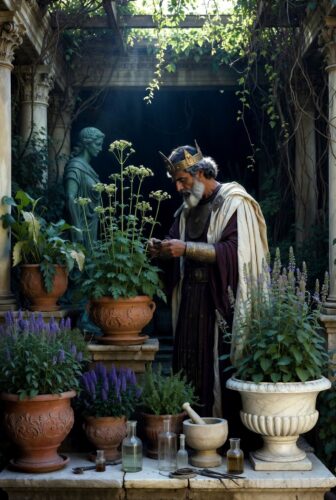 The Attalids' story didn't end in oblivion. Their cultural DNA lived on. Pergamon remained a prosperous provincial center—home to a famous Asclepius healing sanctuary, a theater, and ongoing scholarship. But the bequest marked the end of independent Hellenistic monarchy in the region and the beginning of Rome's imperial age. It was random in execution (a quiet death triggering global shift), specific (one king's will on one April day), and significant beyond measure: it accelerated Rome's transformation from Republic to superpower while preserving Greek learning under new masters.
Fast-forward over 2,150 years, and this obscure event from distant history offers a surprisingly fresh blueprint for modern life. The outcome of Attalus III's bold, eccentric move—letting go of personal control to create something larger—proves that unconventional legacy-building can outlast empires. You don't need a throne or treasury to apply it. In your individual life, channeling Attalus means cultivating your own "poison gardens" of unique skills and challenges, then strategically bequeathing them for amplified impact. It flips traditional self-help (grind harder, hoard achievements) into something quirkier, more sustainable, and historically grounded: build eccentrically, release intentionally, watch ripples turn into waves.
Here are very specific ways this historical fact benefits you today:
- **Embrace "mad scientist" experimentation in your daily work or hobbies**: Just as Attalus turned potential toxins into antidotes, turn your personal weaknesses or "poisonous" habits (procrastination, perfectionism) into strengths by testing small, controlled experiments—like dedicating 15 minutes daily to a weird side project (coding a niche app, sketching absurd inventions, or mixing unconventional recipes). This builds resilience and innovation no generic productivity hack offers.
- **Draft a personal "will" for your knowledge or projects early**: Attalus didn't wait for crisis; he planned succession proactively. Create a digital or physical "bequest folder" outlining how your expertise, unfinished ideas, or networks get passed on—share it with a mentee, open-source a tool you built, or document processes for your team. It ensures your efforts survive beyond your direct involvement.
- **Cultivate alliances like the Attalids did with Rome**: Instead of solo heroism, form strategic partnerships with "greater powers" (industry leaders, communities, or platforms) that amplify your reach. Identify one "Rome" in your field and offer value first—your kingdom grows through smart handover, not endless defense.
- **Turn revolt into renewal**: Aristonicus's uprising showed resistance can spark progress. When pushback hits your goals (critics, setbacks), reframe it as fuel for a "Sun City" vision—rally supporters around a bold, inclusive outcome like freeing "slaves" to old limiting beliefs in your life or career.
- **Measure legacy by cultural diffusion, not size**: Pergamon's art and parchment outlived its kings. Focus on creating shareable, adaptable "artifacts" (a blog series, open toolkit, or family tradition) that others remix, rather than hoarding for personal glory.
For a detailed, quick, unique plan unlike anything in the crowded self-help space, try the **Attalid Bequest Protocol**—a 14-day "kingdom handover" system that blends historical eccentricity with actionable steps. It's not another vision board or habit tracker; it's a deliberate ritual of cultivation and release, designed to feel like you're a Hellenistic scholar-king handing off an empire.
The Attalids' story didn't end in oblivion. Their cultural DNA lived on. Pergamon remained a prosperous provincial center—home to a famous Asclepius healing sanctuary, a theater, and ongoing scholarship. But the bequest marked the end of independent Hellenistic monarchy in the region and the beginning of Rome's imperial age. It was random in execution (a quiet death triggering global shift), specific (one king's will on one April day), and significant beyond measure: it accelerated Rome's transformation from Republic to superpower while preserving Greek learning under new masters.
Fast-forward over 2,150 years, and this obscure event from distant history offers a surprisingly fresh blueprint for modern life. The outcome of Attalus III's bold, eccentric move—letting go of personal control to create something larger—proves that unconventional legacy-building can outlast empires. You don't need a throne or treasury to apply it. In your individual life, channeling Attalus means cultivating your own "poison gardens" of unique skills and challenges, then strategically bequeathing them for amplified impact. It flips traditional self-help (grind harder, hoard achievements) into something quirkier, more sustainable, and historically grounded: build eccentrically, release intentionally, watch ripples turn into waves.
Here are very specific ways this historical fact benefits you today:
- **Embrace "mad scientist" experimentation in your daily work or hobbies**: Just as Attalus turned potential toxins into antidotes, turn your personal weaknesses or "poisonous" habits (procrastination, perfectionism) into strengths by testing small, controlled experiments—like dedicating 15 minutes daily to a weird side project (coding a niche app, sketching absurd inventions, or mixing unconventional recipes). This builds resilience and innovation no generic productivity hack offers.
- **Draft a personal "will" for your knowledge or projects early**: Attalus didn't wait for crisis; he planned succession proactively. Create a digital or physical "bequest folder" outlining how your expertise, unfinished ideas, or networks get passed on—share it with a mentee, open-source a tool you built, or document processes for your team. It ensures your efforts survive beyond your direct involvement.
- **Cultivate alliances like the Attalids did with Rome**: Instead of solo heroism, form strategic partnerships with "greater powers" (industry leaders, communities, or platforms) that amplify your reach. Identify one "Rome" in your field and offer value first—your kingdom grows through smart handover, not endless defense.
- **Turn revolt into renewal**: Aristonicus's uprising showed resistance can spark progress. When pushback hits your goals (critics, setbacks), reframe it as fuel for a "Sun City" vision—rally supporters around a bold, inclusive outcome like freeing "slaves" to old limiting beliefs in your life or career.
- **Measure legacy by cultural diffusion, not size**: Pergamon's art and parchment outlived its kings. Focus on creating shareable, adaptable "artifacts" (a blog series, open toolkit, or family tradition) that others remix, rather than hoarding for personal glory.
For a detailed, quick, unique plan unlike anything in the crowded self-help space, try the **Attalid Bequest Protocol**—a 14-day "kingdom handover" system that blends historical eccentricity with actionable steps. It's not another vision board or habit tracker; it's a deliberate ritual of cultivation and release, designed to feel like you're a Hellenistic scholar-king handing off an empire.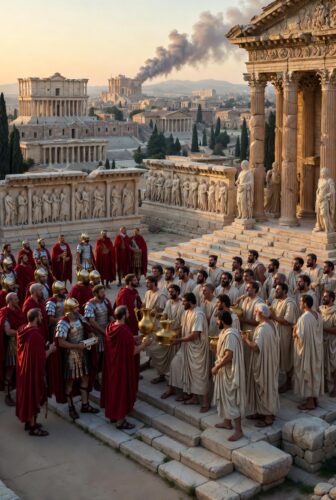 **Days 1–4: Plant Your Poison Garden (Cultivate Eccentrically)**
Identify three "poisonous" elements in your life (a bad habit, skill gap, or unused talent) and three beneficial ones. Spend 20 minutes daily "gardening": research/experiment with them weirdly (e.g., test a productivity poison like doom-scrolling by timing its effects, then brew an antidote routine). Journal one antidote insight per day. This mirrors Attalus's botanical labs—turn chaos into data.
**Days 5–8: Sculpt Your Altar (Build Monumental but Personal)**
Create one "Great Altar" artifact: a physical or digital creation (sketch, prototype, or manifesto) celebrating your "victories" over those poisons. Make it dynamic and emotional like Pergamon's frieze—raw, not polished. Share a photo or excerpt anonymously online to test diffusion. No perfection; just Hellenistic drama in tangible form.
**Days 9–11: Draft the Will (Plan the Bequest)**
Write a one-page "will" for your kingdom: list your core assets (skills, projects, networks) and exactly how/who they transfer to (specific people, communities, or public domain). Include contingencies like Aristonicus-style "revolts" (what if resistance arises?). Make it legally loose but emotionally binding—sign it dramatically.
**Days 12–14: Execute the Handover (Release Like Attalus)**
Physically or digitally transfer one asset: mentor someone with your knowledge, publish a guide, or delegate a project. Celebrate with a small ritual (plant a real herb or toast with "Attalid antidote" herbal tea). Track one unexpected ripple in the following month.
Repeat quarterly. This protocol is quick (under 30 minutes most days), unique (tied to real ancient toxicology and diplomacy, not buzzwords), and motivational because it gamifies legacy as an adventure—eccentric kings built empires this way, so why can't you? Attalus's April 18 bequest didn't just end a kingdom; it seeded a new world order. Yours can seed your personal one. Start planting today—the Romans (and your future self) will thank you.
**Days 1–4: Plant Your Poison Garden (Cultivate Eccentrically)**
Identify three "poisonous" elements in your life (a bad habit, skill gap, or unused talent) and three beneficial ones. Spend 20 minutes daily "gardening": research/experiment with them weirdly (e.g., test a productivity poison like doom-scrolling by timing its effects, then brew an antidote routine). Journal one antidote insight per day. This mirrors Attalus's botanical labs—turn chaos into data.
**Days 5–8: Sculpt Your Altar (Build Monumental but Personal)**
Create one "Great Altar" artifact: a physical or digital creation (sketch, prototype, or manifesto) celebrating your "victories" over those poisons. Make it dynamic and emotional like Pergamon's frieze—raw, not polished. Share a photo or excerpt anonymously online to test diffusion. No perfection; just Hellenistic drama in tangible form.
**Days 9–11: Draft the Will (Plan the Bequest)**
Write a one-page "will" for your kingdom: list your core assets (skills, projects, networks) and exactly how/who they transfer to (specific people, communities, or public domain). Include contingencies like Aristonicus-style "revolts" (what if resistance arises?). Make it legally loose but emotionally binding—sign it dramatically.
**Days 12–14: Execute the Handover (Release Like Attalus)**
Physically or digitally transfer one asset: mentor someone with your knowledge, publish a guide, or delegate a project. Celebrate with a small ritual (plant a real herb or toast with "Attalid antidote" herbal tea). Track one unexpected ripple in the following month.
Repeat quarterly. This protocol is quick (under 30 minutes most days), unique (tied to real ancient toxicology and diplomacy, not buzzwords), and motivational because it gamifies legacy as an adventure—eccentric kings built empires this way, so why can't you? Attalus's April 18 bequest didn't just end a kingdom; it seeded a new world order. Yours can seed your personal one. Start planting today—the Romans (and your future self) will thank you.