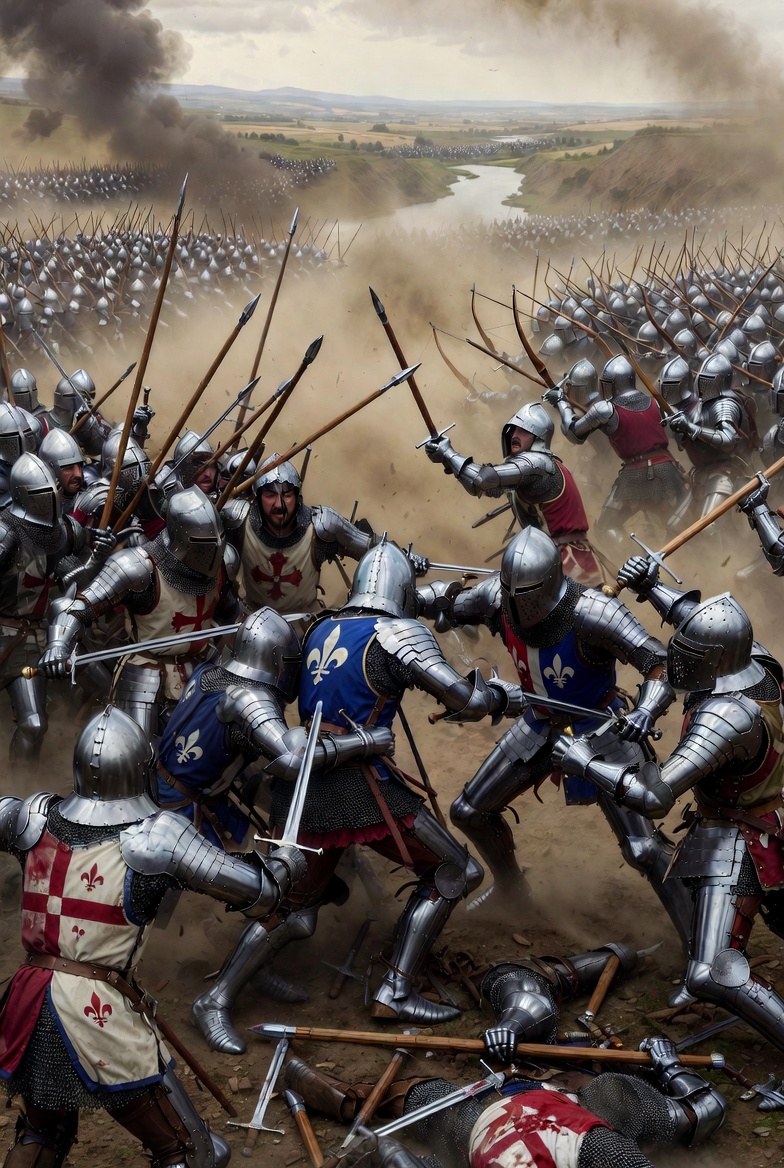
Picture this: April 3, 1367. Dawn cracks over the dusty hills of La Rioja in northern Castile like a reluctant eyelid. A river called the Najerilla snakes lazily behind an army that thinks it’s safe. On the far bank, King Henry of Trastámara—bastard son, battle-hardened survivor, and self-proclaimed rightful ruler—has his men facing east, waiting for an enemy that should be miles away. His vanguard, led by the legendary Breton knight Bertrand du Guesclin, is cocky. Light Castilian cavalry (the jinetes, fast as gossip and armored like teenagers at prom) prance around. Then, out of nowhere, over the crest to the northeast, thunders the Black Prince of England—Edward of Woodstock himself—leading a mercenary horde that marched all night in secret. Arrows blot out the sky thicker than winter rain. Horses scream. Men drown in their own river while trying to flee across a single narrow bridge. By mid-morning, Henry’s army is shattered, du Guesclin is captured, and Peter the Cruel is back on the throne he never deserved. Victory, right? Wrong. This wasn’t just another medieval scrap. It was a masterclass in how one spectacular win can bankrupt your body, empty your treasury, alienate your allies, and set the stage for an even bloodier comeback by the guy you thought you’d crushed. And on today’s date—April 3, more than 650 years later—that single, chaotic day still whispers a truth most self-help gurus have never heard: real power isn’t in the charge. It’s in what you do after the cheering stops.
Welcome to the story of the Battle of Nájera (or Navarrete, depending on which chronicler you trust). Ninety percent of what follows is raw, unfiltered 14th-century history—sourced from the likes of Pedro López de Ayala (a Castilian eyewitness who leaned pro-Henry but kept the receipts), Jean Froissart (the gossip columnist of chivalry), and the Chandos Herald (who basically fan-boyed the Black Prince). We’ll meet psychopath kings, bankrupt superheroes, and mercenaries who treated war like a gig economy with better dental plans. Only after we’ve waded through the blood and the bills will we flip the script to your life. Because this isn’t some dusty textbook tale. It’s a blueprint for decisive action that doesn’t leave you coughing up blood in Valladolid.
Let’s rewind.
The Castilian Civil War (1351–1369) was never just about two half-brothers fighting over daddy’s crown. It was the Hundred Years’ War’s messy Spanish side hustle. England and France had been slugging it out since 1337, but the 1360 Treaty of Brétigny gave everyone a breather—except the thousands of battle-hardened mercenaries who suddenly found themselves unemployed. These “Great Companies” were the original disruptors: bands of English, Gascon, Breton, and German veterans who looted their way across France when peace broke out. Think modern private military contractors, except they wore plate armor and answered to whoever paid the biggest sack of florins.
Wrong. This wasn’t just another medieval scrap. It was a masterclass in how one spectacular win can bankrupt your body, empty your treasury, alienate your allies, and set the stage for an even bloodier comeback by the guy you thought you’d crushed. And on today’s date—April 3, more than 650 years later—that single, chaotic day still whispers a truth most self-help gurus have never heard: real power isn’t in the charge. It’s in what you do after the cheering stops.
Welcome to the story of the Battle of Nájera (or Navarrete, depending on which chronicler you trust). Ninety percent of what follows is raw, unfiltered 14th-century history—sourced from the likes of Pedro López de Ayala (a Castilian eyewitness who leaned pro-Henry but kept the receipts), Jean Froissart (the gossip columnist of chivalry), and the Chandos Herald (who basically fan-boyed the Black Prince). We’ll meet psychopath kings, bankrupt superheroes, and mercenaries who treated war like a gig economy with better dental plans. Only after we’ve waded through the blood and the bills will we flip the script to your life. Because this isn’t some dusty textbook tale. It’s a blueprint for decisive action that doesn’t leave you coughing up blood in Valladolid.
Let’s rewind.
The Castilian Civil War (1351–1369) was never just about two half-brothers fighting over daddy’s crown. It was the Hundred Years’ War’s messy Spanish side hustle. England and France had been slugging it out since 1337, but the 1360 Treaty of Brétigny gave everyone a breather—except the thousands of battle-hardened mercenaries who suddenly found themselves unemployed. These “Great Companies” were the original disruptors: bands of English, Gascon, Breton, and German veterans who looted their way across France when peace broke out. Think modern private military contractors, except they wore plate armor and answered to whoever paid the biggest sack of florins.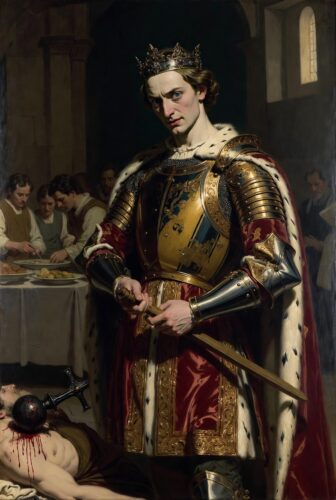 France, under the cagey Charles V, saw an opportunity. Why let these thugs ravage your countryside when you could ship them south to help Henry of Trastámara topple his half-brother Peter I of Castile? Castile had the biggest navy in the Atlantic. A Franco-Castilian alliance could choke English supply lines and turn the war back in France’s favor. Pope Urban V played along, dressing the whole thing up as a “crusade” against Granada’s Moors. Henry, a battle-scarred bastard with experience commanding free companies in France, was the perfect proxy. He rolled into Castile in 1366 with du Guesclin, Aragonese troops, and a wave of desertions from Peter’s side. Cities opened their gates. Peter fled to Portugal, then Galicia, leaving a trail of murdered bishops and archbishops in his wake (more on his charming personality shortly).
Peter wasn’t going quietly. Tall, muscular, pale, with blue eyes and a slight lisp, he fancied himself a cultured Renaissance man before the Renaissance was cool—patron of poets, lover of music, and absolute tyrant when crossed. Chroniclers called him “the Cruel” for good reason. He had his own half-brother Fadrique bludgeoned to death with maces, then calmly ate lunch while the corpse cooled on the floor. He abandoned his bride Blanche of Bourbon two days after the wedding for his mistress María de Padilla, later claiming she was his true wife while the Pope excommunicated him. He executed nobles, clergy, and anyone who looked at him funny. Yet he also protected Jews (executing five rioters who attacked them), centralized royal power like a medieval CEO, and kept a Jewish treasurer named Samuel ha-Levi. History’s villains are rarely one-note.
By late 1366, Peter was in exile in Bayonne, begging his English allies for help. Enter Edward the Black Prince—son of Edward III, Duke of Aquitaine, and the rock-star general who had crushed the French at Crécy and Poitiers. At 36, he was still the epitome of chivalry: tall, handsome, ruthless in battle, generous to friends. He saw Peter’s cause as righteous (a legitimate king versus a bastard usurper—Edward was big on royal bloodlines) and financially juicy. Aquitaine’s wine trade was slumping after years of war; a successful campaign promised plunder, new territories, and a grateful Castilian ally. Peter promised repayment, the lordship of Biscay, and even handed over his daughters Constance and Isabella as “hostages” who later married into the English royal family.
The deal was sealed in Bayonne with Charles II of Navarre (the slippery “Bad” king who demanded cash for passage through the Pyrenees). The Black Prince assembled a multinational mercenary dream team: 6,000 battle-hardened professionals from Gascony, Poitou, England, Brittany, and beyond, plus 2,000 Aquitaine troops, 1,000 English archers, 800 Castilian loyalists, and a sprinkling of Navarrese and Majorcan contingents. Total force: around 10,000. Henry’s army was smaller—about 4,500, mostly Castilian levies, 1,000 French free-company elites under du Guesclin, and Aragonese support. Henry’s strategy? Guerrilla harassment. Use the rugged terrain, light jinetes cavalry for hit-and-run raids, and starve the invaders out.
The campaign kicked off in February 1367. The Black Prince’s army crossed into Navarre. Skirmishes flared. Hugh Calveley’s English mercenaries (who had briefly fought for Henry before switching sides for better pay—classic gig-economy loyalty) sacked Navarrese towns to remind Charles II whose side he was on. In March, at the Battle of Aríñez (also called Inglesmendi), Henry’s vanguard under his brother Don Tello, French captains Arnoul d’Audrehem and Pierre le Bègue de Villaines, and Aragonese nobles ambushed an English detachment led by Sir Thomas Felton. The English longbowmen held the line at first—those six-foot yew bows could punch through armor at 300 yards—but the French and Aragonese dismounted infantry closed in. Felton’s men were slaughtered or captured. Sir William Felton died heroically; Thomas Felton, Richard Taunton, and other nobles were taken prisoner. It was a nasty little preview of how the Spanish terrain favored lighter, faster troops.
France, under the cagey Charles V, saw an opportunity. Why let these thugs ravage your countryside when you could ship them south to help Henry of Trastámara topple his half-brother Peter I of Castile? Castile had the biggest navy in the Atlantic. A Franco-Castilian alliance could choke English supply lines and turn the war back in France’s favor. Pope Urban V played along, dressing the whole thing up as a “crusade” against Granada’s Moors. Henry, a battle-scarred bastard with experience commanding free companies in France, was the perfect proxy. He rolled into Castile in 1366 with du Guesclin, Aragonese troops, and a wave of desertions from Peter’s side. Cities opened their gates. Peter fled to Portugal, then Galicia, leaving a trail of murdered bishops and archbishops in his wake (more on his charming personality shortly).
Peter wasn’t going quietly. Tall, muscular, pale, with blue eyes and a slight lisp, he fancied himself a cultured Renaissance man before the Renaissance was cool—patron of poets, lover of music, and absolute tyrant when crossed. Chroniclers called him “the Cruel” for good reason. He had his own half-brother Fadrique bludgeoned to death with maces, then calmly ate lunch while the corpse cooled on the floor. He abandoned his bride Blanche of Bourbon two days after the wedding for his mistress María de Padilla, later claiming she was his true wife while the Pope excommunicated him. He executed nobles, clergy, and anyone who looked at him funny. Yet he also protected Jews (executing five rioters who attacked them), centralized royal power like a medieval CEO, and kept a Jewish treasurer named Samuel ha-Levi. History’s villains are rarely one-note.
By late 1366, Peter was in exile in Bayonne, begging his English allies for help. Enter Edward the Black Prince—son of Edward III, Duke of Aquitaine, and the rock-star general who had crushed the French at Crécy and Poitiers. At 36, he was still the epitome of chivalry: tall, handsome, ruthless in battle, generous to friends. He saw Peter’s cause as righteous (a legitimate king versus a bastard usurper—Edward was big on royal bloodlines) and financially juicy. Aquitaine’s wine trade was slumping after years of war; a successful campaign promised plunder, new territories, and a grateful Castilian ally. Peter promised repayment, the lordship of Biscay, and even handed over his daughters Constance and Isabella as “hostages” who later married into the English royal family.
The deal was sealed in Bayonne with Charles II of Navarre (the slippery “Bad” king who demanded cash for passage through the Pyrenees). The Black Prince assembled a multinational mercenary dream team: 6,000 battle-hardened professionals from Gascony, Poitou, England, Brittany, and beyond, plus 2,000 Aquitaine troops, 1,000 English archers, 800 Castilian loyalists, and a sprinkling of Navarrese and Majorcan contingents. Total force: around 10,000. Henry’s army was smaller—about 4,500, mostly Castilian levies, 1,000 French free-company elites under du Guesclin, and Aragonese support. Henry’s strategy? Guerrilla harassment. Use the rugged terrain, light jinetes cavalry for hit-and-run raids, and starve the invaders out.
The campaign kicked off in February 1367. The Black Prince’s army crossed into Navarre. Skirmishes flared. Hugh Calveley’s English mercenaries (who had briefly fought for Henry before switching sides for better pay—classic gig-economy loyalty) sacked Navarrese towns to remind Charles II whose side he was on. In March, at the Battle of Aríñez (also called Inglesmendi), Henry’s vanguard under his brother Don Tello, French captains Arnoul d’Audrehem and Pierre le Bègue de Villaines, and Aragonese nobles ambushed an English detachment led by Sir Thomas Felton. The English longbowmen held the line at first—those six-foot yew bows could punch through armor at 300 yards—but the French and Aragonese dismounted infantry closed in. Felton’s men were slaughtered or captured. Sir William Felton died heroically; Thomas Felton, Richard Taunton, and other nobles were taken prisoner. It was a nasty little preview of how the Spanish terrain favored lighter, faster troops. Undeterred, the Black Prince pressed on toward Burgos. Henry blocked the direct route, so the invaders detoured, crossing the Ebro River at Logroño and camping near Nájera. By April 2, Henry had positioned his army on the far bank of the Najerilla, with the river at his back and the town of Nájera behind him. He thought the English were still east of him. Big mistake.
That night, the Black Prince pulled a masterstroke. Under cover of darkness, his army marched in a wide arc to approach from the northeast—exactly the direction Henry wasn’t watching. Dawn on April 3 broke with the Anglo-Gascon host pouring over the hills like an avalanche in plate armor. The Chandos Herald (who was there) describes the surprise as total. Henry’s men were caught facing the wrong way. Panic rippled.
Du Guesclin, ever the pro, tried to salvage the situation. He led his elite French and Castilian vanguard forward in a desperate charge to buy time. Close-quarters carnage erupted: spears snapped, swords hacked, daggers flashed in the dirt. Knights fought with broken lances in both hands. The Black Prince’s vanguard—commanded by his brother John of Gaunt (Duke of Lancaster) and the veteran Sir John Chandos—slammed into them. Gascon mercenaries hit the flanks. English longbows unleashed hell. Arrows fell “thicker than rain,” shredding unarmored jinetes. Don Tello’s light cavalry charged bravely but melted under the barrage; 2,000 horsemen broke and fled in a cloud of dust.
Henry himself charged three times on horseback, armored in a lorica, rallying his men with shouts: “My lords, I am your king… preserve your oaths… I will not fly one step as long as I see you combating by my side!” His horses were shot out from under him. Forced to fight on foot, he performed prodigies of valor—but the main body of his army saw the writing on the wall. They stampeded toward Nájera’s single narrow bridge over the Najerilla. The river became a slaughterhouse. Men drowned by the hundreds. Those who reached the bridge were hacked down or trampled. Aragonese cavalry under James IV of Majorca pursued the rout. By the time the sun was high, Henry had fled (disguised, some say), du Guesclin and other French captains were prisoners, and the field was carpeted with dead and dying. Casualties: Henry’s side lost thousands (chroniclers exaggerate, but the river and bridge did the real killing); the Black Prince’s losses were light—maybe a few hundred.
Undeterred, the Black Prince pressed on toward Burgos. Henry blocked the direct route, so the invaders detoured, crossing the Ebro River at Logroño and camping near Nájera. By April 2, Henry had positioned his army on the far bank of the Najerilla, with the river at his back and the town of Nájera behind him. He thought the English were still east of him. Big mistake.
That night, the Black Prince pulled a masterstroke. Under cover of darkness, his army marched in a wide arc to approach from the northeast—exactly the direction Henry wasn’t watching. Dawn on April 3 broke with the Anglo-Gascon host pouring over the hills like an avalanche in plate armor. The Chandos Herald (who was there) describes the surprise as total. Henry’s men were caught facing the wrong way. Panic rippled.
Du Guesclin, ever the pro, tried to salvage the situation. He led his elite French and Castilian vanguard forward in a desperate charge to buy time. Close-quarters carnage erupted: spears snapped, swords hacked, daggers flashed in the dirt. Knights fought with broken lances in both hands. The Black Prince’s vanguard—commanded by his brother John of Gaunt (Duke of Lancaster) and the veteran Sir John Chandos—slammed into them. Gascon mercenaries hit the flanks. English longbows unleashed hell. Arrows fell “thicker than rain,” shredding unarmored jinetes. Don Tello’s light cavalry charged bravely but melted under the barrage; 2,000 horsemen broke and fled in a cloud of dust.
Henry himself charged three times on horseback, armored in a lorica, rallying his men with shouts: “My lords, I am your king… preserve your oaths… I will not fly one step as long as I see you combating by my side!” His horses were shot out from under him. Forced to fight on foot, he performed prodigies of valor—but the main body of his army saw the writing on the wall. They stampeded toward Nájera’s single narrow bridge over the Najerilla. The river became a slaughterhouse. Men drowned by the hundreds. Those who reached the bridge were hacked down or trampled. Aragonese cavalry under James IV of Majorca pursued the rout. By the time the sun was high, Henry had fled (disguised, some say), du Guesclin and other French captains were prisoners, and the field was carpeted with dead and dying. Casualties: Henry’s side lost thousands (chroniclers exaggerate, but the river and bridge did the real killing); the Black Prince’s losses were light—maybe a few hundred.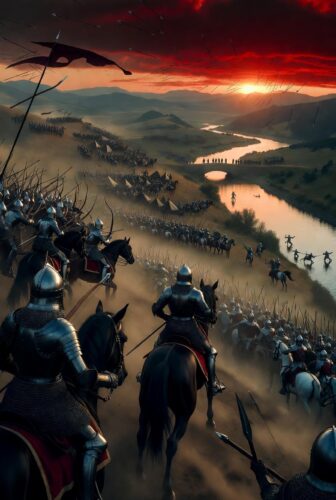 Peter the Cruel was restored. The Black Prince staged a triumphant entry into Burgos. Chivalry was served. But the bill was about to arrive.
Here’s where the “victory” turns pyrrhic—and hilarious in that dark medieval way. Peter, true to form, immediately wanted to execute the captured French knights. The Black Prince, ever the gentleman, stopped him cold: these men were honorable foes. Du Guesclin was ransomed later and went on to become Constable of France, helping Charles V turn the Hundred Years’ War around. Peter, meanwhile, proved a terrible host. He dragged his feet on repayment. The Black Prince’s army sat in the sweltering heat of Valladolid waiting for the gold that never came. Provisions ran short. Disease—dysentery, probably malaria—ripped through the camp. One in five soldiers died. The Black Prince himself fell desperately ill, never fully recovering. He returned to Aquitaine broke, his health wrecked, his mercenaries unpaid and grumbling. Aquitaine’s nobles grew restless. The campaign that was supposed to refill the treasury had emptied it.
Peter’s second reign lasted barely two years. In 1369, Henry returned with French backing. At the Battle of Montiel, Peter was trapped in a fortress. He tried to bribe du Guesclin—200,000 gold coins and towns—to switch sides. Du Guesclin played both ends, tipped off Henry, and lured Peter into a tent under truce. Henry burst in, unrecognized at first. “I am he, I am he!” Peter snarled. They grappled; Henry stabbed him repeatedly. The body lay unburied for days, abused by the victors. Henry II took the throne, founded the Trastámara dynasty that would rule Spain for centuries, and pivoted Castile firmly toward France. England lost its naval ally. John of Gaunt later claimed the Castilian throne through marriage to Peter’s daughter Constance, launching another futile war. The Black Prince limped home, died in 1376 at 45, and never became king. His son Richard II inherited a mess.
The ripples spread. The battle showcased English longbow supremacy one last time before French tactics evolved. It drained England’s resources at a critical moment. It proved mercenaries were loyal only to the highest bidder—du Guesclin switched sides like a modern influencer chasing sponsorships. And it cemented the Black Prince’s legend while quietly destroying his future. Froissart called it a glorious triumph; Ayala saw the writing on the wall. Peter’s cruelty became legend—Chaucer mourned him in *The Monk’s Tale* as a noble fallen to betrayal. But the real lesson is colder: spectacular tactical wins mean nothing without logistics, payment plans, and follow-through.
Fast-forward to 2026. You’re not commanding longbowmen across the Pyrenees, but you’re fighting your own battles every day—career moves, side hustles, family dramas, personal reinventions. The outcome of Nájera screams that one flashy “dawn raid” on a goal isn’t enough. You need the full campaign playbook: ruthless scouting, ironclad alliances, precision strikes, and iron-willed post-victory accounting. Ignore it and you’ll end up like the Black Prince—victorious on paper, bankrupt and bedridden in reality.
Peter the Cruel was restored. The Black Prince staged a triumphant entry into Burgos. Chivalry was served. But the bill was about to arrive.
Here’s where the “victory” turns pyrrhic—and hilarious in that dark medieval way. Peter, true to form, immediately wanted to execute the captured French knights. The Black Prince, ever the gentleman, stopped him cold: these men were honorable foes. Du Guesclin was ransomed later and went on to become Constable of France, helping Charles V turn the Hundred Years’ War around. Peter, meanwhile, proved a terrible host. He dragged his feet on repayment. The Black Prince’s army sat in the sweltering heat of Valladolid waiting for the gold that never came. Provisions ran short. Disease—dysentery, probably malaria—ripped through the camp. One in five soldiers died. The Black Prince himself fell desperately ill, never fully recovering. He returned to Aquitaine broke, his health wrecked, his mercenaries unpaid and grumbling. Aquitaine’s nobles grew restless. The campaign that was supposed to refill the treasury had emptied it.
Peter’s second reign lasted barely two years. In 1369, Henry returned with French backing. At the Battle of Montiel, Peter was trapped in a fortress. He tried to bribe du Guesclin—200,000 gold coins and towns—to switch sides. Du Guesclin played both ends, tipped off Henry, and lured Peter into a tent under truce. Henry burst in, unrecognized at first. “I am he, I am he!” Peter snarled. They grappled; Henry stabbed him repeatedly. The body lay unburied for days, abused by the victors. Henry II took the throne, founded the Trastámara dynasty that would rule Spain for centuries, and pivoted Castile firmly toward France. England lost its naval ally. John of Gaunt later claimed the Castilian throne through marriage to Peter’s daughter Constance, launching another futile war. The Black Prince limped home, died in 1376 at 45, and never became king. His son Richard II inherited a mess.
The ripples spread. The battle showcased English longbow supremacy one last time before French tactics evolved. It drained England’s resources at a critical moment. It proved mercenaries were loyal only to the highest bidder—du Guesclin switched sides like a modern influencer chasing sponsorships. And it cemented the Black Prince’s legend while quietly destroying his future. Froissart called it a glorious triumph; Ayala saw the writing on the wall. Peter’s cruelty became legend—Chaucer mourned him in *The Monk’s Tale* as a noble fallen to betrayal. But the real lesson is colder: spectacular tactical wins mean nothing without logistics, payment plans, and follow-through.
Fast-forward to 2026. You’re not commanding longbowmen across the Pyrenees, but you’re fighting your own battles every day—career moves, side hustles, family dramas, personal reinventions. The outcome of Nájera screams that one flashy “dawn raid” on a goal isn’t enough. You need the full campaign playbook: ruthless scouting, ironclad alliances, precision strikes, and iron-willed post-victory accounting. Ignore it and you’ll end up like the Black Prince—victorious on paper, bankrupt and bedridden in reality.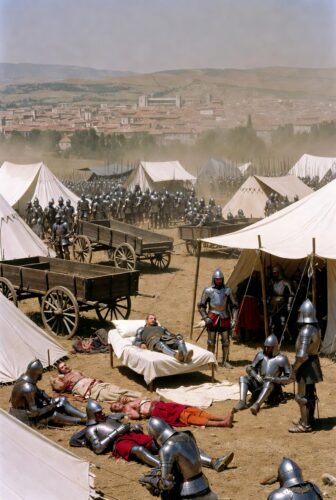 Here’s exactly how that April 3 bloodbath hands you an unfair advantage today:
- **Master the art of the vetted alliance**: The Black Prince’s mercenaries switched sides for better pay; Henry’s French captains stayed loyal longer because du Guesclin knew how to bind them with honor and gold. In your life, stop collecting fair-weather “friends” or co-workers who ghost when the project gets hard. Vet your inner circle like a 14th-century contract: demand reciprocal value upfront, written commitments if possible, and exit clauses. Result? You multiply force without betrayal tax.
- **Strike at dawn—then guard the bridge**: The night march surprise won the day, but the river rout happened because Henry left his back unprotected. Translate: when you launch a bold move (new business launch, fitness overhaul, tough conversation), build the escape-proof systems *before* the adrenaline fades. Automate follow-ups, create accountability loops, lock in the gains so momentum doesn’t drown in the Najerilla of daily distractions.
- **Longbows over jinetes**: English archers delivered consistent, high-impact death from range; Castilian light cavalry looked flashy but crumbled under sustained fire. Stop chasing shiny short-term hacks (fad diets, hustle culture dopamine hits). Invest in high-leverage, repeatable skills—daily writing blocks, compound financial habits, relationship maintenance rituals—that rain arrows on your obstacles month after month.
- **Treat victory like a supply line, not a parade**: The Black Prince partied in Burgos while his army sickened in Valladolid waiting for Peter’s IOUs. After every win—promotion, launch, milestone—run the “Valladolid audit”: pay your people (or yourself) immediately, restock your health reserves, and renegotiate terms before the next push. Health is your heaviest supply train; neglect it and dysentery (burnout) wins.
- **Embrace chivalric arbitration for tough calls**: The Black Prince judged captured knights with a panel of 12 peers. When life throws moral gray zones (firing someone, ending a toxic deal, choosing between opportunities), convene your own “panel of 12”—trusted mentors, past journal entries, core values written down. It keeps cruelty in check and prevents Peter-style impulsivity.
Now the part no other self-help article on the internet has ever served up, because they’ve never dug into Nájera’s dusty chronicles: **The Nájera Tactical Life Campaign**—a 14-day protocol (one day for each century since 1367) that turns medieval campaign logic into a repeatable, zero-fluff system for conquering any personal battlefield. It’s not vision boards. It’s not “manifestation.” It’s a war plan: scout, recruit, raid, secure, audit. Do it once and you’ll have a lifelong framework that feels like commanding your own free company—ruthless, efficient, and weirdly fun.
**Week 1: The Night March (Preparation & Surprise)**
Day 1–3: Terrain Recon. Map your “Najerilla battlefield”—one specific goal (e.g., “double my income stream” or “rebuild my health after burnout”). List every obstacle (terrain), ally (potential supporters), and enemy (bad habits, toxic people). Use the Black Prince’s trick: write it at night when distractions sleep. Day 4–7: Recruit Your Free Companies. Assemble 3–5 “mercenaries” (accountability partners with skin in the game—pay them in favors or equity if needed). Draft ironclad terms: what they give, what they get, deadlines. No vague “let’s catch up” texts.
**Week 2: The Dawn Raid (Execution & Fortification)**
Day 8–10: Execute the Flank Attack. Pick one high-impact “longbow” action per day—something precise and leveraged, not brute force. Do it before noon (the medieval dawn raid). Track it like a chronicler: journal the results brutally. Day 11–13: Guard the Bridge. Immediately build retention systems—automated reminders, financial buffers, health protocols (sleep, movement, nutrition logged like supply tallies). Day 14: The Valladolid Audit. Review everything. Pay what’s owed (celebrate properly, compensate helpers). If you’re sick or broke, diagnose it now—schedule the doctor, renegotiate the bad deal, rest the army. Repeat the 14-day cycle quarterly for new goals.
This isn’t gentle advice. It’s a campaign. It’s quirky (you’ll literally say “time for the dawn raid” before your morning deep work). It’s unique because it steals from 1367’s hard lessons instead of recycled TED Talks. Do it and you’ll stop celebrating hollow wins. You’ll build empires that last longer than Peter’s second reign.
The Black Prince never wore the English crown, but his Nájera raid echoes every time someone chooses precision over panic, sustainability over spectacle. On this April 3, raise a glass (or a longbow) to the fallen at the Najerilla. Then go convene your own mercenary horde and raid your future like it owes you money.
Because in the end, history doesn’t repeat— but the smart ones steal its tactics.
Here’s exactly how that April 3 bloodbath hands you an unfair advantage today:
- **Master the art of the vetted alliance**: The Black Prince’s mercenaries switched sides for better pay; Henry’s French captains stayed loyal longer because du Guesclin knew how to bind them with honor and gold. In your life, stop collecting fair-weather “friends” or co-workers who ghost when the project gets hard. Vet your inner circle like a 14th-century contract: demand reciprocal value upfront, written commitments if possible, and exit clauses. Result? You multiply force without betrayal tax.
- **Strike at dawn—then guard the bridge**: The night march surprise won the day, but the river rout happened because Henry left his back unprotected. Translate: when you launch a bold move (new business launch, fitness overhaul, tough conversation), build the escape-proof systems *before* the adrenaline fades. Automate follow-ups, create accountability loops, lock in the gains so momentum doesn’t drown in the Najerilla of daily distractions.
- **Longbows over jinetes**: English archers delivered consistent, high-impact death from range; Castilian light cavalry looked flashy but crumbled under sustained fire. Stop chasing shiny short-term hacks (fad diets, hustle culture dopamine hits). Invest in high-leverage, repeatable skills—daily writing blocks, compound financial habits, relationship maintenance rituals—that rain arrows on your obstacles month after month.
- **Treat victory like a supply line, not a parade**: The Black Prince partied in Burgos while his army sickened in Valladolid waiting for Peter’s IOUs. After every win—promotion, launch, milestone—run the “Valladolid audit”: pay your people (or yourself) immediately, restock your health reserves, and renegotiate terms before the next push. Health is your heaviest supply train; neglect it and dysentery (burnout) wins.
- **Embrace chivalric arbitration for tough calls**: The Black Prince judged captured knights with a panel of 12 peers. When life throws moral gray zones (firing someone, ending a toxic deal, choosing between opportunities), convene your own “panel of 12”—trusted mentors, past journal entries, core values written down. It keeps cruelty in check and prevents Peter-style impulsivity.
Now the part no other self-help article on the internet has ever served up, because they’ve never dug into Nájera’s dusty chronicles: **The Nájera Tactical Life Campaign**—a 14-day protocol (one day for each century since 1367) that turns medieval campaign logic into a repeatable, zero-fluff system for conquering any personal battlefield. It’s not vision boards. It’s not “manifestation.” It’s a war plan: scout, recruit, raid, secure, audit. Do it once and you’ll have a lifelong framework that feels like commanding your own free company—ruthless, efficient, and weirdly fun.
**Week 1: The Night March (Preparation & Surprise)**
Day 1–3: Terrain Recon. Map your “Najerilla battlefield”—one specific goal (e.g., “double my income stream” or “rebuild my health after burnout”). List every obstacle (terrain), ally (potential supporters), and enemy (bad habits, toxic people). Use the Black Prince’s trick: write it at night when distractions sleep. Day 4–7: Recruit Your Free Companies. Assemble 3–5 “mercenaries” (accountability partners with skin in the game—pay them in favors or equity if needed). Draft ironclad terms: what they give, what they get, deadlines. No vague “let’s catch up” texts.
**Week 2: The Dawn Raid (Execution & Fortification)**
Day 8–10: Execute the Flank Attack. Pick one high-impact “longbow” action per day—something precise and leveraged, not brute force. Do it before noon (the medieval dawn raid). Track it like a chronicler: journal the results brutally. Day 11–13: Guard the Bridge. Immediately build retention systems—automated reminders, financial buffers, health protocols (sleep, movement, nutrition logged like supply tallies). Day 14: The Valladolid Audit. Review everything. Pay what’s owed (celebrate properly, compensate helpers). If you’re sick or broke, diagnose it now—schedule the doctor, renegotiate the bad deal, rest the army. Repeat the 14-day cycle quarterly for new goals.
This isn’t gentle advice. It’s a campaign. It’s quirky (you’ll literally say “time for the dawn raid” before your morning deep work). It’s unique because it steals from 1367’s hard lessons instead of recycled TED Talks. Do it and you’ll stop celebrating hollow wins. You’ll build empires that last longer than Peter’s second reign.
The Black Prince never wore the English crown, but his Nájera raid echoes every time someone chooses precision over panic, sustainability over spectacle. On this April 3, raise a glass (or a longbow) to the fallen at the Najerilla. Then go convene your own mercenary horde and raid your future like it owes you money.
Because in the end, history doesn’t repeat— but the smart ones steal its tactics.