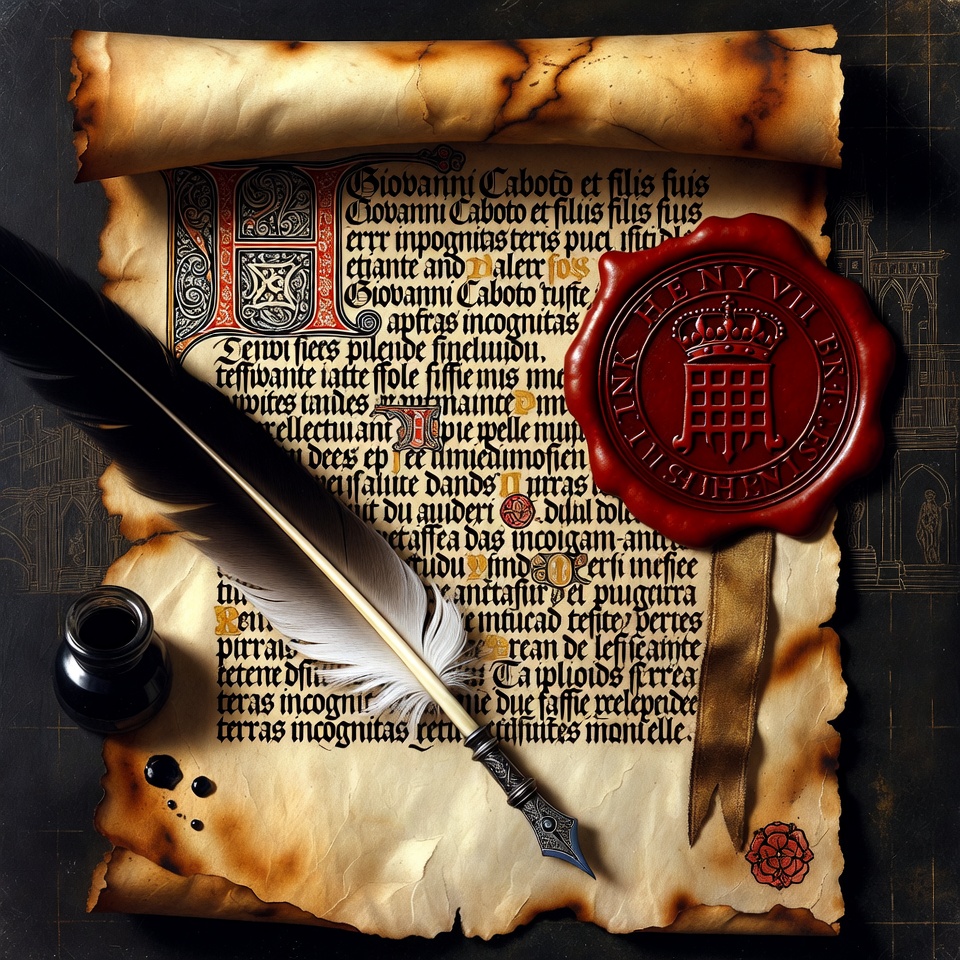
Picture this: It's late winter in 1496 London. The Tudor king, Henry VII—fresh off winning the throne in the messy Wars of the Roses—isn't exactly swimming in cash. His kingdom is still licking wounds from civil war, the treasury is lean, and Spain and Portugal are out there gobbling up the world like it's an all-you-can-eat buffet after Columbus's 1492 splash. Henry isn't about to fund a full armada himself (he's famously stingy—think "the king who counted every penny like it owed him rent"). Instead, on March 5, he does something brilliantly low-risk, high-reward: he signs letters patent.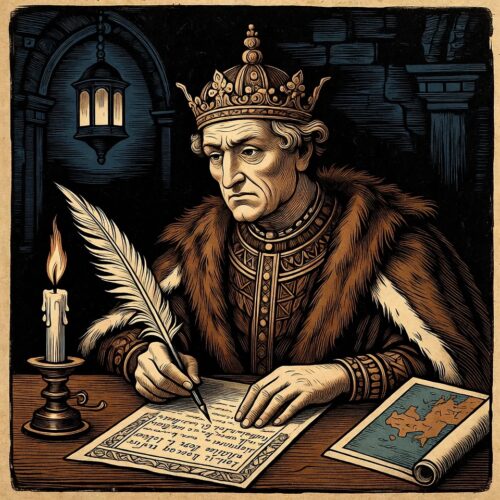 These weren't dramatic proclamations with trumpets and fanfare. They were dry legal documents granting Venetian-born navigator John Cabot and his three sons the right to sail under the English flag, discover "unknown" lands, claim them, and monopolize trade for five years—with the crown taking a cut of profits, of course. No ships provided, no funding promised beyond the royal seal. Just permission, protection from piracy claims, and a promise that any new lands wouldn't be contested by other Europeans under English law.
Why is this a big deal? Because it flipped the script on England's global posture. Before this, England had mostly watched from the sidelines while Iberians dominated. Cabot, inspired by Columbus but convinced a northern route to Asia would be shorter (spoiler: it wasn't, but it hit America instead), took the patent and ran with it. In 1497, on a shoestring budget (he sailed with just one small ship, the Matthew, crewed by about 18 men, partly funded by Bristol merchants), he made landfall in North America. He returned with tales of fish-rich waters and vast coasts, sparking English interest in the New World.
These weren't dramatic proclamations with trumpets and fanfare. They were dry legal documents granting Venetian-born navigator John Cabot and his three sons the right to sail under the English flag, discover "unknown" lands, claim them, and monopolize trade for five years—with the crown taking a cut of profits, of course. No ships provided, no funding promised beyond the royal seal. Just permission, protection from piracy claims, and a promise that any new lands wouldn't be contested by other Europeans under English law.
Why is this a big deal? Because it flipped the script on England's global posture. Before this, England had mostly watched from the sidelines while Iberians dominated. Cabot, inspired by Columbus but convinced a northern route to Asia would be shorter (spoiler: it wasn't, but it hit America instead), took the patent and ran with it. In 1497, on a shoestring budget (he sailed with just one small ship, the Matthew, crewed by about 18 men, partly funded by Bristol merchants), he made landfall in North America. He returned with tales of fish-rich waters and vast coasts, sparking English interest in the New World.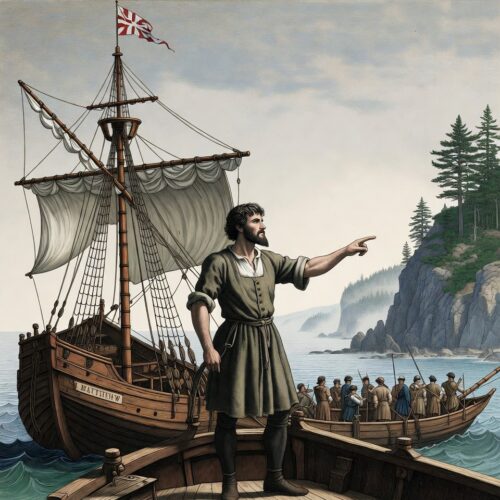 The ripple effects? Massive. Cabot's voyage (and a follow-up in 1498 that vanished) established England's legal claim to parts of North America, influencing later expeditions like those of the Virginia Company, the Pilgrims, and the eventual Thirteen Colonies. Without that March 5 patent, England might have stayed a second-tier player longer, delaying or altering the British Empire's rise, the colonization patterns, even the language and legal systems across continents. One king's signature on a bureaucratic form quietly set the stage for centuries of exploration, conflict, trade, and cultural exchange. It's the ultimate underdog origin story: no grand fleet, no heroic battle—just paperwork that changed the map.
Henry VII's move was pragmatic genius. He outsourced risk to private adventurers like Cabot, who had to fundraise and sail on their own dime. If they succeeded, England gained territory and trade without upfront cost. If they failed, the crown lost nothing but ink. This public-private partnership model became a hallmark of English (and later British) expansion—think joint-stock companies, privateers, and chartered colonies.
Cabot himself is a fascinating figure: born around 1450 in Genoa or Venice, a skilled mariner who had traded in the Mediterranean and possibly reached Iceland or the North Sea. He moved to England around 1484, settling in Bristol, a bustling port hungry for new trade routes to bypass Ottoman-controlled eastern paths. His pitch to Henry was simple: sponsor me, and I'll find you a shortcut to the riches of Cathay (China) and Cipango (Japan). Henry, wary of provoking Spain (who had papal bulls dividing the world), waited until after the 1494 Treaty of Tordesillas but still kept it quiet—hence the patent's low-key issuance.
The document's text is dry legalese gold: it authorizes Cabot "to find, discover and investigate whatsoever islands, countries, regions, provinces, of heathens and infidels... unknown to Christian peoples." He could "conquer, occupy and possess" them, plant the English flag, and enjoy trade monopolies. In return, Henry got one-fifth of profits from any gold, silver, or gems (the king always gets his cut). Cabot set sail May 1497, returned August with proof of land, and Henry rewarded him with a £10 pension—modest, but enough to keep him going.
The ripple effects? Massive. Cabot's voyage (and a follow-up in 1498 that vanished) established England's legal claim to parts of North America, influencing later expeditions like those of the Virginia Company, the Pilgrims, and the eventual Thirteen Colonies. Without that March 5 patent, England might have stayed a second-tier player longer, delaying or altering the British Empire's rise, the colonization patterns, even the language and legal systems across continents. One king's signature on a bureaucratic form quietly set the stage for centuries of exploration, conflict, trade, and cultural exchange. It's the ultimate underdog origin story: no grand fleet, no heroic battle—just paperwork that changed the map.
Henry VII's move was pragmatic genius. He outsourced risk to private adventurers like Cabot, who had to fundraise and sail on their own dime. If they succeeded, England gained territory and trade without upfront cost. If they failed, the crown lost nothing but ink. This public-private partnership model became a hallmark of English (and later British) expansion—think joint-stock companies, privateers, and chartered colonies.
Cabot himself is a fascinating figure: born around 1450 in Genoa or Venice, a skilled mariner who had traded in the Mediterranean and possibly reached Iceland or the North Sea. He moved to England around 1484, settling in Bristol, a bustling port hungry for new trade routes to bypass Ottoman-controlled eastern paths. His pitch to Henry was simple: sponsor me, and I'll find you a shortcut to the riches of Cathay (China) and Cipango (Japan). Henry, wary of provoking Spain (who had papal bulls dividing the world), waited until after the 1494 Treaty of Tordesillas but still kept it quiet—hence the patent's low-key issuance.
The document's text is dry legalese gold: it authorizes Cabot "to find, discover and investigate whatsoever islands, countries, regions, provinces, of heathens and infidels... unknown to Christian peoples." He could "conquer, occupy and possess" them, plant the English flag, and enjoy trade monopolies. In return, Henry got one-fifth of profits from any gold, silver, or gems (the king always gets his cut). Cabot set sail May 1497, returned August with proof of land, and Henry rewarded him with a £10 pension—modest, but enough to keep him going. Tragically, Cabot's 1498 voyage disappeared, likely lost at sea. But the patent lived on, inspiring others. By the 1500s, English fishermen were swarming the Grand Banks off Newfoundland, building seasonal stations. This laid groundwork for permanent settlements, the fur trade, and eventual rivalry with France that shaped North American history.
Fast-forward: that one document helped ensure English (not Spanish or French) dominance in what became the U.S. and Canada. The legal precedent of royal charters influenced colonial governance, property laws, even the American Revolution's grievances over royal overreach. It's a reminder that history's biggest shifts often start with the smallest, most unsexy actions—a signature, a contract, a green light.
Now, here's where we pivot to you, modern-day explorer of your own life. That March 5, 1496 patent wasn't about discovering continents; it was about granting permission to pursue the unknown with official backing. Henry didn't sail himself—he empowered someone else with a clear mandate, minimal interference, and shared upside. Apply that today, and you unlock a wildly different self-improvement path from the usual "hustle harder" or "manifest it" noise.
Forget generic vision boards or 30-day challenges. Channel the "Cabot Patent Principle": issue yourself a personal letters patent—formal permission to explore uncharted personal territory with built-in safeguards, low initial risk, and upside capture. Make it unique by treating it as a literal, written charter you sign, date, and review quarterly, like a royal decree for your inner empire-builder.
Tragically, Cabot's 1498 voyage disappeared, likely lost at sea. But the patent lived on, inspiring others. By the 1500s, English fishermen were swarming the Grand Banks off Newfoundland, building seasonal stations. This laid groundwork for permanent settlements, the fur trade, and eventual rivalry with France that shaped North American history.
Fast-forward: that one document helped ensure English (not Spanish or French) dominance in what became the U.S. and Canada. The legal precedent of royal charters influenced colonial governance, property laws, even the American Revolution's grievances over royal overreach. It's a reminder that history's biggest shifts often start with the smallest, most unsexy actions—a signature, a contract, a green light.
Now, here's where we pivot to you, modern-day explorer of your own life. That March 5, 1496 patent wasn't about discovering continents; it was about granting permission to pursue the unknown with official backing. Henry didn't sail himself—he empowered someone else with a clear mandate, minimal interference, and shared upside. Apply that today, and you unlock a wildly different self-improvement path from the usual "hustle harder" or "manifest it" noise.
Forget generic vision boards or 30-day challenges. Channel the "Cabot Patent Principle": issue yourself a personal letters patent—formal permission to explore uncharted personal territory with built-in safeguards, low initial risk, and upside capture. Make it unique by treating it as a literal, written charter you sign, date, and review quarterly, like a royal decree for your inner empire-builder.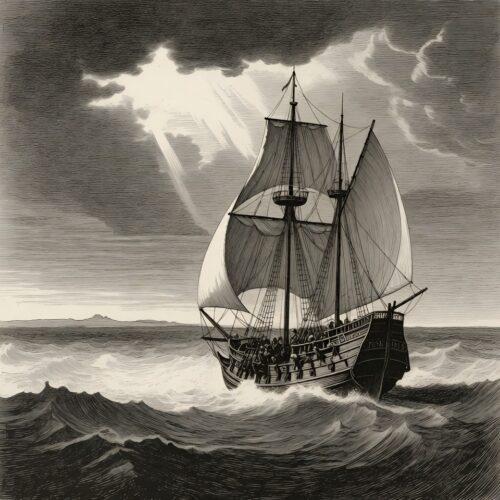 **Your 90-Day Personal Patent Plan: The Explorer's Charter (Unique Twist—No Apps, No Gurus, Just Tudor-Style Bureaucracy for Self-Mastery)**
This isn't another productivity hack. It's a deliberate, historical reenactment: you become both king (granting authority) and Cabot (the adventurer). The quirk? Write it in mock-15th-century legalese on actual paper (no digital docs—ink forces commitment). Seal it with wax or a sticker if you're feeling extra. Review it like Henry reviewed Cabot's reports—dispassionate, profit-focused.
- **Day 1–7: Draft Your Patent.** Sit down with parchment-style paper (or plain printer paper if you're not dramatic). Write: "I, [Your Full Name], Sovereign of My Own Dominion, do hereby grant unto Myself letters patent to discover, occupy, and possess whatsoever unknown provinces of skill, habit, relationship, or purpose lie beyond my current maps..." Specify one "unknown land" to explore (e.g., public speaking, a side skill like woodworking, rebuilding family ties, or a creative pursuit like novel-writing). Limit it to one—Cabot got one voyage at a time. Define success as "any new territory claimed" (even small wins count as landfall), not perfection. Include your "crown cut": 20% of any gains (time, money, joy) funneled back to self-investment (books, courses, travel).
- **Day 8: Seal and Proclaim.** Sign it. Add a wax seal or thumbprint. Read it aloud alone—like a coronation. This verbal act mimics Henry's public issuance, tricking your brain into ownership. Store it visibly (framed or wallet) as your talisman against doubt.
- **Days 9–30: The Outfitting Phase (Low-Risk Prep).** Henry gave no ships—Cabot hustled. You do the same: bootstrap. Spend zero to $50 max on starters (library books, free YouTube, borrowed tools). Map your "route": three waypoints (small milestones). No grand plan— just permission to sail. If fear hits, remember: failure costs nothing but time; success pays dividends forever.
- **Days 31–60: The Voyage.** Launch. Dedicate 1–2 hours daily (or weekly blocks) to pure exploration—no judgment. Track "discoveries" in a logbook: "Claimed new coast: spoke to stranger without panic." Celebrate tiny flags planted. If storms (setbacks), note them clinically—no self-flagellation. Henry didn't berate Cabot for rough seas; he waited for results.
- **Days 61–90: The Return & Tribute.** "Dock" at day 90. Review like Henry: What new lands? What fish-rich waters (unexpected benefits)? Pay your "crown cut"—invest gains (e.g., if you learned guitar, buy strings; if networked, host a thank-you coffee). Renew or amend the patent for next voyage. If zero land claimed? No punishment—just reissue with adjusted scope. The key: persistence through iteration, not one-shot heroism.
**Your 90-Day Personal Patent Plan: The Explorer's Charter (Unique Twist—No Apps, No Gurus, Just Tudor-Style Bureaucracy for Self-Mastery)**
This isn't another productivity hack. It's a deliberate, historical reenactment: you become both king (granting authority) and Cabot (the adventurer). The quirk? Write it in mock-15th-century legalese on actual paper (no digital docs—ink forces commitment). Seal it with wax or a sticker if you're feeling extra. Review it like Henry reviewed Cabot's reports—dispassionate, profit-focused.
- **Day 1–7: Draft Your Patent.** Sit down with parchment-style paper (or plain printer paper if you're not dramatic). Write: "I, [Your Full Name], Sovereign of My Own Dominion, do hereby grant unto Myself letters patent to discover, occupy, and possess whatsoever unknown provinces of skill, habit, relationship, or purpose lie beyond my current maps..." Specify one "unknown land" to explore (e.g., public speaking, a side skill like woodworking, rebuilding family ties, or a creative pursuit like novel-writing). Limit it to one—Cabot got one voyage at a time. Define success as "any new territory claimed" (even small wins count as landfall), not perfection. Include your "crown cut": 20% of any gains (time, money, joy) funneled back to self-investment (books, courses, travel).
- **Day 8: Seal and Proclaim.** Sign it. Add a wax seal or thumbprint. Read it aloud alone—like a coronation. This verbal act mimics Henry's public issuance, tricking your brain into ownership. Store it visibly (framed or wallet) as your talisman against doubt.
- **Days 9–30: The Outfitting Phase (Low-Risk Prep).** Henry gave no ships—Cabot hustled. You do the same: bootstrap. Spend zero to $50 max on starters (library books, free YouTube, borrowed tools). Map your "route": three waypoints (small milestones). No grand plan— just permission to sail. If fear hits, remember: failure costs nothing but time; success pays dividends forever.
- **Days 31–60: The Voyage.** Launch. Dedicate 1–2 hours daily (or weekly blocks) to pure exploration—no judgment. Track "discoveries" in a logbook: "Claimed new coast: spoke to stranger without panic." Celebrate tiny flags planted. If storms (setbacks), note them clinically—no self-flagellation. Henry didn't berate Cabot for rough seas; he waited for results.
- **Days 61–90: The Return & Tribute.** "Dock" at day 90. Review like Henry: What new lands? What fish-rich waters (unexpected benefits)? Pay your "crown cut"—invest gains (e.g., if you learned guitar, buy strings; if networked, host a thank-you coffee). Renew or amend the patent for next voyage. If zero land claimed? No punishment—just reissue with adjusted scope. The key: persistence through iteration, not one-shot heroism.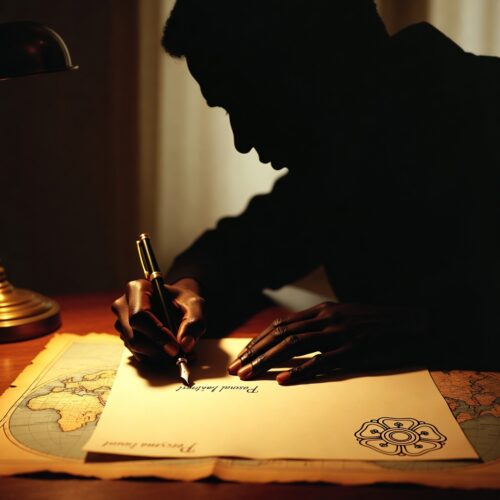 - **Ongoing Twist: The Monopoly Clause.** Grant yourself exclusive rights to your discovered "province" for a set period—no comparing to others' highlight reels. If someone else "discovers" your thing (e.g., viral TikTok on your niche skill), shrug—your claim predates theirs in your kingdom. This kills envy, a modern poison.
- **Funny Safeguard: The "Vanished Voyage" Escape Hatch.** If after 90 days it's a total bust (like Cabot's 1498 trip), declare it "lost at sea" and laugh. Toast the effort with a cheap ale. History remembers the tries, not just the wins. Then patent a new direction—no shame, just new seas.
This plan stands out because it's deliberately archaic, ritualistic, and zero-fluff. No apps tracking streaks, no accountability buddies guilting you, no "atomic habits" jargon. Just you, a kingly decree, and the audacity to claim uncharted personal territory. Like Henry VII on March 5, 1496, you're not betting the kingdom—you're issuing permission. The rest? Pure adventure.
So today, on this anniversary, grab pen and paper. Your empire awaits. What unknown land will you patent first? The world changed because one guy got a green light. Yours can too. Sail boldly—or at least sign the damn paper.
- **Ongoing Twist: The Monopoly Clause.** Grant yourself exclusive rights to your discovered "province" for a set period—no comparing to others' highlight reels. If someone else "discovers" your thing (e.g., viral TikTok on your niche skill), shrug—your claim predates theirs in your kingdom. This kills envy, a modern poison.
- **Funny Safeguard: The "Vanished Voyage" Escape Hatch.** If after 90 days it's a total bust (like Cabot's 1498 trip), declare it "lost at sea" and laugh. Toast the effort with a cheap ale. History remembers the tries, not just the wins. Then patent a new direction—no shame, just new seas.
This plan stands out because it's deliberately archaic, ritualistic, and zero-fluff. No apps tracking streaks, no accountability buddies guilting you, no "atomic habits" jargon. Just you, a kingly decree, and the audacity to claim uncharted personal territory. Like Henry VII on March 5, 1496, you're not betting the kingdom—you're issuing permission. The rest? Pure adventure.
So today, on this anniversary, grab pen and paper. Your empire awaits. What unknown land will you patent first? The world changed because one guy got a green light. Yours can too. Sail boldly—or at least sign the damn paper.