Picture this: It's early March 1789 in New York City, a bustling but still raw post-Revolutionary port town. The streets are muddy from spring thaws, horses clop past wooden buildings, and the air carries the scent of woodsmoke, fish from the docks, and the faint optimism of a nation trying to reinvent itself after throwing off a king. No parades. No brass bands. No one shouting from rooftops about liberty. Yet on March 4, something irreversible happened: the United States government under the brand-new Constitution officially began operations. The weak, bickering Articles of Confederation era ended quietly, like flipping a switch in a dimly lit room. The new framework—three branches, checks and balances, real federal powers—went live.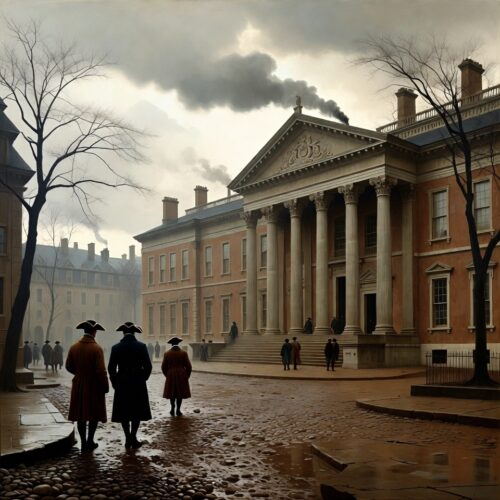 This wasn't a dramatic moment like the Declaration's signing or a battlefield victory. It was procedural, almost anticlimactic. The Confederation Congress, still limping along in New York, had set March 4 as the handover date back in September 1788, once nine states ratified the Constitution (New Hampshire sealed it on June 21, 1788). They chose the first Wednesday in March for practical reasons: it aligned with electoral timelines and gave time for travel in an era when "fast" meant weeks by horse or ship.
But reality was messier. Winter lingered stubbornly. Roads were quagmires of mud and ice. Representatives and senators—elected under the new system—straggled in slowly. The Senate needed 13 members for a quorum (half of 26); the House needed a majority of its 65. On March 4, only a handful appeared at Federal Hall, the remodeled former City Hall on Wall Street. Pierre Charles L'Enfant had overseen its transformation into a grander structure with classical touches: columns, a balcony for public addresses, and separate chambers to reflect the bicameral design.
The House managed to convene first. Thirteen representatives showed up—barely enough to do business. They elected Frederick Augustus Conrad Muhlenberg as the first Speaker of the House. Muhlenberg, a 39-year-old Lutheran pastor's son from Pennsylvania, had served in the Continental Congress and knew how to keep order without drama. He was tall, calm, and bilingual in English and German, which helped in a diverse young nation. His election set a precedent: the Speaker would be chosen by the House itself, not appointed.
This wasn't a dramatic moment like the Declaration's signing or a battlefield victory. It was procedural, almost anticlimactic. The Confederation Congress, still limping along in New York, had set March 4 as the handover date back in September 1788, once nine states ratified the Constitution (New Hampshire sealed it on June 21, 1788). They chose the first Wednesday in March for practical reasons: it aligned with electoral timelines and gave time for travel in an era when "fast" meant weeks by horse or ship.
But reality was messier. Winter lingered stubbornly. Roads were quagmires of mud and ice. Representatives and senators—elected under the new system—straggled in slowly. The Senate needed 13 members for a quorum (half of 26); the House needed a majority of its 65. On March 4, only a handful appeared at Federal Hall, the remodeled former City Hall on Wall Street. Pierre Charles L'Enfant had overseen its transformation into a grander structure with classical touches: columns, a balcony for public addresses, and separate chambers to reflect the bicameral design.
The House managed to convene first. Thirteen representatives showed up—barely enough to do business. They elected Frederick Augustus Conrad Muhlenberg as the first Speaker of the House. Muhlenberg, a 39-year-old Lutheran pastor's son from Pennsylvania, had served in the Continental Congress and knew how to keep order without drama. He was tall, calm, and bilingual in English and German, which helped in a diverse young nation. His election set a precedent: the Speaker would be chosen by the House itself, not appointed.
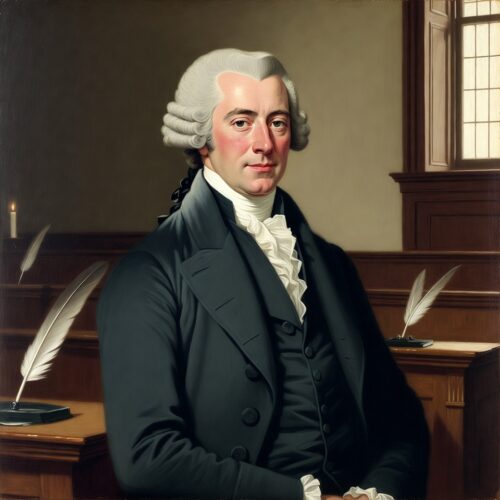 The Senate fared worse initially. Only a few senators arrived that day. They couldn't form a quorum until later in the month (April 6 for full business). Vice President-elect John Adams was still en route from Massachusetts. George Washington himself wouldn't arrive until late April, delayed by bad weather and the sheer logistics of traveling from Mount Vernon.
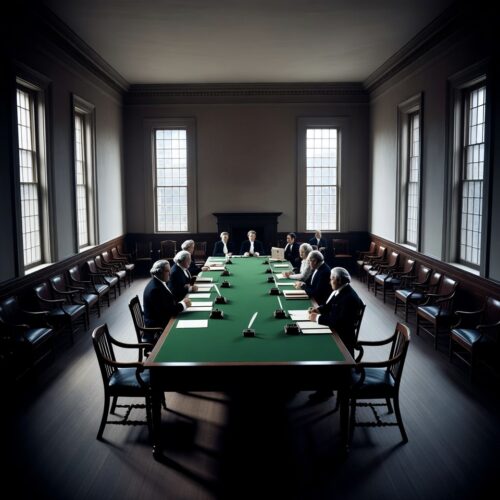 Federal Hall itself was a symbol of transition. Built in 1703 as New York's City Hall, it had hosted colonial assemblies, the trial of John Peter Zenger (the 1735 free-press landmark), and the Confederation Congress after the war. In 1788-89, L'Enfant added a grand facade: a pediment, pilasters, and an eagle-topped roof. The Senate chamber upstairs was intimate and elevated; the House chamber downstairs was larger and more open to the public. It cost about £15,000 (a fortune then), funded partly by New York City hoping to keep the capital.
Despite the sparse attendance, March 4 marked the end of one era and the start of another. The Articles of Confederation had required unanimous state consent for major changes—impossible with 13 squabbling states. The new Constitution allowed majority rule on many issues, gave Congress power to tax, regulate commerce, raise armies, and create courts. It bound the nation more tightly without erasing state identities.
Early days were tentative. The House met sporadically, waiting for more members. They adopted rules based on British parliamentary traditions but adapted them—no powdered wigs required. Debates began on practicalities: how to administer oaths, what titles to use (no "Your Highness" for the president, thank you). Muhlenberg presided with quiet authority, banging a gavel when needed.
By late March and April, quorums formed. The Senate finally convened properly. They counted electoral votes (unanimous for Washington, Adams second). Washington arrived April 23 amid cheering crowds, crossing from New Jersey by barge. His inauguration on April 30 from Federal Hall's balcony drew thousands— the real spectacle. But the machinery had started March 4.
This first Congress accomplished mountains in its two years. They created executive departments: State, Treasury (Alexander Hamilton's domain), War. The Judiciary Act of 1789 set up federal courts, a Supreme Court with six justices. They passed the Bill of Rights (proposed September 25, 1789; ratified 1791). They funded the government via tariffs, assumed state debts (Hamilton's plan), established a national bank prototype. They navigated sectional tensions—North vs. South on slavery, commerce vs. agriculture.
Holdouts like Rhode Island (didn't ratify until 1790) and North Carolina (November 1789) watched from the sidelines but eventually joined when the system's benefits became clear. No civil war erupted; the framework flexed.
March 4 remained Inauguration Day until 1933 (20th Amendment shifted to January 20). Lincoln's 1861 and 1865 inaugurals, FDR's 1933 "fear itself" speech—all on March 4. But 1789's version was the purest: activation without ceremony.
Federal Hall itself was a symbol of transition. Built in 1703 as New York's City Hall, it had hosted colonial assemblies, the trial of John Peter Zenger (the 1735 free-press landmark), and the Confederation Congress after the war. In 1788-89, L'Enfant added a grand facade: a pediment, pilasters, and an eagle-topped roof. The Senate chamber upstairs was intimate and elevated; the House chamber downstairs was larger and more open to the public. It cost about £15,000 (a fortune then), funded partly by New York City hoping to keep the capital.
Despite the sparse attendance, March 4 marked the end of one era and the start of another. The Articles of Confederation had required unanimous state consent for major changes—impossible with 13 squabbling states. The new Constitution allowed majority rule on many issues, gave Congress power to tax, regulate commerce, raise armies, and create courts. It bound the nation more tightly without erasing state identities.
Early days were tentative. The House met sporadically, waiting for more members. They adopted rules based on British parliamentary traditions but adapted them—no powdered wigs required. Debates began on practicalities: how to administer oaths, what titles to use (no "Your Highness" for the president, thank you). Muhlenberg presided with quiet authority, banging a gavel when needed.
By late March and April, quorums formed. The Senate finally convened properly. They counted electoral votes (unanimous for Washington, Adams second). Washington arrived April 23 amid cheering crowds, crossing from New Jersey by barge. His inauguration on April 30 from Federal Hall's balcony drew thousands— the real spectacle. But the machinery had started March 4.
This first Congress accomplished mountains in its two years. They created executive departments: State, Treasury (Alexander Hamilton's domain), War. The Judiciary Act of 1789 set up federal courts, a Supreme Court with six justices. They passed the Bill of Rights (proposed September 25, 1789; ratified 1791). They funded the government via tariffs, assumed state debts (Hamilton's plan), established a national bank prototype. They navigated sectional tensions—North vs. South on slavery, commerce vs. agriculture.
Holdouts like Rhode Island (didn't ratify until 1790) and North Carolina (November 1789) watched from the sidelines but eventually joined when the system's benefits became clear. No civil war erupted; the framework flexed.
March 4 remained Inauguration Day until 1933 (20th Amendment shifted to January 20). Lincoln's 1861 and 1865 inaugurals, FDR's 1933 "fear itself" speech—all on March 4. But 1789's version was the purest: activation without ceremony. Now, strip away the historical dust. The real power of March 4, 1789, lies in its method: deliberate, imperfect launch. No waiting for ideal conditions. Declare the new system operational, show up with whoever arrives, build from there. Quorums short? Keep convening. Resistance? Prove value over time. Iterate relentlessly.
This is anti-fluff self-help. No "believe in yourself" platitudes. It's constitutional engineering applied to one life: create a personal framework that activates now, checks excesses, expands controlled, and endures.
**Your "Federal Activation Protocol" – A Structural Life Overhaul (Unique, Grit-Based, No Manifesting BS)**
Treat your existence like the framers treated 1789 America: activate a new constitution for yourself, minimum viable governance first, then scale.
Now, strip away the historical dust. The real power of March 4, 1789, lies in its method: deliberate, imperfect launch. No waiting for ideal conditions. Declare the new system operational, show up with whoever arrives, build from there. Quorums short? Keep convening. Resistance? Prove value over time. Iterate relentlessly.
This is anti-fluff self-help. No "believe in yourself" platitudes. It's constitutional engineering applied to one life: create a personal framework that activates now, checks excesses, expands controlled, and endures.
**Your "Federal Activation Protocol" – A Structural Life Overhaul (Unique, Grit-Based, No Manifesting BS)**
Treat your existence like the framers treated 1789 America: activate a new constitution for yourself, minimum viable governance first, then scale.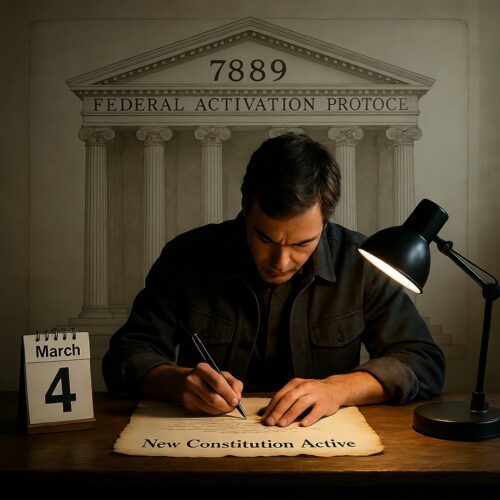 - **Set Your Activation Date (No Delays)**: Tomorrow is your March 4. Write and sign: "Effective [exact date/time], my old operating system (procrastination loops, excuse confederation) is superseded. New constitution active." Read it aloud. This declaration creates psychological finality—like the Confederation Congress ceding power.
- **Convene Your Initial Quorum (Bare-Minimum Operators)**: Don't overhaul everything. Select 3-4 "founding members" (daily non-negotiables) that must attend for the system to function: e.g., hydrate + move body 20 mins, log one money move (save/spend audit), process one emotion without distraction. Miss quorum? Log it in a simple journal ("Senate absent today")—no shame spiral. Reconvene next day. Like 1789's slow arrivals, consistency compounds.
- **Enumerate Limited Powers (Avoid Tyranny of Overambition)**: List 6-8 explicit powers you grant only to yourself. Examples: Power to veto doom-scrolling after 9 PM; power to tax distractions (time-block phone); power to regulate inputs (no junk food after 7); power to raise "troops" (focus blocks for deep work). Powers not listed? Forbidden or delegated. This prevents scope creep that kills most plans.
- **Ratify Your Personal Bill of Rights (Protect Against Inner Despotism)**: Draft and "ratify" three unbreakable protections: 1) Right to unapologetic recovery—mandatory 7-8 hours sleep without guilt. 2) Freedom from self-incrimination—no endless inner trials for past failures. 3) Right to petition change—weekly anonymous note to self on what's broken. These are checks on your own bad governance.
- **Establish Judiciary Sessions (Impartial Weekly Court)**: Sundays at a set time: no screens. Review week like congressional journals: What branches balanced? Overreach? "Verdicts": adjust (e.g., add rest penalty), not punish. You're Chief Justice—evidence only, no emotion verdicts.
- **Controlled Territorial Expansion (Add "States" Gradually)**: Only annex new habits/skills after 60-day quorum stability. Example: Solid basics? Add "territory" like skill-building (30 mins daily reading). Premature? Revolt (burnout). Like Vermont joining 1791 after proving union benefits.
- **Handle Holdouts (Rhode Island Strategy)**: Lazy parts of you or skeptical people resist. Don't coerce. Demonstrate wins quietly—energy up, finances clearer. Holdouts join or self-select out. No drama.
- **Iterative Inaugurations (Monthly Reboot)**: End of each month: quiet "re-inaugural." Tweak one clause (e.g., adjust quorum if too strict). Reward: simple ritual (favorite meal, walk). No fireworks—function is the celebration.
This isn't motivation porn. It's structural. The framers didn't wait for perfect weather or full attendance. They activated, iterated, endured. Your life can too. March 4, 1789, proved quiet starts birth lasting systems. Your personal March Forth starts tomorrow. Convene. Govern. Endure.
- **Set Your Activation Date (No Delays)**: Tomorrow is your March 4. Write and sign: "Effective [exact date/time], my old operating system (procrastination loops, excuse confederation) is superseded. New constitution active." Read it aloud. This declaration creates psychological finality—like the Confederation Congress ceding power.
- **Convene Your Initial Quorum (Bare-Minimum Operators)**: Don't overhaul everything. Select 3-4 "founding members" (daily non-negotiables) that must attend for the system to function: e.g., hydrate + move body 20 mins, log one money move (save/spend audit), process one emotion without distraction. Miss quorum? Log it in a simple journal ("Senate absent today")—no shame spiral. Reconvene next day. Like 1789's slow arrivals, consistency compounds.
- **Enumerate Limited Powers (Avoid Tyranny of Overambition)**: List 6-8 explicit powers you grant only to yourself. Examples: Power to veto doom-scrolling after 9 PM; power to tax distractions (time-block phone); power to regulate inputs (no junk food after 7); power to raise "troops" (focus blocks for deep work). Powers not listed? Forbidden or delegated. This prevents scope creep that kills most plans.
- **Ratify Your Personal Bill of Rights (Protect Against Inner Despotism)**: Draft and "ratify" three unbreakable protections: 1) Right to unapologetic recovery—mandatory 7-8 hours sleep without guilt. 2) Freedom from self-incrimination—no endless inner trials for past failures. 3) Right to petition change—weekly anonymous note to self on what's broken. These are checks on your own bad governance.
- **Establish Judiciary Sessions (Impartial Weekly Court)**: Sundays at a set time: no screens. Review week like congressional journals: What branches balanced? Overreach? "Verdicts": adjust (e.g., add rest penalty), not punish. You're Chief Justice—evidence only, no emotion verdicts.
- **Controlled Territorial Expansion (Add "States" Gradually)**: Only annex new habits/skills after 60-day quorum stability. Example: Solid basics? Add "territory" like skill-building (30 mins daily reading). Premature? Revolt (burnout). Like Vermont joining 1791 after proving union benefits.
- **Handle Holdouts (Rhode Island Strategy)**: Lazy parts of you or skeptical people resist. Don't coerce. Demonstrate wins quietly—energy up, finances clearer. Holdouts join or self-select out. No drama.
- **Iterative Inaugurations (Monthly Reboot)**: End of each month: quiet "re-inaugural." Tweak one clause (e.g., adjust quorum if too strict). Reward: simple ritual (favorite meal, walk). No fireworks—function is the celebration.
This isn't motivation porn. It's structural. The framers didn't wait for perfect weather or full attendance. They activated, iterated, endured. Your life can too. March 4, 1789, proved quiet starts birth lasting systems. Your personal March Forth starts tomorrow. Convene. Govern. Endure.