Imagine a king so powerful he could make empires tremble, a ruler whose armies swept across continents like a bad case of the flu in a crowded elevator. This wasn't some fantasy from a binge-watch of ancient epics; this was Khosrow II, the last great shah of the Sasanian Empire, whose reign was a rollercoaster of triumphs, treasures, and ultimately, a tragic tumble that ended on a chilly February night in 628 AD. His story isn't just dusty scrolls and forgotten friezes—it's a masterclass in ambition gone awry, with enough drama to make Shakespeare jealous. And get this: on February 25, 628, in the glittering but crumbling heart of ancient Persia, Khosrow's own son orchestrated a coup that toppled one of history's most audacious monarchs. But before we get to the motivational mojo (because who doesn't need a pep talk from a 1,400-year-old fiasco?), let's dive deep into the historical nitty-gritty. Buckle up—this is 90% pure, unadulterated history, with just enough wit to keep you from nodding off like a scholar in a stuffy library.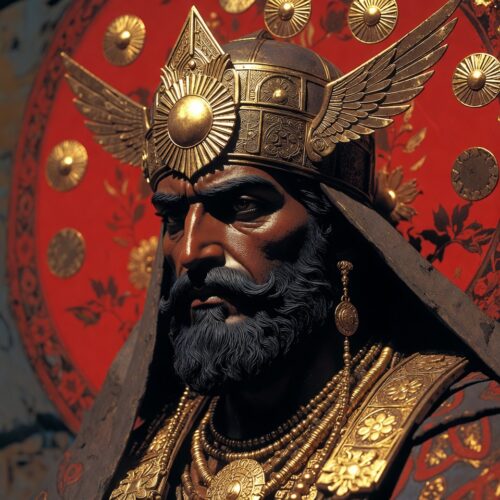 To understand Khosrow II's wild ride, we have to zoom out to the Sasanian Empire itself, that sprawling powerhouse of late antiquity that stretched from the Euphrates River in the west to the Indus Valley in the east, encompassing modern-day Iran, Iraq, parts of Turkey, Syria, Armenia, and even Afghanistan. Founded in 224 AD by Ardashir I, who overthrew the Parthian Arsacids, the Sasanians saw themselves as the rightful heirs to the ancient Achaemenid Persians—the folks who built Persepolis and gave Alexander the Great his biggest headache. Their empire was a melting pot of cultures, religions, and intrigues, fueled by Zoroastrianism as the state faith, but tolerant (mostly) of Christians, Jews, and even Buddhists in the fringes. The economy boomed on silk roads trade, silver mines, and irrigation wizardry that turned deserts into breadbaskets. Kings ruled with divine mandate, sporting crowns that looked like they were designed by a committee of overenthusiastic jewelers, complete with floating orbs symbolizing the sun god Mithra or the divine glory called xwarrah.
By the late 6th century, though, cracks were showing. The empire had been locked in a centuries-long tango of war and diplomacy with the Byzantine Empire, their western neighbor and eternal frenemy. These two superpowers divvied up buffer states like Armenia and Iberia (modern Georgia), where noble families hopped borders like tourists chasing cheap flights. Internally, the Sasanian court was a snake pit of powerful noble houses—the Ispahbudhan, Mihran, and others—who commanded vast feudal armies as spahbeds (regional generals). Religion added spice: Zoroastrian priests wielded influence, but Christian minorities (split between Nestorians and Monophysites) were growing, especially after Byzantine persecutions pushed refugees eastward. And let's not forget the nomadic threats from the north, like the Turks and Hephthalites (White Huns), who raided like uninvited guests at a royal banquet.
Enter Khosrow II, born around 570 AD, during the reign of his grandfather, the legendary Khosrow I "Anushirvan" (the Immortal Soul), who reformed taxes, built canals, and patronized philosophy like a Persian Plato. Khosrow II's dad was Hormizd IV, a prickly king who alienated nobles by curbing their power and favoring commoners—think of it as ancient populism gone wrong. Young Khosrow got an early taste of governance, appointed governor of Partaw in Caucasian Albania (not the European one), where he abolished the Kingdom of Iberia and turned it into a Sasanian province. He also ruled Arbela in Mesopotamia, honing his skills in administration and probably picking up a flair for dramatic rock carvings, a family tradition.
To understand Khosrow II's wild ride, we have to zoom out to the Sasanian Empire itself, that sprawling powerhouse of late antiquity that stretched from the Euphrates River in the west to the Indus Valley in the east, encompassing modern-day Iran, Iraq, parts of Turkey, Syria, Armenia, and even Afghanistan. Founded in 224 AD by Ardashir I, who overthrew the Parthian Arsacids, the Sasanians saw themselves as the rightful heirs to the ancient Achaemenid Persians—the folks who built Persepolis and gave Alexander the Great his biggest headache. Their empire was a melting pot of cultures, religions, and intrigues, fueled by Zoroastrianism as the state faith, but tolerant (mostly) of Christians, Jews, and even Buddhists in the fringes. The economy boomed on silk roads trade, silver mines, and irrigation wizardry that turned deserts into breadbaskets. Kings ruled with divine mandate, sporting crowns that looked like they were designed by a committee of overenthusiastic jewelers, complete with floating orbs symbolizing the sun god Mithra or the divine glory called xwarrah.
By the late 6th century, though, cracks were showing. The empire had been locked in a centuries-long tango of war and diplomacy with the Byzantine Empire, their western neighbor and eternal frenemy. These two superpowers divvied up buffer states like Armenia and Iberia (modern Georgia), where noble families hopped borders like tourists chasing cheap flights. Internally, the Sasanian court was a snake pit of powerful noble houses—the Ispahbudhan, Mihran, and others—who commanded vast feudal armies as spahbeds (regional generals). Religion added spice: Zoroastrian priests wielded influence, but Christian minorities (split between Nestorians and Monophysites) were growing, especially after Byzantine persecutions pushed refugees eastward. And let's not forget the nomadic threats from the north, like the Turks and Hephthalites (White Huns), who raided like uninvited guests at a royal banquet.
Enter Khosrow II, born around 570 AD, during the reign of his grandfather, the legendary Khosrow I "Anushirvan" (the Immortal Soul), who reformed taxes, built canals, and patronized philosophy like a Persian Plato. Khosrow II's dad was Hormizd IV, a prickly king who alienated nobles by curbing their power and favoring commoners—think of it as ancient populism gone wrong. Young Khosrow got an early taste of governance, appointed governor of Partaw in Caucasian Albania (not the European one), where he abolished the Kingdom of Iberia and turned it into a Sasanian province. He also ruled Arbela in Mesopotamia, honing his skills in administration and probably picking up a flair for dramatic rock carvings, a family tradition.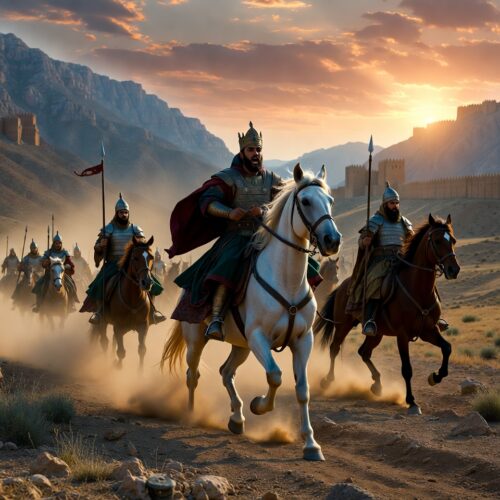 The real drama kicked off in 590 AD when Hormizd IV fired his star general, Bahram Chobin of the Mihran house, for a battlefield blunder against the Byzantines. Bahram, a hot-headed hero with a chip on his shoulder the size of the Zagros Mountains, rebelled. He wasn't just any rebel—he claimed descent from the old Arsacid kings, tapping into Zoroastrian prophecies about the end of the world and the restoration of true rule. Hormizd, paranoid and unpopular, was overthrown in a palace coup by his brothers-in-law, Vistahm and Vinduyih of the Ispahbudhan clan. They blinded Hormizd with a red-hot poker (ouch—ancient Persians didn't mess around), installed young Khosrow on the throne, and likely had Hormizd killed with Khosrow's tacit approval. But Bahram marched on the capital, Ctesiphon, a sprawling metropolis on the Tigris with palaces, gardens, and enough intrigue to fill a soap opera season.
Khosrow's forces got trounced at the Nahrawan Canal, and he fled to Byzantine territory with his uncles, wives, and a posse of 30 nobles. Bahram seized the throne, minting coins with a fancy crenellated crown, proclaiming himself restorer of the Arsacids. It was the first non-Sasanian king in over 350 years—a seismic shock to the empire's legitimacy. Khosrow, ever the opportunist, begged Byzantine Emperor Maurice for help, offering territorial concessions like the cities of Amida, Carrhae, Dara, and Martyropolis, plus ceding Lazistan (a Black Sea region). Maurice, seeing a chance to weaken his rival, agreed. In 591, Khosrow launched a comeback tour with Byzantine troops under commanders like John Mystacon and Comentiolus.
The campaign was a whirlwind: Nisibis and Martyropolis defected to Khosrow, Bahram's lieutenants were captured and executed (one crucified upside down for extra flair), and Dara fell. Vistahm and Vinduyih rallied forces in the east, rejecting Bahram's bribes. The decisive Battle of Blarathon saw Bahram routed; he fled to the Turks, where he briefly played hero by saving the khagan's son from a plot, but Khosrow bribed the Turkic queen to off him. Bahram's death didn't end the headaches—his supporters flocked to Vistahm, who rebelled, claiming Arsacid blood and marrying Bahram's sister Gordiya. Vistahm carved out a mini-empire from the Oxus River to Ardabil, subduing Hephthalite princes and holding court like a rogue shah.
Khosrow, now secure, turned ruthless. To wash his hands of his father's murder, he executed Vinduyih (who'd tried to flee) and sent armies after Vistahm. The rebel holed up in the misty mountains of Gilan, where he was eventually murdered—either by a disloyal lieutenant or, poetically, by his wife Gordiya. The Armenian general Smbat IV Bagratuni mopped up the remnants, earning Khosrow's favor and fancy titles like "Khosrow Shun" (Khosrow's Joy). Khosrow rewarded loyalty lavishly but played favorites with religions. Influenced by his Christian wife Shirin (from Khuzestan, immortalized in later romances as a beauty with a heart of gold), he built churches and monasteries near Ctesiphon, funding clergy and allowing conversions among Arab allies like the Lakhmids. This irked Zoroastrian hardliners but boosted his image among minorities.
The real drama kicked off in 590 AD when Hormizd IV fired his star general, Bahram Chobin of the Mihran house, for a battlefield blunder against the Byzantines. Bahram, a hot-headed hero with a chip on his shoulder the size of the Zagros Mountains, rebelled. He wasn't just any rebel—he claimed descent from the old Arsacid kings, tapping into Zoroastrian prophecies about the end of the world and the restoration of true rule. Hormizd, paranoid and unpopular, was overthrown in a palace coup by his brothers-in-law, Vistahm and Vinduyih of the Ispahbudhan clan. They blinded Hormizd with a red-hot poker (ouch—ancient Persians didn't mess around), installed young Khosrow on the throne, and likely had Hormizd killed with Khosrow's tacit approval. But Bahram marched on the capital, Ctesiphon, a sprawling metropolis on the Tigris with palaces, gardens, and enough intrigue to fill a soap opera season.
Khosrow's forces got trounced at the Nahrawan Canal, and he fled to Byzantine territory with his uncles, wives, and a posse of 30 nobles. Bahram seized the throne, minting coins with a fancy crenellated crown, proclaiming himself restorer of the Arsacids. It was the first non-Sasanian king in over 350 years—a seismic shock to the empire's legitimacy. Khosrow, ever the opportunist, begged Byzantine Emperor Maurice for help, offering territorial concessions like the cities of Amida, Carrhae, Dara, and Martyropolis, plus ceding Lazistan (a Black Sea region). Maurice, seeing a chance to weaken his rival, agreed. In 591, Khosrow launched a comeback tour with Byzantine troops under commanders like John Mystacon and Comentiolus.
The campaign was a whirlwind: Nisibis and Martyropolis defected to Khosrow, Bahram's lieutenants were captured and executed (one crucified upside down for extra flair), and Dara fell. Vistahm and Vinduyih rallied forces in the east, rejecting Bahram's bribes. The decisive Battle of Blarathon saw Bahram routed; he fled to the Turks, where he briefly played hero by saving the khagan's son from a plot, but Khosrow bribed the Turkic queen to off him. Bahram's death didn't end the headaches—his supporters flocked to Vistahm, who rebelled, claiming Arsacid blood and marrying Bahram's sister Gordiya. Vistahm carved out a mini-empire from the Oxus River to Ardabil, subduing Hephthalite princes and holding court like a rogue shah.
Khosrow, now secure, turned ruthless. To wash his hands of his father's murder, he executed Vinduyih (who'd tried to flee) and sent armies after Vistahm. The rebel holed up in the misty mountains of Gilan, where he was eventually murdered—either by a disloyal lieutenant or, poetically, by his wife Gordiya. The Armenian general Smbat IV Bagratuni mopped up the remnants, earning Khosrow's favor and fancy titles like "Khosrow Shun" (Khosrow's Joy). Khosrow rewarded loyalty lavishly but played favorites with religions. Influenced by his Christian wife Shirin (from Khuzestan, immortalized in later romances as a beauty with a heart of gold), he built churches and monasteries near Ctesiphon, funding clergy and allowing conversions among Arab allies like the Lakhmids. This irked Zoroastrian hardliners but boosted his image among minorities. Yet, tolerance had limits. In 600 AD, Khosrow executed the Lakhmid king Al-Nu'man III for refusing a marriage alliance (or maybe over Christian sympathies), abolishing the dynasty and annexing their lands—a move that left the southern borders vulnerable to Bedouin raids and, ironically, paved the way for Muslim conquests decades later. He favored Monophysite Christians over Nestorians, thanks to Shirin's influence and his physician Gabriel of Sinjar, showering gifts on shrines like St. Sergius in Resafa. Zoroastrianism still dominated, with fire temples dotting the landscape, but the church waned under his policies.
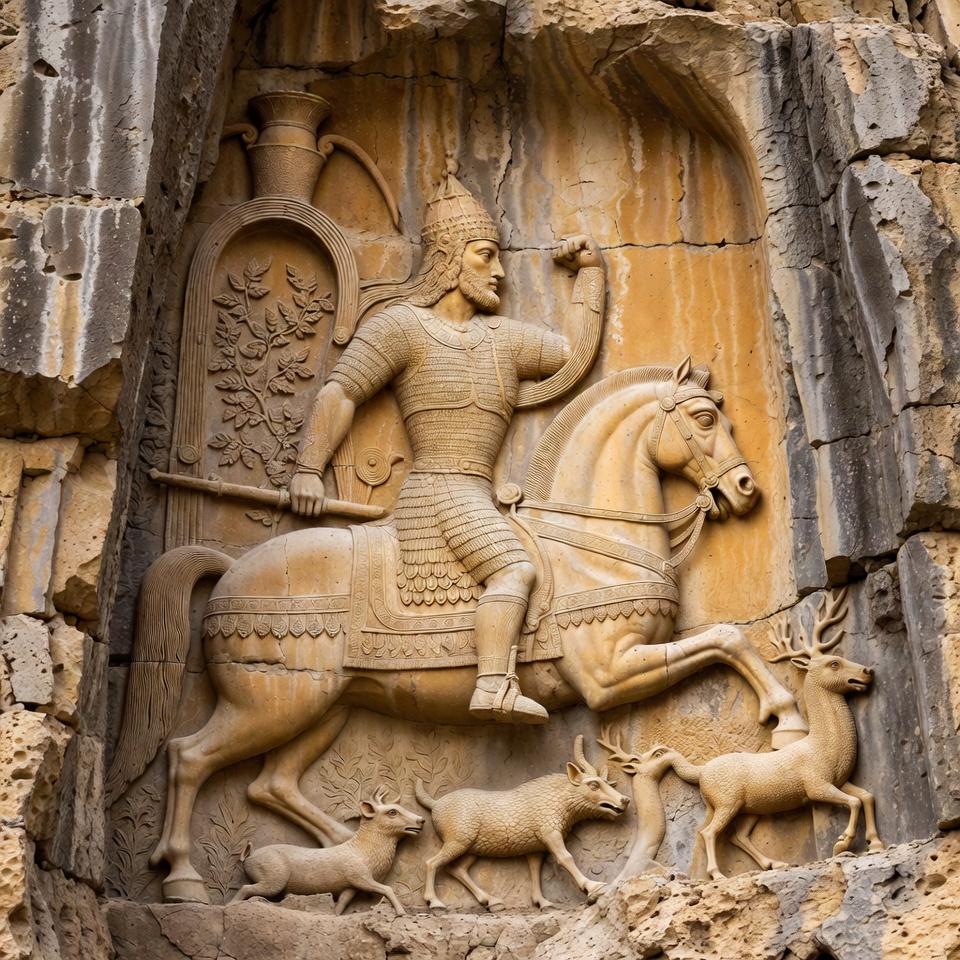
Culturally, Khosrow's court was a Renaissance before the Renaissance. Music thrived with virtuosos like Barbad, who composed epic tunes on the lute and harp, some still echoed in Persian classical music today. Khosrow commissioned grand rock reliefs at Taq-e Bostan, a grotto near Kermanshah: one shows him invested with power by Ahura Mazda and Anahita (the goddess of waters, looking suspiciously like a proto-Venus); others depict him armored on horseback or hunting boars and deer in lush paradises, symbols of royal prowess. These weren't just art—they were propaganda, unfinished due to later wars, but screaming "I'm the king of kings!" His coins added flourishes like "xwarrah increased" and restored ancient titles, evoking Achaemenid glory.
The big showstopper was the Byzantine–Sasanian War of 602–628, the ancient world's equivalent of a world war. It started when Byzantine Emperor Maurice was murdered by the usurper Phocas. Khosrow, claiming vengeance for his ally (and possibly father-in-law, via a disputed marriage to Maurice's daughter Maria), invaded. But let's be real—this was opportunism wrapped in righteousness. With generals like Shahrbaraz (the Wild Boar) and Shahin Vahmanzadegan, Khosrow captured Dara and Edessa by 604, reclaiming lost territories. By 608, his armies ravaged Syria and Anatolia, sacking cities and reaching Chalcedon, across from Constantinople.
Yet, tolerance had limits. In 600 AD, Khosrow executed the Lakhmid king Al-Nu'man III for refusing a marriage alliance (or maybe over Christian sympathies), abolishing the dynasty and annexing their lands—a move that left the southern borders vulnerable to Bedouin raids and, ironically, paved the way for Muslim conquests decades later. He favored Monophysite Christians over Nestorians, thanks to Shirin's influence and his physician Gabriel of Sinjar, showering gifts on shrines like St. Sergius in Resafa. Zoroastrianism still dominated, with fire temples dotting the landscape, but the church waned under his policies.
Culturally, Khosrow's court was a Renaissance before the Renaissance. Music thrived with virtuosos like Barbad, who composed epic tunes on the lute and harp, some still echoed in Persian classical music today. Khosrow commissioned grand rock reliefs at Taq-e Bostan, a grotto near Kermanshah: one shows him invested with power by Ahura Mazda and Anahita (the goddess of waters, looking suspiciously like a proto-Venus); others depict him armored on horseback or hunting boars and deer in lush paradises, symbols of royal prowess. These weren't just art—they were propaganda, unfinished due to later wars, but screaming "I'm the king of kings!" His coins added flourishes like "xwarrah increased" and restored ancient titles, evoking Achaemenid glory.
The big showstopper was the Byzantine–Sasanian War of 602–628, the ancient world's equivalent of a world war. It started when Byzantine Emperor Maurice was murdered by the usurper Phocas. Khosrow, claiming vengeance for his ally (and possibly father-in-law, via a disputed marriage to Maurice's daughter Maria), invaded. But let's be real—this was opportunism wrapped in righteousness. With generals like Shahrbaraz (the Wild Boar) and Shahin Vahmanzadegan, Khosrow captured Dara and Edessa by 604, reclaiming lost territories. By 608, his armies ravaged Syria and Anatolia, sacking cities and reaching Chalcedon, across from Constantinople.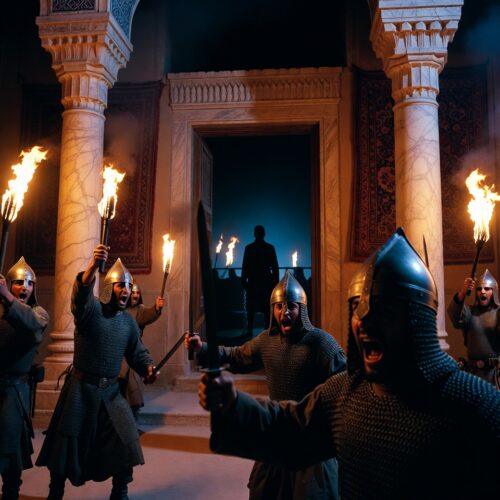 Heraclius, who overthrew Phocas in 610, sued for peace, but Khosrow executed the envoys and pushed on. In 613–614, Shahrbaraz took Damascus and Jerusalem, carting off the True Cross (a Christian relic) as booty—imagine the PR disaster for Byzantium. Egypt fell in 618, cutting off grain supplies to Constantinople. Sasanians even seized Rhodes and Aegean islands by 623, turning the Mediterranean into a Persian lake. Khosrow repelled Turkic raids in 606–607, allying with Smbat IV to crush invaders and reward victors with jewels and titles.
But hubris bites back. In 624, Heraclius counterattacked into Armenia and Adurbadagan (Azerbaijan), where locals rebelled against Khosrow's taxes and tyranny. Nobles like Farrukh Hormizd and his sons Rostam and Farrukhzad grumbled. By 626, Heraclius captured Lazistan; Shahrbaraz besieged Constantinople with Avar and Slav allies, but Byzantine ships dominated the Bosporus, and the siege fizzled like a wet firecracker. Heraclius then allied with the Turks in the Third Perso-Turkic War, smashing through to the Battle of Nineveh in 627, where his forces routed the Persians despite being outnumbered.
Heraclius sacked Khosrow's favorite palace at Dastagird, finding treasures like 3,000 pounds of aloe wood and exotic birds. Khosrow fled, abandoning Ctesiphon briefly, but paranoia set in—he accused generals of treason and executed dissenters. The empire's nobles, exhausted by endless wars, taxes, and floods that ruined crops, turned. In a classic coup, they freed Khosrow's son Sheroe (later Kavad II) from prison. On the night of February 24–25, 628, guards at Ctesiphon shouted Sheroe's name, signaling the switch. Aspad Gushnasp led troops to arrest Khosrow, who was imprisoned in a noble's house. Sheroe proclaimed himself king, executed his brothers (including heir Mardanshah) to eliminate rivals, and had Khosrow killed—shot with arrows by Mihr Hormozd, or perhaps starved and pierced. Khosrow's last words? A defiant curse on his son.
The overthrow sparked chaos: Kavad II made peace with Heraclius, returning lands, prisoners, and the True Cross, but a plague (possibly bubonic) killed him within months. Civil wars raged from 628–632, with queens Boran and Azarmidokht briefly ruling amid noble squabbles. The empire fractured, nobles like the Ispahbudhan and Mihran vied for power, and young Yazdegerd III ascended at age 8. This weakness invited the Arab Muslim invasions, leading to the Sasanian fall by 651. Khosrow's wars had bankrupted the treasury, alienated allies, and depopulated regions—his "victorious" reign sowed the seeds of doom.
Khosrow's legacy? A mix of grandeur and tragedy. In Persian epics like Ferdowsi's Shahnameh, he's a heroic lover entangled with Shirin; Nizami's romance paints him as passionate but flawed. Islamic lore has Muhammad sending him a letter to convert; Khosrow tears it, dooming his realm. Historically, he nearly toppled Byzantium, expanded east, and patronized arts, but his overreach echoed Icarus—flying too high on wax wings of ambition.
Now, for that 10% motivational kicker: Khosrow's downfall teaches us that unchecked power breeds isolation, and empires (or personal empires) crumble without balance. But hey, you're not ruling Persia—you're navigating 21st-century life. So, how can this ancient oopsie benefit you? By turning Khosrow's mistakes into your superpowers. Forget generic self-help like "meditate daily" or "journal your gratitude." We're crafting the "Sasanian Shadow Strategy"—a unique plan where you shadow historical pitfalls to build an unbreakable personal dynasty. It's like reverse-engineering a king's flop into your win, using "shadow rituals" to anticipate and flip failures.
Heraclius, who overthrew Phocas in 610, sued for peace, but Khosrow executed the envoys and pushed on. In 613–614, Shahrbaraz took Damascus and Jerusalem, carting off the True Cross (a Christian relic) as booty—imagine the PR disaster for Byzantium. Egypt fell in 618, cutting off grain supplies to Constantinople. Sasanians even seized Rhodes and Aegean islands by 623, turning the Mediterranean into a Persian lake. Khosrow repelled Turkic raids in 606–607, allying with Smbat IV to crush invaders and reward victors with jewels and titles.
But hubris bites back. In 624, Heraclius counterattacked into Armenia and Adurbadagan (Azerbaijan), where locals rebelled against Khosrow's taxes and tyranny. Nobles like Farrukh Hormizd and his sons Rostam and Farrukhzad grumbled. By 626, Heraclius captured Lazistan; Shahrbaraz besieged Constantinople with Avar and Slav allies, but Byzantine ships dominated the Bosporus, and the siege fizzled like a wet firecracker. Heraclius then allied with the Turks in the Third Perso-Turkic War, smashing through to the Battle of Nineveh in 627, where his forces routed the Persians despite being outnumbered.
Heraclius sacked Khosrow's favorite palace at Dastagird, finding treasures like 3,000 pounds of aloe wood and exotic birds. Khosrow fled, abandoning Ctesiphon briefly, but paranoia set in—he accused generals of treason and executed dissenters. The empire's nobles, exhausted by endless wars, taxes, and floods that ruined crops, turned. In a classic coup, they freed Khosrow's son Sheroe (later Kavad II) from prison. On the night of February 24–25, 628, guards at Ctesiphon shouted Sheroe's name, signaling the switch. Aspad Gushnasp led troops to arrest Khosrow, who was imprisoned in a noble's house. Sheroe proclaimed himself king, executed his brothers (including heir Mardanshah) to eliminate rivals, and had Khosrow killed—shot with arrows by Mihr Hormozd, or perhaps starved and pierced. Khosrow's last words? A defiant curse on his son.
The overthrow sparked chaos: Kavad II made peace with Heraclius, returning lands, prisoners, and the True Cross, but a plague (possibly bubonic) killed him within months. Civil wars raged from 628–632, with queens Boran and Azarmidokht briefly ruling amid noble squabbles. The empire fractured, nobles like the Ispahbudhan and Mihran vied for power, and young Yazdegerd III ascended at age 8. This weakness invited the Arab Muslim invasions, leading to the Sasanian fall by 651. Khosrow's wars had bankrupted the treasury, alienated allies, and depopulated regions—his "victorious" reign sowed the seeds of doom.
Khosrow's legacy? A mix of grandeur and tragedy. In Persian epics like Ferdowsi's Shahnameh, he's a heroic lover entangled with Shirin; Nizami's romance paints him as passionate but flawed. Islamic lore has Muhammad sending him a letter to convert; Khosrow tears it, dooming his realm. Historically, he nearly toppled Byzantium, expanded east, and patronized arts, but his overreach echoed Icarus—flying too high on wax wings of ambition.
Now, for that 10% motivational kicker: Khosrow's downfall teaches us that unchecked power breeds isolation, and empires (or personal empires) crumble without balance. But hey, you're not ruling Persia—you're navigating 21st-century life. So, how can this ancient oopsie benefit you? By turning Khosrow's mistakes into your superpowers. Forget generic self-help like "meditate daily" or "journal your gratitude." We're crafting the "Sasanian Shadow Strategy"—a unique plan where you shadow historical pitfalls to build an unbreakable personal dynasty. It's like reverse-engineering a king's flop into your win, using "shadow rituals" to anticipate and flip failures. - **Shadow the Hubris Hunt: Weekly Overreach Audits** – Khosrow ignored warnings from floods and famines, pushing wars anyway. You? Set a Sunday ritual: List three "empires" in your life (career, relationships, health). Audit for overexpansion—e.g., taking on extra projects when burnt out. Then, "execute" one excess (politely decline or delegate) to reclaim balance. Unique twist: Pair it with a "Persian Feast" of simple fruits and nuts, symbolizing humility amid abundance.
- **Forge the Noble Alliance Network: Monthly Betrayal Simulations** – Khosrow alienated nobles like the Ispahbudhan, leading to coups. Build your "spahbed council"—pick 3–5 trusted friends or mentors. Monthly, simulate a "coup" by role-playing your worst decisions (e.g., "Why am I procrastinating?"). They give blunt feedback; you reward with a shared activity. Unlike standard networking, this includes a "treasure exchange"—swap one skill or resource, like teaching them cooking while they help your resume.
- **Erect Your Taq-e Bostan Talisman: Daily Legacy Carvings** – Khosrow's unfinished reliefs remind us legacies need completion. Create a "rock relief journal"—not words, but doodles or photos of one daily act building your future (e.g., sketch a workout for health empire). Review weekly; if unfinished, "flood" it with a penalty like donating time. This beats typical goal-setting by making it visual and archaeological—dig into your progress like unearthing artifacts.
- **Invoke the Shirin Sanctuary: Bi-Weekly Tolerance Temples** – Khosrow's religious favoritism sparked resentment. Build "sanctuaries" for diverse views: Every two weeks, immerse in an opposing perspective (read a book from a rival ideology or chat with someone unlike you). Then, integrate one insight into your routine, like adopting a vegan meal from an eco-friend. Unique: End with a "fire temple" candle ritual, burning a note of old biases to symbolize renewal.
The Sasanian Shadow Strategy Plan: Commit for 90 days. Week 1: Map your empires and allies. Weeks 2–4: Cycle audits, simulations, carvings, and sanctuaries. Track in a "crown ledger" (app or notebook with Sasanian-inspired doodles). By month 3, you'll have flipped Khosrow's tyranny into your wise rule—ambitious yet grounded, connected yet resilient. Remember, history's greatest kings fell from ignoring shadows; you? Rise by dancing with them. Go forth and conquer your Ctesiphon!
- **Shadow the Hubris Hunt: Weekly Overreach Audits** – Khosrow ignored warnings from floods and famines, pushing wars anyway. You? Set a Sunday ritual: List three "empires" in your life (career, relationships, health). Audit for overexpansion—e.g., taking on extra projects when burnt out. Then, "execute" one excess (politely decline or delegate) to reclaim balance. Unique twist: Pair it with a "Persian Feast" of simple fruits and nuts, symbolizing humility amid abundance.
- **Forge the Noble Alliance Network: Monthly Betrayal Simulations** – Khosrow alienated nobles like the Ispahbudhan, leading to coups. Build your "spahbed council"—pick 3–5 trusted friends or mentors. Monthly, simulate a "coup" by role-playing your worst decisions (e.g., "Why am I procrastinating?"). They give blunt feedback; you reward with a shared activity. Unlike standard networking, this includes a "treasure exchange"—swap one skill or resource, like teaching them cooking while they help your resume.
- **Erect Your Taq-e Bostan Talisman: Daily Legacy Carvings** – Khosrow's unfinished reliefs remind us legacies need completion. Create a "rock relief journal"—not words, but doodles or photos of one daily act building your future (e.g., sketch a workout for health empire). Review weekly; if unfinished, "flood" it with a penalty like donating time. This beats typical goal-setting by making it visual and archaeological—dig into your progress like unearthing artifacts.
- **Invoke the Shirin Sanctuary: Bi-Weekly Tolerance Temples** – Khosrow's religious favoritism sparked resentment. Build "sanctuaries" for diverse views: Every two weeks, immerse in an opposing perspective (read a book from a rival ideology or chat with someone unlike you). Then, integrate one insight into your routine, like adopting a vegan meal from an eco-friend. Unique: End with a "fire temple" candle ritual, burning a note of old biases to symbolize renewal.
The Sasanian Shadow Strategy Plan: Commit for 90 days. Week 1: Map your empires and allies. Weeks 2–4: Cycle audits, simulations, carvings, and sanctuaries. Track in a "crown ledger" (app or notebook with Sasanian-inspired doodles). By month 3, you'll have flipped Khosrow's tyranny into your wise rule—ambitious yet grounded, connected yet resilient. Remember, history's greatest kings fell from ignoring shadows; you? Rise by dancing with them. Go forth and conquer your Ctesiphon!