The winter of 1525 in Zurich was not merely cold; it was spiritually and politically frozen. While the Great Minster church loomed over the Limmat River, its bells tolling with the weight of a thousand years of tradition, a small group of men gathered in a modest home near the Grossmünster. They were not soldiers, nor were they kings. They were scholars, former priests, and commoners who were about to commit an act so radical that it would shatter the foundations of Western society.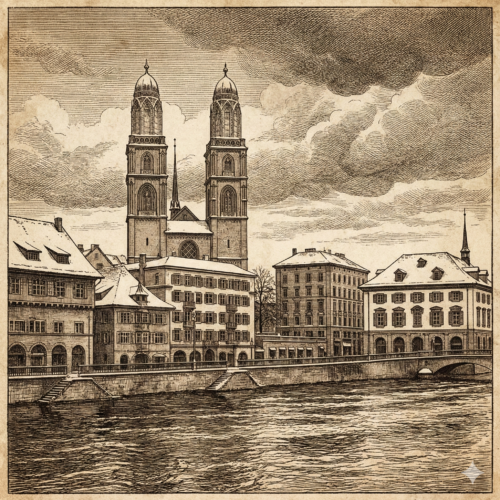 On this day, January 21, 1525, the Radical Reformation was born. This was the moment when the "Anabaptist" movement began, not with a proclamation from a throne, but with a simple bowl of water and the terrifyingly bold assertion that an individual's conscience belongs to no one but themselves.
Part I: The Thousand-Year Shadow
To understand the weight of what happened on January 21, 1525, one must first understand the world that existed before that Tuesday evening. For over ten centuries, Europe lived under the "Corpus Christianum"—the idea that the Church and the State were two sides of the same coin. You were born into the State, and you were baptized into the Church. There was no distinction. To be a citizen was to be a member of the Church; to dissent from the Church was to be a traitor to the State.
Infant baptism was the glue of this system. By baptizing a child shortly after birth, the authorities ensured that every soul was "on the books." It was the medieval version of a Social Security number and a birth certificate rolled into one religious rite. To suggest that a person should wait until they were an adult to "choose" their faith was more than just a theological disagreement—it was an act of anarchy. It suggested that the State did not have total claim over the person.
By the early 1520s, the Protestant Reformation was already in full swing. Huldrych Zwingli, the powerful and charismatic leader of the Reformation in Zurich, had successfully broken away from the Roman Catholic Church. He had abolished the Mass, removed icons from churches, and allowed priests to marry. But for a group of his most brilliant students—Conrad Grebel, Felix Manz, and George Blaurock—Zwingli had not gone far enough.
They argued that Zwingli was moving too slowly because he was too concerned with what the City Council thought. They believed the Reformation shouldn't wait for a government vote. They believed the "true" church should be a voluntary community of believers, not a compulsory organization run by politicians.
Part II: The Tuesday Night Rebellion
The tension reached a breaking point in January 1525. The Zurich City Council, sensing the growing unrest, issued a decree: all unbaptized infants must be brought for baptism within eight days, or their parents would be banished. This was a direct strike at Grebel and Manz, who had refused to baptize their own children.
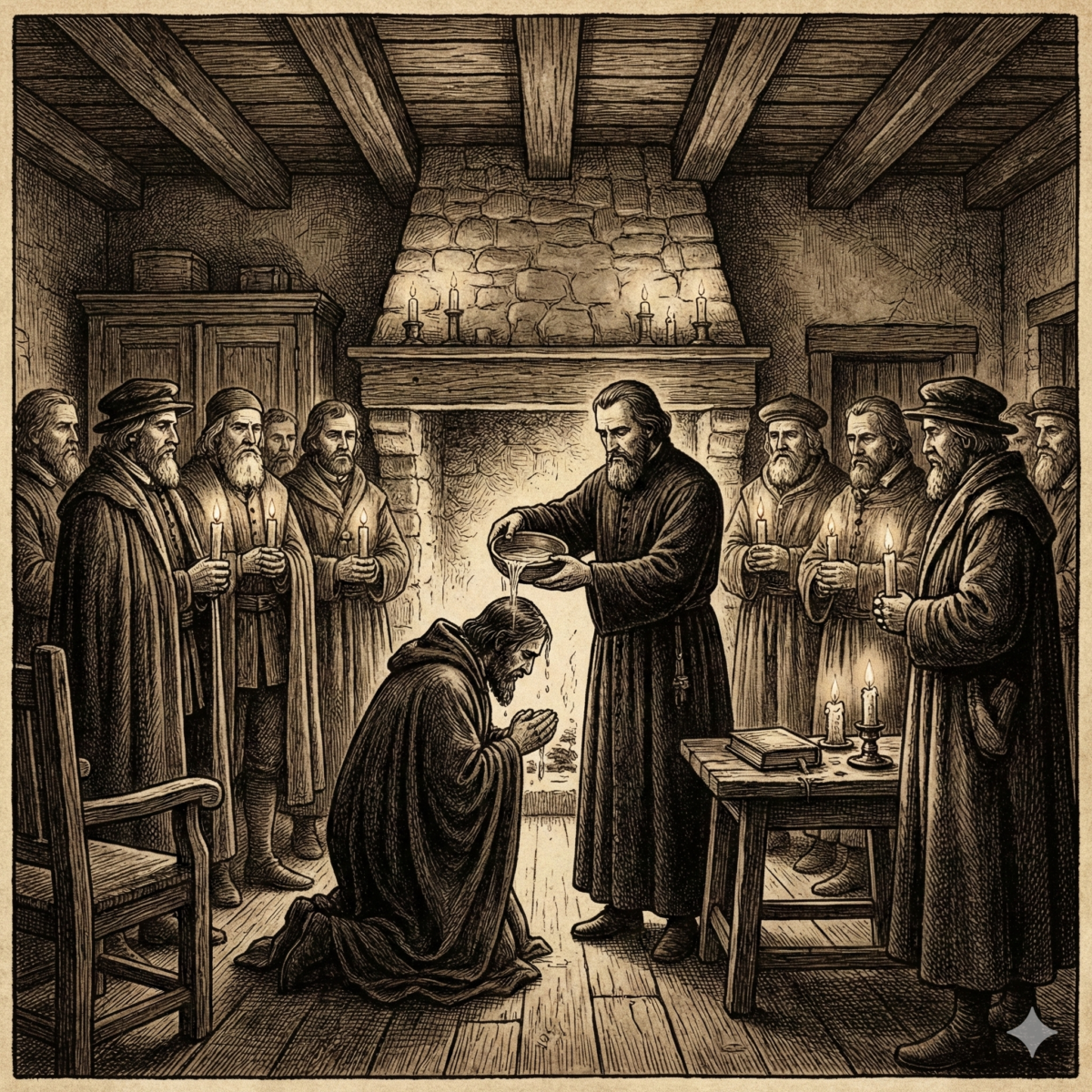
On the evening of January 21, the group met in the house of Felix Manz’s mother. The atmosphere was thick with the scent of woodsmoke and the palpable electricity of men who knew they were crossing a line from which there was no return. They knew that what they were about to do was a capital offense. In the eyes of the law, "re-baptizing" an adult was a crime punishable by death.
According to the Hutterite Chronicle, which preserves the history of these radicals, a "great fear" came over them. They fell to their knees and prayed for guidance. Then, George Blaurock, a former monk known for his fiery personality, stood up and asked Conrad Grebel to baptize him upon his confession of faith. Grebel did so, using a simple bowl of water. Then Blaurock, in turn, baptized the others.
This was the first "believer's baptism" in modern history. In that single, quiet act, they declared that the State had no power over the soul. They decoupled citizenship from faith. They asserted that the individual had the right to choose their path, regardless of the traditions of their ancestors or the laws of their governors.
On this day, January 21, 1525, the Radical Reformation was born. This was the moment when the "Anabaptist" movement began, not with a proclamation from a throne, but with a simple bowl of water and the terrifyingly bold assertion that an individual's conscience belongs to no one but themselves.
Part I: The Thousand-Year Shadow
To understand the weight of what happened on January 21, 1525, one must first understand the world that existed before that Tuesday evening. For over ten centuries, Europe lived under the "Corpus Christianum"—the idea that the Church and the State were two sides of the same coin. You were born into the State, and you were baptized into the Church. There was no distinction. To be a citizen was to be a member of the Church; to dissent from the Church was to be a traitor to the State.
Infant baptism was the glue of this system. By baptizing a child shortly after birth, the authorities ensured that every soul was "on the books." It was the medieval version of a Social Security number and a birth certificate rolled into one religious rite. To suggest that a person should wait until they were an adult to "choose" their faith was more than just a theological disagreement—it was an act of anarchy. It suggested that the State did not have total claim over the person.
By the early 1520s, the Protestant Reformation was already in full swing. Huldrych Zwingli, the powerful and charismatic leader of the Reformation in Zurich, had successfully broken away from the Roman Catholic Church. He had abolished the Mass, removed icons from churches, and allowed priests to marry. But for a group of his most brilliant students—Conrad Grebel, Felix Manz, and George Blaurock—Zwingli had not gone far enough.
They argued that Zwingli was moving too slowly because he was too concerned with what the City Council thought. They believed the Reformation shouldn't wait for a government vote. They believed the "true" church should be a voluntary community of believers, not a compulsory organization run by politicians.
Part II: The Tuesday Night Rebellion
The tension reached a breaking point in January 1525. The Zurich City Council, sensing the growing unrest, issued a decree: all unbaptized infants must be brought for baptism within eight days, or their parents would be banished. This was a direct strike at Grebel and Manz, who had refused to baptize their own children.
On the evening of January 21, the group met in the house of Felix Manz’s mother. The atmosphere was thick with the scent of woodsmoke and the palpable electricity of men who knew they were crossing a line from which there was no return. They knew that what they were about to do was a capital offense. In the eyes of the law, "re-baptizing" an adult was a crime punishable by death.
According to the Hutterite Chronicle, which preserves the history of these radicals, a "great fear" came over them. They fell to their knees and prayed for guidance. Then, George Blaurock, a former monk known for his fiery personality, stood up and asked Conrad Grebel to baptize him upon his confession of faith. Grebel did so, using a simple bowl of water. Then Blaurock, in turn, baptized the others.
This was the first "believer's baptism" in modern history. In that single, quiet act, they declared that the State had no power over the soul. They decoupled citizenship from faith. They asserted that the individual had the right to choose their path, regardless of the traditions of their ancestors or the laws of their governors.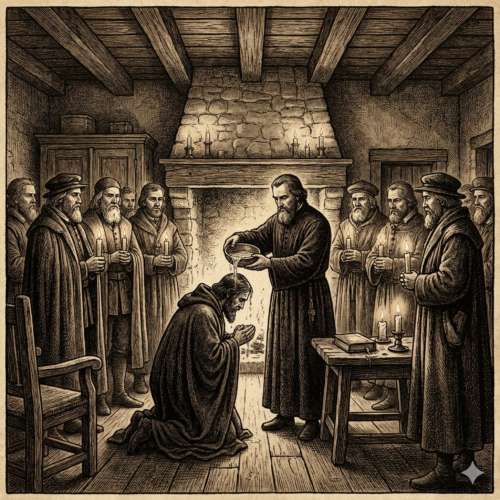 Part III: The Cost of Conviction
The reaction from the authorities was swift and brutal. Within days, the "Anabaptists" (a derogatory term meaning "re-baptizers") were hunted down. Zwingli, their former mentor, turned against them with a vengeance. He argued that their insistence on a voluntary church would lead to the total collapse of social order.
The persecution that followed was some of the most intense in European history. On January 5, 1527, less than two years after that first meeting, Felix Manz was taken to the middle of the Limmat River in Zurich. His hands were tied to his knees, a stick was pushed between his arms and legs, and he was shoved into the icy water. He became the first Anabaptist martyr, executed by the very Protestants who had themselves just broken away from Rome.
The irony was lost on no one: Manz was executed by drowning—a "third baptism" for the man who insisted on a second.
Part III: The Cost of Conviction
The reaction from the authorities was swift and brutal. Within days, the "Anabaptists" (a derogatory term meaning "re-baptizers") were hunted down. Zwingli, their former mentor, turned against them with a vengeance. He argued that their insistence on a voluntary church would lead to the total collapse of social order.
The persecution that followed was some of the most intense in European history. On January 5, 1527, less than two years after that first meeting, Felix Manz was taken to the middle of the Limmat River in Zurich. His hands were tied to his knees, a stick was pushed between his arms and legs, and he was shoved into the icy water. He became the first Anabaptist martyr, executed by the very Protestants who had themselves just broken away from Rome.
The irony was lost on no one: Manz was executed by drowning—a "third baptism" for the man who insisted on a second.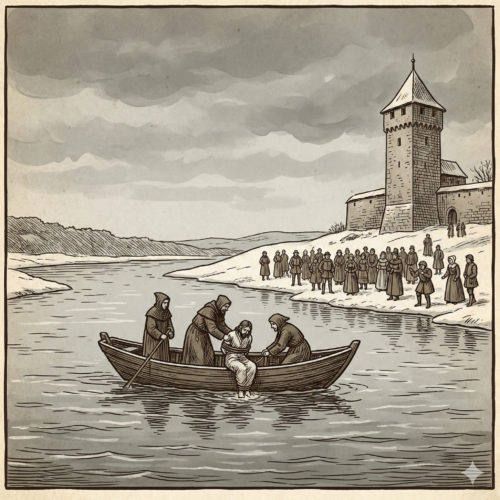 Yet, despite the executions, the burnings at the stake, and the forced migrations, the movement could not be stopped. Because the idea was too powerful. The idea that "the soul is free" resonated with the common people. It spread through the Alps, into Germany, the Netherlands, and eventually across the Atlantic. Today, the direct descendants of that January 21 meeting—Mennonites, Hutterites, and Amish—still exist, but their broader legacy lives on in every modern democracy that guarantees the freedom of religion and the separation of church and state.
Part IV: The Anatomy of a Breakthrough
What can we learn from Grebel, Manz, and Blaurock? They weren't just religious zealots; they were architects of autonomy. They recognized a fundamental truth that applies to your life today: The systems that claim to "protect" you often do so by limiting your growth.
The "thousand-year tradition" they broke was not just a religious one; it was a psychological one. It was the belief that "this is just how things are done." On January 21, 1525, they proved that a small group of people, armed with nothing but a clear vision and the willingness to take a risk, can pivot the direction of human history in a single evening.
The "Radical Reformation" Plan: Applying 1525 to Your 2026
The events in Zurich over five centuries ago were about religious freedom, but the principle was about Self-Ownership. Most of us today are "infant baptized" into systems we didn't choose: career paths, social expectations, financial habits, and limiting beliefs.
Here is how you can apply the "Zurich Strategy" to your individual life to achieve a radical personal reformation.
Yet, despite the executions, the burnings at the stake, and the forced migrations, the movement could not be stopped. Because the idea was too powerful. The idea that "the soul is free" resonated with the common people. It spread through the Alps, into Germany, the Netherlands, and eventually across the Atlantic. Today, the direct descendants of that January 21 meeting—Mennonites, Hutterites, and Amish—still exist, but their broader legacy lives on in every modern democracy that guarantees the freedom of religion and the separation of church and state.
Part IV: The Anatomy of a Breakthrough
What can we learn from Grebel, Manz, and Blaurock? They weren't just religious zealots; they were architects of autonomy. They recognized a fundamental truth that applies to your life today: The systems that claim to "protect" you often do so by limiting your growth.
The "thousand-year tradition" they broke was not just a religious one; it was a psychological one. It was the belief that "this is just how things are done." On January 21, 1525, they proved that a small group of people, armed with nothing but a clear vision and the willingness to take a risk, can pivot the direction of human history in a single evening.
The "Radical Reformation" Plan: Applying 1525 to Your 2026
The events in Zurich over five centuries ago were about religious freedom, but the principle was about Self-Ownership. Most of us today are "infant baptized" into systems we didn't choose: career paths, social expectations, financial habits, and limiting beliefs.
Here is how you can apply the "Zurich Strategy" to your individual life to achieve a radical personal reformation.
Identify Your "State-Mandated" Habits
Just as the Zurich radicals realized they were part of a church-state system they didn't choose, you must identify the areas of your life where you are acting on "autopilot" based on external pressure.
The Career "Baptism": Are you in your current job because you chose it, or because it was the "logical next step" expected by your family or peers?
The Social "Covenant": Which of your friendships or social obligations feel like a mandatory tax rather than a voluntary joy?
The Financial "Tradition": Are you following the "buy a house, get a debt" path because it’s your dream, or because it’s the 1,000-year-old script of the middle class?
Practice "Adult Re-Baptism" of Your Goals
In 1525, the radicals insisted that faith must be a conscious, adult choice. You must do the same with your goals.
Audit Your "Whys": Take your top three goals and ask: "If I were starting from scratch today with no history, would I choose this?"
The Re-Commitment Rite: For every goal that survives the audit, write a "Declaration of Intent." This is your version of the bowl of water—a conscious act of choosing your path.
Discard the Rest: Anything you are doing simply because "that’s what people like me do" must be metaphorically banished.
Build Your "Small Room" Community
The radicals didn't act alone. Grebel, Manz, and Blaurock needed each other to withstand the pressure of the City Council.
Curate Your Inner Circle: Find 2-3 people who are also looking to "break the mold."
The "Hutterite" Accountability: Establish a weekly check-in where you discuss not just what you did, but where you conformed when you should have led.
Identify the "Zwinglis": Be aware of mentors or figures in your life who want you to change, but only at a speed that makes them comfortable. You may need to move past them.
The "Limmat River" Resilience
The Anabaptists knew that their actions would bring "social friction." You must be prepared for the same.
Expect "Drowning" Attempts: When you start making radical changes—quitting a stable but soul-crushing job, starting a niche business, or changing your lifestyle—people will try to "sink" your ambition with "practical" advice.
Develop a "Martyr's" Focus: (Metaphorically speaking!) Be so committed to your personal truth that the "icy water" of criticism doesn't deter you.
The "Third Baptism" Mentality: Use the resistance you face as a confirmation that you are actually changing. If no one is uncomfortable with your growth, you aren't growing fast enough.
Your 30-Day "Radical Autonomy" Action Plan

Phase 1: The Audit (Days 1–7)
Day 1-3: List every major commitment in your life (Financial, Professional, Social).
Day 4-7: Mark each one as "Voluntary" (I chose this) or "Compulsory" (I do this because I feel I have to).
Phase 2: The Small Room (Days 8–14)
Day 8: Identify one person you trust who also feels "stuck" in a tradition.
Day 10: Meet with them. Share one "Compulsory" thing you are going to stop doing.
Day 14: Formally "resign" from one minor social or professional obligation that no longer serves your "Adult Choice."
Phase 3: The Declaration (Days 15–21)
Day 15: Write down your "Personal Creed." What do you stand for in 2026?
Day 18: Create a "No-Fly List" of behaviors or thoughts that belong to your "Infant-Baptized" self (e.g., "I must please everyone," "I can't start a business until I have $X").
Day 21 (The Anniversary): Perform a symbolic act of "Re-Baptism." This could be launching a website, committing to a new health regime, or simply telling your "Zwingli" that you are taking a different path.
Phase 4: The Expansion (Days 22–30)
Day 22-25: Identify the first "friction" point caused by your new path. Instead of retreating, lean into it.
Day 26-29: Seek out one new resource (book, course, mentor) that aligns with your new chosen path, not your old one.
Day 30: Reflect on the shift. Notice how much lighter you feel when you aren't carrying the weight of a thousand years of someone else's expectations.
Conclusion: The Legacy of January 21

Conrad Grebel died of the plague shortly after the movement began. Felix Manz was drowned. George Blaurock was burned at the stake. By the standards of 1525, they were failures. But by the standards of history, they were the ultimate winners. They won because they refused to let the "way things are" dictate the "way things will be."

Today, as you look at your own life, remember that small room in Zurich. Remember that the most significant changes in history—and in a human life—don't require a majority vote. They only require a bowl of water, a few brave friends, and the radical courage to say: "I choose this for myself."

Go out and start your own reformation. The world is waiting for your "Adult Choice."