
The Problem With Screaming in the Dark
On Thursday evening, November 4, 1847, inside a stately Georgian townhouse at 52 Queen Street in Edinburgh, Scotland, three respected medical professionals committed what modern research institutions would classify as absolute, unhinged recklessness.
Dr. James Young Simpson, Professor of Midwifery at the University of Edinburgh, sat around his mahogany dining room table with his two assistants, Dr. George Skene Keith and Dr. James Matthews Duncan. On the table sat empty dinner plates, crystal tumblers, and a curious little bottle filled with a dense, sweet-smelling chemical liquid that had been sitting forgotten beneath a stack of paper for days.
They had gathered to find an answer to the single greatest human nightmare of their century: the fact that medical surgery and childbirth were indistinguishable from torture.
To understand why these three gentlemen sat down after dessert to deliberately inhale an unverified chemical compound until they collapsed, one must understand what an operating room looked like in 1847.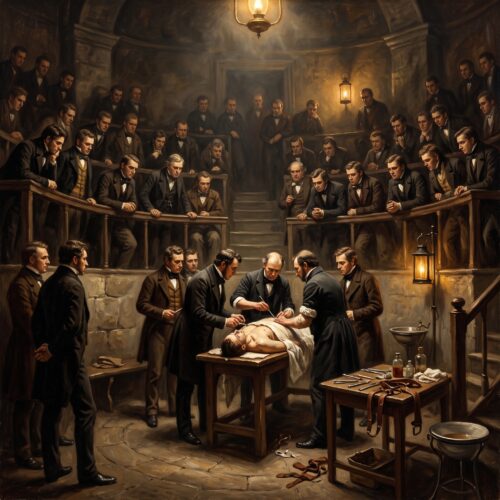
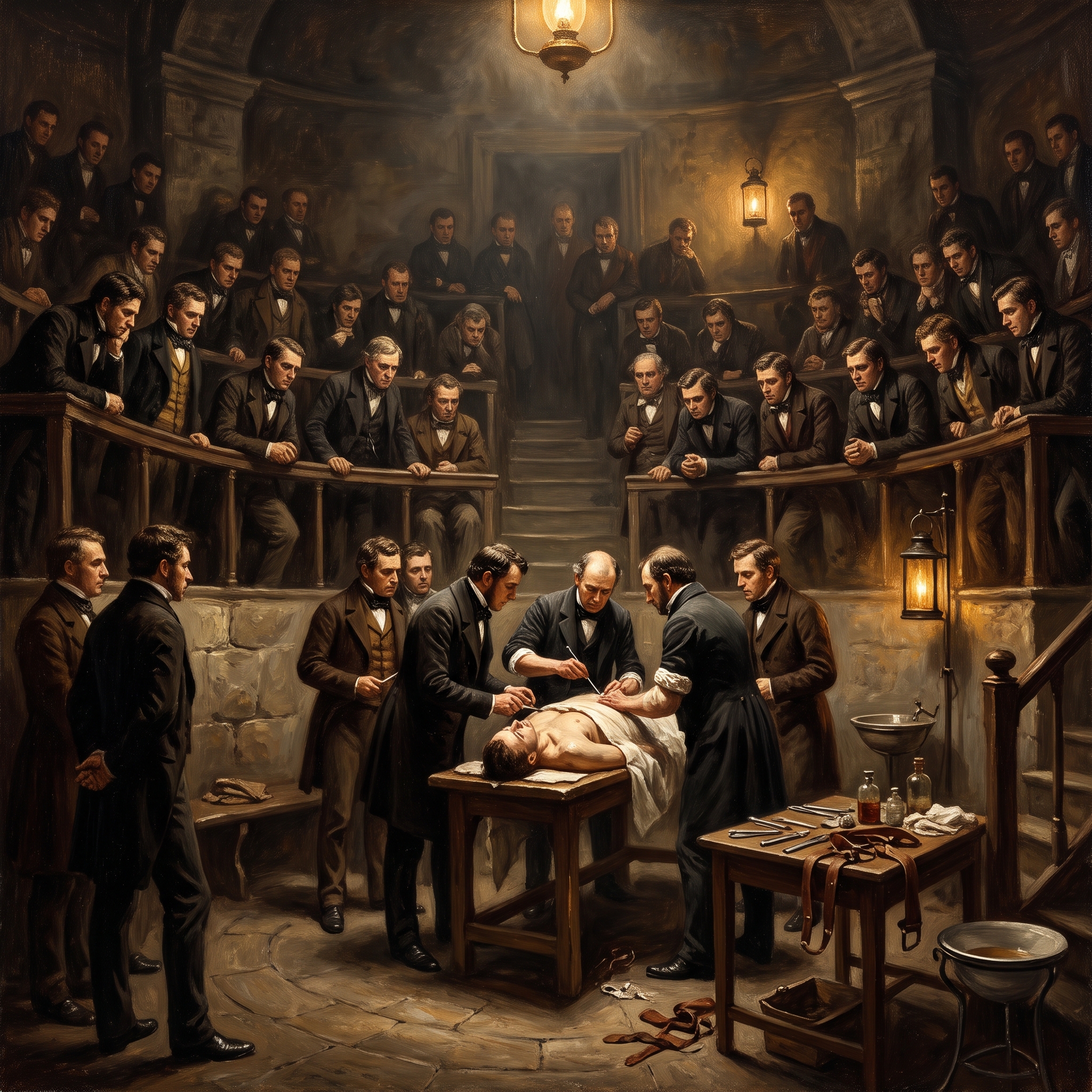
Before modern anesthesia, surgery was not a tranquil, sterile science. It was an abattoir with theater seating. Surgeons took fierce pride in frock coats stiff with dried blood, pus, and tissue from hundreds of prior procedures, wearing their encrusted garments like military battle medals. There were no antiseptic washes, no IV lines, and no pain monitors. The defining element of any nineteenth-century surgical theater was human noise. Patients were wide awake, fully aware, and screaming at the top of their lungs until they lost consciousness from sheer physiological shock.
Speed was the only mercy a surgeon could offer. Great reputations were forged on velocity alone. The famous Scottish surgeon Robert Liston could take off a human leg at mid-thigh in twenty-eight seconds flat, famously holding the blood-slicked surgical saw between his teeth to keep his hands free while tying sutures.
Hospital orderlies were hired specifically for their brute physical power. Their only job was to throw their entire weight across the writhing limbs and chests of patients strapped down to wooden boards.
For expectant mothers, the ordeal was often worse. Obstructed labor dragged on for days in cold domestic rooms, often ending in maternal exhaustion, hemorrhage, systemic infection, or death.
Compounding this agony was Victorian dogma. Society and conservative religious leaders viewed physical suffering not as an engineering problem to be solved, but as a divine design. Pain was treated as a moral tonic, a biological stimulant that kept the heartbeat steady, and an unalterable commandment laid down in sacred texts.
Young James Simpson had hated this slaughterhouse reality from the moment he entered medical school as an impoverished baker’s son from Bathgate. The first time he watched an operation at the Royal Infirmary, he felt so sickened by the terror of the patient that he walked out into the cold streets of Edinburgh, almost abandoning medicine forever.
He stayed because he became obsessed with a single mission: silencing the knife.
The Flaws of Ether and the Mad Alchemists of Queen Street
By the autumn of 1847, surgical anesthesia had taken its first awkward steps into medical awareness. In Boston, dentists and surgeons had begun experimenting with sulfuric ether.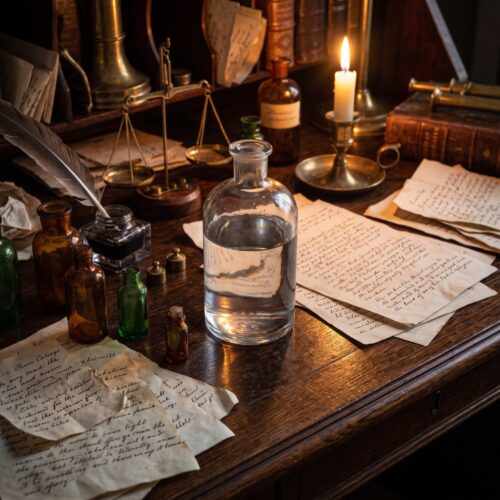
Simpson eagerly adopted ether in Scotland, but he found it deeply flawed. Ether had a suffocating, pungent odor that clung to upholstery, clothing, and hair for weeks. When inhaled, it severely irritated human bronchial tubes, provoking violent fits of coughing, spitting, and retching before sedation occurred.
More dangerously, ether was wildly volatile and explosive. In an era when surgeries and home births were illuminated exclusively by open gas flames, flickering oil lamps, and glowing coal hearths, splashing pints of ether around a room carried a constant, terrifying risk of igniting the entire house.
Simpson wanted an agent that was sweet, rapid, gentle on the lungs, and completely non-flammable. But chemical pharmacology in the 1840s possessed no computerized simulations, animal testing protocols, or laboratory clinical trials.
Simpson’s townhouse at 52 Queen Street effectively became an unregulated chemical laboratory. Whenever visiting lecturers, dignitaries, and social callers left his drawing room late at night, Simpson, Keith, and Duncan retreated to the dining table.
Their screening process was shockingly basic: chemical manufacturers and pharmacists from across Britain sent Simpson samples of newly isolated solvents. The doctors poured small measures of each mysterious fluid into drinking glasses, set the glasses in warm water to accelerate vaporization, hovered their faces over the rims, and inhaled until something happened.
Over several nerve-racking weeks, they inhaled acetone, nitric ether, benzene, iodoform, and assorted volatile hydrocarbons.
The results were largely miserable. Some vials triggered ferocious coughing fits that left the men doubled over washbasins. Others caused migraines that pinned them to their beds for twenty-four hours. Several liquids caused stomach convulsions without producing an ounce of sedation.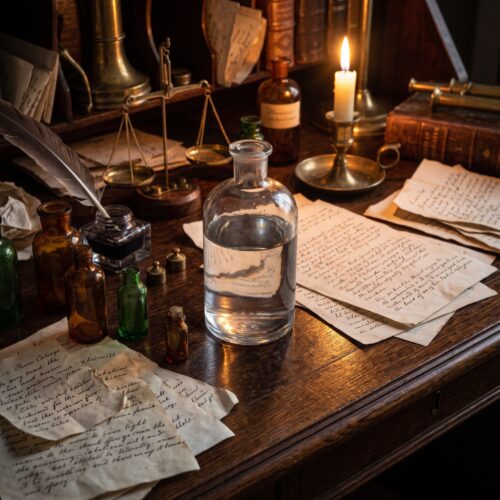
Colleagues warned Simpson that he was flirting with sudden respiratory arrest, brain damage, or cardiac failure. Simpson dismissed their concerns. He maintained that if a doctor was unwilling to risk his own skin testing a remedy, he had no moral standing to administer it to a suffering human being.
Then came a bottle sent by a chemist named David Waldie.
The Great Collapse of November 4, 1847
David Waldie was a chemist from Linlithgow working for the Liverpool Apothecaries’ Company. During a brief trip to Scotland, he recommended that Simpson examine an obscure, heavy chemical compound known as perchloride of formyl, or chloroform.
Synthesized independently in 1831 by American, French, and German researchers, chloroform had spent sixteen years sitting on apothecary shelves as a curious organic solvent with an aroma like ripe apples, but devoid of practical use.
Simpson obtained a sample from Edinburgh chemists William Flockhart and John Duncan. When it arrived, Simpson looked at the dense, viscous fluid, concluded it was far too heavy to vaporize effectively, shoved the bottle under a pile of medical papers on his writing desk, and forgot it was there.
On Thursday night, November 4, 1847, the three exhausted doctors had worked their rounds through the rainy streets of Edinburgh and reconvened around the dining table.
They began the session by inhaling another volatile ether mixture. It produced nothing but an acrid throat irritation and deep frustration. They were tired, annoyed, and on the verge of calling it a night.
Simpson suddenly remembered the heavy bottle gathering dust beneath his desk. He retrieved it, carried it into the dining room, and unstoppered the cork.
He poured a generous dose of the dense liquid into three wide glass tumblers, passing one to Dr. Keith, one to Dr. Duncan, and keeping the third for himself.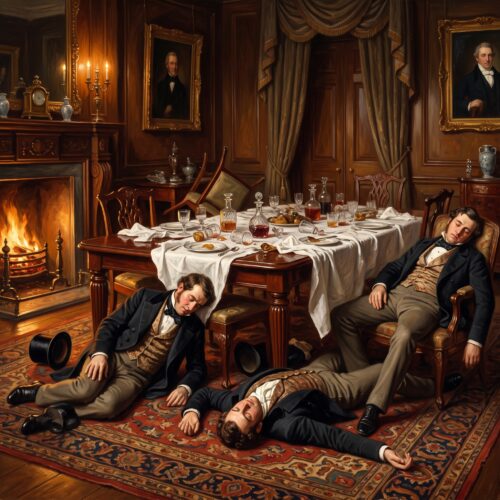
The three men leaned forward in their high-backed chairs, rested their noses over the glasses, and inhaled the sweet, fruit-scented fumes.
The effect hit them with shocking speed.
First came a sudden wave of radiant warmth and mental lightness. The fatigue of their long workday dissolved in seconds. Simpson noted that their eyes brightened, their banter grew sharp and uproarious, and they broke into fits of lively laughter, marveling at how pleasant and clear the vapor felt compared to everything else they had tried.
Then the acoustic landscape altered. Simpson noted that sounds in the room began to spin and amplify, rumbling inside his ears like the clatter of a hundred cotton mills churning at full throttle.
Keith and Duncan looked across the table through drooping, heavy eyelids, their cheerful banter slurring into nonsense syllables.
A split-second later, complete silence fell across the table.
Then came an almighty crash.
All three men dropped like felled timber.
Dr. Duncan slid off his seat, wedging himself under a side chair with his jaw slack, his eyes rolled back, and his breath sawing through a thunderous, alarming snore.
Dr. Keith folded sideways, his limbs kicking out in a convulsive reflex that nearly flipped the heavy mahogany table and sent crystal decanters rattling onto the rug.
Dr. Simpson dropped straight backward onto the floorboards, completely knocked out.
In the adjoining room, Simpson’s wife, Jessie, along with her sister and young niece, Miss Agnes Petrie, heard the splintering thud and ran into the parlor.
They found Scotland’s premier medical minds scattered across the floor like victims of a gas attack. For several terrifying minutes, the women assumed the three men had poisoned themselves to death.
Then, Simpson’s eyes fluttered open.
He was still lying flat on his back, gazing up at the ceiling molding. His mind was instantly lucid. Before he even attempted to sit up, he spoke his first waking thought aloud: “This is far stronger and better than ether!”
He pulled himself up, checked on his unconscious friends, and realized that unlike his bouts with ether, he had zero headache, no nausea, and no bronchial fire in his chest.
Duncan was still snoring under the chair, and Keith was slowly blinking back to life on the carpet.
To confirm that the experience was repeatable, Miss Agnes Petrie decided to test the vapors herself. She sat at the table, inhaled from a tumbler, peacefully crossed her hands over her chest, and murmured “I’m an angel! Oh, I’m an angel!” before drifting off to sleep with her head against the table.
The dining room session carried on until three in the morning, as the three doctors repeatedly awoke, compared sensations, and inhaled the fumes again, realizing they had accidentally stumbled upon the holy grail of surgery.
The Moral War Over Pain Relief
The breakthrough happened on November 4, but human progress rarely enjoys a smooth reception.
Simpson wasted no time. Four days later, on November 8, he administered chloroform to Jane Carstairs, a mother who had endured a traumatic three-day labor in a prior pregnancy that ended in the loss of her child. Under chloroform, she delivered a healthy baby girl without a trace of agony. In celebration of the miracle, Simpson dubbed the child’s nickname “Anaesthesia”.
Within days, Simpson published a short, punchy treatise describing his findings. The news spread like wildfire across the medical community.
Yet, Simpson was immediately met with a fierce counteroffensive.
A coalition of church leaders, conservative surgeons, and traditionalist moralists denounced the discovery. Clerics argued that pain during childbirth was a direct command from God, pointing to Genesis: “In sorrow thou shalt bring forth children.” To remove pain with a bottle of vapors was, according to these critics, an act of secular arrogance that defied divine will.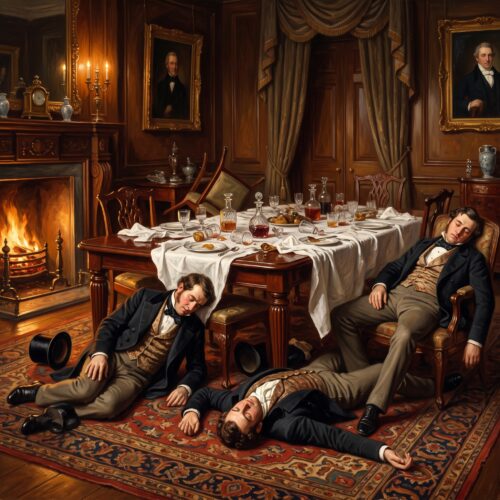
Conservative surgeons claimed that surgical pain was a necessary physical stimulant that prevented shock and promoted wound healing. They dismissed Simpson’s parlor-room experiment as reckless showmanship.
Simpson did not back down. He went straight to the theological arguments and picked them apart on their own terms.
He wrote that when God performed the very first surgery recorded in scripture—removing Adam’s rib to create Eve—the Lord Himself administered anesthesia first: “And the Lord God caused a deep sleep to fall upon Adam, and he slept.”
Simpson attacked his medical critics with relentless clinical evidence, proving that surgical shock dropped, survival rates climbed, and complications diminished when patients were spared agonizing pain.
The cultural dispute ended decisively in April 1853, when Queen Victoria went into labor with her eighth child, Prince Leopold.
The Queen insisted on receiving chloroform, which was administered by Dr. John Snow.
Victoria described the medicine as “that blessed Chloroform,” praising the soothing relief it granted her. Once the Queen of England embraced pain relief, public resistance crumbled overnight.
Simpson was eventually made a baronet, becoming the first Scottish physician ever knighted for services to medicine. When he passed away in 1870, more than thirty thousand people lined the streets of Edinburgh in rain and cold to honor the doctor who took away the screams.
Why Simpson’s Dining Table Matters to Your Life Right Now
The events of November 4, 1847, are not simply a colorful medical anecdote. They represent a masterclass in human agency, problem-solving, and personal breakthroughs.
Modern life is suffocated by advice telling you to wait for safe, predictable conditions. We are flooded with blueprints, certifications, market validations, and endless planning tools.
Most people spend years suffering under their own personal status quo—a miserable job, a dead-end routine, a creative block, or crippling self-doubt—because they have been conditioned to believe that discomfort is mandatory, that solutions require immense institutional permission, and that attempting an unproven path is irresponsible.
Look closely at what Simpson and his colleagues demonstrated on that rainy Thursday night:
- Refusing to Normalize Pain: Millions of people accepted horrific surgical agony as an immutable law of life. Simpson rejected the idea that suffering was noble simply because it had always been there.
- Active, High-Velocity Testing: Simpson did not spend five years theorizing about organic vapors; he brought the substances home, uncorked the bottles, and tested them in rapid succession.
- Investigating the Discarded: The answer to Simpson’s life quest had been sitting right under his nose, shoved under a pile of discarded papers on his desk. He almost threw it out because it looked too heavy to work.
- Skin in the Game: Simpson took the risk onto himself before asking anyone else to trust the outcome.
- Standing Tall Against the Traditionalists: When the entire medical and cultural establishment declared his breakthrough unnatural, he tore their arguments apart with poise, humor, and irrefutable proof.
Here is how you apply the mindset of November 4, 1847, directly to your own circumstances today, using an actionable, counter-intuitive blueprint that ignores typical self-help cliches.
The Chloroform Protocol: A Counter-Intuitive Action Plan
Most self-help advice demands that you build thirty-day morning routines, write long affirmations, or visualize endless goals. The Edinburgh Chloroform Protocol operates in reverse: it focuses on identifying points of friction, extracting what works through short, decisive experiments, and disregarding the gatekeepers.
- Audit Your Unquestioned Agonies
- Write down three areas of your daily routine that drain your energy, provoke anxiety, or feel deeply unpleasant.
- Ask yourself: Am I enduring this simply because everyone around me treats it as normal?
- Label these items as systemic design flaws rather than personal badges of honor. If a process hurts repeatedly without creating measurable progress, it needs an anesthetic or an amputation.
- Dig Beneath the Clutter
- Simpson kept chloroform shoved under a stack of scrap paper because it looked unpromising. Look at your own life for discarded options: the half-written draft, the job lead you thought you were underqualified for, the conversation you avoided, or the simple software tool you never bothered to configure.
- Pick one neglected idea that you sidelined for looking inconvenient or unfamiliar, and move it to the center of your desk today.
- Run a Zero-Stakes Parlor Experiment
- Do not wait for formal approval, perfect credentials, or a risk-free environment.
- Create a compact, twenty-four-hour experiment around your neglected idea. If you want to change careers, test a single micro-deliverable this evening. If you want to fix a broken operational bottleneck, apply an immediate, direct modification for one afternoon.
- Accept that testing requires mild disorientation: your initial experiments might make you stumble or feel out of place, exactly as the doctors did when they awoke on the carpet. Disorientation is proof that you entered territory you have never explored.
- Build Your Two-Doctor Dining Table
- Simpson did not experiment in total isolation; he invited Keith and Duncan to sit at the table with him.
- Identify two people in your life who possess high curiosity, low cynism, and zero attachment to conventional dogma.
- Share your raw, unfinished tests with them instead of broadcasting your ambitions to large groups of cautious traditionalists who will reflexively give you reasons to stop.
- Neutralize the Gatekeepers With Pragmatic Results
- When you change your methods, expect pushback from people who have grown comfortable with the old way of doing things.
- Never waste emotional energy arguing abstract theory with critics. Do not ask for their blessings.
- Follow Simpson’s approach: quietly gather direct, undeniable proof of results. When you present concrete evidence that solves real problems, the resistance eventually fades away.
The Lasting Truth of Queen Street
The three doctors who opened their eyes on the dining room rug at 52 Queen Street on November 4, 1847, were disheveled, groggy, and surrounded by spilled glasses.
Yet within that chaotic room sat the end of surgical agony.
Human progress does not belong to the people who sit quietly in comfortable chairs, nodding along with centuries of unexamined misery. It belongs to the individuals who are willing to unstopper the neglected bottle, gather their closest allies, inhale the unknown, and build a better way forward out of the results.
Share: