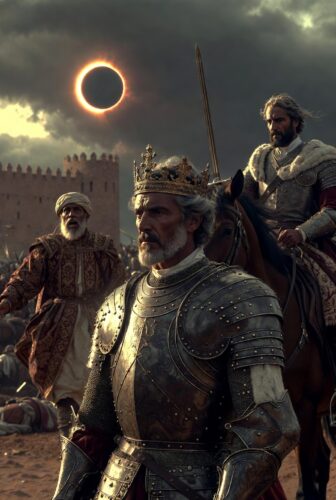

On July 12, 1191, after nearly two years of mud, starvation, Greek fire, and corpses rotting in the summer heat, the walls of Acre finally surrendered. Not with a glorious last stand or a heroic cavalry charge that songs would immortalize for centuries, but with the grim, exhausted capitulation of a garrison that had simply run out of everything except stubbornness. The city on its narrow peninsula—key port, supply hub, symbol—passed from Saladin’s Ayyubid forces back into Crusader hands. It was the pivotal moment of the Third Crusade, the one that proved you could grind an “invincible” enemy into submission if you refused to lift the siege, no matter how many of your own people the “foul air polluted with the stink of corpses” carried off.
This was no clean victory. It was a two-year mutual siege where both sides encircled each other, where disease killed far more than swords or arrows, where kings arrived late and left early, where alliances fractured over flags and egos the moment the prize was won, and where the “winner” still couldn’t march straight to Jerusalem. The fall of Acre on that July day didn’t end the war. It didn’t even guarantee the next battle. But it changed everything by proving that prolonged, ugly, attritional pressure—catapults named “Bad Neighbour” and “God’s Own Catapult” lobbing stones day after day—could crack what looked unbreakable.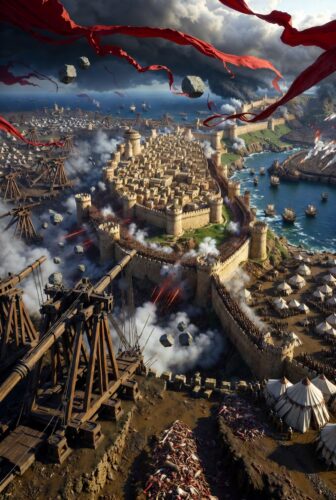
The story of how those walls came down, and what it cost, is one of the rawest lessons in human persistence ever recorded. And the specific outcome of July 12, 1191, contains a blueprint for anyone staring down their own seemingly endless siege today—whether that’s a career that feels stalled for years, a creative project that keeps hitting the same wall, a health or habit battle that drains you in the trenches, or any goal that demands showing up in the mud long after the romance has died.
### The Desperate Gamble That Started It All
After Saladin’s shattering victory at the Battle of Hattin in 1187 and the subsequent fall of Jerusalem, the Latin Kingdom of Jerusalem was reduced to a few coastal scraps. Guy of Lusignan, the man whose poor decisions had helped lose everything at Hattin, was released by Saladin on parole with a promise not to take up arms again. Churchmen conveniently ruled that promises to infidels didn’t count. So in late August 1189, Guy marched south from Tyre with a pathetically small force—roughly 7,000 infantry and maybe 400 knights—and plopped himself down in front of Acre’s formidable walls.
Acre was no minor fortress. It sat on a peninsula, protected by sea on two sides, a massive dyke and double walls with towers on the landward approaches, and a harbor full of potential resupply. Saladin had taken it easily in 1187. Now Guy was besieging it with almost nothing, gambling that holding even this one strongpoint would give him legitimacy and a base to rebuild. It was the ultimate underdog move: a discredited king with a tiny army declaring, “I’m not leaving until this city is mine again.”
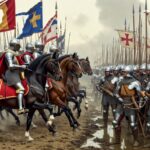
Saladin, the master strategist who had united much of the Muslim world, responded by doing what he did best—encircling the besiegers with his own larger army. Suddenly the Crusaders were trapped between the city garrison and Saladin’s relief force. What followed was not a series of epic field battles but nearly 700 days of grinding attrition. Reinforcements trickled in from Europe by sea. Early contingents from Denmark, Germany, England, France, Frisia, and Flanders swelled the Christian lines and allowed them to build their own fortified camps and double lines. But Saladin’s men kept pressure on with arrows, darts, and harassment. The Crusaders launched occasional assaults that usually ended in bloody repulses or plundering that left them vulnerable to counterattacks.
Winters were nightmares. Storms kept supply ships away. Food prices soared until only the rich could eat grain; the poor starved or ate their warhorses, then grass. Disease—dysentery, malaria, whatever “foul air” carried—tore through both camps. Queen Sibylla of Jerusalem and her daughters died of illness in 1190, stripping Guy of his strongest claim to the throne and sparking vicious succession politics between him and Conrad of Montferrat (who held Tyre and had his own ambitions). Leaders like Louis III of Thuringia succumbed. Men arrived eager for holy war and died before they ever swung a sword in anger.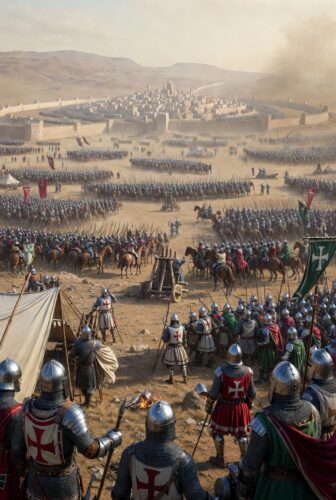
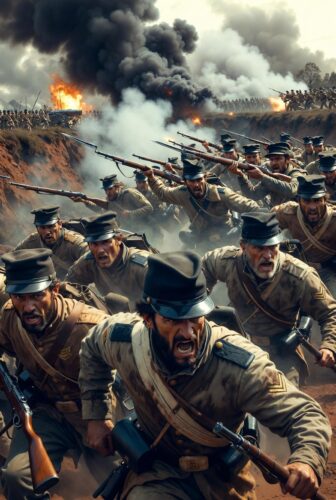
The technology of misery advanced on both sides. Crusaders built trebuchets, ballistas, and mangonels. Defenders answered with Greek fire—pressurized flammable liquid that turned siege engines into infernos. Early on, Muslim galleys slipped through incomplete blockades to resupply the city. Crusader crossbowmen learned to soften targets before charges. Both sides dug in, quite literally, in trench-like conditions where guards got no rest and lulls sometimes produced bizarre fraternization—shared meals or games across lines—before the killing resumed.
By spring and summer 1190 the stalemate was total. Three massive Crusader siege engines were destroyed by Greek fire in one day. Saladin’s nephew Taqi al-Din pulled some of his forces away for personal conquests elsewhere, weakening the relief effort. The Crusader camp became its own besieged city, surrounded and slowly bleeding.
### The Kings Arrive and the Real Engines of War Deploy
The arrival of the big European monarchs changed the math but not the misery. Frederick Barbarossa’s massive German army had mostly disintegrated on the overland route— the emperor himself drowned in a river, and disease finished off huge numbers of the survivors before they reached the Holy Land. Philip II Augustus of France reached Acre on April 20, 1191, and immediately set about building more trebuchets and pressing attacks. But it was Richard I of England—the Lionheart—who landed on June 8, 1191, with a fleet of over 100 ships carrying thousands of men, supplies, and serious siege equipment, who shifted the balance decisively.
Richard brought “Bad Neighbour” (Malevoisine) and “God’s Own Catapult”—two enormous mangonels that could batter walls from distance. He also brought personal leadership of the aggressive, hands-on variety. Chronicles describe him firing a crossbow from a stretcher while ill (possibly with scurvy or some camp fever), and personally incentivizing sappers with gold coins for every stone they removed from the foundations. The Crusader numbers swelled toward 25,000. A Genoese fleet helped complete the naval blockade, trapping dozens of Muslim ships in the harbor.
The final weeks were a crescendo of engineering and violence. Walls were breached and repaired multiple times amid savage fighting. On July 11 there was a last coordinated attempt by the Acre garrison and Saladin’s army to break out or relieve the city. It failed. On July 12, 1191, the defenders offered terms. Conrad of Montferrat helped negotiate. The garrison surrendered the city, its military stores, and the 70 ships in the harbor (a detail that reportedly shocked Saladin when a swimmer messenger finally reached him). Christian prisoners were to be exchanged, a large ransom in gold paid, and a fragment of the True Cross—captured at Hattin—returned.
The Crusaders entered Acre. For a moment, it looked like the kind of triumph that could turn the entire war.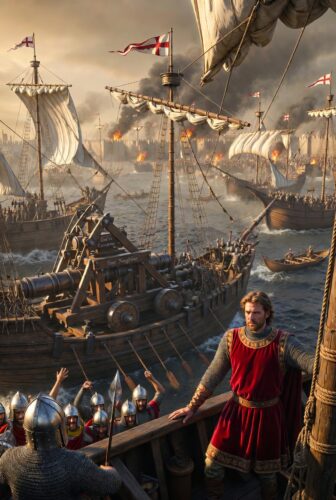
### The Ugly Morning After
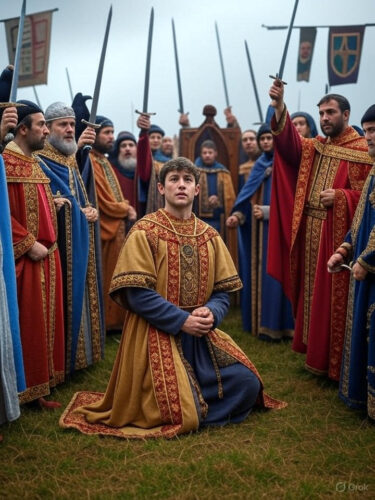
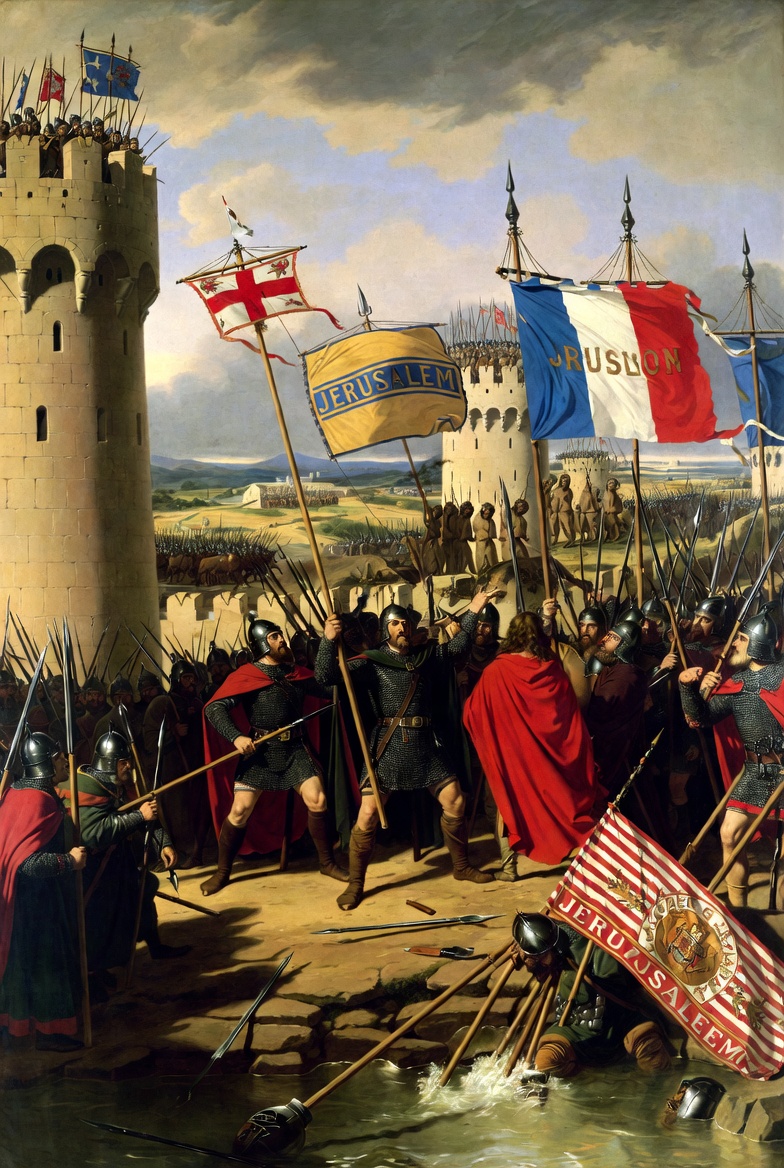
Victory immediately revealed its cracks. Leopold V of Austria, leading the remaining German contingent, raised his banner alongside those of England, France, and Jerusalem. Richard (or his men) tore it down and threw it into the ditch—an insult to Leopold’s honor that would have consequences later when Richard was captured on his way home. Philip II, already ill or politically anxious about France, soon departed. Guy of Lusignan’s position remained shaky amid ongoing succession fights.
Then came the massacre. The surrender terms included phased ransom payments and prisoner exchanges starting in mid-August. When the first deadline passed without full compliance (and with suspicions that Saladin was stalling to regroup), Richard ordered the execution of roughly 2,700 Muslim prisoners—men, women, and children—on August 20 in full view of Saladin’s army. Saladin retaliated by killing his own Christian captives. The act stained Richard’s reputation in Muslim sources and hardened attitudes on both sides.
Acre itself became the new de facto capital of the battered Kingdom of Jerusalem and remained a Crusader stronghold until 1291. The victory allowed Richard to march south, win a tactical masterpiece at the Battle of Arsuf on September 7 (where disciplined Crusader formations and a timely cavalry charge broke Saladin’s harassing attacks), and capture Jaffa. But the broader goal—Jerusalem—remained out of reach. Disease, supply problems, internal rivalries, and Saladin’s still-intact army prevented a successful siege of the Holy City. In 1192 Richard and Saladin signed the Treaty of Jaffa: Christians kept a coastal strip including Acre and Jaffa, and unarmed pilgrims could visit Jerusalem, but the city stayed under Muslim control.
The Third Crusade achieved a partial strategic success—reversing many of Saladin’s 1187 gains and proving the Crusader states could survive—but it fell short of its religious and emotional core. Acre’s fall was the hinge. Without it, there would have been no Arsuf, no Jaffa, no treaty. With it, the Crusade still couldn’t deliver the ultimate prize.
### What July 12, 1191 Actually Teaches Anyone Grinding Through Their Own Siege
The specific outcome of that day—the city surrendering after nearly two years of mutual exhaustion rather than one side achieving total annihilation—carries direct, usable lessons for modern life that go far beyond generic “never give up” posters.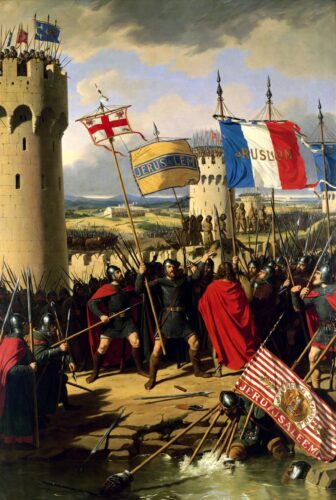
– Prolonged visible pressure on a fixed target eventually creates structural failure even when the target looks impregnable. The walls didn’t fall because of one genius assault; they fell because sappers removed stones daily, mangonels chipped away relentlessly, and the blockade starved resupply. In any long-term challenge, the equivalent of “Bad Neighbour” tactics—consistent, accumulating actions aimed at the weakest structural point—beats waiting for a perfect heroic moment.
– Disease and attrition are usually deadlier than the enemy’s best shots. Most of the 19,000 or so Crusader deaths at Acre came from illness, starvation, and exhaustion, not glorious combat. Your real opponents in any extended campaign are rarely the dramatic obstacles; they’re the slow leaks—distraction, burnout, poor recovery, self-sabotage—that erode you while you’re focused on the “big battle.”
– Reinforcements change everything, but only if you’re still in the field when they arrive. Guy’s tiny initial force would have been wiped out without the steady arrival of ships and the later arrival of Philip and especially Richard with serious engines and numbers. Holding position long enough for the right resources, skills, or allies to show up is often the entire game.
– Internal politics and ego will try to wreck your victory the moment the wall cracks. The flag incident with Leopold, Philip’s early departure, the succession squabbles, and the massacre itself all happened right after the surrender. Success creates new problems—envy, credit-claiming, overreach, or relaxing the very discipline that got you there. The “post-Acre consolidation” phase is where many campaigns die.
– Even partial victories that secure a foothold are worth the horror if they give you options you didn’t have before. Acre didn’t win the war, but it turned a desperate, scattered remnant into a viable base with a port. Many modern “failures” are actually the capture of necessary intermediate positions that later enable the real advance.
– The enemy is also suffering. Saladin’s army was large and skilled but couldn’t fully relieve the city despite his brilliance. His forces faced the same disease and supply strains. Assuming your obstacles are infinitely resilient while you’re the only one hurting is a fast way to quit too early.
### The Acre Protocol: Your Personal Siege-Breaking Blueprint (Fast, Brutal, and Nothing Like Standard Self-Help)
Most self-help tells you to “visualize success” or “find your why” or “take massive action.” The Acre Protocol is different. It’s built on the actual mechanics that worked in 1189–1191: establish siege lines, deploy accumulating engines, audit and integrate reinforcements ruthlessly, maintain discipline through the dysentery phase, and handle the messy victory without self-destructing. It’s designed to be implemented quickly—start today, see structural movement in weeks, not years—and then repeated or scaled for bigger campaigns.
**Week 1: Draw Your Siege Lines and Name Your Mangonels**
Identify the exact “city” you’re besieging (the specific goal or problem) and the walls around it (the recurring obstacles). Draw literal lines—physical or calendar boundaries—that cut off easy resupply to the bad habits or distractions feeding the problem. Then build two named “mangonels”: two non-negotiable daily or near-daily actions that chip away at the weakest structural point. One might be a 25-minute deep work block on the project every morning before anything else. The other might be a “stone removal” habit like reviewing and deleting one source of friction or input daily. Pay yourself small, immediate “sapper gold”—a tiny reward or tracked win—for each stone moved. No feelings required. Just accumulation.
**Week 2: Complete the Naval Blockade and Audit Reinforcements**
Cut off the remaining supply lines to whatever is keeping your problem alive—specific apps, people, environments, or thought patterns. Make it mechanically harder to access them. Then run a brutal reinforcement audit: Who or what in your life is Philip (useful but likely to leave early or bring complications)? Who is Richard (high-impact when they arrive, worth waiting for and integrating aggressively)? Who is Leopold (will cause ego drama right after a win)? Make deliberate decisions—strengthen the useful, limit exposure to the dramatic, prepare for the ones who bail. Add one high-leverage external input this week (a tool, course segment, or person) that functions like Richard’s fleet.
**Week 3: Weather the Dysentery and Launch Calculated Sorties**
This is the attrition phase. Expect energy crashes, motivation flatlines, and “why am I even doing this” moments—the medieval equivalent of camp fever. Your only job is to keep the lines manned and the mangonels firing at minimum viable levels. No heroics needed. Add one “sortie” per week: a slightly bigger push or experiment aimed at a breach point, but only after the daily engines have softened it. Track what actually moves the needle versus what just feels productive.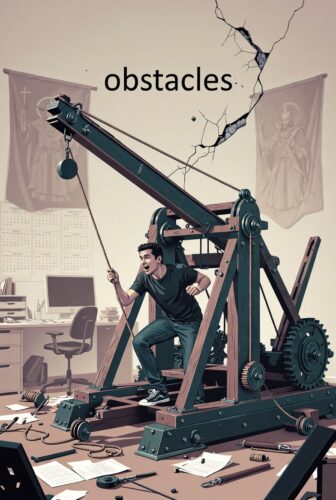
**Week 4: Breach, Consolidate, and Don’t Throw the Flag in the Ditch**
When you see the first real crack (a measurable win, reduced resistance, new options appearing), treat it like July 12, 1191. Secure the gain immediately—lock in the new habit, system, or position before celebrating. Then run the post-surrender checklist:
– Handle any “Leopold flag” moments ruthlessly but cleanly (address ego clashes or credit issues before they fester).
– Decide what “prisoners” (old habits, toxic inputs, unfinished business) need executing versus ransoming (keeping around in limited form).
– Use the new foothold to plan the next campaign (Arsuf equivalent) instead of declaring total victory and relaxing.
Repeat the protocol on the next layer of the problem or a new target. The beauty is that each completed siege makes the next one faster because you’ve already built the discipline, engines, and alliance-management skills.
This isn’t about becoming a medieval knight or romanticizing suffering. It’s about recognizing that the thing that actually worked in one of history’s longest and grimmest sieges—refusing to lift the pressure, protecting your own lines while steadily degrading the opponent’s, bringing in the right heavy equipment when it became available, and refusing to let victory politics destroy what you’d won—was never about inspiration. It was about mechanics.
On July 12, 1191, the Accursed Tower fell not because the Crusaders were purer or braver in some abstract sense, but because they stayed, they built better engines, they tightened the noose, and they accepted that the cost would be horrific. The modern version of that choice is available to anyone willing to treat their biggest obstacles like a fortified peninsula that can be reduced by consistent, intelligent, ugly persistence.
The walls are thicker than you think. The disease will hit harder than the obvious enemies. Your allies will squabble over flags the moment you win something. But the precedent is there in the historical record: if you keep the mangonels firing and the blockade tight long enough, even the most stubborn walls eventually run out of stones to throw back.
That’s the lesson that arrived on July 12, 1191. Use it.
Share: