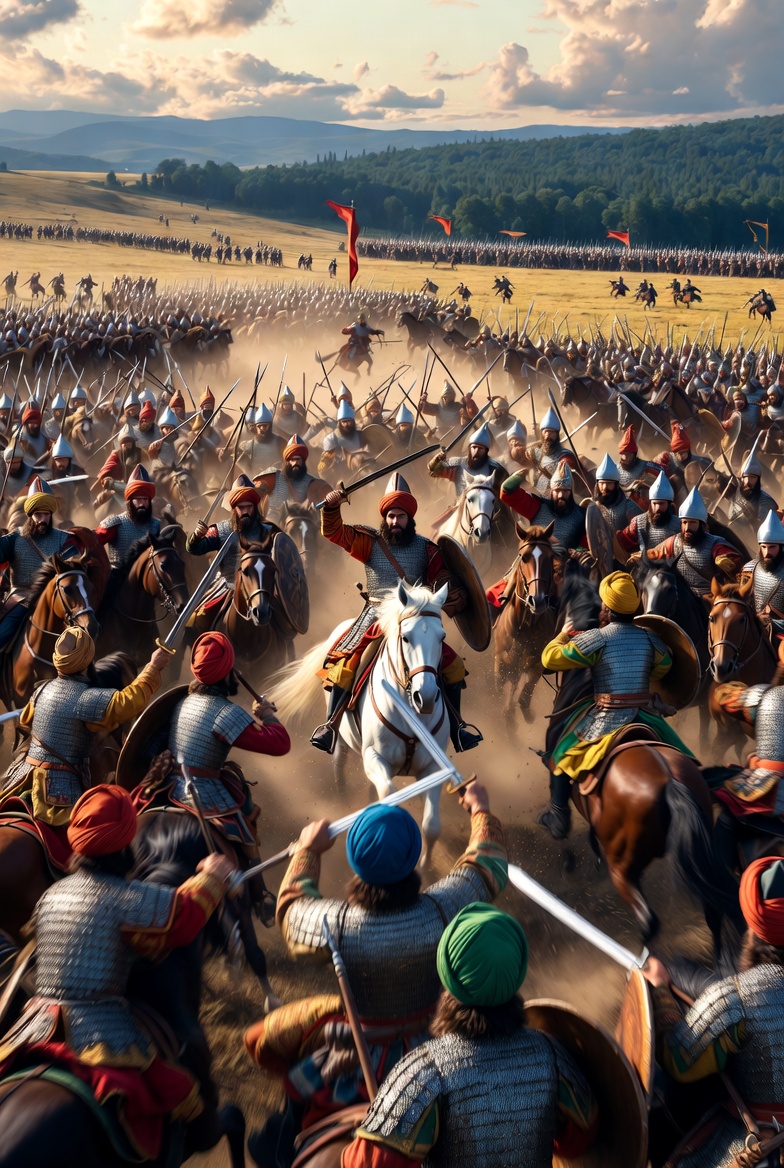

On July 1, 69 AD, in the sun-baked streets of Alexandria, Egypt, a Roman prefect named Tiberius Julius Alexander did something quietly revolutionary. He ordered the legions under his command—the hardened soldiers guarding Rome’s vital grain supply—to swear a formal oath of allegiance not to the current emperor in Rome, but to a tough, no-nonsense general still fighting rebels hundreds of miles away in Judea. That general was Titus Flavius Vespasianus, better known as Vespasian. This single act, executed under the desert sun amid the chaos of civil war, kicked off a chain reaction that ended Rome’s bloodiest year of imperial musical chairs and launched the stable Flavian dynasty. Vespasian would go on to restore order, refill empty treasuries, begin construction of the Colosseum, and rule for a decade with the kind of gritty pragmatism that made previous emperors look like reality-show contestants.The story is packed with political intrigue, military maneuvering, unlikely alliances, and one of history’s most delightfully blunt lessons on where real power actually comes from. It is not flashy self-promotion from the capital. It is decisive action from your strongest outpost, the rallying of key supporters who “proclaim” you, iron control of critical resources, and the cheerful willingness to squeeze value out of anything—even public toilets. Here is the full, vivid tale of that pivotal July 1, followed by exactly how its outcome can reshape how you approach your own chaotic “empire” of goals, obstacles, and daily battles—delivered through specific, battle-hardened bullet points and one genuinely original, quick-to-execute plan that owes nothing to generic vision boards or morning routines. ### The Year Everything Fell Apart: Rome’s Soap Opera of Emperors To understand why one oath in Alexandria mattered so much, picture the Roman Empire in late 68 and early 69 AD as a sprawling, overstretched beast whose head kept getting chopped off and replaced by increasingly ridiculous successors. Emperor Nero had killed himself in June 68 after the Senate declared him a public enemy. His death triggered the “Year of the Four Emperors”—a frantic civil war that saw four men claim the purple in quick succession. It was less “Game of Thrones” and more “four middle-aged men with bad judgment and too many soldiers” trying to out-murder each other while the provinces watched in horror. First came Servius Sulpicius Galba, an elderly, stingy aristocrat propped up by the Spanish legions. He marched on Rome but quickly alienated everyone by refusing to pay the customary bonuses to the Praetorian Guard and by executing people with gleeful inefficiency. By January 69, the Praetorians murdered him in the Forum and installed Marcus Salvius Otho, a charming, debt-ridden former friend of Nero’s who had once been married to the emperor’s wife (awkward). Otho looked the part—handsome, theatrical, good at parties—but his reign lasted barely three months. He committed suicide after losing a battle to the next claimant.
That next claimant was Aulus Vitellius, a gluttonous former governor of Lower Germany whose main qualifications seemed to be an enormous appetite and legions loyal to him. Vitellius’s march to Rome was a traveling circus of excess: thousands of soldiers, hangers-on, and supply wagons groaning under the weight of food and wine. Once in the capital he feasted extravagantly while the treasury hemorrhaged money. Contemporary writers described him as so bloated he could barely move; his reign was short on governance and long on banquets. Meanwhile, far from this Roman drama, a different kind of Roman was methodically grinding through a real war in Judea. Vespasian, born in 9 AD to a family of modest equestrian rank (think solid middle class with military connections, not ancient nobility), had already built a respectable career. He had fought in Britain, helped subdue rebellious tribes, and earned a reputation for steady competence rather than flashy brilliance. Nero had sent him in 66 or 67 to crush the Jewish Revolt. By early 69, Vespasian and his son Titus had secured large parts of the province, bottling up the remaining resistance in Jerusalem. Vespasian was no wide-eyed idealist; he was a practical soldier-administrator who understood logistics, morale, and when to be ruthless. News of the chaos in Rome reached the eastern provinces. The legions in Judea, Syria, and especially Egypt began to grumble. They had a capable commander already in the field. Why follow a parade of weak or decadent emperors when they could back their own man? ### Enter Tiberius Julius Alexander: The Fixer Who Made the First Move The man who lit the fuse was Tiberius Julius Alexander, prefect (governor) of Egypt. Born around 15 AD in Alexandria to a wealthy Jewish family—his father was a prominent businessman known as the Alabarch, and his uncle was the philosopher Philo of Alexandria—Alexander had chosen the Roman path completely. He rose through the ranks: procurator of Judea in the late 40s, then increasingly powerful posts. By the late 60s he was prefect of Egypt, one of the most important jobs in the empire because Egypt supplied much of Rome’s grain. Whoever controlled Egypt’s grain fleet could starve or sustain an emperor. Alexander was pragmatic to the core. He had navigated Roman service while maintaining complex ties to his Jewish heritage, but loyalty to the empire and to competent leadership came first. In early 69 he received communications from Vespasian (or coordinated through mutual contacts). The timing was perfect. Vitellius was emperor in name only, unpopular and overstretched. The eastern armies needed a champion. On July 1, 69 AD—exactly as recorded in ancient sources—Alexander acted. In Alexandria, the great cosmopolitan city of libraries, lighthouses, and trade, he assembled the Roman legions stationed there (two legions plus auxiliaries) and ordered them to swear the military oath of allegiance (*sacramentum*) to Vespasian as emperor. This was not a casual cheer. It was a formal, binding ritual. Soldiers pledged loyalty, often touching their standards or weapons. The act was public enough to be noticed and recorded; papyri fragments even hint at accompanying festivities.
This was the first formal imperial acclamation for Vespasian. It carried enormous weight. Egypt’s legions were well-trained and its grain supply was the empire’s lifeblood. Alexander’s move gave Vespasian instant legitimacy in the East and a strategic base. Within days the legions in Judea (Vespasian’s own command) and then those in Syria under the capable governor Gaius Licinius Mucianus followed suit. The eastern bloc had chosen its emperor. Vespasian, still in the field in Judea or nearby Caesarea, received the news and accepted the title. He did not immediately race to Rome like some glory-hungry claimant. Instead he played the long game with characteristic shrewdness. ### Securing the Grain and Marching West Vespasian sailed to Alexandria to personally secure the Egyptian grain supply. Controlling those shipments meant he could influence (or threaten) Rome’s food supply without firing a shot in Italy yet. While there he was received with pomp; the city celebrated its new imperial patron. He left his son Titus in charge of finishing the Judean campaign. Meanwhile, Mucianus took a significant force and began the long march westward through Asia Minor and into the Balkans, heading for Italy. Another Flavian supporter, Antonius Primus, led Danubian legions in a faster thrust. These forces met Vitellius’s army at the Second Battle of Bedriacum in October 69. Vitellius’s side crumbled. In December, fighting reached Rome itself. Vitellius was captured, paraded through the streets, and killed in brutal fashion—his body dumped in the Tiber. On December 21, 69, the Senate in Rome formally recognized Vespasian as emperor. The civil war was effectively over. Vespasian himself did not arrive in the capital until the summer of 70, taking time to consolidate his eastern position and let the dust settle. ### Ten Years of Gritty Greatness: What Vespasian Actually Built Once in power, Vespasian ruled from 69 to 79 AD with the same practical intelligence that had served him in the field. He was not a philosopher-king or a military genius like some predecessors. He was a fixer who understood money, morale, and monuments.
The treasury was empty after years of Nero’s extravagance and the civil war. Vespasian raised taxes, reorganized finances, and famously imposed a tax on the collection of urine from public latrines (used in tanning and laundering). When his son Titus complained that taxing something so base was beneath imperial dignity, Vespasian held up a coin from the first payment and asked whether it smelled offensive. Titus said no. Vespasian replied, “Yet it comes from urine.” The phrase *pecunia non olet*—“money does not stink”—was born. It remains a perfect encapsulation of Vespasian’s worldview: value is value, regardless of source. He squeezed revenue from everywhere without shame and without waste. He began the Flavian Amphitheatre—better known as the Colosseum—using funds partly from the spoils of the Jewish War. The massive project symbolized renewal: a grand public space built by and for the people after years of elite excess and civil strife. Construction started around 70–72 AD and continued under his sons. Vespasian also stabilized the frontiers, reformed the army’s loyalty structures, and projected steady competence. When he died in 79 AD at age 69, his last reported words were characteristically wry: “Oh dear, I think I’m becoming a god” (referring to the Roman custom of deifying emperors). His son Titus succeeded him smoothly, then Domitian. The Flavian dynasty brought two decades of relative stability after the nightmare of 69. The July 1 oath in Alexandria had been the spark. Without that distant, decisive proclamation and the subsequent control of Egypt’s resources, the eastern legions might have stayed neutral or backed someone else. The civil war could have dragged on longer, with more destruction. Instead, one calculated move from a capable subordinate turned a grinding provincial commander into the man who rebuilt Rome’s foundations. ### How the Alexandria Oath’s Outcome Can Transform Your Life Right Now The historical payoff of that July 1, 69 AD moment is not abstract inspiration. It is a precise strategic template: - Act decisively from your strongest current position rather than waiting for perfect consensus or central approval. - Secure critical resources and supply lines first. - Allow respected allies to elevate and proclaim your position rather than shouting your own claims from weakness. - Extract value from every available source, no matter how unglamorous (“urine tax” thinking). - Consolidate your base before charging into the main arena. - Rule with pragmatic humor and measurable results rather than flash or excess. These are not vague mindset shifts. They are operational principles that ended a civil war and built lasting monuments. Applied to an individual life—career plateaus, competing priorities, personal projects, or daily chaos—they produce outsized results because they mirror how real power actually consolidates.
**Specific benefits you gain by internalizing this historical outcome:** - You stop reacting to everyone else’s chaos and instead set the tempo from your own “Alexandria”—the area where you already hold leverage or competence. - You build legitimacy through demonstrated support rather than self-hype, which attracts better opportunities and reduces resistance. - You protect your momentum by locking down foundational resources (time, money, energy, key relationships) before launching big moves. - You develop the habit of monetizing or optimizing overlooked assets instead of dismissing them as “not prestigious enough.” - You cultivate patience for consolidation phases, preventing burnout from premature all-out assaults on goals. - You gain a bias toward measurable, pragmatic progress over performative drama, leading to compounding wins that actually last. ### The Alexandria Oath Action Plan: Your Quick, Original, Battle-Tested Campaign This is not another generic self-help checklist. It is a compressed military-style operation modeled directly on the 69 AD sequence—scout, oath, secure grain, rally and march, pragmatic rule, and triumph. It is designed to be executed in roughly 7–14 focused days (or spread over a few weeks if life intervenes), then maintained as an ongoing operating system. The uniqueness lies in its proxy-elevation mechanics, resource-first sequencing, and deliberate “urine tax” optimization step—elements almost never combined in modern advice. **Phase 1: Scout Your Alexandria (Days 1–2)** Map your current strongest position with brutal honesty. Where do you already have some command, resources, or credibility (current job/role, a side skill, a network, a physical base, even a consistent habit)? Write a one-page “province report”: strengths, available assets, immediate threats (distractions, leaks of time/energy). Identify 1–3 potential “Tiberius Alexanders”—people whose public or private endorsement would carry weight in your world (a respected colleague, mentor, client, or even an online community leader). Do not pitch yet; just list them and note why their support would matter. **Phase 2: The Oath (Day 3)** Craft your precise “imperial vision” in one clear paragraph: the specific outcome you are claiming (promotion target, project completion date and metrics, habit streak goal, financial milestone). Make it measurable and time-bound. Then “proclaim” it by sharing the vision statement with your chosen Alexander figure(s) in a direct conversation or message. Frame it as seeking their insight or alliance, not begging. This mirrors the formal oath—external validation from a credible source creates psychological and practical momentum. Journal the exact wording and date it. The act of externalizing it under witness changes internal commitment. **Phase 3: Secure the Grain (Days 4–5)** Before any forward movement, lock your supply lines. Create a simple resource fortress: block recurring time slots in your calendar for the goal (non-negotiable “legion training” blocks); build or review a minimal budget/skill inventory; gather the three most critical tools or pieces of information you lack. Now execute the “urine tax” step—identify one overlooked or slightly embarrassing asset in your life (unused skills, old inventory, awkward network contact, time spent on low-value scrolling) and convert a small piece of it into immediate value or advantage this week. Sell something, pitch a micro-service, reframe a “waste” activity into a 20-minute daily optimization. Document the conversion. This single habit alone differentiates the plan from everything else online. **Phase 4: Rally and March (Days 6–9)** With base secured and oath witnessed, expand support. Contact or subtly engage 2–4 additional allies using the credibility from your Alexander figure. Begin small, disciplined daily actions toward the goal (the “march”) while fiercely protecting your Alexandria base—do not let new activity cannibalize your foundation. Use simple tracking (a notebook or app log of key metrics like Vespasian tracking finances). Expect friction; treat obstacles as Vitellius-style excess to be outmaneuvered with steady pressure rather than dramatic confrontation. **Phase 5: Pragmatic Rule and Triumph Review (Days 10–14 and ongoing)** Measure results like an emperor auditing the treasury: What moved? What leaked? Cut one obvious waste ruthlessly. Add one high-leverage optimization. Celebrate the “triumph” milestone modestly but visibly (a small reward tied to progress, a note to your supporters). Adjust course without drama. The plan’s maintenance rule: every 30 days rerun a mini “Alexandria scout” to re-secure resources and re-proclaim updated goals to key supporters. This sequence works because it replicates the actual mechanics that turned civil-war chaos into a decade of building: first-mover advantage from strength, external proclamation for legitimacy, iron resource control, value extraction from anywhere, and pragmatic iteration. It is fast enough to produce visible movement within two weeks yet structured enough to compound over months and years. It requires no special equipment, no expensive courses, and no pretending chaos does not exist—it weaponizes the chaos the way Vespasian weaponized a fractured empire. The man who became emperor because a prefect in Alexandria decided the time was right did not wait for permission from Rome. He did not rely on flash. He secured his base, accepted the proclamation of capable allies, and then ruled with the cheerful realism that money—and power—does not stink when you know how to collect it. On this July 1, the same strategic logic is available to anyone willing to treat their life like a campaign worth winning. The legions are waiting. Your Alexandria is already under your command. The only question is whether you will give the order.
Share: