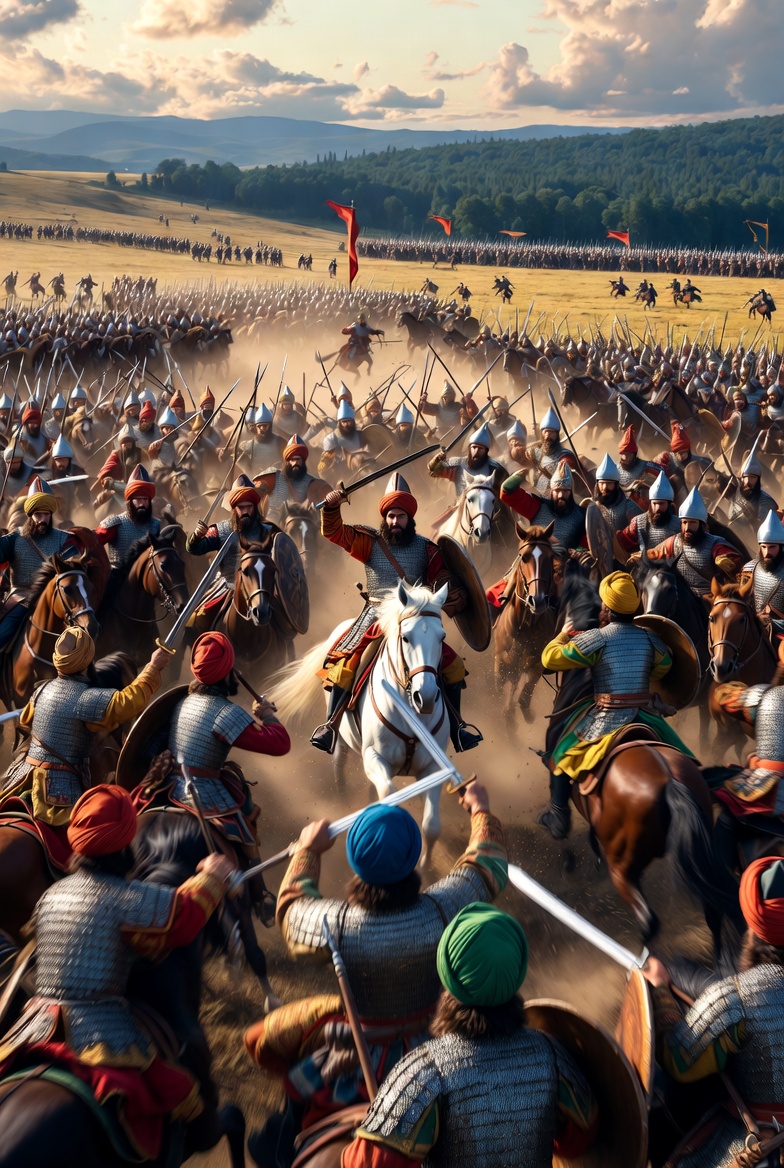

On a humid June morning in 1575, in the rolling hills of Mikawa Province in central Japan, the air smelled of wet earth, horse sweat, and gunpowder smoke that refused to stay wet. A young warlord named Takeda Katsuyori, heir to one of the most feared cavalry dynasties in the chaotic Sengoku period, watched his elite horsemen — the legendary “wind” riders who had terrorized eastern Japan for decades — charge again and again into a line of crude wooden fences. Behind those fences waited ashigaru foot soldiers with matchlock guns that “shouldn’t” have worked after recent rain. By mid-afternoon, thousands lay dead, including eight of the Takeda’s most famous veteran generals. The proud Takeda cavalry, built on speed, tradition, and the assumption that proven methods would always carry the day, had been systematically dismantled by preparation, discipline, and a willingness to let old assumptions die.This was the Battle of Nagashino (also called the Battle of Shitaragahara), fought on June 28, 1575. It was not the largest battle of the Sengoku wars, nor the most famous in Western retellings. But it was a perfect, bloody demonstration of a timeless truth: brute-force tradition and overconfidence in “what always worked before” will eventually gallop straight into a wall of new realities — and the wall usually wins. The story begins in the fractured world of 16th-century Japan. The central Ashikaga shogunate had collapsed into irrelevance. Daimyo warlords carved out territories through constant warfare, betrayal, and opportunistic alliances. In this environment, the Takeda clan of Kai Province had risen to terrifying prominence under Takeda Shingen. Shingen was a strategic genius who combined brilliant logistics, psychological warfare, and the most feared cavalry in Japan. His red-armored horsemen moved like a storm, using speed and coordinated archery to shatter slower enemies. Rival daimyo learned to fear the Takeda banner. When Shingen died in 1573 (reportedly from illness during a campaign, though rumors of a sniper’s bullet persist), his son Katsuyori inherited an army at the peak of its reputation but facing new pressures. Katsuyori was ambitious and aggressive, eager to prove himself worthy of his father’s legacy. He continued the clan’s expansionist policies, particularly clashing with Tokugawa Ieyasu over control of Mikawa Province. In June 1575, Katsuyori launched an invasion aimed at securing Nagashino Castle, a modest but strategically vital fortress held by a Tokugawa vassal, Okudaira Nobumasa (also called Sadamasa). The castle sat along key supply routes. Capturing it would give the Takeda a bridgehead deep into Tokugawa territory and threaten Ieyasu’s growing power base.
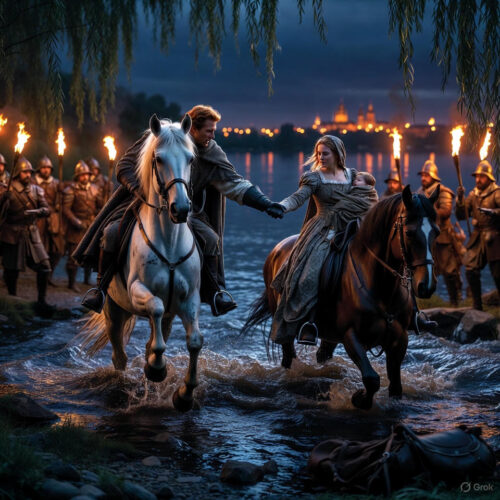
Katsuyori brought roughly 15,000 men against a garrison of only about 500 defenders. On paper, it looked like an easy siege. Takeda engineers attempted mining under the walls, rafts to ferry troops across rivers, and siege towers. The defenders, led with remarkable tenacity by Okudaira and supported by his wife Kamehime, repulsed every attempt. Supplies inside the castle dwindled. The situation grew desperate. Here enters one of the most stirring underdog moments in samurai history: Torii Suneemon. Torii was not a high-born samurai. He was an ashigaru — a foot soldier of lower status — serving the Okudaira. But he was known for bravery and intimate knowledge of the local terrain. With the garrison facing imminent collapse, Torii volunteered for a near-suicidal mission. Under cover of night, he slipped out of the castle, swam the cold river moat, evaded Takeda patrols, and ran roughly 35 kilometers through mountainous country to reach Tokugawa Ieyasu at Okazaki Castle. He delivered the urgent plea for help. Tokugawa immediately appealed to his powerful ally, Oda Nobunaga. Nobunaga — the ruthless innovator often called the “Demon King” — had been occupied with other campaigns but recognized the strategic stakes. He mobilized swiftly. By June 21–22, Nobunaga was marching with around 30,000 men. Combined with Ieyasu’s forces, the relieving army numbered approximately 38,000. They arrived in the area around June 26–27 and took up positions west of the Rengogawa (or Rengo River), a small but steep-banked stream that would play a crucial role. Katsuyori, learning of the approaching army, faced a critical decision. Many of his veteran vassals advised retreat back to the safety of Kai Province. The odds had shifted dramatically. But Katsuyori, perhaps overconfident in his cavalry’s reputation or underestimating the speed and resolve of the Oda-Tokugawa response, chose to fight. He left about 3,000 men to maintain pressure on the castle and advanced with roughly 12,000 to confront the relieving force. What happened next on June 28 transformed Japanese military history and offers one of the clearest historical case studies in why innovation and disciplined systems beat raw tradition when circumstances change. Nobunaga and Ieyasu did not meet the Takeda in open-field glory. They chose their ground carefully and improved it. They deployed across a north-south line roughly 100 yards west of the Rengogawa. The northern flank was anchored by high ground; the southern by the Toyokawa River. The steep banks of the Rengogawa itself would slow any cavalry charge. Most importantly, Nobunaga’s engineers quickly constructed a series of wooden palisades — simple but devastatingly effective barriers made of stakes driven into the ground with horizontal timbers lashed between them. These fences ran in sections with deliberate gaps every 50 yards or so. The palisades were positioned to break the momentum of charging horses while allowing Oda’s own spearmen to counterattack through the openings. Some accounts describe zig-zag or multi-layered arrangements that channeled attackers into kill zones.
Behind these fences stood Oda’s matchlock gunners — arquebusiers equipped with tanegashima guns. Japan had adopted firearms from Portuguese traders decades earlier, and both sides at Nagashino fielded them. But Oda held critical advantages: better access to quality gunpowder and, crucially, imported lead shot through his control of trading ports like Sakai. Takeda gunners reportedly had to rely more on melted-down copper coins for ammunition, which was less effective. More importantly, Oda’s men had superior discipline and numbers committed to the gun line — estimates range from 1,000 to 3,000 arquebuses effectively deployed. The Takeda emerged from woods on the eastern side of the river. Katsuyori, reportedly believing recent rain had ruined the matchlocks (a common and sometimes valid concern with early firearms), ordered the charge. His famed cavalry — the pride of the Takeda, trained for rapid, devastating mounted assaults — thundered forward. They crossed the river and began climbing the far bank. Momentum faltered on the steep, slippery ground. At that moment, Oda’s commanders gave the order. The guns opened fire at close range — around 50 meters. Contemporary and later accounts describe rotating or volley fire. While some modern historians debate whether the precise “three-rank rotating volley” was fully developed or later embellished, the effect was clear: sustained, disciplined fire rather than scattered individual shots. One rank fired while others reloaded. The palisades absorbed and disrupted the charge. Horses and riders piled up. Ashigaru spearmen thrust through or over the barriers at any Takeda warriors who reached the line. The Takeda launched multiple waves — some sources say up to five separate charges. Each was repulsed with horrific losses. Elite Takeda generals fell one after another: Yamagata Masakage (one of Shingen’s most famous “Twenty-Four Generals”), Baba Nobuharu, Naitō Masatoyo, Hara Masatane, Sanada Nobutsuna and his brother Sanada Masateru, Tsuchiya Masatsugu, Saegusa Moritomo, and others. In total, Takeda casualties reached catastrophic levels — contemporary chronicles like the *Shinchō Kōki* claim around 10,000 dead, roughly two-thirds of the besieging force, though some modern estimates are lower but still devastating. Dozens of named samurai leaders were killed. The leadership backbone of the Takeda army was shattered in a single afternoon.
By midday the Takeda broke. Nobunaga ordered pursuit. The routed survivors were hunted across the countryside. Katsuyori escaped with a tiny remnant of his once-mighty host. The siege of Nagashino Castle was lifted. The Takeda clan never recovered its former dominance in the region. Nobunaga gained breathing room to pursue his unification campaigns. Tokugawa Ieyasu strengthened his position, setting the stage for his eventual rise as shogun decades later. Firearms and disciplined infantry tactics gained credibility over romanticized cavalry charges. Japanese warfare continued evolving toward more centralized, professional forces. The battle became legendary in Japan, dramatized in films like Akira Kurosawa’s *Kagemusha*, which vividly depicts the slaughter at the barricades. It is remembered not just for the body count but for what it represented: the collision between old assumptions and new realities, resolved by preparation and adaptation rather than heroic last stands or brute tradition. Torii Suneemon’s story added the perfect human layer. Captured on his return journey, he was ordered to demoralize the castle garrison by shouting that no help was coming. Instead, standing on a cliff or bound to a cross overlooking the fortress, he shouted defiance: reinforcements were on the way — hold fast. He was executed (accounts vary between crucifixion and spearing), but his words sustained the defenders until relief arrived. An ashigaru of modest birth became a symbol of loyalty and courage that transcended class. His family was later elevated to samurai status. This is the kind of specific, distant-history story that rewards close attention. It is not a vague “ancient wisdom” parable. It is a documented sequence of decisions, terrain choices, engineering improvisations, and human defiance on one June day in 1575 that produced outsized consequences. Now consider what actually happened at the level of individual agency and systems. The Takeda relied on their signature strength — rapid, overwhelming cavalry charges — in conditions where that strength was blunted by terrain, prepared defenses, and sustained firepower. Katsuyori appears to have discounted or ignored intelligence and advice that the relieving army was larger and better prepared than expected. He assumed rain would neutralize the guns (it did not, thanks to discipline and logistics). He committed to frontal assaults against a position deliberately chosen and improved to negate his advantages. The result was not bad luck. It was the predictable outcome of charging an adapted defense with an unadapted plan. Oda Nobunaga and Tokugawa Ieyasu did the opposite. They scouted and chose ground that favored their mix of forces. They invested time and labor in simple engineering (the palisades) that multiplied the effectiveness of their gunners. They maintained discipline under pressure, holding fire until the moment of maximum effect. They rotated pressure and exploited success without reckless overextension. They turned a potential siege relief into a decisive field victory through preparation rather than hoping their reputation or raw numbers would carry the day. The underdog elements are striking. A tiny castle garrison held out long enough for help to arrive. A low-status foot soldier’s defiance kept hope alive. An alliance of ambitious daimyo used “new” tools (organized firearms) and old ones (spears, barriers) in combination. The mighty Takeda, heirs to Shingen’s legacy, were the ones who gambled on tradition and lost. History does not repeat, but patterns echo with uncomfortable clarity. Every person, every team, every creative or professional endeavor eventually faces its own version of the Takeda charge: the momentum of old habits, the assumption that what worked in the past will work against new obstacles, the temptation to double down on familiar strengths when the battlefield has changed. Distractions, setbacks, market shifts, health challenges, creative blocks, or simple daily chaos can feel like an unstoppable cavalry charge thundering across the plain.
The Nagashino response offers a sharper alternative than generic “be resilient” advice. It is a concrete model of building systems that blunt incoming pressure and then deliver sustained, layered counteraction. Here is how the outcome translates into practical advantage today, expressed in specific, actionable terms rather than vague inspiration: - **You stop wasting energy on head-on collisions with problems that have been engineered against your old tactics.** Instead of charging every obstacle with maximum effort and burning out, you first assess terrain and build simple barriers that slow or channel the pressure. This preserves resources for the moments that matter. - **You gain compounding returns from small, consistent engineering efforts.** The palisades were not high-tech or expensive; they were stakes and timber arranged intelligently. Equivalent modern “palisades” — routines, environmental design, boundaries, checklists, or tools that create friction against bad defaults — multiply the effectiveness of your daily actions without requiring heroic willpower every time. - **You develop the capacity for sustained output instead of explosive but short-lived bursts.** Rotating or layered action (the volley principle) means you can maintain pressure over time. One focused effort fires while others reload. This directly counters the common pattern of all-or-nothing sprints followed by collapse. - **You exploit opponents’ (or your own past self’s) outdated assumptions.** The Takeda assumed rain neutralized guns and that cavalry reputation would intimidate. Modern equivalents include assuming old productivity methods work in a distracted digital environment, or that past success guarantees future results without adaptation. Spotting and testing those assumptions creates asymmetric advantage. - **You create space for underdog resilience to matter.** Torii Suneemon’s action did not win the battle alone, but it kept the possibility alive long enough for larger forces to arrive. Personal equivalents — small defiant acts of preparation or communication when things look hopeless — buy time for systems and allies to engage. - **You turn potential sieges (prolonged pressure) into decisive victories through preparation rather than endurance alone.** The castle did not simply “hold out.” It held out because of active defense and because help was actively summoned and mobilized. Prolonged challenges become winnable when you combine stubbornness with signaling for resources and positioning for relief. Now for the unique, quick-deploy plan that turns these lessons into a repeatable personal operating system. This is not another morning-routine checklist or vision-board exercise. It is designed to be implemented in under 30 minutes on day one, scaled over a week, and then maintained with minimal daily overhead. It borrows the structure of Nagashino without the bloodshed: scout the ground, erect one barrier, deliver disciplined fire in rotation, and maintain defiant clarity. **The Nagashino Quick-Deploy Defense (28-Minute Starter Protocol)** This protocol is built for anyone facing scattered efforts, recurring setbacks, or the slow grind of daily “charges.” It runs on three rotating “volleys” and one standing “palisade.” The entire active portion can be completed in roughly 28 minutes (a nod to the date) once familiar. It is deliberately asymmetric — front-loaded preparation that reduces later friction. **Step 1: Torii’s Scout (5 minutes, daily or at the start of each focused block)** Identify the current “siege” — the specific pressure or goal under threat. Write one sentence: “The charge coming at me is X, and my current default response is Y.” This is your terrain assessment. No long journaling. Just clarity on what is actually attacking your progress. **Step 2: Erect One Palisade (8–10 minutes, focus on one per day or week)** Build or reinforce one simple barrier or system that slows or redirects the identified pressure. Examples tailored to common battlefields: - Physical/environmental: Move your phone charger to another room or install a site blocker for specific hours. - Process: Create a two-question decision filter for incoming requests (“Does this move the main objective? Can it wait 24 hours?”). - Creative/work: Set up a “ready-to-fire” folder or template so the first 10 minutes of work are never wasted on setup. - Health or habit: Pre-portion or pre-schedule the non-negotiable action so it requires zero daily decision. The key is one palisade at a time. Multiple half-built fences are useless. One solid section that actually changes behavior compounds fast. **Step 3: The Three-Volley Fire Rotation (10–12 minutes total, executed in three short bursts)** Divide your primary action for the session into three micro-volleys. Fire one, step back (literally or mentally) to “reload,” fire the next. This prevents the all-out charge that exhausts you before results appear. - Volley 1 (3–4 min): Highest-leverage action on the main objective. - Volley 2 (3–4 min): Supporting or maintenance action that keeps systems running (email triage, quick review, small admin that prevents future friction). - Volley 3 (3–4 min): Recovery or setup action for tomorrow (note what worked, prep the next palisade, or close loops). The rotation ensures continuous pressure without burnout. If a “charge” (distraction, setback, fatigue) hits during one volley, the palisade and the rotation structure absorb it better than an unstructured push. **Step 4: The Defiant Shout Close (2–3 minutes)** End with one sentence of defiant clarity, spoken or written: “Reinforcements are coming. The systems are holding. I do not surrender the ground.” This is not fluffy affirmation. It is Torii Suneemon’s act — refusing to voice defeat even when captured by circumstances. It resets mindset after the volleys and reinforces identity as someone who builds defenses rather than just enduring charges. **Weekly Scaling Rule** After the first day, add or refine one palisade per week. Review which volleys produced disproportionate results and double down on those. After 4–6 weeks you will have a small network of functioning barriers and a rotation habit that feels automatic. The protocol stays quick because most of the work is front-loaded into the palisades. This plan is deliberately narrow and mechanical at the start so it can be executed even when motivation is low or chaos is high. It scales to larger ambitions because each palisade and rotation can be expanded once the base structure exists. It is unique because it treats daily life as a siege that can be relieved through engineering and disciplined fire rather than through endless motivational charges or passive endurance. The Takeda rode into Nagashino expecting their reputation and traditional tactics to carry them through changed conditions. They left thousands of their best on the field. The Oda-Tokugawa forces arrived, assessed the ground, drove stakes into it, and let disciplined, layered action do the rest. One ashigaru’s refusal to accept the narrative of defeat kept the possibility alive until the larger system could engage. On June 28, 1575, preparation and adaptation defeated momentum and assumption. The same choice remains available every day you decide whether to charge the same old way or to drive a few stakes, hold disciplined fire, and wait for the results that prepared systems reliably produce. The fences do not have to be fancy. They just have to be there when the charge arrives.
Share: