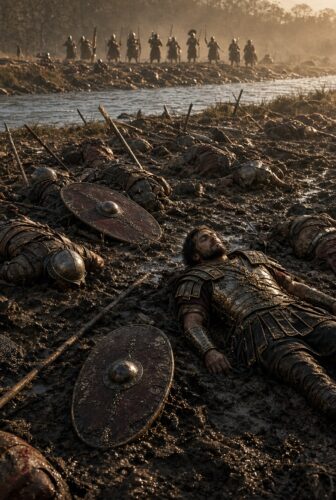

Picture this: it’s May 4, 1471, in the lush Gloucestershire countryside just south of the sleepy market town of Tewkesbury. The air is thick with the metallic tang of blood, the screams of dying men, and the thunder of arrows slicing through the morning mist. Two armies—each around 5,000 to 6,000 strong, armored in plate and mail, banners snapping in the breeze with white roses for York and red for Lancaster—clash in what will become one of the shortest, bloodiest, and most decisive battles in English history. By nightfall, the Lancastrian cause lies shattered in a field still called the Bloody Meadow today. The seventeen-year-old Prince Edward, the only son and heir of the deposed King Henry VI, is dead. His mother, the formidable Margaret of Anjou, is captured. Key Lancastrian nobles are either slaughtered on the field or dragged from sanctuary and executed days later. And King Edward IV of the House of York? He’s not just won a battle—he’s won the war, or at least the second and most vicious round of the Wars of the Roses. England will enjoy more than a decade of relative peace under his rule until his death in 1483.
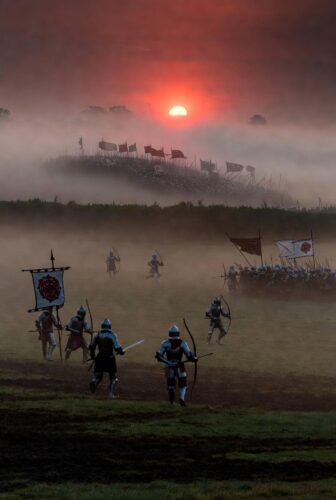
This isn’t some dusty footnote from a history textbook you skimmed in school. This is raw, visceral medieval power politics played out with swords, betrayal, family feuds that make modern reality TV look like a tea party, and tactical brilliance that turned a potential rout into total domination. Today, on the exact anniversary of this forgotten-yet-pivotal showdown, we’re diving deep—ninety percent of this piece is pure, unfiltered historical meat, packed with the kind of granular details that make you feel like you’re standing knee-deep in that gore-soaked meadow yourself. Only at the very end will we flip the script and show you how the hard-won lessons from Tewkesbury can supercharge your individual life with a plan so surgically unique it makes every generic “journal three gratitudes” self-help guru weep into their matcha latte. No fluff, no footnotes, no filler. Just the story of how one decisive May morning in 1471 changed England forever—and how you can weaponize that same mindset to crush your own endless civil wars. To understand why May 4, 1471, mattered so much, we have to rewind a bit into the chaotic saga known as the Wars of the Roses. These weren’t tidy, patriotic conflicts like Agincourt against the French. No, this was English noble houses tearing each other apart like a pack of rabid dogs fighting over the biggest bone in the kingdom: the throne itself. The roots went back decades, to the weak rule of Henry VI, a pious, bookish king who suffered from bouts of catatonic madness that left the realm rudderless. Henry was a Lancastrian, descended from John of Gaunt, Duke of Lancaster, one of Edward III’s sons. His rival claimants were the Yorkists, tracing their line through another son of Edward III, Edmund of Langley, Duke of York. Symbolism ran deep: red rose for Lancaster, white for York. But the real fuel was ambition, land, titles, and the ever-present fear that the other side would lop off your head if they got the chance. By the late 1450s, open warfare had erupted. The first major clash came in 1455 at St. Albans, where Richard, Duke of York, and his allies ambushed a royal army and killed key Lancastrian lords. Skirmishes dragged on, with Yorkists gaining ground until 1460 when York himself was killed at Wakefield. His son, the tall, charismatic, battle-hardened Edward, Earl of March, took up the cause. In 1461, at the Battle of Towton—the largest and bloodiest battle ever fought on English soil—Edward crushed the Lancastrians in a blizzard, with rivers running red and thousands left frozen on the field. He was proclaimed King Edward IV. Henry VI, captured later, was locked in the Tower of London like a sad, mad mascot. His wife Margaret of Anjou—French-born, fierce as a she-wolf, and utterly devoted to her son—fled to France with young Prince Edward, scraping by on handouts and plotting revenge. Edward IV seemed unstoppable. He was everything Henry wasn’t: six-foot-four, a warrior king who loved hunting, women, and good living. He rewarded loyalty lavishly and crushed disloyalty without mercy. But cracks appeared fast. His biggest supporter, Richard Neville, Earl of Warwick—the so-called “Kingmaker”—had engineered Edward’s rise expecting to pull the strings. Instead, Edward secretly married Elizabeth Woodville, a beautiful but low-born Lancastrian widow, in 1464. Warwick, who had been negotiating a fancy French royal match for Edward, was furious. Elevating the Woodvilles to titles and influence only poured oil on the fire. Edward’s foreign policy flip—allying with Burgundy instead of France—pushed Warwick over the edge. In 1469, Warwick and Edward’s own brother George, Duke of Clarence, rebelled, briefly capturing the king. Reconciliation followed, but it was fake news. By 1470, Warwick and Clarence fled to France, cut a deal with Louis XI (the Spider King of France), and—get this—even reconciled with their old enemy Margaret of Anjou. Warwick knelt before her like a penitent schoolboy, begging forgiveness. Prince Edward was betrothed to Warwick’s daughter Anne Neville. They swore oaths on a fragment of the True Cross. Warwick invaded England in September 1470, released Henry VI from the Tower, and restored him as a puppet king. Edward IV, caught off guard, fled to Burgundy with a tiny band of loyalists. Here’s where the story gets deliciously Shakespearean. Edward wasn’t done. Backed by his brother-in-law Charles the Bold of Burgundy (who coughed up cash, ships, and handgunners), Edward sailed home in March 1471 with just 1,200 men. Storms scattered his fleet, but he landed near Ravenspur on the Yorkshire coast. Locals at first told him to shove off—until Edward cleverly claimed he was only reclaiming his duchy of York, not the crown. Smart. He marched south, gathering supporters, dodging ambushes. His brother Clarence, smelling which way the wind was blowing, double-crossed Warwick and rejoined him. On April 14, 1471—Easter Sunday—Edward crushed Warwick at the Battle of Barnet in thick fog. Warwick was killed fleeing; his brother the Marquess Montagu died too. Edward entered London in triumph, shoved poor mad Henry back in the Tower, and prepared for the final act.Meanwhile, Margaret of Anjou had finally landed at Weymouth on April 14 (same day as Barnet, talk about cosmic timing) with Prince Edward, now seventeen and eager for blood. She was no shrinking violet; this woman had led armies before. With her were the Duke of Somerset (Edmund Beaufort, a die-hard Lancastrian whose family had lost everything to Yorkists), the Earl of Devon, and other western lords. Their plan: race northwest, recruit in the West Country and Wales (where Jasper Tudor was raising men), cross the Severn River, and link up for a decisive strike. Edward, fresh from Barnet, was at Windsor. He got word and gave chase like a bloodhound. The Lancastrians moved fast—through Bath, Bristol (where they grabbed supplies), feinting toward London but actually heading for Wales. Edward’s scouts kept pace. There were sharp skirmishes, like at Sodbury Hill. By May 3, the Lancastrians reached Tewkesbury, exhausted after a forced night march. The Severn crossing was treacherous; they couldn’t risk it with Edward’s army closing in just miles behind. Somerset chose to stand and fight. The battlefield was a mile south of Tewkesbury Abbey, a perfect defensive nightmare for attackers. The Lancastrians positioned themselves cleverly on rising ground protected by hedges, deep ditches, embankments, lanes, woods, and streams like the Colnbrook and Swilgate. Their right flank (Somerset’s division) had broken terrain ideal for ambush. Center under Baron Wenlock and the young Prince Edward. Left under the Earl of Devon. The Avon and Severn rivers guarded their rear. It was a “right evil place,” as one contemporary chronicler put it—foul lanes, hills, valleys, everything designed to funnel attackers into kill zones. Edward IV arrived that evening after a grueling 36-mile march from Cheltenham. His army—maybe 5,000-6,000, including his brother Richard, Duke of Gloucester (just 18 but already a proven commander), Lord Hastings, and Clarence—was tired but fired up. Edward knew the ground favored defense, so he didn’t charge blindly. He deployed his forces in the standard three “battles”: vanguard under Gloucester on the left, main body under himself and Clarence in the center, rear under Hastings. Crucially, he hid 200 mounted spearmen in the woods on his left to counter any flank attack. Yorkists had more and better artillery and archers. Prayers were said—Edward invoked St. George and the Virgin Mary—and then the Yorkists advanced. Dawn on May 4 broke with Yorkist arrows and cannon fire raining down. The Lancastrians shot back, but the broken ground slowed the Yorkist advance. Then Somerset made his move—the bold, potentially game-changing one. He led his division out through the lanes and hedges in a surprise flanking attack on the Yorkist left. It looked brilliant on paper. But Edward’s hidden spearmen sprang the trap. Gloucester’s men held firm, counterattacked, and the Yorkist main force piled in. Somerset’s division was hammered from front and side. Panic set in. Men fled across open ground toward the Severn—what locals later called the Bloody Meadow. Hundreds were cut down, bodies piling up in the ditches and streams. Somerset himself was captured after allegedly smashing Baron Wenlock’s brains out with an axe for failing to support him (a juicy legend from chronicler Edward Hall, though maybe apocryphal—medieval sources loved a good betrayal story).
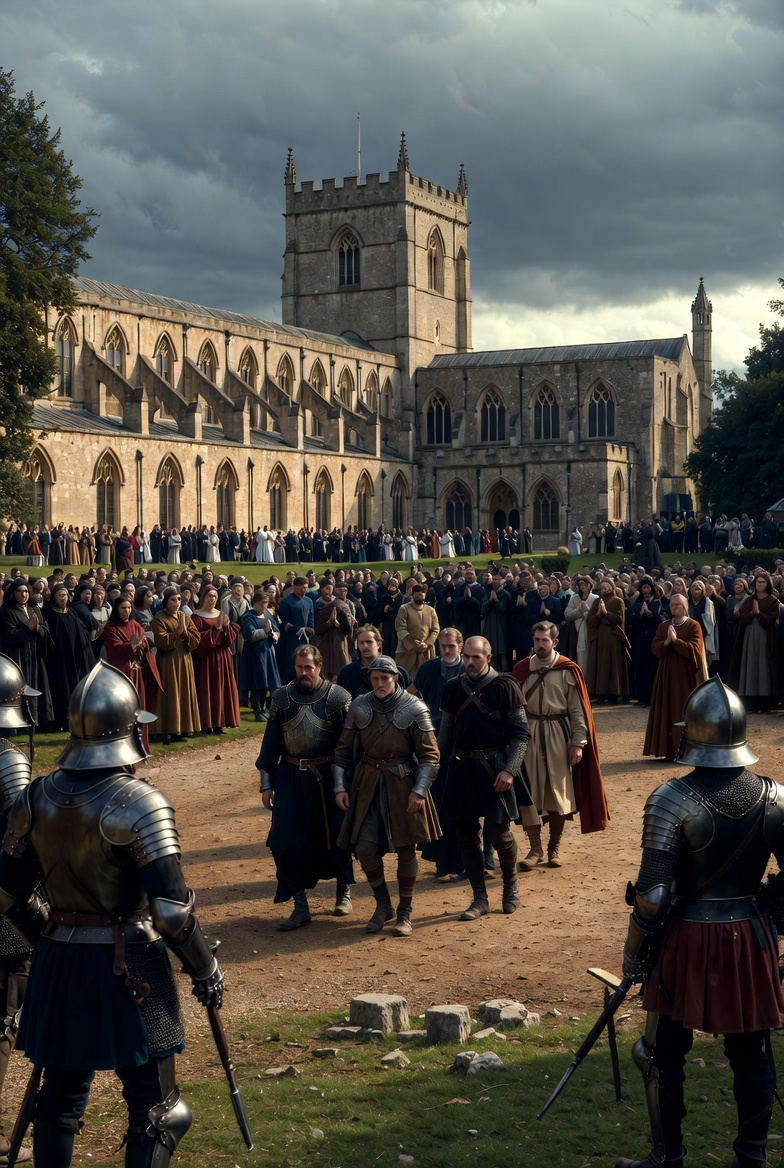
The Lancastrian center collapsed next. Prince Edward, fighting bravely in the thick of it, was overwhelmed in the rout. Contemporary accounts say he was killed by Clarence’s men while pleading for mercy, crying out that he was the king’s son. The Earl of Devon died too. Total Lancastrian dead: around 2,000. Yorkist losses were lighter, though exact numbers are fuzzy. Survivors fled to Tewkesbury Abbey seeking sanctuary. Edward IV, ever the showman of piety, prayed there himself the next day and allowed honorable burials at first. But two days later, his brother Gloucester and others dragged out Somerset, Sir John Langstrother, and a dozen other nobles. Quick show trials, then heads rolled on the abbey green. The abbey had to be reconsecrated later—blood tends to linger. Margaret was captured nearby, broken. She’d lost her son, her cause, everything. Henry VI? Conveniently “died” in the Tower on May 21 or 22, officially of “melancholy” but almost certainly murdered on Edward’s orders—probably by Gloucester or agents. The Lancastrian male line was extinct. Only the distant Beaufort claim through Margaret Beaufort and her son Henry Tudor (hiding in Brittany with Jasper) remained, but that was a long shot at the time. The aftermath was pure Yorkist consolidation. Remaining Lancastrian holdouts—like the Bastard of Fauconberg’s Kentish rebels—were crushed. Edward ruled firmly, promoting trade, crushing noble overreach, and enjoying the spoils. England got breathing room from civil war for over a decade. No more endless marches, no more fields turned red. The Wars of the Roses weren’t fully over (Bosworth in 1485 would flip it back), but Tewkesbury effectively decapitated the immediate threat. Edward IV’s victory wasn’t just military—it was psychological. He showed that relentless pursuit, tactical foresight, and zero tolerance for half-measures could end chaos. Think about the human cost for a second. These weren’t faceless soldiers; they were brothers, cousins, fathers. The Prince of Wales, at 17, had spent his short life in exile, trained for kingship that never came. Margaret, once the power behind the throne, spent her remaining years in French captivity before dying in poverty. Warwick’s daughter Anne Neville ended up married to Richard of Gloucester (future Richard III). Families were shattered, fortunes reversed overnight. Yet from that carnage came stability—the kind that let ordinary folk farm, trade, and live without fearing the next army marching through their village. Historians still debate the exact numbers and some legends (did Somerset really axe Wenlock? Was Prince Edward murdered in cold blood?). Primary sources like *The Historie of the Arrivall of Edward IV* (written by a Yorkist insider) give the blow-by-blow from the winners’ perspective, full of praise for Edward’s “manly” leadership. Polydore Vergil and others added color later. The battlefield today is preserved—walk it and you can still see the hedges, the meadow sloping to the river, the abbey looming like a silent witness. Archaeological finds—arrowheads, armor bits—back up the chaos.
What makes Tewkesbury stand out isn’t just the body count or the royal deaths. It’s the masterclass in leadership under pressure. Edward IV had every reason to hesitate after exile, after Barnet’s fog-of-war madness. Instead, he marched 36 miles in a day, forced battle on his terms, planted those spearmen like a chess grandmaster, and pursued the rout without mercy. No half-victories. No letting enemies regroup. That decisiveness bought England peace. Now, fast-forward more than 550 years. You’re not a medieval king with an army at your back, but you face your own endless “Wars of the Roses”—procrastination battles, toxic habit civil wars, career stalemates, relationship sieges, personal doubt that feels like a mad king ruling your mind. The outcome of Tewkesbury teaches that sometimes the only way to lasting stability is one decisive, well-timed confrontation. No more endless maneuvering. No more fleeing across metaphorical rivers hoping for Welsh reinforcements that never come. Here’s how that historical fact delivers massive benefits to your individual life today: - **Decisive action ends cycles of chaos**: Just as Tewkesbury prevented another decade of Lancastrian rebellions, forcing a final stand on your biggest obstacle (that side hustle you keep delaying, that toxic friendship draining you) creates breathing room for growth instead of perpetual skirmishes. - **Terrain awareness turns defense into offense**: The Lancastrians picked “evil ground” thinking it favored them—until Edward read the map better. In life, auditing your daily “terrain” (schedule traps, environment triggers, hidden strengths) lets you deploy resources exactly where they’ll shatter resistance. - **Hidden reserves win flank attacks**: Those 200 spearmen in the woods flipped Somerset’s brilliant plan. You’ve got untapped skills, allies, or micro-habits you ignore—activate them proactively and your “enemies” (self-sabotage, distractions) get routed. - **No sanctuary for excuses**: Dragging nobles from the abbey showed zero tolerance for loopholes. Apply that to your own rationalizations and watch bad patterns die fast. - **Victory compounds into peace**: Edward’s win bought 12+ years of stability. One focused triumph in your life snowballs—better health leads to sharper focus leads to bigger opportunities. The motivational payoff? You stop being a wandering exile like pre-1471 Edward and become the king who dictates terms. Life stops feeling like endless civil war and starts feeling like a secured realm—productive, prosperous, at peace. To make this real and unique against every cookie-cutter self-help scroll-fest online (no vision boards, no “morning routines” recycled from Instagram), here’s the **Yorkist Vanguard Protocol**—a quick, battlefield-inspired 7-day reset you can run anytime you feel your personal kingdom under siege. It’s not therapy-speak or hustle porn. It’s tactical, historical, and ruthlessly effective because it mirrors Edward’s playbook: scout, position, strike, pursue, consolidate. Do it once a quarter or whenever a “Lancastrian threat” rears its head. Takes 15-30 minutes daily, zero apps required. **Day 1: Scout the Enemy (Terrain Audit)** – Grab paper and map your week like Edward scouting Gloucestershire. List every “lane and hedge” (time sinks, people, environments) that could ambush your goals. Circle the one decisive “Somerset flank” you’ve been avoiding—the single biggest obstacle. Rate its strength 1-10. Edward didn’t charge blind; neither do you. **Day 2: Deploy the Hidden Spearmen (Reserve Activation)** – Identify two “woods” in your life: an overlooked skill, forgotten contact, or 10-minute habit that could counter your weakness. Activate one immediately with a micro-action (e.g., if your “enemy” is fitness procrastination, dig out those old running shoes and commit to a 5-minute test run). This is your ambush force—unexpected and devastating. **Day 3: Force the Field (Decisive Confrontation)** – No more feints. Schedule and execute one unavoidable “battle” against your circled obstacle. Make it public or accountable (tell a friend, set a non-negotiable calendar block). Channel Edward marching 36 miles: exhaustion is no excuse. Feel the rush of closing the distance. **Day 4: Rain Arrows and Shot (Sustained Pressure)** – Use superior “firepower”—your best tools (journaling the win, tracking metrics, whatever fits you)—to hammer the weakness all day. When resistance flares (like Lancastrian arrows), counter immediately. No retreat across the Severn. **Day 5: Rout in the Bloody Meadow (Pursuit Phase)** – After the main clash, chase the remnants. If you slipped, double down with an extra action. Slaughter excuses in real time. This is where most self-help fails—you stop at the first win. Edward didn’t. Neither will you. **Day 6: Deny Sanctuary (Zero-Tolerance Lock)** – Drag any lingering rationalizations into the open and execute them. Re-consecrate your space (clean your desk, delete distracting apps, whatever symbolizes a fresh start). Edward reconsecrated the abbey; you reset your environment.**Day 7: Consolidate the Realm (Stability Harvest)** – Review the week like Edward entering London. Celebrate the peace you’ve claimed. List three ways this victory compounds (more energy, clearer mind, momentum). Plan your next “campaign” if needed. Then rule peacefully—use the freed-up mental bandwidth for creation, joy, whatever your version of Edward’s prosperous reign looks like. Run this protocol and you’ll feel the Tewkesbury shift: from besieged to sovereign. It’s quick because history proves speed and decisiveness win. It’s unique because it’s laced with medieval tactics instead of vague positivity. No other plan weaponizes a 1471 slaughter this way. So next time May 4 rolls around, or any day you feel the old civil wars stirring inside, remember the Bloody Meadow. One decisive charge, properly prepared, can end the fighting for good. Your throne awaits. Now go claim it.
Share: