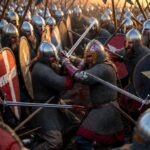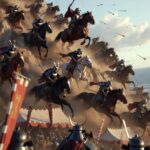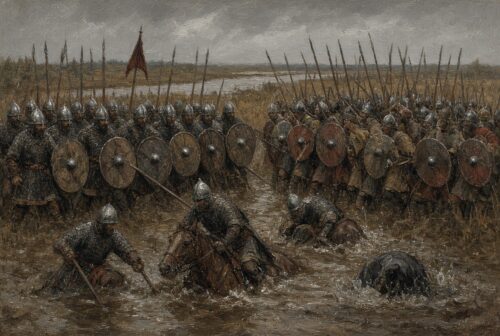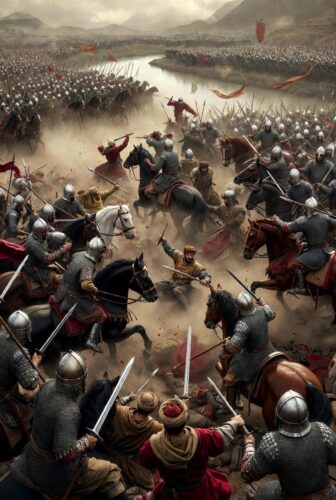

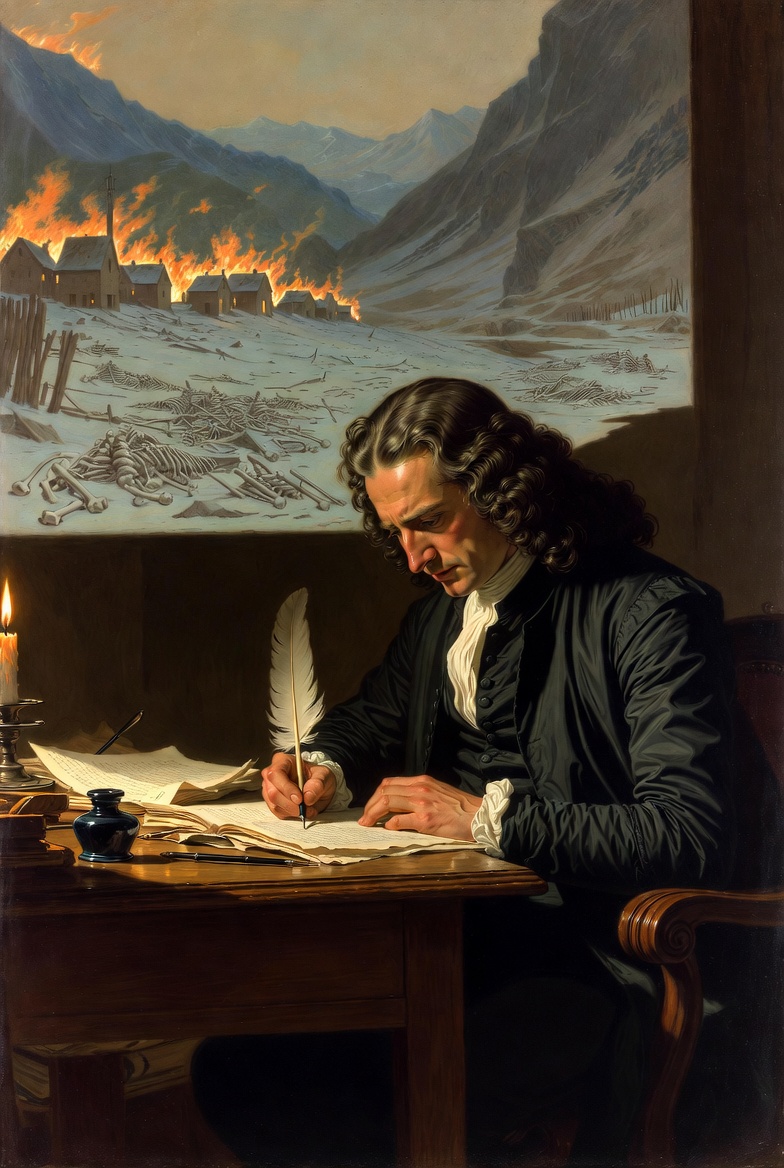
Picture this: it’s April 24, 1655, in the rugged Cottian Alps of the Piedmont region, where snow still clings to the high pastures and the valleys echo with the bleating of sheep rather than the clash of steel. A signal rocket bursts from the castle hill at La Torre at four o’clock in the morning. What follows isn’t a battle between armies. It’s a slaughter. Thousands of ordinary families—farmers, shepherds, mothers rocking infants—are dragged from their beds by soldiers who had been quartered in their own homes the night before as supposed “guests.” Homes are torched with people locked inside. Children are dashed against rocks. Women are violated and thrown from cliffs. Entire villages vanish in smoke and screams. This is the Piedmontese Easter, also called the Pasque Piemontesi or the Waldensian Massacre, and it marks one of the most savage, calculated attempts in European history to wipe an entire people off the map simply for refusing to abandon their Bibles and their conscience.Yet from that nightmare of betrayal and butchery rose something extraordinary: a ragtag resistance led not by kings or generals but by a plainspoken farmer named Joshua Janavel—the Lion of Rora. With a few dozen neighbors armed with scythes, rocks, and intimate knowledge of every goat path and ravine, he turned the Alps into a death trap for professional armies. The Duke of Savoy’s forces, outnumbering the defenders ten or twenty to one, found themselves ambushed, routed, and humiliated in terrain that favored the desperate over the disciplined. The massacre didn’t break the Waldensians. It forged them into legends whose story of survival still whispers across the centuries: when brute force and institutional power come for you, sometimes the only winning move is to become the ghost in the mountains, the ambush in the fog, the voice that refuses to stay silent even when the world tells you to convert or die. This isn’t some dusty footnote in religious history textbooks. The events of April 24, 1655, and the weeks that followed represent a raw, unfiltered case study in asymmetric warfare, unbreakable communal identity, and the power of moral clarity against overwhelming odds. To understand why this random spring morning in a remote corner of the Alps still matters—and why its outcome can hand you a practical, battle-tested edge in your own modern life—we have to go back centuries before the rockets lit the sky. The Waldensians, or Vaudois as the French called them, traced their roots to a most unlikely revolutionary: a wealthy Lyon merchant named Peter Waldo (or Valdes) around 1173. Waldo heard the Gospel call to sell everything and follow Christ, so he did exactly that—liquidated his goods, gave the proceeds to the poor, and began preaching in the streets in the local Romance language instead of Latin. No fancy cathedrals, no priestly hierarchy, no indulgences or relics. Just simple believers reading the Bible in their own tongue, living in apostolic poverty, and rejecting what they saw as the corruptions of the medieval Church. By 1184 the Pope had had enough; the Waldensians were excommunicated as heretics. But unlike many reform movements that burned out quickly, these “Poor Men of Lyon” scattered into the Alps and survived for four hundred years like mountain goats on impossible slopes. They didn’t seek revolution—they sought fidelity. In the high valleys of Piedmont, between France and Italy, they carved out communities centered on family Bible studies, lay preachers (barbes), and a stubborn refusal to bow to Rome’s demands. They practiced adult baptism by choice, rejected purgatory and saint veneration, and emphasized personal holiness over ritual. For centuries the Inquisition hunted them, but the terrain protected them. Treaties like the 1561 Peace of Cavour granted limited toleration in certain valleys—Lucerne, St. Giovanni, Bibiana, Campiglione, and others—allowing them to worship in peace as long as they stayed quiet. They became skilled shepherds, farmers, and artisans, their stone houses hugging the cliffs, their children learning Scripture by hearth light.
But the 17th century was the age of the Counter-Reformation, and the Catholic authorities in Turin weren’t in the mood for tolerance. A new Council for the Propagation of the Faith and Extermination of Heresy set up shop in the Archbishop’s palace. Pressure mounted. In 1650 an edict stripped away the old privileges. Then came the hammer: the Edict of 25 January 1655. It was brutally clear. Every Waldensian head of household, regardless of rank, had exactly three days to abandon their homes in the tolerated valleys and relocate to a handful of restricted highland spots—or convert to Catholicism. Failure meant death and total confiscation of property. Winter still gripped the Alps. Moving families with infants and elders into the snow at gunpoint was a death sentence by exposure. The Waldensians politely but firmly refused. They would not renounce their faith for real estate. Duke Charles Emmanuel II of Savoy, young and under the thumb of hardline Catholic advisors, decided enforcement was necessary. Over 15,000 troops—Savoyard regulars plus French and Irish Catholic mercenaries—poured into the valleys. Soldiers were billeted in Waldensian homes with orders to “persuade” conversion. For a few tense weeks the hosts played polite hosts while sleeping with one eye open. Then, on the night of April 23 into the morning of April 24, the trap snapped shut. At 4 a.m. the signal flared from La Torre castle. The “guests” turned butchers. Contemporary accounts, preserved by survivors and eyewitnesses like pastor Jean Léger and English diplomat Samuel Morland, paint a picture of calculated horror that still chills. Entire families were locked in their barns and burned alive. Infants were ripped from mothers’ arms and their heads smashed against walls. Women were raped in front of their husbands before being disemboweled. Men were flayed or had limbs hacked off with wounds cauterized by fire so they would suffer longer. One group of 150 was herded onto a ledge and pushed over a 500-foot precipice. Villages like Villar and Rorà were systematically looted and torched. Estimates of the dead range from over 1,000 to as high as 6,000—roughly a third to half the Waldensian population in those valleys. The air filled with smoke, screams, and the smell of roasting flesh while Easter bells rang in nearby Catholic towns.
Yet not everyone rolled over. In the village of Rorà, a prosperous farmer named Joshua Janavel smelled the betrayal coming. When troops demanded quarters, he refused to open his door. He rallied a handful of neighbors—maybe 20 or 30 at first—and used the narrow mountain paths like a master tactician. When a larger Savoyard force marched up to crush the “rebellion,” Janavel’s tiny band ambushed them from above, rolling boulders, firing from cover, and vanishing into the mist. The professionals panicked and retreated in disorder. Janavel repeated the trick again and again, turning the high pastures into kill zones. His exploits earned him the nickname “the Lion of Rora” and “Captain of the Valleys.” Other leaders like Bartolomeo Jahier joined, forming guerrilla bands that harassed supply lines and liberated captives. The Duke’s grand army, meant to finish the job in days, found itself bogged down in a war it couldn’t win on the enemy’s chosen ground. Word of the massacre raced across Protestant Europe like wildfire. In England, Lord Protector Oliver Cromwell—fresh from his own wars—flew into a rage. He ordered national days of fasting and prayer, dispatched envoy Samuel Morland to Turin with a blistering protest, raised funds for survivors, and even threatened military intervention. The poet John Milton, Cromwell’s Latin secretary, immortalized the horror in his sonnet “On the Late Massacre in Piedmont”: > Avenge, O Lord, thy slaughtered saints, whose bones > Lie scattered on the Alpine mountains cold; > Ev’n them who kept thy truth so pure of old, > When all our fathers worshipped stocks and stones, > Forget not: in thy book record their groans > Who were thy sheep, and in their ancient fold > Slain by the bloody Piemontese that rolled > Mother with infant down the rocks. Their moans > The vales redoubled to the hills, and they > To Heav’n. Their martyred blood and ashes sow > O’er all th’ Italian fields where still doth sway > The triple Tyrant; that from these may grow > A hundredfold, who, having learnt thy way, > Early may fly the Babylonian woe. The sonnet wasn’t just poetry—it was propaganda that amplified diplomatic pressure from England, the Dutch, Swiss Protestants, and German states. France’s Cardinal Mazarin, wary of broader war, leaned on the Duke. By August 18, 1655, the Pinerolo Declaration of Mercy forced concessions. The immediate killing stopped. The Waldensians, bloodied but unbowed, rebuilt in the high valleys. Janavel continued leading resistance in later conflicts, eventually dying in exile in 1690 after the “Glorious Return” of 1689 when surviving Waldensians marched home from Swiss exile in a daring winter trek that became another epic of defiance.
The outcome of April 24, 1655, wasn’t total annihilation. It was the opposite: a people refined by fire, their identity hardened, their story weaponized across continents. The massacre exposed the limits of brute institutional power when met with terrain-savvy resistance, communal solidarity, and international moral outrage. The Waldensians didn’t just survive—they outlasted empires, inspired later Protestant movements, and today maintain churches worldwide with the same stubborn commitment to Scripture and simplicity. Their “defeat” became a victory that echoed for centuries. Now imagine applying that same raw, proven outcome to your individual life today. The Piedmontese Easter wasn’t just a tragedy—it was a masterclass in turning certain destruction into legendary endurance. Here’s exactly how the historical fact hands you concrete, everyday advantages: - When life quarters “troops” in your home—unexpected job loss, health diagnosis, toxic relationship—you recognize the betrayal early instead of playing polite host until the knife drops. You prepare escape routes and counter-moves like Janavel spotting the edict coming. - Overwhelming odds stop scaring you because you learn asymmetric thinking: one farmer with local knowledge routed professional regiments. Your “small” resources—time, creativity, a tight circle—become force multipliers against corporate giants, bureaucratic mazes, or personal demons. - Community isn’t optional feel-good talk; it’s survival infrastructure. The Waldensians’ refusal to scatter individually saved them. Your network of trusted allies becomes the high ground from which you launch ambushes. - Moral clarity acts as unbreakable armor. They wouldn’t convert for safety. You stop compromising core values for temporary peace, and that refusal becomes the spark that ignites broader change around you. - International (or external) solidarity works when you make noise. Cromwell didn’t act in a vacuum—the survivors’ stories reached him. You learn to broadcast your struggle strategically so help arrives from unexpected quarters. - Terrain mastery turns defense into offense. The Alps were their ally. Your personal “valleys”—daily routines, hidden strengths, quiet hours—become the places where you dictate terms instead of reacting. - Legacy outlives the massacre. The blood of the slain became “seeds” as Milton wrote. Your setbacks plant ideas, habits, or influence that bloom long after the crisis passes. The motivational payoff is electric: if a handful of mountain farmers could stare down 15,000 troops and force European superpowers to blink, then your Monday morning overwhelm, your stalled dream, or your inner critic doesn’t stand a chance. History didn’t hand the Waldensians victory on a platter. It handed them the perfect conditions to invent a new way of fighting—one that prized cunning, cohesion, and conviction over size. You inherit the same playbook.
Here’s the unique, quick, never-seen-in-any-self-help-book plan I call **Janavel’s Lion Protocol**—a 10-day guerrilla campaign you run in your own life whenever a “Savoy army” shows up at your door. It’s not vision boards, not gratitude journals, not hustle culture. It’s tactical, terrain-based, and ruthlessly effective because it steals directly from the 1655 resistance manual instead of generic positivity. **Day 1–2: Scout the Edict (Terrain Recon)** Map your exact “valleys” and the incoming threat with ruthless honesty. Write the equivalent of the Duke’s edict in your journal: “What demand is being made of me—conform, quit, or die (metaphorically)?” List every advantage the enemy has and every hidden goat path you alone know (your skills, odd hours, forgotten contacts). No fluff. Janavel didn’t charge blindly; he knew every rock. **Day 3–4: Refuse Quarters (Defiance Phase)** Issue your personal counter-edict. Pick one non-negotiable boundary the “troops” cannot cross—whether it’s protecting family dinner time, refusing a soul-crushing overtime demand, or blocking a toxic habit. Announce it internally and to key people. Burn the bridges politely but firmly. The Waldensians’ refusal was the first victory; yours is too. **Day 5–7: Build the Ambush (Guerrilla Prep)** Recruit your tiny militia—three to five people who get it. Assign micro-tasks that leverage terrain: one ally scouts opportunities you can’t see, another provides cover (emotional or practical), you strike the first small blow (a targeted email, a 20-minute habit stack that exploits your natural energy peaks). Use the element of surprise. Do it when resistance is lowest—early morning or late night, just like the Lion struck from fog-shrouded slopes. **Day 8–9: Roll the Boulders (Cascade Offense)** Launch three coordinated “ambushes”: one visible win that forces the opposition to react, one invisible habit that compounds daily, one alliance move that brings outside pressure (a mentor email, a public post, a favor called in). Keep the force small and mobile. Janavel’s band never fought fair; they fought smart. Measure only momentum, not perfection. **Day 10: Retreat to High Ground and Reassess (Endurance Reset)** Disappear into your personal high pastures for 24 hours—no social media, just reflection and Scripture (or whatever grounds you). Document what worked, what the enemy revealed, and the new map of the valleys. Celebrate the small routs. Then prepare for the next round because empires don’t surrender after one skirmish. Repeat the protocol in mini-cycles whenever needed. It’s quick—ten focused days—but infinitely scalable. No mantras, no expensive tools, just farmer logic sharpened on Alpine rock. The beauty? It turns every personal Piedmont into training ground for becoming the Lion. You stop waiting for rescue and start manufacturing it from whatever scraps the mountains provide. The Waldensians of April 24, 1655, didn’t ask for glory. They asked only to live according to their lights. When that was denied, they answered with ingenuity, solidarity, and a roar that still echoes. You carry the same DNA. Next time life issues an impossible edict, remember the Lion of Rora: refuse the quarters, know the terrain, strike from the shadows, and watch the big battalions break against your small, stubborn courage. The valleys are yours to keep. Go roar.
Share: