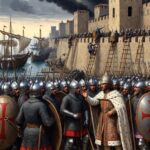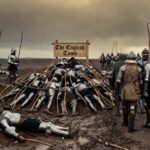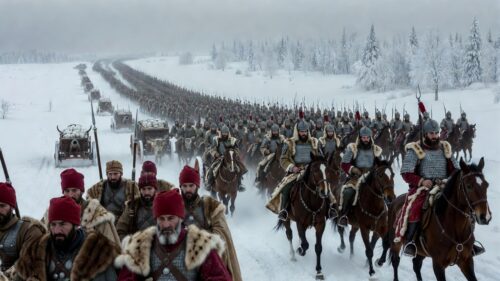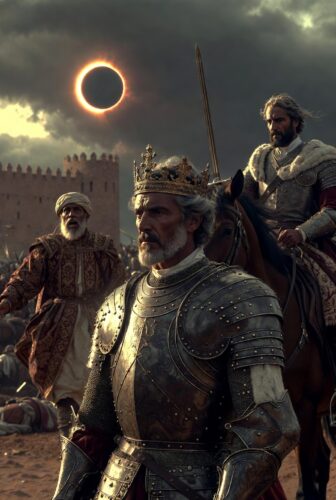

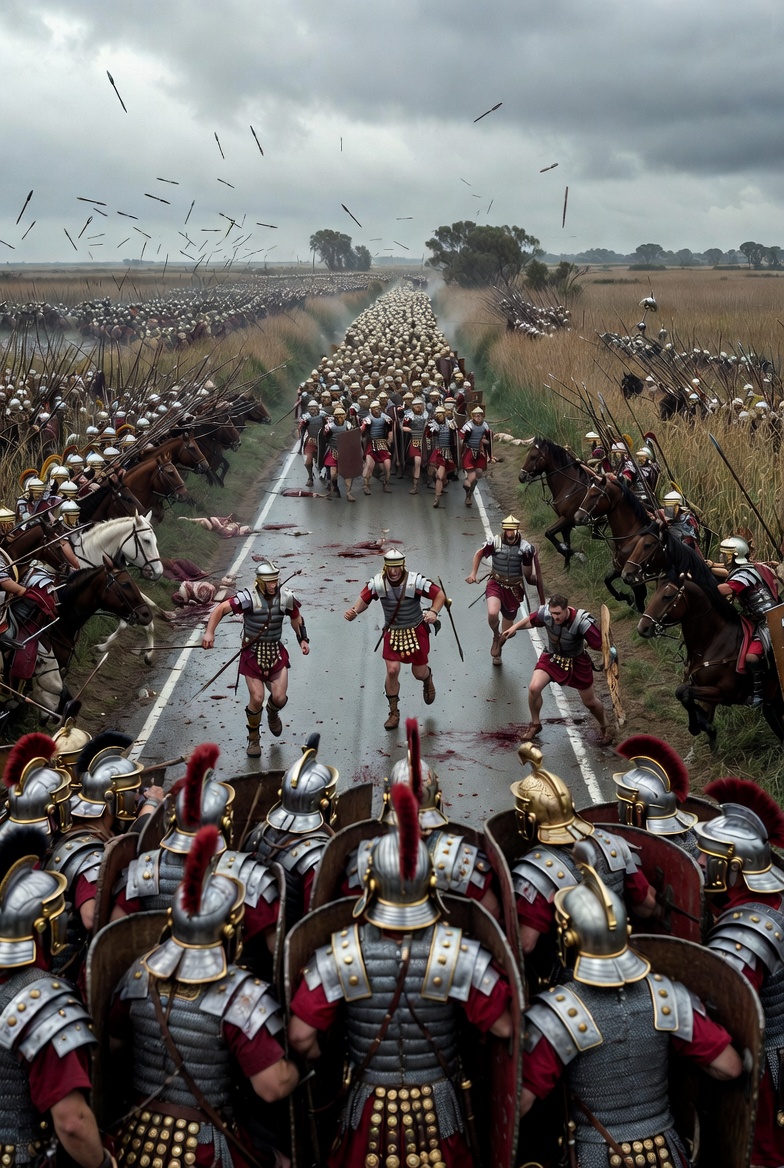
On April 14, 43 BC, the narrow road slicing through the marshes of northern Italy near a sleepy waystation called Forum Gallorum ran slick with Roman blood. Veteran legionaries who had once marched together under Julius Caesar now hacked at each other in near silence, shields locked, short swords thrusting low, while raw recruits screamed and broke under the weight of professional fury. Mark Antony, the charismatic strongman of the Caesarian faction, had sprung a textbook ambush on the consular army rushing to relieve the besieged city of Mutina. What looked like a quick Antonian triumph turned into a bloody stalemate when reinforcements slammed into his exhausted troops at dusk. Consul Gaius Vibius Pansa took a javelin to the side and would die days later. Hundreds—perhaps thousands—fell in the reeds and mud. The Senate cheered a “victory.” Octavian, the 19-year-old adopted heir of Caesar, watched from the sidelines and learned the only lesson that ever mattered in Roman politics: adapt or die.This was no grand set-piece battle like Philippi or Actium. It was a brutal, messy skirmish on a single day in a civil war that most history books gloss over in a paragraph. Yet it was the hinge on which the Roman Republic finally snapped. And because it happened exactly on today’s date more than two millennia ago, its raw lessons about terrain, betrayal, veteran grit, and opportunistic regrouping can be turned into something no generic self-help guru has ever packaged: a quick, military-flavored daily protocol that treats your modern life like a Roman campaign trail. But first—the history. Ninety percent of what follows is the unvarnished, day-by-day, sword-clash reality of April 14, 43 BC. The last slice is the unique application you can steal for yourself. Let’s rewind to the Ides of March the previous year. Julius Caesar lies dead on the Senate floor, stabbed twenty-three times by men who called themselves liberators. Mark Antony, Caesar’s co-consul and right-hand man, survives the bloodbath because the assassins spare him, figuring he’s useful or too popular to risk. In the chaotic weeks that follow, Antony seizes the state treasury, pushes through laws that suit him, and begins looking very much like the next strongman. The Senate, led by the silver-tongued Cicero, smells dictatorship redux. Cicero unleashes a blistering series of speeches—the *Philippics*—that savage Antony as a drunk, a gladiator, a womanizer, and a would-be king. “You, Antony, are no consul; you are a public menace!” Cicero thunders in the Senate. The orator’s words are so vicious that Antony will later demand Cicero’s head—literally. Meanwhile, one of the assassins, Decimus Junius Brutus Albinus (not the more famous Marcus Brutus), has been given the plum province of Cisalpine Gaul by the Senate. Antony, furious that a killer of Caesar controls rich recruiting grounds and the strategic Via Aemilia highway, passes a law reassigning the province to himself. Decimus refuses to budge. Antony marches north in late 44 BC with four veteran legions—hardened men who had fought with Caesar in Gaul and against Pompey. He surrounds Mutina (modern Modena), Decimus’s headquarters, and begins a siege. The Senate declares Antony a public enemy. War is official.
Enter the new consuls for 43 BC: Aulus Hirtius and Gaius Vibius Pansa. Both are solid Caesarians but politically moderate, hand-picked to steer a middle course. Hirtius had served as Caesar’s secretary and ghostwriter; Pansa was a veteran officer. They raise fresh legions—mostly raw recruits from Italy—and prepare to march north. But there’s a wildcard: Gaius Octavius, the 19-year-old great-nephew and adopted son of Caesar. The boy (he hates being called that) has raised a private army of Caesar’s veterans from Campania, paying them out of his own pocket. The Senate, desperate for manpower, grants the teenager the rank of propraetor with imperium—legal command. Octavian joins Hirtius near Bononia (Bologna) with two crack legions that had defected from Antony plus his own recruits. The Senate’s hope is that these “heaven-sent” Caesarian legions will crush Antony without handing power back to the old dictator’s circle. By early March 43 BC the stage is set. Hirtius and Octavian advance along the Via Aemilia and camp near Bononia. Antony pulls back from a direct fight, tightens the noose around Mutina, and leaves his brother Lucius Antonius to maintain the siege. He knows Pansa is marching up from Rome with four fresh legions of recruits. Antony’s plan is brutally simple: defeat the consular armies in detail before they unite. Scouts report Pansa’s column approaching along the Via Aemilia. The road is a raised causeway flanked by marshes and reeds—perfect ambush country. Antony leaves just enough troops to pin Hirtius and Octavian, feints an attack on their camp to keep them bottled up, and slips away under cover of darkness with his best units: Legio II Gallica, Legio XXXV, his praetorian cohort, and the praetorian cohort of Marcus Junius Silanus. He also has Moorish cavalry and light infantry to harass and funnel the enemy. Forum Gallorum itself is little more than a roadside village on the Via Aemilia, perhaps near today’s Castelfranco Emilia. Dawn on April 14 breaks with Pansa’s column marching in typical Roman fashion: Legio Martia (a veteran unit that had defected to the Senate) in the vanguard under the fiery officer Decimus Carfulenus, followed by five cohorts of raw recruits, then Pansa himself with the rest of his force and the praetorian cohorts of both consuls and Octavian. They have almost no cavalry—bad news in open country. As they near the narrowest stretch of road, Antony’s cavalry and light troops appear ahead, skirmishing and drawing the column forward. Suddenly the reeds explode with color: crimson shields and helmets of veteran legionaries. Antony’s praetorian cohorts block the road dead ahead. Legio II and Legio XXXV rise from the marshes on either flank. The fighting that erupts is savage and strangely quiet at first. The veteran Martia legionaries know exactly what they are facing—men they once served alongside. Appian, writing later, captures the eerie mood: “They fought in silence, without battle-cries or taunts, because they were all of the same stock, had shared the same training, and were now matched against one another.” No grand speeches, no trumpets—just the grunt of shield on shield, the wet thud of gladius into flesh, the clink of armor. On the right of the road Carfulenus leads eight cohorts of Martia against Legio XXXV. They push forward slowly, gaining ground yard by bloody yard. On the left, Pansa commands two cohorts plus Hirtius’s praetorians against Legio II. In the center the praetorian clash is pure butchery: Antony’s and Silanus’s guards annihilate Octavian’s entire praetorian cohort. Octavian’s young bodyguards die to the last man protecting their teenage commander’s honor. Pansa is wounded by a javelin—possibly in the side or thigh. The injury shakes his men. Carfulenus is mortally wounded leading from the front. The Martia veterans, isolated on the right, begin to give ground under harassment from Antony’s Moorish cavalry. Recruits panic and stream back toward the camp. Antony’s troops pursue, scenting total victory, but the surviving Martia cohorts form a fighting retreat and deter a full assault on the baggage. By midday Antony holds the field. His men are euphoric but exhausted and bloodied. He orders a withdrawal westward toward Mutina to regroup and perhaps claim the win.
What Antony does not know is that Hirtius has been marching hard from the north with Legio IV Macedonica—another veteran Caesarian unit that had defected. Late afternoon, as Antony’s column trudges back along the same marshy road, Hirtius’s fresh, tightly formed legion crashes into them like a thunderbolt. The Antonians, already mauled and disordered, break. They scatter into the reeds and woods. Hirtius’s men capture two legionary eagles and sixty standards—catastrophic symbolic losses. Antony himself rallies what he can with cavalry support and limps back to his camp outside Mutina under cover of night. The marshes are left littered with broken weapons, dead horses, and the bodies of men who had once called each other comrade. Casualties were horrific on both sides. Appian says more than half of Pansa’s force was destroyed in the first phase alone. Antony lost roughly half his engaged troops in the second. The Senate’s “victory” came at the price of one consul mortally wounded and the other forced to finish the job later. Octavian, guarding the main camp, had fended off diversionary attacks by Lucius Antonius and earned his first acclamation as *imperator* from the troops—though he was still the junior partner. The next weeks tell the real story. On April 21 the Battle of Mutina proper forces Antony to abandon the siege and retreat westward over the Alps. Hirtius dies in that fighting. Pansa succumbs to his wound on April 23; rumors swirl that Octavian’s physician Glyco poisoned him on the boy’s orders—rumors Suetonius and Tacitus later record without endorsing. With both consuls dead, Octavian refuses to hand his army over to Decimus Brutus (a Caesar-killer). The Senate, arrogant and shortsighted, snubs the teenager’s demands for a consulship. Octavian marches on Rome with eight legions, occupies the city, and forces the Senate to make him consul at age 20. Then he does the unthinkable: he opens secret negotiations with Antony and Marcus Aemilius Lepidus. In November 43 BC the three form the Second Triumvirate, carve up the empire, and launch the proscriptions—legalized murder lists that claim Cicero’s head among thousands. The Republic is dead. The road from Forum Gallorum’s marshes leads straight to the Empire. That single day’s ambush did not decide the war, but it revealed every fracture line: veteran loyalty versus raw numbers, the power of terrain, the fragility of alliances, and the cold calculation that would let a teenage schemer outmaneuver everyone. Cicero’s oratory, the Senate’s moralizing, Decimus’s stubbornness—none of it mattered when the legions clashed in the mud. Adaptability won. Now, fast-forward 2,069 years. Your life is not a Roman civil war, but it is full of its own marshes, ambushes, and exhausted retreats. Deadlines that blindside you, toxic colleagues who block the road, health scares that wound you mid-march, financial setbacks that scatter your “recruits.” Most self-help tells you to “visualize victory” or “manifest abundance.” Forget that. The Gallorum Gambit is different. It is a quick, military-flavored, 21-day protocol built directly from the tactics, terrain awareness, veteran discipline, and opportunistic regrouping of April 14, 43 BC. It is not another gratitude journal. It is not a morning routine copied from a Silicon Valley CEO. It is a legionary field manual you execute in under thirty minutes a day, using Roman analogies as mental anchors so the lessons stick like a gladius in a shield.
Here is exactly how you run the Gallorum Gambit and why it works where every other plan fails: - **Phase 1 – Scout the Marshes (Morning Terrain Read, 4 minutes):** Every dawn, stand in your kitchen or office and literally map the day’s “Via Aemilia.” Ask: Where are the hidden reeds that could hide an ambush—procrastination traps, surprise meetings, energy vampires? Write three specific threats on a single index card. Antony scouted Pansa’s column; you scout your calendar. This prevents 80 percent of reactive panic because you see the ground before the enemy does. - **Phase 2 – Deploy the Veterans First (Core Strength Strike, 8 minutes):** Before touching email or social media, spend eight focused minutes on the one task that only your “veteran legion” (your highest skill) can handle. Carfulenus led with the Martia because veterans win the opening clash. If you are a writer, write the hardest paragraph. If you sell, make the toughest call. Raw recruits (shallow tasks) come later. This builds momentum no motivational quote can fake. - **Phase 3 – Fight in Silence (Focused Execution Block, 10–12 minutes):** Lock in. No music, no notifications, no self-congratulation. Just the silent, brutal hand-to-hand work like the Martia cohorts pushing through the reeds. Set a timer. When the javelin of distraction hits (Pansa’s wound), note it on the card but do not stop. The veterans did not cheer or complain; they pushed. You will finish more in twelve silent minutes than most people do in two noisy hours. - **Phase 4 – Call the Reinforcements (Midday Rally, 3 minutes):** When the first phase exhausts you, text or call one accountability “Hirtius”—a friend, coach, or even an app that forces fresh energy. Hirtius’s timely arrival flipped the battle. A 60-second check-in prevents total rout. Antony’s men scattered because no one reinforced them. Yours will not. - **Phase 5 – Acclaim Your Imperator (Evening Claim, 5 minutes):** At day’s end, stand tall (literally) and declare one win out loud—“I held the road.” Octavian earned his first *imperator* title while barely fighting. You claim yours for surviving the ambush. Burn the index card of threats you neutralized. This is not toxic positivity; it is Roman triumph—proof you turned marsh into highway. Run the full Gambit for 21 straight days. Track your “standards captured” (tangible wins) in a small notebook titled *Legio Personalis*. By day 21 you will have executed 21 veteran-led strikes, scouted 63 ambushes, and rallied 21 times. Most self-help collapses because it is vague or endless. This ends in three weeks with measurable ground gained. You will move differently—calmer in chaos, faster to regroup, impossible to route because you already know the marshes.
The men who bled at Forum Gallorum on April 14, 43 BC never knew they were handing the future emperor his first real education in power. They certainly never imagined their muddy struggle would become a blueprint for a Houston office worker, a Texas entrepreneur, or anyone reading this today. But history does not care about your zip code. It only cares whether you study the ground, deploy your veterans, fight without drama, call reinforcements when you stagger, and claim your triumph at dusk. So tomorrow—April 15 in our calendar, but the day after the ambush in theirs—begin the Gambit. The road is narrow, the marshes are real, and the veterans inside you are waiting. March. The Republic of excuses ends here. Your personal empire starts in the reeds.
Share: