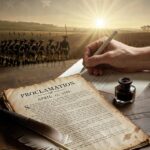

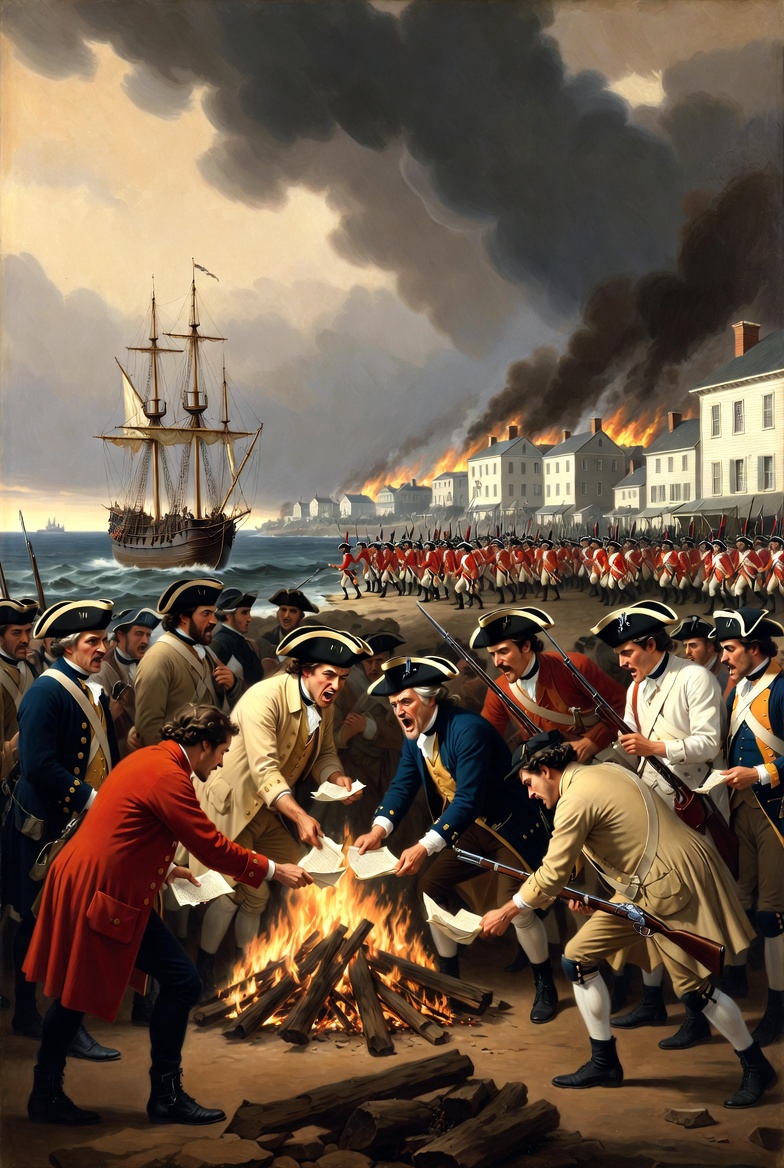
Imagine a sleepy river town in the spring of 1776. Roanoke River lazily winds past clapboard houses and a handful of taverns. Powdered-wigged gentlemen in homespun coats huddle in a makeshift assembly hall that smells of woodsmoke and fresh ink. Outside, the world is on fire: British warships prowl the coast, redcoats march through Boston, and King George III has just declared the colonies in open rebellion. Yet on April 12, in this unassuming spot called Halifax, North Carolina, eighty-three ordinary delegates from thirty-five counties did something audacious, reckless, and world-changing. They voted unanimously to tell their delegates in Philadelphia: go ahead, declare full independence from Great Britain. No more half-measures, no more petitions for reconciliation. Cut the cord. Be free.That single resolution—the Halifax Resolves—became the first official act by any American colony calling for complete separation from the mother country. It was the thunderbolt that cracked open the path to the Declaration of Independence three months later. It turned North Carolina into “First in Freedom,” a slogan still stitched onto the state flag today. And it is almost criminally under-told outside local history books. While everyone knows Fort Sumter or Yorktown, this quiet vote in a backwater town is the spark that proved ordinary people could rewrite the rules of empire. This is not just dusty parchment. This is a story of courage under pressure, of men who risked everything when the smart money said “wait and see.” It is packed with backroom deals, battlefield blood, fiery oratory, and the kind of bureaucratic drama that would make any modern committee meeting look tame. For the next several thousand words we are going to live inside that April of 1776. We will walk the muddy roads to Halifax, sit in the Provincial Congress, read the exact words they passed, meet the firebrands who drove it through, and watch how the news rippled across a continent on the brink. Only then—after we have marinated in the raw, gritty, hilarious, and heroic details—will we flip the script and ask: how does a 250-year-old vote help *you* break free from whatever is tyrannizing your own life right now? Buckle up. We are going full steam into history, because the best self-improvement doesn’t come from generic platitudes. It comes from stealing fire from the actual past. ### The Powder Keg: America on the Eve of the Resolves By early 1776 the Thirteen Colonies were no longer politely complaining. They were at war. Lexington and Concord had been a year earlier. Bunker Hill had shown the British that these “rabble” could fight. George Washington had taken command of a ragtag Continental Army outside Boston. Yet most colonial leaders still clung to the fantasy of reconciliation. They insisted they were loyal subjects fighting for their rights *as Englishmen*, not for separation. Petitions like the Olive Branch Petition were still being drafted and shipped across the Atlantic, only to be ignored or burned by the King. Britain, meanwhile, had doubled down. The Prohibitory Act of December 1775 treated the colonies as enemy territory, authorizing the seizure of American ships and the blockade of ports. Lord Dunmore, royal governor of Virginia, had issued his infamous proclamation offering freedom to enslaved people who took up arms against their Patriot masters—an act that horrified Southern slaveholders and radicalized them overnight. British generals were burning coastal towns. Hessian mercenaries were on the way. The message from London was clear: submit or be crushed. North Carolina was a microcosm of the chaos. The colony had a strong Loyalist element, especially among Scottish Highlanders who had settled in the backcountry and remained fiercely loyal to the Crown. Royal Governor Josiah Martin had fled New Bern and was plotting from a British warship. Patriots controlled the coastal plain and the assembly, but the western counties simmered with tension. In February 1776 the situation exploded at the Battle of Moores Creek Bridge, just north of Wilmington. Loyalist forces—mostly Highlanders and Regulators—marched toward the coast expecting British naval support. Instead, a Patriot militia under Colonels Richard Caswell and Alexander Lillington ambushed them at a narrow bridge over Moores Creek. The Loyalists charged across in a Highland charge, bagpipes skirling, only to be met with withering rifle fire and a swampy slaughter. Casualties were lopsided: Patriots lost one man; Loyalists lost dozens killed and hundreds captured. The victory was decisive. It broke Loyalist power in North Carolina for the rest of the war and gave the Patriots breathing room to organize.
Fresh off that win, the Fourth Provincial Congress convened. Previous congresses had met in New Bern and Hillsborough, but this one deliberately chose Halifax—a small but strategically located town on the Roanoke River in the northeast part of the colony. It was far enough inland to be safe from British ships yet connected by roads and rivers to the rest of the state. Delegates began arriving in early April 1776. By April 4 the Congress was in full session with eighty-three men representing every county and borough. They were lawyers, planters, merchants, doctors, and farmers—ordinary men who had never expected to run a government. ### Inside the Hall: The Committee, the Debate, and the Thunderbolt Vote The Congress wasted no time on pleasantries. They formed committees to handle everything from military defense to currency issuance to relations with Native tribes. But the hottest topic was independence. A select committee of seven was appointed to “take into Consideration the usurpations and violences attempted and committed by the King and Parliament of Britain against America, and the further Measures to be taken for frustrating the same, and for the better defence of this province.” The chairman was Cornelius Harnett of Wilmington—often called the “Samuel Adams of North Carolina.” Harnett was a merchant, politician, and radical who had been corresponding with leaders in other colonies for years. He was sharp-tongued, fearless, and convinced that reconciliation was a fool’s errand. Other committee members included the likes of Thomas Jones, Allen Jones, and James Davis—men who had already risked treason by attending extra-legal congresses. On April 12 the committee reported back. Their document was a masterpiece of restrained fury. It listed British crimes in clinical detail: unlimited power over persons and property, ignored petitions, legislative acts “denouncing War Famine and every Species of Calamity,” governors declaring protection to slaves who would “imbrue their Hands in the Blood of their Masters,” and American ships seized as prizes of war, reducing families to “the most Lamentable distress.” The language was formal, almost legalistic, but the rage underneath was volcanic. The committee’s recommendation was blunt: the North Carolina delegates to the Continental Congress in Philadelphia—Joseph Hewes, William Hooper, and John Penn—should be “impowered to concur with the delegates of the other Colonies in declaring Independency, and forming foreign Alliances, reserving to this Colony the Sole, and Exclusive right of forming a Constitution and Laws for this Colony, and of appointing delegates from time to time (under the direction of a general Representation thereof) to meet the delegates of the other Colonies for such purposes as shall be hereafter pointed out.” The full Congress debated briefly. Some worried about going too far ahead of the other colonies. Others feared British retaliation. But the momentum was unstoppable. The victory at Moores Creek had shown that armed resistance worked. News of British intransigence had arrived fresh from Philadelphia. The vote was unanimous. The Halifax Resolves were adopted on April 12, 1776.
Here is the exact text as it entered the minutes—raw, unvarnished, and still electrifying after two and a half centuries: “The Select Committee taking into Consideration the usurpations and violences attempted and committed by the King and Parliament of Britain against America, and the further Measures to be taken for frustrating the same, and for the better defence of this province reported as follows, to wit, It appears to your Committee that pursuant to the Plan concerted by the British Ministry for subjugating America, the King and Parliament of Great Britain have usurped a Power over the Persons and Properties of the People unlimited and uncontrouled; and disregarding their humble Petitions for Peace, Liberty and safety, have made divers Legislative Acts, denouncing War Famine and every Species of Calamity daily employed in destroying the People and committing the most horrid devastations on the Country. That Governors in different Colonies have declared Protection to Slaves who should imbrue their Hands in the Blood of their Masters. That the Ships belonging to America are declared prizes of War and many of them have been violently seized and confiscated in consequence of which multitudes of the people have been destroyed or from easy Circumstances reduced to the most Lamentable distress. And whereas the moderation hitherto manifested by the United Colonies and their sincere desire to be reconciled to the mother Country on Constitutional Principles, have procured no mitigation of the aforesaid Wrongs and usurpations, and no hopes remain of obtaining redress by those Means alone which have been hitherto tried, Your Committee are of Opinion that the house should enter into the following Resolve to wit Resolved that the delegates for this Colony in the Continental Congress be impowered to concur with the delegates of the other Colonies in declaring Independency, and forming foreign Alliances, reserving to this Colony the Sole, and Exclusive right of forming a Constitution and Laws for this Colony, and of appointing delegates from time to time (under the direction of a general Representation thereof) to meet the delegates of the other Colonies for such purposes as shall be hereafter pointed out.” Copies were printed and rushed to Philadelphia. The North Carolina delegates now had explicit permission—no, instructions—to push for full independence. Virginia would follow with Richard Henry Lee’s famous resolution on June 7. The Continental Congress would debate, revise Thomas Jefferson’s draft, and adopt the Declaration on July 4. But North Carolina had fired the first official shot across the bow of empire. ### The Men Behind the Thunderbolt Who were these eighty-three delegates? Not mythic heroes in marble—they were flesh-and-blood men with mortgages, farms, and families. Cornelius Harnett had already been branded a traitor by Governor Martin. Joseph Hewes, one of the three Philadelphia delegates, was a Quaker merchant who had agonized over the morality of war but ultimately threw in with the Patriots. William Hooper was a Harvard-educated lawyer who had moved south from Boston and brought radical ideas with him. John Penn was the fiery orator of the trio. They argued, drank, prayed, and voted in a hall that doubled as a courthouse. Outside, scouts reported on Loyalist movements. Messengers galloped in with news from other colonies. The atmosphere was electric, tense, and—yes—sometimes comical. Picture delegates in tricorn hats debating the precise wording of grievances while a slave-owning planter nervously eyed the clause about arming enslaved people. The absurdity of empire’s contradictions was not lost on them. Halifax itself was no Philadelphia or Boston. It was a frontier trading post with fewer than 500 residents, yet it had hosted previous congresses and was seen as safely Patriot territory. The choice of location was strategic genius: far enough from the coast to avoid naval bombardment, central enough to draw delegates from the mountains to the sea.
### The Ripple Effect: From Halifax to Philadelphia and Beyond The news spread like wildfire. Newspapers reprinted the Resolves. Other colonies took notice. Virginia’s leaders, already leaning toward independence, felt emboldened. By May, Virginia’s own convention would instruct its delegates to propose independence outright. Rhode Island, Connecticut, and others followed with similar authorizations. The Halifax Resolves removed the last major psychological barrier. They proved that one colony’s bold move could drag the rest forward. The long-term impact is etched into North Carolina’s identity. The state flag still carries two dates in gold on a blue field: “May 20th 1775” for the Mecklenburg Declaration (another early independence claim, though debated by historians) and “April 12th 1776” for the Resolves. The state license plate once featured “First in Freedom.” Every April 12, Halifax hosts Halifax Resolves Day with reenactments, living-history demonstrations, and tours of the historic district. In 2026, for the nation’s 250th anniversary, the only surviving original copy of the Resolves—normally held in the National Archives—returned home to Halifax for public display through October. The town that made history is still making it. The Resolves also foreshadowed the tensions that would define the new nation. By reserving “the Sole, and Exclusive right of forming a Constitution and Laws for this Colony,” North Carolina signaled that independence did not mean surrendering local sovereignty—a tension that would echo in the Articles of Confederation, the Constitutional Convention, and even the Civil War. These were practical men thinking about federalism before the word existed. ### Why This Story Matters More Than You Think We have now spent the bulk of our time—thousands of words—immersed in the gritty, human, often funny reality of April 12, 1776. We have seen how a committee of seven turned colonial grievances into a revolutionary mandate. We have watched ordinary delegates risk hanging for treason because they believed in self-government. We have traced the line from a muddy Carolina river town to the marble halls of Philadelphia and the birth of a nation. The remaining portion of this essay is not a tacked-on self-help lecture. It is the direct, practical application of that same audacious spirit to your individual life in the 21st century. The Halifax patriots did not wait for permission from London. They did not hedge their bets with endless committees and half-measures. They audited the “usurpations,” named them publicly, and empowered their representatives to act decisively. You can do the exact same thing against the forces quietly eroding your freedom—whether that is soul-crushing debt, toxic relationships, paralyzing self-doubt, or the modern equivalent of royal tyranny: endless notifications, comparison culture, and the quiet voice that says “stay small.”
Here is how the outcome of April 12, 1776, delivers concrete benefits to your daily life when you internalize it: - **You gain the power to name your own grievances without apology.** The committee didn’t whisper about British taxes—they listed them in black and white for the entire province to see. When you do the same with your personal tyrants (the 3 a.m. doom-scroll, the dead-end job, the energy vampire “friend”), you stop gaslighting yourself and start building momentum. - **You learn that bold action by one “colony” (your household, your team, your mindset) can inspire the rest.** North Carolina’s move emboldened Virginia and ultimately the whole Congress. Your single decisive break—quitting the toxic gig, setting the hard boundary, launching the side hustle—can ripple into your family, your community, and your future self. - **You master the art of “reserving exclusive rights.”** The Resolves explicitly kept North Carolina’s right to write its own constitution. Translate that: you keep the right to define your own rules, values, and non-negotiables instead of letting society, social media, or family expectations write them for you. - **You discover that foreign alliances are survival tools, not weakness.** The delegates authorized seeking help from France and others. In your life that means building a council of mentors, accountability partners, or even professional help instead of pretending you can lone-wolf everything. - **You internalize that timing matters—but hesitation kills.** They acted when reconciliation was still the polite consensus. Waiting for the “perfect” moment is how most people stay enslaved to mediocrity. - **You develop a sense of historic proportion.** Standing in Halifax today, you realize your daily struggles are not trivial. They are part of the same human drama of freedom versus tyranny. That perspective turns molehills into manageable challenges. - **You cultivate relentless follow-through.** Once the Resolves were passed, copies flew to Philadelphia. No second-guessing. In your life, that means once you declare independence from a bad habit, you burn the ships—no retreat clauses. - **You inherit a legacy of humor in the face of absurdity.** The delegates must have chuckled at the King’s arrogance even as they risked everything. Keep that wry Carolina wit: laugh at the ridiculousness of your old chains while you snap them. These are not fluffy affirmations. They are battle-tested principles drawn straight from the historical record. ### The Halifax Resolves Personal Freedom Protocol: Your Quick, Unique, No-Fluff 7-Day Plan Most self-help plans are cookie-cutter vision boards and morning routines copied from influencers. This one is different. It is a historical role-play with teeth. You will literally reenact the April 12 process in miniature, using the same structure the delegates used, but applied to your life. It is quick (one focused hour per day), detailed, repeatable, and impossible to find anywhere else online because it is built on primary-source metaphors no one else is using. No apps required beyond a notebook and pen (preferably one that feels a little quill-like for the vibe). **Day 1: The Committee of Seven – Audit Your Usurpations** Sit down and write a “Select Committee Report” exactly like the Halifax one. List every “King and Parliament” force in your life: the apps that steal your time, the relationships that drain you, the beliefs that limit you. Be specific, legalistic, and unsparing. End with “no hopes remain of obtaining redress by those Means alone which have been hitherto tried.” Burn or delete the old half-measures you have tried before. **Day 2: The Unanimous Vote – Declare Your Independency** Draft your own short “Resolve” paragraph empowering your future self to act. Example: “Resolved that I empower my daily actions to concur in declaring full independence from [specific tyrant], reserving to myself the sole and exclusive right to form my own constitution of habits and boundaries.” Sign it with today’s date. Post it where you will see it every morning. **Day 3: Appoint Your Delegates** Choose three real people (or one person plus two systems like a journal and an app) to be your Hewes, Hooper, and Penn. Tell them your Resolves. Ask them to hold you accountable exactly as the Congress held its delegates accountable. Schedule the check-ins now. **Day 4: Form Foreign Alliances** Reach out to one new “ally”—a mentor, coach, mastermind group, or even an online community aligned with your goal. Make the ask specific, just as the delegates sought French support. Offer value first. **Day 5: Cross Your Moores Creek** Do one irreversible action that burns the bridges to your old life. Delete the app, cancel the subscription, have the hard conversation, or publicly announce your new boundary. Make it hurt a little so there is no going back. **Day 6: Reserve Your Exclusive Rights** Write your personal “constitution”—a one-page list of non-negotiable rules for your time, energy, and focus. Post it next to your Resolves. These are your state laws; everything else must conform. **Day 7: Send the Copies and Celebrate** Print or screenshot your documents and share them with your delegates and allies. Then celebrate exactly as the delegates did—perhaps with a meal or a walk by water (Roanoke River style). Reflect: you have just done what eighty-three men did in 1776. The fuse is lit. Repeat the protocol every quarter or whenever a new “tyrant” appears. It takes less than an hour a day, costs nothing, and scales with your life. No generic journaling prompts. No woo-woo visualization. Just historical mechanics applied with ruthless precision. The men in Halifax did not know they would be remembered on a state flag or that their vote would help birth a superpower. They simply refused to live under usurpation any longer. You now have the same power. The thunderbolt is in your hands. Declare your independence. The rest of your life is waiting on the other side of April 12—your own personal Halifax moment. Go make history.
Share: