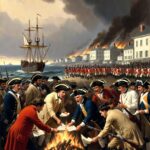

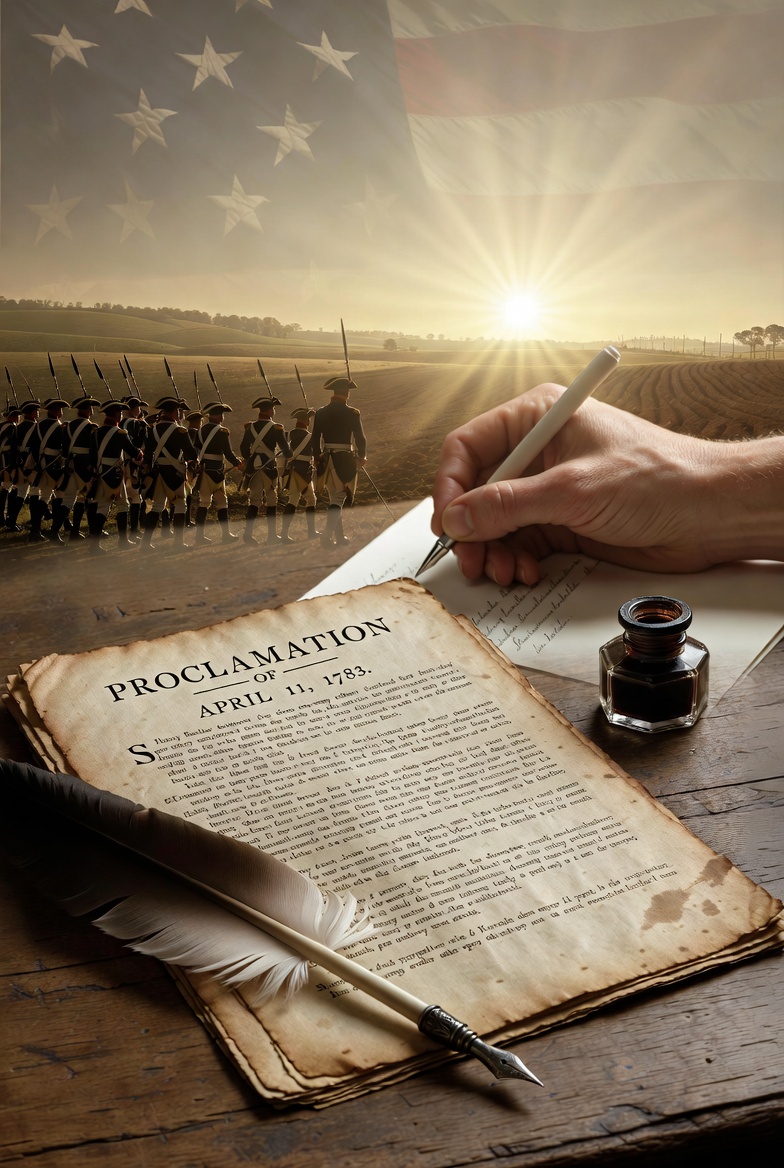
Picture this: Philadelphia, April 11, 1783. The air still carried the faint tang of woodsmoke from winter fires. Delegates in threadbare coats shuffled into the Pennsylvania State House, the same room where they had once signed a Declaration that lit the world on fire. No fireworks. No cheering crowds. Just a single sheet of paper, read aloud in a voice hoarse from too many late-night arguments. By the time the clerk finished, the United States of America had officially told King George III to shove off. Hostilities ceased. The guns fell silent. The Revolutionary War—the longest, bloodiest, most improbable underdog story in history—was over.Not with a bang, but with a proclamation. A dry, legalistic document that most Americans today couldn’t pick out of a lineup. Yet that single day, April 11, 1783, marked the moment a ragtag collection of farmers, merchants, and dreamers stopped being rebels and started becoming a nation. Ninety percent of what follows is pure, unfiltered history—the kind of gritty, funny, heartbreaking detail that gets skipped in textbooks. The last ten percent? A razor-sharp, zero-fluff plan that turns this forgotten victory into rocket fuel for your daily grind. No vision boards. No morning affirmations. Just the same stubborn, alliance-building, endurance-honed tactics the Founders used when the odds were stacked higher than Valley Forge snowdrifts. Let’s dive in. The war had already dragged on for eight grueling years by the time that proclamation hit the floor. It began in the crisp spring of 1775 when a British column marched out of Boston to seize colonial gunpowder and found itself staring down a motley militia on Lexington Green. “The shot heard round the world” wasn’t poetic fluff—it was literal chaos. Eight minutemen dead before breakfast. By the time the Redcoats limped back, 273 of their own lay wounded or slain. The colonies were in open revolt, but nobody thought it would last. King George and his ministers figured a few regiments would smack the rabble into line and everyone would go home for tea. They were wrong. Spectacularly. By 1776 the Continental Army under George Washington was already a skeleton crew of half-starved volunteers. Enlistments lasted a year—if that. Pay came in worthless Continental dollars that soldiers joked were “not worth a Continental.” Desertion rates spiked every winter. Yet Washington kept them together with sheer force of will and a genius for retreat that saved the army more times than any battlefield triumph. The crossing of the Delaware on Christmas night 1776? That wasn’t Hollywood drama. It was desperate: ice-choked river, sleet-lashed boats, men with no shoes leaving bloody footprints in the snow. They hit Trenton at dawn, caught the Hessians hungover from holiday rum, and bagged nearly a thousand prisoners. A week later they did it again at Princeton. Suddenly the rebellion had legs. But legs can only carry you so far. The middle years were a meat grinder. Saratoga in 1777 gave the Americans their first major European ally—France—after Burgoyne’s entire army surrendered. Benjamin Franklin, charming the French court in his plain brown suit and fur cap, turned diplomatic charm into hard cash, gunpowder, and a fleet. The French alliance was the turning point nobody saw coming. Without it, there is no Yorktown.
Fast-forward to 1781. Cornwallis had marched his army into a trap at Yorktown, Virginia, expecting the British navy to rescue him. Instead, Admiral de Grasse’s French fleet bottled up Chesapeake Bay like a cork in a bottle. Washington and Rochambeau’s combined forces—Americans in rags, French in spotless uniforms—ringed the peninsula. For three weeks the cannons roared. British redoubts fell in brutal nighttime assaults where bayonets did the talking. On October 19, 1781, Cornwallis surrendered 8,000 men. The band played “The World Turned Upside Down.” It was over… except it wasn’t. Not quite. Peace negotiations dragged through 1782 like a bad hangover. American commissioners—John Adams, Benjamin Franklin, and John Jay—haggled in Paris while the guns still barked in the Carolinas and New York. The British were fighting on multiple fronts: against France in the Caribbean, Spain at Gibraltar, the Dutch in the East Indies. Their treasury was bleeding. Lord North’s government collapsed. New Prime Minister Lord Shelburne finally blinked and sent Richard Oswald to talk terms. The preliminary articles signed November 30, 1782, were a masterpiece of Yankee bargaining. Britain recognized American independence. Borders stretched to the Mississippi River—doubling the young nation’s size overnight. Fishing rights off Newfoundland, no compensation for Loyalists (a sticking point that nearly torpedoed everything), and a promise to evacuate British troops “with all convenient speed.” Franklin leaked just enough to keep the French from feeling double-crossed, while Adams and Jay outmaneuvered the Spanish who wanted to keep the Americans landlocked. News traveled at the speed of sail. A ship from France reached Philadelphia in early March 1783 carrying the provisional treaty and a British proclamation of armistice. Congress, meeting under the weak Articles of Confederation, had to act. Quorum was always a nightmare—states sent delegates when they felt like it. But by April 11 they had enough bodies in the room. Elias Boudinot, President of Congress, put the question. Only one dissenter: John Mercer of Virginia, who thought the terms too generous. The rest voted aye. The proclamation itself was pure 18th-century legalese, but every word carried the weight of eight years of graves: > “By the United States of America in Congress assembled. A Proclamation. Declaring the Cessation of Arms, as well by Sea as by Land, agreed upon between the United States of America and His Britannic Majesty… All Hostilities between the United States of America and His Britannic Majesty shall cease… Done in Congress, at Philadelphia, this Eleventh Day of April, in the Year of our Lord One Thousand Seven Hundred and Eighty-Three, and of our Sovereignty and Independence the Seventh.” They ordered it printed and sent by express riders to every army post, every port, every governor. Washington received his copy at Newburgh, New York, on April 18. The very next day he had it read aloud to the troops at the “New Building”—a rough log hall the soldiers had built themselves. Chaplains offered prayers of thanksgiving. An extra ration of rum was issued. Men who had marched barefoot from Boston to Yorktown wept openly. The timing was perfect—and precarious. Just a month earlier, the Newburgh Conspiracy had nearly shattered everything. Officers, furious over unpaid wages and broken promises of half-pay pensions, circulated anonymous letters calling for a march on Congress or even a coup. Washington showed up unannounced, put on his spectacles, and delivered the most powerful speech of his life: “I have grown gray in your service and now find myself growing blind.” He pulled out a letter from a Virginia congressman and read it with shaking hands. The officers, shamed and moved, voted to trust Congress. The proclamation arriving so soon after turned potential mutiny into relief. Civilians reacted with a mix of joy, exhaustion, and skepticism. In Boston, church bells rang for days. In New York, the last British garrison lingered until November, looting and burning on their way out. Farmers who had hidden livestock from foraging armies finally drove cattle home. Merchants reopened trade routes long choked by blockades. But the war left scars: inflation had destroyed savings, Loyalist property seizures created bitter lawsuits, and thousands of veterans limped home with nothing but a paper discharge and a promise of western land that often never materialized. The humor of the era shines through the grim records. Soldiers swapped stories of British officers who still insisted on powdered wigs even while surrendering. One Hessian prisoner reportedly asked an American guard, “Vy do you fight so hard for a king you do not have?” The guard replied, “Because we don’t want one.” Franklin’s Parisian dinner parties became legend—serving American corn and potatoes while charming countesses into loans. Even the proclamation carried a sly jab: it was dated “the Seventh Year of our Sovereignty and Independence,” a deliberate thumb in King George’s eye.
Economically, the young republic was a mess. Under the Articles, Congress could beg states for money but couldn’t tax. The proclamation ended the fighting, but the real work—ratifying the final Treaty of Paris in 1784, writing a new Constitution in 1787—lay ahead. Washington resigned his commission in December 1783, riding home to Mount Vernon in a quiet snowstorm, refusing any crown or dictatorship. That single act of restraint may have saved the republic more than any battlefield win. The human cost was staggering. Roughly 25,000 Americans died in battle or from disease—about 1% of the population, a higher proportional toll than the Civil War. Native tribes caught in the crossfire lost vast hunting grounds. Enslaved people who fought for either side found freedom promises mostly broken. Yet the proclamation signaled something revolutionary: a nation founded not on bloodlines or divine right, but on the radical idea that ordinary people could govern themselves.
Zoom out and the April 11 moment feels almost anticlimactic. No Yorktown parade. No grand treaty signing on American soil. Just ink on paper in a borrowed statehouse. But that’s the genius. The Founders understood that real victory isn’t the last cannon shot—it’s the first day when the cannons stop and you have to build something that lasts. Now, fast-forward 243 years. That same spirit of declaring an end to unnecessary fighting and pivoting to nation-building is pure gold for your everyday life. The proclamation didn’t magically fix debts, border disputes, or veteran grievances. It simply marked the official close of one brutal chapter so a better one could begin. Here’s how that historical pivot pays off for you today, translated into hyper-specific, no-nonsense actions: - **End your personal “hostilities” with sunk-cost projects the way Congress ended the war:** When a side hustle, toxic relationship, or dead-end job has drained you for years, set an exact “proclamation date” (pick the 11th of any month). On that day, write a one-paragraph declaration listing what you’re ceasing—no more late-night emails, no more weekend arguments, no more pouring money into a failing venture. Then burn the paper or delete the file. The act of formal closure frees mental bandwidth the same way the 1783 order let soldiers finally march home instead of guarding empty redoubts. - **Use the Newburgh lesson to crush internal mutiny before it starts:** Just as Washington defused officer rage with transparency and a pair of reading glasses, audit your own “inner army” every quarter. List every resentment you’re carrying—unpaid emotional labor, broken promises to yourself. Read them aloud in private, then immediately issue yourself a “half-pay pension” in the form of one non-negotiable reward (a full day off, a new tool for your craft, whatever). The gesture prevents self-sabotage and keeps your motivation loyal. - **Forge French-style alliances that actually deliver:** The Americans didn’t win alone; they built a coalition. Identify three people in your network who have skills you lack but need. Offer them something concrete first—no vague “let’s collaborate” nonsense. Hand over a client lead, a skill tutorial, or an introduction. Then propose a 90-day joint project. The 1783 treaty succeeded because negotiators gave ground strategically; you’ll expand your territory the same way. - **Claim your “Mississippi River” expansion rights:** The treaty doubled American land overnight. After your personal cessation proclamation, immediately redraw your own boundaries—add one new skill, one new income stream, or one new habit that doubles your previous capacity. Track it weekly like a surveyor’s map. No vague goals; measure in acres of progress. - **Evacuate British garrisons from your mental real estate:** The British lingered in New York for months after Yorktown. Identify the lingering “occupiers” in your head—old failures, comparison traps, perfectionism. Set a hard evacuation deadline (30 days max) and replace each one with a veteran’s benefit: a daily 20-minute walk with no phone, a weekly review of wins only, or a public commitment posted where accountability lives. Those bullets are tactical, not inspirational wallpaper. They work because they mirror exactly what the Founders did when the shooting stopped. Here’s the unique, lightning-fast plan that no other self-help guru is running: the **Philadelphia Proclamation Protocol**—a 14-day operation that turns historical cessation into personal empire-building. It’s deliberately short, military-style, and built around three 18th-century tools no modern coach teaches: express riders (rapid information loops), printed proclamations (public declarations), and rum rations (deliberate celebration).
**Days 1-3: Intelligence Gathering (the spy network phase)** Act like John Jay in Paris—gather unfiltered intel on your current “war.” Spend 30 minutes nightly listing every active conflict: financial, relational, health, career. Rank them by body count (how much energy each steals). No judgment, just maps. End each night by writing one sentence: “Hostilities in this sector have cost me X.” **Days 4-7: Draft the Proclamation (the congressional debate)** On day 4, write your personal cessation document—maximum one page. List every “hostility” you’re ending and the exact date it stops. Make it legal-sounding and funny: “I, [Your Name], do hereby declare that doom-scrolling after 9 p.m. shall cease…” Print it. Sign it in front of a mirror like Washington reviewing troops. Post a redacted version where one trusted ally can see it—public accountability was how Congress kept each other honest. **Days 8-10: Issue the Orders (Washington at Newburgh)** Read your proclamation aloud daily. Then issue “general orders” to your own troops (your calendar and habits). Block the freed-up time immediately—schedule the new alliances, the new skill practice, the new boundary. No open slots; armies that linger get mutinous. **Days 11-13: Celebrate with Rum Rations (the victory toast)** Issue yourself the 1783 extra ration: one deliberate, guilt-free celebration per day. Could be a fancy coffee, a playlist of power anthems, or calling a friend to brag about progress. The soldiers needed that swig to believe the war was really over. You do too. **Day 14: Ratify the Treaty (final treaty phase)** Review every change. Adjust borders. Then burn or archive the old proclamation and start the next cycle. The real Treaty of Paris took months; your personal version takes two weeks because you refuse to let perfect be the enemy of done. Run this protocol once per quarter and watch your life expand like the American West after 1783—messy, imperfect, but undeniably yours. The men who cheered that April proclamation didn’t get rich overnight. Many died broke. But they handed their children a continent instead of a crown. You get the same deal: declare the old fights over, pick up the hammer, and start building. That single sheet of paper in Philadelphia didn’t just end a war. It proved that ordinary people, armed with stubbornness, alliances, and the courage to say “enough,” can redraw the map of history. Your map is next. The cannons are silent. Time to march forward.
Share: