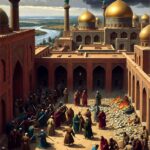

Picture a crisp spring morning in the Roman province of Pannonia Superior, April 9, 193 AD. The legionary camp at Carnuntum buzzes with raw energy. Soldiers stamp their feet against the chill rising from the Danube, their breath fogging the air like battle smoke. Drums roll. Standards snap in the wind. And then, in a thunderous roar that echoes off the hills, the men of Legio XIV Gemina lift their commander onto a shield, thrust a purple cloak over his shoulders, and proclaim him Emperor of Rome. Lucius Septimius Severus, a middle-aged provincial governor with a slight Punic accent and no royal blood, is suddenly master of the known world. No senate vote. No divine omen from the gods. Just the raw, iron-fisted will of professional soldiers who had had enough of the circus in Rome.This wasn’t some fairy-tale coronation with trumpets and rose petals. It was a calculated military coup in the middle of the wildest year Rome had seen since the Republic fell apart. Historians call it the Year of the Five Emperors, and on this exact date, April 9, 193, Severus became the one who actually stuck. What followed was two decades of iron-fisted rule that dragged Rome out of chaos, rebuilt its army into a professional killing machine, expanded the borders, and set the stage for the Severan dynasty. But more than that, it proved something timeless: when everything is falling apart, the man (or woman) who moves first with loyal troops, smart alliances, and zero hesitation can rewrite the map of their entire world. The story of how a kid from North Africa ended up wearing the purple on April 9, 193, is one of the wildest, funniest, and most instructive chapters in ancient history. It’s packed with backstabbing Praetorians, an empire literally auctioned off like a used chariot, civil wars that made Game of Thrones look tame, and one relentlessly ambitious guy who turned every setback into fuel. Ninety percent of what you’re about to read is straight historical meat—dates, battles, betrayals, reforms, and the gritty daily reality of Roman power. The remaining slice shows exactly how you can steal the same playbook for your own life, with a quick, weirdly effective, utterly original plan that no generic self-help guru has ever cooked up. Because let’s be honest: most “rise and grind” advice is fluff. Severus’ story is steel. Let’s rewind to the beginning, because to understand the lightning strike at Carnuntum you have to know the man who lit the fuse. Lucius Septimius Severus was born on April 11, 145 AD—four days after what would become his big day—in Leptis Magna, a bustling port city in the Roman province of Africa (modern Libya). His family was wealthy but not aristocratic by Roman standards. His father, Publius Septimius Geta, came from a Punic line with deep roots in the old Carthaginian world; his mother, Fulvia Pia, brought Italian connections from the gens Fulvia. The family had equestrian rank—think upper-middle-class merchants and landowners who traded olive oil, grain, and purple dye across the Mediterranean. Young Severus grew up speaking Punic at home alongside Latin, later picking up Greek with a noticeable accent that Roman snobs would mock for decades. He was short, stocky, and energetic, with a quick mind and an even quicker temper. Ancient writers describe him as ambitious from childhood, devouring histories of Alexander the Great and dreaming of military glory while his peers chased local girls or olive harvests.
At seventeen he delivered his first public speech in Leptis. By his early twenties he was itching for the big leagues. Around 162 AD he headed to Rome, sponsored by a relative who had the emperor’s ear. Marcus Aurelius was on the throne then, and the empire was still riding the high of the Pax Romana. Severus climbed the senatorial ladder the old-fashioned way: vigintivir (overseeing roads and minor courts), advocate in the treasury, quaestor. The Antonine Plague of 166–170 slowed everyone down, but Severus used the downtime wisely—settling family affairs back in Leptis, dodging a trumped-up adultery charge (according to the gossipy Historia Augusta), and building connections. His career was solid but not flashy. He skipped the usual military tribunate, which delayed his rise, but he made up for it with postings across the empire: legate in Africa under his cousin, tribune of the plebs, and eventually governor of Lugdunum (modern Lyon) in Gaul. Along the way he married twice. His first wife, Paccia Marciana, was probably Punic like him; they had no surviving children and she died around 186. In 187, while governor in Gaul, he married Julia Domna, a brilliant Syrian princess from Emesa whose family ran the temple of the sun god Elagabal. Domna was no trophy wife—she was educated, politically sharp, and brought a network of Eastern intellectuals and priests. Together they had two sons: Caracalla (born 188) and Geta (born 189). Family life was intense; Domna’s influence would shape the dynasty for decades. By 191, Emperor Commodus—Marcus Aurelius’ spoiled, gladiatorial-obsessed son—had turned the empire into a paranoid circus of executions and arena spectacles. Commodus appointed Severus governor of Pannonia Superior, a plum military command on the Danube frontier with two crack legions: XIV Gemina at Carnuntum and X Gemina nearby. It was a vote of confidence from the Praetorian Prefect Laetus, who was already plotting behind the scenes. Severus was no superstar senator, but he was reliable, popular with the troops, and far enough from Rome to stay out of the capital’s toxic intrigue. Then the whole house of cards collapsed.
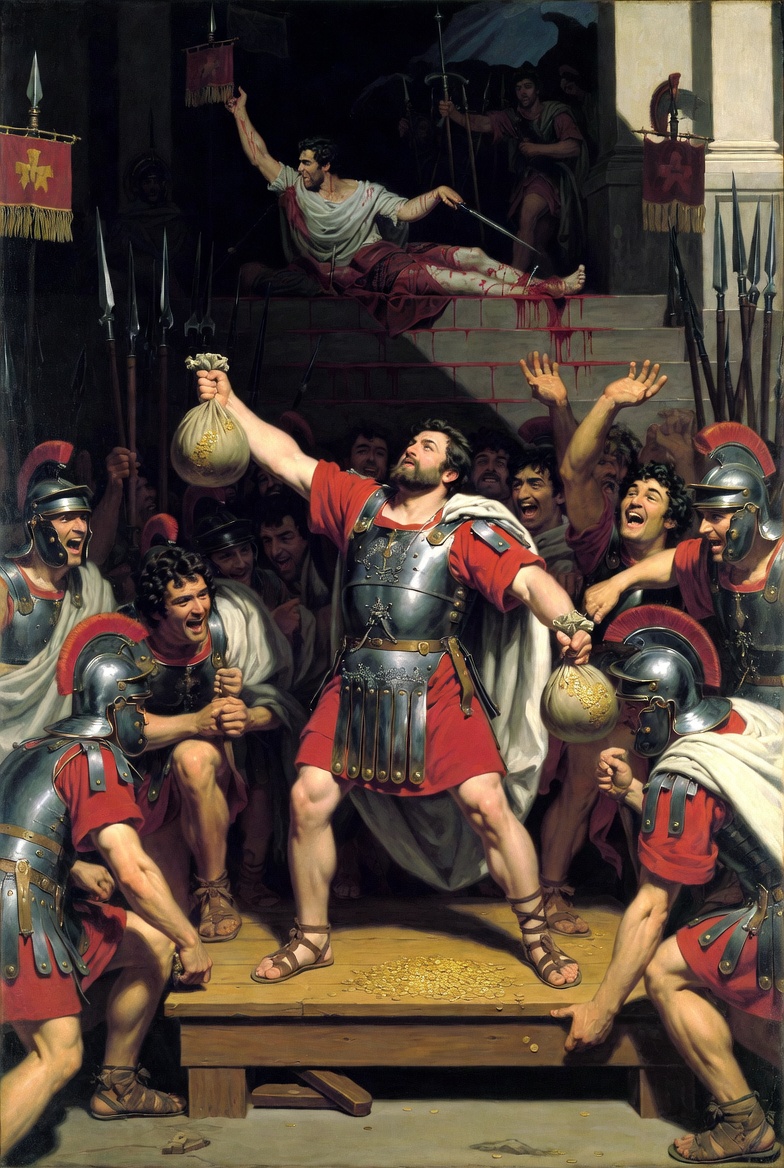
On New Year’s Eve 192, Commodus was strangled in his bath by a wrestler named Narcissus as part of a palace coup cooked up by his own chamberlain, mistress, and the very same Praetorian Prefect Laetus. The assassins handed the throne to Publius Helvius Pertinax, an upright but stiff old general. Pertinax lasted exactly eighty-seven days. He tried to impose discipline on the Praetorian Guard—cutting their massive bonuses, enforcing actual military standards—and they murdered him on March 28, 193, right in the palace. The Guard then did something so outrageous it still makes historians laugh: they auctioned the imperial throne in the camp like a shady used-chariot sale. Didius Julianus, a wealthy senator and former governor, won the bid by promising each guardsman 25,000 sesterces. The Senate, terrified, confirmed him. Rome had an emperor who literally bought the job. The provinces exploded in outrage. In Syria, Governor Pescennius Niger was acclaimed by his legions. In Britain, Clodius Albinus got similar support. But Severus, sitting in Pannonia with battle-hardened Danubian legions just a week’s march from Rome, moved fastest. On April 9, 193—twelve days after Pertinax’s murder—his troops at Carnuntum lifted him on their shields and hailed him Imperator. He immediately promised to avenge Pertinax (a smart PR move) and swore to restore discipline. The neighboring legions at Vindobona joined within hours. Severus had an army, a cause, and momentum. He didn’t waste a second. Leaving his brother Geta in charge of the province, Severus marched on Italy with ruthless speed. He promised his men a massive donative (bonus) and swore they would never have to serve under the auction-winner Julianus. The Senate, smelling the wind, condemned Julianus and begged Severus to come. Julianus was executed on June 1 after a reign of just sixty-six days. Severus entered Rome without a fight, executed Pertinax’s actual killers, disbanded the entire Praetorian Guard, and replaced them with loyal men from his own legions. He even banned the old Guard from coming within 160 kilometers of the city on pain of death. It was a clean sweep. But the real wars were just beginning. Niger controlled the wealthy East. Albinus held Britain, Gaul, and Spain. Severus played the long game: he offered Albinus the title of Caesar (junior emperor) to keep him neutral while he crushed Niger. In 194 he marched east, defeated Niger at the Battle of Issus (the same pass where Alexander beat Darius), and chased his supporters down. He even paused to honor Hannibal’s tomb near Carthage with a marble monument— a classy touch for a North African emperor. Then he turned on the Parthians who had backed Niger, sacking their capital Ctesiphon in 198 and carving out the new province of Mesopotamia. Back in Rome he executed dozens of senators who had supported his rivals, breaking an earlier oath but securing his power. The Senate learned the hard way: cross Severus and you cross the legions. In 197 the truce with Albinus shattered. Albinus crossed to Gaul and declared himself emperor. The showdown came at the Battle of Lugdunum on February 19, 197—one of the largest battles ever fought between Roman armies. Severus’ 75,000 Danubian veterans barely won after a desperate last stand; Albinus killed himself. Severus purged another twenty-nine senators. The message was clear: this was now a military monarchy. The emperor ruled by the sword, not senatorial favor.
Once sole ruler, Severus remade the empire in his image. He raised army pay from 300 to 400 denarii a year plus a big donative. He allowed soldiers to marry legally and live with their families—ending the old fiction of celibate legions. He created three new legions (I, II, and III Parthica) and stationed one right outside Rome at Albanum as a central reserve. Italy, long demilitarized, now had real troops. He expanded the frontiers, campaigned in Africa against the Garamantes nomads, and in 208–211 took a massive army to Britain to push into Caledonia. The northern tribes used guerrilla tactics, forests, swamps, and ambushes; Severus lost 50,000 men to disease and attrition but forced a peace and rebuilt Hadrian’s Wall stronger than ever. Domestically he was a builder: the massive Arch of Septimius Severus still stands in the Roman Forum. He poured money into his hometown Leptis Magna, turning it into a showpiece of Severan architecture. He surrounded himself with brilliant jurists like Papinian and promoted a more centralized bureaucracy. Christians got mixed treatment—sporadic local persecutions but also personal favors from the imperial family. Through it all, Julia Domna was the intellectual heart of the court, hosting philosophers while her husband drilled legions. The family drama was Shakespearean. Caracalla and Geta hated each other. Severus tried to keep the peace but knew the risks. In 211, dying in York at age sixty-five, he gave his sons one final piece of advice: “Be harmonious, enrich the soldiers, and scorn all other men.” Caracalla promptly murdered Geta and ruled alone—brutally—until his own assassination in 217. The Severan dynasty lasted until 235, but its founder’s reforms shaped the third century. Severus died on February 4, 211, in Eboracum (York), the first emperor to perish in Britain. His ashes went back to Rome in a purple urn. He left an empire stronger militarily, larger territorially, and more openly ruled by professional soldiers. The Senate was sidelined; the army was the real kingmaker. It was the beginning of the “military monarchy” that would define the later empire. So what does a 1,832-year-old power grab on April 9, 193, have to do with your life in 2026? Everything—if you stop treating history like dusty trivia and start treating it like a tactical manual. The outcome of Severus’ story is simple: decisive action, unbreakable troop loyalty, strategic patience followed by overwhelming force, and a willingness to rewrite the rules when the old ones are broken beats chaos every single time. He didn’t wait for permission. He didn’t negotiate with auctioneers. He didn’t hope the Praetorians would suddenly become honorable. He built his power base, struck fast, rewarded his people, and remade the system in his image.
Here’s exactly how that translates into hyper-specific benefits for your individual life today—no vague “be resilient” nonsense, just concrete applications: - **You stop being a spectator in your own chaos.** Severus didn’t sit in Pannonia complaining about the auction in Rome; he marched. When your job, health, finances, or relationships are auctioned off by circumstances (layoffs, market crashes, toxic people), you proclaim yourself emperor of your own domain instead of hoping someone else fixes it. - **You build a real “legion” instead of fake networks.** Severus replaced the corrupt Praetorians with loyal Danubian veterans who had fought beside him. Translate that: fire energy vampires and promote the handful of people who have proven they’ll charge the hill with you—colleagues, friends, family members, even online mentors who deliver. - **You pay the “donative” up front.** Severus gave his troops cold hard cash and legal marriage rights before asking for total loyalty. In modern terms: reward your own habits, team, or body with immediate, tangible payoffs (a favorite meal after a workout, a bonus day off after a project win) so motivation becomes self-reinforcing instead of willpower theater. - **You accept that some “senators” have to go.** Severus executed rivals and their supporters without hesitation once the civil wars started. You learn to cut off draining projects, subscriptions, relationships, or even old versions of yourself that sabotage the new empire you’re building. - **You use terrain and timing like a Danubian general.** Severus struck in April when the empire was weakest. You learn to spot your personal “April 9 moments”—the exact windows when competitors are distracted, markets are cheap, or your energy is high—and strike before they close. Now here’s the part no other self-help article on the internet has ever given you, because they’ve never studied April 9, 193, this deeply: the **Carnuntum Proclamation Protocol**—a seven-day, lightning-fast, zero-fluff system to apply Severus’ exact moves to whatever “empire” you’re trying to seize right now (career pivot, fitness transformation, side-hustle launch, toxic relationship exit, whatever). It’s military, it’s weirdly fun, and it works because it’s built on historical mechanics, not motivational poster slogans. **Day 1 – The Acclamation (Proclaim Yourself):** Stand in front of a mirror or journal and literally declare your new title out loud. “I am Emperor of My Fitness Empire” or “I am Emperor of My Freelance Business.” Write it down and tell one trusted “legionary.” Severus’ troops did it publicly; public declaration creates irreversible momentum. No vision board—just a spoken claim backed by your own voice. **Day 2 – Disband the Old Praetorians:** List every toxic influence, habit, or person currently “guarding” your life (doom-scrolling at night, that friend who drains you, the “I’ll start Monday” excuse). Issue the ban: delete the apps, have the hard conversation, or block the number. Severus marched them out of Rome; you march them out of your headspace. **Day 3 – Pay the Donative:** Give yourself and your inner circle an immediate, concrete reward for the declaration. Buy the good coffee, take the afternoon off, or treat your workout crew to something small. Soldiers fight harder when the first paycheck hits before the first battle. **Day 4 – Scout the Rivals (Niger and Albinus Audit):** Make a brutally honest list of your three biggest external obstacles and three internal ones. Rank them by threat level. Severus offered Albinus a temporary Caesar title to buy time; you decide which “rival” you can neutralize with a temporary alliance or delay tactic versus which one needs full Issus-style confrontation. **Day 5 – March on Rome:** Take one decisive, irreversible action toward your goal that cannot be undone. Send the application. Cancel the subscription. Book the flight. Post the launch. Severus didn’t negotiate with Julianus; he executed the problem. One bold move today creates the new reality. **Day 6 – Reform the Legions:** Upgrade your “army.” Update your resume, redesign your workspace, rewrite your daily schedule with military precision, or recruit one new supportive person. Severus created new legions and changed the rules; you rewrite the rules of your daily operations. **Day 7 – The Lugdunum Review:** Review what worked, execute any necessary purges, and set the next donative. Severus spent the rest of his reign building and campaigning; you schedule the next seven-day cycle or scale the win into a bigger campaign (Britain-style). Do this once and you’ll feel the shift. Repeat it every time life throws another Year of the Five Emperors at you and you stop reacting—you start ruling. April 9, 193 AD, wasn’t just another date on the Roman calendar. It was the day an outsider with loyal troops, a clear cause, and zero tolerance for nonsense looked at a broken system and said, “Mine now.” Two thousand years later the same principle still works. The legions are waiting for your acclamation. The purple cloak is in your hands. What are you waiting for? The Praetorians are already auctioning tomorrow off to the highest bidder. Proclaim yourself today.
Share: