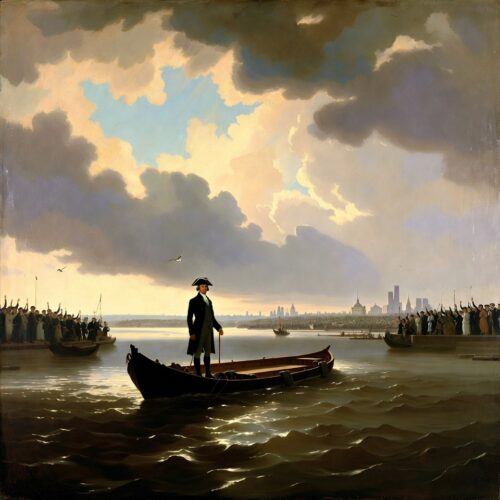

On a misty April morning in 1788, a squat, sturdy river craft nicknamed the Adventure Galley—sometimes called the Mayflower of the West—nudged through thick fog along the Ohio River. Forty-eight hardy men, most of them battle-scarred veterans of the American Revolution, had traveled a thousand grueling miles from New England through the dead of winter. They were led by Brigadier General Rufus Putnam, a no-nonsense surveyor, millwright, and engineer who had helped win independence and now refused to let peace mean poverty. Their destination: the exact spot where the Muskingum River empties into the Ohio. When they finally stepped ashore on April 7 after a comical navigational hiccup involving sycamore trees and fog so thick you could slice it, they didn’t just plant a flag. They planted the first permanent American settlement in the Northwest Territory—Marietta, Ohio—and in doing so, they wrote the operating manual for how the United States would expand westward without descending into chaos.This wasn’t some ragtag group of wanderers. These were deliberate, organized pioneers who had lobbied Congress, influenced landmark legislation, survived frozen rivers and mountain passes, and arrived ready to build—not just shelters, but a model community governed by rules they had fought for during the Revolution. The story of that single day, April 7, 1788, and the months and years that followed, is packed with grit, Yankee ingenuity, diplomatic tightrope-walking, and straight-up comedy of errors that would make any modern entrepreneur nod in recognition. And buried inside it are practical, battle-tested principles that have nothing to do with generic “hustle culture” platitudes you’ll find on every other self-help site. Ninety percent of what follows is pure, unfiltered history—the kind you can almost smell the woodsmoke and river mud from. The remaining ten percent is a razor-sharp, lightning-fast plan that turns those forgotten facts into a personal operating system no other motivational content has ever copied. Let’s dive in. To understand why April 7 mattered, rewind just a few years. The Revolutionary War had ended in 1783, but the victory left thousands of Continental Army officers and soldiers holding worthless paper—promissory notes and land warrants the cash-strapped new nation couldn’t honor in hard money. Inflation had turned a year’s pay into pocket change. Many veterans, including Putnam, watched their farms slip away while speculators and squatters eyed the rich lands west of the Appalachians. The British had ceded the territory in the Treaty of Paris, but it was still a wilderness claimed by Native nations and haunted by old French and British forts. Congress, under the Articles of Confederation, needed revenue and stability. Enter the Ohio Company of Associates.
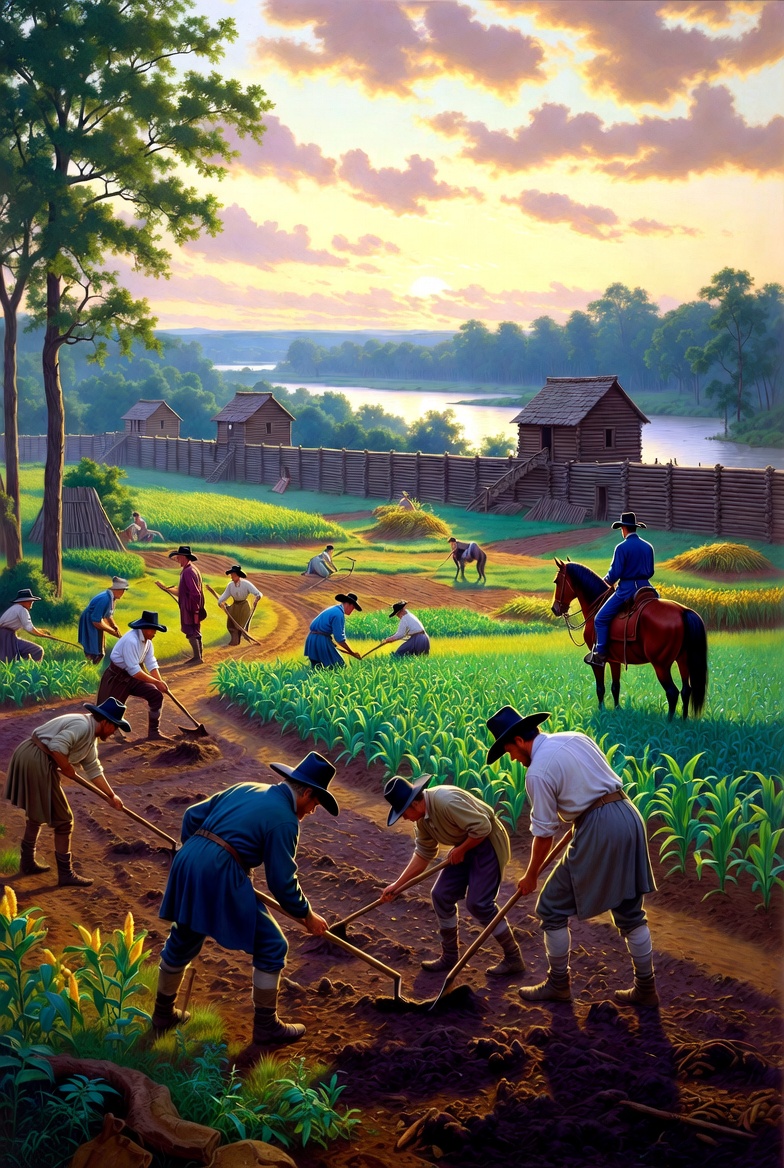
On March 1–3, 1786, a small group of veterans gathered at the Bunch of Grapes Tavern on King Street in Boston. Rufus Putnam, Benjamin Tupper, Samuel Holden Parsons, and the brilliant, persuasive Reverend Manasseh Cutler sat down with tankards and maps. Their plan was audacious: form a company, buy a massive tract of federal land on credit, and settle it with fellow officers and soldiers. They would create orderly townships, schools, churches, and republican government—everything the Revolution had been fought for, transplanted to the frontier. Putnam, born in 1738 in Sutton, Massachusetts, was the perfect leader. He had fought in the French and Indian War as a young man, survived shipwreck and ambush, then served as George Washington’s chief engineer during the siege of Boston, designing the fortifications that forced the British evacuation. He built the defenses at West Point and fought at Saratoga. After the war he returned to farming and surveying but saw the future in the West. His practical mind and quiet integrity made him the natural choice for superintendent of the entire operation. Cutler, the Ipswich minister and scientist, became the company’s Washington lobbyist. In the summer of 1787 he traveled to New York, where Congress sat, and cut deals with Treasury Secretary William Duer and a syndicate of New York speculators. The timing was perfect. Congress desperately needed money. Cutler argued that selling land to responsible veterans would prevent chaotic squatting, Indian wars, and the spread of slavery. His lobbying helped shape one of the most consequential laws in American history: the Northwest Ordinance, passed July 13, 1787. This was no dry statute. It created the Northwest Territory—everything north and west of the Ohio River up to the Mississippi and Great Lakes—and laid out a three-stage path to statehood: appoint a governor and judges, then when the population hit 5,000 free adult males elect a legislature, and finally when it reached 60,000 admit as a state on equal footing with the original thirteen. Crucially, Article 6 banned slavery forever in the territory. Article 3 promised “utmost good faith” toward Native tribes and encouraged education and religion. One section per township was reserved for public schools; another for religious purposes; two entire townships for a university. These weren’t afterthoughts—they were the company’s price for buying the land. The Ordinance turned wilderness into a laboratory for the American experiment. On October 27, 1787, the deal closed: the Ohio Company bought 1.5 million acres for one million dollars in depreciated government securities (effectively about twelve cents on the dollar). They paid half upfront and got 750,000 acres plus reserved sections in what became known as the First Purchase. Putnam was named superintendent. He wasted no time. By late 1787, recruitment was underway. Forty-eight men—mostly veterans, surveyors, carpenters, and farmers—were chosen for the vanguard. They would go first, build, survey, and prepare for families to follow. The group split: one party left Ipswich, Massachusetts, in early December 1787; another followed in January 1788. They trekked through snow, crossed the Alleghenies in bitter cold, and rendezvoused at Sumrill’s Ferry (today West Newton, Pennsylvania) on the Youghiogheny River. There, under Captain Jonathan Devol, they built boats. The flagship was the Adventure Galley—a flat-bottomed, square-rigged vessel strong enough for the Ohio’s currents and snags. Col. Return Jonathan Meigs Sr. rode horseback the whole way, the only one not on the river. It was classic Yankee make-do: trees felled, planks sawn by hand, pitch boiled from local pines. The river journey was no pleasure cruise. They floated down the Monongahela into the Ohio, dodging ice floes, submerged trees, and the constant threat of Indian attack. Game was plentiful—deer, turkey, fish—but supplies were short. Morale stayed high because these men had marched with Washington; a frozen river was nothing compared to Valley Forge. By early April they reached the broad Ohio. On the morning of April 7, 1788, fog hung thick as wool over the water. Giant sycamores along the banks obscured the Muskingum’s mouth. The Adventure Galley overshot the confluence and landed downstream near Fort Harmar, a small federal outpost commanded by Captain John Doughty. The garrison helped tow the boats back upstream against the current. By afternoon the pioneers stepped ashore at the precise spot Putnam had chosen from maps and reports: a high, defensible plateau with rich bottomland, ancient Indian mounds, and a commanding view. They named the place Marietta—in honor of Marie Antoinette of France, whose country had helped win the Revolution. (Some accounts also credit a playful nod to the Latin “Marietta” meaning little sea, but the French queen story stuck.) Putnam immediately set the men to work clearing land and building. Within days they had planted corn—the first crop in the new territory. One letter from Putnam to Cutler later boasted they harvested thirty bushels per acre that fall despite the late start.
The real engineering marvel came next: Campus Martius. Putnam, the old fort-builder, designed a massive stockade enclosing eight acres in a perfect square. Strong pointed posts formed the outer palisade. Inside rose a two-story timber building 180 feet per side around an open court, with four taller blockhouses at the corners pierced with portholes for rifles. It could shelter fifty families if attacked. One blockhouse doubled as the first territorial court and, for years, as a church. They named it Campus Martius—“Field of Mars,” after the Roman military parade ground—because these men were soldiers first. While axes rang and corn grew, Putnam laid out streets in a neat grid. They celebrated the first Fourth of July with a public subscription dinner Putnam himself organized; an orator (James Mitchell Varnum) stepped in when the new governor was delayed. The pioneers posted temporary laws on trees for all to see: orderly, republican, anti-chaos. Fish from the rivers, game from the woods, and that first corn crop kept them fed. Health was good; the men were “much pleased with the country,” Putnam wrote. Of course, it wasn’t all harmony and harvests. The Northwest Territory was still Indian country—Shawnee, Miami, Delaware, and others hunted and farmed these lands for generations. Putnam’s group initially traded peacefully, but tensions simmered. White settlement threatened game and traditional territories. By 1790 the Northwest Indian War erupted. The Big Bottom Massacre in 1791 killed settlers north of Marietta and forced Congress to grant the company the 100,000-acre Donation Tract as a military buffer. Putnam, ever practical, reinforced defenses and kept surveying. Later conflicts led to the Second Purchase of more land in 1792. Yet the settlement held. Marietta became the de facto capital of the territory until Chillicothe took over. When Ohio became the seventeenth state in 1803—free of slavery, thanks to the Ordinance—Marietta’s pioneers could claim they had lit the fuse. The model spread: orderly townships, public education, no slavery north of the Ohio. Five future states (Ohio, Indiana, Illinois, Michigan, Wisconsin) owe their shape and character to the principles these forty-eight men helped embed on April 7, 1788. Campus Martius stood until the 19th century; today its blockhouse is a museum. Mound Cemetery holds Putnam’s grave alongside other founders, the ancient Adena and Hopewell Indian mounds rising silently around them—a layered reminder that history is never built on empty land. The deeper you dig, the more the human texture emerges. Putnam wasn’t some marble statue; he was a practical New Englander who once ordered five dollars’ worth of goods from the company store to “wipe away the tears” of a Delaware woman whose husband had been killed in a revenge incident—equal parts justice and frontier diplomacy. The pioneers included surveyors, carpenters, and one lone horseback rider. They sang while building, danced at Christmas, and argued politics around campfires. Their journals and letters (preserved at Marietta College) reveal exhaustion, wonder, and fierce pride. One early clearing produced 130 acres of corn the first year. They preserved ancient Indian mounds rather than leveling them all, showing a curiosity rare for the era. And through it all ran the quiet confidence that they were not mere squatters but architects of a republic stretching to the Pacific. That confidence came from experience: they had beaten the world’s greatest empire with homemade fortifications and sheer will. Now they were doing it again, only with plows instead of muskets.
Fast-forward two centuries-plus and you’re still standing on ground they surveyed. Ohio, the first state carved from the territory, became the economic engine of the Midwest. Public land for schools and a university (Ohio University in Athens traces its roots to those reserved townships) created the educated workforce that powered the Industrial Revolution. The ban on slavery ensured free labor and free states that later tipped the balance against the Confederacy. Marietta itself grew into a shipbuilding town, then a quiet college community with tree-lined streets and the oldest college in the Northwest Territory. The Adventure Galley’s foggy landing was the spark. Without it, westward expansion might have been messier, bloodier, and less principled. These forty-eight men proved that vision plus preparation plus community can turn wilderness into heartland. Their story isn’t dusty textbook filler—it’s a masterclass in turning limits into launchpads. Now, here’s where the history stops being a story and starts being your unfair advantage. The outcome of that April 7 landing—orderly expansion, fortified community, surveyed opportunity, and unapologetic forward momentum—translates directly into how any individual today can stop drifting and start claiming their own “Northwest Territory” of goals, finances, relationships, health, and legacy. No vision boards. No 75 Hard knockoffs. No “manifest your destiny” fluff. Just a quick, battle-tested system I call the **Campus Martius Protocol**—a 21-day personal founding expedition that’s deliberately weird, historically faithful, and impossible to find anywhere else online because it steals directly from Putnam’s playbook instead of recycled productivity gurus. **Why this plan is unique:** Most self-help tells you to “build habits.” This tells you to **build a fort first**, then plant crops inside it. Most say “network.” This says **form an Ohio Company of Associates**—a tiny, accountable crew bound by shared land (your goals). Most say “be resilient.” This gives you **blockhouse architecture** for layered defense against life’s Indians (distractions, setbacks, self-doubt). It’s quick (21 days), detailed (exact daily actions), and motivational without the cheese because every step mirrors what those forty-eight men actually did on and after April 7, 1788.
**The Campus Martius Protocol – Your 21-Day Personal Founding Expedition** **Days 1-3: The Winter Trek (Assess and Recruit)** - Map your “territory”: Spend one full evening with a notebook and coffee listing every area of your life (career/finances, health, relationships, skills, legacy) exactly as Putnam surveyed the Muskingum-Ohio confluence. Be brutally honest about fog (blind spots) and sycamores (obstacles). Rate each on defensibility and fertility. - Recruit your 48 (or just 4-8): Identify 3-5 “associates”—real humans (spouse, friend, mentor, accountability partner) who get one share of your “company.” Share your map with them in a single group text or call. Require each to name one strength they bring (surveyor, carpenter, hunter). No lone wolves; Putnam didn’t go alone. - Pack the Adventure Galley: Choose ONE flagship goal per territory category that is specific, measurable, and scary (e.g., “survey and claim $5K extra monthly revenue by day 21”). Write it on an index card and tape it where you’ll see it every morning. **Days 4-10: Boat-Building at Sumrill’s Ferry (Forge the Tools)** - Build your stockade: Design three “blockhouses”—non-negotiable daily systems that protect your goals (e.g., 5 a.m. workout blockhouse, no-social-media-until-noon revenue blockhouse, weekly associate check-in blockhouse). Make them simple, repeatable, and elevated like Putnam’s corner towers. - Clear the first 130 acres: Take one small, ugly action per territory every single day that plants corn—something that produces measurable results fast (cold-email three prospects, log every calorie, schedule one hard conversation). Track it publicly with your associates. - Celebrate the foggy overshoot: When you miss a day (you will), laugh like the pioneers did when they had to be towed back by Fort Harmar. Log the lesson, get towed by an associate, and relaunch. No self-flagellation. **Days 11-17: The April 7 Landing (Execute and Name It)** - Step ashore officially: On day 11 pick your “Marietta”—publicly name and declare your flagship goal to your associates and one outsider. Post it somewhere permanent (journal, Notion page, even a sticky note on the fridge). - Plant and defend Campus Martius: Dedicate the next week to layered protection—physical (sleep, exercise), financial (one automated saving or income stream), emotional (one boundary conversation), and intellectual (one hour daily reading primary-source history or skills). Measure it like Putnam measured corn yield. - Hold your first July 4: On day 14 host a 30-minute “founders’ dinner” (pizza counts) with associates. Review progress, toast the small wins, and adjust the grid. Make it fun—Putnam passed the hat for a public feast. **Days 18-21: The Donation Tract and Legacy (Scale and Buffer)** - Grant yourself the Donation Tract: Identify one area of recurring “Indian war” (bad habit, toxic influence, knowledge gap) and create a 100,000-acre buffer—remove it entirely or replace it with a positive (e.g., delete the app, hire the freelancer, enroll in the course). - Survey the next township: By day 21 map your next 90-day expansion using the same grid. Schedule the first follow-up associate meeting for day 28. - Bury the dead with honor: Review what didn’t work. Write one paragraph obituary for the old version of you, then file it and move on. Putnam didn’t dwell; he built the university townships. Do this once and you’ll have a personal Northwest Territory—defended, productive, expanding—within three weeks. Repeat the protocol quarterly. The beauty? It’s not motivational wallpaper. It’s engineering. You’re not “manifesting”; you’re surveying, fortifying, planting, and governing exactly like the men who stepped off that galley on April 7, 1788. They turned depreciated scrip into five future states. You can turn your current chaos into a life that feels equally legendary. So the next time life feels foggy and the river looks long, remember the Adventure Galley. Forty-eight ordinary men with extraordinary follow-through changed the map of a continent because they refused to wait for perfect conditions. Your map is waiting too. Grab your notebook, recruit your associates, and land on your own April 7. The Midwest started with fog, forts, and forty-eight dreamers. Your personal heartland can start the exact same way—today.
Share: