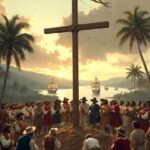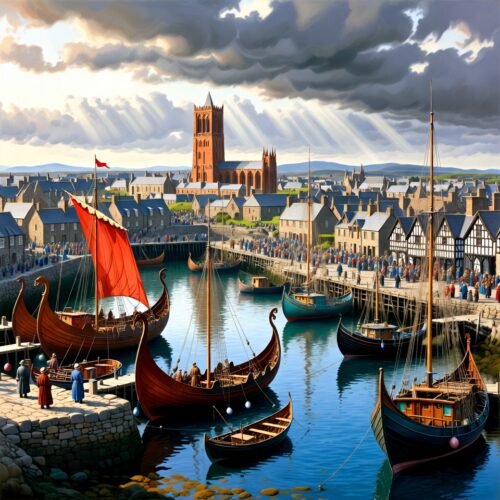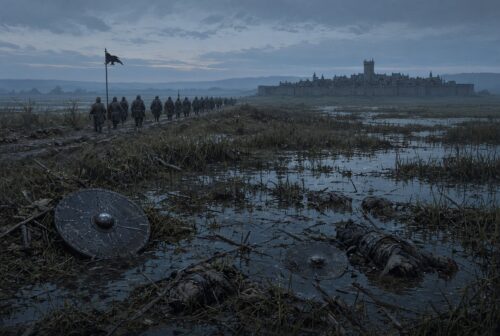

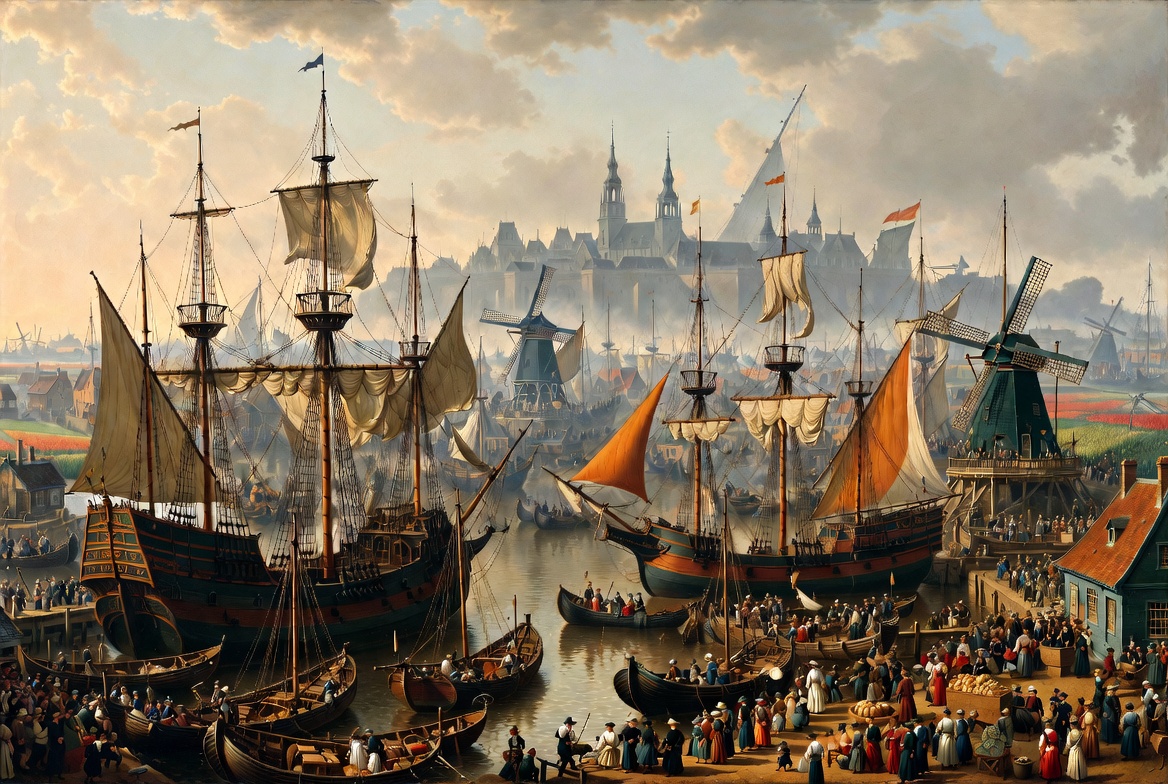
On April 1, 1572, the Duke of Alba supposedly "lost his bril." In Dutch, *bril* means "glasses," but it was also the nickname for the sleepy little port town of Brielle, or Den Briel. A ragtag fleet of exiled Dutch privateers—self-proclaimed *Watergeuzen*, or Sea Beggars—crashed the party uninvited, rammed the town gate with a ship's mast, and turned a forgotten fishing harbor into the spark that would ignite the Eighty Years' War and birth the Dutch Republic. This wasn't some grand armada clash with trumpets and banners. It was a desperate, muddy, storm-driven raid by a few hundred sunburned, half-starved sailors who decided, on a whim, not to sail away but to stay and fight. What followed was one of history's most improbable underdog stories: a small act of cheeky defiance that snowballed into a global maritime superpower, a beacon of tolerance, and the economic miracle that gave us Rembrandt, the stock exchange, and tulip mania. This is no dusty textbook footnote. It's a riotously human tale packed with religious zealots, ruthless pirate lords, ironic nicknames, and the kind of slapstick opportunism that feels like the original April Fools' prank—with real stakes. The Spanish Habsburg empire, at the height of its gold-fueled power, got humiliated by a bunch of Calvinist sea dogs who couldn't even afford matching uniforms. And the best part? The outcome of that single day's chaos offers a razor-sharp blueprint for modern life. Not the generic "seize the day" self-help fluff you'll find everywhere else. This is a *privateer protocol*: quick, chaotic, and built on adapting to storms, holding one undefended port, and letting momentum do the rest. Ninety percent of what follows is pure, unfiltered 16th-century history—names, dates, blood, beer, and all. The last slice turns that history into your personal revolt. Buckle up; we're sailing into the Dutch Revolt.To understand why April 1, 1572, mattered, rewind to the Low Countries in the mid-1500s. The Seventeen Provinces—modern Netherlands, Belgium, Luxembourg—were a prosperous patchwork of trading cities, canals, and windmills under the Spanish crown. Flanders and Holland hummed with cloth, herring, and banking. Antwerp was Europe's busiest port. But the Habsburgs ruled from afar. Charles V, born in Ghent, had kept things relatively hands-off, but when he abdicated in 1555 and his son Philip II took over from Madrid, cracks turned into chasms. Philip was a devout Catholic absolutist who saw the Protestant Reformation spreading like fire through Dutch towns. Calvinism, with its emphasis on personal Bible-reading and rejection of papal pomp, appealed to merchants tired of tithes and inquisitors. Philip responded with the Inquisition. Heresy trials, book burnings, and public executions became routine. Taxes skyrocketed: the infamous "tenth penny" on all sales threatened to strangle trade. Spanish troops, billeted in Dutch homes, acted like occupiers. Locals grumbled about "Spanish tyranny." Tensions boiled over in 1566. A group of lesser nobles presented a petition to Regent Margaret of Parma in Brussels, begging for moderation on religious persecution. A Spanish courtier sneered that they were just *gueux*—beggars. The nobles embraced the insult with dark humor, wearing beggar medallions and rough gray cloaks as badges of honor. The *Geuzen* name was born. That summer, the Iconoclastic Fury erupted. Calvinist mobs stormed Catholic churches from Antwerp to Groningen, smashing statues, whitewashing frescoes, and melting down silver altars into coins for the cause. It wasn't random vandalism; it was targeted rage against symbols of foreign control and clerical wealth. Churches that had taken centuries to build were gutted in hours. Philip II, furious, dispatched Fernando Álvarez de Toledo, 3rd Duke of Alba, with 10,000 veteran Spanish troops in 1567. Alba was 60, iron-willed, and merciless. He established the Council of Troubles—quickly nicknamed the Council of Blood. Over the next six years, it would condemn 9,000 people, executing at least 1,000, including prominent Catholic nobles like Counts Egmont and Horn, beheaded in Brussels' Grand Place in 1568 despite their loyalty to the crown. The message was clear: no mercy, even for moderates. William of Orange, the wealthiest noble in the provinces and a pragmatic politician (later called the Silent for his cautious diplomacy), fled to Germany. He had converted to Protestantism and began funding resistance. One tool: letters of marque authorizing privateers to attack Spanish shipping. These *Watergeuzen*—Sea Beggars—were a motley crew of exiled nobles, bankrupt merchants, fishermen, and outright pirates. Operating from bases in England and Emden, they flew the orange, white, and blue flag (the origin of the Dutch tricolor) and sang salty psalms mixed with drinking songs. Their motto? "Liever Turks dan Paaps"—"Rather Turkish than Papist." They raided Spanish treasure fleets, sold herring to fund guns, and terrorized the coasts. Leaders included the flamboyant Baron Willem van der Marck, Lord of Lumey, a giant with a reputation for hanging priests from yardarms (he once quipped that priests made good chandeliers). Another was Bloys van Treslong, a local Zeeland noble with intimate knowledge of the waterways. They were effective but undisciplined—more interested in plunder than strategy. By early 1572, even Queen Elizabeth I of England had had enough of their raids on neutral shipping. She expelled them from English ports in March, forcing the fleet—about 25 ships and 600 men—back to sea in terrible weather.
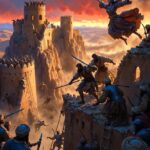
Here comes the random genius of April 1. A ferocious storm battered the coast. The Beggars, low on supplies and desperate, sighted the mouth of the Maas River. Brielle sat there: a modest fortified town of about 4,000 souls, with thick walls, a harbor, and strategic control over inland waterways. It was lightly defended. The Spanish governor and most troops had marched off to support operations elsewhere, leaving a skeleton crew under a local commander. The Beggars sent a delegation demanding surrender "in the name of the Prince of Orange." The Spanish refused at first. What happened next was pure improvisation. The fleet's ships were too big for the shallow harbor, so the sailors lashed a spare mast to a small boat, rowed it to the gate, and used it as a battering ram. Boom—the gate splintered. In poured the Sea Beggars, ragged, armed with pikes, harquebuses, and cutlasses, shouting Protestant hymns. Resistance crumbled almost instantly. A few Spanish soldiers fled or were overwhelmed. By evening, the orange flag flew over Brielle's church tower. The town was theirs with minimal bloodshed—maybe a handful of casualties on each side. The real stroke of genius came in the council of war that night. Some captains wanted to loot and sail away, as they had done dozens of times before. But one—accounts credit either Treslong or a lesser-known sailor—argued: *Why leave? This is undefended territory. We hold it.* They stayed. Word spread like gunpowder along the canals. Within days, Flushing (Vlissingen) and other Zeeland ports rose up, inviting the Beggars in. By May, much of Holland and Zeeland had declared for Orange. Alba was apoplectic. Legend says he raged that he had "lost his bril" on April 1—a pun that became the Dutch equivalent of an April Fools' joke for centuries. Spanish forces counterattacked, but the damage was done. William of Orange crossed back into the provinces with an army. The war that followed was brutal: the Spanish Fury sack of Antwerp in 1576 (7,000 dead), the Union of Utrecht in 1579 uniting the northern provinces, the formal Act of Abjuration in 1581 declaring independence from Philip II. It dragged on until the Peace of Münster in 1648, but Brielle was the undeniable first foothold. Without it, the Dutch Republic might never have existed.
The long-term payoff was staggering. The Dutch Republic became the first modern bourgeois state: no king, elected stadtholders, religious tolerance that welcomed Jews, Huguenots, and even freethinkers. The Dutch East India Company (VOC, founded 1602) invented the joint-stock corporation and dominated global trade from spices to silk. Amsterdam's canals filled with wealth; tulip bulbs traded like cryptocurrency futures. Art exploded—Rembrandt's *Night Watch*, Vermeer's quiet interiors, Frans Hals' laughing militiamen. Science thrived: Antonie van Leeuwenhoek's microscope, Christiaan Huygens' pendulum clock and Saturn's rings. The Dutch invented modern finance, insurance, and the idea that a small nation could punch above its weight through navy and ingenuity. They flooded their own lands strategically (the "Dutch water line" defense) to stop invaders, turning geography into a weapon. All of it traceable, in part, to that muddy April 1 raid. The Sea Beggars themselves were no saints. Lumey was later sidelined for his excesses—he once ordered a priest skinned and used as a drum, or so the stories go. The Beggars plundered monasteries and executed Catholics with glee. Yet their zeal, combined with sheer audacity, flipped the script on Europe's mightiest empire. Spain, bloated with American silver, couldn't sustain endless troop shipments across stormy seas. The Dutch navy evolved from pirate fleet to the world's finest. By the 17th century, the Golden Age was in full bloom: a tiny republic out-trading giants, funding the arts, and exporting the very idea of republican liberty that would inspire later revolutions. Fast-forward four-and-a-half centuries. That single, scrappy foothold on April 1, 1572, proves one truth: big empires fall to small, determined raids on weak points. You don't need an army or perfect timing. You need a storm, a mast for a battering ram, and the guts to stay instead of sailing off. The outcome—Dutch independence, prosperity, and cultural explosion—translates directly to your individual life. Not in vague inspiration, but in concrete, history-hacked advantages that no generic productivity guru teaches.
- **You gain "first-foothold immunity" against overwhelm**: Just as Brielle's capture gave the Dutch a secure base to expand from, nailing one small, undefended "port" in your life (say, a 10-minute daily habit) creates momentum that protects against total collapse when bigger storms hit. History shows tiny wins compound faster than grand plans. - **You weaponize chaos like a 16th-century privateer**: The Beggars turned a literal storm into opportunity. Today, that means treating unexpected crises—job loss, breakup, market crash—as the "divine wind" that blows you toward undefended territory. Spanish troops absent? Your boss distracted? Raid it. - **You build tolerance as a superpower**: The Dutch Republic's survival hinged on pragmatic alliances and openness. Applying that, you learn to recruit "unlikely crew" (mentors, odd skills, even former rivals) instead of demanding perfect ideological purity, turning potential enemies into trade partners. - **You master strategic flooding**: The Dutch flooded lowlands to stop invaders. Translate it: deliberately "inundate" toxic areas of life (endless scrolling, toxic relationships) with deliberate barriers so they can't advance, buying time for your revolt to spread. - **You inherit a Golden Age mindset**: Brielle led to tulips, telescopes, and tolerance. Your version? A personal economy of ideas and skills that compounds into wealth, creativity, and freedom—without waiting for permission from any "Philip II" in your head. Now, the part no other self-help piece dares: a detailed, quick, *uniquely pirate-coded* plan built *only* from this Brielle raid. Call it the **Watergeuzen Seven-Day Revolt Protocol**. It's not a 30-day glow-up or vision-board nonsense. It's a seven-day lightning raid: assess the "Spanish tyranny" in your life, build a fleet from scraps, ride the storm, seize one port, hold it, raise your flag, and watch the revolt spread. Do it in a single focused week. No apps, no journals required beyond scraps of paper. It's chaotic, adaptive, and historically faithful—because the Beggars didn't have perfect plans; they had oars and attitude.
**Day 1: The Petition and the Insult (Scout Your Tyranny)** List three "Spanish" oppressors in your life: a soul-crushing routine, a draining relationship, a financial leak. Give them mocking nicknames like the Beggars did ("Tenth Penny Tax" for your subscription bloat). Write them on a single scrap. Burn or delete two; keep the weakest, most "undefended" one. That's your Brielle. **Day 2: Letters of Marque (Assemble Your Ragtag Fleet)** Gather whatever "ships" you have: one skill you're decent at, one contact who's underused, one hour of free time. Don't buy anything new. The Beggars used leaky boats; you use what's in your harbor. Example: if your Brielle is "procrastination on side-hustle," your fleet is your phone's voice memos and a free Canva account. **Day 3: Ride the Storm (Create Controlled Chaos)** Intentionally disrupt your normal day. Skip one comfort (coffee, social media) to simulate the English expulsion. Use the freed energy to sail toward your target port. The storm is your friend—force an uncomfortable action, like cold-calling one person or shipping one imperfect product. **Day 4: Ram the Gate (The Bold Seizure)** Hit your Brielle hard and fast. Spend exactly 90 minutes executing the one undefended move: launch the micro-project, have the hard conversation, cut the expense. Use a literal "mast"—any tool at hand, even a kitchen timer. No perfection. Just breach the wall. **Day 5: The Council of War (Decide to Stay)** Don't loot and leave. List three reasons to *hold* this new territory (e.g., "This gives me daily orange-flag wins"). Commit publicly: tell one ally or post a vague "flag raised" update. The Beggars stayed because one voice said so. Yours does too. **Day 6: Raise the Orange Flag (Signal the Revolt)** Make your foothold visible. Change one visible thing: a new desktop wallpaper with an orange element, a sticky note saying "Brielle Taken," or a small ritual (morning psalm-like affirmation tied to your win). Invite "allies" by sharing the story casually—momentum spreads like 1572 news along canals. **Day 7: Flood the Lowlands & Expand (Defend and Spread)** Apply the Dutch water-line: block one "invasion route" (delete an app, set a boundary). Then seize the next port—build on Day 4's win with a 30-minute follow-up. Track only wins, not perfection. By week's end, your personal revolt has its first province. Repeat monthly; watch it snowball like Holland to a republic. This protocol is lightning-fast because history proves speed beats size. The Beggars didn't plan for years; they acted in hours and let the chain reaction do the work. No meditation apps, no $997 courses—just oars, attitude, and one muddy port. Apply it, and you'll feel what those sailors felt standing on Brielle's walls at dusk: the Spanish empire suddenly looks smaller, and your future suddenly looks golden. The April 1, 1572, raid wasn't a joke. It was the punchline that rewrote Europe's map. Today, it can rewrite yours. Grab your mast. The storm is coming—make it yours. The Dutch did it with 600 salty souls. You've got everything you need. Now go seize your Brielle.
Share: