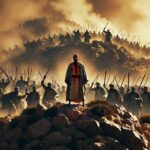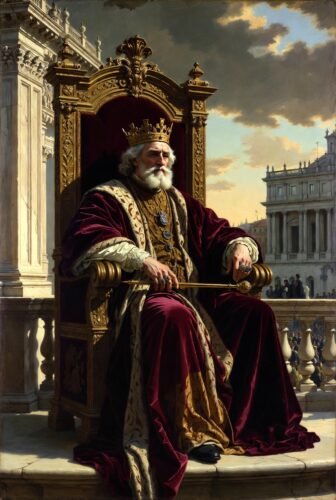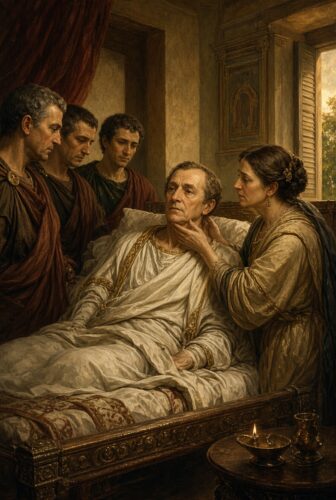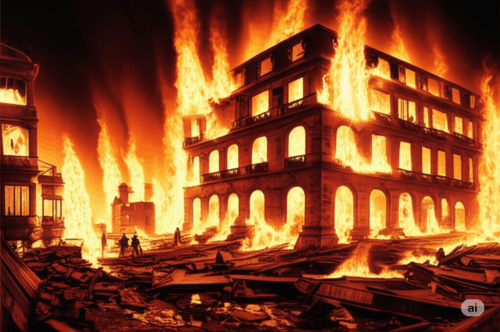

Picture the ancient streets of Damascus on March 24, 1401. Smoke chokes the sky as the Umayyad Mosque—one of the grandest and holiest structures in the Islamic world—crackles in flames. Screams echo off stone walls that have stood for centuries. Pyramids of severed heads rise like grotesque monuments outside the city gates, while terrified citizens are herded into mosques, only to be locked inside and burned alive by the thousands. This wasn’t random chaos. This was the calculated fury of Timur, the Turco-Mongol warlord known as Tamerlane, the Lame. One decisive assault on that very day toppled the second-greatest city of the Mamluk Sultanate, deported its master artisans to beautify his distant capital of Samarkand, and sent shockwaves across the medieval world. It was brutal, strategic, and world-altering—and 90 percent of this story is the raw, blood-soaked history behind it.Timur wasn’t born a conqueror. He entered the world around 1336 near the town of Kesh, in what is now Uzbekistan, in the heart of Transoxiana under the fractured Chagatai Khanate. His tribe, the Barlas, claimed distant Mongol lineage through Genghis Khan’s lines, though Timur himself was more Turkic in speech and custom. His father, Taraghai, was a minor noble with some influence at court, but young Timur grew up raiding caravans and travelers for sheep, horses, and cattle alongside a ragtag band of followers. Legend has it that around age 20 or so, during one such raid—some say in Sistan, others near home—he took arrows to his right leg and hand. Two fingers gone, the leg permanently damaged. He dragged that lame limb for the rest of his days, earning the mocking Persian nickname Timur-i Lang, Timur the Lame, which English ears twisted into Tamerlane. Funny, isn’t it? The man who would make emperors tremble started as a sheep-rustling bandit with a limp. Yet that very injury became his signature. He walked short distances dragging the leg, but for long marches his men carried him. No excuses. No complaints. Just iron will wrapped around a broken body. By the 1360s, Timur had clawed his way into the brutal politics of Transoxiana. The Chagatai khans were figureheads; real power lay with tribal amirs. Timur allied with the powerful Amir Qazaghan, then later with Tughlugh Timur of Kashgar, using a mix of battlefield brilliance and cold betrayal. He feuded with his own brother-in-law, Amir Husayn, besieging him in Balkh in 1370. Husayn surrendered and was promptly assassinated. Timur proclaimed himself sovereign on April 9, 1370, in the very city where he had just spilled family blood. To legitimize his rule—he couldn’t claim the title of khan without pure Genghisid blood—he married Husayn’s widow, Saray Mulk Khanum, a direct descendant of Genghis Khan. He installed puppet khans like Suyurghatmish and styled himself “güregen,” royal son-in-law. He took the title Sahib Qiran, Lord of the Auspicious Conjunction, playing on astrological signs of world-changing rulers. And he wrapped it all in Islam, calling himself the Sword of Islam and a ghazi warrior, even as his armies slaughtered fellow Muslims by the hundreds of thousands. His motto was simple: “Rāstī rustī”—truth is safety. Yet his truth was terror. Timur’s armies were multi-ethnic machines of mobility: Turkish, Mongol, Persian, and more, advancing in wide fronts up to ten miles across. He favored psychological warfare. Surrender? Mercy, sometimes. Resistance? Total annihilation. He built towers of skulls from the heads of the slain—20,000 at Aleppo alone in 1400. Cities that revolted after initial submission faced worse. In Isfahan in 1387, after a tax revolt, he massacred somewhere between 100,000 and 200,000 people and stacked their heads into towers. In Delhi in 1398, he slaughtered 100,000 captive Indian soldiers before the battle to prevent uprisings, then used a brilliant trick during the fight: camels loaded with burning hay and straw stampeded into the enemy lines, panicking the armored war elephants into trampling their own troops. Delhi burned for days. The city was looted, its population enslaved or killed. Timur didn’t conquer for territory alone; he plundered to keep his men loyal and rich, shipping artisans and treasures back to Samarkand like a twisted Santa Claus of the steppes.
By the late 1390s, Timur had crushed the Golden Horde in Russia, ravaged Persia multiple times, and invaded India. He turned west again in 1399–1400, eyeing the Mamluk Sultanate of Egypt and Syria and the rising Ottomans. The Mamluks were no pushovers. These former slave-soldiers had stopped the Mongols at Ain Jalut in 1260, ruling a prosperous empire from Cairo that stretched across Egypt, Syria, and the Hejaz. Damascus was their jewel—ancient, wealthy, a center of learning and trade since Roman times, home to the magnificent Umayyad Mosque built in the early 8th century on the site of a Christian basilica. The mosque’s massive courtyard, golden mosaics, and towering minarets made it one of Islam’s holiest sites after Mecca and Medina. Its loss would wound the Muslim world deeply. Timur’s provocation came when the Mamluk viceroy of Damascus, Sudun, executed one of his ambassadors. In late 1400, Timur stormed into Syria. He took Aleppo after a fierce battle, massacring inhabitants and building yet another skull tower of 20,000 heads. Hama, Homs, and Baalbek fell in quick succession. By December 1400, his forces camped west of Damascus at Qubbat Sayyar near Al-Rabweh. They raided the Ghouta orchards and surrounding villages—Qatana, Al-Kiswah, Darayya, Lake Hula, Hauran—starving the city of supplies. Mamluk Sultan Nasir-ad-Din Faraj marched north with an army but proved cowardly. After skirmishes and a defeat outside Damascus in January 1401, Faraj abandoned his troops and fled back to Egypt at night on January 7, fearing a coup at home. The Damascenes were left leaderless. A delegation of notables, judges, and scholars—including the legendary North African historian Ibn Khaldun—was sent from Cairo to negotiate. Ibn Khaldun, already famous for his groundbreaking Muqaddimah (the introduction to his universal history Kitab al-Ibar), was in his late 60s. He had served various North African and Egyptian rulers, survived political upheavals, and developed his theory of asabiyyah—group solidarity—as the engine of empire rise and fall. The delegation reached Damascus amid chaos. The citadel commander held out with a tiny garrison, but the city’s gates opened under Timur’s false promises of safety.
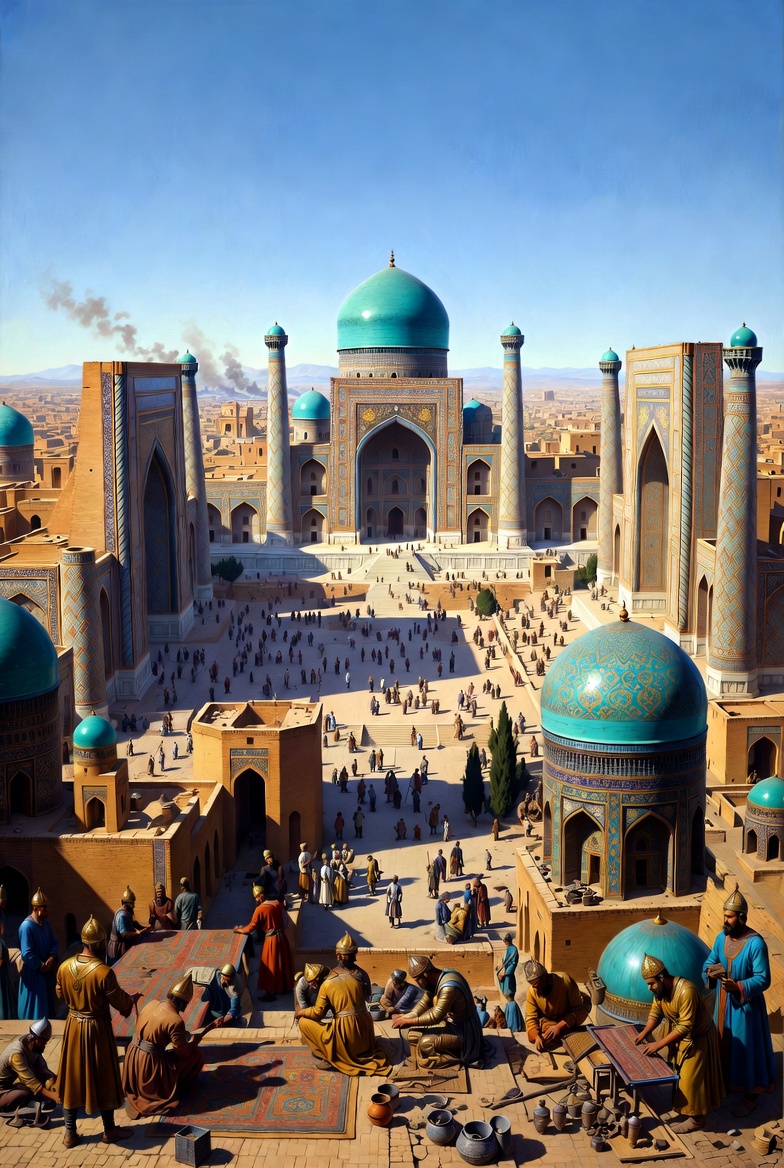
Ibn Khaldun’s own autobiography gives us the vivid, firsthand drama. At dawn one morning, he was lowered by rope over the city wall to meet Timur’s deputy Shah Malik, who gave him a horse and escorted him to the conqueror’s tent. Inside, Timur reclined on his elbow, platters of food—rishta noodles and more—passing before him as he sent portions to circles of his Mongol warriors outside. An interpreter, a Khwarazmian jurist named Abd al-Jabbar ibn al-Numan, facilitated. Ibn Khaldun greeted humbly and kissed Timur’s hand. Timur, between 60 and 70, lame knee dragging but mind razor-sharp, questioned him for hours. The conversations were electric. Timur asked about Ibn Khaldun’s origins in the Maghrib. Ibn Khaldun described the geography in detail: the “inner Maghrib” of Fez and Marrakesh, Tlemcen in the middle, Tangier near the Strait of Gibraltar, Ceuta just across into Iberia, and the desert edge at Sijilmasa. Timur demanded a full written report—equivalent to 12 quires of paper. Ibn Khaldun delivered it. They debated history: Timur dismissed Nebuchadnezzar, Khusraw, Caesar, and Alexander as overrated; Ibn Khaldun defended sources like al-Tabari. They discussed the caliphate—Ibn Khaldun explained Sunni ijtihad, the choice of righteous rulers, and the Abbasid line preserved in Cairo under the Mamluks. Ibn Khaldun flattered Timur masterfully, tying his asabiyyah theory to the conqueror: “Sovereignty exists only because of group solidarity, and the greater the number, the greater the sovereignty. You are the supreme sovereign… None like you from Adam onward.” He referenced astrologers’ prophecies of a nomadic world-conqueror under the Jupiter-Saturn conjunction—Timur fit perfectly as Sahib Qiran. Timur was impressed. He called Ibn Khaldun “highly intelligent and very perspicacious,” one of the greatest kings favored by God. The scholar stayed 35 days in the camp. He presented gifts—a Qur’an, a prayer rug, the Qasidah al-Burda poem, sweets—which Timur accepted graciously, kissing the holy book. Ibn Khaldun secured written amnesties for Damascus’s people and protection for Egyptian officials. He even gifted his mule when Timur admired it; payment arrived later. But Timur’s word proved slippery. While negotiations dragged, the siege engines—catapults, naphtha throwers, mining—battered the citadel. On March 24, 1401, Timur’s army launched the final assault. The governor held the citadel a month longer with just forty men before surrendering, but the city fell. What followed was horror on an industrial scale. Timur’s troops raped, pillaged, and tortured with bastinado (beating the soles of feet), burning, and crushing in presses. Over 50,000 were slaughtered. Imams and religious leaders begged for mercy in Allah’s name. Timur promised safety if they gathered women and children in the mosques. More than 30,000 crowded into the Umayyad Mosque and others. The doors were locked. The buildings were set ablaze. Flames consumed the mosque’s ancient mosaics and minarets. The Great Mosque burned; so did Baibars’ al-Ablaq Palace. Heads piled into the “Burj al-Ru’us,” Tower of Heads, in a field northeast of the walls between modern Al-Qassaa and Bab Tuma. Children under five were abandoned to starve as mothers were enslaved. Yet Timur spared one group deliberately: the skilled artisans—metalworkers, weavers, architects, glassmakers, calligraphers. Thousands were deported hundreds of miles to Samarkand. There, they transformed the city into a jewel of turquoise domes, madrasas, and palaces. The Gur-e-Amir tomb, where Timur himself would later lie, and the Registan square owe much to these Syrian captives. Destruction funded creation. Terror built beauty. Timur withdrew from Damascus’s ruins around March 19 in some accounts (Islamic calendar variances), but the sack’s impact lingered. He sacked Hama on the way out. The Mamluks were humiliated but survived in Egypt. Timur turned north, defeating the Ottomans at Ankara in 1402 and capturing Sultan Bayezid I. He planned a final campaign against Ming China but died in 1405 near Otrar, his body returned to Samarkand amid legends of curses. His empire fragmented quickly, but his descendants—the Timurids—sparked a renaissance in Central Asia: Ulugh Beg’s astronomy, Babur’s founding of the Mughal Empire in India. Art, science, and architecture flourished on the bones of conquest.
Damascus eventually recovered, but the event marked the shift of power. The Mamluks lingered until the Ottomans conquered them in 1517. Timur’s terror strategy—decisive, overwhelming force after prolonged siege, selective mercy for the useful—worked time and again. He claimed millions of lives across decades, yet his patronage of scholars like Ibn Khaldun (who wrote glowing yet horrified accounts) and artists showed a twisted intellect. He debated theology, played a complex chess variant he may have invented, and quoted poetry. Ahmad ibn Arabshah, a boy enslaved in Damascus that day, later wrote Timur’s biography, painting him as destined for infernal punishment. Christopher Marlowe dramatized him in Tamburlaine the Great as a bloodthirsty titan. Yet here we are, over six centuries later, still talking about the limp bandit who torched a mosque and built an empire. The sack wasn’t pointless destruction. It was the climax of a career that reshaped Eurasia. From sheep raids to skull towers, Timur proved that iron will, strategic terror, rapid mobility, and repurposing human capital could topple ancient powers. Ibn Khaldun survived by intellect and bold negotiation, emerging with profound respect for the conqueror’s mind even as he mourned the atrocities. The deported artisans turned ruin into renaissance. That March 24 outcome—devastation yielding unexpected legacy—whispers across time. Now apply that same historical fact to your individual life. The sack’s core lesson is this: when facing overwhelming odds, decisive action combined with intellectual negotiation and talent repurposing doesn’t just survive chaos—it forges something greater from the ashes. Timur overcame a literal limp to conquer the world; Ibn Khaldun turned enemy interrogation into influence; Syrian craftsmen built Samarkand’s domes while their city burned. You benefit today by treating personal crises the same way—no victimhood, only campaign. Here are very specific bullet points showing exactly how: - Overcome your own “lame leg” limitations exactly as Timur did: identify one physical, financial, or mental setback (bad knee from old injury, mounting debt, public-speaking anxiety) and adapt around it with daily micro-raids—short walks building to marathons, side hustles funding the debt snowball, or 60-second voice memos rehearsed like Timur’s chess strategies—turning weakness into your signature brand of unstoppable momentum. - Negotiate like Ibn Khaldun descending the wall: when a boss, partner, or inner doubt “besieges” you, prepare a 35-day mental audience script—flatter the “conqueror” with asabiyyah facts about your team strengths, debate outcomes with historical evidence from your past wins, and secure written “amnesties” (contracts or commitments) that protect your position while you gather intelligence on their weak points. - Deport your “artisans” to a new Samarkand: list five underused skills (Excel wizardry, storytelling knack, mechanical aptitude) as if they were Syrian craftsmen, then forcibly “relocate” them weekly into one flagship project—your side business, fitness transformation, or family legacy—where they generate beauty instead of gathering dust in your old burned-out routines. - Build visible skull towers of victories: after every small conquest (closing a sale, hitting a workout streak), stack a literal or digital pyramid—photos, journal entries, or app logs—outside your mental city walls so procrastination sees the growing monument and flees, just as Damascene resistance crumbled before Timur’s towers. - Withdraw like Timur from a ruined Damascus only after extraction: when a toxic job or relationship finally falls, don’t linger—raid it for every last artisan skill and resource, then march your army (your renewed energy) toward the next target (new career, healthier relationships), leaving the ashes behind while carrying the gold.
The detailed, quick, unique plan drawn straight from this March 24, 1401 history is the **Timurid Artisan Deportation & Renaissance Protocol**—a blisteringly fast 72-hour weekend campaign (not another 30-day generic challenge or vision-board fluff) that role-plays the entire sack as strategic personal warfare. No woo-woo affirmations. No endless journaling circles. This is literal historical LARP: you become both Timur the decisive raider and Ibn Khaldun the wise negotiator, deporting talents to build your Samarkand while burning excuses. Do it once, and your life’s “Mamluk defenses” never recover. **Hour 0–6 (Friday evening setup – Scout and Besiege):** Map your personal Damascus—pick one fortress-sized life problem (stalled career, health plateau, broken relationship). Write its “defenses” on paper exactly like Timur’s scouts: list three strong walls (excuses) and three weak gates (easy entry points). Lower yourself over the wall mentally: rope-descend by texting or calling one real mentor (your Shah Malik) for a 15-minute intel briefing. End by eating a simple meal while reclining like Timur, reviewing your Maghrib report—your own 12-page skill inventory of hidden artisans. **Hour 6–24 (Saturday – The Assault and Burning):** Launch the decisive March 24-style sack. Pick three “artisan” skills from your inventory and “deport” them immediately: spend two focused hours applying each to a micro-project inside your new Samarkand (e.g., turn Excel skill into a budget template for the side hustle, storytelling into a pitch video, mechanical aptitude into fixing one home issue that’s been draining you). Burn the old mosques—literally delete or archive three procrastination apps or habit triggers while blasting motivational audio of siege sounds if you want dark humor. Stack your first skull tower: photograph or list three immediate wins with red marker “blood” notes. Feel the terror you’re inflicting on your own excuses—they’re locked inside and aflame. **Hour 24–48 (Saturday night–Sunday – Negotiation and Extraction):** Hold your Ibn Khaldun audience. Debate your inner Timur (doubt) for 90 minutes using real quotes: flatter your group solidarity (“My skills give me asabiyyah no one else has”), argue history (“Past failures like Isfahan taught me better tactics”), and secure amnesty—write and sign your own protection letter outlining exactly how you’ll safeguard family time or finances during the rebuild. Gift your “mule”—sacrifice one comfort item (extra screen time, junk food) to the cause. Extract every last resource: raid your old routines for three more transferable assets and relocate them. **Hour 48–72 (Sunday – Renaissance Construction and Withdrawal):** Build the first dome of your Samarkand. Use the deported artisans to create one visible legacy piece (a one-page business plan, workout log turned calendar, or repaired relationship ritual). Photograph your growing skull tower of victories. Withdraw like Timur—pack your mental bags, delete any lingering siege apps or contacts, and march toward the next target (Ankara 1402 style). By Monday morning, your personal empire has new turquoise domes rising from the ashes. This protocol is nothing like the self-help noise online—no crystals, no endless gratitude lists, no accountability apps that gather dust. It’s a brutal, funny, history-accurate 72-hour conquest simulation that weaponizes March 24, 1401 tactics for real results. You emerge limping if you must, but carrying deported talents that will turn your Samarkand into something the world notices. Timur did it with a bad leg and a bigger limp than you’ll ever have. Ibn Khaldun survived the flames with nothing but words and wit. The artisans rebuilt after their city burned. Your turn. March 24 isn’t just a date in distant history—it’s your cue to light the match on excuses and start building. The smoke clears. The domes rise. Go conquer.
Share: