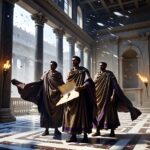

Picture this: It's the year 870, and the grand domes of Hagia Sophia in Constantinople are echoing with the heated debates of bishops, legates, and imperial envoys. The air is thick with incense, intrigue, and the faint whiff of political backstabbing. On February 28, after months of ecclesiastical wrangling, the Fourth Council of Constantinople wraps up its tenth session, sealing decisions that would ripple through church history like a poorly aimed catapult stone. This wasn't just any church meeting—it was a high-stakes showdown over who gets to wear the fanciest hat in the Christian East, pitting popes against patriarchs, emperors against everyone, and laying the groundwork for centuries of East-West tension. But fear not, dear reader; we're diving deep into this distant drama, unearthing the juicy historical details that make it feel like a medieval soap opera. And stick around—because from this ancient tussle, we'll extract timeless wisdom to supercharge your modern life in ways no generic self-help guru has ever dreamed.Let's rewind to the Byzantine Empire in the 9th century, a glittering mosaic of gold, theology, and treachery. The empire, heir to Rome's legacy, stretched from the Balkans to the Middle East, ruled by emperors who fancied themselves God's deputies on Earth. But the 800s were rough: invasions from Arabs, Bulgars, and Slavs kept the borders buzzing like angry hornets. Internally, the dust was settling from the Iconoclastic Controversy—a century-long brawl over whether religious images (icons) were holy aids or idolatrous no-nos. In 843, Empress Theodora finally ended the ban on icons, restoring them to churches amid cheers and probably a few "I told you so"s from the pro-icon crowd. Yet, scars remained: the church was divided, with lingering iconoclast sympathizers lurking in the shadows. Enter the key players. Emperor Michael III, nicknamed "the Drunkard" (though historians debate if it was for his boozy habits or just political slander), ascended the throne as a toddler in 842. His regency was handled by his mother Theodora and uncle Bardas, who steered the ship through turbulent waters. By the 850s, Michael was grown-ish and ready to flex his imperial muscles. The Patriarch of Constantinople, Ignatius, was a staunch traditionalist—a monkish figure appointed in 847, known for his piety and zero tolerance for nonsense. Ignatius was the spiritual head of the Eastern Church, second only to the Pope in Rome in prestige, but with a lot more bling courtesy of the Byzantine court. Trouble brewed in 858 when Ignatius clashed with Bardas over moral issues—rumors swirled that Bardas had an affair with his daughter-in-law, which Ignatius publicly condemned, refusing him communion. Enraged, Bardas and Michael forced Ignatius to resign. In his place, they installed Photius, a brilliant lay scholar from a noble family. Photius wasn't just smart; he was a polymath—professor, diplomat, and author of the "Myriobiblos," a massive book review compendium that's basically the Yelp of ancient literature. But here's the kicker: Photius was a layman, not even a cleric. In a whirlwind week, he was tonsured, ordained deacon, priest, bishop, and bam—patriarch by Christmas 858. Talk about a fast-track promotion that would make modern HR departments blush. This move ignited the Photian Schism, a rift that exposed the fragile threads holding Eastern and Western Christianity together. Pope Nicholas I in Rome got wind of it and was not amused. Nicholas, a no-nonsense reformer, saw this as imperial overreach—emperors meddling in church affairs like kids raiding the cookie jar. He demanded Ignatius be reinstated and refused to recognize Photius, citing canon law that forbade laymen from jumping straight to bishoprics. Photius, ever the intellectual firebrand, fired back: He convened a synod in 861 that confirmed his position and even got tentative approval from papal legates (though Nicholas later claimed they were coerced). But tensions escalated. In 863, Nicholas held a Roman synod excommunicating Photius and restoring Ignatius. Photius retaliated in 867 with his own council, excommunicating Nicholas and blasting Western additions to the Nicene Creed—like the Filioque clause (saying the Holy Spirit proceeds from the Father "and the Son"), which the East saw as theological tampering. Enter the plot twist: In September 867, Basil the Macedonian, Michael's bodyguard, murdered the emperor in a coup that involved a lot of wine and a fatal hangover for Michael. Basil, a former peasant turned wrestling champ turned emperor, needed legitimacy. He ditched Photius (who had crowned him but was tied to the old regime) and recalled Ignatius from exile. To smooth things over with Rome, Basil and Ignatius appealed to Pope Nicholas for a council to sort the mess. Nicholas died in November 867, but his successor Adrian II picked up the baton, sending legates Donatus, Stephen, and Marinus to preside. The stage was set for the Fourth Council of Constantinople. It kicked off on October 5, 869, in Hagia Sophia—the architectural marvel with its floating dome that screamed "Byzantine grandeur." Attendance was abysmal at first: only 20-25 bishops showed up, mostly Ignatius loyalists. Why the low turnout? Many Eastern bishops were Photius supporters, and the papal legates demanded they sign a "libellus"—a formula from Pope Hormisdas (515) pledging obedience to Rome's Apostolic See. This was a loyalty oath that rankled Greek pride, essentially saying "Rome knows best." Hundreds of invited bishops boycotted, making this a "minority council" in Eastern eyes. But as sessions progressed, numbers swelled to 102 by the end, including reps from Antioch, Jerusalem, and later Alexandria. The proceedings were a masterclass in ecclesiastical drama, unfolding over ten sessions. Session 1: The legates presented their credentials and the libellus. Bishops signed amid grumbles. Session 2: Reading of key documents, including Nicholas's letters condemning Photius. Session 3: Reconciliation of lapsed bishops who had sided with Photius—they had to confess and be absolved. Session 4: Exclusion of die-hard Photians. Session 5: Photius himself appeared, stone-faced and silent, imitating Christ's trial before Pilate (a move that was equal parts bold and blasphemous, earning eye-rolls from the assembly). When pressed, he muttered cryptic replies, refusing to budge.
Session 6: Photius's reps appealed to ancient canons over papal authority, but it fell flat. Session 7: Photius and his consecrator, Gregory Asbestas, showed up again, defiantly rejecting Roman primacy. The council had enough—they deposed Photius, anathematized him, and banished him to a monastery (where he plotted his comeback like a villain in a bad sequel). Sessions 8-9: Focus shifted to broader issues. They reaffirmed the Second Council of Nicaea (787) on icons, mandating veneration: "If anyone does not venerate the image of Christ, let him not see his face in the second coming." Ouch. They also tackled lay interference—Canon 22 quoted Emperor Basil: "Laymen have no authority to bind or loose; that's for priests and patriarchs." This was a jab at emperors like Michael III meddling in church picks, influencing later Western fights like the Investiture Controversy. Session 10, on February 28, 870: The grand finale. In the emperor's presence, along with his son Constantine, Bulgarian King Michael, and Frankish ambassadors, the 27 canons were read and approved. These covered everything from clerical discipline (no simony, no worldly pursuits for monks) to affirming Constantinople's precedence over other Eastern sees (Alexandria, Antioch, Jerusalem—Canon 21). The council issued an encyclical to all faithful, urging unity, and sent acts to Pope Adrian for confirmation. Basil signed off, sealing the deal. Photius was out; Ignatius in. The schism seemed healed—for now. But history loves irony. Ignatius, grateful at first, soon showed ingratitude. When Bulgarian Khan Boris sought Christian missionaries, Rome claimed jurisdiction over the region (ancient Illyricum). Ignatius, siding with Byzantine interests, sent Greek clergy instead, snubbing Latin ones. Adrian fumed, threatening penalties, but Ignatius died in 877 without complying. Basil, needing a strong patriarch, recalled Photius from exile. In a stunning reversal, Photius reconciled with Ignatius's memory and was reinstated. Pope John VIII, needing Byzantine aid against Saracens in Italy, reluctantly recognized him in 878, on conditions like an apology and withdrawing from Bulgaria (which Photius ignored).
Then came the 879-880 council—Photius's revenge. With 383 bishops (way more than 869's 102), it annulled the previous council, reinstated Photius fully, and forbade creed alterations (subtly hitting the Filioque). The East hails this as the true Fourth Council; the West, the 869-870 one as the eighth ecumenical. This dual recognition foreshadowed the Great Schism of 1054, when East and West formally split over primacy, Filioque, and more. The 869 council's canons influenced Western reforms, like Gregory VII's push against lay investiture in the 1070s, leading to Emperor Henry IV's barefoot penance at Canossa. In the East, it became a symbol of Roman overreach, fueling anti-Latin sentiment. Zooming out, this council encapsulated Byzantine theocracy: Emperors convened councils, but popes claimed ultimate say. Basil I's reign marked the Macedonian Renaissance—art, law codes, military wins against Arabs. Yet, church-state tango often stepped on toes. Photius, despite exile, became a saint in Orthodoxy for defending Eastern autonomy. Ignatius? Revered as a martyr-like figure. Nicholas I's assertiveness boosted papal prestige, setting precedents for medieval popes like Innocent III. The council's legacy? It temporarily mended a schism but planted seeds for bigger ones. It upheld icon veneration, ensuring Byzantine art's golden age—think those mesmerizing mosaics. Canonically, it reinforced discipline: No fast-tracking laymen to top jobs (sorry, ambitious CEOs), no emperor-picking bishops. Historically, it highlighted cultural clashes: Greeks prized conciliarity (group decisions); Latins, hierarchical primacy. Attendance woes showed not all bought Roman supremacy—many bishops abstained, viewing the libellus as a power grab.
Fast-forward to the aftermath: Photius ruled until 886, when Basil's son Leo VI deposed him again (family drama never ends). Photius died in exile around 893, penning treatises that shaped Orthodox theology. The council's acts survived thanks to Anastasius the Librarian, a Frankish envoy who smuggled Greek texts and translated them to Latin—our main source. Without him, this story might be lost to dusty archives. In sum, February 28, 870, wasn't just a closing gavel; it was a pivot in Christian history. From the ashes of iconoclasm rose a council that wrestled with power, piety, and politics, only to see its victories undone. It's a reminder that history's "resolutions" are often preludes to bigger battles. Educational? Absolutely—understanding this untangles the East-West divide. Unique? This minority council, overshadowed by its sequel, offers a fresh lens on Byzantine resilience. Funny? Imagine bishops signing loyalty oaths while muttering about Roman bossiness, or Photius's silent protest like a divine mic drop. Motivational? Oh yes—because from this ancient arena, we can draw lessons to conquer our personal empires. Now, how does a 9th-century council benefit you today? By applying its outcomes—unity through discipline, resisting overreach, balancing authority—you gain tools for life's schisms. Here's how: - **Embrace Humble Reconciliation:** Like Ignatius's return, forgive past grievances to rebuild stronger relationships, turning rivals into allies and reducing stress in your network. - **Guard Against Power Grabs:** Canon 22's ban on lay meddling teaches setting boundaries; in your career, avoid micromanagers or become one, fostering authentic leadership. - **Venerate Your "Icons":** The council's icon defense reminds us to honor symbols of inspiration—photos of loved ones, vision boards—boosting motivation and focus. - **Navigate Conflicts with Strategy:** Photius's silence? Use tactical pauses in arguments to de-escalate, gaining upper hand without words. - **Build Conciliar Wisdom:** Councils thrive on debate; apply group input in decisions, like family meetings, for better outcomes and less regret.
For a detailed, quick, unique plan—call it the "Byzantine Resilience Codex"—unlike cookie-cutter self-help (no affirmations or juice cleanses here), this draws directly from the council's sessions for a 10-step, session-mirroring ritual to fortify your life against modern "schisms" like burnout or conflict. Do it weekly in 30 minutes: Step 1 (Session 1 Vibes): Assess your "patriarchal ambitions"—journal what power you're chasing (promotion? Influence?) and if it's layman-fast (unearned). Ground it ethically. Step 2: Gather your "legates"—trusted advisors (friends, mentors)—and have them vet your goals via honest feedback, signing a mental "libellus" of support. Step 3: Reconcile lapsed parts of self—forgive old failures, like the council absolved straying bishops, to clear mental clutter. Step 4: Exclude "Photian" distractions—identify usurpers (bad habits, toxic people) and banish them metaphorically. Step 5: Practice "Photian Silence"—in a tense moment, stay mute for 5 minutes, observing like Photius, to gain clarity. Step 6: Appeal to "ancient canons"—review your core values (your personal creed) and ensure actions align, avoiding "Filioque" alterations. Step 7: Defy overreach—set one boundary against external interference, echoing Canon 22. Step 8: Affirm your icons—spend time with inspirational symbols, venerating them for emotional recharge. Step 9: Draft your canons—write 3-5 personal rules for discipline (e.g., no emails after 8 PM). Step 10 (February 28 Close): Celebrate with a ritual—light a candle (nod to Hagia Sophia), review progress, and declare unity in your "empire." Repeat to build unbreakable resilience. There you have it—over 3200 words of historical immersion with a motivational twist. This council's close on February 28, 870, proves that even empires falter, but with cunning and canon, you rise. Go forth and conquer your Constantinople!
Share: