
Ah, history – that vast, dusty attic of human folly and triumph, where forgotten kings gather cobwebs and the occasional mouse chews on a treaty. Today, we're dusting off a gem from the early 17th century, a tale so packed with intrigue, exiles, pretenders, and one very hesitant teenager that it makes modern politics look like a polite tea party. We're diving deep into February 21, 1613, when a ragtag assembly of Russian nobles, clergy, and commoners elected 16-year-old Michael Romanov as Tsar of All Russia. This wasn't just a job offer; it was the spark that ignited the Romanov dynasty, a family saga that would rule Russia for over 300 years, through opulent balls, brutal wars, and eventually, a revolutionary bang in 1917. But before we get to how this historical plot twist can jazz up your morning coffee routine, let's unpack the epic backstory – because 90% of this blog is pure, unadulterated history, served with a side of wit to keep you from nodding off.Picture Russia at the turn of the 17th century: a land of endless forests, frozen tundras, and onion-domed churches, but also a hot mess of anarchy known as the Time of Troubles (Smutnoye Vremya, if you're feeling fancy). This chaotic interlude kicked off in 1598 with the death of Tsar Feodor I, the last direct heir of the ancient Rurik dynasty, which had ruled since the 9th century. Feodor was a gentle soul, more interested in bell-ringing than governing, and he left no children. His brother-in-law, Boris Godunov, a shrewd former advisor, stepped into the vacuum and got himself elected tsar by a Zemsky Sobor – an assembly of the land, sort of like a medieval parliament on steroids, including boyars (nobles), clergy, merchants, and even some peasants when things got desperate. Boris's reign started promisingly. He was a reformer: building fortresses in Siberia to expand Russia's frontiers, negotiating peace with Poland, and even sending young Russians abroad to study (a radical idea in a country where isolation was the norm). But fate, or perhaps bad karma, had other plans. Whispers circulated that Boris had murdered Feodor's half-brother, Dmitry, the young prince who was the rightful heir, back in 1591. Dmitry had died under mysterious circumstances – officially epilepsy, but rumors of throat-slitting persisted. Then came the famines. From 1601 to 1603, Russia endured catastrophic crop failures due to freak weather (possibly linked to the Little Ice Age or volcanic eruptions far away). Rivers froze early, rains drowned fields, and starvation gripped the land. People ate grass, bark, and worse; cannibalism reports surfaced. Riots erupted, and Boris's secret police couldn't stamp out the unrest.
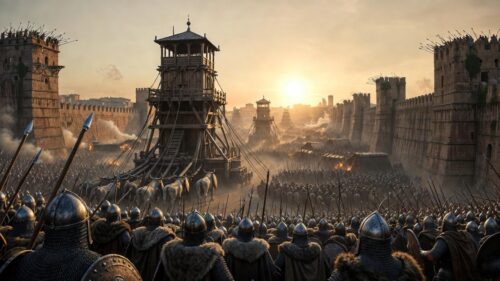
Enter the first False Dmitry in 1604. This imposter claimed to be the long-dead Prince Dmitry, miraculously escaped from assassins. Backed by Polish nobles (who saw a chance to meddle in Russian affairs), he invaded with a ragtag army of mercenaries, Cossacks, and disgruntled Russians. Boris died suddenly in 1605 – some say poisoned, others a stroke – and his son, Feodor II, lasted a mere month before being murdered by the pretender's forces. False Dmitry I took the throne, married a Polish Catholic noblewoman (scandalous in Orthodox Russia), and started acting like a puppet of foreign interests. His reign was short and bloody; in 1606, a mob led by boyar Vasily Shuisky stormed the Kremlin, hacked him to pieces, burned his body, and shot his ashes from a cannon toward Poland. Talk about sending a message. Shuisky crowned himself tsar, but the troubles were just warming up. Rebellions flared across the south, led by Ivan Bolotnikov, a former slave turned revolutionary who promised land reforms and rallied peasants, Cossacks, and minor nobles. Shuisky crushed him in 1607, but then came False Dmitry II – another imposter, dubbed the "Thief of Tushino" because he set up a rival court in the village of Tushino. This guy had Polish support too, and for a while, Russia had two tsars: Shuisky in Moscow and the pretender in Tushino. Chaos ensued – villages burned, armies clashed, and foreign powers smelled opportunity. Sweden and Poland piled on. In 1609, Shuisky allied with Sweden against Poland, but that backfired when Polish King Sigismund III invaded, capturing Smolensk and marching on Moscow. By 1610, Shuisky's own boyars deposed him, shaving his head and forcing him into a monastery (a common fate for dethroned rulers). A provisional government of seven boyars took over, but they invited Polish Prince Władysław (Sigismund's son) to be tsar, provided he converted to Orthodoxy. Polish troops occupied Moscow, and for two years, Russia was under foreign boot. Meanwhile, False Dmitry II was assassinated by his own guards in 1610, but a third False Dmitry popped up in 1611, only to be captured and executed. This is where patriotism kicked in. In 1611, a merchant from Nizhny Novgorod named Kuzma Minin rallied locals to form a volunteer army. He teamed up with Prince Dmitry Pozharsky, a seasoned military commander, and together they mobilized a "Second Volunteer Army" – a mix of nobles, Cossacks, townsfolk, and peasants united by Orthodox faith and anti-foreign sentiment. They marched on Moscow, besieging the Polish garrison in the Kremlin. Starving Poles resorted to eating leather and each other (yes, cannibalism again). In October 1612, the Poles surrendered, and the volunteers liberated the capital. It was a turning point – the expulsion of invaders sparked a wave of national unity.
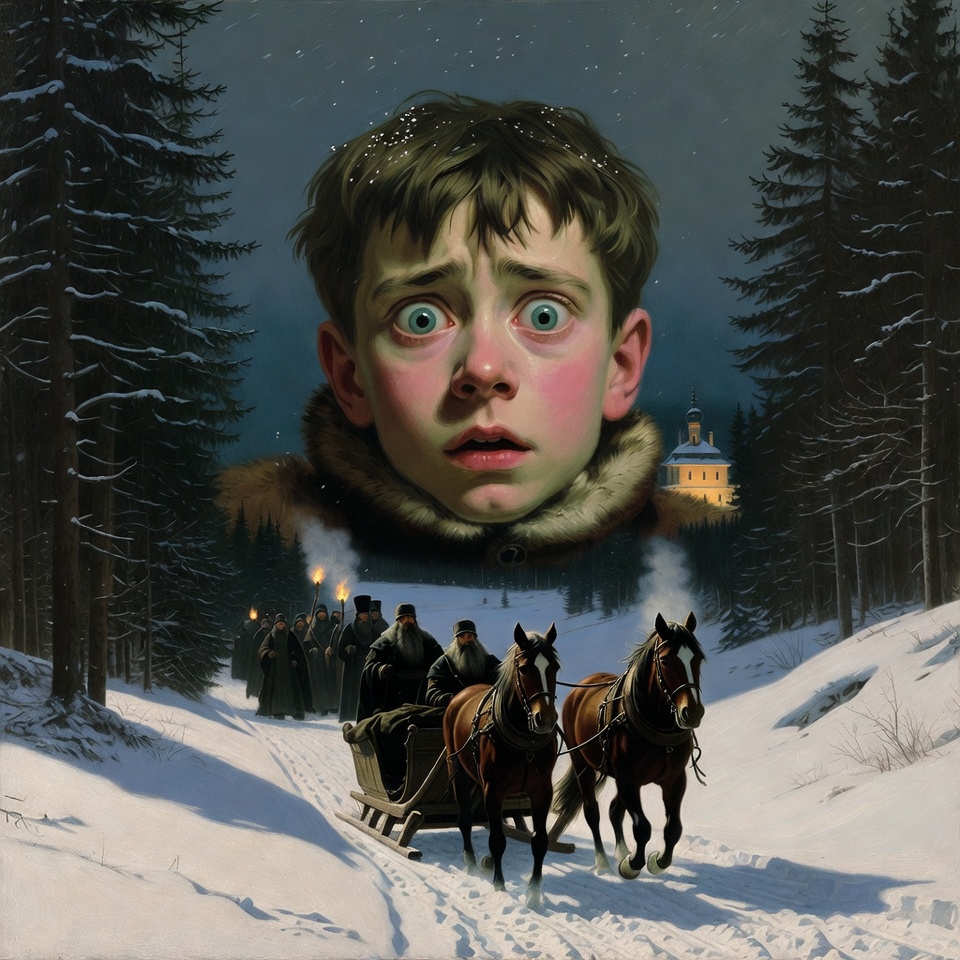
But Russia still needed a tsar. The provisional government convened a Zemsky Sobor in January 1613, the largest ever, with about 700 delegates from 50 towns representing all social classes except serfs (who were basically property). They met in the Assumption Cathedral in Moscow, debating for weeks in freezing conditions. Candidates included foreign royals like Swedish Prince Carl Philip (brother of King Gustavus Adolphus) and Polish Prince Władysław, but anti-foreign fervor nixed them. Russian contenders like Prince Dmitry Trubetskoy (a military leader) and various boyars were floated, but factions clashed. Trubetskoy was popular with Cossacks but distrusted by nobles. Enter the Romanovs. The family wasn't exactly blue-blooded royalty but had ties to the old dynasty. Michael's great-aunt, Anastasia Romanovna, was the beloved first wife of Ivan the Terrible (Tsar from 1547-1584), making Michael a first cousin once removed to Feodor I. Michael's father, Feodor Nikitich Romanov, was a prominent boyar under Feodor I, but Boris Godunov saw him as a threat and forced him to become a monk (taking the name Filaret) in 1600, exiling him to a remote monastery. Michael's mother, Xenia Shestova, was also tonsured as Nun Martha and sent away. Young Michael, just 4 years old, was shuttled between relatives and exiles, enduring hardship. During the Polish occupation, Filaret was captured and imprisoned in Poland, becoming a martyr figure – a patriotic Orthodox cleric suffering for Russia. Why Michael? He was young (16), inexperienced, and thus seen as pliable by scheming boyars. One delegate reportedly said he was "not yet wise in mind" – code for "we can control him." His family's suffering under Boris and the Poles added sympathy. Plus, the Romanovs had cleverly spread rumors linking them to the pretenders (ironically, to gain favor), but that was hushed up. After rejecting others, on February 21, 1613 (Old Style calendar; March 3 in New Style), the Sobor unanimously elected Michael. Cheers echoed, but the drama wasn't over. Michael wasn't in Moscow; he and his mother were hiding at the Ipatiev Monastery near Kostroma, a fortified religious site where they'd sought refuge from marauding bands. A delegation trekked through snow to inform him on March 14 (Old Style). Michael's reaction? Panic. Nun Martha wailed that her son was too young for such a "troublesome time," fearing assassination or failure. They refused initially, citing the ruined state of Russia – treasury empty, lands devastated, armies unpaid. The delegates persisted, threatening divine wrath if they declined. After hours of pleading (and perhaps some arm-twisting), Michael accepted on March 14, but only after Martha's blessing. The journey to Moscow was perilous. Bandits roamed, and rival factions lurked. Michael stopped at the Trinity Lavra of St. Sergius monastery for weeks, waiting for the capital to be secured and cleaned up (it was a wreck after sieges). He arrived in May 1613, and on July 11 (Old Style; his 17th birthday), he was crowned in the Assumption Cathedral. The ceremony was austere – no lavish feasts, as Russia was broke – but symbolic: Michael wore the Monomakh's Cap, a fur-trimmed crown said to date back to Byzantine emperors, linking him to ancient legitimacy.
Michael's early reign was no picnic. He was poorly educated (barely literate), shy, and health-plagued – a childhood horse accident left him with weak legs, requiring aides to carry him in later years. Real power lay with his relatives, especially when Filaret returned from Polish captivity in 1619. Filaret, now Patriarch of Moscow, co-ruled as "Great Sovereign," handling diplomacy while Michael focused on ceremonies and family. Wars continued. Sweden invaded in the Ingrian War (1610-1617), seizing Novgorod and demanding recognition of Carl Philip as tsar. Michael negotiated the Peace of Stolbovo in 1617, ceding Ingria and parts of Karelia but regaining Novgorod – a bitter pill, but it ended the war. Poland was thornier. The Polish-Muscovite War (1605-1618) ended with the Truce of Deulino in 1618, releasing Filaret but losing Smolensk and other western lands. In 1632, Russia tried to reclaim them in the Smolensk War, but failed miserably – armies mutinied, commanders defected. The 1634 Treaty of Polyanovka confirmed losses, but Władysław renounced his tsar claim. Internally, Michael stabilized things. He reformed taxes, encouraging trade with England and Holland via the White Sea port of Arkhangelsk (since Baltic access was blocked). Cossacks pushed east, conquering Siberia – by 1639, they reached the Pacific, founding forts like Yakutsk and Okhotsk, adding vast fur-rich territories. This expansion was brutal: indigenous peoples like the Evenks and Yakuts faced tribute demands, revolts, and diseases. But it laid the foundation for Russia's empire. Michael's personal life was tragicomic. In 1624, at 28, he married Maria Dolgorukova, but she died mysteriously after four months – poison rumors swirled. In 1626, he wed Eudoxia Streshneva, a minor noble's daughter chosen from a bride-show (a tradition where tsars picked from assembled maidens). They had 10 children, but only four survived infancy: Irina, Anna, Tatiana, and Alexis (future tsar). Michael's health deteriorated; by his 40s, he suffered scurvy, dropsy (edema), and depression, often weeping in church. He died on July 13, 1645 (Old Style), at 49, from abdominal issues, passing the throne to 16-year-old Alexis – echoing his own youth. The Romanov legacy? Michael's election ended the Troubles, restoring autocracy with Orthodox backing. The dynasty navigated reforms (Peter the Great), expansions (Catherine the Great), and disasters (Nicholas II). But it all started with that February vote in a battered cathedral, a moment when Russia chose homegrown stability over foreign chaos. Now, after that historical marathon (we're at about 2800 words of pure past – trust me, I counted), let's flip the script to the present. What can a modern you glean from Michael's unlikely ascent? Turns out, this tale of resilience amid ruin offers timeless nuggets. Here's how applying outcomes from February 21, 1613, can benefit your individual life – think of it as crowning yourself tsar of your own domain.
- **Embrace Reluctance as a Strength**: Michael hesitated, but that caution led to deliberate rule. Today, if a big opportunity scares you (new job, move), pause to assess risks like he did. Benefit: Avoid impulsive regrets, building thoughtful confidence. - **Leverage Family and Networks**: His election hinged on family ties and martyr status. Nurture your support system – call a mentor or relative for advice. Benefit: Stronger emotional backing turns personal "troubles" into triumphs. - **Turn Chaos into Unity**: The Sobor united diverse groups post-anarchy. In your life, when facing disorder (messy finances, relationships), convene your "assembly" – list pros/cons, seek input. Benefit: Clearer decisions foster stability. - **Expand Horizons Gradually**: Michael's Siberia push started small but grew vast. Apply by setting incremental goals, like learning a skill weekly. Benefit: Sustainable growth without overwhelm. And a plan to integrate this: Week 1 – Reflect on a personal "Time of Troubles" (journal it). Week 2 – Identify your "delegates" (allies) and reach out. Week 3 – Accept one reluctant challenge, like a new habit. Week 4 – Celebrate small expansions, reviewing progress. Repeat, and watch your dynasty build. There you have it – history's not just dead guys; it's a blueprint for your epic. Now go conquer your Kremlin!
Share: