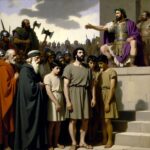


Picture this: It's the 14th century, and the highlands of Ethiopia are a bubbling cauldron of faith, fury, and fabulous conquests. While Europe was busy with knights in rusty armor jousting over soggy castles, over in the Horn of Africa, a powerhouse emperor was rewriting the map with a sword in one hand and a cross in the other. Enter Amda Seyon I, the man whose name literally means "Pillar of Zion" – because why settle for being a mere king when you can be the structural support of an entire divine legacy? On February 18, 1332, this legendary ruler kicked off one of the most daring military campaigns in African history, charging against a coalition of Muslim sultanates that dared to dream of flipping his Christian empire upside down. This wasn't just a skirmish; it was a seismic shift that ballooned Ethiopia into an imperial juggernaut, securing Christian dominance for centuries and turning trade routes into Ethiopian goldmines. Buckle up, history buffs – we're diving deep into this epic saga, with enough twists, triumphs, and tactical genius to make your average action movie look like a nap time story. And hey, we'll sprinkle in some laughs because, let's face it, medieval drama is basically "Game of Thrones" but with more elephants and fewer dragons.To set the stage, let's rewind a bit. Ethiopia in the early 1300s was no sleepy backwater. The Solomonic dynasty, claiming descent from King Solomon and the Queen of Sheba (talk about royal flexing), had been holding down the fort as one of the world's oldest Christian kingdoms. Christianity had rooted itself here since the 4th century, thanks to King Ezana of Aksum, who ditched pagan gods for the Gospel faster than you can say "hallelujah." But by Amda Seyon's time, the kingdom was hemmed in by a patchwork of Muslim sultanates to the southeast – think Ifat, Adal, Hadiya, and Dawaro – who controlled lucrative trade routes snaking from the Red Sea ports like Zeila to the Indian Ocean. These routes carried everything from gold and ivory to slaves and spices, making the sultans richer than a pharaoh's piggy bank. The Christians? They were stuck paying tolls and dodging raids, all while proselytizing in the highlands. Amda Seyon wasn't born with a silver spoon – or even a confirmed family tree. His early life reads like a soap opera script. Some chronicles whisper he was the son of Emperor Wedem Arad, but others spice it up with accusations of incestuous drama, claiming he was born from Wedem Arad's union with a concubine. Amda Seyon clapped back, insisting he was the emperor's brother's kid. Whatever the truth, his ascension in 1314 was messy, involving a succession squabble that saw him allegedly beating up an abbot and exiling monks who crossed him. Imagine a young prince throwing tantrums that reshape monasteries – that's our guy. But once on the throne, he transformed from controversial heir to conquering colossus. He married Djan Mangasha (or Jan Mogassa, depending on the scribe's handwriting), and together they steered Ethiopia toward glory. Amda Seyon's reign was a masterclass in empire-building. He wasn't content with just defending borders; he wanted to expand them like a kid stretching pizza dough. Early on, he flexed against pagan and Muslim neighbors. In 1316/1317, he steamrolled the pagan kingdom of Damot, exiling chunks of its population to make room for loyal settlers. Then came Hadiya, a Muslim sultanate where King Amano got uppity, refusing tribute egged on by a shadowy "prophet of darkness" named Bel'am. Bel'am's pep talk? "Don't bow to that Christian king; you'll crush him like a bug." Spoiler: It didn't go well for Amano. Amda Seyon invaded, killed heaps, and carted off prisoners, including the king himself. This wasn't random raiding; it was strategic. By conquering Hadiya, Amda Seyon snagged control of vital trade paths, choking off Muslim profits and boosting Christian coffers. Hadiya even flipped sides, supplying troops for later campaigns – talk about a forced alliance!
But the real fireworks ignited in the lead-up to 1332. The Sultanate of Ifat, under Haqq ad-Din I and then his brother Sabr ad-Din I, was the big bad wolf. These guys weren't just neighbors; they were provocateurs. Haqq ad-Din jailed and force-converted Amda Seyon's envoy, Ti'yintay, sparking outrage. Sabr ad-Din upped the ante, seizing goods from Zeila's coast and declaring jihad. His manifesto? Pure villain monologue: He'd rule Ethiopia as a Muslim king, raze churches, build mosques in their place, and make Amda Seyon's queen grind corn like a servant. He even planned to appoint governors over Christian heartlands like Damot, Amhara, and Gojjam, while planting khat (that chewable stimulant) everywhere. To amp up the threat, Sabr ad-Din rallied allies: Sultan Amano of Hadiya (again!), Sultan Haydera of Dawaro, "prophet" Qadi Salih in Adal (worshipped like a deity), and forces from Mora and Sharkha. He even tried wooing Beta Israel communities in the northwest for a pincer attack. It was a Muslim dream team, united by holy war vibes and a shared hatred for the Christian "infidels." Amda Seyon? He laughed in the face of doom – or at least, his chroniclers make it sound that way. Spies fed him intel, and he prepped like a pro. His army was a beast: A core of elite regiments like Qeste-Nihb, Hareb Gonda, and Tekula, loyal to the bone, raised from childhood and competing for royal favor. Local militias swelled the ranks, including chewa regiments funded by fiefs. Weapons? Bows with poisoned arrows, spears, lances, swords imported via Muslim trade (ironic, right?), and shields. Cavalry charged like thunder, infantry held lines like walls. Numbers? Massive – al-Umari, a contemporary Arab writer, gushed about Ethiopian hordes overwhelming foes in close combat. Amda Seyon sweetened the deal with gifts of gold, silver, and clothes to motivate the troops. And let's not forget his personal flair: He rode an elephant into battle once, because why not? The campaign blasted off on February 18, 1332 – or 24 Yakatit in the Ethiopian calendar. Amda Seyon mobilized from the highlands, brushing off tough terrain and rainy seasons that would make modern hikers quit. First target: Hadiya. He devastated it, capturing Amano (again) and hauling off captives. Next, Fatagar and Dawaro fell like dominoes, with Haydera nabbed. Then the main event: Ifat. Sabr ad-Din threw everything at him, but Amda Seyon's forces routed them. He sacked Ifat's capital, looted treasures, and took prisoners galore. Sabr ad-Din begged for peace through intermediaries (including Amda Seyon's queen, who urged mercy), but the emperor wasn't having it. Sabr surrendered, got imprisoned – but spared execution, a rare mercy. The juggernaut didn't stop. Adal and Mora rebelled? Crushed. At the Battle of Das, Amda Seyon's army got encircled but broke out victorious, even as the emperor fell ill. He infiltrated spies to execute traitors, ravaged Talag (which surrendered), hit Ifat again for good measure, deposed a disloyal governor (Jamal ad-Din I, Sabr's brother, whom he'd initially installed), and appointed Nasir ad-Din instead. Pushing east, he slaughtered in Gu'ét, defeated the Harla in Somaliland, looted Dilhoya (after its governor burned Christians alive – grim stuff), and killed Warjih in Degwi. By December, Sharkha was ravaged, its governor Yoseph jailed. Amda Seyon extended his sway across the Awash River into Bale and beyond, never losing a battle. His chronicle claims he returned to the highlands unscathed, a feat no prior king matched. Tomb? In Adi Qelebes, where his legacy rests. Now, zoom out: Why was this significant? Amda Seyon didn't just win wars; he forged an empire. His conquests settled Christian-Muslim power dynamics for centuries, making Amhara elites the bosses and southern regions the economic engine. Trade boomed – Byzantine coins and textiles flooded in, a Syrian secretary linked to the Middle East. Culturally, boom time: The Kebra Nagast (Ethiopia's national epic) got translated, Ge'ez Bible revised, Amharic soldier songs penned (first named horse in history? Right here). His bio, "The Glorious Victories," painted him as a Christian savior, kicking off royal chronicle traditions. But it wasn't all rosy – conquests impoverished Muslims, sowed resentment, and lacked cultural fusion. No shared wealth or intermarriage; just dominance. Funny aside: Imagine Sabr ad-Din plotting world domination while chewing khat – like a medieval energy drink fueling bad decisions. Or Amda Seyon on his elephant, probably thinking, "This beats walking!"
Diving deeper into the battles, let's unpack the grit. The campaign's genius lay in divide-and-conquer. Amda Seyon hit allies separately, preventing a united front. In Hadiya, his archers rained death while cavalry flanked – classic Ethiopian tactics praising troops as "eagle-like" for speed, "goat-like" for agility. Against Ifat, he ignored pleas to retreat due to rain, pressing on to crush Sabr's forces. The Battle of Das? Epic encirclement broken by sheer ferocity; Amda Seyon, bedridden, still directed the win. Post-victory, he installed puppet governors but kept tabs, deposing the unreliable. This wasn't blind aggression – it was calculated expansion. He Christianized frontiers, built churches on mosque sites (tit-for-tat with Sabr's threats), and integrated conquered troops, turning enemies into assets. Amda Seyon's northern campaigns add flavor. In Tigray's Enderta, he quashed rebellions by dividing titles and planting non-local garrisons. Appointed his queen Bilén Saba as governor (ruling via proxies, stirring unrest), then son Bahr Seged. In 1329, he hit Semien and Wegera against Beta Israel conversions. Even along the Red Sea, he battled on elephant-back, meeting monk Ewostatewos (who later fled to Armenia). These moves secured internal stability, letting him focus south. Religiously, he was a zealot: Threatened Nile diversion to Cairo's sultan over Coptic persecution, blending diplomacy with muscle. By 1344, Amda Seyon died, but his empire endured. Son Newaya Krestos carried the torch. Historians like Taddesse Tamrat hail him as Ethiopia's founder, shifting power south. Arab writers like al-Umari marveled at his army's prowess. But chronicles exaggerate – written a century later, they conflate events, turning Amda Seyon into a mythic hero. Still, facts shine: He enlarged the kingdom, spread Christianity, and made trade Ethiopian-owned. Lesser-known nugget: His wars disrupted slave trades, hitting Muslim economies hard. And that first Amharic lit? Hymns to him, baby!
Fast-forward to other facets: Economy-wise, conquests enriched Christians with looted wealth, while Muslims paid tribute. No equality, breeding future revolts (hello, Ahmad Gran in the 1500s). Culturally, his era birthed "Zena Eskender" (Alexander the Great as saint) and earth mysteries texts. He donated to Jerusalem's Ethiopian library, globalizing influence. Funny bit: His "bastards of mixed origins" officials in Tigray? Probably stirred local beef, like appointing outsiders to run your family business. Wrapping the history (we're at about 2700 words of pure past-punching), Amda Seyon's 1332 blitz was a turning point. It wasn't just swords clashing; it was ideologies, economies, and empires colliding. He turned threats into triumphs, proving one determined leader can reshape a continent.
Now, the motivational kicker: What can you, modern warrior, glean from this ancient ass-kicker? Amda Seyon's saga teaches resilience, strategy, and bold expansion. Apply it to your life – whether battling career setbacks, personal doubts, or that endless to-do list. Here's how his outcomes benefit you today: - **Identify Your 'Sabr ad-Dins':** Spot the challengers in your world – toxic jobs, negative habits, or doubters. Like Amda Seyon spying on foes, gather intel (journal, seek advice) to preempt strikes. - **Mobilize Your Army:** Build a support squad – friends, mentors, skills – like his elite regiments. Gift yourself motivation (rewards, affirmations) to charge forward. - **Divide and Conquer Obstacles:** Break big goals into bites. Facing a career shift? Tackle resume first, then networking, not all at once. - **Embrace the Rain:** Push through discomfort. Rainy seasons didn't stop him; your "bad days" shouldn't halt progress. - **Install Loyal Governors:** After wins, secure gains. Landed a promotion? Set habits (budgeting, networking) to hold it. - **Spread Your 'Faith':** Champion your values – self-belief, kindness – converting "frontiers" like new hobbies or relationships. - **Loot Wisely:** Celebrate victories by reinvesting (skills, health) for future growth. - **Never Lose a Battle (But Learn If You Do):** He didn't; you might. Analyze losses like his spies, pivot stronger. - **Build an Empire, Not a Hut:** Expand horizons – learn languages, travel mentally – turning life into a legacy. - **Ride the Elephant:** Add flair! Tackle challenges with style, making the journey epic. Your plan: Week 1 – Scout challenges (list top 3). Week 2 – Assemble tools/resources. Week 3 – Attack one, divide steps. Week 4 – Secure win, reflect. Repeat monthly, channeling Amda Seyon's pillar strength. You've got this – roar like the lion of Ethiopia!
Share: