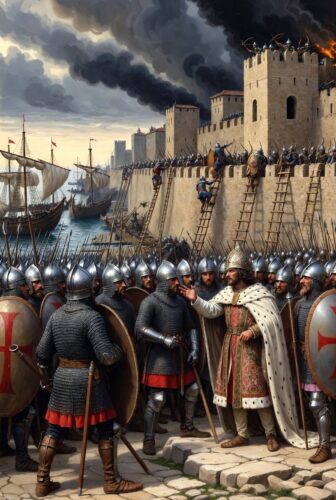

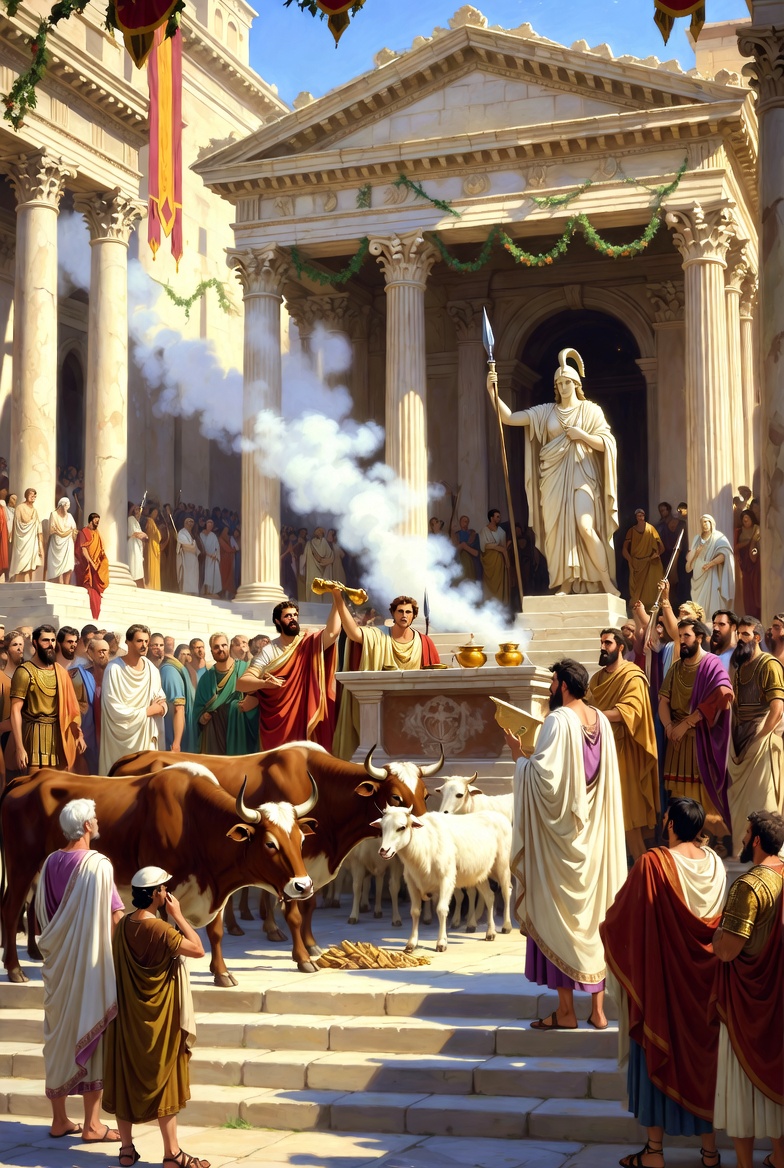
In the annals of ancient Rome, where gods walked among mortals and victories were etched in stone, February 1, 194 BC, stands as a pivotal moment of triumph and devotion. On that day, amidst the bustling Forum Holitorium in the heart of Rome, Consul Gaius Cornelius Cethegus dedicated the Temple of Juno Sospita—a sanctuary honoring the goddess as the "Savior" or "Safeguarder." This wasn't just another architectural feat in a city already brimming with marble wonders; it was a bold declaration of Roman resilience, military prowess, and religious fervor following a grueling campaign against the fierce Insubrian Gauls. Imagine the scene: trumpets blaring, incense wafting through the air, crowds of toga-clad citizens cheering as sacrificial animals were led to the altar. This event, often overshadowed by flashier tales of emperors and legions, encapsulates the essence of Roman identity—blending warfare, piety, and cultural assimilation in ways that shaped the empire for centuries.To truly appreciate this dedication, we must journey back to the turbulent years leading up to it. The Roman Republic in the early 2nd century BC was a powerhouse on the rise, fresh from the Second Punic War against Hannibal's Carthage. The scars of that conflict—devastated farmlands, depleted treasuries, and a populace weary of endless strife—still lingered. Yet, Rome's ambitions knew no bounds. North of the Po River Valley lay Cisalpine Gaul, a region teeming with Celtic tribes like the Insubres, Boii, and Cenomani. These Gauls weren't mere barbarians in Roman eyes; they were formidable warriors with a history of sacking Rome itself in 390 BC under Brennus. That ancient humiliation burned in the collective Roman memory, fueling a desire for vengeance and control. The Insubres, centered around modern-day Milan (then Mediolanum), were particularly troublesome. They had allied with Hannibal during his Italian invasion, providing troops and supplies that prolonged the Carthaginian threat. By 197 BC, the Romans could no longer tolerate this northern instability. Enter Lucius Cornelius Lentulus and Publius Villius Tappulus, the consuls tasked with subduing the region. Their campaigns were brutal: sieges, pitched battles, and scorched-earth tactics that left villages in ruins and fields barren. But the Gauls fought like lions, their long swords clashing against Roman gladii in forests and riverbanks. It was a war of attrition, where Roman discipline slowly wore down Celtic ferocity. Fast forward to 195 BC, when Gaius Cornelius Cethegus took the consular reins. A member of the illustrious Cornelii gens, Cethegus was no stranger to politics or warfare. His family boasted consuls, censors, and triumphators, and he himself had served as aedile and praetor. Assigned to Cisalpine Gaul, Cethegus faced a resurgent Insubrian force led by chieftains who refused to bow to Roman yokes. The decisive clash came near the Mincio River, where Cethegus's legions—bolstered by allied contingents—encircled the Gauls in a masterful maneuver. Ancient sources like Livy describe the battle as a slaughter: 35,000 Gauls fell, their standards captured, and their camps plundered. Cethegus, ever the showman, paraded the spoils through Rome upon his return, earning a triumph that filled the streets with cheering throngs and exotic captives.
But why dedicate a temple to Juno Sospita? To understand this, we delve into Roman religion, a vibrant tapestry where gods were not distant deities but active participants in human affairs. Juno, wife of Jupiter and queen of the gods, wore many hats: protector of marriage, childbirth, and the state. As "Sospita," she was the savior, often depicted in Lanuvium (her ancient cult center south of Rome) wearing a goatskin helmet, shield, and spear— a warrior goddess akin to Athena. The Insubres' defeat was seen as divine intervention; Juno had "saved" Rome from northern peril. Cethegus, fulfilling a vow made on the battlefield (a common Roman practice called a "votum"), pledged this temple as thanks. It wasn't mere superstition—such dedications boosted morale, legitimized conquests, and integrated local cults into the Roman pantheon. The Forum Holitorium, where the temple rose, was a fitting location. This "Vegetable Market" Forum buzzed with trade: fruits, herbs, and livestock from across Italy. Nestled between the Capitoline Hill and the Tiber River, it was prone to floods and fires, symbolizing the precariousness of life that Juno Sospita guarded against. Archaeological remnants—columns reused in nearby churches like San Nicola in Carcere—hint at its grandeur. The temple likely featured a podium, pronaos (porch), and cella housing Juno's statue, adorned with spoils from the Insubrian war: captured weapons, inscribed dedications, and perhaps even Gaulish artifacts as trophies. Construction wasn't cheap or quick. Temples required Senate approval, public funds (from war booty), and skilled labor. Stonemasons from Greek-influenced southern Italy shaped the tufa and travertine, while artists painted vivid frescoes of Juno's myths. The dedication ceremony on February 1 was timed auspiciously—February derived from "februum," meaning purification, aligning with themes of renewal post-war. Priests in white robes performed lustrations, sprinkling holy water and chanting hymns. Oxen, sheep, and pigs were sacrificed, their entrails examined for omens (haruspicy). Cethegus, crowned with laurel, ascended the steps to unveil the temple, his oration praising Juno and recounting his victories. Feasts followed: bread, wine, and meat distributed to the masses, turning the day into a communal celebration. This event rippled through Roman society. Politically, it solidified the Cornelii's influence; Cethegus later became censor, overseeing morals and infrastructure. Militarily, it pacified Cisalpine Gaul, paving the way for colonization—veterans settled on confiscated lands, spreading Roman culture. Economically, secured northern routes boosted trade: amber from the Baltic, slaves from Gaul, and grain from fertile valleys flowed to Rome. Culturally, it exemplified syncretism—Juno Sospita's cult, originally from Lanuvium, absorbed Celtic elements, perhaps equating her with local goddesses like Brigantia.
Zooming out, the temple's story mirrors broader Roman expansion. From 218 BC (Hannibal's invasion) to 191 BC (final Gaulish submissions), Rome transformed from a city-state to a Mediterranean hegemon. Victories like Cethegus's were building blocks: each temple, aqueduct, and road asserted dominance. Juno Sospita's sanctuary joined others in the Forum Holitorium—temples to Janus, Spes, and Pietas—creating a sacred precinct that endured floods, fires, and invasions. Even in the Empire, emperors like Augustus restored it, and its priestesses (from Lanuvium) performed annual rites, including snake-handling oracles foretelling harvests. Yet, the Insubres' perspective adds nuance. These Celts, with their druidic traditions and clan-based society, viewed Romans as invaders. Their defeat meant cultural erosion: Latin replaced Celtic tongues, villas supplanted hill forts, and gods like Juno overshadowed native deities. Archaeological sites like Castelseprio reveal blended artifacts—Roman coins amid Gaulish pottery—testifying to assimilation's double-edged sword. Livy's accounts, while Roman-biased, hint at Gaulish bravery: warriors fighting naked, painted blue, their torques gleaming in battle. Fast-forward through centuries: the temple survived barbarian incursions but succumbed to Christianization. By the Middle Ages, its stones were repurposed for churches, symbolizing Rome's eternal recycling. Today, echoes linger in museums—coins depicting Juno Sospita, inscriptions honoring Cethegus. Historians debate details: Was the battle's scale exaggerated? Did Cethegus's vow stem from genuine piety or political opportunism? Such questions keep the story alive, reminding us history is a mosaic of facts and interpretations.
Delving deeper into Roman religion reveals Juno Sospita's uniqueness. Her Lanuvine cult involved virgins feeding sacred snakes; if accepted, it augured prosperity. This rite, possibly Etruscan-influenced, underscores women's roles in Roman spirituality—priestesses wielded influence, advising on omens. The temple's dedication reinforced state religion (religio publica), where magistrates like Cethegus intertwined politics and piety. Festivals like the Matronalia (March 1) honored Juno, but February's purificatory vibe made it ideal for post-war cleansing. Cethegus himself was a Renaissance man before the term existed. As orator, he swayed Senate debates; as builder, he commissioned roads and temples. His censorship in 184 BC reformed morals, expelling unworthy senators—a precursor to later purges. The Insubrian war's logistics fascinate: legions of 20,000 men, supply chains across Alps, alliances with friendly tribes like the Cenomani. Tactics evolved— from phalanx to manipular system—allowing flexibility against Gaulish charges. The war's aftermath reshaped Italy. Roman colonies like Placentia and Cremona dotted the Po Valley, fostering urbanization. Gaulish integration produced Gallo-Roman culture: wine amphorae, mosaics, and baths blended styles. This cultural fusion fueled Rome's strength, absorbing talents from conquered peoples. Yet, challenges persisted. Slave revolts, like those in 198 BC among captured Gauls, highlighted conquest's costs. Economic strains—war debts, inflation—tested resilience. Juno Sospita symbolized hope amid chaos, her "saving" grace a beacon for a war-torn republic. Exploring artifacts brings vividness. The British Museum holds coins showing Juno in goatskin, spear raised. Inscriptions from Lanuvium praise her as "Mater Regina." Excavations in the Forum Holitorium uncover podium fragments, evoking the temple's scale—perhaps 30 meters long, with Corinthian columns. Comparisons with other dedications enrich context. Manlius Vulso's Temple of Juno Regina (187 BC) followed Asian victories, showing a pattern: triumph, vow, temple. This cycle reinforced Roman exceptionalism, gods favoring the pious.
The event's obscurity today stems from focus on "big" histories—Caesar, Augustus. But micro-stories like this reveal everyday Roman life: faith sustaining empire-building. Shifting to Gaulish side, oral traditions (lost to time) likely lamented defeats. Druidic resistance to Romanization persisted, influencing later revolts. In sum, February 1, 194 BC, wasn't just a dedication—it was Rome's soul manifest: victory through arms, secured by gods, celebrated in stone. This historical gem, buried in Livy's scrolls, deserves spotlight for its lessons in perseverance and adaptation. Now, how does this ancient triumph translate to your life today? The outcome— a secured frontier, cultural integration, and renewed societal vigor—offers timeless wisdom. By channeling the spirit of Cethegus's dedication, you can turn personal "battles" into lasting victories. Here's how to apply it motivationally, with a structured plan to build resilience and achievement. ### Turning Historical Triumph into Personal Power The dedication of Juno Sospita's Temple teaches that victories aren't endpoints but foundations for growth. In today's fast-paced world, where challenges like career setbacks, health struggles, or relationship hurdles mimic ancient wars, embracing a "vow and dedicate" mindset fosters unstoppable momentum. Persevere through adversity, honor your wins with meaningful rituals, and integrate lessons for long-term success. This isn't abstract—it's actionable. - **Identify Your "Insubrian Battle":** Pinpoint a current challenge, like a stalled project or fitness goal, as your modern foe. Just as Cethegus faced resurgent Gauls, recognize recurring obstacles and commit to conquering them systematically. - **Make a Personal Vow:** Emulate Roman vota by pledging a reward upon victory—e.g., if you land a promotion, dedicate time to mentoring others, mirroring the temple's communal benefit. - **Build Discipline Like a Legion:** Train daily habits, such as 30 minutes of focused work or exercise, to forge unyielding resolve, akin to Roman manipular tactics. - **Celebrate with Purification Rituals:** After wins, perform a "dedication"—journal achievements, share with friends, or create a small altar of mementos—to cleanse negativity and reinforce positivity. - **Integrate Conquered "Territories":** Absorb lessons from defeats; if a failed diet teaches portion control, blend it into your routine, fostering growth like Roman syncretism. ### Your 30-Day Victory Plan: From Battlefield to Sanctuary Kickstart transformation with this motivational blueprint, inspired by Cethegus's campaign. Commit fully—results compound like Roman conquests!
-
**Days 1-7: Scout the Terrain (Preparation Phase)** Assess your life: List three "battles" (e.g., procrastination, poor sleep). Research solutions—read a book on productivity or consult a coach. Vow one specific goal, like "Complete a 5K run by month-end."
-
**Days 8-14: Engage the Enemy (Action Phase)** Dive in with daily drills: For fitness, run progressively longer distances; for career, network via LinkedIn. Track progress in a journal, noting "victories" like resisted temptations.
-
**Days 15-21: Secure the Flanks (Resilience Building)** Anticipate setbacks—use meditation apps for mental fortitude. Integrate allies: Join a group or accountability partner, echoing Roman alliances.
-
**Days 22-28: Claim the Spoils (Reflection Phase)** Review wins; adjust tactics. Perform a mini-ritual: Buy a symbolic item (e.g., a motivational poster) as your "temple."
-
**Days 29-30: Dedicate and Renew (Celebration Phase)** Host a personal feast—treat yourself and reflect. Plan the next cycle, turning one-time wins into lifelong habits.
By living this, you'll not only conquer today's hurdles but build an "empire" of self-mastery. Remember, ancient Romans didn't win overnight—they persisted with faith and strategy. You can too—start now, and let Juno's saving grace inspire your epic journey!
Share: