
Introduction: The Spark in the Dark On the night of January 28, 1393, the biting wind of a Parisian winter battered the stone walls of the Hôtel Saint-Pol. Inside the royal residence, however, the atmosphere was stiflingly hot, heavy with the scent of roasted meats, spiced hippocras wine, and the sweat of a aristocracy dancing on the edge of the abyss. This was the court of Charles VI, the King of France, a monarch whose fragile grip on reality mirrored the fractured state of his kingdom. Tonight was not merely a party; it was a desperate, frenetic attempt to hold back the darkness that threatened to consume the Valois dynasty. It was a celebration of the grotesque, a flirtation with the savage, and before the sun rose, it would become one of the most horrific spectacles in the history of the French monarchy. History remembers this night as the Bal des Ardents—the Ball of the Burning Men. It is a story that reads like a grim fable: a King who dressed as a beast, a brother who played with fire, and a dance that turned into an inferno. But beneath the medieval pageantry lies a profound lesson about the nature of risk, the consequences of unchecked decadence, and the vital importance of situational awareness in a world filled with torches. To understand the magnitude of this event, we cannot simply glance at the flames. We must walk the corridors of the 14th century, a time historian Barbara Tuchman famously dubbed "A Distant Mirror" of our own calamitous age. We must understand the chemistry of the costumes, the psychology of the mad King, and the sociology of the charivari ritual that started it all. And once we have sifted through the ashes of 1393, we will extract a survival guide for the modern world. Because while you may not be wearing a suit of flax and pitch, you are almost certainly dancing in a room that is not as fireproof as you think. Part I: The Calamitous Century The World on the Brink To grasp why the King of France would strip naked, cover himself in tar, and howl like a wolf on a Tuesday night in January, we must first understand the psychological landscape of 1393. Europe was not well. The 14th century was a period of apocalyptic anxiety. The Black Death had swept through the continent just a few decades prior (1348–1350), killing perhaps half the population. The trauma of this mass extinction event lingered in the collective consciousness. Death was not a distant possibility; it was a constant companion, sitting at the dinner table, sleeping in the bedchamber. France itself was locked in the "Hundred Years' War" with England, a grinding, ruinous conflict that had devastated the countryside and drained the royal treasury. Mercenary bands, known as écorcheurs (flayers), roamed the provinces, pillaging and burning. The Church, the bedrock of medieval stability, was rent in two by the Great Schism. There was a Pope in Rome and a Pope in Avignon, each excommunicating the other, leaving the faithful terrified that their souls were imperiled no matter whom they obeyed. In this atmosphere of doom, the French court did not turn to prayer; they turned to excess. The aristocracy retreated into a bubble of extreme fashion, aggressive hedonism, and bizarre pageantry. They sought distraction with a manic intensity. If the world was ending, they would go out dancing. The fashion of the day became surreal—shoes with toes so long they had to be tied to the knees with chains, headdresses that scraped the doorframes. The Bal des Ardents was the apex of this desperate escapism. The King’s Fragile Mind At the center of this whirlwind was King Charles VI. Ascending to the throne in 1380 at the tender age of eleven, he was initially beloved by his people. He was handsome, athletic, and eager to rule. But the blood of the Valois carried a dark legacy. In the summer of 1392, six months before the fatal ball, the King’s mind had snapped. The incident occurred in the Forest of Le Mans. It was a stiflingly hot August day. The King was leading an army to Brittany. He was already on edge, exhausted by the heat and the pressures of ruling. As he rode through the trees, a ragged man—perhaps a leper or a madman—burst from the undergrowth, grabbing the King’s bridle and screaming, "Ride no further, noble King! You are betrayed!". The man was chased away, but his words planted a seed of paranoia in Charles's fevered brain. Hours later, as the heat intensified, a page boy dozed off in the saddle. His lance slipped from his grip and clanged loudly against a steel helmet. The sudden noise triggered a catastrophic psychotic break. Charles drew his sword, crying "Forward against the traitors! They wish to deliver me to my enemies!" He attacked his own escort, killing four of his own knights before he was physically restrained.The King fell into a coma-like state, only to awaken days later with no memory of the slaughter. This was the onset of a condition that modern historians suspect was paranoid schizophrenia or perhaps bipolar disorder. His physicians, lacking modern understanding of mental health, prescribed a regimen that would prove fatal: "amusement." They believed that melancholy was the enemy. The King needed to be entertained, distracted, and kept in high spirits to prevent a relapse. It was this medical prescription for "fun" that set the stage for the disaster of January 28. Part II: The Architecture of the Masquerade The Occasion: A Charivari for a Widow The festivities on January 28, 1393, were organized by Queen Isabeau of Bavaria. The ostensible reason for the party was the wedding of Catherine de Fastaverin, one of the Queen’s favorite ladies-in-waiting. But this was not a typical royal wedding. Catherine was a widow, and she was marrying for the third time. In the intricate social codes of medieval France, the remarriage of a widow—especially one who had buried two husbands—was viewed with a mixture of amusement and superstition. It was considered a disruption of the natural order, an act of excessive vitality that bordered on the comical. Such occasions were traditionally marked by a charivari. The charivari, or "rough music," was a folk custom deeply rooted in rural life. When a mismatch occurred in a village—an old man marrying a young girl, or a widow remarrying—the young men of the village would gather outside the couple's house. They would bang pots and pans, blow horns, shout obscenities, and perform mocking skits. It was a mechanism of social control, a way for the community to voice its disapproval or ridicule through noise and disorder.
However, the French court, in its boredom and arrogance, decided to appropriate this peasant tradition. They would perform their own charivari at the Hôtel Saint-Pol. But instead of banging pots, the King of France and his highest lords would dress as "Wild Men" and invade the wedding feast. It was a dangerous inversion of status: the divinely anointed monarch descending to the level of a beast to mock his own servant. The "Wild Man" in the Medieval Imagination To understand the costumes, we must understand the figure they were mimicking. The "Wild Man" (l'homme sauvage or wodewose) was a ubiquitous symbol in the art and folklore of the late Middle Ages. He was a mythical creature, a hairy, club-wielding humanoid who lived deep in the forests, far from the civilizing influence of the Church and the Court. The Wild Man represented dualities: he was fearsome yet free, bestial yet human, chaotic yet vital. In tapestries and heraldry, he was often depicted fighting knights or abducting maidens. By dressing as Wild Men, the courtiers were not just putting on a costume; they were adopting a persona of unbridled instinct. They were shedding the rigid protocols of court life to become creatures of pure impulse. For a King whose mind was already fracturing, blurring the line between man and beast was a perilous psychological game. The Architect of Doom: Huguet de Guisay The specific idea for the "Dance of the Savages" came from a nobleman named Huguet de Guisay. History has not been kind to Huguet, and for good reason. He was a favorite of the King, a member of the inner circle of reckless youth who dominated the court. But outside that circle, he was loathed. Guisay was described by contemporaries as "the cruelest and most insolent of men." He was a man of "wicked life" who took pleasure in the suffering of others. He had a notorious habit of abusing his servants and the common people. When a servant displeased him, Guisay would force the man to lie on the ground. He would then stand on the servant's back, kicking him with his spurred boots, and command him to "Bark, dog!". This specific cruelty—forcing a human to act as a beast—would become a grim irony in his own death. It was Guisay who devised the construction of the costumes. To achieve the "hairy" look of the Wild Man, he proposed a technique that was visually effective but chemically disastrous. The dancers would wear linen bodysuits, sewn tightly onto their naked flesh. These suits would then be slathered in pitch (a tar-like substance used for waterproofing ships), resin (tree sap), and wax. Finally, clumps of frayed flax and hemp would be stuck into the sticky resin to simulate shaggy fur. Any medieval military engineer would have recognized these ingredients immediately. Pitch, resin, wax, flax, and hemp are the precise components used to make torches and incendiary weapons. Huguet de Guisay had essentially convinced the King of France to wrap himself in a wick and douse himself in accelerant. The Warnings The danger was not entirely lost on the organizers. The flammability of the costumes was evident to anyone who touched them. As a precaution, a strict order was issued: no torches were to be brought into the hall during the performance. The room was to be lit only by the chandeliers and sconces high on the walls, well out of reach of the dancers. The torchbearers who usually accompanied the nobility were explicitly banned from the floor. It was a sensible safety protocol. But as with many disasters, the failure would not be in the plan, but in the enforcement. Part III: The Night of the Inferno The Gathering at Hôtel Saint-Pol The Hôtel Saint-Pol was a sprawling complex on the Right Bank of the Seine, in the Marais district of Paris. Built by Charles V, it was a maze of galleries, gardens, and banquet halls, designed to be a sanctuary for the royal family. On the night of January 28, the Great Hall was packed with the flower of French nobility. The wine flowed freely, musicians played from the gallery, and the air hummed with anticipation. The six dancers prepared in a side room. They were:
-
King Charles VI
-
Huguet de Guisay
-
The Comte de Joigny
-
Yvain de Foix (the bastard son of the Count of Foix)
-
Aimery de Poitiers (son of the Count of Valentinois)
-
Ogier de Nantouillet (Sieur de Nantouillet).
They were sewn into their linen suits. The pitch was applied, the flax attached. Masks, also covered in wax and hair, were fitted over their faces to ensure total anonymity. The point of the game was mystery—the audience was to guess who these monsters were. Once the suits were sewn shut, there was no easy way out. They were sealed inside their flammable skins. The Entrance of the Savages At the appointed signal, the six Wild Men burst into the hall. They howled, leaped, and gestured lewdly, fully embracing the charivari spirit of misrule. The audience shrieked with delight. The disguise was perfect; not even the Queen knew which of the shaggy monsters was her husband. Five of the dancers were chained together, emphasizing their captive, bestial nature. The King, however, was unchained, allowing him to roam more freely among the guests. This slight separation would ultimately save his life. The spectacle was a triumph. The court was entertained. The King was distracted. For a moment, the plan worked perfectly. The Agent of Chaos: Louis of Orléans Enter Louis, the Duke of Orléans. Louis was the King’s younger brother. He was brilliant, charming, ambitious, and notoriously dissolute. He was also the bitter rival of his uncle, the Duke of Burgundy, a rivalry that would later tear France apart. On this night, Louis arrived late. He had spent the evening at a tavern or another festivity, and he arrived at the Hôtel Saint-Pol accompanied by his own retinue of knights and servants. Crucially, Louis was drunk. As he entered the hall, the music and the spectacle of the Wild Men caught his attention. He saw the shaggy figures dancing and, like the rest of the court, he wanted to know who they were. But unlike the others, Louis did not respect the rules. He was a Prince of the Blood; bans on torches did not apply to him. Ignorant of the specific prohibition—or perhaps too intoxicated to care—Louis snatched a torch from one of his servants. He stumbled onto the dance floor, approaching the chained group of five dancers. He wanted to peer through their masks, to see the faces beneath the flax. The Spark The physics of the disaster were simple and unforgiving. Louis held the open flame of the torch too close to the dancers. Some accounts say a drop of hot wax fell from the torch onto a dancer’s shoulder; others say the flame simply brushed against the dry, frayed flax that mimicked the fur. It did not matter. The flax, dry and aerated, ignited instantly. It acted as a fuse. The fire flashed over the surface of the first dancer, igniting the resin and pitch beneath. Because the five men were chained together and dancing in close formation, the fire jumped from one to the next in a heartbeat. "They were all in flames," wrote the Monk of Saint-Denis, the royal chronicler. The Great Hall, a moment ago filled with laughter, was filled with a sudden, blinding light and the roar of combustion.The Dance of Death The horror that followed is difficult to imagine. The men were sewn into the suits. They could not strip them off. As they writhed in agony, the pitch melted, fusing the burning linen to their skin. They became living torches. The musicians in the gallery, confused by the sudden eruption of light and movement, continued to play for several moments, providing a macabre soundtrack to the immolation of the French nobility. The crowd panicked. The air filled with the smell of burning hair and flesh. The screams of the dying men shattered the festive atmosphere. The Comte de Joigny was the first to fall. The heat was so intense that he died on the spot, collapsing to the floor as the fire consumed him. Yvain de Foix and Aimery de Poitiers ran in circles, trying to outrun the flames, but only fanning them. They burned extensively before collapsing. The Survival of the King King Charles VI was not part of the chained group. He had drifted away from the other dancers to tease a young lady sitting on the sidelines. This lady was Joan II, the Duchess of Berry.
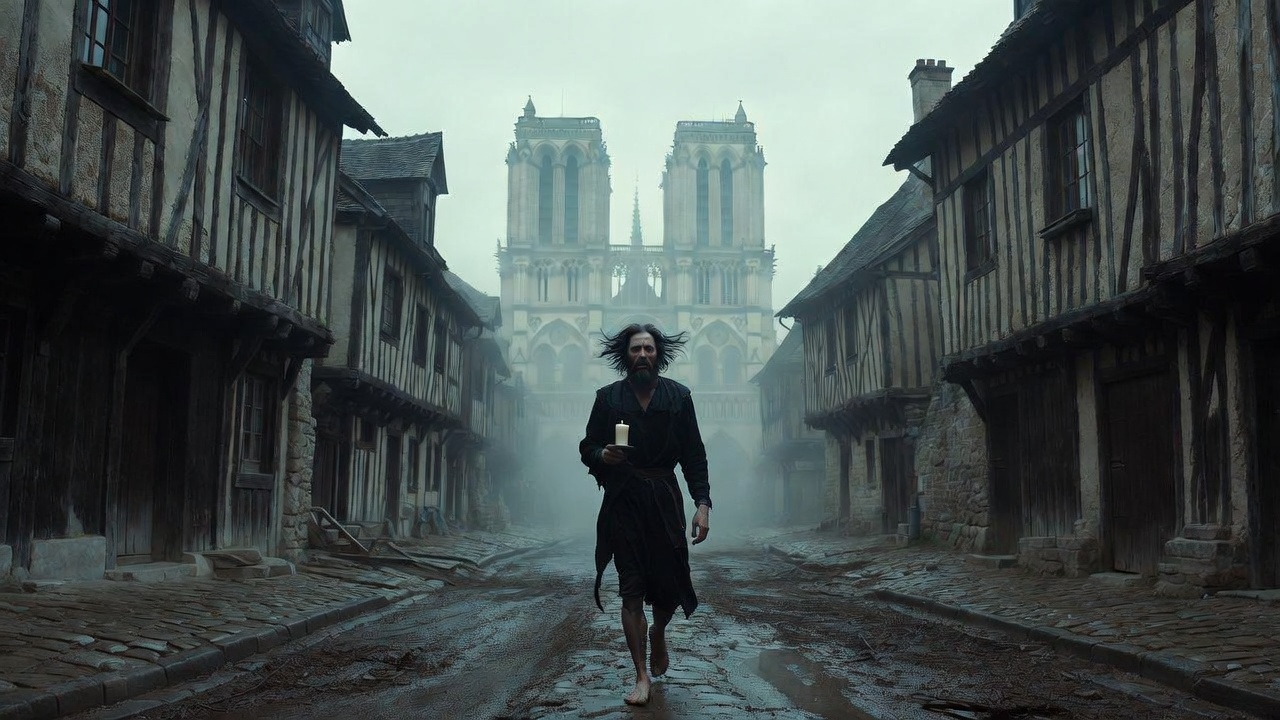
Joan was young—only about 14 or 15 years old. She was the King’s aunt by marriage (wife of the Duke of Berry). As the fire erupted feet away from them, the Queen, Isabeau, recognized her husband’s physique among the dancers and fainted dead away. The teenage Duchess did not faint. She saw the flames spreading and realized that the "Wild Man" standing next to her was the King. She acted with an instinct that would change history. She grabbed the King and threw the voluminous, heavy train of her court dress over him. She pulled him to the ground, smothering the sparks and shielding him from the heat and the sight of his burning friends. Under the dark canopy of her skirts, the King huddled, trembling, while the Duchess held him tight, refusing to let him run to aid his companions—an act that would have surely killed him. The Escape of Nantouillet While the Duchess saved the King, Ogier de Nantouillet saved himself. He was one of the chained dancers. As the man next to him ignited, Ogier realized that the chain was a death sentence. With a burst of adrenaline, he managed to break free from the line. He was already burning. He looked around the room, scanning for salvation. He spotted the botellerie, the area where servants poured drinks. There, he saw a large vat filled with water and wine, used for rinsing the goblets. Without hesitation, Ogier threw himself bodily into the vat. The liquid extinguished the flames instantly. He emerged from the wine soaked, steaming, and burned, but alive. Part IV: The Ashes of January The Lingering Death The fire was eventually extinguished, but the damage was done. The King was physically unharmed, thanks to the Duchess of Berry, but he was in a state of profound shock. The other four dancers were carried to their quarters. The Comte de Joigny was dead. Yvain de Foix and Aimery de Poitiers lingered in agony for two days before succumbing to their burns. But the grisliest fate was reserved for Huguet de Guisay, the man who had designed the costumes. He did not die immediately. He lived for three days. His burns were catastrophic, but his constitution was strong. As he lay dying, he cursed his companions, the King, and the living. When he finally expired, his funeral procession wound its way through the streets of Paris. The common people, hearing that the hated Guisay was dead, did not weep. They lined the streets. Remembering how he had forced his servants to lie on the ground and "bark," the mob jeered at his coffin. "Bark, dog, bark!" they shouted as his body passed. It was a chilling final verdict on a life of cruelty. The Penance of the King The morning after the ball, Paris was in an uproar. The news spread that the King had nearly been burned alive in a debauched masquerade. The citizens were furious. They viewed the fire not as an accident, but as divine judgment—a sign that the court’s decadence had angered God. The monarchy was shaken. To appease the mob and ask for God’s forgiveness, a grand act of penance was required. A few days later, a solemn procession formed at the Hôtel Saint-Pol. King Charles VI, accompanied by his uncles and the Duke of Orléans (the architect of the fire), walked through the freezing mud of Paris to the Cathedral of Notre-Dame. The King walked barefoot. He carried a simple wax candle. It was a stark contrast to the gold and resin of the masquerade. The Duke of Orléans, humiliated and blamed by the court, paid for the construction of a beautiful chapel at the Celestine monastery to pray for the souls of the men he had killed.
The Long Shadow of the Fire The Bal des Ardents had consequences that echoed for decades. Politically, it destroyed the reputation of the Duke of Orléans. His uncle, the Duke of Burgundy (Philip the Bold), used the incident to paint Louis as reckless, dangerous, and unfit to be near the throne. He whispered that perhaps the fire was no accident—that Louis had intended to kill his brother to seize the crown. This suspicion festered. The hatred between the House of Orléans and the House of Burgundy grew until, in 1407, the new Duke of Burgundy (John the Fearless) had Louis of Orléans assassinated on the streets of Paris. This murder triggered the Armagnac-Burgundian Civil War, which split France in two and allowed the English King Henry V to crush the French at Agincourt in 1415. In a very real sense, the torch that lit the Bal des Ardents also lit the fuse for the fall of France. Medically, the fire broke the King. Charles VI relapsed into madness. The trauma of the fire, the screams, and the guilt shattered his fragile recovery. He began to suffer from the "Glass Delusion," believing he was made of glass and would shatter if touched. He ceased to recognize his wife or children. He became "Charles the Mad," leaving a power vacuum that his feuding relatives tore apart. Part V: The Application – Fireproofing Your Life We leave the smoking ruins of the Hôtel Saint-Pol and step back into the present. It is easy to look at Huguet de Guisay and Louis of Orléans with disdain—to see them as archaic figures of folly. But the dynamics of the Bal des Ardents—the hubris, the ignored warnings, the flammable vulnerabilities, and the sudden chaos—are timeless. You are likely not wearing a suit of pitch and flax. But you are almost certainly dancing in a room with torches. The "Wild Man" represents the part of us that wants to take shortcuts, to ignore risks for the sake of a thrill or a quick win. The "Torch" is the external crisis—the market crash, the health scare, the competitor—that you cannot control. Here is your survival plan, forged in the fires of 1393.
-
The "Pitch and Resin" Audit (Risk Identification)
The dancers died because they ignored the fundamental properties of their costumes. They coated themselves in accelerants and walked into a party.
-
The Concept: We often clothe our lives in "flammable materials"—vulnerabilities we tolerate because "nothing bad has happened yet."
-
Financial Resin: Living paycheck to paycheck with high-interest debt.
-
Relationship Pitch: A marriage built on unsaid resentments or lies.
-
Professional Wax: Relying on a single client for 90% of your income, or faking a skill set you don't have.
-
-
The Plan:
-
Identify Your Flammability: Take one hour this week to list the three most fragile areas of your life. Ask: "If a torch (a crisis) hit this area today, would it singe me, or would I incinerate?"
-
Strip the Suit: You cannot control the torches (chaos), but you can change your costume. Aggressively pay down the debt. Have the difficult conversation with your spouse. Diversify your client base. Do not walk into the future wearing materials that turn a spark into an inferno.
-
-
The Duchess Principle: Action Over Status
When the fire started, Queen Isabeau fainted. She was the highest-ranking woman in the room, but she was useless. The teenage Duchess of Berry, lower in rank but higher in wit, acted. She didn't scream; she smothered.
-
The Concept: In a crisis, status, title, and ego are irrelevant. The only thing that matters is utility. Panic is a luxury. Dissociation (fainting) is a failure of leadership.
-
The Plan:
-
Pre-Mortem Visualization: The Duchess reacted instantly because she likely had a protective instinct for the King. You must train your instinct. Visualize your worst-case scenarios (Loss of job, car accident, PR scandal).
-
The "Skirt" Protocol: Decide now what your "skirt" is. What is the one asset you must protect at all costs? (Your reputation? Your children? Your mental health?). When the fire starts, throw the skirt over that asset. Let the rest burn if necessary. Don't try to save everything; save the King.
-
-
The "Wine Vat" Exit Strategy
Ogier de Nantouillet survived because he did two things: he broke the chain, and he jumped into a bucket of dirty dishwater.
-
The Concept: The other dancers died because they stayed linked together. Groupthink is fatal. Loyalty to a sinking ship (or a burning dance troupe) is suicide. Furthermore, survival is often undignified. Nantouillet didn't care about ruining his silk suit or smelling like old wine; he cared about living.
-
The Plan:
-
Break the Chain: Look at your peer group. Are they engaging in self-destructive behavior (financial recklessness, toxic habits)? If they catch fire, they will pull you down. Have the courage to unlink yourself, even if they mock you for leaving the party early.
-
Find Your Vat: What is your ugly escape hatch? Is it moving back in with your parents? Taking a lower-status job? Selling the fancy car? Do not let pride prevent you from jumping into the vat. It is better to be wet and alive than dignified and dead.
-
-
The Law of Guisay (Reputation Management)
Huguet de Guisay died screaming while the public cheered. His legacy was not his wealth, but the phrase "Bark, dog!" hurled at his corpse.
-
The Concept: You are writing your eulogy every day. The way you treat people who have no power over you (waiters, interns, subordinates) creates a reservoir of goodwill or ill will. When you are vulnerable (and everyone eventually is), that reservoir will burst.
-
The Plan:
-
The "Servant" Test: Audit your behavior toward subordinates. Are you demanding? Do you humiliate people?
-
Bank Goodwill: Be the person who brings water, not fire. When you eventually stumble, you want people to rush to help you, not to jeer at your misfortune. Character is your ultimate fire insurance.
-
-
Respect the Ban on Torches (Safety Culture)
The King’s advisors banned torches. It was a good rule. But they allowed the Duke of Orléans to break it because he was a VIP.
-
The Concept: A safety rule that has exceptions for "important people" is not a rule; it is a suggestion. Catastrophes often happen when the person in charge thinks they are immune to the laws of physics or economics.
-
The Plan:
-
No Exceptions: If you set a boundary (e.g., "I will not check email after 8 PM," "We will not spend more than we earn"), it must apply to everyone, especially you.
-
Gatekeep the Chaos: If you know you are in a fragile state (wearing a flammable costume), do not let chaotic elements (drunk brothers with torches) into your room. If you are recovering from addiction, do not go to the bar. If you are on a budget, do not go to the mall. Keep the torches out.
-
Conclusion: The Barefoot Walk

We end where the King ended: barefoot on the cold stones of Paris.

The Bal des Ardents was a tragedy, but it was also a moment of clarity. It stripped away the gold and the pretense and revealed the bone-deep fragility of the human condition.

January 28 is a day to remember that civilization—your career, your health, your plans—is a thin veneer over chaos. We all like to dress up as Wild Men. We like to play with risk. We like to pretend we are invincible. But the fire is always waiting.

Use this date as your annual audit.

Check your costume for pitch.

Check your room for torches.

Check your friends for chains.

And if the spark comes, be the Duchess. Be the Survivor. Be the one who walks away from the fire, barefoot and humble, but alive.
Share: