
Imagine a world where loyalty is your greatest weapon, yet it becomes the chain that binds you. On a chilling January day in 1142, in the shadowed halls of a Song Dynasty prison in Hangzhou, China, one of history's most revered generals met an unjust end. Yue Fei, the unyielding patriot whose name echoes through centuries like a battle cry, was executed on baseless charges, his life cut short at the peak of his glory. But this isn't just a tale of tragedy—it's a riveting saga of valor, strategy, and human spirit that spans the turbulent Jin-Song Wars, a period when empires clashed and heroes were forged in the fires of invasion. Today, we'll dive deep into the intricate tapestry of Yue Fei's life, his legendary campaigns, and the political intrigue that led to his demise on January 27, 1142. And then, we'll uncover how this ancient story can ignite your modern life with practical, transformative power. Buckle up—this is history at its most thrilling, where swords clash, alliances shatter, and lessons leap off the page to reshape your world.Let's start at the beginning, because Yue Fei's story isn't one of sudden heroism; it's rooted in the humble soil of ancient China, during a time when the Song Dynasty (960–1279 AD) was a beacon of cultural and technological brilliance amid constant threats from northern nomads. The Song era was marked by innovations like gunpowder, the magnetic compass, and movable-type printing, but it was also plagued by military weaknesses. The empire had shifted its capital southward after the devastating Jingkang Incident of 1127, when Jurchen invaders from the Jin Dynasty captured the northern heartland, including the imperial city of Kaifeng. This "humiliation of Jingkang" saw Emperor Huizong and his son Qinzong abducted, forcing the remaining royals to flee and establish the Southern Song in Hangzhou. It was into this era of fragility and fervor that Yue Fei was born on March 24, 1103, in Tangyin County, Anyang Prefecture (modern-day Henan Province). Yue Fei's early life reads like a classic underdog epic, infused with the grit and determination that would define him. Born to a poor tenant farmer named Yue He and his wife Lady Yao, young Yue's arrival was shrouded in legend. According to folklore, a massive bird—some say a roc or a divine swan—circled his family's modest home during his birth, screeching loudly before perching on the roof. Interpreting this as an omen, his parents named him "Fei," meaning "to fly" or "soar," symbolizing the lofty heights he was destined to reach. But destiny didn't hand him privilege; it tested him early. The Yellow River, that serpentine lifeline of Chinese civilization, flooded catastrophically shortly after his birth, sweeping away homes and livelihoods. In a heroic act, Yue He's family survived by clinging to a large earthen jar that floated them to safety—a tale that mirrors the biblical Noah's ark but with a distinctly Chinese flavor of resilience amid natural fury. Growing up, Yue Fei toiled in the fields, his hands calloused from plowing and harvesting. His father, a man of modest means but profound integrity, instilled in him the Confucian virtues of filial piety, loyalty, and self-improvement. Yue He was no scholar, but he ensured his son received a basic education, drawing from classics like the "Zuo Zhuan" (a commentary on the Spring and Autumn Annals) and military treatises by Sun Tzu and Wu Qi. Young Yue devoured these texts, his mind sharpening like a blade on a whetstone. He wasn't just bookish; he was a prodigy in martial arts. Legends abound about his training under the renowned archer Zhou Tong, who taught him the "eighteen arms of wushu"—a comprehensive arsenal including spears, swords, bows, and hand-to-hand combat. Zhou, a Shaolin-influenced master, allegedly passed on qigong techniques like the Emei Dapeng Qigong, which enhanced Yue's strength and endurance. By his late teens, Yue could reportedly draw a bow weighing 300 catties (about 400 pounds) and fire arrows with pinpoint accuracy from horseback. Historical records confirm he mastered spearfighting under Chen Guang, a tutor hired by his maternal grandfather, honing skills that would make him a terror on the battlefield.
In 1122, at the tender age of 19, Yue Fei enlisted in the Song army, driven by a burning patriotism fueled by the encroaching Jurchen threats. But duty called him home when his father died, adhering to the strict Song law mandating a 27-month mourning period for parents. During this time, he supported his mother through farming and continued his self-study, emerging stronger and more resolute. Reenlisting in 1126, just as the Jin Dynasty launched their devastating invasion, Yue Fei plunged into the chaos of war. The Jin, a semi-nomadic people from Manchuria, had risen under the leadership of Aguda (Emperor Taizu of Jin), who unified the Jurchen tribes and declared war on the Liao Dynasty before turning southward. Their cavalry-heavy forces overwhelmed the Song's infantry-dependent armies, leading to the fall of Kaifeng in 1127. Yue Fei defended the city valiantly, earning promotions for his bravery in repelling assaults and protecting civilians. As the Song court retreated south, establishing the Southern Song under Emperor Gaozong (Qinzong's brother), Yue Fei rose through the ranks with meteoric speed. By 1129, he was commanding forces along the Yangtze River, thwarting Jin advances and suppressing internal rebellions. His leadership style was revolutionary for the time: he emphasized selective recruitment, preferring quality over quantity by choosing battle-hardened veterans and training them rigorously. Soldiers under his command leaped walls in full armor during drills, fostering unbreakable discipline. Yue enforced strict rules—no pillaging villages, no mistreating civilians—with harsh punishments for violators, including execution. Yet, he led with empathy, sharing hardships with his troops and rewarding merit regardless of social status. This egalitarian approach turned his army into a loyal, efficient machine, often outnumbered but rarely outfought. The heart of Yue Fei's legacy lies in his campaigns against the Jin from 1133 to 1141, a series of daring offensives that nearly turned the tide of war. In 1134, he recaptured key territories in Henan and Hubei from the puppet state of Qi, a Jin-backed regime under Liu Yu. His tactics were ingenious: using fortified positions to lure enemies into ambushes, employing rapid cavalry strikes, and coordinating infantry with archers for devastating volleys. At the Battle of Yancheng in 1139, Yue's forces crushed a massive Jin army led by Wuzhu, capturing thousands and forcing a retreat. Legends tell of Yue personally charging into the fray, his spear flashing like lightning, inspiring his men to feats of superhuman valor. By 1140, his armies had pushed north, threatening the Jin-held Kaifeng itself. He famously declared his intention to "recover the Central Plains, welcome back the two emperors, and restore the Song Dynasty," a vow etched in his poetry and strategy.
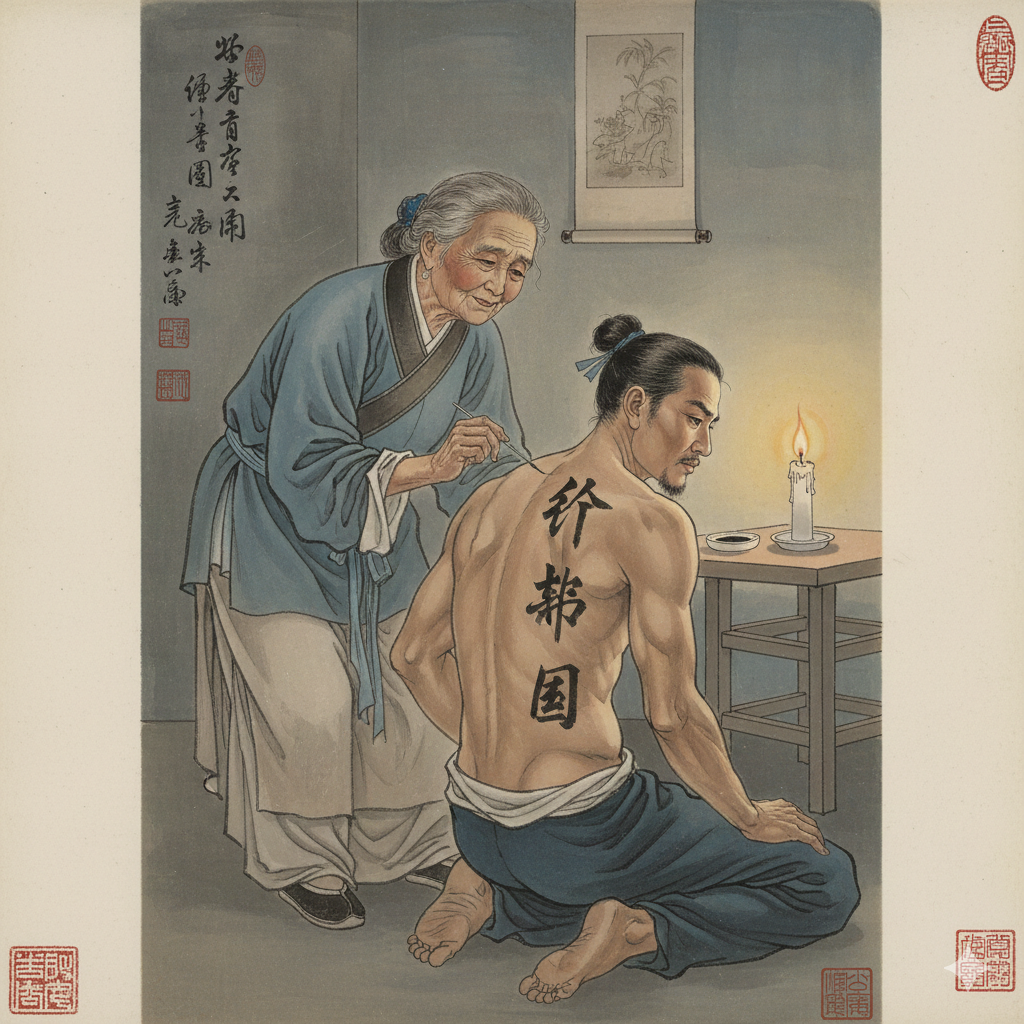
Yue Fei's military genius extended beyond the battlefield. He innovated in logistics, ensuring his troops were well-fed and equipped, often at personal expense. He studied medicine, creating health regimens like the Ba Duan Jin qigong exercises—eight simple movements to boost vitality and prevent disease, inspired by ancient healer Hua Tuo. These practices kept his soldiers fit during grueling campaigns, giving them an edge over fatigued enemies. Culturally, Yue was a Renaissance man of his era: a skilled poet and calligrapher whose works, like the stirring "Man Jiang Hong" (The River All Red), lamented the lost north and railed against appeasement. Lines like "My wrath bristles through my helmet, crests high as the long mountain clouds" capture his fiery spirit, blending martial fervor with literary elegance. But heroes often fall not to enemies, but to intrigue. The events leading to Yue Fei's execution on January 27, 1142, are a masterclass in political betrayal. Emperor Gaozong, while publicly praising Yue, privately feared his growing power and the risks of prolonged war. The Jin, sensing weakness, offered peace terms that included returning the abducted emperors—but only if the Song ceased offensives. Chancellor Qin Hui, a cunning courtier who rose under Gaozong's favor, championed this appeasement policy, viewing Yue's militancy as a threat to his influence. In 1140, as Yue's forces neared victory, Gaozong issued 12 gold plaques (imperial edicts) recalling him to Hangzhou. Yue obeyed, famously sighing, "Ten years of effort wasted in one day." Upon return, Qin Hui orchestrated a smear campaign, accusing Yue of treason, insubordination, and plotting rebellion. Fabricated evidence included claims that Yue's subordinate Zhang Xian conspired against the court. Imprisoned in Dali Temple, Yue endured torture but maintained his innocence, reportedly baring his back to reveal a tattoo inked by his mother: "jin zhong bao guo" (serve the country with utmost loyalty). This legendary act, though debated by historians, symbolizes his unyielding devotion. Despite no concrete proof—Qin Hui himself admitted the charges were "moxuyou" (perhaps groundless)—Yue, his son Yue Yun, and Zhang Xian were condemned. On a cold January night in 1142, they were executed, likely by strangulation or poison in prison. Yue was 38, his legacy seemingly buried with him. The immediate aftermath was shrouded in secrecy and sorrow. A sympathetic prison guard, Wei Shun, secretly buried Yue's body near Nine-Mile Pine by West Lake, risking his life to honor the general. Qin Hui's treachery became infamous; later, iron statues of him and his accomplices were placed kneeling before Yue's tomb, where visitors spat and cursed them for centuries. The peace treaty with Jin in 1141 (Treaty of Shaoxing) brought temporary respite but at great cost: the Song ceded northern territories, paid tribute, and acknowledged Jin superiority. Yet, it sowed seeds of resentment that fueled future resistance.
Yue Fei's rehabilitation began two decades later, under Emperor Xiaozong (r. 1162–1189), Gaozong's successor. In 1162, the charges were annulled, and Yue was posthumously titled "Wumu" (Martial and Stern). By 1179, he was "Zhongwu" (Loyal and Martial), and in 1211, elevated to "King of È." Temples sprang up across China, the most famous being the Yue Fei Temple in Hangzhou, rebuilt in the Ming Dynasty (1368–1644). His tomb became a pilgrimage site, where rituals honored his spirit. In literature, Yue Ke, his grandson, compiled the "Eguo Jintuo Zubian," preserving his grandfather's deeds in the official "History of Song" (1345). Yue evolved into a cultural icon: a deified war god in Taoism, a door guardian in folk art, and a symbol of Han patriotism against foreign domination. His influence rippled through history. During the Ming and Qing Dynasties, Yue's story inspired rebellions against Mongol and Manchu rule. In the 20th century, his anthem "Man Jiang Hong" rallied Chinese forces in World War II against Japanese invasion. Even today, he's invoked in Taiwan's navy (ROCS Yueh Fei frigate) and popular media, from novels like "Shuo Yue Quanzhuan" to video games. Legends amplified his mystique: tales of him inventing martial arts styles like Xingyiquan (mind-intent boxing), Eagle Claw, and Chuojiao, blending spear techniques with internal energy. His qigong exercises are still practiced worldwide for health and focus. The Jin-Song Wars context is crucial to appreciate Yue's significance. The Jin, evolving from Jurchen tribes, conquered the Liao in 1125 and then the Northern Song, establishing a multi-ethnic empire blending nomadic warfare with Chinese administration. Their invasions displaced millions, reshaping demographics. Yue's resistance represented the Southern Song's desperate bid to reclaim lost glory, highlighting themes of cultural identity, military reform, and the perils of internal division. His execution underscored how autocratic courts could sacrifice heroes for short-term stability, a pattern seen in histories from Rome's Scipio Africanus to France's Joan of Arc. Diving deeper into the campaigns, let's explore the 1134–1135 offensives. After suppressing the Qi puppet state, Yue coordinated with generals like Han Shizhong, whose wife Liang Hongyu famously drummed signals from a hilltop during the Battle of Huangtiandang (1130), trapping Jin forces in a swamp. Yue's "Yue Family Army" (Yuejiajun), numbering up to 100,000 at its peak, employed "linked horse" formations—cavalry chained together to break charges—and psychological warfare, spreading rumors to demoralize enemies. In 1140's Northern Expedition, he liberated Zhengzhou and Luoyang, cities steeped in imperial history, boosting Song morale. But the recall edicts arrived just as victory loomed, a poignant "what if" in history: Could Yue have reclaimed Kaifeng? Historians debate, noting Jin's superior cavalry and Song's supply issues, but his strategies influenced later generals like Qi Jiguang in the Ming era. Yue's personal life added layers to his legend. He adopted Yue Yun as his eldest son, training him in warfare; Yun died bravely beside him. Yue had four biological sons—Yue Lei, Ting, Lin, and Zhen—who carried his legacy. His marriage to Lady Li was marked by devotion, though duty often separated them. He shunned luxuries, living frugally to fund his army, embodying the Confucian ideal of the "junzi" (gentleman-scholar). His poetry, beyond "Man Jiang Hong," includes "Xiao Chong Shan," reflecting on nature's beauty amid war's ugliness, and a piece on the Yellow Crane Tower, pondering transience. The cultural evolution of Yue's image is fascinating. Post-Song fall to the Mongols in 1279, he became a symbol of resistance in Yuan-era folklore. Ming emperors promoted him to counter Manchu threats, while Qing rulers, being Manchu descendants of Jurchens, suppressed his veneration initially but later co-opted it. In Jewish-Chinese history, Kaifeng's Jewish community referenced his back tattoo in synagogue steles, drawing parallels to loyalty oaths. Modern interpretations vary: in Guy Gavriel Kay's fantasy novel "River of Stars," he's reimagined as Ren Daiyan, a bandit-turned-general. In video games like "Romance of the Three Kingdoms XI," players command his forces, reliving battles. Yue Fei's story also illuminates broader historical themes. The Song Dynasty's emphasis on civil bureaucracy over military might—eunuchs and scholars often overriding generals—contributed to its downfall. Yue's fate mirrors this tension: a warrior-scholar clashing with court pacifists. Economically, the wars drained resources, but Yue's disciplined army minimized civilian suffering, contrasting with Jin's scorched-earth tactics. Socially, his meritocracy challenged rigid hierarchies, inspiring social mobility in later eras. As we approach the end of this historical deep dive, consider the irony: Yue Fei's death on January 27, 1142, didn't extinguish his light; it immortalized him. His wrongful execution galvanized public outrage, leading to Qin Hui's posthumous disgrace and Yue's deification. Temples like the one in Tangyin, his birthplace, host annual festivals where martial artists demonstrate styles attributed to him. His descendants, numbering over 1.8 million by 2017, trace lineages through clans in Anhui and beyond. In essence, Yue Fei transcended mortality, becoming an eternal emblem of integrity in a corrupt world. Now, shifting gears to the motivational spark—because history isn't just about the past; it's a blueprint for your future. Yue Fei's life teaches us that true loyalty—to principles, not flawed leaders—builds unbreakable resilience. In today's fast-paced world of career shifts, personal challenges, and societal pressures, applying his lessons can transform you into a modern warrior of self-mastery. Here's how his historical outcome benefits you today, distilled into specific, actionable insights. ### Harnessing Yue Fei's Legacy: A Modern Plan for Unwavering Loyalty and Triumph Yue Fei's wrongful end highlights the power of steadfast integrity amid betrayal. By emulating his discipline, strategic mindset, and patriotic zeal, you can navigate life's battles—whether in your career, relationships, or personal growth—with victorious poise. Below is a detailed plan, starting with key bullet points on benefits, followed by a step-by-step implementation strategy. - **Cultivate Unshakable Discipline for Daily Wins:** Yue's rigorous training turned ordinary soldiers into elites; apply this to your routines for enhanced productivity. Benefit: You'll build habits that withstand distractions, leading to career advancements or health breakthroughs, like consistently hitting gym goals despite a hectic schedule. - **Embrace Merit-Based Growth to Overcome Obstacles:** By rewarding skill over status, Yue fostered loyalty; in your life, prioritize self-improvement over external validation. Benefit: This mindset shifts you from victimhood to empowerment, helping you land promotions by upskilling in areas like coding or public speaking, even if starting from scratch. - **Channel Patriotic Zeal into Personal Purpose:** Yue's vow to reclaim lost lands fueled his drive; translate this to your "personal empire"—family, community, or ambitions. Benefit: It infuses motivation into mundane tasks, such as volunteering locally to build networks that open unexpected doors in your professional life. - **Practice Strategic Patience in Adversity:** Recalled from victory, Yue obeyed with grace; learn to pivot without resentment. Benefit: In job losses or setbacks, this prevents burnout, allowing you to rebound stronger, like networking during unemployment to secure a better role. - **Foster Empathy and Leadership in Relationships:** Sharing hardships with troops built unbreakable bonds; apply to teams or family. Benefit: Stronger connections lead to collaborative successes, such as leading a project team to exceed targets through inclusive decision-making. - **Incorporate Qigong-Like Wellness for Endurance:** Yue's Ba Duan Jin exercises sustained his army; adopt similar mindfulness practices. Benefit: Improved mental clarity combats stress, enabling sustained focus during long work hours or creative pursuits. - **Defy Betrayal with Inner Integrity:** Tattooed loyalty guided Yue; anchor your actions in core values. Benefit: This builds resilience against toxic environments, empowering you to exit draining jobs gracefully and thrive elsewhere. - **Turn Poetry into Reflection for Clarity:** Yue's verses processed turmoil; journal your thoughts strategically. Benefit: Enhanced self-awareness uncovers hidden strengths, like identifying a passion for entrepreneurship amid corporate dissatisfaction.
**Your 30-Day Yue Fei-Inspired Transformation Plan:**
-
**Days 1-7: Build Foundations of Discipline.** Start each day with 10 minutes of Ba Duan Jin qigong (free tutorials online)—simple stretches for energy. Track one daily habit, like reading a strategy book (e.g., Sun Tzu's "Art of War") for 20 minutes. Journal: "What 'battle' am I preparing for today?" This mirrors Yue's training, forging mental toughness.
-
**Days 8-14: Strategize Personal Campaigns.** Identify a "lost territory" in your life—e.g., neglected fitness or stalled career goals. Create a merit-based action list: three skills to learn (e.g., via online courses). Reward progress with small treats, emulating Yue's incentives. Weekly review: Adjust tactics like he did in battles.
-
**Days 15-21: Cultivate Loyalty and Empathy.** Commit to one act of "patriotic" service daily—help a colleague or family member without expectation. Practice strategic patience: When faced with frustration, pause and respond with grace. Benefit: Deeper relationships amplify your support network.
-
**Days 22-30: Reflect and Conquer Adversity.** Write a short "poem" or reflection on weekly wins and setbacks. If betrayal arises (e.g., a friend's disloyalty), anchor in your values—tattoo a reminder phrase on a journal if not your skin. End with a big push: Achieve a milestone, like completing a project, celebrating Yue-style with shared gratitude.
By integrating these elements, you'll not only honor Yue Fei's memory but elevate your life to soaring heights. His story proves that even in defeat, true heroes inspire eternal victory. So, rise like the bird that named him—fly high, stay loyal, and conquer your world.
Share: