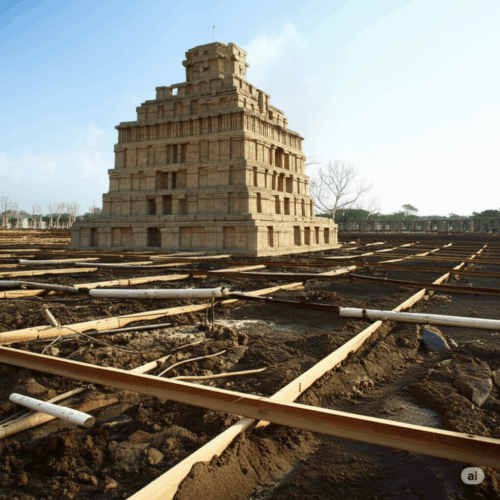


Imagine a land where mist-shrouded rivers wind through lush valleys, ancient pagodas pierce the sky, and kingdoms rise and fall like the tides of the mighty Irrawaddy. This is the story of Burma—now Myanmar—in the turbulent 16th century, a time of ceaseless warfare, ambitious kings, and shifting alliances that reshaped Southeast Asia. On January 22, 1555, the once-mighty Kingdom of Ava, a beacon of Burmese culture and power for nearly two centuries, crumbled under the onslaught of an unstoppable conqueror. This wasn't just the end of a dynasty; it was a seismic shift that unified a fractured land under one banner, creating the largest empire in Southeast Asian history. But how did a kingdom that traced its roots to the legendary Pagan Empire meet such a fate? And what can this epic tale teach us about turning adversity into advantage in our own lives? To truly grasp the significance of Ava's fall, we must journey back through the annals of Burmese history, unraveling the threads of ambition, betrayal, and innovation that led to that fateful day. The story begins not in 1555, but centuries earlier, with the grandeur of the Pagan Kingdom, which set the stage for Ava's rise and eventual demise.The Pagan Kingdom, founded in the 9th century, was a marvel of medieval Asia. Centered around the city of Pagan (modern-day Bagan), it sprawled across the Irrawaddy River basin, uniting diverse ethnic groups under a single Theravada Buddhist monarchy. King Anawrahta, who reigned from 1044 to 1077, is credited with establishing Pagan as a powerhouse. He conquered the Mon kingdom of Thaton in 1057, bringing back sacred Buddhist texts, artisans, and monks who infused Pagan with cultural and religious vibrancy. Under his rule and that of his successors, like Kyansittha (1084–1113) and Alaungsithu (1113–1167), the kingdom flourished. Thousands of temples and stupas dotted the landscape—over 10,000 were built, with more than 2,000 surviving today as a UNESCO World Heritage site. Pagan's economy thrived on agriculture, with sophisticated irrigation systems turning arid plains into fertile rice paddies. Trade routes connected it to India, China, and the Malay Archipelago, exchanging gems, teak, and rice for spices, silks, and ideas. Yet, even empires built on such solid foundations can crack. By the late 13th century, Pagan faced mounting pressures. Internal strife, including succession disputes and monastic corruption—monks amassed vast tax-free lands, draining royal coffers—weakened the center. Externally, the Mongol invasions under Kublai Khan proved devastating. In 1287, after refusing tribute, Pagan was sacked by Mongol forces. King Narathihapate fled, earning the ignominious title "Tarukpyemin" (he who fled from the Chinese). The kingdom fragmented into petty states, with Shan tribes from the north migrating southward, establishing their own principalities. This "Shan period" marked the end of Pagan's unity, setting the scene for a century of chaos. From this fragmentation emerged the Kingdom of Ava in 1364. Founded by Thado Minbya, a Burmese noble who unified the splintered realms of Myinsaing, Pinya, and Sagaing, Ava positioned itself as the spiritual and political heir to Pagan. Its capital, Inwa (also called Ava), was strategically located at the confluence of the Irrawaddy and Myitnge rivers, facilitating trade and defense. Thado Minbya, a descendant of Pagan royalty, ruled briefly until 1367, but his vision endured. Under kings like Swa Saw Ke (1367–1400), Ava became a center of learning and culture. Swa, an intellectual monarch, hosted scholarly councils blending Buddhist monks, Sinhalese envoys, and Brahmin advisors. The city was likened to Tavatimsa, the heavenly realm in Buddhist cosmology, with its gilded palaces and serene gardens. Ava's early years were defined by relentless efforts to reconquer lost territories. The kingdom waged wars against the Mon-dominated Hanthawaddy in the south, the Shan states in the north and east, and Arakan in the west. The Forty Years' War (1385–1424) with Hanthawaddy was particularly grueling. It began under King Razadarit of Hanthawaddy, who repelled multiple Avan invasions. In 1385, Ava's forces under Minkhaung I besieged Pegu (Hanthawaddy's capital), but clever tactics—like flooding fields to bog down elephants—thwarted them. The war dragged on, with sieges, naval battles on the Irrawaddy, and guerrilla raids. By 1424, a truce was signed, but both sides were exhausted, their economies strained and populations depleted.
The 15th century brought internal stability under kings like Mohnyin Thado (1426–1439), who ushered in the House of Mohnyin. Ava expanded northward, subduing Shan principalities through marriage alliances and military campaigns. Culture blossomed: Burmese literature shifted from Pali to vernacular Burmese, with poets like Shin Maha Rathathara composing epics and inscriptions. Ava's court patronized the arts, producing intricate lacquerware, murals depicting Jataka tales, and architectural wonders like the Maha Aungmye Bonzan Monastery. However, the seeds of decline were sown in the late 15th century. Rebellions erupted upon each new king's accession, as vassals tested loyalties. By the 1480s, the Prome Kingdom in the south broke away, followed by northern Shan states. The most critical blow came from the south: Toungoo (Taungoo), a small frontier town, declared independence in 1510 under Mingyi Nyo. Toungoo's location—shielded by the Bago Yoma mountains—made it a haven for refugees fleeing Ava's wars and Shan raids. Mingyi Nyo built a formidable army, blending Burmese tactics with Portuguese firearms introduced via coastal trade. The early 16th century saw Ava's fortunes plummet. Shan raids intensified, culminating in the devastating invasions of 1524–1527. Led by the Confederation of Shan States under Sawlon of Mohnyin, allied with Prome, the Shans sacked Ava in 1527. King Min Bin of Arakan watched from afar, but the assault was brutal: Ava's walls were breached, its treasures looted, and its king, Shwenankyawshin, killed. The Shans installed puppet rulers, like Thohanbwa (1527–1542), a Shan prince infamous for his tyranny—he reportedly sacrificed Burmese monks to nat spirits and desecrated temples. Under Shan rule, Ava became a shadow of itself, its Burmese population oppressed, its economy in ruins. Meanwhile, Toungoo rose like a phoenix. Mingyi Nyo's son, Tabinshwehti (1530–1550), was a military prodigy. Crowned at 14, he dreamed of reuniting Burma. In 1534, he launched campaigns against Hanthawaddy, exploiting its internal divisions. The Mon kingdom, weakened by the Forty Years' War, fell piecemeal. Tabinshwehti captured Martaban in 1538, then besieged Pegu in 1539. Using Portuguese mercenaries armed with matchlocks and cannons, he overwhelmed defenses. By 1541, Hanthawaddy was his, and he crowned himself king of all Burma at ancient Pagan in 1544, symbolically reclaiming Pagan's legacy. Tabinshwehti's ambitions extended further. He conquered Prome in 1542 and Bagan in 1544, inching toward Ava. But excess took its toll: addicted to alcohol, he was assassinated in 1550 by Mon rebels. His brother-in-law, Bayinnaung (1550–1581), ascended the throne. Bayinnaung, whose name means "King's Elder Brother," was a colossus of Burmese history. Born Ye Htut in 1516, he rose from humble origins as a betel-nut carrier to Tabinshwehti's trusted general. Charismatic, strategic, and ruthless, Bayinnaung embodied the warrior-king ideal.
Bayinnaung's reign began with quelling rebellions. He recaptured Pegu from Mon insurgents, then turned north to the Shan-occupied Ava. In 1554, he mobilized a massive army—tens of thousands of infantry, war elephants, cavalry, and riverine fleets. The campaign was methodical: first, securing the Irrawaddy corridor by taking Bagan and other outposts. The Shans, divided among confederate states like Mohnyin and Hsipaw, couldn't mount a unified defense. Bayinnaung exploited this, offering alliances to some while crushing others. The siege of Ava began in late 1554. Ava's fortifications, built on an island-like bend in the Irrawaddy, were formidable—high walls, moats, and watchtowers. The last king, Sithu Kyawhtin (a Shan ruler since 1551), rallied defenses, stocking granaries and arming levies. But Bayinnaung's forces encircled the city, cutting supply lines. They employed siege engines—catapults hurling boulders, fire arrows igniting thatched roofs—and psychological warfare, parading captured Shan chiefs to demoralize defenders. For months, the siege ground on. Starvation set in as the Irrawaddy's waters rose during monsoon, flooding approaches but also isolating Ava. Bayinnaung's engineers built floating bridges and rafts, launching amphibious assaults. Portuguese gunners bombarded walls, creating breaches. Inside, dissent brewed: Burmese elements in Ava, weary of Shan rule, secretly aided the besiegers. On January 22, 1555, after a final, ferocious assault, Toungoo forces stormed the gates. Sithu Kyawhtin was captured, and Ava fell. Bayinnaung entered triumphantly, sparing the city from total sack to legitimize his rule as Ava's liberator.
The fall marked the end of Ava as an independent kingdom. Bayinnaung incorporated it into his empire, appointing loyal governors. He continued conquests, subduing Shan states by 1557, Lan Na (Chiang Mai) in 1558, Manipur in 1560, and even Ayutthaya (Siam) in 1564 and 1569. His domain stretched from India to Laos, the largest in Southeast Asian history. Bayinnaung fostered unity through infrastructure—roads, canals—and cultural patronage, building the grand Kaunghmudaw Pagoda. Yet, his empire relied on his persona; after his death in 1581, rebellions fragmented it. Ava's legacy endured. It preserved Burmese identity amid chaos, influencing language, literature, and religion. The fall in 1555 wasn't mere defeat—it was transformation, paving the way for Toungoo's golden age.
Now, shifting from the mists of history to the clarity of today, what can the fall of Ava teach us? This event exemplifies how empires—and individuals—face inevitable challenges, but the response defines the legacy. Bayinnaung's triumph over Ava wasn't luck; it was the culmination of resilience, strategy, and adaptability. In our lives, we encounter "Ava moments"—times when structures we've built crumble under pressure. Perhaps a job loss, a relationship breakdown, or a health crisis. But like Bayinnaung rising from the ashes of Tabinshwehti's reign, we can rebuild stronger. Here's how this historical pivot can fuel your personal growth: - **Embrace Adaptability in Crisis**: Ava fell because it clung to outdated alliances and ignored rising threats like Toungoo. Today, rigidity can doom careers or goals. If your industry shifts (e.g., AI disrupting jobs), pivot by learning new skills. Specific action: Enroll in an online course on platforms like Coursera for emerging fields like data analytics, dedicating 5 hours weekly. - **Build Strategic Alliances**: Bayinnaung succeeded by forging ties with Portuguese mercenaries and local dissidents. In life, isolation leads to downfall. Network intentionally: Attend industry meetups monthly, or join LinkedIn groups to connect with mentors. Bullet point plan: Identify 3 professionals in your field, send personalized outreach emails, and follow up with coffee chats to discuss collaborations. - **Cultivate Resilience Through Preparation**: The siege tested endurance; Bayinnaung prepared with logistics and morale boosts. For personal "sieges" like financial hardship, build buffers. Start an emergency fund: Save 10% of each paycheck into a high-yield account, aiming for 3-6 months' expenses. Track progress weekly to stay motivated. - **Learn from Setbacks**: Ava's earlier defeats in the Forty Years' War weakened it, but Toungoo learned and innovated with firearms. Reflect on failures: Keep a journal logging "lessons learned" from each setback, reviewing it quarterly to adjust goals. - **Unify Your Inner Empire**: Just as Bayinnaung unified Burma, harmonize your life aspects—work, health, relationships. Create a weekly schedule balancing them: 30 minutes daily exercise, family dinners thrice weekly, and professional development reading. A comprehensive plan to apply this: Week 1: Research your "Ava"—identify a current challenge. Week 2: Study historical parallels (read about Bayinnaung). Week 3: Build alliances—network. Week 4: Implement adaptability—start a new skill. Monthly review: Assess progress, adjust. This isn't just history; it's your blueprint for conquest. Rise, like Bayinnaung, and turn falls into foundations for empire-building in your life!
Share: