
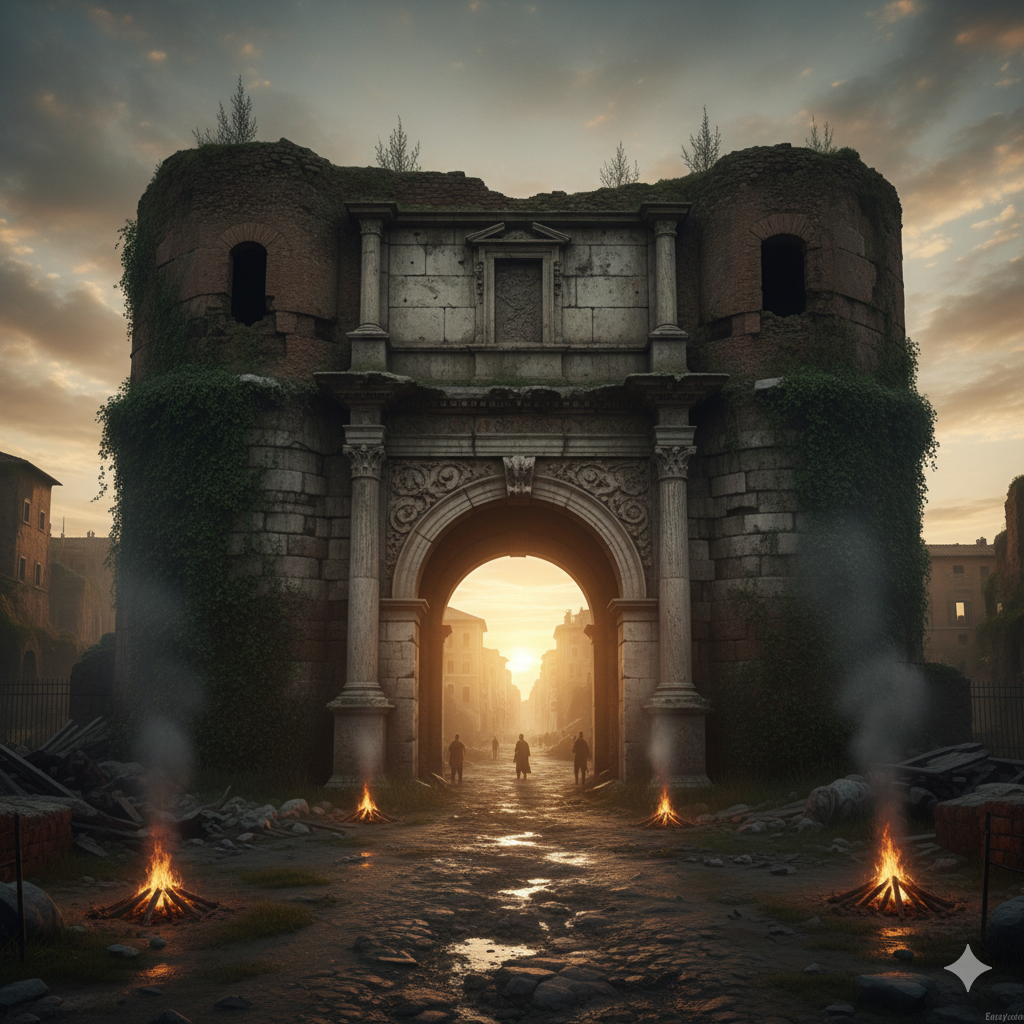
Part I: The Gilded Handcuffs of Avignon To understand the magnitude of what happened on January 17, 1377, we have to stop looking at history as a series of dry dates and start looking at it as a series of high-stakes human dramas. Imagine you are the CEO of the world’s most powerful, influential, and wealthy organization. Now imagine that for seventy years, your headquarters has been "temporarily" moved to a beautiful, sunny, safe location in a foreign country because your home office was too "stressful." This was the Papacy in the 14th century. Since 1309, the Popes—all of them French—had lived in Avignon. On the surface, Avignon was a dream. They built the Palais des Papes, the largest Gothic palace in Europe. They had the best wine, the best libraries, and the protection of the French King. It was the ultimate "comfort zone."But there was a rot underneath the gold. By staying in Avignon, the Papacy was losing its soul. It was becoming a puppet of the French crown. The rest of the world looked at the "Holy See" and saw a "Captivity." The Romans were furious, the Italians were in revolt, and the spiritual authority of the office was evaporating. This is the "Avignon Trap." In our modern lives, Avignon is that job that pays well but kills your spirit. It’s the relationship that is "fine" but prevents you from growing. It is any situation where you have traded your Identity for Security. Part II: The Reluctant Hero — Gregory XI Enter Pierre Roger de Beaufort, known to history as Pope Gregory XI. He wasn’t a rugged warrior. He was a scholarly, somewhat frail man who suffered from various ailments. He was a "company man" who had spent his life in the comforts of the French ecclesiastical system. However, Gregory had something that his predecessors lacked: a nagging, painful awareness of the Gap. The Gap is the space between who you are and where you live. He knew that as long as he stayed in France, he was a pretender. He was a Pope in exile, a leader without a foundation.
Then came the catalyst: Catherine of Siena. This 20-something mystic from Italy began writing him letters that would make a modern "hustle culture" influencer blush. She didn't mince words. She told him he was acting like a coward. She told him that if he didn't return to Rome, he should resign. She essentially acted as his "external conscience," forcing him to look at the ruins of Rome and the decadence of Avignon. Part III: The Logistics of a Miracle Gregory decided to move in 1370, but it took six years to actually make it happen. Why? Because the "Status Quo" has a massive defense mechanism.
-
The Political Hostages: The French King, Charles V, sent his own brother to intercept Gregory and plead with him to stay. They used every emotional manipulation in the book: "Think of your health," "Think of your family," "Think of the danger."
-
The Financial Drain: Moving a 14th-century government across the sea was like moving a Fortune 500 company. He had to hire a fleet of galleys, pay thousands of mercenaries for protection, and liquidate assets to fund the journey.
-
The Internal Mutiny: Gregory’s own Cardinals—his board of directors—hated the idea. Most were French. They staged "slow-downs," they "forgot" to pack essential records, and they openly wept as they left Avignon, hoping Gregory would see their sadness and turn around.

Gregory didn't turn around. On September 13, 1376, he left Avignon. The journey was a catastrophe. There were shipwrecks, outbreaks of sickness, and constant threats from pirates. But Gregory understood a fundamental truth: The difficulty of the journey is proof of the importance of the destination. Part IV: January 17, 1377 — The Point of No Return Finally, on this day, January 17, Gregory XI entered the gates of Rome. He didn't find a shining city. He found a city of ruins. The population was barely 30,000 (down from over a million in ancient times). Pigs were literally wandering through the streets of the Roman Forum.But it didn't matter. The moment he stepped off his horse and entered the city, the "Captivity" was over. He had re-anchored the institution to its source. He had reclaimed the narrative. Part V: The Application — Your Life is Your "Rome" Now, how do we take this massive historical event and use it to change your life today? Most people spend their lives in a "Captivity" of their own making. We stay in Avignon because it’s easier than navigating the storms on the way to Rome. Here is how you benefit from Gregory XI’s bravery by applying it to your individual life with surgical precision.
-
The "Avignon Audit"
You cannot leave a place until you admit you are stuck there. You need to identify the areas of your life where you are "comfortable but compromised."
-
The Career Avignon: You are good at what you do, but you hate what it does to you.
-
The Digital Avignon: You spend hours in a "scroll-hole" because it feels safe, but your real-world ambitions are rotting.
-
The Social Avignon: You hang out with people who make you feel "safe" but never challenge you to be more.
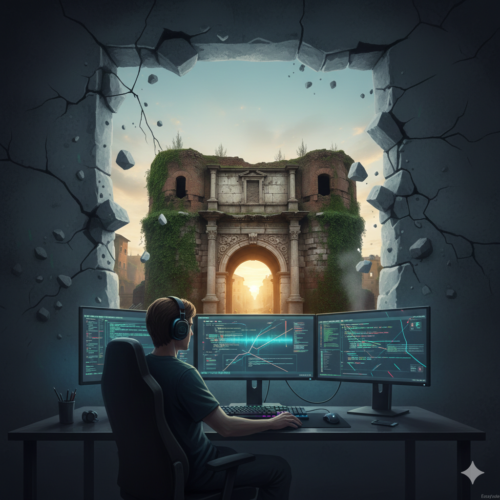
The Plan: Take a piece of paper. Draw a line down the middle. On the left, write "Avignon" (Where I am safe/comfortable). On the right, write "Rome" (Where I belong/What I am meant to do). Be brutally honest. If "Rome" is starting that YouTube channel you've been researching, or launching that VPS-based project, write it down.
-
Recruiting Your "Catherine of Siena"
Gregory XI wouldn't have made it without someone yelling at him. You need an external force that refuses to let you settle.
-
Actionable Step: Find a mentor, a coach, or a very blunt friend. Tell them your "Rome" goal and give them permission to "troll" you when you start making excuses.
-
The "Marseille Departure" Protocol
Gregory didn't just "wish" he was in Rome; he sold his stuff and got on a boat. You need a physical act of departure.
-
The Sacrifice: What are you willing to give up to get to your Rome? To build your digital empire, are you willing to give up your Friday nights? To master ACE Studio or Suno, are you willing to spend the money on the subscription instead of a new pair of shoes?
-
The Non-Negotiable Start Date: Gregory picked a date. You need a date. Not "someday." Not "when things settle down." Pick a date in the next 30 days that is your "Departure."
-
Navigating the "Stormy Sea" Phase
The space between deciding to change and actually seeing the results is the most dangerous part. This is where most people quit.
-
The "Sink the Ships" Mentality: When Gregory’s Cardinals begged him to turn back during the storms, he kept his eyes on the horizon.
-
Daily Micro-Victories: When the big goal feels too far away, focus on the "next mile" of the sea. If your goal is a 3,000-word blog or a complex video production, focus on the next paragraph or the next 10 seconds of footage.
-
Rebuilding the Ruins
When you finally reach your goal, don't expect it to look like a finished palace. It will look like a construction site.
-
Actionable Step: Once you "arrive" at your new career or project, give yourself grace for the mess. Gregory XI didn't fix Rome in a day; he just showed up. Your job is to show up and start laying bricks.
Your Sovereign Plan: The 90-Day "Homecoming" Strategy

This isn't just a "motivational thought." This is a plan of action based on the logistics of 1377.
-
Weeks 1-2: Identifying the Captivity. Use your digital history. Look at your searches. What are you actually interested in versus what you say you are interested in? If you're searching for "how to leave my job" or "how to start a creative business," that’s your soul crying out for Rome.
-
Weeks 3-4: The Resource Gather. Gregory had to fund his trip. You need to fund your dream. Audit your time and money. Cut one "Avignon luxury" (a streaming service you don't watch, eating out three times a week) and reallocate that money to your "Rome Project" tools.
-
Weeks 5-8: The Departure. This is the "Messy Middle." This is where you actually start the work. If you're building a new platform, this is the coding phase. If you're a creator, this is the "bad first drafts" phase. Embrace the storm.
-
Weeks 9-12: The Entry. By Day 90, you must have something tangible to show. A launched site, a finished video, a new routine that is now a habit. You are now a resident of Rome.
The Conclusion: History is a Mirror

Gregory XI died shortly after his return, but his legacy was secured. The Papacy never returned to Avignon. He broke a cycle that had lasted nearly a century.

You have the power to break your own cycles today. The "Captivity" of your potential ends the moment you decide that the risk of the journey is less than the cost of staying still.

You’ve been doing the research. You’ve been looking at the tools. You’ve been watching the tutorials. Now, it’s time to stop being a "Pope in Avignon" and start being the Architect of your own Rome.
Share: