
Imagine a kingdom teetering on the edge of chaos, where a single man's death unravels centuries of royal bloodline, sparking wars, shifting alliances, and reshaping the map of Europe. On January 14, 1301, in the shadowy halls of Buda Castle, Andrew III of Hungary drew his last breath, marking the extinction of the Árpád dynasty—a lineage that had ruled Hungary for over 300 years. This wasn't just the passing of a king; it was the dramatic finale to a saga of intrigue, rebellion, and fragile power. Known as "Andrew the Venetian" for his exotic upbringing in the canals of Venice, his story is a whirlwind of bastardy claims, daring escapes, and relentless battles against oligarchs who treated the kingdom like their personal chessboard. It's a tale that reads like a medieval thriller, full of twists that could rival any modern epic fantasy. But beyond the drama, Andrew's life and death offer profound insights into leadership, legacy, and adaptation—lessons that, when applied today, can transform how you navigate your own life's uncertainties.To truly appreciate the seismic impact of that fateful day in 1301, we must journey back to the roots of the Árpád dynasty and trace Andrew's improbable rise. The Árpáds weren't just rulers; they were the architects of Hungary's identity. Founded by Grand Prince Árpád in the late 9th century, the dynasty transformed nomadic Magyar tribes into a formidable Christian kingdom. Árpád's descendants, like Saint Stephen I—who was crowned the first King of Hungary in 1000 AD—cemented Hungary's place in Europe through strategic marriages, military conquests, and alliances with the Holy Roman Empire and the papacy. By the 13th century, the Árpáds had expanded their realm to include Croatia, Slavonia, and parts of what are now Romania and Slovakia. They weathered Mongol invasions in 1241-1242, which devastated the land but showcased their resilience. King Béla IV rebuilt the kingdom with stone fortresses and invited settlers from Germany and elsewhere to repopulate and fortify the borders. Yet, as dynasties often do, the Árpáds began to fray at the edges. Internal feuds, childless rulers, and the rise of powerful noble families eroded central authority. Enter Andrew III, born around 1265 in Venice, a city-state far removed from the rugged plains of Hungary. His father, Stephen the Posthumous, was himself a figure of controversy. Stephen was the son of King Andrew II of Hungary and his third wife, Beatrice d'Este, an Italian noblewoman. Andrew II, a crusader king known for his lavish spending and the issuance of the Golden Bull of 1222—a charter limiting royal power and granting nobles rights akin to England's Magna Carta—died in 1235. Stephen was born posthumously, hence his nickname. But Andrew II's elder sons, Béla IV and Coloman, accused Beatrice of adultery, branding Stephen a bastard and forcing her to flee to Italy with her infant son. Stephen grew up in exile, styling himself Duke of Slavonia, and married Tomasina Morosini, a member of Venice's influential Morosini family. Tomasina's brother, Albertino Morosini, would later become a key guardian for young Andrew. Andrew's early life in Venice was steeped in the opulence and intrigue of the Republic. Venice in the 13th century was a maritime powerhouse, its doges and merchants controlling trade routes from the Mediterranean to the Black Sea. Andrew, orphaned young after Stephen's death in 1271 or 1272, was raised under the watchful eyes of his mother Tomasina and uncle Albertino. He learned the arts of diplomacy, commerce, and perhaps even the subtle machinations of Venetian politics—skills that would serve him well in Hungary's turbulent court. But Hungary was a distant dream until 1278, when a rebellious Hungarian baron, Ivan Kőszegi, invited the teenage Andrew to claim his birthright. Kőszegi, part of a powerful oligarchic family controlling vast southwestern estates, saw Andrew as a pawn to challenge King Ladislaus IV, known as Ladislaus the Cuman for his ties to the nomadic Cumans who had settled in Hungary after fleeing the Mongols. Andrew's first foray into Hungary was a flop. He marched to Lake Balaton, proclaiming himself Duke of Slavonia, Dalmatia, and Croatia, but achieved little and slunk back to Venice. The kingdom under Ladislaus IV was in disarray: the king favored his Cuman allies, alienating the nobility and clergy. Excommunicated by the pope for his "pagan" leanings, Ladislaus faced constant revolts. In 1290, Archbishop Lodomer of Esztergom, a staunch defender of church privileges, secretly urged Andrew to return. But intrigue struck again—Andrew was captured by Arnold Hahót, a loyalist, and imprisoned in Vienna by Duke Albert I of Austria, who eyed Hungarian territories.
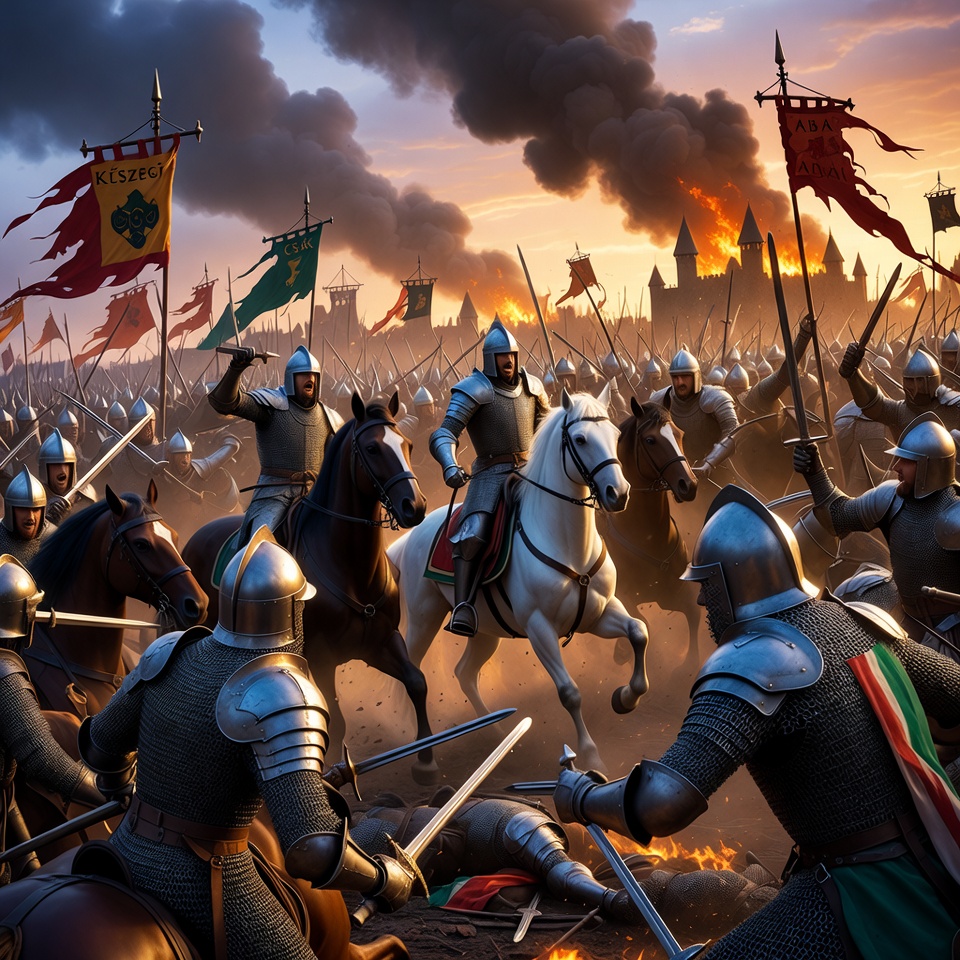
Fate intervened dramatically on July 10, 1290, when Ladislaus IV was assassinated by his Cuman bodyguards in a plot possibly orchestrated by nobles. With no direct heir—Ladislaus's sister Elizabeth was a nun, and his marriage to Isabella of Anjou was childless—the throne was vacant. Archbishop Lodomer dispatched monks disguised as commoners to free Andrew from Vienna. In a cloak-and-dagger escape worthy of a spy novel, Andrew fled to Hungary. He arrived in Székesfehérvár, the traditional coronation site, and was crowned King Andrew III on July 23, 1290. Lodomer performed the rite, issuing the first-ever coronation diploma, a document confirming the new king's oath to uphold noble and clerical privileges. Nobles swore fealty, and Andrew promised peace and justice. Andrew's reign, lasting just over a decade, was a masterclass in survival amid anarchy. Hungary in 1290 was fragmented into semi-independent provinces ruled by oligarchs—families like the Kőszegis, Csáks, Abas, and Borsas—who built unauthorized castles, minted their own coins, and waged private wars. Andrew appointed key figures to high offices: Amadeus Aba as palatine (chief administrator), Ivan Kőszegi as master of the treasury, and Roland Borsa as voivode (governor) of Transylvania. A national diet (assembly) convened before September 1, 1290, ordering the demolition of illegal fortresses and the return of seized estates. Andrew pledged annual diets to consult the nobles, a nod to the Golden Bull's spirit. But pretenders swarmed like vultures. First, Holy Roman Emperor Rudolf I claimed Hungary as a lapsed fief, granting it to his son Albert of Austria on August 31, 1290. Andrew invaded Austria, capturing border fortresses like Pressburg (modern Bratislava) and Sopron. The Peace of Hainburg in August 1291 forced Albert to withdraw and demolish the forts. Meanwhile, a bizarre impostor emerged from Poland, claiming to be Ladislaus IV's long-dead brother Andrew, Duke of Slavonia. Backed by Polish Duke Władysław the Elbow-high, this faker invaded but was repelled and murdered. The most persistent threat came from the Angevin line. Ladislaus IV's sister Mary, Queen of Naples, claimed the throne for her son Charles Martel. The Angevins, descendants of Charles I of Anjou, had papal backing and ties to Croatia and Slavonia. In 1292, the Kőszegis rebelled, acknowledging Charles Martel and even capturing Andrew, holding him for four months until hostages secured his release. Andrew married Fenenna of Kuyavia, a Polish princess, around late 1290, hoping for alliances. Their daughter Elizabeth, born in 1291 or 1292, would later become a Dominican nun and be venerated as Blessed Elizabeth of Töss. From 1293, Andrew's mother Tomasina administered Croatia, Dalmatia, and Slavonia, winning over families like the Babonići and Šubići. Dalmatian towns recognized Andrew's rule. But rebellions persisted. In 1294, Roland Borsa besieged a castle, leading Andrew to outlaw him and siege Borsa's stronghold at Adrian for three months. Ladislaus III Kán replaced Borsa as Transylvanian voivode. In 1295, Croatian lord Paul Šubić rebelled for Charles Martel, who died that August, passing the claim to his son Charles Robert. Andrew remarried in 1296 to Agnes of Austria, Albert's daughter, sealing a Viennese alliance. The Kőszegis rebelled again, earning excommunication from Archbishop Lodomer. By 1297, Palatine Matthew III Csák turned against Andrew. Lodomer died that year, a blow to royal support. Andrew aided Albert against German King Adolf of Nassau, contributing to Albert's victory at the Battle of Göllheim in July 1298.
In 1298, a diet in Pest lambasted Andrew's "laxity" in curbing oligarchs, authorizing castle destructions and penalties. Andrew allied with loyal nobles like the Abas, Ákos, Rátóts, Balassas, and Paul Szécs against the church hierarchy. He deprived the new archbishop, Gregory Bicskei, of estates for boycotting a 1299 diet. By 1300, Croatian lords invited 12-year-old Charles Robert from Naples; he landed in Split in August, gaining support from most but not all towns. The Kőszegis and Csáks temporarily reconciled with Andrew, and Pope Boniface VIII withheld full endorsement of Charles. Andrew's health deteriorated amid the stress. Rumors of poisoning swirled, though historians like Attila Zsoldos and Gyula Kristó deem them unproven. Planning to capture Charles Robert, Andrew instead succumbed on January 14, 1301, aged about 35-36. He was buried in Buda's Greyfriars' Church. Palatine Stephen Ákos eulogized him as the "last golden branch" of Saint Stephen's family tree. The consequences were cataclysmic. Andrew's death extinguished the Árpád male line, plunging Hungary into a seven-year interregnum of civil war. Claimants included Charles Robert (Angevin), Wenceslaus III of Bohemia (betrothed briefly to Elizabeth), and Otto of Bavaria. Battles raged; oligarchs like the Kőszegis, Abas, and Csáks carved out autonomous "provinces." Charles Robert emerged victorious by 1308-1309, but pacifying the realm took until the 1320s. He centralized power, reformed the economy with gold mines, and established the Angevin dynasty, which lasted until 1387.
Long-term, Andrew's end shifted Hungary's trajectory. The elective monarchy weakened, inviting foreign influence—Angevins from Italy, later Habsburgs from Austria. It influenced Central Europe's balance, amid papal-Angevin ties and Ottoman threats looming. Hungary's golden age under Matthias Corvinus in the 15th century built on Charles Robert's foundations, but the Árpáds' extinction marked the end of native Magyar royal purity, fostering a multicultural monarchy. Andrew's story isn't just dusty history—it's a blueprint for personal triumph. His reign teaches that even in chaos, strategic alliances and persistence can turn the tide. Applying this to your life: the outcome of his death highlights the fragility of legacies without preparation, but also the power of adaptation.
By embracing Andrew's lessons, you can build a resilient personal "dynasty"—your career, relationships, and impact—that withstands life's upheavals. Here's how it benefits you today: - **Secure Your Succession**: Andrew's lack of a male heir led to chaos; in your life, this means planning for the future. Identify mentors or successors in your professional role to ensure your projects endure beyond you. - **Forge Alliances Wisely**: Like Andrew's marriages and pacts, cultivate networks that support your goals. Join professional groups or build family bonds to create a safety net against isolation. - **Embrace Resilience Amid Rebellion**: Oligarchs constantly challenged him; view your setbacks as opportunities to strengthen. If a job loss "rebels" against your plans, pivot to new skills, turning adversity into growth. - **Honor Your Roots While Adapting**: Andrew's Venetian upbringing blended with Hungarian duties; celebrate your unique background while adapting to new environments, like relocating for a dream opportunity. - **Prioritize Health in High-Stress Times**: His early death amid turmoil reminds us to manage stress—incorporate daily exercise or mindfulness to sustain long-term vitality. To apply this historically inspired wisdom, follow this step-by-step plan for building your enduring legacy:
-
**Reflect on Your "Dynasty"**: Spend 30 minutes journaling about your current life "realm"—career, family, hobbies. What achievements define you? What vulnerabilities, like Andrew's health, need addressing?
-
**Plan for Continuity**: Create a "succession document." Outline who could take over your responsibilities at work or home. Share it with trusted allies, updating it quarterly.
-
**Build Strategic Alliances**: This week, reach out to three people—one mentor, one peer, one newcomer—and propose collaborative goals, like a joint project or mutual support system.
-
**Fortify Against Chaos**: Identify potential "oligarchs" in your life—stressors or distractions. Develop countermeasures, such as a weekly routine for self-care or skill-building courses.
-
**Adapt and Innovate**: Inspired by Andrew's escapes and treaties, tackle one change this month. If facing a career shift, research new fields and take a small step, like an online course.
-
**Celebrate Milestones**: Annually review progress, honoring your "golden branches"—successes big and small—with a personal ritual, like a reflective dinner.
-
**Sustain Momentum**: Revisit this plan monthly, adjusting as life evolves, ensuring your legacy thrives like Hungary's post-Árpád resilience.
Andrew III's death on that cold January day wasn't an end—it was a catalyst for reinvention. Let his story ignite your own, turning historical echoes into modern motivation. Your kingdom awaits.
Share: