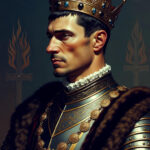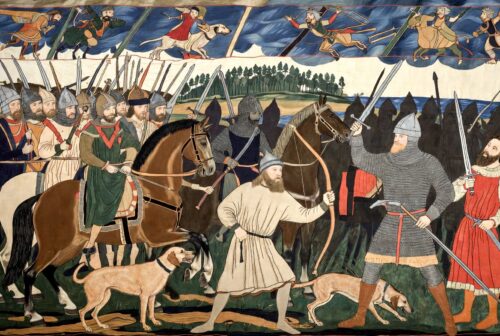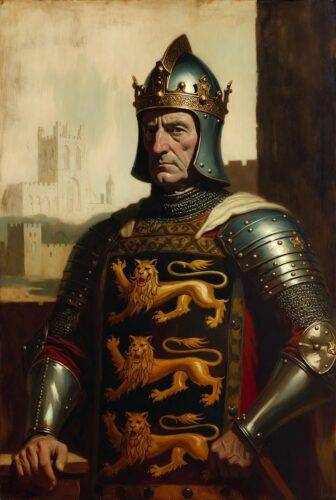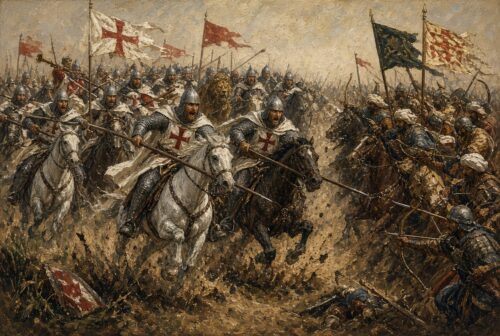

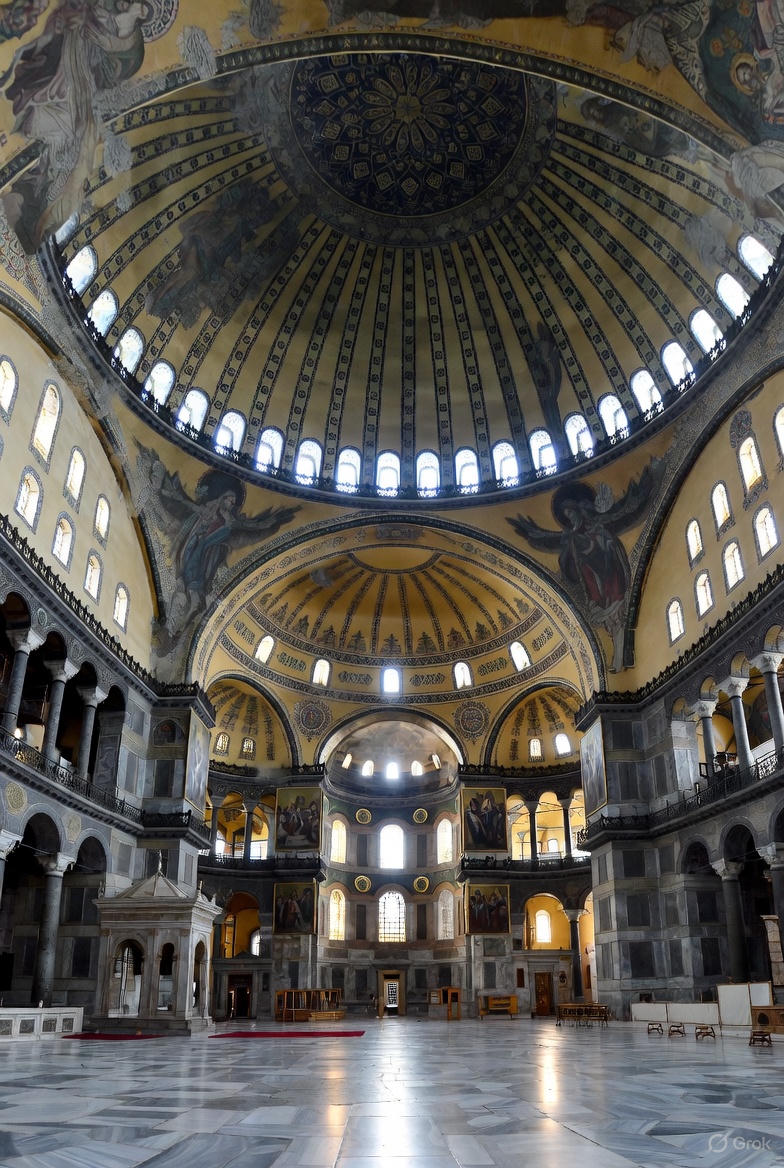
Imagine a world where empires crumble not with a bang, but with the quiet anointing of a crown in a remote hilltop palace. On January 6, 1449, in the fortified town of Mystras overlooking the Spartan plains, a man named Constantine Palaiologos was proclaimed emperor of what remained of the Byzantine Empire. This wasn't the glittering ceremony of ancient Rome or the opulent rituals of Constantinople's Hagia Sophia. It was a subdued, almost defiant act in a dying realm, marking the beginning of the end for over a millennium of Roman legacy. Yet, this moment—steeped in political intrigue, religious tension, and impending catastrophe—captures the essence of human tenacity against overwhelming odds. In this blog, we'll dive deep into the historical whirlwind surrounding Constantine XI's coronation, exploring the Byzantine Empire's twilight years with all the drama of a medieval epic. We'll uncover the empire's fractured past, Constantine's adventurous life as a warrior-prince, the details of that fateful January day, his turbulent reign, and the cataclysmic fall of Constantinople just four years later. Along the way, expect tales of sieges, betrayals, diplomatic gambles, and heroic last stands that make history feel like a blockbuster thriller. And finally, we'll bridge the centuries to see how this ancient emperor's story can supercharge your daily life with practical, motivational wisdom.To set the stage, let's rewind to the Byzantine Empire's glory days and trace its agonizing decline. The empire, often called the Eastern Roman Empire, traced its roots back to 330 AD when Emperor Constantine the Great (the first Constantine) founded Constantinople as the "New Rome" on the site of ancient Byzantium. For centuries, it was a powerhouse: a melting pot of Greek, Roman, and Eastern cultures, defending Europe from invasions while preserving classical knowledge through its libraries and scholars. At its peak under Justinian I in the 6th century, it spanned from Spain to Syria, boasting architectural marvels like the Hagia Sophia and a sophisticated bureaucracy that outlasted the Western Roman Empire's fall in 476 AD. But cracks appeared early. The Arab conquests of the 7th century stripped away Egypt, Syria, and North Africa. Then came the Seljuk Turks in the 11th century, who crushed Byzantine forces at the Battle of Manzikert in 1071, opening Anatolia to Turkish settlement. The empire's death knell sounded during the Fourth Crusade in 1204, when Western Christian knights—meant to fight Muslims in the Holy Land—sacked Constantinople instead, splintering the empire into Latin-controlled states and Byzantine successor realms like the Empire of Nicaea, the Despotate of Epirus, and the Empire of Trebizond. The Palaiologos dynasty clawed back Constantinople in 1261 under Michael VIII Palaiologos, but the restored empire was a pale shadow: plagued by civil wars, economic ruin from Venetian and Genoese trade monopolies, and constant Ottoman pressure. The Ottomans, rising from a small Anatolian beylik in the late 13th century, expanded rapidly under leaders like Osman I and Orhan. By the 14th century, they controlled much of the Balkans, reducing Byzantium to vassal status. Emperors like Manuel II Palaiologos—Constantine XI's father—traveled hat-in-hand to Western Europe begging for aid, but religious schisms (the Great Schism of 1054 split Christianity into Orthodox East and Catholic West) made alliances tricky. Manuel's reign (1391–1425) saw desperate measures, including pawning the Byzantine crown jewels to Venice and enduring a humiliating blockade of Constantinople by Sultan Bayezid I from 1394 to 1402, only lifted by Timur's Mongol invasion at the Battle of Ankara. Into this maelstrom was born Constantine Palaiologos on February 8, 1405 (some sources say 1404), in Constantinople. He was the eighth of ten children and the fourth son of Manuel II and Helena Dragaš, a Serbian princess whose lineage tied the family to Balkan nobility. Helena, daughter of the Serbian lord Konstantin Dejanović, brought a touch of Slavic resilience to the court, while Manuel's side connected to the Kantakouzenos family through his mother. Constantine was a *porphyrogennetos*—born in the purple chamber of the imperial palace, signifying legitimate birth during a reigning emperor's term. His early years were overshadowed by the Ottoman siege of 1422, when he was just 17. Sultan Murad II besieged Constantinople with 10,000 troops, but the city's massive Theodosian Walls—triple-layered fortifications stretching 6.5 kilometers—held firm, thanks in part to young Constantine's involvement in the defense. This experience forged him into a soldier: contemporaries like the historian George Sphrantzes described him as brave, skilled in horsemanship, hunting, and martial arts, more at home on the battlefield than in diplomatic salons.
By the 1420s, Constantine emerged as a key player. In 1423–1424, he served as regent in Constantinople while his brother John VIII traveled to Hungary and Italy seeking aid. He negotiated a peace with Murad II, securing a fragile truce. For his efforts, Manuel granted him a small appanage along the Black Sea coast, including towns like Mesembria and Selymbria. But Constantine's real stage was the Morea (modern Peloponnese), a semi-autonomous despotate that became Byzantium's last vibrant stronghold. In 1427, he joined John VIII in a campaign against Carlo I Tocco, the Frankish ruler of Epirus who threatened Byzantine holdings. They sailed to the Morea, capturing Glarentza (modern Killini) after the naval Battle of the Echinades on December 26, 1427. Tocco surrendered, ceding territories and offering his niece Theodora Tocco in marriage to Constantine, with Glarentza as her dowry. The wedding on July 1, 1428, was a strategic union, blending Latin and Byzantine bloodlines. Proclaimed Despot of the Morea on May 1, 1428, Constantine co-ruled with brothers Theodore II and Thomas. The despotate was a patchwork of principalities, but Constantine's ambition shone. Based in Glarentza, he expanded his domain to include Aigio, parts of Laconia, Kalamata, and Messenia. His boldest move came in 1429–1430: besieging Patras, a city under papal control since 1205. Starting the siege on March 20, 1429, he faced resistance from Archbishop Pandolfo Malatesta. When Malatesta fled to Italy for reinforcements that never came, Patras surrendered on June 4, 1430, ending 225 years of foreign rule. Constantine installed Sphrantzes as governor, but the conquest irked the Pope, Venice, and Ottomans. He dispatched envoys, including Sphrantzes to Ottoman governor Turahan Bey in Thessaly, to placate them. Meanwhile, Catalan pirates seized Glarentza, forcing Constantine to ransom it for 6,000 ducats and later demolish its walls to prevent further misuse.
Tragedy struck personally: Theodora died in November 1429 during childbirth, buried initially at Glarentza and later reinterred at Mystras. Undeterred, Constantine pressed on. By the early 1430s, Byzantine control extended over most of the Peloponnese, bolstered by Thomas's marriage to Catherine Zaccaria in 1432, which absorbed the remaining Principality of Achaea. But Ottoman raids persisted; in 1431, Murad II demolished the Hexamilion wall, a 6-kilometer fortification across the Isthmus of Corinth built by Manuel II. Constantine swapped territories with Thomas in 1432, taking Kalavryta for Elis. Succession tensions flared with Theodore, who eyed the imperial throne, but Patriarch Joseph II mediated a reconciliation in 1436. Constantine returned to Constantinople as regent in 1437–1440 while John VIII attended the Council of Ferrara-Florence, a desperate bid to unite Orthodox and Catholic churches for Western military aid against the Ottomans. The council, starting in Ferrara in 1438 and moving to Florence due to plague, culminated in the Union of Florence on July 6, 1439, where John VIII acknowledged papal supremacy in exchange for promises of a crusade. Constantine supported the union, seeing it as pragmatic, but it ignited backlash in Byzantium—many viewed it as heresy, fearing Ottoman retribution. Upon John's return in February 1440, riots erupted, with anti-unionists like Mark of Ephesus leading opposition. Amid this, Constantine remarried in August 1441 to Caterina Gattilusio, daughter of the Genoese lord of Lesbos, Dorino I. Arranged by Sphrantzes, the marriage aimed to secure alliances, but Caterina died in childbirth in August 1442 during an Ottoman blockade of Lemnos. That year, brother Demetrios rebelled against the union, allying with Ottomans to besiege Constantinople. Constantine, rushing from the Morea, was trapped at Lemnos until November but helped repel the attack. Demetrios was briefly imprisoned. In 1443, Theodore abdicated the Morea to Constantine, who now co-ruled with Thomas. Constantine made Mystras his capital, a Renaissance-like center of learning under philosopher George Gemistus Plethon. He rebuilt the Hexamilion by March 1444, levying heavy taxes and labor, quelling a rebellion. Inspired by the Crusade of Varna (1443–1444), he invaded the Duchy of Athens in summer 1444, capturing Athens and Thebes; Duke Nerio II Acciaioli became his tributary. With 300 Burgundian knights from Duke Philip the Good, he raided central Greece and Thessaly, even renaming a town Kantakouzinopolis after his grandmother's family. But Ottoman backlash was swift. In 1446, Murad II invaded with 50,000–60,000 troops, bombarding the Hexamilion with cannons—a new terror in warfare—on December 10. Constantine and Thomas's 20,000 defenders crumbled; the brothers fled as the Peloponnese was ravaged. Forced to pay tribute and dismantle the wall, Constantine licked his wounds, hosting games and granting privileges to landowners to rebuild morale. The turning point came on October 31, 1448: John VIII died childless. Constantine, popular and militarily proven, was Helena's choice as heir. Demetrios contested, but Sphrantzes secured Murad II's approval on December 6, 1448. Envoys proclaimed Constantine emperor at Mystras on January 6, 1449—Epiphany in the Orthodox calendar, adding symbolic weight. The ceremony was modest, likely in the Despot's Palace or a local church like the Metropolis Cathedral, overseen by the bishop of Lacedaemon. No elaborate crowning occurred; Constantine may have donned a *pilos* (imperial hat) amid acclamations as "true Emperor and Autocrat of the Romans." This bypassed a full patriarchal coronation in Hagia Sophia to avoid anti-union riots—Patriarch Gregory III Mammas supported the Florence union, which could spark unrest. Precedents existed, like Manuel I's field coronation in 1143. Constantine issued a chrysobull (golden-sealed decree) in February 1449 affirming his title. He sailed to Constantinople on a Catalan ship, arriving March 12, 1449, to a city of 50,000 souls, encircled by Ottoman lands.
His reign (1449–1453) was a frantic scramble for survival. Childless and twice widowed, he sought a third wife: envoys proposed matches to Portugal's Isabella or Aragon's Beatrice, but none materialized. Sphrantzes scouted Trebizond and Georgia, suggesting Murad's widow Mara Branković (who declined) or a Georgian princess (delayed). Helena died in March 1450; her funeral orations by Plethon and Gennadios Scholarios praised her as a modern Penelope. Constantine navigated court factions: megas domestikos Andronikos Kantakouzenos opposed Eastern marriages; megas doux Loukas Notaras trusted the walls; Sphrantzes urged caution. Religiously, Constantine enforced the union, commemorating the pope in liturgies, but anti-unionists rioted. Diplomatically, he renewed truces with Murad in February 1449. When Murad died in 1451, Constantine congratulated Mehmed II but tested him by demanding higher payments for hostage Orhan Çelebi, provoking Mehmed's fury: "You stupid Greeks... you will lose what little you have." Mehmed built Rumelihisarı fortress in 1452, strangling Constantinople's supply lines. Constantine declared war briefly, executing Turkish prisoners, but backed down. Preparations intensified: walls repaired under engineer Manuel Iagros; taxes raised; alliances sought with Venice (hesitant due to their Ottoman treaty), Genoa's Chios colony, Ragusa, Hungary's John Hunyadi (promising border towns), and Pope Nicholas V (sending legate Isidore of Kiev with 200 Neapolitan archers in October 1452). A union liturgy in Hagia Sophia on December 12, 1452, unified some, but Notaras quipped, "Better the Turkish turban than the Latin mitre." The siege began April 6, 1453. Mehmed's 80,000 troops, including 5,000 elite janissaries and Hungarian engineer Urban's massive cannons (one firing 600-pound stones), faced Constantine's 7,000–8,000 defenders: 5,000 Greeks (many untrained militia), plus Venetian, Genoese, and Catalan volunteers. Giovanni Giustiniani Longo commanded the land walls with 700 Genoese. Bombardment shattered sections; on April 23, Mehmed dragged 70 ships overland into the Golden Horn, bypassing the harbor chain. Food shortages forced melting church silver. Constantine refused surrender, telling Mehmed: "To surrender the city is beyond my authority... we have decided to die." In a May 28 speech to troops, he evoked Rome's legacy: "Remember your ancestors... fight for faith, country, family." The final assault hit May 29 at 1:30 AM. Waves of bashi-bazouks, Anatolian regulars, then janissaries breached near St. Romanus Gate after a Kerkoporta postern was left ajar. Giustiniani, wounded, withdrew; defenders panicked. Constantine, stripping imperial regalia, charged with sword in hand: "The city is fallen and I am still alive!" He vanished in the melee—likely slain by a janissary, body unidentified, head possibly paraded as a trophy. The city fell; 4,000 died, 30,000 enslaved. Mehmed entered, sparing Hagia Sophia but converting it to a mosque. Constantine's death ended 1,482 years of Roman emperors since Augustus. His legacy? A martyr-hero in Greek folklore as the "Marble Emperor," petrified awaiting resurrection to reclaim Constantinople. Historians like Steven Runciman (1965) paint him as tragic; Donald Nicol (1992) as competent but doomed; Marios Philippides (2019) as flawed. Statues in Athens and Mystras honor him; his story inspired Greek independence in 1821.
Shifting from history's grand canvas to your personal one, Constantine XI's tale isn't just ancient drama—it's a blueprint for thriving amid modern chaos. Whether facing career setbacks, personal crises, or global uncertainties, his life teaches resilience, strategic boldness, and unyielding purpose. Here's how to apply it specifically to your life: - **Embrace Adaptability in Uncertainty**: Constantine pivoted from Morean conqueror to besieged emperor, rebuilding walls and alliances on the fly. In your life, when plans derail—like a job loss—assess resources immediately. Bullet-point your skills, network, and alternatives, then act: Update your resume within 24 hours, reach out to three contacts daily, and explore freelance gigs to bridge gaps. - **Cultivate Courage Through Small Victories**: His Patras siege succeeded via persistence, not overwhelming force. Build your bravery by tackling micro-challenges: If public speaking terrifies you, start with a 1-minute video daily, escalating to group presentations. Track progress in a journal to mimic his campaign logs. - **Forge Alliances Wisely**: Constantine's diplomatic outreaches, though flawed, highlight relationship power. In daily life, nurture your "court"—family, friends, mentors. Schedule weekly check-ins, offer help first (e.g., share a useful article), and diversify: Join one new professional group monthly to expand your support net like his Western appeals. - **Defend Your Core Values Fiercely**: Facing religious divides, he upheld the union for survival without betraying his faith. Identify your non-negotiables—health, integrity, family—and protect them: Set boundaries like no work emails after 7 PM, or commit to daily exercise as your "wall" against burnout. - **Learn from Setbacks Without Surrender**: The 1446 Hexamilion defeat didn't break him; he rebuilt morale with games and grants. After a failure, like a failed project, debrief: List three lessons, then celebrate a small win (e.g., treat yourself) to recharge before pivoting. To turn these into action, follow this 30-day plan inspired by Constantine's defiant spirit:
-
**Days 1-7: Fortify Foundations** – Audit your life like Constantine surveyed walls. Journal daily: What threats (stressors) loom? What strengths (skills) do you have? End each day with one adaptive action, like learning a new tool via online tutorials.
-
**Days 8-14: Build Alliances** – Reach out like his envoys. Contact five people weekly for coffee or calls. Focus on mutual benefits—ask how you can support them, fostering loyalty.
-
**Days 15-21: Conquer Small Battles** – Tackle a fear head-on, echoing Patras. Break it into steps: If it's fitness, start with 10-minute walks, building to runs. Track victories to build momentum.
-
**Days 22-30: Sustain Resilience** – Simulate a "siege" by committing to a challenge, like a no-spend week or daily meditation. Reflect weekly: What worked? Adjust, ending with a "coronation" reward—a special outing celebrating your growth.
Constantine's story reminds us that even in defeat, legacy endures through grit and grace. Dive into your own empire-building today—who knows what conquests await?
Share: