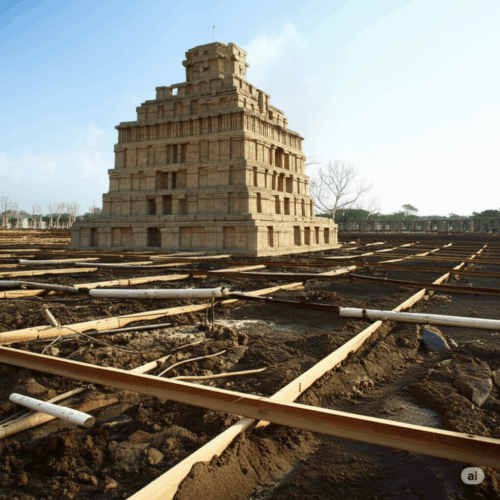


Ah, December 25—a day synonymous with twinkling lights, festive feasts, and the gentle chime of holiday cheer. But rewind the clock over a millennium, and this date transforms into a stage for one of history's most audacious power plays: the brutal assassination of Byzantine Emperor Leo V the Armenian in the year 820 AD. Far from the merry carols and gift-wrapped surprises we know today, this Christmas morning unfolded with intrigue, betrayal, and bloodshed in the opulent halls of Constantinople's imperial palace. This isn't just a dusty tale from the annals of the past; it's a riveting saga of ambition, faith, and fragility that shaped an empire and offers profound insights for navigating our own chaotic worlds.In this deep dive, we'll excavate the layers of this event, exploring the Byzantine Empire's turbulent backdrop, Leo V's meteoric rise and controversial rule, the shadowy conspiracy that sealed his fate, and the ripple effects that echoed through centuries. We'll pack in the historical nitty-gritty—because who doesn't love a good dose of emperors, icons, and epic battles?—before pivoting to how this ancient drama can supercharge your life today. Think of it as a holiday history lesson wrapped in motivation: informative enough to impress at your next trivia night, educational to expand your worldview, fun with its twists and turns, and highly motivational to inspire you to seize your own throne in life. Let's journey back to the 9th century and uncover why this Christmas coup still matters. ### The Byzantine Stage: A Empire Teetering on the Edge of Glory and Chaos To truly grasp the significance of Leo V's assassination, we must first set the scene in the Byzantine Empire, that glittering successor to ancient Rome, which spanned from the 4th century AD until its fall in 1453. By the early 9th century, Byzantium was a powerhouse of culture, religion, and military might, centered in Constantinople (modern-day Istanbul), a city of soaring domes, intricate mosaics, and bustling markets where East met West. Yet, beneath the splendor lurked perpetual threats: invading armies from the Arab Caliphates to the south and east, nomadic Bulgars from the north, and internal strife that could erupt like a volcano. The empire's history in the decades leading up to 820 was a rollercoaster of triumphs and tribulations. The 8th century had been marred by the Iconoclastic Controversy—a fierce debate over religious images that divided society like a modern culture war. Iconoclasm, the belief that venerating icons (sacred paintings or statues of Christ, Mary, and saints) amounted to idolatry and invited divine wrath, first erupted under Emperor Leo III in 726 AD. Leo III, convinced that icons were to blame for military defeats and natural disasters, ordered their destruction, sparking riots, excommunications, and a schism with the Western Church. His son, Constantine V, doubled down, convening the Council of Hieria in 754 to declare icon veneration heretical. But in 787, Empress Irene—regent for her son Constantine VI—reversed course at the Second Council of Nicaea, restoring icons and branding iconoclasm as heresy.
This flip-flopping wasn't just theological nitpicking; it reflected deeper societal fractures. Icons were more than art; they were spiritual conduits for the faithful, especially in a largely illiterate population where visual storytelling conveyed religious truths. Iconoclasts, often from military or eastern provinces influenced by Islamic aniconism (prohibition of images), saw them as pagan holdovers. Iconophiles (icon lovers) viewed destruction as an assault on tradition and incarnation theology—the idea that God became flesh in Christ, making images permissible. By the turn of the 9th century, the empire faced existential threats. Emperor Nicephorus I (r. 802-811) ascended after Irene's overthrow but met a grisly end in 811 at the Battle of Pliska against the Bulgars under Khan Krum. Nicephorus's skull was famously turned into a drinking cup by the victorious khan—a macabre trophy that symbolized Byzantium's vulnerability. His son, Staurakios, briefly ruled but was paralyzed from battle wounds, leading to Michael I Rangabe (r. 811-813), a courtier married to Nicephorus's daughter. Michael's reign was shaky; he favored icon veneration but suffered crushing defeats against the Bulgars, culminating in the disastrous Battle of Versinikia in 813, where Byzantine forces crumbled due to internal betrayals. Enter Leo V, a seasoned general whose life story reads like a Byzantine rags-to-riches epic. Born around 775 AD to a patrician family of Armenian descent—Armenians were prized in Byzantium for their martial prowess—Leo grew up in a world where military service was the ladder to power. Armenia, a rugged region straddling the empire's eastern frontier, bred tough warriors accustomed to fending off Persian and Arab incursions. Leo's father, Bardas, was likely a mid-level official, but young Leo honed his skills in the thematic armies, the provincial forces that formed the backbone of Byzantine defense. Leo's early career is shrouded in some mystery, but sources like the chronicler Theophanes Continuatus paint him as a rising star. He served under Nicephorus I, distinguishing himself in campaigns against the Arabs. By 803, he was strategos (general) of the Anatolikon theme, one of the empire's largest military districts in central Asia Minor. There, he clashed with Arab raiders, earning a reputation for tactical acumen. A pivotal moment came in 808 when, during a raid, Leo's forces were ambushed; he lost the army's payroll but escaped blame, perhaps due to his charisma or connections. Under Michael I, Leo's fortunes soared. Appointed domestikos ton scholon—a high command role over the elite tagmata regiments—he became a key advisor. But Michael's bungled Bulgar war exposed weaknesses. At Versinikia, Leo commanded the left wing; when the right wing under John Aplakes held firm but the center fled, Leo's forces retreated orderly, avoiding total annihilation. Whispers of incompetence swirled around Michael, and Leo, sensing opportunity, rallied disgruntled officers. On July 11, 813, Michael abdicated, and Leo was crowned in Hagia Sophia, the empire's grand cathedral, amid cheers from the troops. ### Leo V's Reign: Swords, Icons, and the Seeds of Discontent Leo V's seven-year rule was a masterclass in pragmatic governance, blending military reforms, diplomatic savvy, and religious zealotry. At 38, he was in his prime—tall, bearded, with the stern gaze of a battlefield veteran. His Armenian heritage made him an outsider in some court circles, but it also lent an aura of exotic resilience. He married Theodosia, a noblewoman, and they had sons, including Symbatios (later renamed Constantine), whom he groomed as co-emperor. First on the agenda: peace with the Bulgars. Khan Krum's death in 814 from a cerebral hemorrhage—rumored to be divine intervention—paved the way for negotiations. Leo signed a 30-year treaty in 815, ceding border territories but securing stability. This allowed him to pivot east against the Abbasid Caliphate. In 816, he repelled an Arab invasion at Euchaita, and in 817, his forces under Thomas the Slav (a future rebel) sacked Arab strongholds. These victories bolstered the economy, as safer trade routes meant more tax revenue from silk, spices, and slaves.
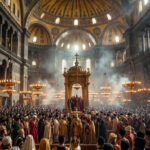
But Leo's legacy is indelibly tied to iconoclasm's revival. Why resurrect a divisive policy? Chroniclers like Genesios suggest military motivations: defeats were seen as God's punishment for idolatry. Leo, influenced by iconoclast advisors like John the Grammarian, believed icons hindered divine favor. In 815, he convened a synod in Constantinople, deposing the iconophile Patriarch Nikephoros and installing Theodotus I, an iconoclast. The council reaffirmed the 754 decrees, ordering icons removed from churches. Monks, the staunchest iconophiles, faced persecution; many fled to Italy or the empire's fringes. This second iconoclasm (815-843) was less violent than the first but still polarizing. Leo argued icons violated the Second Commandment, promoting instead cross veneration and textual scripture. He even had icons in the palace destroyed, save for a famous Christ icon at the Chalke Gate, which he replaced with a cross. Publicly, he debated iconophiles, once challenging a monk to walk on water if icons were holy— the monk declined. These acts alienated clergy and populace, fostering underground resistance. Internally, Leo reformed the administration, cracking down on corruption and bolstering the themes. He patronized learning, inviting scholars to court, and maintained the Theodosian Walls, Constantinople's impregnable defenses. Yet, paranoia crept in. His closest ally, Michael the Amorian—a fellow soldier from humble Phrygian roots, nicknamed "the Stammerer" for a speech impediment—grew influential. Michael had helped orchestrate Michael's abdication, but by 820, rumors of his ambition surfaced. Leo, perhaps influenced by astrologers or spies, accused Michael of treason, imprisoning him in the palace furnaces on Christmas Eve, sentencing him to death by roasting. ### The Christmas Conspiracy: A Plot Hatched in the Shadows Michael, ever the survivor, didn't wait for the flames. From his cell, he smuggled messages to co-conspirators—disgruntled officers, iconophiles, and opportunists weary of Leo's iconoclasm. Key plotters included Theoktistos, a court eunuch, and others like domestikos Manuel. The plan: strike during Christmas matins on December 25, 820, when Leo would attend services in the palace's St. Stephen Chapel, unarmed and surrounded by choir. Disguised as monks and choristers, the assassins infiltrated the chapel amid snowy dawn. Leo, a devout singer despite his iconoclasm, led the hymns, his voice booming through the candlelit space adorned with frescoes (ironically, some iconic). As the service peaked, the killers drew hidden blades. Confusion reigned; in the dim light, they first attacked the wrong man—a priest resembling Leo. Leo, realizing the peril, grabbed a massive altar cross, wielding it like a club. He fought fiercely, felling several attackers, his imperial robes torn, blood splattering the holy ground. But numbers overwhelmed him. A sword severed his arm; another struck his neck. He collapsed before the altar, hacked to pieces. His body, mutilated beyond recognition, was dragged out and dumped in the snow-covered hippodrome, later thrown into the sea with his family's remains after their exile.
The assassins rushed to free Michael, proclaiming him emperor. Crowned that day in the same bloodstained chapel, Michael II founded the Amorian dynasty, ruling until 829. He continued iconoclasm but faced rebellions, notably Thomas the Slav's massive uprising (821-823), which nearly toppled him. Michael's son, Theophilos, and widow Theodora eventually ended iconoclasm in 843, ushering in the "Triumph of Orthodoxy." The assassination's details, preserved in chronicles like those of John Skylitzes and Theophanes, reveal Byzantine intrigue's brutality. No poison or subtle dagger; this was raw, visceral regicide on a sacred day, blending personal betrayal with political calculation. Leo's death marked the end of the Isaurian dynasty and highlighted how religion and power intertwined, often fatally. ### Echoes Through Time: The Aftermath and Broader Impact Leo's fall didn't end Byzantium's woes but reshaped its trajectory. Michael II stabilized the throne, defeating Thomas's rebellion through scorched-earth tactics and alliances. Iconoclasm persisted until 843, when Theodora restored icons, celebrated annually as the Feast of Orthodoxy. This resolution strengthened monasticism and art, leading to the Macedonian Renaissance under Basil I (867-886), a golden age of mosaics, manuscripts, and expansion. Historically, Leo's reign exemplified the theme system's efficacy—provincial armies that sustained Byzantium for centuries. His iconoclasm influenced later debates, even echoing in Protestant Reformation icon-smashing. The assassination underscored Constantinople's palace politics, where emperors rose and fell on whispers and blades, a pattern repeating until 1453.
Culturally, the event inspired medieval tales of treachery, like in the Epic of Digenes Akritas, blending heroism and betrayal. In Armenian lore, Leo's heritage fueled pride, despite his iconoclasm alienating some. Modern historians view him as a capable but flawed ruler, his death a cautionary tale of trust misplaced. ### From Byzantine Betrayal to Modern Breakthrough: Harnessing Leo V's Lessons for Your Life Now, let's fast-forward to today. Leo V's story isn't just a historical footnote; it's a treasure trove of wisdom for anyone building their personal empire—be it in career, relationships, or self-growth. The key takeaway? Power, trust, and vigilance are double-edged swords. Leo trusted Michael, his battle-tested comrade, only to be undone by ambition. Yet, his resilience in defense offers inspiration: even cornered, he fought back. Here's how to apply this to your life, turning ancient tragedy into contemporary triumph. - **Cultivate Unshakable Alliances, But Verify Trust Relentlessly**: Leo's bond with Michael forged in war turned toxic in peace. In your world, nurture networks—mentors at work, friends in life—but audit them regularly. Ask: Do they celebrate your wins or covet them? Benefit: Stronger, betrayal-proof relationships that propel you forward, like landing that promotion through genuine support. - **Embrace Bold Reforms, But Anticipate Backlash**: Leo's iconoclasm aimed to unify and strengthen, yet it divided. When you overhaul your habits—say, adopting a strict fitness regime or career pivot—expect resistance from old patterns or skeptics. Benefit: Greater resilience, turning obstacles into stepping stones, like shedding 20 pounds and inspiring others. - **Defend Your Core Values Fiercely, Even in Crisis**: Facing assassins, Leo grabbed a cross—symbol of his faith—and battled. Identify your "altar cross": principles like integrity or family. When challenges hit—a toxic job or personal setback—wield them defensively. Benefit: Inner strength that builds confidence, helping you navigate layoffs or heartbreaks with grace. - **Turn Paranoia into Proactive Vigilance**: Leo's suspicion saved him briefly but came too late. Channel healthy caution: monitor finances, health, or goals weekly. Use apps for tracking investments or journaling for emotional check-ins. Benefit: Early detection of issues, like catching a budget leak before debt spirals, leading to financial freedom. - **Learn from Falls to Rise Stronger**: Leo's dynasty ended, but Byzantium endured. View failures as setups for comebacks—analyze what went wrong, adapt. After a project flop, debrief and iterate. Benefit: Accelerated growth, transforming setbacks into expertise, like pivoting from a failed startup to a thriving venture. Now, a step-by-step plan to integrate these lessons:
-
**Week 1: Audit Your Circle**—List 10 key people in your life. Rate their loyalty on a 1-10 scale based on past actions. Reach out to the top 5 with gratitude; distance from the bottom 3 if needed. Goal: Forge ironclad alliances.
-
**Week 2: Identify Your Reforms**—Pinpoint one area needing change (e.g., diet, skills). Research pros/cons, then implement gradually. Track resistance and adjust. Goal: Build momentum without overwhelm.
-
**Week 3: Define Your Cross**—Write down 3-5 core values. Create a "defense ritual"—daily affirmation or visualization. When stressed, recall Leo's stand. Goal: Bolster mental fortitude.
-
**Week 4: Establish Vigilance Routines**—Set reminders for weekly reviews: health check, goal progress, relationship pulse. Use tools like planners or apps. Goal: Prevent small issues from escalating.
-
**Ongoing: Reflect and Adapt**—Monthly, journal a "Leo Lesson": a recent challenge, what you learned, how you'll apply it. Celebrate wins with a treat. Goal: Continuous evolution into your best self.
By channeling Leo V's saga, you're not just surviving—you're thriving, turning history's shadows into your spotlight. This Christmas coup reminds us: empires fall, but lessons endure. Seize yours today!
Share: