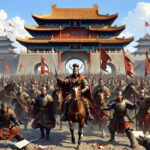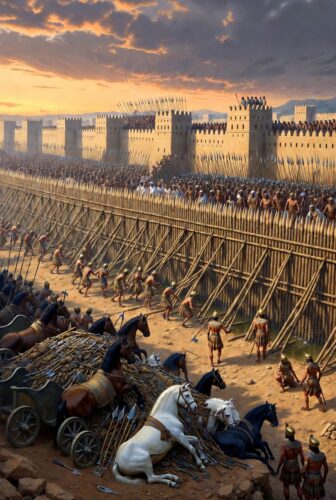


Imagine a winter night in the 10th century, where the chill of December bites through the air like a sharpened blade, and the mighty walls of one of the Arab world's most vibrant cities stand as silent guardians against an encroaching storm of steel and fire. On December 23, 962, the Byzantine Empire, under the iron-fisted command of Nikephoros Phokas, unleashed a devastating assault on Aleppo, the jewel of northern Syria and the heart of the Hamdanid emirate. This wasn't just a raid; it was a cataclysmic event that reshaped the power dynamics of the medieval Middle East, marking a pivotal turn in the centuries-long Arab-Byzantine wars. As flames licked the skies and relics of ancient myths were carted away as spoils, the sack of Aleppo became a testament to the fragility of empires and the ruthless calculus of conquest. But beyond the blood and booty, this story from distant history offers a treasure trove of insights—lessons in strategy, survival, and resurgence that can ignite a spark in our everyday lives today. Buckle up for a deep dive into this epic saga, where history comes alive with the clash of swords, the intrigue of courts, and the unyielding spirit of those who rebuilt from the ashes.To truly appreciate the sack of Aleppo, we must journey back to the turbulent landscape of the 10th-century Mediterranean world, a time when the Byzantine Empire—often called the Eastern Roman Empire—was clawing its way back from the brink of oblivion. The Byzantines, heirs to the Roman legacy, had endured centuries of invasions from Slavs, Persians, and Arabs since the fall of the Western Roman Empire in 476. By the 900s, under the Macedonian dynasty, they were experiencing a renaissance of sorts, a period historians dub the "Byzantine Reconquista." Emperors like Basil I and his successors focused on reclaiming lost territories, bolstering the military with elite units like the tagmata (imperial guards) and the themata (provincial armies), and leveraging advanced tactics such as Greek fire—a napalm-like incendiary weapon that could burn on water. On the other side of the frontier lay the fragmented Islamic world. The Abbasid Caliphate, once a monolithic powerhouse stretching from Spain to India, had splintered into rival emirates and caliphates by the mid-900s. In northern Syria and Mesopotamia, the Hamdanid dynasty rose to prominence. Founded by the Banu Hamdan tribe, who traced their lineage to the ancient Taghlib Arabs, the Hamdanids were Shi'a Muslims known for their martial prowess and patronage of the arts. Their rule began in the 890s when Nasir al-Dawla established control over Mosul, but it was his brother, Ali ibn Abi al-Hayja—better known as Sayf al-Dawla—who truly elevated the family to legendary status. Sayf al-Dawla, whose name means "Sword of the Dynasty," was born around 916 and ascended to power in Aleppo in 944 after a series of cunning maneuvers and battles against rivals like the Ikhshidids of Egypt. Capturing Aleppo from the Abbasids, he transformed it into a fortified metropolis and a cultural beacon. Under his patronage, Aleppo's markets buzzed with traders from Baghdad, Constantinople, and beyond, dealing in silks, spices, and slaves. He built the magnificent palace of Halbas on the outskirts, complete with lush gardens irrigated by a sophisticated aqueduct system that drew water from the nearby Quwayq River. Poets like al-Mutanabbi flocked to his court, composing odes that celebrated his valor, while scholars debated philosophy and science in halls adorned with intricate mosaics. Aleppo wasn't just a city; it was a symbol of Arab resilience against Byzantine aggression, strategically positioned at the crossroads of trade routes linking the Mediterranean to the Euphrates.
Sayf al-Dawla's reign coincided with heightened tensions along the Byzantine-Arab border, a volatile zone known as the thughur (frontier districts). From 945 onward, he waged relentless jihad against the Byzantines, launching annual raids into Anatolia to capture booty, slaves, and prestige. His forces, a mix of Bedouin cavalry, Turkish mamluks (slave soldiers), and Daylamite infantry from the Iranian highlands, were agile and fierce. In one famous encounter in 950, he defeated a Byzantine army at the Battle of Hadath, capturing thousands of prisoners and parading them through Aleppo's streets. Over the next decade, Sayf al-Dawla fought more than 40 battles against the Byzantines, often emerging victorious. His exploits earned him the title of ghazi (holy warrior), and Arab chroniclers like Ibn al-Qalanisi later hailed him as a defender of Islam. But the tide began to turn with the rise of Nikephoros Phokas on the Byzantine side. Born into the aristocratic Phokas family around 912, Nikephoros was a seasoned general whose father, Bardas Phokas the Elder, had served as Domestic of the Schools—the supreme commander of the Byzantine army. Bardas's early campaigns against the Hamdanids were disastrous; repeated defeats led to his dismissal in 954. His son Nikephoros, however, proved a different breed. Tall, stern, and ascetic—nicknamed "the Pale Death of the Saracens" by his troops—Nikephoros combined tactical brilliance with unyielding discipline. He reformed the army, emphasizing heavy cataphract cavalry (armored horsemen) and phalanx formations, and drew on lessons from earlier generals like John Kourkouas, who had reconquered Melitene and other border fortresses in the 930s. Assisted by his brother Leo Phokas and nephew John Tzimiskes—both formidable warriors in their own right—Nikephoros started reversing Byzantine fortunes. In 956, he sacked Adata (modern Şanlıurfa) and captured its emir. But the real breakthrough came in 960. While Nikephoros was away leading the conquest of Crete from the Arabs—a monumental campaign that involved 300 ships and 50,000 men—Sayf al-Dawla saw an opportunity. He invaded Byzantine Cappadocia, a rugged region in central Anatolia rich in horses and minerals. However, Leo Phokas ambushed him at the Battle of Andrassos in the Taurus Mountains. The Hamdanid army was shattered; Sayf al-Dawla barely escaped on foot, leaving behind his camp, treasures, and even family members. Arab sources, including the poet Abu Firas (Sayf al-Dawla's cousin), lamented the disaster in verses that captured the humiliation: "The stars wept as our banners fell."
This defeat broke the Hamdanid military backbone. Sayf al-Dawla's forces, once numbering tens of thousands, dwindled to a core of 4,000 loyalists. Rebellions erupted among his Bedouin allies, and his prestige as a ghazi waned. Meanwhile, Nikephoros returned from Crete triumphant, his reputation soaring. In 961, he launched a series of preparatory strikes to isolate Aleppo. He sacked Anazarbus in Cilicia, a key fortress guarding the mountain passes, slaughtering part of its population and razing its walls to create a buffer zone. This "scorched earth" policy disrupted supply lines from Syria to Anatolia, leaving Aleppo vulnerable. In April 962, Nikephoros swept through Marash, Sisium, Duluk, and Manbij, securing the western approaches over the Anti-Taurus Mountains. These campaigns weren't mere raids; they were systematic demolitions, with Byzantine engineers dismantling fortifications stone by stone. Sayf al-Dawla, still reeling from Andrassos, attempted to rebuild. He dispatched generals like Qarghuyah the Abyssinian and Naja al-Kasaki on counter-raids into Byzantine territory, hoping to draw Nikephoros away. There were even tentative negotiations for a truce and prisoner exchange, which may have lulled the Hamdanids into complacency. But in November 962, a Byzantine vanguard captured Manbij, the last major outpost north of Aleppo, and took Abu Firas prisoner. Abu Firas, a renowned poet and governor, was paraded in Constantinople, where he composed defiant verses from his cell. By early December, Nikephoros assembled his main force—Arab chroniclers exaggerate it at 70,000, though modern estimates suggest 30,000-40,000—and marched on Aleppo. The timing was audacious: Byzantines rarely campaigned in winter, when snow clogged the passes and rivers swelled. This element of surprise, combined with Sayf al-Dawla's depleted army, gave Nikephoros overwhelming superiority. As the Byzantines advanced, Hamdanid responses were chaotic. Sayf al-Dawla rushed to Azaz, a northern outpost, but retreated without engaging. Naja al-Kasaki, returning from a raid near Antioch, was routed by John Tzimiskes in a skirmish at Azaz. Tzimiskes, a dashing Armenian noble known for his speed and cunning, pursued relentlessly.
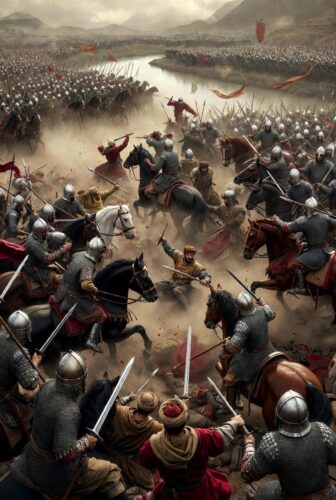
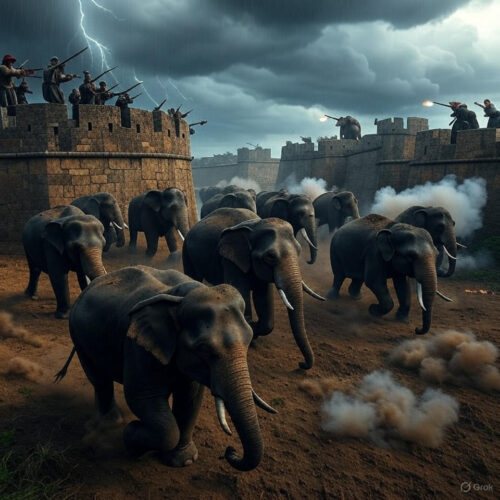
The Byzantines first targeted the opulent palace of Halbas. Unprotected and laden with treasures, it fell easily. Soldiers stripped its golden roof, marble columns, and jeweled furnishings, then set it ablaze. The plunder was immense: silks, gold, and exotic animals filled wagons. With Aleppo now isolated, Nikephoros encircled the city. Aleppo's defenses were formidable—a massive stone wall punctuated by towers, a deep moat, and a citadel atop a hill. But without reinforcements, morale crumbled. Sayf al-Dawla made a brief stand outside the gates with his 4,000 men but, outnumbered, fled southeast to the fortress of Balis on the Euphrates, then further to Sab'in. Tzimiskes hounded him, capturing more prisoners. Inside Aleppo, panic reigned. Merchants barricaded shops, families hid in basements, and the Daylamite garrison manned the citadel. On the night of December 23, 962, Nikephoros ordered the assault. Byzantine siege engines—catapults hurling stones and fire pots—battered the walls. Sappers undermined sections, while ladders and rams targeted gates. By dawn on December 24, breaches allowed infantry to pour in. The sack lasted eight to nine days, a orgy of violence chronicled by contemporaries like Yahya of Antioch, a Christian Arab historian, and Ibn Hawqal, a Muslim geographer who visited shortly after. The Byzantines spared no quarter initially. Streets ran with blood as soldiers massacred civilians—men, women, and children alike. Mosques and markets were torched; the Great Mosque, with its towering minaret, suffered damage but survived. One poignant account describes Nikephoros's nephew, possibly Theodore Parsakoutenos, leading a charge on the citadel. He was felled by a Daylamite arrow, his head severed and presented to Nikephoros, who in rage beheaded 1,200 Arab prisoners. Yet, the citadel held; its defenders, fierce mercenaries from Daylam, repelled assaults. Nikephoros, pragmatic, negotiated terms: the garrison surrendered in exchange for safe passage, but the city was his. The loot was legendary. Beyond mundane wealth—390,000 silver dinars, 2,000 camels, 1,400 mules—Byzantines seized relics of mythic significance. These included the tusk of the boar that slew Adonis in Greek mythology, a "bleeding" icon of Christ said to weep real blood, and other Christian artifacts plundered from earlier raids. These were triumphantly paraded in Constantinople, boosting Nikephoros's aura. Some 10,000 captives, mostly young men for labor or ransom, were marched north. Ibn Hawqal's eyewitness description paints a harrowing picture: "The Greeks took the city despite its strong wall; they ruined the mosque, took captive all the women and children, burned the houses. The castle was poorly built; the population fled there with their goods, and most perished."
As the Byzantines withdrew in early January 963, Aleppo lay in ruins—half-deserted, its walls demolished, its economy shattered. Sayf al-Dawla returned weeks later, finding a ghost town. He repopulated it with refugees from nearby Qinnasrin, rebuilding markets and fortifications. But the damage was irreversible. His authority eroded; subordinates like Qarghuyah rebelled, and Bedouin tribes defected. The sack exposed the Hamdanids' vulnerabilities, paving the way for Byzantine conquests in Cilicia (963-965), where Nikephoros seized Tarsus and Adana. In 963, Nikephoros ascended the throne as emperor after the death of Romanos II, ruling until his assassination in 969 by Tzimiskes. The aftermath rippled across the region. For the Byzantines, it signaled the apex of their 10th-century resurgence, extending their frontier to the Euphrates and incorporating Armenian principalities. Antioch fell in 969, and Damascus paid tribute. Sayf al-Dawla, plagued by strokes and internal strife, died in 967, his dynasty fracturing. His son Sa'd al-Dawla inherited a weakened realm, eventually becoming a Byzantine vassal. The sack also highlighted cultural exchanges amid conflict: Byzantine chroniclers like Leo the Deacon praised Nikephoros's piety, while Arab poets immortalized Sayf al-Dawla's chivalry. Al-Mutanabbi's elegies capture the era's pathos: "Aleppo weeps for her sword, broken in the dust." Historically, the event underscores the cyclical nature of empires. The Arab-Byzantine wars, spanning from the 7th-century Muslim conquests to the 11th-century Seljuk invasions, were marked by such turning points. The sack weakened the thughur system, allowing Byzantines to dominate until the Battle of Manzikert in 1071 reversed fortunes again. It also reflected the era's religious fervor: Nikephoros, a devout Christian, framed his campaigns as crusades avant la lettre, reclaiming holy sites. Yet, Aleppo endured, rebounding under later rulers like the Zengids and Ayyubids, becoming a hub under Saladin. Delving deeper, consider the military innovations. Nikephoros's use of combined arms—cavalry charges supported by archers and siege artillery—prefigured later tactics. His winter campaign exploited weather as a weapon, much like Hannibal's Alpine crossing. Sayf al-Dawla's reliance on mobile raiders, effective in hit-and-run, failed against a professional standing army. Economic factors played a role: Byzantine gold solidi funded mercenaries, while Hamdanid revenues from trade tolls couldn't match after Andrassos. Personal stories add flavor. Abu Firas, captured at Manbij, spent years in Byzantine captivity, composing the "Rumiyyat" poems that blend defiance and melancholy. One verse laments: "In chains, yet my spirit soars like the eagle." Nikephoros, despite victories, was ascetic, sleeping on stone floors and wearing hair shirts, driven by a mix of ambition and faith. His nephew Tzimiskes, who later became emperor, gained fame here for his pursuit, foreshadowing his conquest of Bulgaria. The sack's cultural impact lingered. The stolen relics fueled Byzantine propaganda; the Adonis tusk symbolized pagan triumphs reclaimed for Christendom. In Arab memory, it became a symbol of betrayal and resilience, echoed in later sieges like the Mongol sack of Baghdad in 1258. Historians like William Garrood argue it shattered Sayf al-Dawla's prestige irreparably, leading to Hamdanid decline, while others see it as a temporary setback amid broader Byzantine advances. Expanding on the broader context, the 10th century was a time of flux. In Europe, Otto I founded the Holy Roman Empire in 962—the same year—crowning himself in Rome. In the East, the Fatimid Caliphate rose in North Africa, challenging Abbasid hegemony. Aleppo's position made it a prize; its capture disrupted caravan routes, shifting trade to Byzantine ports like Antioch. Nikephoros's campaign logistics were masterful. Supply trains from Constantinople via the Cilician Gates ensured provisions, while scouts mapped routes. Hamdanid intelligence failed, partly due to internal spies—rumors suggest Byzantine agents in Aleppo's court. The sack's brutality, while typical of medieval warfare, drew condemnation; Yahya of Antioch, a neutral observer, decried the massacres. In the years following, Sayf al-Dawla attempted comebacks, raiding Byzantine lands in 963, but strokes in 964 left him paralyzed. His death in 967 at age 51 marked the end of an era. Aleppo passed through hands, eventually thriving under the Mirdasids and Seljuks. This rich tapestry of intrigue, battles, and human drama makes the sack of Aleppo a captivating chapter in history. It's a reminder that empires rise and fall on the decisions of individuals, the whims of fortune, and the grind of strategy. Now, shifting to how this historical fact can benefit you today. The outcome of the sack— a devastating blow followed by partial recovery—teaches us about bouncing back from setbacks, strategic foresight, and adapting to adversity. Applying these to your individual life can transform challenges into opportunities for growth. - **Cultivate Strategic Preparation in Daily Routines**: Just as Nikephoros's meticulous planning overwhelmed Sayf al-Dawla, map out your goals with detailed steps. For instance, if facing a career shift, research industry trends, network with three professionals weekly, and build a skill portfolio over six months to avoid being caught off guard like the Hamdanids. - **Embrace Resilience After Failure**: Sayf al-Dawla's repopulation of Aleppo shows recovery is possible. If you lose a job, immediately assess your resources, seek support from mentors, and rebuild by updating your resume, applying to five positions daily, and upskilling via online courses to turn despair into momentum. - **Leverage Surprise Elements for Advantage**: The winter timing of the attack highlights innovation. In personal fitness, switch routines unexpectedly—like adding HIIT sessions mid-week—to break plateaus, tracking progress with a journal to mimic Byzantine tactical surprises. - **Build Alliances and Networks**: The Hamdanids' isolation due to rebellions underscores unity's importance. In your social life, nurture relationships by scheduling monthly check-ins with friends and joining community groups, ensuring a support network during tough times. - **Learn from Historical Relics of Wisdom**: The seized artifacts symbolize preserving knowledge. Curate a personal "relic" collection—books, journals, or apps on history and self-improvement—reading one chapter daily to gain perspectives that fortify mental strength. Here's a step-by-step plan to integrate these lessons:
-
**Reflect on Past Setbacks**: Spend 15 minutes journaling about a recent challenge, analyzing what went wrong like a historical debrief of Andrassos.
-
**Set Strategic Goals**: Outline three objectives for the next quarter, breaking them into weekly actions with contingencies, echoing Nikephoros's campaigns.
-
**Build Resilience Habits**: Commit to daily practices like meditation or exercise for 20 minutes to foster endurance, inspired by Sayf al-Dawla's return.
-
**Innovate Routinely**: Introduce one new element weekly—try a novel recipe or hobby—to cultivate adaptability.
-
**Review and Adapt**: At month's end, evaluate progress, adjusting like post-sack reconstructions, celebrating small wins to stay motivated.
By weaving these threads from 962 into your life, you'll not only honor history but harness its power for a more empowered tomorrow. History isn't just dates—it's a blueprint for triumph.
Share: