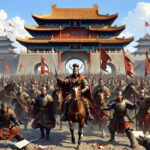

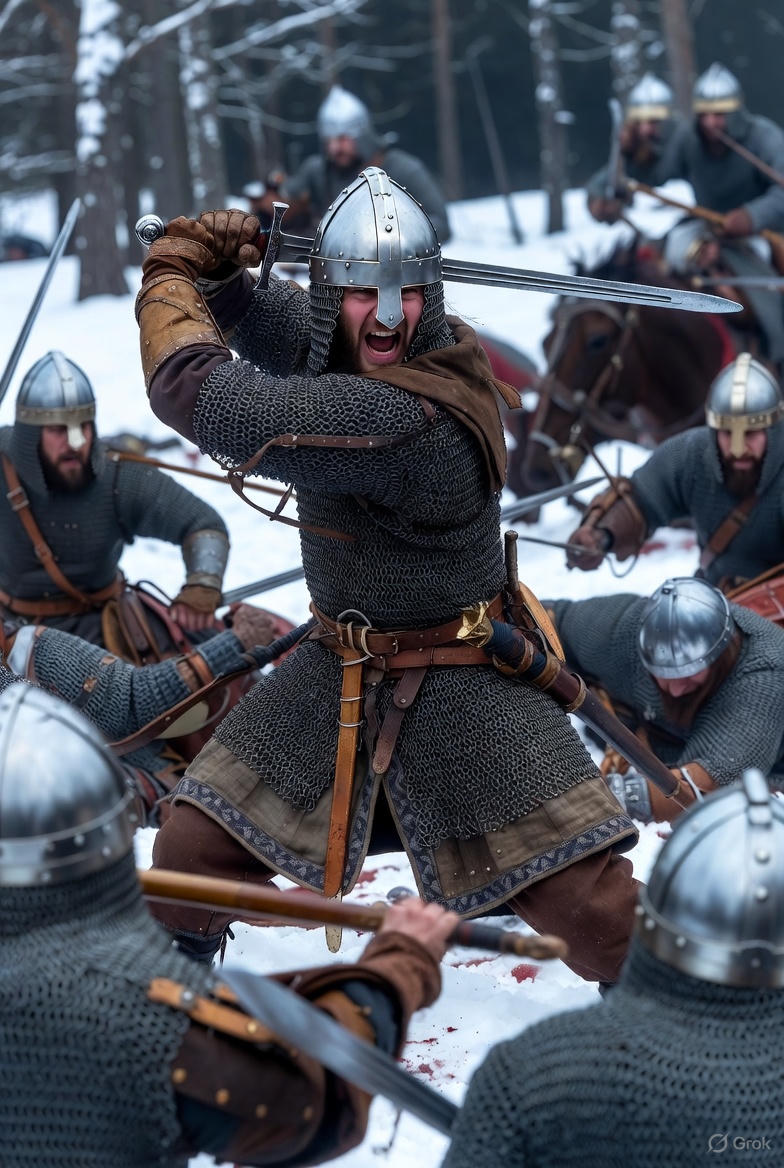
Imagine the biting chill of a Russian winter in 1237, where the snow-covered plains of the Principality of Ryazan stretch out like a vast, unforgiving canvas. Hoofbeats thunder across the frozen earth, not from local riders, but from an unstoppable wave of horsemen pouring in from the distant steppes. These are the Mongols, led by Batu Khan, grandson of the legendary Genghis Khan. On December 21 of that year, the ancient city of Ryazan—once a thriving hub of trade, craftsmanship, and princely power—falls in a blaze of destruction that echoes through the annals of history. This wasn't just a battle; it was the opening salvo in the Mongol conquest of Kievan Rus', a cataclysm that reshaped Eastern Europe for centuries. But beyond the smoke and screams, this story holds secrets of survival and strength that can ignite your own path today. Dive with me into this riveting tale of empires clashing, heroes rising, and lessons that transcend time—because history isn't just about the past; it's a blueprint for unbreakable resolve.To understand the sack of Ryazan, we must first journey back to the origins of the Mongol Empire, a force that exploded onto the world stage like a steppe wildfire. Founded by Genghis Khan in 1206, the empire was born from the unification of nomadic tribes in Mongolia, hardened by endless wars over scarce resources. Genghis, originally named Temujin, rose from humble beginnings—orphaned young and betrayed by allies—to forge the largest contiguous empire in history through sheer military genius, innovative tactics, and an unyielding code of loyalty. His armies were masters of mobility: mounted archers who could ride for days without rest, striking with precision bows that outranged most foes. By the time of his death in 1227, the Mongols had conquered northern China, Central Asia, and parts of the Middle East. Genghis's successors divided the empire into khanates, with his grandson Batu inheriting the western frontiers through his father Jochi. At a grand kurultai (assembly) in 1235, the Mongol leaders, including Ögedei Khan (Genghis's third son and successor), plotted the conquest of Europe. The goal? To expand the Jochi Ulus, subjugate tribute-paying states, and gather intelligence on distant lands. Batu assembled a massive horde—estimates vary, but around 60,000 warriors, bolstered by Turkish allies and Chinese engineers. They employed advanced siege technology borrowed from conquered peoples: catapults, trebuchets, and even early gunpowder devices. Winter campaigns were their specialty, using frozen rivers as highways to bypass defenses. The target: Kievan Rus', a loose federation of Slavic principalities descended from Viking settlers (the Varangians) who had established trade routes from the Baltic to the Black Sea by the 9th century. By the 13th century, Rus' was fragmented, with rival princes in cities like Kiev, Vladimir, Chernigov, and Ryazan squabbling over power. Ryazan, located on the Oka River southeast of modern Moscow, was a prosperous border principality. Its economy thrived on trade along the Volga, Don, and Black Sea routes, exporting furs, honey, wax, and slaves while importing silks, spices, and metals. Crafts flourished, especially jewelry-making with intricate filigree work influenced by Byzantine and Caucasian styles. The city of Old Ryazan (Staraya Ryazan) boasted wooden fortifications, stone churches, and a population perhaps numbering in the tens of thousands, though exact figures are elusive due to sparse records.
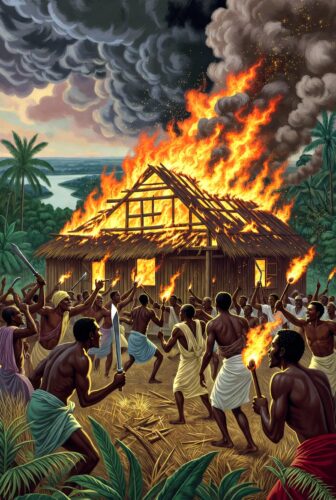
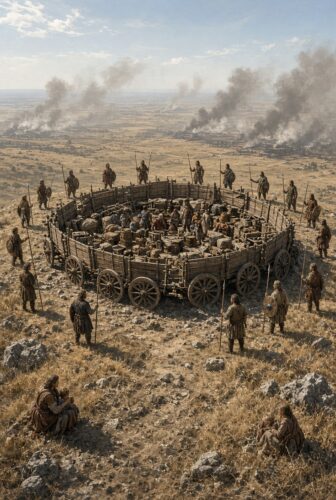
Politically, Ryazan was ruled by the House of Svyatoslavich, with Prince Yuriy Igorevich at the helm in 1237. Relations with neighbors were tense: conflicts with Chernigov to the south and Vladimir-Suzdal to the north had left scars, but by the invasion, a fragile peace held. The Mongols had probed Rus' earlier—in 1223, at the Battle of the Kalka River, a reconnaissance force under generals Jebe and Subutai crushed a combined Rus'-Cuman army, slaying princes like Mstislav the Bold. That defeat should have been a warning, but the Rus' princes dismissed it as a one-off raid by "unknown peoples." The invasion proper began in late 1236. Batu's horde first crushed Volga Bulgaria, a Muslim trading state, in a lightning campaign that fortified their supply lines. By autumn 1237, they subdued the Cumans (nomadic Turkic tribes) and Alans in the southern steppes, securing their flanks. Turning north, the Mongols demanded submission from Ryazan: one-tenth of all wealth, horses, and even people as tribute. Prince Yuriy refused, famously retorting (according to later chronicles), "If none of us are left, it will all be yours!" He sent envoys to Grand Prince Yuriy Vsevolodovich of Vladimir and Prince Mikhail of Chernigov, pleading for aid. Vladimir delayed, perhaps underestimating the threat or prioritizing his own defenses; Chernigov outright refused, citing Ryazan's absence from the 1223 battle. The Mongols struck swiftly. In early December, they annihilated Ryazan's vanguard at the Voronezh River, a skirmish that scattered the principality's outer defenses. By December 16, the horde encircled Old Ryazan. The city's walls—timber palisades reinforced with earthen ramparts—were formidable for the era, but no match for Mongol ingenuity. Initial assaults were repelled by determined defenders: archers on the battlements, spearmen holding the gates, and civilians hurling stones and boiling oil. The Rus' fought with desperation, knowing surrender meant enslavement or worse. But the Mongols were patient predators. They deployed catapults to batter the walls, launching stones, incendiary pots, and even diseased corpses to spread panic (an early form of biological warfare). Chinese engineers oversaw the construction of siege towers and battering rams, while Mongol archers provided covering fire. The bombardment lasted days, cracking the fortifications and demoralizing the inhabitants. On December 21, after five grueling days, the walls breached. Batu's troops—led by princes like Orda, Güyük (future Great Khan), Möngke (also future Great Khan), Kulkan, Kadan, and Büri—stormed in. What followed was a massacre of biblical proportions. Prince Yuriy Igorevich and his wife were slain; chronicles describe the prince fighting valiantly before being cut down. Nearly the entire population perished—men, women, children—in a frenzy of looting and burning. The Novgorod Chronicle poignantly notes: "There was none left to groan and cry." Archaeological digs in 1915 and 1979 unearthed grim evidence: 97 severed heads near a church site, 143 bodies in mass graves, all bearing marks of violent death—sword cuts, arrow wounds, crushed skulls. The city burned to the ground, its churches desecrated, treasures carted off. Only the bishop escaped, fleeing moments before the assault, an event chronicled as divine intervention.
Yet, amid the horror, legends of heroism emerged, immortalized in "The Tale of the Destruction of Ryazan," a 14th-century literary cycle blending chronicle, epic, and folklore. Compiled by clergy at the Church of St. Nicholas of Zaraisk, it weaves in the miraculous transfer of a wonder-working icon of St. Nicholas from Korsun (Chersoneses) to Ryazan in 1225, symbolizing divine favor. The tale dramatizes the invasion: Batu demands concubines from Ryazan's nobility, leading Prince Fedor Yurevich (Yuriy's son) to refuse and be killed. His wife, Princess Eupraxy, leaps from a tower with their infant son to avoid capture, a tragic act echoing ancient tales of defiance. The tale's highlight is Evpaty Kolovrat, a Ryazan boyar (noble) absent during the siege, serving in Chernigov. Returning with a small detachment—perhaps 1,700 men—he launches guerrilla raids on the Mongol rear, slashing through patrols with superhuman ferocity. Described as "adept and swift" like a bylina (Russian epic) hero, Evpaty challenges Batu's champion, Khostovrul, in single combat, cleaving him in two. The Mongols, awestruck, bombard him with catapults when arrows fail. Batu, honoring his bravery, releases prisoners and allows a proper burial, saying, "If I had such a servant, I would keep him close to my heart." This motif reflects medieval chivalric ideals, where even enemies respect valor.
The aftermath was devastating. Old Ryazan was never rebuilt; repeated Tatar raids from the steppe rendered it untenable. The principality's capital shifted to Pereyaslavl-Ryazansky (modern Ryazan) by the 14th century. Batu's horde pressed on, sacking Suzdal, Kolomna, and Moscow in January 1238, then Vladimir in February, where Grand Prince Yuriy Vsevolodovich's family burned alive in a church. At the Battle of the Sit River on March 4, a Rus' army was annihilated, the prince beheaded. The Mongols ravaged 14 northeastern cities, including Rostov, Yaroslavl, and Tver, using winter's frozen terrain to their advantage. The invasion continued southward: Chernigov fell in 1239, Kiev in December 1240—its population plummeted from 50,000 to a ghost town. Galicia-Volhynia resisted under Prince Daniel but was ravaged. By 1241, the horde reached Hungary and Poland, sacking cities like Pest and winning at Liegnitz, where they collected nine sacks of enemy ears. Ögedei's death in 1241 halted the advance, as princes returned for a new kurultai. The human cost: Up to 500,000 dead, 6-7% of Rus' population. Cities lay in ruins; stone building halted for decades, crafts regressed, trade disrupted. Population fled north to safer forests, fueling Moscow's rise. Rus' became vassals of the Golden Horde (Batu's khanate, capital at Sarai), paying tribute until 1480's "Great Stand on the Ugra River." The "Tatar Yoke" introduced postal systems, censuses, and military organization to Muscovy, blending cultures—Tatar words entered Russian, noble families like the Aksakovs traced Mongol roots, and harsh punishments became norm. Yet, the sack of Ryazan wasn't just destruction; it birthed resilience. Fragmentation doomed Rus'—princes' rivalries prevented unity. Ryazan's pleas went unanswered, a fatal error. The tale laments disunity as "God's punishment," urging brotherhood. Evpaty's legend inspires: one man's courage disrupted an empire. Mongol tactics—adaptability, innovation—contrasted Rus' rigidity. Now, fast-forward to today. The fall of Ryazan teaches that division invites downfall, but unity and preparation forge victory. In your life, apply this: Face "invasions"—challenges like career setbacks, health crises, or relationships— with historical wisdom. Here's how this 13th-century saga benefits you, with specific strategies to build an unbreachable personal fortress.
- **Cultivate Alliances Like a Wise Prince**: Just as Ryazan's isolation sealed its fate, nurture your network. Reach out weekly to mentors or friends for advice—schedule coffee chats or virtual calls. In job hunts, connect on LinkedIn with five new contacts daily, sharing value first. This builds a "druzhina" (retinue) that supports you in crises. - **Prepare Defenses Against Life's Sieges**: Mongols used winter wisely; anticipate your "winters." Create an emergency fund covering six months' expenses, starting with $50 weekly deposits. For health, adopt a routine: 30 minutes daily exercise, like walking while listening to history podcasts for fun motivation. - **Embrace Adaptability, Mongol-Style**: Their tactics evolved; so should yours. If a goal stalls, pivot—learn a skill via free online courses (e.g., Coursera on leadership). Track progress in a journal, adjusting weekly, turning setbacks into strategic retreats. - **Channel Evpaty's Heroic Resolve**: Face fears head-on. If public speaking terrifies, join Toastmasters and practice one speech monthly. In conflicts, respond calmly, like Evpaty's calculated strikes—pause, breathe, then act with purpose. - **Rebuild Stronger Post-Defeat**: Ryazan rose anew; after failures, reflect. After a breakup, journal lessons learned, then pursue hobbies like archery (nod to Mongols) for empowerment. To implement, follow this 30-day plan: Week 1: Assess vulnerabilities—list three "threats" (e.g., procrastination) and allies to counter them. Week 2: Build habits—daily 10-minute meditation for mental fortitude, inspired by Rus' endurance. Week 3: Adapt and innovate—try one new approach, like a productivity app mimicking Mongol efficiency. Week 4: Reflect and celebrate—review wins, reward yourself with a history book or steppe-inspired meal. Repeat, scaling up. Ryazan's flames remind us: History's tempests forge legends. Harness this energy—unite, prepare, adapt—and conquer your horizons. The horde of doubt retreats before such spirit!
Share: