
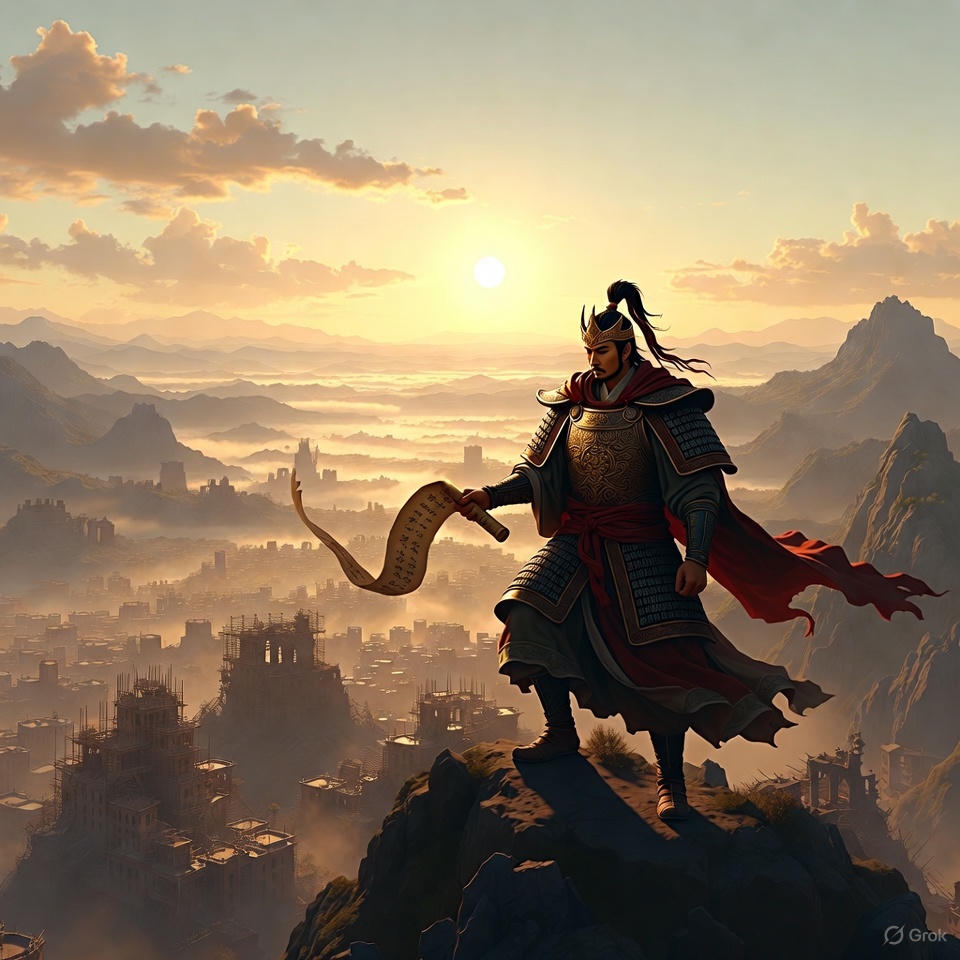
On a frigid winter day in 755 AD, in the northern Chinese commandery of Fanyang—near modern-day Beijing—a powerful general named An Lushan gathered his vast army and declared war on the empire he had sworn to serve. December 16 marked the official launch of what would become known as the An Lushan Rebellion, a cataclysmic civil war that tore through the heart of China’s Tang Dynasty, then at the zenith of its golden age. This was no minor skirmish; it was a rebellion that toppled capitals, claimed tens of millions of lives, and forever altered the course of Chinese history. Yet, amid the devastation, stories of extraordinary human endurance, strategic brilliance, and cultural rebirth emerged—stories that echo powerfully even today.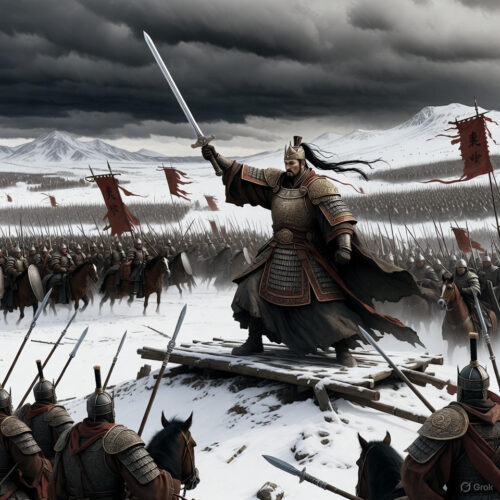
The Tang Dynasty (618–907 AD) is often celebrated as one of the most prosperous and cosmopolitan eras in Chinese history. Under emperors like Taizong and Xuanzong, China expanded its borders, embraced diverse cultures along the Silk Road, and flourished in poetry, art, and innovation. Chang’an, the imperial capital, was the world’s largest city, a bustling metropolis of nearly two million people where Persians, Arabs, Sogdians, Koreans, and Japanese mingled in markets filled with exotic goods. Poetry thrived—masters like Li Bai and Du Fu would later immortalize the era’s beauty and tragedy. Buddhism, Daoism, and even Nestorian Christianity coexisted. Trade flowed freely, and the empire’s military might seemed unassailable.
But beneath this glittering surface lurked cracks. By the 750s, Emperor Xuanzong, who had ruled brilliantly for decades, grew indulgent in his later years. His devotion to the beautiful consort Yang Guifei—one of history’s most famous romantic figures—became legendary. Yang, originally married to one of Xuanzong’s sons, captivated the aging emperor with her grace, musical talent, and intelligence. Their love story inspired countless poems and operas, portraying her as a femme fatale whose influence disrupted court politics. Her cousin, Yang Guozhong, rose to become chief minister through nepotism, despite his incompetence and corruption. He clashed bitterly with An Lushan, a rising military star.
An Lushan himself was a fascinating and complex figure. Born around 703 to a Sogdian father (from Central Asia) and a Turkic mother, An grew up on the frontiers, fluent in multiple languages and skilled in warfare. He entered Tang service as a soldier, rising rapidly due to his charisma, battlefield prowess, and ability to manage non-Han troops. By the 740s, he commanded border forces against nomadic threats like the Khitans and Xi. Emperor Xuanzong favored him immensely—An was even adopted as a “son” by Yang Guifei in a ceremonial ritual, binding him closer to the imperial family. Granted control over three key northern commanderies (Pinglu, Fanyang, and Hedong) by 752, An commanded over 150,000 troops, the empire’s finest. He lived lavishly in Chang’an, with a mansion adorned in sandalwood, hosting extravagant banquets.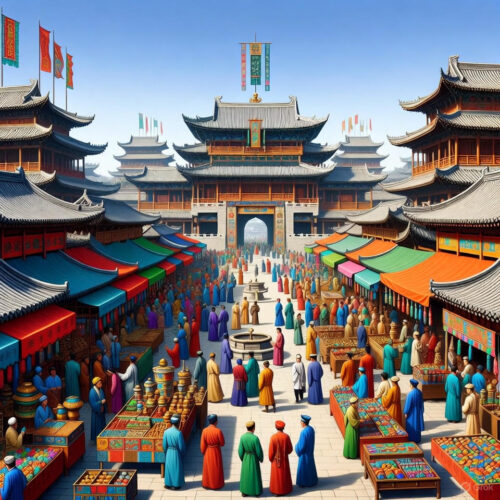
Tensions boiled over due to Yang Guozhong’s paranoia. Convinced An was plotting rebellion, Yang repeatedly urged Xuanzong to strip him of power. An, feeling threatened, feigned loyalty while preparing his forces. Rumors swirled: An was obese and suffered from blindness and skin sores in his later years, yet his ambition burned fiercely. In late 755, as court intrigue intensified, An decided to strike first.
On December 16, 755, An Lushan proclaimed his revolt from Fanyang. Claiming a divine mandate and accusing Yang Guozhong of treason, he mobilized an army estimated at 150,000–200,000, including elite cavalry of non-Han origin. His forces marched south along the Grand Canal, moving with astonishing speed. An treated surrendered officials courteously, winning defections and swelling his ranks. By January 756, his vanguard reached the Yellow River.
The rebellion’s early successes were stunning. Tang defenses crumbled. Generals like Feng Changqing and Gao Xianzhi were executed for failures, victims of court scapegoating. In July 756, after the disastrous Battle of Tong Pass where loyalist Geshu Han was defeated, An’s forces captured Chang’an. Emperor Xuanzong fled westward to Sichuan, but en route, at Mawei Inn, mutinous troops demanded Yang Guifei’s death, blaming her for the catastrophe. Heartbroken, Xuanzong consented; she was strangled (or, in romantic legends, committed suicide). The emperor abdicated soon after, passing the throne to his son Suzong.
An Lushan entered the fallen capital triumphantly but did not linger. He pushed east to Luoyang, the secondary capital, declaring himself Emperor of the Great Yan Dynasty in early 756. Luoyang became his base, where he minted coins and appointed officials. Yet, cracks appeared in the rebel camp. An’s health deteriorated; paranoia gripped him. He mutilated subordinates and grew increasingly tyrannical. In January 757, his own son, An Qingxu, with the aid of eunuch Li Zhu’er, assassinated him—stabbing the blinded, bedridden general in a fit of rage.
The rebellion did not end with An’s death. An Qingxu took over but proved ineffective. His ally Shi Siming, another powerful general, turned on him in 759, killing An Qingxu and proclaiming himself emperor. Shi recaptured Luoyang briefly, but he too was assassinated by his son Shi Chaoyi in 761 amid family strife. The Yan regime fractured through infighting, a classic case of rebels devouring themselves.
Meanwhile, the Tang mounted a fierce recovery. Emperor Suzong, from a base in Lingwu, rallied loyalists. Key generals like Guo Ziyi and Li Guangbi shone brightly. Guo, a master strategist, forged crucial alliances. He secured Uyghur Khaganate support—nomadic horsemen who provided decisive cavalry. In 757, with Uyghur aid (and even a small contingent of Arab mercenaries from the Abbasid Caliphate), Tang forces recaptured Chang’an and Luoyang. Battles like Xiangji Temple turned the tide.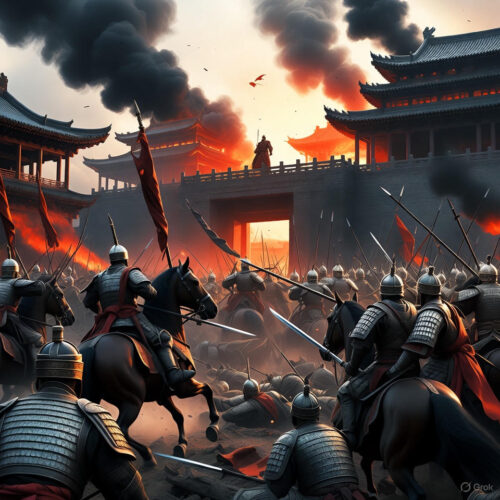
Some of the war’s most harrowing episodes unfolded in prolonged sieges. The Siege of Suiyang (757) saw Tang defender Zhang Xun hold out against overwhelming odds. As food ran out, defenders resorted to eating horses, then rats, then—horrifically—the bodies of the dead, including women and slaves. Zhang reportedly executed his own concubine to feed his troops. When the city finally fell, only a few hundred survived, but it delayed rebel advances south, saving the Yangtze region.
Another grim chapter: massacres of foreigners. In 760, rebel general Tian Shengong slaughtered thousands of Arab and Persian merchants in Yangzhou. In 761, anti-foreign sentiment led to pogroms against Sogdians in the north.
By 762, under Emperor Daizong, Tang momentum grew. Luoyang fell again in late 762. Shi Chaoyi fled, pursued relentlessly. On February 17, 763, cornered and despairing, he hanged himself. The rebellion was over.
The cost was staggering. Pre-rebellion censuses recorded about 53 million people; post-war, only 17 million. While not all deaths were direct (famine, displacement, and census collapse played roles), estimates range from 13 to 36 million dead—making it one of history’s deadliest conflicts, rivaling World War II in proportional impact. Northern China was depopulated; millions migrated south, shifting economic power to the Yangtze valley. The central government’s authority weakened; provincial military governors (jiedushi) retained power, sowing seeds for later fragmentation.
Culturally, the trauma inspired profound art. Du Fu, trapped in Chang’an during its fall, wrote poignant poems of loss: “The state perishes, rivers and mountains remain.” Li Bai wandered in exile. Wang Wei, captured by rebels, composed verses of quiet resilience. The era’s poetry gained depth from suffering.
Yet the Tang endured for another 150 years. Recovery came through adaptive policies, economic shifts south, and military reforms. The dynasty destroyed the Uyghur Khaganate later and maintained cultural influence. The rebellion’s end marked not total collapse but a turning point toward renewal.
The An Lushan Rebellion reveals the fragility of even the greatest empires. Nepotism blinded leadership; over-reliance on charismatic generals invited betrayal; ethnic diversity, while a strength, could fuel division when exploited. Internal rot proved deadlier than external threats.
But it also showcases triumph over adversity. Loyalists like Guo Ziyi exemplified strategic patience and alliance-building. The Tang’s survival demonstrated institutional resilience. Cultural output flourished amid ruin—poets transformed pain into timeless beauty.
This ancient cataclysm offers profound benefits for modern life. The rebellion’s core lesson: crises, no matter how devastating, can be catalysts for personal growth and reinvention if met with resilience, strategic action, and strong relationships. Just as the Tang rebuilt stronger in new ways, you can turn betrayals or setbacks into fuel for unbreakable determination.
Here are specific ways to apply these historical insights to your individual life today:
– **Cultivate strategic alliances like Guo Ziyi did with the Uyghurs**: In your career or personal goals, don’t go it alone. Identify mentors, colleagues, or friends who bring complementary strengths. Actively network—attend one industry event or reach out to one new contact per week—to build a support system that provides “cavalry” during tough times.
– **Guard against “court intrigue” in your decisions**: Avoid letting favoritism or emotions cloud judgment, as with Yang Guozhong’s nepotism. When making big choices (hiring, promotions, investments), use objective criteria: create checklists or seek third-party advice to ensure fairness and prevent self-sabotage.
– **Embrace resilience in the face of “siege-like” challenges**: Like Zhang Xun at Suiyang, endure prolonged hardships by prioritizing essentials. During financial strain or health issues, break problems into daily survival steps—track expenses rigorously, seek small wins, and remind yourself that holding the line preserves future opportunities.
– **Transform suffering into creative output, as Tang poets did**: Channel setbacks into growth. Start a journal chronicling challenges and insights, or pursue a hobby like writing or art. This reframes pain as meaningful, boosting mental strength and even opening new paths (many successful authors emerged from personal crises).
– **Recognize and redirect destructive ambition, learning from An Lushan**: Ambition is powerful, but unchecked it destroys. Regularly self-assess: Are your goals serving long-term fulfillment or short-term ego? Set boundaries, like annual reviews of work-life balance, to harness drive ethically.
– **Adapt to change by shifting “economic centers” southward**: When one area of life declines (a job loss, relationship end), pivot resources to emerging strengths. Invest time in learning new skills online or relocating focus to family/health, mirroring the Tang’s southern economic boom.
To put this into action, follow this motivational 30-day plan inspired by the rebellion’s turnaround:
- **Days 1-5: Assess Your Empire** – Inventory your life: strengths (loyal forces), weaknesses (court intrigues), and threats (potential rebellions like burnout). Write a honest “imperial report.”
- **Days 6-10: Forge Alliances** – Reach out to five people for support or advice. Schedule coffee chats or calls. Build your “Uyghur cavalry.”
- **Days 11-15: Fortify Defenses** – Identify one bad habit (nepotism-like favoritism toward comfort) and replace it with discipline, e.g., daily exercise or objective decision-making tools.
- **Days 16-20: Endure the Siege** – Tackle a current challenge head-on with small, consistent actions. Track progress daily, celebrating endurance.
- **Days 21-25: Channel Creativity** – Dedicate 30 minutes daily to reflective writing or art about your struggles. Turn pain into poetry.
- **Days 26-30: Plan Renewal** – Outline a pivot: new goal in an untapped area (skill, relationship, side hustle). Take first steps, like enrolling in a course.
By embodying the Tang’s unyielding spirit, you’ll not only survive life’s rebellions—you’ll emerge stronger, wiser, and ready to build your own golden age. December 16, 755, reminds us: chaos is inevitable, but triumph is a choice.
Share: