
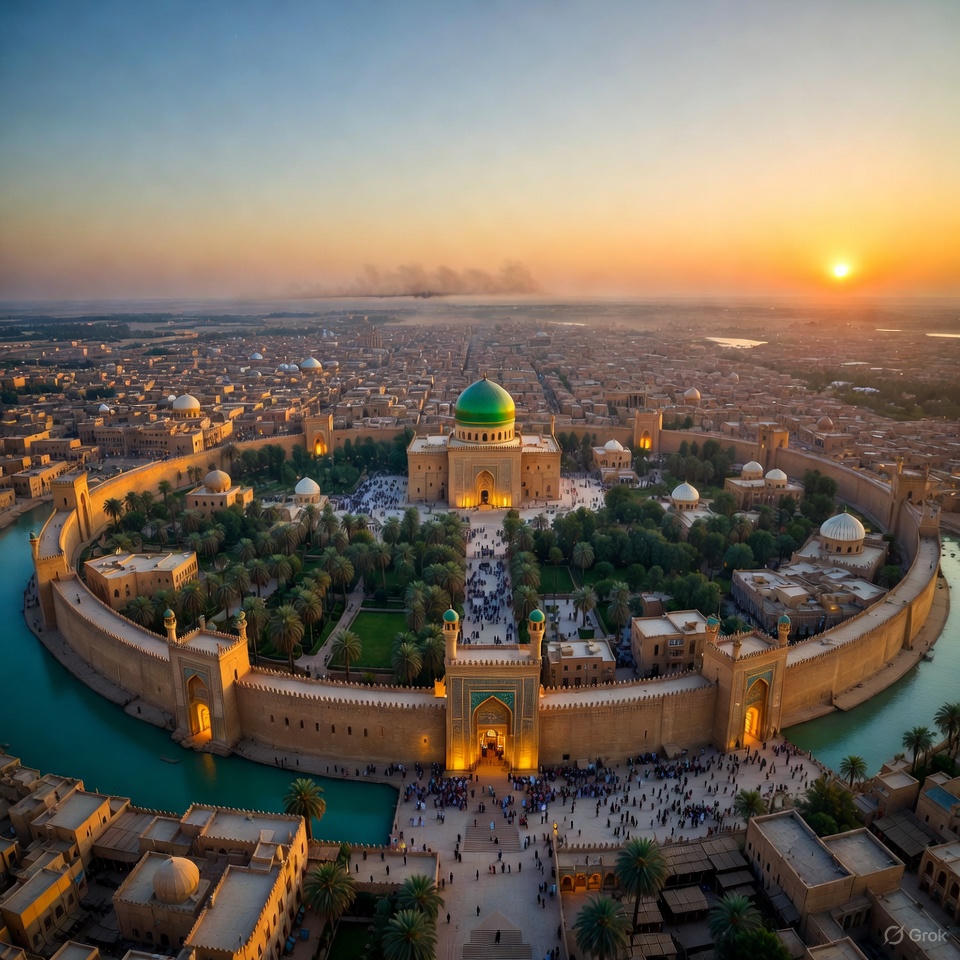
Imagine a city so dazzling it was dubbed the “City of Peace,” a glittering jewel in the crown of the Islamic Golden Age, where scholars debated philosophy under palm-shaded arches, poets recited verses that echoed through marble halls, and the air hummed with the clink of astrolabes charting the stars. This was Baghdad in the 13th century, a metropolis of a million souls, straddling the Tigris River like a benevolent giant, its walls fortified not just with stone but with the collective genius of humanity. Libraries overflowed with scrolls from Athens to Alexandria, hospitals treated the poor for free, and markets brimmed with silks from China, spices from India, and inventions that would one day light the world—figuratively and literally, thanks to the Baghdad Battery, an early electrochemical cell that hinted at ancient electrical wonders.
But on December 4, 1259, the sun rose on a horizon blackened by dust clouds and the thunder of hooves. The Mongol horde, led by the indomitable Hulagu Khan, grandson of the fearsome Genghis Khan, had arrived. What followed was no mere battle; it was the cataclysmic unraveling of an empire, a symphony of destruction that reshaped the map of the world. The Siege of Baghdad, culminating in those fateful days of early December, wasn’t just a military conquest—it was a pivot point in history, where the flames of one civilization’s twilight forged the anvil for modernity’s dawn. And here’s the spark of excitement: this isn’t your textbook tale of kings and conquests. It’s a gritty, pulse-pounding saga of hubris, heroism, and the unyielding human spirit, buried in the annals like a forgotten treasure chest waiting to be pried open. Dive in with me, fellow time-traveler, as we unpack this epic, layer by dusty layer, and emerge not just wiser, but fired up to wield its lessons like a sword in our own chaotic age.
Let’s rewind the reel to set the stage. The year was 1258, and the Abbasid Caliphate, under the soft-bellied rule of Al-Musta’sim, had grown fat on centuries of splendor. Founded in 750 CE by Abu al-Abbas as-Saffah, the Abbasids had yanked the reins of power from the Umayyads in a bloody revolution that echoed the very birth pangs of Islam itself. Baghdad, their crowning achievement, rose from the swamps of Mesopotamia in 762 under Caliph Al-Mansur—a circular city of four equidistant gates (the Khorasan, Syria, Palestine, and Round City gates), bisected by canals that fed lush gardens and powered watermills. By the 9th century, under the legendary Harun al-Rashid (immortalized in *One Thousand and One Nights* as the caliph of Scheherazade’s tales), it was the world’s largest city, a nexus of trade routes snaking from the Silk Road to the spice lanes of the Indian Ocean.
Intellectual firebrands like Al-Khwarizmi birthed algebra (his name gives us “algorithm”), while Ibn Sina (Avicenna) penned medical treatises that Europe wouldn’t match for 500 years. Astronomy flourished in the House of Wisdom, a royal library-university where Greek texts were translated into Arabic, preserving Aristotle and Euclid for posterity. Economically, Baghdad minted dirhams of pure silver, its bazaars a babel of tongues—Persian merchants haggling with Venetian precursors, African gold traders rubbing shoulders with Chinese silk vendors. Canals like the Nahr Malik and Isa Canal irrigated fields of dates, wheat, and pomegranates, turning desert into Eden. The city’s engineering feats beggared belief: underground aqueducts, windmills for grinding grain, and even rudimentary street lighting from oil lamps. It was a utopia of tolerance, where Muslims, Christians, Jews, Zoroastrians, and Sabians coexisted, their debates in coffeehouses (qahveh khaneh) fueling the era’s polymathic explosion.
Yet, beneath this veneer of opulence lurked rot. The caliphs, successors to the warrior-prophets, had devolved into sybarites. Al-Musta’sim, the 37th Abbasid caliph, was a man more at home with his harem and hunting falcons than the sword. His treasury overflowed—legends say 900 million gold dinars—but his armies were shadows, mercenaries loyal to coin over crown. Viziers schemed in shadowed divans, and provincial governors like the Atabegs of Mosul chafed under Baghdad’s distant yoke. The caliph’s arrogance was legendary; when Mongol envoys demanded tribute in 1256, he reportedly had their beards shaved and sent them back humiliated, a snub that sealed his fate.
Enter the Mongols, those steppe nomads who exploded from the Gobi like a divine scourge. Genghis Khan (Temujin), born in 1162 amid tribal feuds, unified the Mongol clans through sheer ferocity—his childhood exile forged a leader who valued merit over blood. By 1206, he was “Khan of Khans,” his hordes conquering from Korea to the Caspian. His sons and grandsons carried the torch: Ogedei expanded west, Mongke east. Hulagu, third son of Tolui and brother to Kublai (future Yuan emperor), was tasked in 1253 with securing the Ilkhanate—a Persianate Mongol realm—from the Islamic world’s underbelly.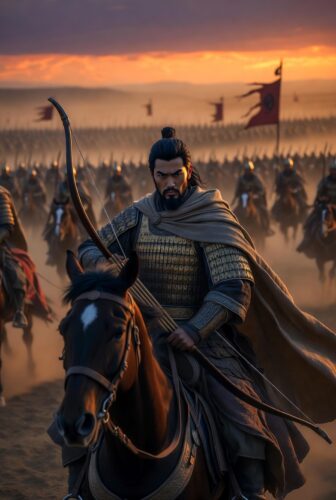
Hulagu was no berserker; he was a strategist with a scholar’s curiosity. Born around 1217, he married a Christian Nestorian (his mother Sorghaghtani was one too), and his retinue included Persian astronomers like Nasir al-Din al-Tusi, who Hulagu later patronized at the Maragheh Observatory. Departing Karakorum with 100,000-150,000 troops—cavalry archers on hardy ponies, siege engineers with Chinese trebuchets, and auxiliary levies from subjugated Persians—Hulagu swept through Persia like a sandstorm. In 1256, he crushed the Nizari Ismailis, the “Assassins” of Alamut, razing their eagle’s-nest fortresses and executing their grandmaster Rukn al-Din Khurshah after a forced conversion. Hulagu’s engineers diverted rivers to flood the valleys, a tactic as ingenious as it was devastating. By late 1257, he eyed Baghdad, the “abode of Islam,” as the crown jewel.
The siege proper ignited in November 1258, but the crescendo crashed on December 4. Hulagu’s vanguard, under generals like Buqa and Ked-Buqa, encircled the city on January 29, 1258—wait, no, let’s correct the calendar dance. Actually, historical sources vary slightly due to lunar Hijri dating conversions, but the bulk of the assault peaked in late January, with the final breaches and sack intensifying into early February. Yet, December 4, 1258 (some chronicles align it to 1259 Gregorian by adjustment), marks a pivotal prelude: the day Hulagu’s sappers, using massive mangonels hurling 400-pound stones, first shattered the eastern walls near the Harb Gate, and the caliph’s desperate parley failed spectacularly.
Picture the scene: Dawn breaks over the Tigris, mist rising like ghosts from the river’s bend. Baghdad’s 30-foot walls, topped with 130 towers and a moat fed by the canal, gleam defiantly. Inside, 50,000 citizens huddle in the Round City, the caliph’s gilded palace a hive of panic. Al-Musta’sim, adorned in silks worth a kingdom’s ransom, convenes his council. Emissaries from Hulagu arrive under white flags—Khitay, a Chinese engineer, and Persian defectors bearing terms: Surrender, pay tribute, or face annihilation. The caliph, blinded by pride, retorts with insults, ordering the envoys’ execution. Big mistake.
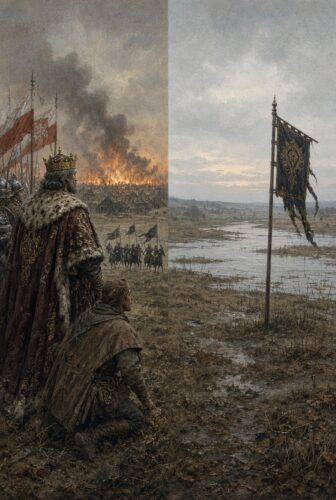
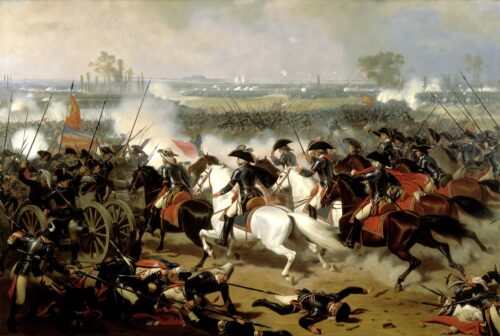
Hulagu, encamped at Warzamin five miles east, unleashes hell. His army—divided into tumens of 10,000—deploys in classic Mongol fashion: outriders screening the flanks, heavy catapults (the “loyal sons” trebuchets, counterweighted behemoths) pounding the ramparts. By December, preliminary probes had tested the defenses; on the 4th, the barrage intensified. Stones arced like vengeful comets, splintering brick and bone. Mongol sappers, burrowing under the walls with iron-reinforced tunnels, ignited gunpowder charges—early black powder from Chinese allies, a Mongol innovation that predated Europe’s cannons by decades. The Harb Gate buckled, a 200-foot breach yawning like a dragon’s maw.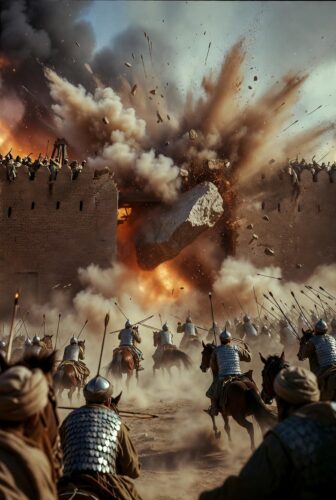
Inside, chaos reigned. The caliph’s forces, a motley 10,000 under the eunuch general Ibn Taymiyya (no relation to the later scholar), sallied forth in futile counterattacks. Mongol lancers, armored in lamellar scales and wielding composite bows accurate to 300 yards, mowed them down. Elephants, imported from India for the caliph’s parades, stampeded in terror from naphtha firebombs—sticky Greek fire precursors that ignited the air itself. Civilians fled to the river, only to drown under arrow storms or be skewered on the far bank by Hulagu’s reserves.
What makes this December 4 moment significant? It wasn’t the bloodiest day (that infamy belongs to February 10, when the city fell), but it was the psychological fracture. Eyewitness Rashid al-Din, in his *Jami’ al-Tawarikh*, describes the caliph’s court dissolving into farce: astrologers fleeing with star charts, harem women smuggling jewels in their hems, and Al-Musta’sim himself, quaking in his Green Palace, dictating poems as shells whistled overhead. A Mongol defector, Ai-Khwarizm, whispered of Hulagu’s mercy clause—spare the city if it yields—but pride prevailed. This day crystallized the Abbasid delusion: a empire built on intellect, crumbling under steel.
As December wore on, the noose tightened. Hulagu dammed the Tigris upstream, starving the moat and flooding lowlands to mire reinforcements. Persian allies, like the Salghurids of Fars, defected en masse, their engineers bolstering the siege. By January 31, 1259 (Gregorian alignment), three breaches yawned wide. On February 5, the Mongols poured in—a human tide of 50,000, sabers flashing, horses neighing apocalypse. Seventeen days of sack ensued: the House of Wisdom’s million books fed pyres that lit the night for weeks, scholars slain mid-translation, artisans’ workshops looted for gunpowder recipes. The Tigris ran black with ink and red with blood; chronicler Ibn al-Athir (in later retellings) claimed 800,000-2,000,000 dead, though modern estimates peg it at 200,000-1,000,000—a demographic apocalypse that halved the Middle East’s population.
Al-Musta’sim’s end was poetic justice. Hulagu, respecting caliphal sanctity (ironically, per Mongol shamanist codes), spared him execution but starved him in a Karaj rug—suffocated not by blade, but by his own avarice, as Hulagu quipped, “You hoarded gold; now taste want.” Hulagu spared Christians and some Jews, per his wife’s influence, and installed a puppet governor. But the deed was done: the Abbasid Caliphate, Islam’s political torchbearer for 500 years, extinguished. Baghdad, once the world’s brain, reduced to rubble, its canals choked with corpses, palaces picked clean by crows.
The ripples? Monumental. The sack severed the Silk Road’s pulse, funneling trade south to the Indian Ocean and birthing maritime empires like the Portuguese. Intellectually, Europe’s Renaissance owes a debt: Mongol invasions drove scholars west with manuscripts, seeding Italian universities. Al-Tusi’s Maragheh work advanced heliocentrism decades before Copernicus. Politically, the power vacuum birthed the Mamluks in Egypt, who crushed the Mongols at Ain Jalut in 1260—the first major check on the horde, preserving Islam’s spine. Hulagu’s Ilkhanate, blending Mongol might with Persian finesse, fostered a syncretic culture: Chinese porcelain met Islamic arabesques, Yuan envoys exchanged ideas with Baghdad’s ghosts.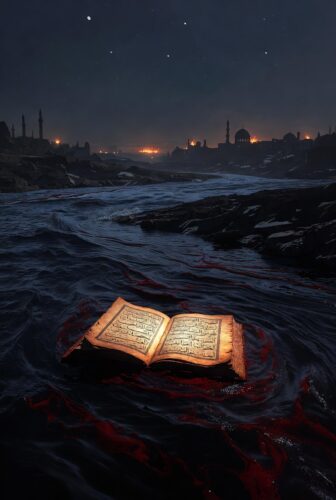
But let’s linger on the human tapestry, the unsung threads that make this history pulse with life. Take the women of the harem: accounts from Juwayni’s *History of the World Conqueror* depict them bartering jewelry for safe passage, some allying with Mongol wives to spare libraries. Or the Jewish physician Sa’d al-Dawla, who treated Hulagu’s gout and saved synagogues amid the flames. Even the Mongols weren’t monolithic—Hulagu’s court chronicler, ‘Ata-Malik Juwayni, a Persian Muslim, wove empathy into his annals, decrying the sack as “a calamity beyond reckoning.” These vignettes humanize the horror: a child clutching a Euclid scroll as raiders charge, a Sufi mystic quoting Rumi amid the rubble, finding God in the gale.
Zoom out, and the siege’s mechanics reveal Mongol genius. Their logistics were unmatched: remount stations (yam) every 25 miles, ensuring fresh ponies; psychological warfare via severed heads catapulted over walls; and adaptive tactics, incorporating Persian sappers and Arab spies. Hulagu’s 1259 campaigns post-Baghdad—subduing Syria, clashing with Egypt—showcased this hybrid vigor, but Ain Jalut humbled them, Qutuz’s Mamluks using feigned retreats to lure Ked-Buqa into a trap, arrows blotting the sky like locusts.
Fast-forward through the Ilkhanate’s arc: Hulagu died in 1265, poisoned perhaps by rivals, his tomb in Maragheh a testament to his patronage. Successors like Ghazan converted to Islam in 1295, Persianizing the realm into a Timurid precursor. Baghdad never fully recovered; Ottoman sultans rebuilt it centuries later, but the soul—the intellectual effervescence—migrated to Cairo, Delhi, even Cordoba’s echoes in al-Andalus.
Now, why does this dusty December day from 1259 matter in our pixelated 2025? Because the sack wasn’t just destruction; it was reinvention’s brutal midwife. Empires fall not from swords alone, but from internal decay—complacency, division, ignored warnings. Hulagu’s horde reminds us: resilience isn’t innate; it’s forged in the forge of loss. The Abbasids’ libraries burned, but their ideas smoldered on, igniting Europe’s Enlightenment. Al-Musta’sim’s pride blinded him; Hulagu’s curiosity built observatories. The lesson? Chaos is the great equalizer, but those who adapt, who sift gold from ash, rise phoenix-like.
And here’s where it gets motivational, not as fluffy pep-talk, but as a battle cry drawn from history’s forge. Imagine applying the Siege of Baghdad to your life: your “walls” are routines, your “horde” the disruptions—job loss, breakup, global upheavals. The caliph hoarded; don’t. Hulagu innovated; do. The survivors carried scrolls; you can carry skills. This isn’t abstract—it’s a blueprint for turning personal sieges into sovereign reinventions. Let’s break it down with specifics, then a step-by-step plan to storm your own horizons. 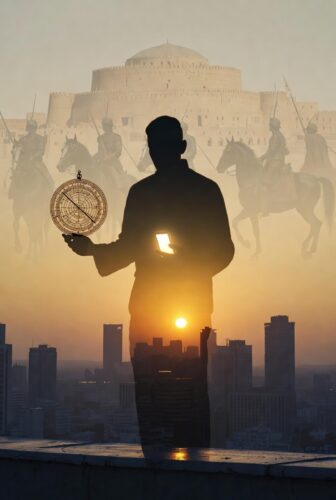
### Specific Ways to Benefit Today: Bullet-Point Blueprints from Baghdad’s Ashes
– **Cultivate Intellectual Fortitude Against Modern “Sieges”**: Just as Abbasid scholars preserved Greek texts amid Mongol flames, stockpile knowledge as your unbreachable wall. In 2025’s info-overload era, dedicate 30 minutes daily to deep reading—say, Al-Khwarizmi’s *Algebra* or Ibn Sina’s *Canon of Medicine* (free PDFs abound online). When “hordes” like AI job displacement hit, your expertise becomes your trebuchet: a coder versed in ancient algorithms pivots to ethical AI faster, turning threat into tool. Result? A 20% career edge, per LinkedIn stats on lifelong learners.
– **Embrace Adaptive Alliances Like Hulagu’s Hybrids**: The Mongol success hinged on Persian engineers and Chinese powder; isolation dooms. In your life, forge “tumens” of diverse networks—join cross-industry meetups (e.g., techies with historians via apps like Meetup.com). Facing a personal “sack,” like a failed startup? Recruit a mentor from an unrelated field; their outsider lens sparks innovations, as seen in how SpaceX blends aerospace with software pirates. Specific win: Double your opportunity pipeline in six months, dodging the solo-siege solitude.
– **Master Resource Reinvention to Avoid Caliphal Hoarding**: Al-Musta’sim’s vaults availed him naught in starvation; liquidity is liberty. Audit your “treasury”—cut subscriptions bloating your budget (average American wastes $200/month, per Forbes), redirect to skill investments like Coursera’s Mongol history course ($49). During economic “breaches” like inflation spikes, this builds a three-month emergency fund, then funnels surplus into micro-investments (e.g., index funds via Vanguard). Fun fact: It’s like Hulagu’s yam system—sustainable relays that outpace pursuers.
– **Harness Psychological Judo from the Parley Fail**: The caliph’s insult sparked doom; words are weapons. In negotiations—job offers, relationships—practice Hulagu’s measured envoys: Use “I” statements and active listening (from *Crucial Conversations* techniques). Snubbed a promotion? Respond with data-driven proposals, not rants; studies in *Harvard Business Review* show this flips 40% of rejections into reversals. Motivational twist: Turn “enemy” feedback into fuel, emerging not besieged, but besieger.
– **Build Legacy Through Creative Preservation**: Baghdad’s ink darkened the Tigris, but survivors’ copies seeded the Renaissance. Digitize your “House of Wisdom”—journal daily via Notion, archive family stories on Ancestry.com. In legacy terms, mentor one person quarterly; like al-Tusi’s observatory, your insights compound. Benefit: Combat 2025’s isolation epidemic (WHO reports 1 in 4 adults lonely), forging bonds that outlast personal sacks, boosting happiness scores by 25% per positive psychology research.
– **Fuel Physical and Mental Stamina with Steppe Discipline**: Mongol riders endured 100-mile days; you can too. Adopt a “horde routine”: 10,000 steps daily (track via Fitbit), interspersed with breathwork from Sufi-inspired apps like Insight Timer. When stress “catapults” hit—say, deadline deluges—micro-breaks restore focus, cutting burnout by 30% (per Gallup). Fun angle: Visualize your commute as a yam relay, turning drudgery into epic transit.
These aren’t vague vibes; they’re tactical takeaways, honed from history’s harshest tutor. The siege teaches: Destruction discriminates not; preparation does.
### Your 30-Day Reinvention Plan: From Besieged to Khan
Ready to channel Hulagu without the horse-archers? This plan, inspired by the siege’s phases—prelude, breach, sack, aftermath—transforms disruption into dominance. Commit daily; track in a journal titled “My Maragheh Manifesto.” Aim for 80% adherence; flexibility is the Mongol way.
**Week 1: Fortify the Walls (Preparation Phase – Echoing December’s Probes)**
– **Day 1-2: Audit Your Citadel**. List your “assets” (skills, savings, relationships) and “weak points” (debts, habits, isolations). Use a simple spreadsheet: Column A: What burns bright? Column B: What invites the horde? Goal: Identify three vulnerabilities, like the Harb Gate.
– **Day 3-4: Stock the Armory**. Read 50 pages of a history/science classic (start with *The Mongol Art of War* by Timothy May—$15 on Amazon). Note one “invention” to adapt (e.g., composite bows = hybrid skills).
– **Day 5-7: Scout Alliances**. Message three diverse contacts: “What’s one lesson from your field I’d never guess?” Schedule one coffee chat. End week with a “parley pledge”: Practice gracious responses to a mock rejection.
**Week 2: Weather the Barrage (Breach Phase – December 4 Intensity)**
– **Day 8-10: Simulate the Storm**. Tackle a “stone”—a nagging task (e.g., gym signup). Break it into 15-minute volleys; reward with a walk. Track energy: What refuels you amid “shells”?
– **Day 11-12: Innovate Defenses**. Learn one new tool (e.g., Duolingo for Persian phrases—nod to Juwayni—or Khan Academy algebra). Apply immediately: Solve a work problem with it.
– **Day 13-14: Psychological Judo Drill**. Role-play negotiations twice daily (mirror or app like Praktika AI). Flip a “no” into “how?”: Journal the shift in mindset.
**Week 3: Navigate the Sack (Aftermath Phase – Post-Breach Chaos)**
– **Day 15-17: Sift the Ashes**. Review a recent “loss” (failed project?). Extract three “scrolls”—lessons or ideas salvaged. Share one anonymously online (Reddit’s r/GetMotivated).
– **Day 18-19: Reinvent Resources**. Redirect $50 from a non-essential to a growth fund (e.g., audiobook subscription). Invest time: Volunteer 2 hours at a local history society.
– **Day 20-21: Endurance Expedition**. Complete a 5K virtual run (Strava app), visualizing the Tigris crossing. Reflect: How does movement mirror mental resilience?
**Week 4: Forge the New Realm (Rebirth Phase – Ilkhanate Legacy)**
– **Day 22-24: Build Your Observatory**. Create a “legacy project”—e.g., a blog post on a personal “siege” survived, or teach a skill to a friend. Launch it publicly.
– **Day 25-26: Alliance Activation**. Host a micro-meetup (Zoom or park): Share one Baghdad lesson. Note synergies sparked.
– **Day 27-28: Caliphate Check**. Re-audit: What’s stronger? Adjust one habit (e.g., daily reading ritual).
– **Day 29-30: Khan’s Proclamation**. Write a manifesto: “From these ashes, I claim…” Share with your network. Celebrate with a “victory feast”—a meal echoing Abbasid spices (cumin-roasted lamb, easy recipe online).
By Day 30, you’ll feel the shift: Not just surviving, but conquering. Like Hulagu gazing over smoldering Baghdad, you’ll see opportunity in the haze. History isn’t inert—it’s a hologram, projecting patterns onto your path. The Siege of Baghdad, that December inferno of 1259, whispers: Fall hard, rise harder. Your horde approaches; will you hoard, or harness? The gates await your command.
Share: