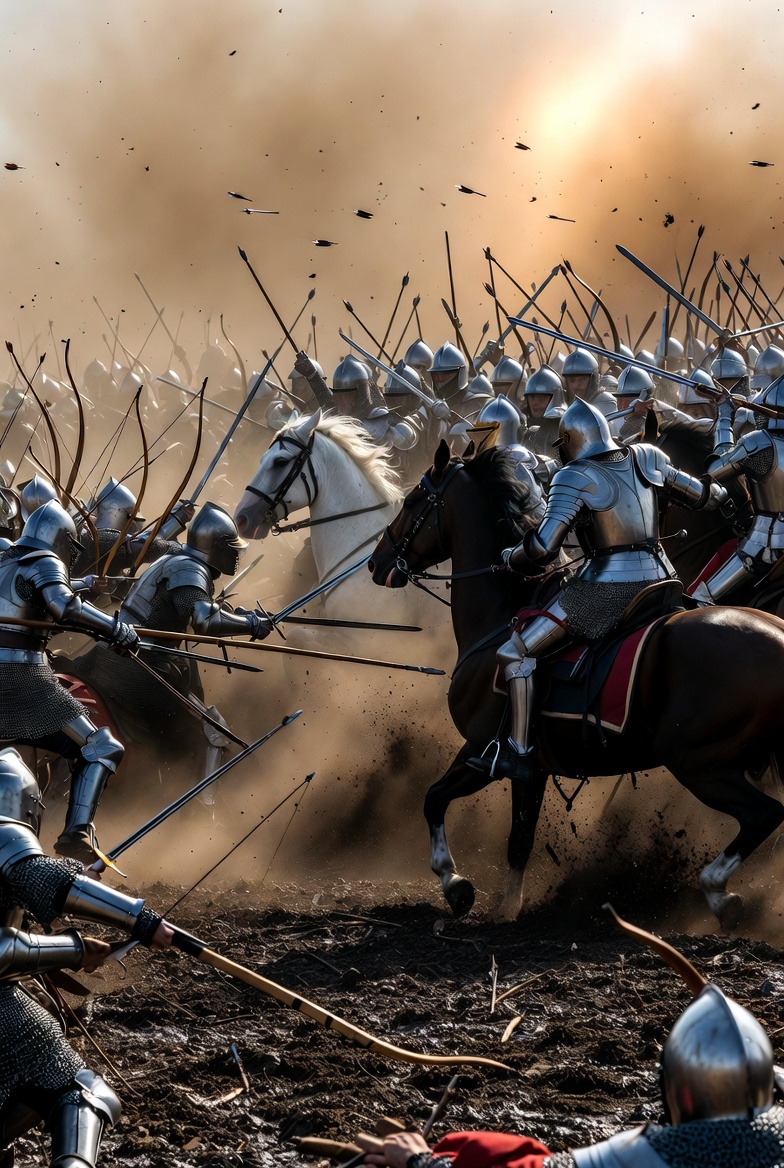


On July 7, 1520, amidst a sweltering Mexican plain thick with tension, Hernán Cortés and his Tlaxcalan allies faced a numerically superior Aztec force in what would become the Battle of Otumba. Fresh from the harrowing La Noche Triste—“The Night of Sorrows”—in which the Spaniards lost most of their gold and half their men, Cortés made a fateful decision: stand and fight on unfamiliar ground rather than risk a broken retreat. Against overwhelming odds, his cavalry charge shattered Aztec lines, salvaging not only his doomed expedition but altering the course of history.
In exploring this distant yet significant event, we unearth lessons in resilience, decisive action, alliance building, and adaptability—qualities that any individual today can harness to turn challenges into stepping-stones for personal growth.
The Road to Otumba: Context and Cataclysm
The Spring of 1520 found Cortés and his band of Spaniards in dire straits. After months of navigating shifting alliances among indigenous polities, they entered Tenochtitlán peacefully only to be betrayed by Moctezuma’s successor. A brutal uprising forced a midnight escape on June 30–July 1, leaving Spaniards bleeding, gold slipping through their fingers, women and children in tears, and morale at rock bottom.
Rather than capitulate, Cortés pressed on toward Tlaxcala, where he hoped to regroup. But just outside the village of Otumba lay an Aztec army as fierce in reputation as the sun-god they worshipped. Estimates vary, but some chronicles suggest Cortés commanded fewer than 200 cavalry, 1,200 infantry, and a few hundred Tlaxcalan warriors. Their Aztec pursuers numbered in the thousands, determined to avenge Spanish desecration.
Sand, dust, and mid-day heat became the stage for a drama of survival. Cortés studied the terrain: a broad plain hemmed by marshy patches and low hills—ideal for cavalry maneuvers. He reorganized his exhausted troops, reminding them that retreat across the plain would mean slaughter in the open. His Tlaxcalan allies, equally battered but vehemently loyal, formed protective screens. In the distance, war drums thundered as the Aztecs closed in.
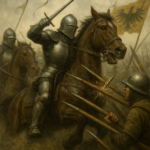
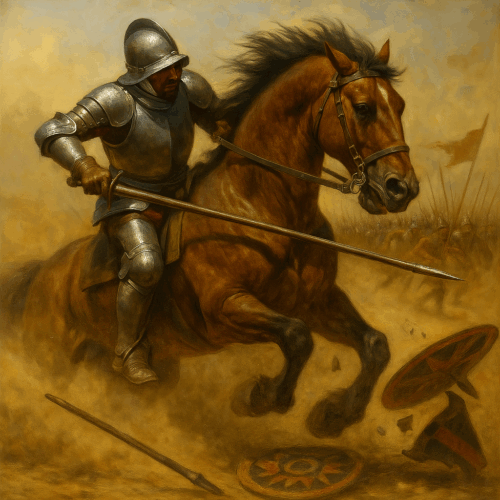
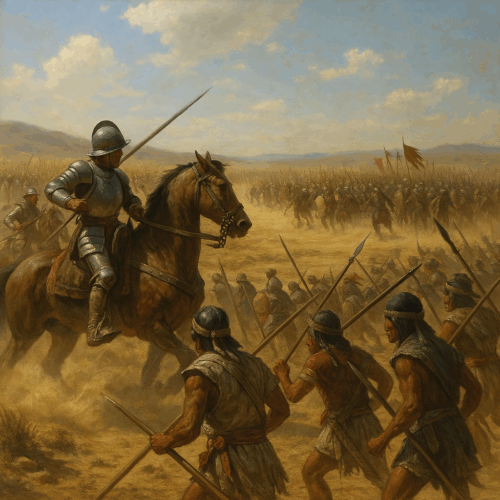 The Aztecs struck first, swarming in waves of javelin-armed infantry. The Spanish infantry fired their arquebuses and crossbows, slowing the charge. Suddenly, Cortés gave the signal: a thunderous cavalry charge straight into the Aztec center. Horses, unseen by New World warriors, reared and trampled, lances pierced bodies, and panic rippled through enemy ranks. What began as an escape turned into an explosive victory amid blood and dust.
Anatomy of the Turning Point
The Battle of Otumba stands as a textbook example of how bold leadership and swift adaptation can convert despair into triumph. Several factors crystallized into this historic outcome:
- Terrain Mastery
Cortés recognized the tactical advantage of open ground for cavalry and positioned his men accordingly. By exploiting the flat plain, he maximized his army’s greatest strength. - Allied Cohesion
Tlaxcalan warriors, once bitter foes of the Aztecs, fought with vengeance-fueled zeal. Their intimate understanding of local customs and battlefield terrain proved invaluable in protecting Spanish infantry. - Decisive Initiative
Facing annihilation or escape through treacherous wetlands, Cortés chose to strike. This seizure of initiative prevented the Aztecs from encircling his forces. - Psychological Shock
For Aztec warriors, horses and steel-clad riders were demonic forces. The sheer terror of a cavalry charge undermined their cohesion, amplifying the impact of the strike.
Each element—terrain, alliance, initiative, surprise—formed interlocking gears. When one faltered, others compensated. The synergy between these factors turned a desperate stand into a resounding victory that secured Cortés’s continued campaign.
 Why Otumba Matters: Historical Ripples
The outcome at Otumba ensured Cortés could reach Tlaxcala, where he rebuilt his forces, secured more native allies, and ultimately returned to besiege Tenochtitlán. By 1521, the Aztec capital fell, ushering in three centuries of Spanish influence across Mesoamerica. This single July 7 engagement:
- Preserved a Conquest
Without victory at Otumba, Cortés’s expedition—and the subsequent colonization of Mexico—might have evaporated. - Altered Global Trade
Silver mines in Central America fueled Spain’s economy and financed European wars, influencing geopolitics for generations. - Cultural Fusion
The melding of indigenous and Spanish customs, languages, and faiths originated in the crucible formed by battles like Otumba. - Knowledge Exchange
Botanical, agricultural, and architectural techniques traversed continents, reshaping diets and built environments on both sides of the Atlantic.
Otumba is more than an isolated clash; it exemplifies how swift decisions and unity under pressure can reshape continents and cultures.
Universal Lessons from a 16th-Century Battlefield
History distills patterns that transcend centuries. From Otumba, we extract principles applicable in any endeavor:
- Resilience Under Duress
When stripped of comfort and security, strength of will emerges. - Strategic Positioning
Knowing your strengths and environment lets you exploit advantages. - Alliances of Purpose
Shared vision unites diverse talents toward a common victory. - Decisive, Timely Action
Hesitation invites defeat; bold moves seize fleeting opportunities. - Leveraging Surprise
Unconventional tactics can disorient larger, entrenched opponents.
Recognizing these patterns, contemporary individuals can map them onto personal, professional, or creative challenges, converting obstacles into springboards for success.
Your Personal Otumba Plan: Turning Adversity into Achievement
Inspired by one of history’s most dramatic turnarounds, here’s a step-by-step blueprint to apply in your own life. Each stage mirrors a key Otumba lesson:
- Assess Your Plain
- Identify the landscape of your challenge: resources, constraints, allies, and threats.
- Map strengths (your skills, support network) and vulnerabilities (gaps in knowledge, toxic influences).
- Secure Allies
- List three people or groups who share your goal.
- Reach out with clear, mutual- benefit proposals (expert advice, collaborative projects).
- Craft a Bold Initiative
- Determine a decisive action that leverages your top strength and confounds your biggest obstacle.
- Set a realistic but ambitious deadline.
- Execute with Precision
- Divide the initiative into micro-tasks.
- Schedule each on your calendar, assigning accountability checkpoints.
- Adapt and Exploit Surprise
- Monitor progress daily.
- If you hit resistance, pivot tactics—introduce an unexpected twist (new tool, fresh approach).
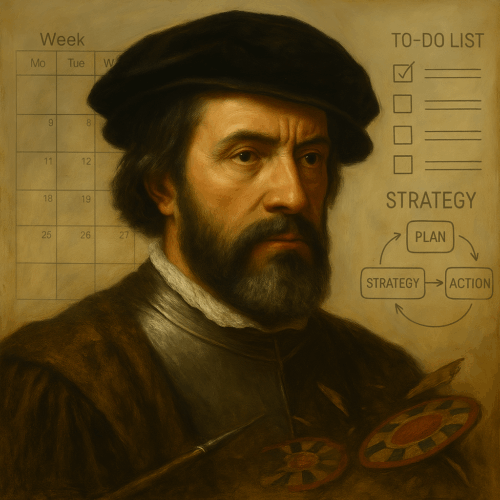 Apply this plan to any personal project—career pivot, writing a book, launching a startup, or mastering fitness. The blueprint supplies structure, but your commitment and adaptability determine triumph.
A 60-Day Otumba Roadmap
To embed these lessons deeply, follow this six-week program. Each week builds on the previous, culminating in a transformative breakthrough on Day 60.
Week 1: Landscape Reconnaissance
- Day 1–2: Brainstorm a challenge you’re passionate about conquering.
- Day 3–4: Research best practices; list three case studies of success.
- Day 5–7: Create a visual “Battle Map” showing strengths and threats.
Week 2: Alliance Formation
- Day 8–10: Identify five potential allies; draft personalized outreach.
- Day 11–12: Conduct one-on-one calls or meetings.
- Day 13–14: Formalize collaboration: set mutual goals and roles.
Week 3: Strategic Initiative Design
- Day 15–17: Brainstorm multiple bold actions (no censorship).
- Day 18–19: Evaluate each by impact vs. effort; select one.
- Day 20–21: Break that action into daily tasks for Week 4.
Week 4: Execution Phase
- Day 22–28: Tackle daily tasks at the same time each day; log progress.
- Day 25: Midweek check-in with an ally for feedback.
- Day 27: Introduce a surprise element—work from a new location, add a creative flair.
Week 5: Adapt and Refine
- Day 29–31: Review logs; identify what worked and what stalled.
- Day 32–33: Brainstorm pivot options for stalled tasks.
- Day 34–35: Implement pivots; measure changes.
- Day 36–37: Gather additional ally feedback; refine next steps.
Week 6: Consolidation and Celebration
- Day 38–42: Final push on the initiative; polish deliverables.
- Day 43: Host a showcase or presentation to your allies or community.
- Day 44–46: Reflect on learnings; journal key insights.
- Day 47–49: Plan next big challenge, applying lessons learned.
- Day 50–60: Rest days interspersed with micro-wins: small tasks to maintain momentum.
By Day 60, you’ll have navigated from clarity of landscape to decisive victory, mirroring Cortés’s journey from retreat to triumph.
 Unlocking Your Inner Conquistador: Daily Rituals
To make these transformations stick, embed daily habits that echo three Otumba pillars:
- Morning Recon (10 minutes)
Journal today’s objectives and potential roadblocks. - Alliance Check-In (5 minutes)
Send a quick message of gratitude or progress update to an ally. - Surprise Spark (5 minutes)
Learn a micro-skill unrelated to your main goal—stimulate creativity. - Evening Debrief (10 minutes)
Reflect on successes and missteps; adjust tomorrow’s task list.
Consistent practice trains your mind to spot terrain, marshal allies, and seize initiative without hesitation.
The Spirit of Otumba in Everyday Life
Whether debating a negotiation, pitching an investor, or navigating personal setbacks, the spirit that transformed a doomed expedition into an imperial conquest lies within each of us. It thrives in our network of relationships, in the quality of our decisions, and in our willingness to shock complacency with fresh tactics.
Each small victory—running that extra mile, landing a challenging client, completing a complex chapter—echoes Cortés’s charge. The more frequently you tap into adaptability and decisive momentum, the larger the challenges you’ll overcome.
 Conclusion: Claim Your Own Victory
July 7, 1520, reminds us that history’s turning points often arise when grit, alliance, and boldness meet. From the bloodied fields of Otumba sprang an empire; from your own fields of challenge can spring your greatest achievements.
Embrace your terrain, assemble your champions, strike with purpose, and surprise tomorrow with a triumph you never saw coming. Your Otumba awaits—seize the charge.
And remember: every decisive action today shapes the history of your tomorrow. Good luck, conquistador of your own destiny.
Share: