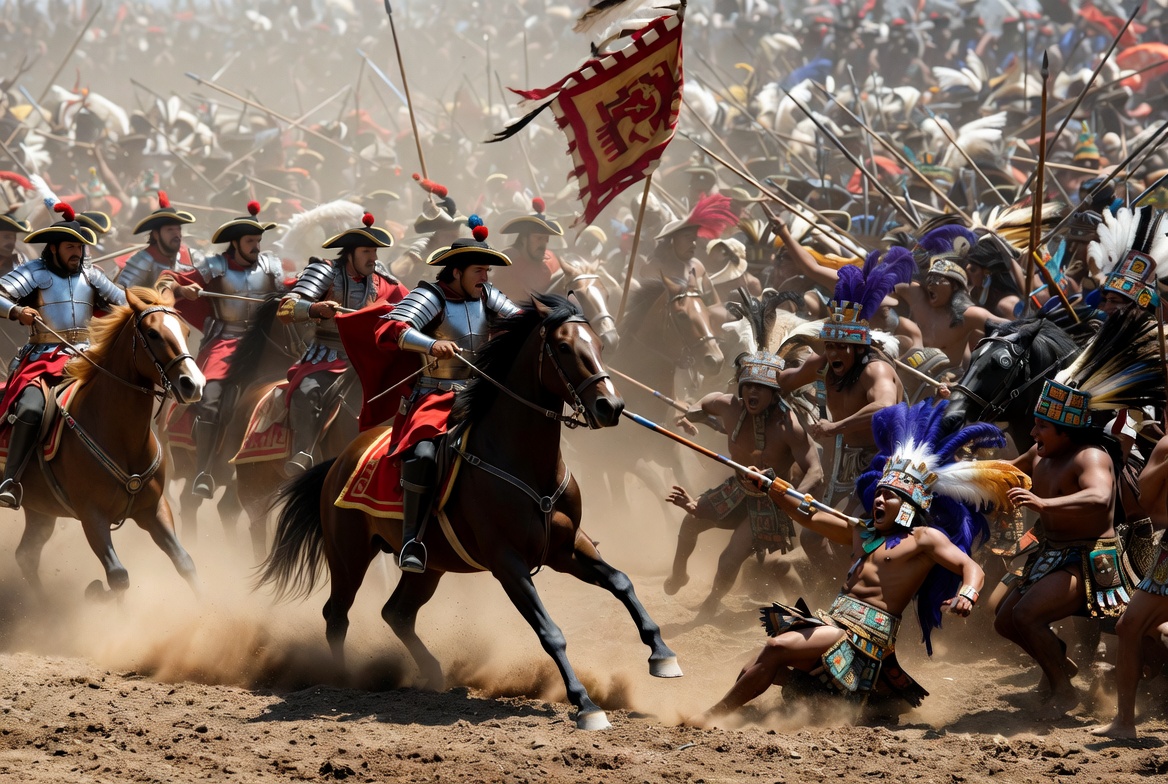
In the sweltering heat of a New England summer, amid the chaos of a revolution hanging by a thread, a ragtag group of frontier delegates gathered in a humble Windsor tavern. On July 8, 1777, they didn’t just scribble another colonial charter. They birthed something audacious: the Constitution of the Vermont Republic—the first written constitution in North America to explicitly prohibit adult slavery, enshrine universal manhood suffrage without property qualifications, guarantee religious freedom, and establish a framework for public education. All while British forces were steamrolling nearby Fort Ticonderoga and the young American experiment teetered on the brink of collapse.
This wasn’t polished Philadelphia rhetoric from powdered wigs. This was gritty, backwoods defiance from settlers squeezed between feuding New York claims, British invasion, and their own burning desire for self-rule. The story of that single day—and the whirlwind weeks leading to it—brims with high drama, improbable heroes, tactical cunning, and a thunderstorm that felt like divine intervention. It’s a tale of underdogs who refused to wait for permission to be free. And buried in its details lies a forgotten lesson for anyone staring down their own seemingly impossible battles today.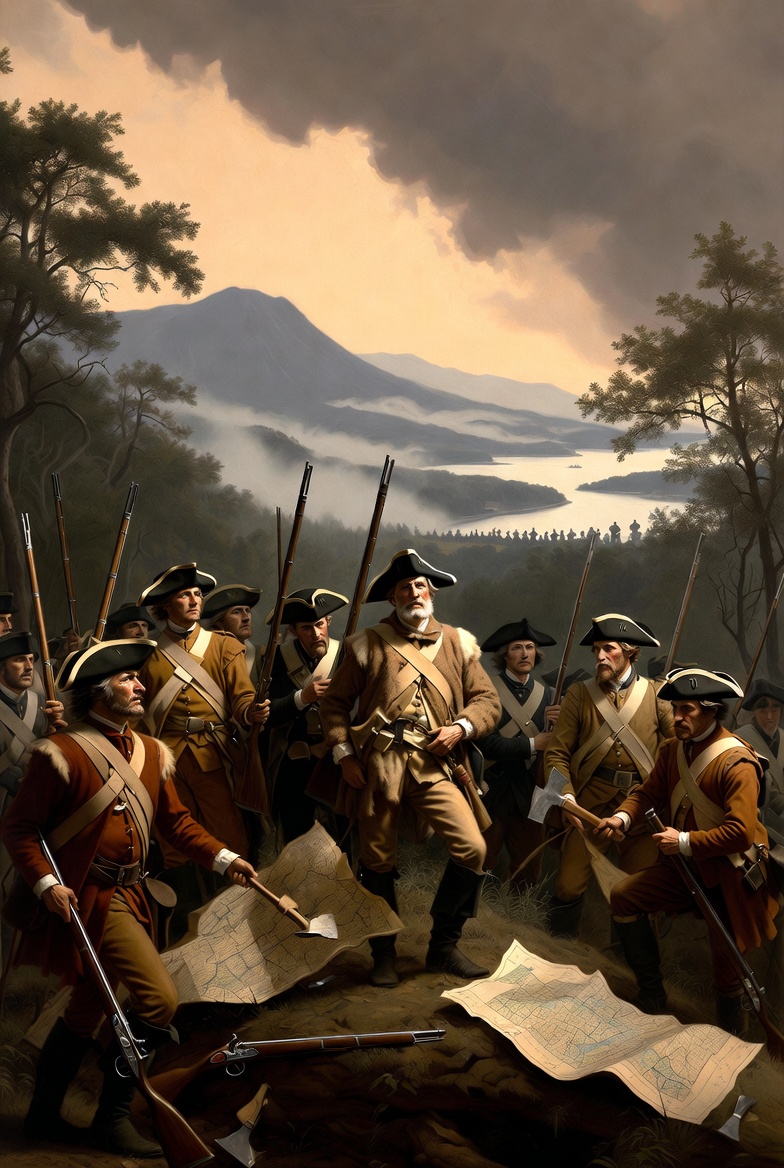
### The Powder Keg: New Hampshire Grants in Turmoil
To understand July 8, 1777, rewind to the wilds of what we now call Vermont but was then the disputed New Hampshire Grants. These rugged hills and valleys along Lake Champlain and the Connecticut River were a frontier powder keg. New York and New Hampshire both claimed the land, sparking violent “land wars” in the 1760s and 1770s. New York governors issued grants and tried to evict settlers who held New Hampshire titles. Enter the Green Mountain Boys—tough, no-nonsense militiamen led by the charismatic (and controversial) Ethan Allen. They harassed New York surveyors, tarred and feathered officials, and defended their farms with axes and muskets.
The American Revolution supercharged the conflict. In May 1775, just weeks after Lexington and Concord, Allen and Benedict Arnold (yes, that Benedict Arnold) led a daring dawn raid to capture Fort Ticonderoga from the British. It was one of the first major American victories, yielding cannons that Washington later used to force the British evacuation of Boston. The Boys proved their worth, but Congress dithered on recognizing their land claims, wary of alienating New York.
By early 1777, the situation was desperate. British General John Burgoyne launched a major offensive from Canada, aiming to split the colonies along the Hudson-Champlain corridor. On January 15, 1777, delegates from the Grants met in Westminster and declared independence—not just from Britain, but from New York—naming their new entity “New Connecticut” (later Vermont, suggested by Pennsylvania radical Dr. Thomas Young, Ethan Allen’s mentor). They petitioned Congress for recognition but got little love.
A second convention convened in Windsor on July 2. Seventy-two delegates crammed into Elijah West’s tavern (now the Old Constitution House, a modest wooden building still standing). Their task: draft a full constitution for this self-proclaimed republic while Burgoyne’s army loomed. News arrived that Ticonderoga had fallen on July 6 after American forces under General Arthur St. Clair evacuated under pressure. British pursuit led to the sharp fight at Hubbardton on July 7. Delegates panicked—many had families in the path of invasion and wanted to rush home to fight.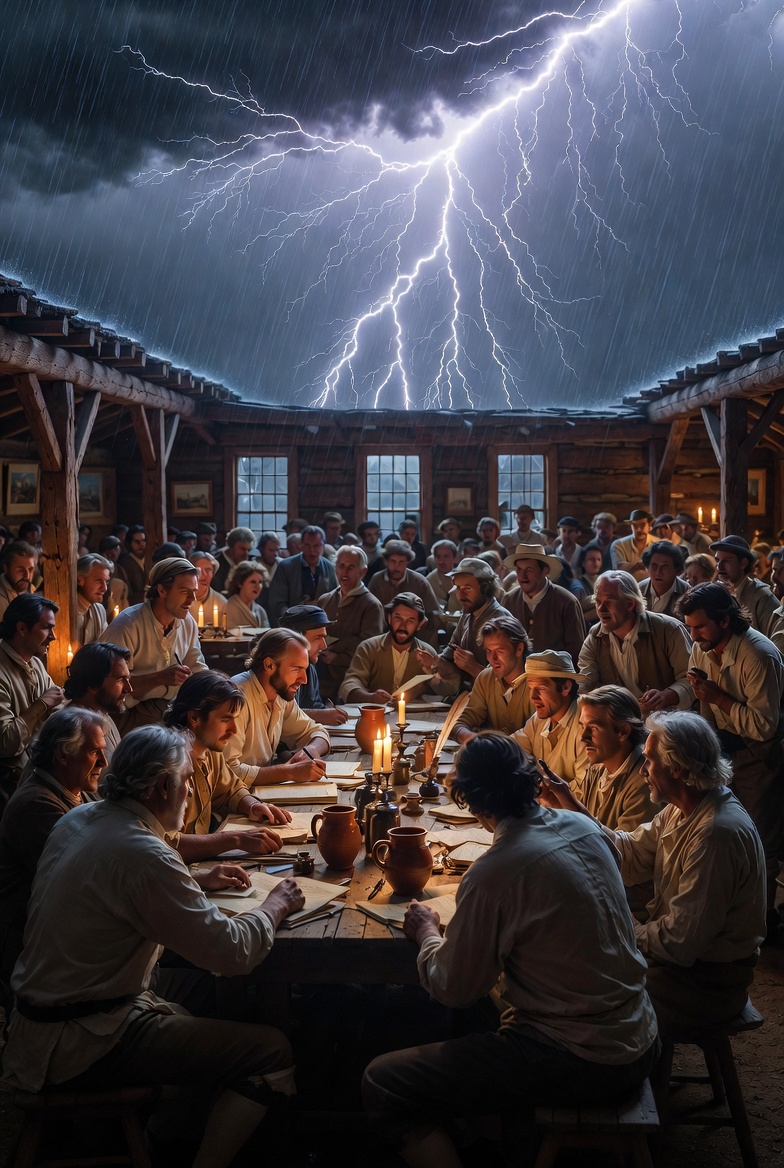
### The Storm That Saved the Convention
Here’s where history gets cinematic. As debate raged and adjournment loomed, a furious summer thunderstorm exploded over the Connecticut River valley. Torrential rain, lightning, and thunder pinned everyone inside the tavern. They couldn’t leave. So they kept working. The storm bought precious hours. By the time it passed, the delegates had hammered out and unanimously adopted their constitution on July 8.
It was modeled heavily on Pennsylvania’s 1776 radical constitution (influenced by Benjamin Franklin’s ideas), but Vermont’s version went further in key ways. The preamble railed against New York’s “arbitrary” claims and asserted the people’s right to form government “derived from, and founded on, the authority of the people only.” Chapter I, the Declaration of Rights, proclaimed natural rights in stirring language echoing Jefferson. But Article 1 delivered the bombshell: “no male person, born in this country, or brought from over sea, ought to be holden by law, to serve any person, as a servant, slave or apprentice, after he arrives to the age of twenty-one years, nor female, in like manner, after she arrives to the age of eighteen years, unless they are bound by their own consent…”
This was revolutionary. Vermont became the first jurisdiction in what would become the United States to constitutionally ban adult slavery. (Children born to enslaved mothers were to be freed at maturity.) It wasn’t perfect—enforcement was gradual, and some slavery persisted informally—but it set a moral and legal precedent that influenced later abolitionists. The constitution also abolished property requirements for voting (universal white male suffrage), guaranteed freedom of religion and the press, established a unicameral legislature with strong popular control, and mandated public schools. No king, no hereditary titles, no entrenched elite. Pure frontier republicanism.
The document was rushed into print and distributed. Elections followed in December 1777, and the government operated under it until revisions in 1786 and statehood in 1791 (as the 14th state, balancing Kentucky’s admission). Vermont’s stand helped tie down British forces and contributed to Burgoyne’s eventual surrender at Saratoga in October 1777—the turning point of the Revolution.
### Deeper into the Drama: Key Figures and the Human Cost
Ethan Allen, though not at the convention (he was captured earlier by the British and imprisoned), loomed large. His brother Ira Allen played a key role in drafting and later defending the document. Thomas Chittenden became Vermont’s first governor, a pragmatic leader who navigated diplomacy with Congress. Delegates like Joseph Bowker (president of the convention) and others were ordinary farmers, militia officers, and town leaders—men who had cleared land, fought Indians and Yorkers, and now risked everything for an idea.
The context was brutal. Burgoyne’s army included Hessians, Indians, and Canadians. At Hubbardton, American rearguard under Seth Warner fought fiercely but took heavy losses. The fall of Ticonderoga was a shock; St. Clair’s evacuation saved his army but handed the British a strategic fort. Yet the Vermont constitution galvanized resistance. Settlers rallied, contributing to the militia victories at Bennington in August that bled Burgoyne’s forces.
Humor creeps in amid the gravity. These weren’t polished statesmen. Ira Allen later recounted the rough-hewn nature of the proceedings. The tavern setting—tankards of ale, flickering candles, muddy boots—must have made the lofty language of rights feel both absurd and profound. One can imagine delegates pausing mid-debate as thunder rattled the windows, joking that Heaven itself demanded they finish the job.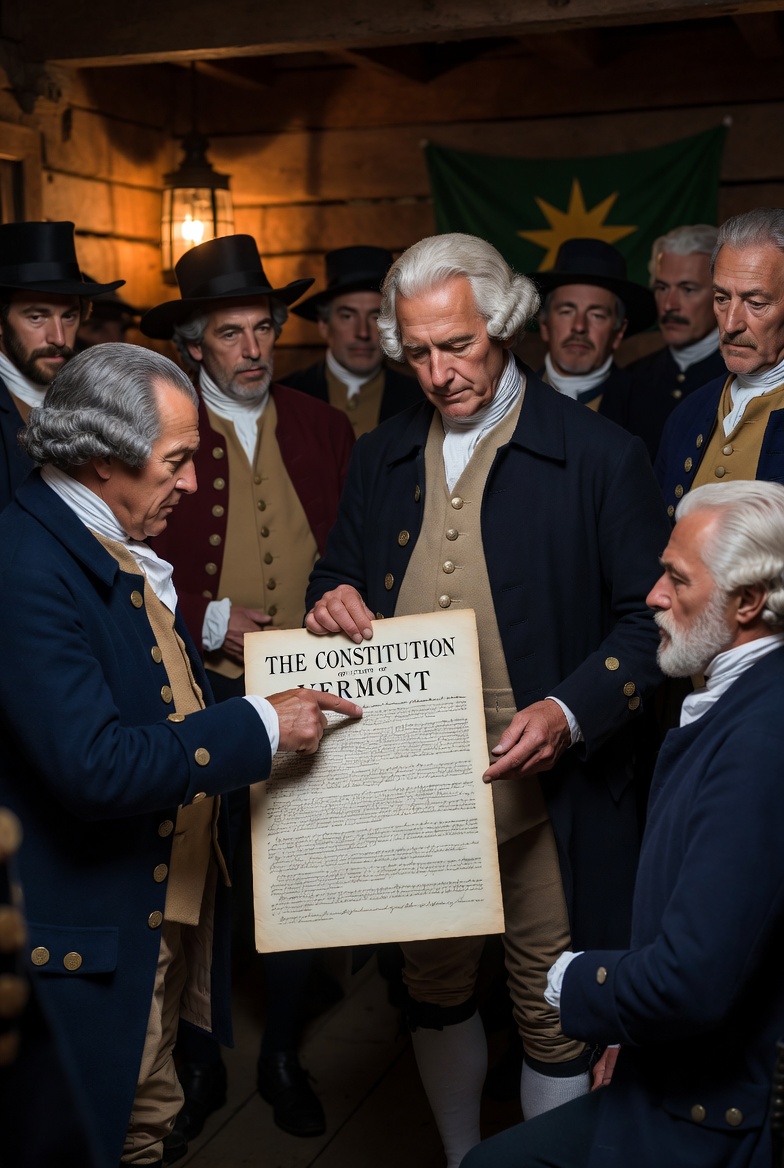
The constitution’s slavery ban stands out for its boldness. While other states gradually abolished slavery post-Revolution (often with caveats for existing enslaved people), Vermont drew a hard line from day one. It reflected the region’s small Black population and the egalitarian ethos of frontier life, but it was still a moral choice in an era when slavery underpinned Southern economies and was tolerated in the North. This wasn’t abstract philosophy; it was practical governance for a people who valued self-reliance above all.
### Lessons from the Tavern: Applying Vermont’s Defiant Independence to Your Life
Ninety percent of this story is the raw history above—the desperate convention, the storm, the audacious clauses, the military backdrop. But the remaining spark is what turns dusty dates into fuel for today. Vermont’s founders didn’t wait for perfect conditions, a bigger army, or external validation. They seized the moment, improvised under pressure, and built institutions reflecting their values. That mindset—decisive action amid chaos, prioritizing core principles like liberty over convenience—translates powerfully to modern struggles.
Here’s a detailed, quick, unique plan inspired by July 8, 1777. Call it the **“Tavern Thunder Protocol”**—a no-fluff system for forging personal independence when life’s “British army” (debt, bad habits, toxic situations, stagnation) is at your doorstep. It’s not generic self-help affirmations or vision boards. It’s tactical, history-rooted, and built for execution under fire. Unlike online gurus peddling endless courses or “manifestation,” this demands immediate, asymmetric action like Montcalm’s defenses or the delegates’ storm-forced focus. It’s short because real revolutions don’t have time for 12-step marathons.
– **Recon the Terrain (Vermont Land Claims Audit)**: Spend one focused hour listing your “disputed grants”—the external claims on your time/energy (soul-sucking job, draining relationships, financial leaks, health neglect). Rank them by threat level like New York vs. New Hampshire titles. Vermont settlers documented grievances publicly; do the same in a private “declaration.” Unique twist: Burn or delete one symbolic “Yorker claim” immediately (e.g., unsubscribe from a time-waster app, cancel a subscription). This creates psychological momentum without waiting for perfection.
– **Build Your Abatis (Defensive Earthworks in Daily Life)**: Montcalm improvised fortifications with logs and sharpened branches. Identify 3-5 “natural barriers” you control—small, high-leverage habits that slow or stop enemy advances (e.g., a strict morning routine blocking doom-scrolling, automated savings transfers foiling impulse buys, or a “no after 8pm” rule for energy preservation). Make them physical and ugly if needed: tape over your TV, use website blockers. The goal isn’t comfort; it’s buying time to organize your counterattack. Review weekly like a militia muster.
– **Draft Your Own Article 1 (Personal Anti-Slavery Clause)**: Vermont banned holding people in servitude after maturity. Translate this: Write and publicly commit (to a trusted friend or journal) to ending one form of self-enslavement by a hard deadline (e.g., “By age X or date Y, I will no longer be bound to [toxic pattern/obligation]”). Make it specific and age-bound like theirs—21 for “males” (your aggressive goals), 18 for “females” (nurturing ones). Enforce with accountability: Tell someone who will call you out. This isn’t vague “self-love”; it’s constitutional law for your life.
– **Convene Your Windsor Convention (Decisive Group or Solo Council)**: Delegates didn’t poll endlessly. Gather 1-3 allies (or go solo with strict self-rules) for a timed “storm session”—90 minutes max—to ratify your plan. No endless debate. Thunderstorm rule: If distracted, force completion. Output: A one-page “constitution” with preamble (your why), rights (non-negotiables), and frame of government (daily/weekly structure). Sign it. Date it. Live by it until revised on evidence, like Vermont’s later tweaks.
– **Charge the Flanks, Not the Front (Asymmetric Tactics)**: Abercromby’s frontal assault failed horribly. Vermont played smart—diplomacy with Congress, militia raids, moral high ground. For your battles: Avoid head-on fights with overwhelming foes (e.g., don’t quit a job cold if broke; build side income first like Green Mountain Boys farming while fighting). Use leverage: skills, networks, timing. One quirky Vermont-inspired move— “Hubbardton rearguard”: When retreating from a loss, inflict maximum delay/cost on the problem (e.g., negotiate severance, extract lessons/data).
– **Proclaim It Publicly (Nixon’s Reading)**: After adoption, Vermont printed and spread their constitution. Read your personal declaration aloud (to mirror or trusted circle). Ring your own “bells”—celebrate with a symbolic act (bonfire of old junk, public post of progress). This cements commitment and attracts allies. Bells rang in Philadelphia on July 8, 1776; make yours ring too.
– **Iterate Under Fire (Post-1777 Revisions)**: Vermont didn’t stop at July 8. They refined in 1786 and joined the Union in 1791. Schedule quarterly “December elections” to audit and amend your protocol. Measure by results (freedom gained, ground held), not feelings. If Burgoyne approaches (major setback), evacuate intelligently like St. Clair but rally for Bennington-style counterpunches.
This protocol is unique because it’s event-specific, historically anchored, and ruthlessly practical. No crystals, no hustle culture grind— just storm-forged resolve, defensive improvisation, and principle-first governance applied to one life. Vermont’s delegates were outnumbered, outgunned, and out of time, yet they built lasting liberty. You face your own invasions daily. Use the thunderstorm. Ratify your independence on whatever “July 8” this moment represents. The fort holds when the defenders decide it must.
Share: