

On June 2, 455 AD, the gates of Rome swung open not with the crash of battering rams or the roar of a frenzied assault, but with a calculated invitation. King Gaiseric (also known as Genseric) and his Vandal forces—seasoned warriors from North Africa, many with Berber roots and a seafaring empire built on opportunism—entered the Eternal City. What followed was two weeks of systematic plunder (June 2–16), one of the most infamous sacks in Roman history, yet notably restrained compared to the chaos that could have ensued.


This wasn’t mindless barbarism. It was a masterclass in strategic execution: leveraging a broken treaty, negotiating limits with Pope Leo I, and extracting maximum value while minimizing unnecessary destruction. The event accelerated the Western Roman Empire’s decline, reshaped Mediterranean power dynamics, and left a linguistic legacy (the word “vandalism” derives from their reputation, though unfairly). Yet buried in the details is a blueprint for personal triumph that has nothing to do with conquest and everything to do with navigating chaos intelligently.
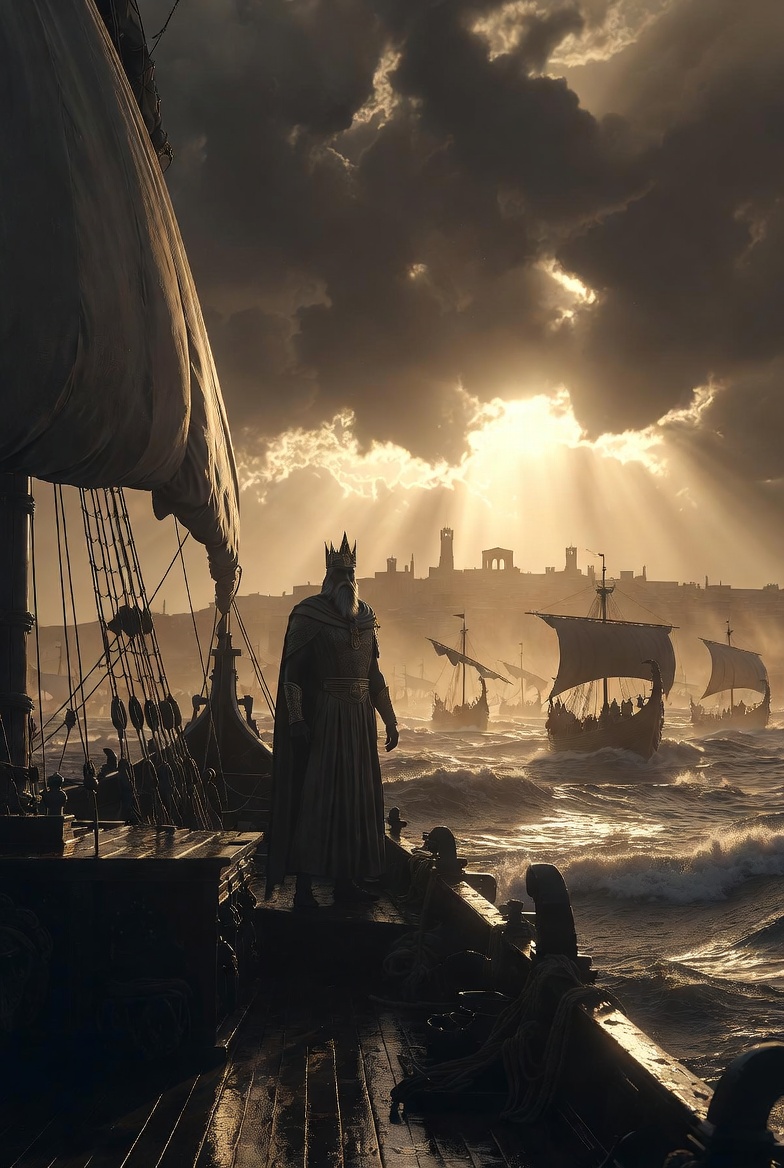
### The Road to June 2: Empire in Freefall and a King’s Grievance


To understand the significance, rewind the tape. The Western Roman Empire in the mid-5th century was a hollowed-out shell. Decades of internal corruption, economic strain, barbarian migrations, and military reliance on foederati (allied “barbarian” troops) had eroded its strength. The first sack by Visigoths under Alaric in 410 AD had already shattered the myth of Roman invincibility. By 455, emperors rose and fell like mayflies.


Valentinian III, the previous emperor, had arranged a marriage alliance: his daughter Eudocia was betrothed to Gaiseric’s son Huneric. This treaty stabilized relations with the Vandal Kingdom, which had carved out a powerful realm in North Africa after crossing from Spain in the 420s–430s. The Vandals controlled key grain routes and posed a naval threat. Gaiseric, a shrewd Arian Christian leader known for his ambition and pragmatism, had built a formidable fleet and administration in Carthage.


Then betrayal struck. On March 16, 455, Valentinian III was assassinated. Petronius Maximus, a wealthy senator, seized the throne. To legitimize his rule, Maximus married Valentinian’s widow, Licinia Eudoxia, and forced her daughter Eudocia (Gaiseric’s intended daughter-in-law) to marry his own son. This violated the treaty. Eudoxia, furious, reportedly sent word to Gaiseric inviting intervention. Whether the invitation was decisive or pretextual, Gaiseric acted decisively.


He sailed from Carthage with a fleet carrying warriors, sailors, and the logistical capacity for a major operation. The Vandals landed at Ostia, Rome’s port, around late May. Panic gripped the city. Petronius Maximus attempted to flee but was lynched by a mob on May 31—his body mutilated and thrown into the Tiber. Rome was leaderless and undefended.


Enter Pope Leo I, the same pontiff who had negotiated with Attila the Hun. Leo met Gaiseric outside the walls. He secured promises: no arson, no mass slaughter, no torture, and respect for major Christian basilicas (St. Peter’s, St. Paul’s, St. John’s) as sanctuaries. Gaiseric agreed. The gates opened. On June 2, the Vandals marched in.
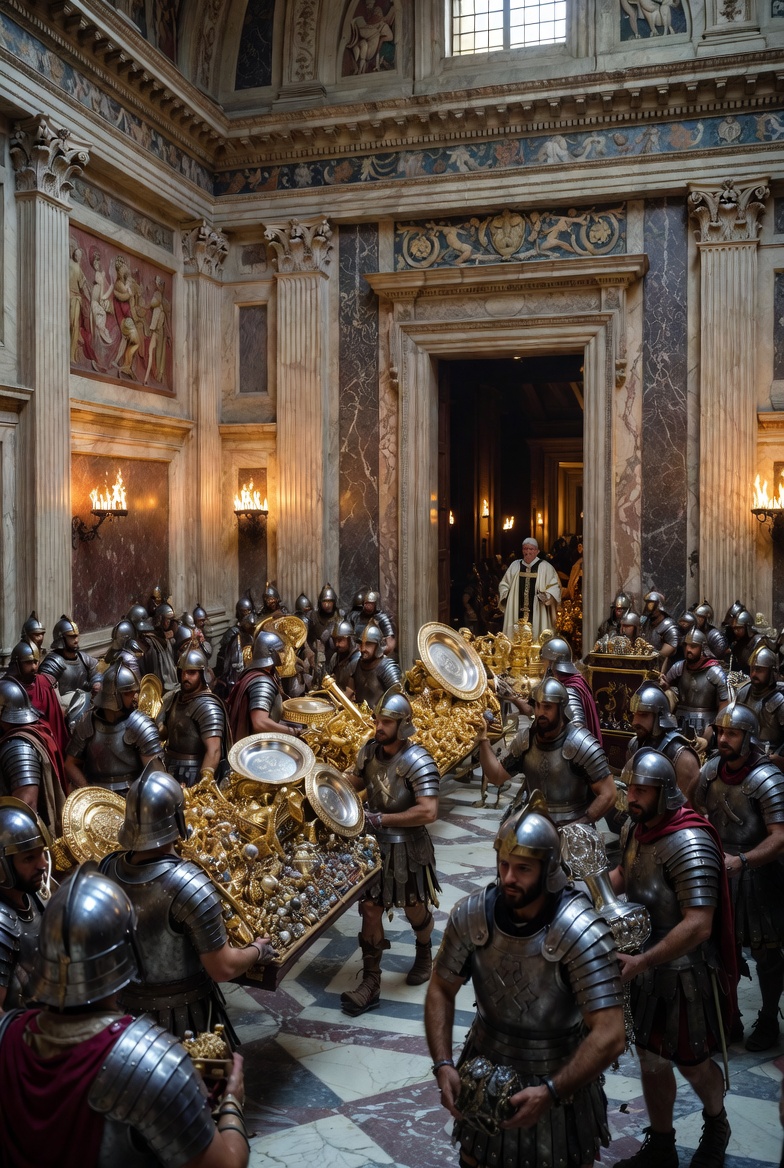
### The Sack Unfolds: Fourteen Days of Methodical Extraction What happened next was plunder on an industrial scale, but with surprising discipline. Contemporary sources like Prosper of Aquitaine and later historians describe the Vandals stripping the city of treasures systematically. - **Imperial and Public Wealth**: They emptied the imperial palace, taking gold, silver, jewels, furniture, and symbols of power. The gilded roof of the Temple of Jupiter Capitolinus was partially stripped. Government buildings yielded administrative riches. - **The Temple Treasures**: Notably, they carted off artifacts from the Temple of Jerusalem, looted by Titus in 70 AD—the golden menorah, sacred vessels, and other spoils that had symbolized Roman triumph over the Jews. These went back to Carthage. - **Private Homes and Temples**: Wealthy senators and citizens lost art, statues, and valuables. Pagan temples were targeted heavily. Some churches were looted, but the major basilicas were largely spared. - **Human Cargo**: Thousands were taken as slaves or captives, including Empress Eudoxia and her daughters Eudocia and Placidia. Eudocia later married Huneric, fulfilling the original alliance in a twisted way. Many skilled artisans and professionals were relocated to boost Vandal North Africa. Crucially, there was no widespread burning or wanton destruction. Gaiseric’s forces operated with orders limiting excess. This wasn’t mercy born of softness—it was pragmatism. Destroying the city would yield less long-term value and risk unnecessary resistance or disease. The fleet loaded with spoils sailed back to Carthage, enriching the Vandal kingdom for generations. Rome was left humiliated but standing, a ghost of its former self. The event sent shockwaves. It hastened the end of the Western Empire (which fell in 476 AD with Romulus Augustulus). It demonstrated that even the “eternal” city was vulnerable. For the Vandals, it cemented their reputation as a naval power and enriched their African base until the Byzantine reconquest under Belisarius in the 530s. ### Why This Event Stands Out in Distant History June 2, 455, wasn’t random violence. It was the culmination of patient empire-building. Gaiseric had spent decades consolidating North Africa, building a navy, and waiting for weakness. He struck when opportunity aligned with preparation: a broken treaty, internal Roman chaos, and a defensible negotiation position. He extracted wealth without overextending into a prolonged occupation he couldn’t sustain. This blend of audacity and restraint made the sack “significant” beyond mere destruction—it was a pivot point in the transition from classical antiquity to the early Middle Ages. Historians debate the scale of violence (some accounts exaggerate for dramatic effect), but the consensus is clear: calculated gain over cathartic ruin. The Vandals weren’t “barbarians” in the Hollywood sense; they were a sophisticated Germanic people with Roman administrative influences, Arian faith, and strategic vision. Their kingdom in Africa thrived for nearly a century post-sack.### Applying the Vandal Lesson: Turning Historical Leverage into Personal Power The motivational core here isn’t glorifying plunder but extracting timeless principles of **strategic opportunism, negotiated boundaries, and value-focused disruption**. In a world of constant change—career shifts, market volatility, personal setbacks—Gaiseric’s approach offers a counter to reactive chaos. Most self-help pushes endless grinding or blind positivity. This is different: it’s about positioning yourself to strike decisively when windows open, extracting maximum sustainable value, and leaving the “city” intact enough for future moves. Here are very specific bullet points on benefits today: - **Master Timing Over Force**: Gaiseric didn’t storm Rome prematurely. He waited for Maximus’s blunder and the invitation. Today, apply this by auditing your “treaties” (contracts, relationships, habits). Identify one broken agreement or unmet expectation in your life (e.g., a stagnant job promise or unbalanced partnership). Don’t rage-quit immediately. Prepare your “fleet” (skills, savings, network) for 3–6 months, then act when vulnerability peaks. Benefit: You avoid burnout from premature fights and maximize leverage. - **Negotiate Your Non-Negotiables**: Leo I secured protections for people and sacred spaces. Translate to life: Before any major “sack” (leaving a toxic job, ending a draining relationship, pivoting a business), define 2–3 core protections (e.g., “maintain key professional references,” “ensure family stability,” “preserve health metrics”). Communicate them clearly upfront. This turns potential enemies into reluctant partners and reduces collateral damage. Unique edge: Most advice says “set boundaries”; this says negotiate them like a 5th-century diplomat facing a Vandal fleet—firm but pragmatic. - **Plunder Value, Not Vengeance**: The Vandals targeted high-yield assets (palace, temples, skilled captives) without torching infrastructure. In modern terms, when disrupting (quitting, pivoting, competing), focus on transferable assets: extract knowledge, contacts, credentials, and momentum rather than burning bridges for emotional satisfaction. Example: In a layoff scenario, negotiate severance while quietly building a client list. Benefit: Sustainable wealth vs. pyrrhic victories that leave you isolated. - **Build a Mobile Empire**: Gaiseric’s strength was his fleet and African base—he wasn’t tied to Rome. Today, cultivate “naval mobility”: multiple income streams, portable skills (coding, writing, trade expertise), and a home base resilient to disruption. Diversify so one “sack” (market crash, relationship end) doesn’t sink you. Funny twist: Your “Vandal fleet” could be a laptop, side hustle, and network of allies ready to relocate opportunities. - **Embrace Calculated Reputation**: The “vandal” label stuck, yet their kingdom prospered. Own the narrative of your disruptions. A bold career move might earn you a “ruthless” tag from some, but it builds a legend of competence for others. Use it to deter future opportunists while attracting value-aligned partners.
- **Post-Sack Renewal**: Rome survived and adapted. After your personal “sack” (major change), audit what remains and rebuild selectively. The event teaches antifragility: chaos exposes weaknesses but rewards those who repurpose the rubble. ### Your Unique “Vandal Protocol” Plan: A 30-Day Disruptive Mastery System This isn’t generic journaling or vision-board nonsense. It’s a battle plan modeled on Gaiseric’s precision—scout, prepare, negotiate, extract, consolidate. Execute it once per quarter for compounding results. It’s designed to feel like commanding a fleet: disciplined, opportunistic, and outcome-obsessed. **Week 1: Scout the Weak Points (Intelligence Phase)** Map your personal “Rome”—list 5–7 key areas (career, finances, health, relationships, skills, environment, mindset). For each, note vulnerabilities: broken promises, underutilized assets, energy drains. Use a simple grid: Column 1 = Asset, Column 2 = Current State, Column 3 = Potential Plunder Value (what you could gain by disrupting). Spend 20 minutes daily walking (like a general surveying terrain) while reviewing. Unique rule: No judgment, just facts. End the week with one “treaty violation” you’ve tolerated too long. **Week 2: Assemble the Fleet (Preparation Phase)** Build resources quietly. Stockpile: update resume/portfolio, save 10–20% more aggressively, learn one high-leverage skill (e.g., negotiation scripting or data analysis). Identify 3 potential “allies” (mentors, contacts) and one “Pope Leo” figure for mediation if needed. Physical training: 4x weekly strength sessions mimicking “rowing” (actual rowing machine or core work) to embody naval endurance. Track everything in a single encrypted note—your war journal. Motivation spike: Visualize the gates opening; feel the power of readiness.
**Week 3: The Approach and Negotiation (Execution Phase)** Initiate contact or action on your chosen target. Script conversations with Leo-style requests: “I seek [protection/outcome] in exchange for [minimal disruption/cooperation].” Examples: Salary renegotiation with clear asks, boundary talk with a partner, or business pivot pitch. Strike on a “June 2” moment—when timing favors you (end of quarter, after their mistake). Extract: Secure one tangible win (raise, commitment, asset transfer). Keep it controlled—no emotional burning. **Week 4: Consolidation and Sail Home (Integration Phase)** Catalog gains: new skills, freed energy, captured “treasures” (money, time, knowledge). Relocate them to your “Carthage” base—invest, document processes, strengthen core systems. Destroy nothing useful; repurpose. Celebrate with a ritual feast (nice meal) while reviewing what to defend better next time. Measure success: Quantifiable uplift in energy, income, or autonomy. Adjust for next cycle. This protocol is unique because it treats life changes as naval campaigns—finite, high-reward operations—not endless self-optimization marathons. It injects humor (you’re a modern Vandal king, not a victim), education (real history over platitudes), and motivation through agency. Most self-help fears disruption; this weaponizes it intelligently. The sack of June 2, 455 AD, reminds us that empires fall, opportunities arise in the ruins, and the wise extract gold while others lament. Position yourself like Gaiseric: patient, prepared, pragmatic. Your personal Rome awaits—not to be destroyed, but strategically claimed. The fleet is yours to command. Set sail.