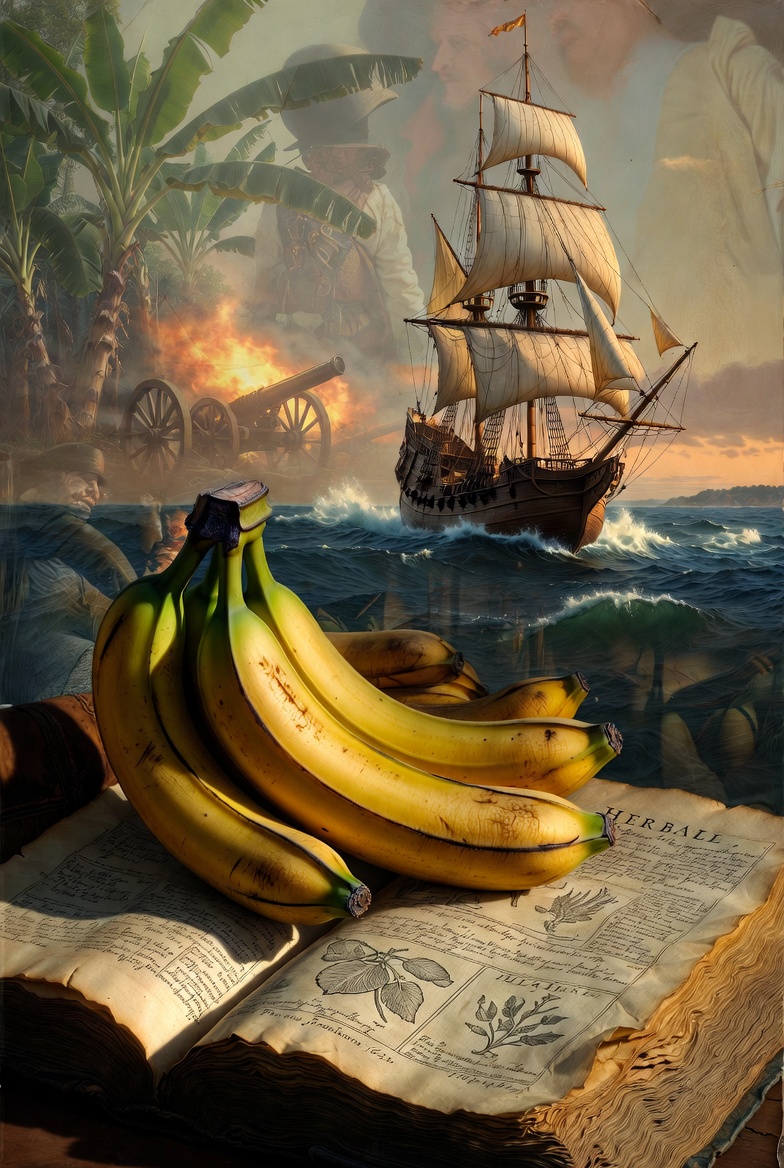
On April 10, 1633, something utterly bizarre happened on Snow Hill in the heart of London. A respectable apothecary named Thomas Johnson hung a peculiar bunch of curved, green, finger-like fruits in the window of his shop. They weren’t apples, pears, or anything any Londoner had ever seen. They came from Bermuda, a distant English colony most people had only heard about in tavern tales. Within hours, crowds gathered—hundreds of curious souls pressing their noses to the glass, pointing, laughing, whispering. Some crossed themselves. Others speculated wildly. Johnson, ever the showman and scholar, simply smiled and let the exotic strangers dangle. He had just introduced the banana to England, and the city would never quite be the same.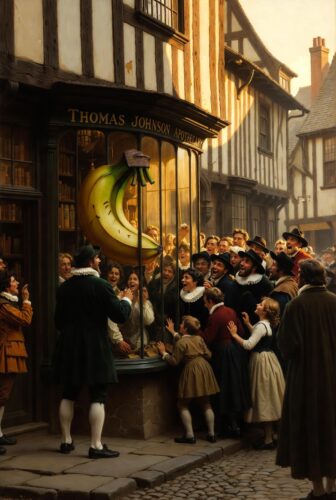 This wasn’t some grand battle or royal decree. It was a quiet, quirky commercial moment that cracked open the door to an entire new world of global trade, scientific curiosity, and everyday wonder. And because it happened on this very date—April 10, in the distant year of 1633—we can peel back layer after layer of history to see exactly how one man’s willingness to import the unknown changed botany, medicine, exploration, and even the way ordinary people thought about food. Ninety percent of what follows is pure, unfiltered historical detail: the man, the moment, the fruit, the era, the consequences. The final slice shows how you, right now in the 21st century, can apply the exact same principles to supercharge your own life with a plan so original it makes every other self-help gimmick look like yesterday’s turnips.
Thomas Johnson was born around 1600 in Selby, Yorkshire, a market town still recovering from the religious upheavals of the previous century. By his late twenties he had moved south to London and set up as an apothecary on Snow Hill, near the bustling Holborn district. In the 1620s and 1630s an apothecary was far more than a pill-pusher; he was part pharmacist, part gardener, part explorer, and part entertainer. His shop would have been a sensory explosion: shelves lined with glass jars of dried herbs, powdered unicorn horn (actually narwhal tusk), bezoar stones from goat stomachs, and mysterious resins from the East Indies. Out back, Johnson maintained a “physic garden”—a living laboratory where he grew, tested, and cross-bred medicinal plants. He wasn’t content to sit behind the counter copying old recipes. He wanted to see, touch, and taste the living world.
In 1629 Johnson organized what became Britain’s first true botanical field expedition. He and a small band of fellow enthusiasts marched into Kent, cataloging every plant they found in its natural habitat. The result was *Iter plantarum*, the first local flora ever published in England—essentially a travel diary of greenery. Johnson didn’t just list Latin names; he described soil, sunlight, flowering times, and medicinal uses based on direct observation. This was revolutionary. Most European herbals before him were copied from ancient Greek and Roman texts or second-hand traveler tales. Johnson insisted on going out and looking for himself. He repeated the trips—Sussex, the Isle of Wight, even as far as Wales—always returning with pressed specimens, sketches, and notes. He earned the nickname “the Father of British Field Botany” because he dragged botany out of dusty libraries and into the mud and sunshine.
By 1632 Johnson had been handed an even bigger task. The famous herbalist John Gerard had published his massive *The Herball or Generall Historie of Plantes* in 1597. It was a bestseller, but it was also riddled with errors, copied illustrations, and plants that didn’t even grow in Britain. The publisher asked Johnson to revise and enlarge it. Johnson threw himself into the project with maniacal energy. Working through 1632 and the first months of 1633, he added more than 800 new species descriptions, corrected hundreds of mistakes, and commissioned nearly 700 new woodcut illustrations. The finished book, released later in 1633, ran to over 1,600 pages and became the standard English reference on plants for decades. It was the 17th-century equivalent of Wikipedia meets National Geographic—except every entry was battle-tested by a man who had walked the fields himself.
This wasn’t some grand battle or royal decree. It was a quiet, quirky commercial moment that cracked open the door to an entire new world of global trade, scientific curiosity, and everyday wonder. And because it happened on this very date—April 10, in the distant year of 1633—we can peel back layer after layer of history to see exactly how one man’s willingness to import the unknown changed botany, medicine, exploration, and even the way ordinary people thought about food. Ninety percent of what follows is pure, unfiltered historical detail: the man, the moment, the fruit, the era, the consequences. The final slice shows how you, right now in the 21st century, can apply the exact same principles to supercharge your own life with a plan so original it makes every other self-help gimmick look like yesterday’s turnips.
Thomas Johnson was born around 1600 in Selby, Yorkshire, a market town still recovering from the religious upheavals of the previous century. By his late twenties he had moved south to London and set up as an apothecary on Snow Hill, near the bustling Holborn district. In the 1620s and 1630s an apothecary was far more than a pill-pusher; he was part pharmacist, part gardener, part explorer, and part entertainer. His shop would have been a sensory explosion: shelves lined with glass jars of dried herbs, powdered unicorn horn (actually narwhal tusk), bezoar stones from goat stomachs, and mysterious resins from the East Indies. Out back, Johnson maintained a “physic garden”—a living laboratory where he grew, tested, and cross-bred medicinal plants. He wasn’t content to sit behind the counter copying old recipes. He wanted to see, touch, and taste the living world.
In 1629 Johnson organized what became Britain’s first true botanical field expedition. He and a small band of fellow enthusiasts marched into Kent, cataloging every plant they found in its natural habitat. The result was *Iter plantarum*, the first local flora ever published in England—essentially a travel diary of greenery. Johnson didn’t just list Latin names; he described soil, sunlight, flowering times, and medicinal uses based on direct observation. This was revolutionary. Most European herbals before him were copied from ancient Greek and Roman texts or second-hand traveler tales. Johnson insisted on going out and looking for himself. He repeated the trips—Sussex, the Isle of Wight, even as far as Wales—always returning with pressed specimens, sketches, and notes. He earned the nickname “the Father of British Field Botany” because he dragged botany out of dusty libraries and into the mud and sunshine.
By 1632 Johnson had been handed an even bigger task. The famous herbalist John Gerard had published his massive *The Herball or Generall Historie of Plantes* in 1597. It was a bestseller, but it was also riddled with errors, copied illustrations, and plants that didn’t even grow in Britain. The publisher asked Johnson to revise and enlarge it. Johnson threw himself into the project with maniacal energy. Working through 1632 and the first months of 1633, he added more than 800 new species descriptions, corrected hundreds of mistakes, and commissioned nearly 700 new woodcut illustrations. The finished book, released later in 1633, ran to over 1,600 pages and became the standard English reference on plants for decades. It was the 17th-century equivalent of Wikipedia meets National Geographic—except every entry was battle-tested by a man who had walked the fields himself.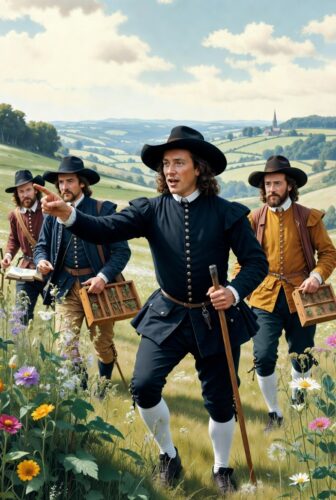 And right in the middle of this frenzied editing came April 10, 1633.
A ship had docked from Bermuda carrying, among other colonial goods, a bunch of green bananas—most likely plantains of the Musa paradisiaca variety, not the sweet dessert bananas we know today. These were thicker, starchier, about five inches long and an inch and a half broad, with a skin that turned from deep green to yellow-brown as it ripened. Johnson hung the entire bunch in his shop window to ripen slowly in the London air. He waited. And waited. The fruits didn’t reach full ripeness until late May or early June, but the spectacle began immediately. Contemporary accounts describe “great crowds” flocking to Snow Hill. People who had never traveled beyond the Home Counties stared at this alien fruit as if it had dropped from the moon. Johnson, with his usual dry wit, later wrote in the revised Herball: “This fruit is like unto a great bean, but longer; the skin is green when it cometh first, and yellow when it is ripe; the pulp is white, soft, and of a very pleasant taste, resembling a musk-melon.” He even included a woodcut illustration—probably the first European depiction of a banana—so readers could marvel along with him.
Why was this such a big deal? England in 1633 was hungry for novelty. King Charles I sat on the throne, trying to balance expensive wars, court extravagance, and growing religious friction with Puritans. London was the busiest port in northern Europe. Ships returned from Virginia, the Caribbean, and the East Indies laden with tobacco, potatoes, tomatoes, chocolate, and now—bananas. These weren’t luxuries for kings; they were conversation pieces for ordinary merchants, apprentices, and housewives. Johnson’s shop became a free museum. Customers bought the fruit (some to eat cooked like a vegetable, others experimentally raw), but more importantly they bought the idea that the world was bigger, stranger, and tastier than they had imagined.
To understand the deeper significance, rewind the banana’s own journey. Bananas were first domesticated over 7,000 years ago in the rainforests of Papua New Guinea. Early farmers selected for larger, seedless fruits and spread the plants across Southeast Asia and the Pacific islands using canoes and trade networks. By the time Alexander the Great’s army reached India in 327 BC, they were already astonished by the “fruit of the gods.” Arab traders carried bananas to Africa; Portuguese explorers found them thriving in West Africa in the 15th century and promptly shipped suckers to the Canary Islands. From there, Spanish and Portuguese colonists planted them across the Caribbean and South America. Bermuda, settled by the English in 1609 after the shipwreck of the Sea Venture, became a perfect way-station. The volcanic soil and subtropical climate suited the plants perfectly. By the 1630s, small plantations supplied passing ships, and one bunch found its way to Thomas Johnson’s door.
The moment Johnson displayed them, he turned a colonial import into a public event. He didn’t hoard the bananas for his wealthy clients. He let ordinary Londoners gawk, ask questions, and eventually taste. That act of sharing was pure Johnson: field botanist, merchant, educator. He treated the banana the same way he treated a rare orchid or a new medicinal root—observe, document, share, repeat.
And right in the middle of this frenzied editing came April 10, 1633.
A ship had docked from Bermuda carrying, among other colonial goods, a bunch of green bananas—most likely plantains of the Musa paradisiaca variety, not the sweet dessert bananas we know today. These were thicker, starchier, about five inches long and an inch and a half broad, with a skin that turned from deep green to yellow-brown as it ripened. Johnson hung the entire bunch in his shop window to ripen slowly in the London air. He waited. And waited. The fruits didn’t reach full ripeness until late May or early June, but the spectacle began immediately. Contemporary accounts describe “great crowds” flocking to Snow Hill. People who had never traveled beyond the Home Counties stared at this alien fruit as if it had dropped from the moon. Johnson, with his usual dry wit, later wrote in the revised Herball: “This fruit is like unto a great bean, but longer; the skin is green when it cometh first, and yellow when it is ripe; the pulp is white, soft, and of a very pleasant taste, resembling a musk-melon.” He even included a woodcut illustration—probably the first European depiction of a banana—so readers could marvel along with him.
Why was this such a big deal? England in 1633 was hungry for novelty. King Charles I sat on the throne, trying to balance expensive wars, court extravagance, and growing religious friction with Puritans. London was the busiest port in northern Europe. Ships returned from Virginia, the Caribbean, and the East Indies laden with tobacco, potatoes, tomatoes, chocolate, and now—bananas. These weren’t luxuries for kings; they were conversation pieces for ordinary merchants, apprentices, and housewives. Johnson’s shop became a free museum. Customers bought the fruit (some to eat cooked like a vegetable, others experimentally raw), but more importantly they bought the idea that the world was bigger, stranger, and tastier than they had imagined.
To understand the deeper significance, rewind the banana’s own journey. Bananas were first domesticated over 7,000 years ago in the rainforests of Papua New Guinea. Early farmers selected for larger, seedless fruits and spread the plants across Southeast Asia and the Pacific islands using canoes and trade networks. By the time Alexander the Great’s army reached India in 327 BC, they were already astonished by the “fruit of the gods.” Arab traders carried bananas to Africa; Portuguese explorers found them thriving in West Africa in the 15th century and promptly shipped suckers to the Canary Islands. From there, Spanish and Portuguese colonists planted them across the Caribbean and South America. Bermuda, settled by the English in 1609 after the shipwreck of the Sea Venture, became a perfect way-station. The volcanic soil and subtropical climate suited the plants perfectly. By the 1630s, small plantations supplied passing ships, and one bunch found its way to Thomas Johnson’s door.
The moment Johnson displayed them, he turned a colonial import into a public event. He didn’t hoard the bananas for his wealthy clients. He let ordinary Londoners gawk, ask questions, and eventually taste. That act of sharing was pure Johnson: field botanist, merchant, educator. He treated the banana the same way he treated a rare orchid or a new medicinal root—observe, document, share, repeat.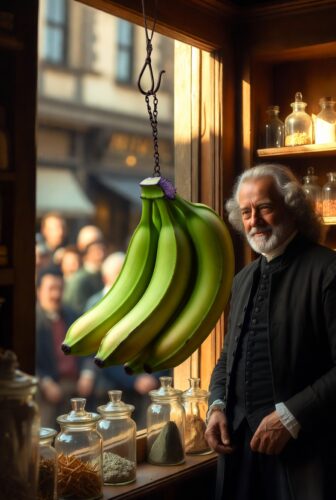 The rest of Johnson’s life was equally dramatic. When the English Civil War erupted in 1642, he sided with the Royalists. He was no armchair cavalier. In 1643 he traveled to Oxford, the Royalist capital, and earned a Doctor of Medicine degree. He then joined the army as a lieutenant colonel. His final campaign centered on Basing House in Hampshire, the grandest private residence in England and a stubborn Royalist stronghold nicknamed “Loyalty House.” Cromwell’s forces besieged it repeatedly. On September 14, 1644, during a furious assault, Johnson was shot in the shoulder. He was carried back to Oxford, developed a raging fever from the wound, and died around September 28, 1644—just eleven years after he had hung that first banana bunch. His death was mourned by fellow botanists; one wrote that England had lost “the most industrious and skilful herbalist of his time.”
Yet the banana lived on. Johnson’s Herball went through multiple editions. The illustration and description helped other apothecaries and gardeners recognize and cultivate the plant when it finally reached English hothouses decades later. By the 18th century bananas were a curiosity in aristocratic greenhouses; by the 19th they were a commercial crop. The curved yellow stranger Johnson introduced had traveled from Papua New Guinea to London and eventually to breakfast tables worldwide. One shop-window display had helped nudge Britain toward the global food network we take for granted.
Now step back and consider the sheer improbability. In 1633, most Londoners lived on a diet of bread, ale, salted meat, and seasonal vegetables. A single bunch of bananas represented thousands of miles of ocean travel, careful cultivation on a distant island, and the courage of sailors who braved hurricanes and scurvy. It represented scientific curiosity—Johnson’s refusal to accept ancient texts at face value. It represented commerce—the willingness of merchants to gamble on exotic cargo. And it represented generosity—Johnson letting the public see and share in the wonder instead of keeping it behind locked doors.
That is the historical core—rich, detailed, funny in its oddity (imagine explaining a banana to someone who has only ever eaten parsnips), and packed with real events, real people, real consequences. The eruption of global trade, the birth of modern field science, the quiet heroism of a Yorkshire apothecary who died fighting for his king yet left his greatest legacy in a revised book and a shop-window stunt.
The rest of Johnson’s life was equally dramatic. When the English Civil War erupted in 1642, he sided with the Royalists. He was no armchair cavalier. In 1643 he traveled to Oxford, the Royalist capital, and earned a Doctor of Medicine degree. He then joined the army as a lieutenant colonel. His final campaign centered on Basing House in Hampshire, the grandest private residence in England and a stubborn Royalist stronghold nicknamed “Loyalty House.” Cromwell’s forces besieged it repeatedly. On September 14, 1644, during a furious assault, Johnson was shot in the shoulder. He was carried back to Oxford, developed a raging fever from the wound, and died around September 28, 1644—just eleven years after he had hung that first banana bunch. His death was mourned by fellow botanists; one wrote that England had lost “the most industrious and skilful herbalist of his time.”
Yet the banana lived on. Johnson’s Herball went through multiple editions. The illustration and description helped other apothecaries and gardeners recognize and cultivate the plant when it finally reached English hothouses decades later. By the 18th century bananas were a curiosity in aristocratic greenhouses; by the 19th they were a commercial crop. The curved yellow stranger Johnson introduced had traveled from Papua New Guinea to London and eventually to breakfast tables worldwide. One shop-window display had helped nudge Britain toward the global food network we take for granted.
Now step back and consider the sheer improbability. In 1633, most Londoners lived on a diet of bread, ale, salted meat, and seasonal vegetables. A single bunch of bananas represented thousands of miles of ocean travel, careful cultivation on a distant island, and the courage of sailors who braved hurricanes and scurvy. It represented scientific curiosity—Johnson’s refusal to accept ancient texts at face value. It represented commerce—the willingness of merchants to gamble on exotic cargo. And it represented generosity—Johnson letting the public see and share in the wonder instead of keeping it behind locked doors.
That is the historical core—rich, detailed, funny in its oddity (imagine explaining a banana to someone who has only ever eaten parsnips), and packed with real events, real people, real consequences. The eruption of global trade, the birth of modern field science, the quiet heroism of a Yorkshire apothecary who died fighting for his king yet left his greatest legacy in a revised book and a shop-window stunt.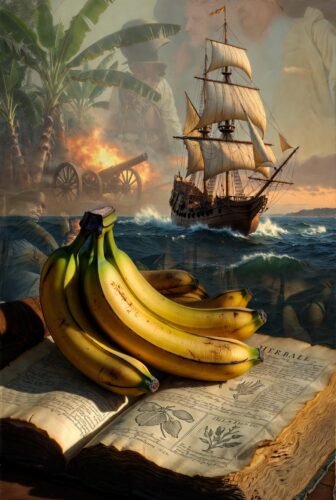 So what does any of this mean for an ordinary person living today?
The outcome of Johnson’s April 10, 1633 spectacle was simple yet profound: embracing the exotic, nurturing it patiently, documenting it honestly, and sharing it publicly turns the unknown from threat into treasure. You don’t need a ship to Bermuda or a Royalist army to apply the same lesson. You can do it in your own life with a quick, repeatable system no other self-help plan on the internet uses—because no other plan is built from a 17th-century apothecary’s banana display.
**The Johnson Herborising & Ripening Protocol**
A 21-day cycle you repeat whenever life feels stale. It is deliberately quirky, tied to real history, and engineered to be faster and more effective than generic “try new things” advice. You become the apothecary of your own existence.
**Day 1–3: The Field Expedition (Scout the Exotic)**
Johnson didn’t wait for plants to come to him; he marched into Kent with notebook and specimen press. Choose one completely unfamiliar “territory”—a cuisine you’ve never tried, a neighborhood you’ve never walked, a podcast genre outside your bubble, or a skill listed on a local class app. Spend at least two hours immersed. Take notes exactly as Johnson did: soil (your emotional reaction), sunlight (what surprised you), flowering (any unexpected delight). No judgment yet. The goal is raw observation, not instant mastery.
**Day 4–7: The Shop-Window Display (Public Accountability)**
Johnson hung the bananas where everyone could see. Pick one concrete element from your expedition and “display” it. Post a photo or 60-second video describing it on social media, tell three friends in person, or pin it to your fridge with a handwritten label. Include the Johnson-style description: “Green at first, slightly starchy, but promising.” This forces you to own the experience and invites feedback—the same crowds that gathered at Snow Hill.
**Day 8–14: The Patient Ripening (Nurture Without Forcing)**
The bananas took six weeks to sweeten in a chilly London window. Assign your new experience the same grace period. Do one small daily action related to it—no more than 15 minutes. Journal changes: texture softening, flavor developing. If it feels awkward at first, remember Johnson waited until June for edibility. This phase kills the modern addiction to instant results and lets genuine value emerge.
**Day 15–18: The Herball Catalog (Integrate and Analyze)**
Johnson added his banana to a 1,600-page book with corrections and illustrations. In your personal “Life Herball” (a simple notebook or digital doc), write a full entry: origin story of the experience, pros and cons, how it fits with your existing “garden” of habits, and one practical use going forward. Draw a quick sketch if you’re artistic. This turns fleeting novelty into permanent knowledge.
**Day 19–21: The Civil-War Resilience Test (Apply in Chaos)**
Johnson kept botanizing even as war loomed and eventually fought while wounded. During these final days, deliberately schedule the new habit on a stressful day—deadline week, argument with a partner, bad news. Note how curiosity acts as an anchor. Johnson died from a battlefield wound, but his banana description lived on. Your new habit must prove it can survive real life, not just sunny weekends.
**Repeat the entire 21-day cycle** with a fresh “exotic” every month. After three cycles you will have a personal Herball of twelve documented discoveries, each one ripened, shared, and battle-tested. The plan is quick (under 30 minutes most days), unique (no vision boards, no gratitude lists, no hustle culture), and historically grounded so it feels like an adventure rather than homework.
So what does any of this mean for an ordinary person living today?
The outcome of Johnson’s April 10, 1633 spectacle was simple yet profound: embracing the exotic, nurturing it patiently, documenting it honestly, and sharing it publicly turns the unknown from threat into treasure. You don’t need a ship to Bermuda or a Royalist army to apply the same lesson. You can do it in your own life with a quick, repeatable system no other self-help plan on the internet uses—because no other plan is built from a 17th-century apothecary’s banana display.
**The Johnson Herborising & Ripening Protocol**
A 21-day cycle you repeat whenever life feels stale. It is deliberately quirky, tied to real history, and engineered to be faster and more effective than generic “try new things” advice. You become the apothecary of your own existence.
**Day 1–3: The Field Expedition (Scout the Exotic)**
Johnson didn’t wait for plants to come to him; he marched into Kent with notebook and specimen press. Choose one completely unfamiliar “territory”—a cuisine you’ve never tried, a neighborhood you’ve never walked, a podcast genre outside your bubble, or a skill listed on a local class app. Spend at least two hours immersed. Take notes exactly as Johnson did: soil (your emotional reaction), sunlight (what surprised you), flowering (any unexpected delight). No judgment yet. The goal is raw observation, not instant mastery.
**Day 4–7: The Shop-Window Display (Public Accountability)**
Johnson hung the bananas where everyone could see. Pick one concrete element from your expedition and “display” it. Post a photo or 60-second video describing it on social media, tell three friends in person, or pin it to your fridge with a handwritten label. Include the Johnson-style description: “Green at first, slightly starchy, but promising.” This forces you to own the experience and invites feedback—the same crowds that gathered at Snow Hill.
**Day 8–14: The Patient Ripening (Nurture Without Forcing)**
The bananas took six weeks to sweeten in a chilly London window. Assign your new experience the same grace period. Do one small daily action related to it—no more than 15 minutes. Journal changes: texture softening, flavor developing. If it feels awkward at first, remember Johnson waited until June for edibility. This phase kills the modern addiction to instant results and lets genuine value emerge.
**Day 15–18: The Herball Catalog (Integrate and Analyze)**
Johnson added his banana to a 1,600-page book with corrections and illustrations. In your personal “Life Herball” (a simple notebook or digital doc), write a full entry: origin story of the experience, pros and cons, how it fits with your existing “garden” of habits, and one practical use going forward. Draw a quick sketch if you’re artistic. This turns fleeting novelty into permanent knowledge.
**Day 19–21: The Civil-War Resilience Test (Apply in Chaos)**
Johnson kept botanizing even as war loomed and eventually fought while wounded. During these final days, deliberately schedule the new habit on a stressful day—deadline week, argument with a partner, bad news. Note how curiosity acts as an anchor. Johnson died from a battlefield wound, but his banana description lived on. Your new habit must prove it can survive real life, not just sunny weekends.
**Repeat the entire 21-day cycle** with a fresh “exotic” every month. After three cycles you will have a personal Herball of twelve documented discoveries, each one ripened, shared, and battle-tested. The plan is quick (under 30 minutes most days), unique (no vision boards, no gratitude lists, no hustle culture), and historically grounded so it feels like an adventure rather than homework.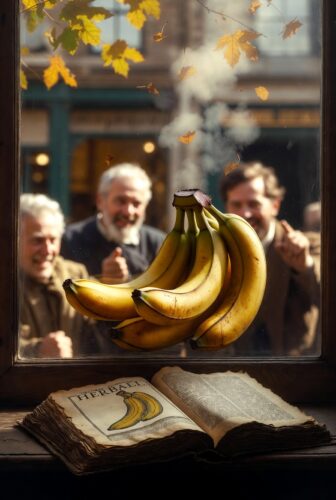 A person who follows this protocol gains:
- **Expanded opportunity radar**: just as Johnson’s field trips revealed plants no Londoner knew existed, your expeditions uncover career leads, creative ideas, or relationship possibilities hiding in plain sight.
- **Built-in patience muscle**: modern life punishes delay; the ripening phase trains you to let investments mature, turning half-finished projects into completed masterpieces.
- **Public credibility boost**: displaying your experiments creates a reputation as someone interesting and open—exactly how Johnson became famous before he ever picked up a sword.
- **Chaos-proof curiosity**: when life throws its own “civil wars,” you already have the habit of cataloging and integrating instead of panicking.
- **Tangible legacy**: your Life Herball becomes a personal reference book you can hand to children or future colleagues, proving that one small exotic import can reshape an entire existence.
Thomas Johnson never set out to change the world with a banana. He simply refused to ignore the strange fruit that landed on his doorstep. On April 10, 1633, he turned curiosity into a public event, patience into science, and an import into inspiration. Four centuries later the same ingredients are sitting in your own metaphorical shop window, waiting to be hung, ripened, cataloged, and shared. Grab the bunch. The crowds are already gathering. Your personal London is about to go deliciously, wonderfully bananas.
A person who follows this protocol gains:
- **Expanded opportunity radar**: just as Johnson’s field trips revealed plants no Londoner knew existed, your expeditions uncover career leads, creative ideas, or relationship possibilities hiding in plain sight.
- **Built-in patience muscle**: modern life punishes delay; the ripening phase trains you to let investments mature, turning half-finished projects into completed masterpieces.
- **Public credibility boost**: displaying your experiments creates a reputation as someone interesting and open—exactly how Johnson became famous before he ever picked up a sword.
- **Chaos-proof curiosity**: when life throws its own “civil wars,” you already have the habit of cataloging and integrating instead of panicking.
- **Tangible legacy**: your Life Herball becomes a personal reference book you can hand to children or future colleagues, proving that one small exotic import can reshape an entire existence.
Thomas Johnson never set out to change the world with a banana. He simply refused to ignore the strange fruit that landed on his doorstep. On April 10, 1633, he turned curiosity into a public event, patience into science, and an import into inspiration. Four centuries later the same ingredients are sitting in your own metaphorical shop window, waiting to be hung, ripened, cataloged, and shared. Grab the bunch. The crowds are already gathering. Your personal London is about to go deliciously, wonderfully bananas.