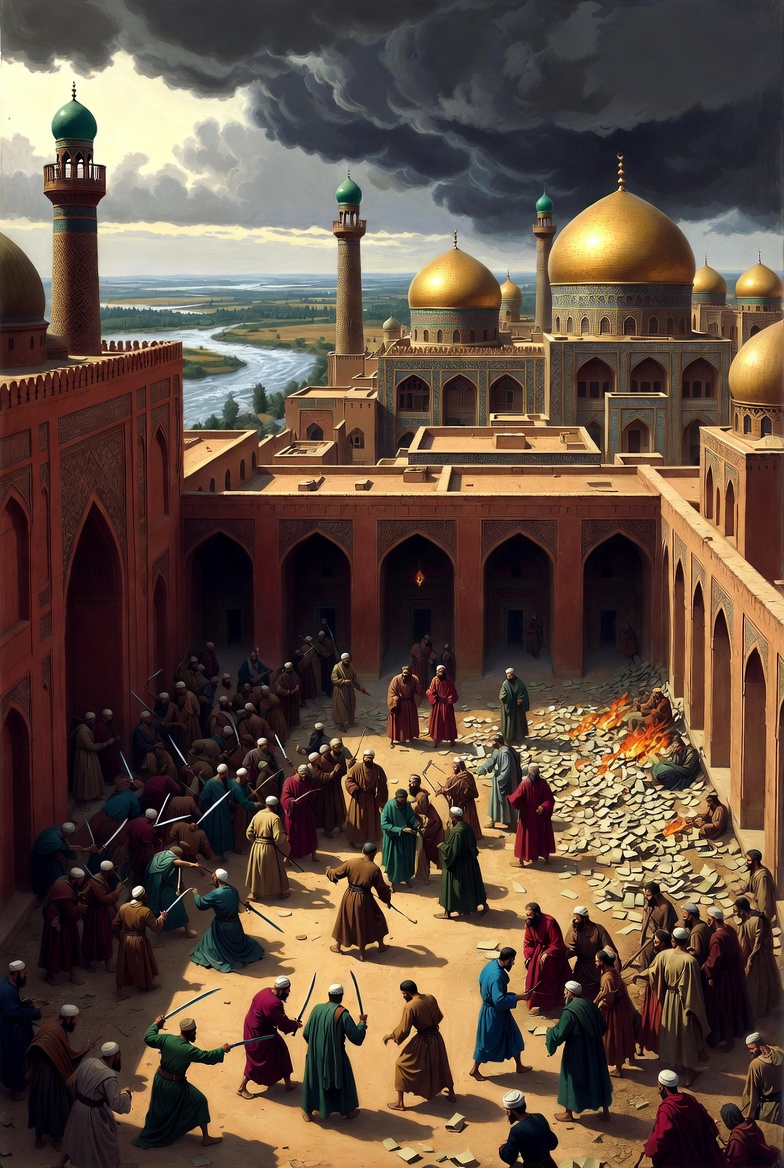
Picture this: it’s April 8, 876 AD—Palm Sunday in the Christian calendar, a random spring morning along the muddy banks of the Tigris River about fifty miles southeast of Baghdad. A massive army of eastern Iranian warriors, hardened by years of desert campaigns and led by a former village coppersmith who once ate nothing but bread and onions, is pushing straight for the heart of the Abbasid Caliphate. Their emir, Ya‘qub ibn al-Layth al-Saffar—literally “Ya‘qub son of Layth the Coppersmith”—has conquered half of what we now call Greater Iran. He’s toppled dynasties, looted treasuries, minted his own coins, and even dragged the last Tahirid governor back to Sistan in chains. Now he’s within striking distance of the caliph’s capital, convinced the weakened Abbasids will simply hand over the keys.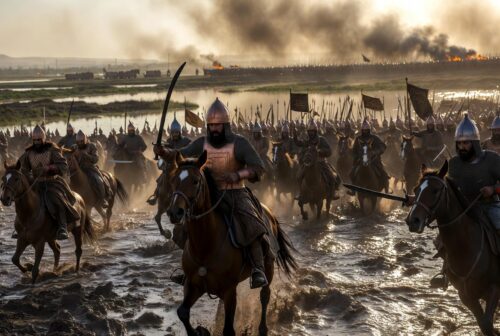 Instead, he slams into a wall of 150,000 Abbasid troops who know every irrigation canal and floodplain like the back of their hands. By nightfall, thousands of Saffarid fighters are dead or drowning in deliberately flooded fields, their baggage train is burning thanks to a sneaky riverboat raid, and Ya‘qub himself is wounded and retreating. The Battle of Dayr al-‘Aqul (named after a local monastery at a river bend) is over. The caliphate, teetering on the edge of collapse for decades, gets a miraculous breather. Ya‘qub never threatens Baghdad again and dies three years later from untreated stomach pain in Gundeshapur. His brother Amr inherits a shrunken realm that eventually fades into a footnote.
That single day—April 8, 876—is one of those obscure but pivotal hinges in distant history that most people have never heard of. It wasn’t a glamorous clash like Hastings or a cinematic siege like Constantinople. It was gritty, tactical, and weirdly modern: terrain manipulation, internal betrayals, overconfident ambition meeting smart defense. Yet it ripples through centuries of Islamic, Persian, and world history. The Abbasids hung on long enough to crush the Zanj slave revolt a few years later, reassert some central authority, and keep the caliphal idea alive until the Mongols finally ended it in 1258. The Saffarids, meanwhile, became the poster child for how a local strongman could rise from the workshop floor to challenge an empire—only to discover that raw hammer swings don’t always beat clever canal management.
Ninety percent of what follows is pure, unfiltered history: the crumbling 9th-century Abbasid world, the astonishing life of a coppersmith turned conqueror, the bloody campaigns that brought him to Iraq’s doorstep, and the blow-by-blow chaos of that Palm Sunday showdown. Only at the end do we flip the script to today—because this forgotten battle offers something better than generic self-help slogans. It gives you a razor-sharp, battle-tested framework for defending your personal “territory” (career, relationships, goals) without overextending, while still swinging the hammer when the moment is right. No vision boards. No “manifest your destiny.” Just ancient tactics repurposed into a quick, unique plan that actually works because it’s rooted in real human ambition meeting real human limits.
Instead, he slams into a wall of 150,000 Abbasid troops who know every irrigation canal and floodplain like the back of their hands. By nightfall, thousands of Saffarid fighters are dead or drowning in deliberately flooded fields, their baggage train is burning thanks to a sneaky riverboat raid, and Ya‘qub himself is wounded and retreating. The Battle of Dayr al-‘Aqul (named after a local monastery at a river bend) is over. The caliphate, teetering on the edge of collapse for decades, gets a miraculous breather. Ya‘qub never threatens Baghdad again and dies three years later from untreated stomach pain in Gundeshapur. His brother Amr inherits a shrunken realm that eventually fades into a footnote.
That single day—April 8, 876—is one of those obscure but pivotal hinges in distant history that most people have never heard of. It wasn’t a glamorous clash like Hastings or a cinematic siege like Constantinople. It was gritty, tactical, and weirdly modern: terrain manipulation, internal betrayals, overconfident ambition meeting smart defense. Yet it ripples through centuries of Islamic, Persian, and world history. The Abbasids hung on long enough to crush the Zanj slave revolt a few years later, reassert some central authority, and keep the caliphal idea alive until the Mongols finally ended it in 1258. The Saffarids, meanwhile, became the poster child for how a local strongman could rise from the workshop floor to challenge an empire—only to discover that raw hammer swings don’t always beat clever canal management.
Ninety percent of what follows is pure, unfiltered history: the crumbling 9th-century Abbasid world, the astonishing life of a coppersmith turned conqueror, the bloody campaigns that brought him to Iraq’s doorstep, and the blow-by-blow chaos of that Palm Sunday showdown. Only at the end do we flip the script to today—because this forgotten battle offers something better than generic self-help slogans. It gives you a razor-sharp, battle-tested framework for defending your personal “territory” (career, relationships, goals) without overextending, while still swinging the hammer when the moment is right. No vision boards. No “manifest your destiny.” Just ancient tactics repurposed into a quick, unique plan that actually works because it’s rooted in real human ambition meeting real human limits. Let’s hammer the anvil first.
### The Crumbling Caliphate: Why Baghdad Was Vulnerable in 876
To understand why Ya‘qub thought he could stroll into the capital, you have to rewind to the messy 9th century. The Abbasid Caliphate—founded in 750 after they overthrew the Umayyads—had started as a golden age of science, poetry, and cosmopolitan rule from Baghdad. Harun al-Rashid (r. 786–809) and his son al-Ma’mun (r. 813–833) turned the city into the intellectual capital of the world. But by the 860s, everything was rotting from the inside.
The “Anarchy at Samarra” (861–870) was brutal. Turkish slave-soldiers (the ghilman) had become the real power behind the throne. They assassinated caliphs like they were changing socks: al-Mutawakkil murdered in 861, al-Muntasir dead soon after (possibly poisoned), al-Musta’in strangled in 866, al-Mu’tazz starved in 869, al-Muhtadi killed in 870. Three violent deaths in under a decade. The capital bounced between Baghdad and the new military camp at Samarra. Finances collapsed because tax revenue from the provinces dried up. Regional governors stopped sending money and started acting like independent kings.
Enter the peripheral threats that made Ya‘qub look unstoppable. In Egypt, Ahmad ibn Tulun carved out his own Tulunid state in 868. In Tabaristan (northern Iran), Zaydi Shi‘ite leaders set up a rival dynasty in 864. Worst of all, the Zanj Rebellion—tens of thousands of East African slave farmers rising up in the marshes of southern Iraq—had been raging since 869, torching plantations, besieging Basra, and threatening the very food supply of Baghdad. The caliphate looked like a giant with a hundred knives in its back.
Into this vacuum stepped the eastern provinces—Khorasan, Sistan, Fars—where Persian cultural pride and military talent had never fully died. The Tahirids had governed Khorasan semi-independently since 821, but they were still loyal-ish Abbasid appointees. The real disruptor was a homegrown movement in the wild frontier of Sistan: the ayyars.
Ayyars were basically medieval Iranian vigilante gangs—part Robin Hood, part mafia, part holy warriors. They fought bandits, protected locals, and sometimes toppled weak governors. They operated with a code of honor that mixed chivalry, trickery, and raw toughness. In Sistan, a dusty, arid region straddling modern Afghanistan and Iran, these bands had been clashing with Tahirid officials for years.
Let’s hammer the anvil first.
### The Crumbling Caliphate: Why Baghdad Was Vulnerable in 876
To understand why Ya‘qub thought he could stroll into the capital, you have to rewind to the messy 9th century. The Abbasid Caliphate—founded in 750 after they overthrew the Umayyads—had started as a golden age of science, poetry, and cosmopolitan rule from Baghdad. Harun al-Rashid (r. 786–809) and his son al-Ma’mun (r. 813–833) turned the city into the intellectual capital of the world. But by the 860s, everything was rotting from the inside.
The “Anarchy at Samarra” (861–870) was brutal. Turkish slave-soldiers (the ghilman) had become the real power behind the throne. They assassinated caliphs like they were changing socks: al-Mutawakkil murdered in 861, al-Muntasir dead soon after (possibly poisoned), al-Musta’in strangled in 866, al-Mu’tazz starved in 869, al-Muhtadi killed in 870. Three violent deaths in under a decade. The capital bounced between Baghdad and the new military camp at Samarra. Finances collapsed because tax revenue from the provinces dried up. Regional governors stopped sending money and started acting like independent kings.
Enter the peripheral threats that made Ya‘qub look unstoppable. In Egypt, Ahmad ibn Tulun carved out his own Tulunid state in 868. In Tabaristan (northern Iran), Zaydi Shi‘ite leaders set up a rival dynasty in 864. Worst of all, the Zanj Rebellion—tens of thousands of East African slave farmers rising up in the marshes of southern Iraq—had been raging since 869, torching plantations, besieging Basra, and threatening the very food supply of Baghdad. The caliphate looked like a giant with a hundred knives in its back.
Into this vacuum stepped the eastern provinces—Khorasan, Sistan, Fars—where Persian cultural pride and military talent had never fully died. The Tahirids had governed Khorasan semi-independently since 821, but they were still loyal-ish Abbasid appointees. The real disruptor was a homegrown movement in the wild frontier of Sistan: the ayyars.
Ayyars were basically medieval Iranian vigilante gangs—part Robin Hood, part mafia, part holy warriors. They fought bandits, protected locals, and sometimes toppled weak governors. They operated with a code of honor that mixed chivalry, trickery, and raw toughness. In Sistan, a dusty, arid region straddling modern Afghanistan and Iran, these bands had been clashing with Tahirid officials for years.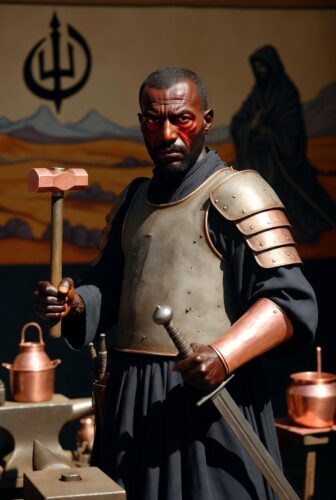 ### Ya‘qub the Coppersmith: From Bread-and-Onions Poverty to Hammering Empires
Ya‘qub ibn al-Layth was born on October 25, 840, in the tiny village of Karnin (Qarnin), east of Zaranj in Sistan. His family was poor enough that later chroniclers loved exaggerating the rags-to-riches angle. He and his brothers—Amr, Tahir, and Ali—moved to the regional capital Zaranj because of local sectarian violence. Ya‘qub learned the coppersmith trade (saffar means coppersmith in Arabic; the dynasty took its name from him). His brother Amr drove mules for a living. They ate simply—bread, onions, whatever was cheap.
But Ya‘qub wasn’t content hammering pots. He joined the local ayyar band under Salih ibn al-Nadr. By the mid-850s these vigilantes had expelled the Tahirid governor Ibrahim ibn al-Hudain from Sistan. Another ayyar leader, Dirham ibn Nasr, briefly took over in 858. Ya‘qub wasn’t having it. In 861—coincidentally the same year the Anarchy at Samarra kicked off—he overthrew Dirham, proclaimed himself emir, and made Zaranj his capital. The Saffarid dynasty was born.
He wasn’t some cartoon warlord. Chroniclers describe him as ascetic, almost monk-like: devout Sunni (despite later hostile Abbasid propaganda calling him Kharijite or worse), rarely smiling, refusing luxuries. He suffered chronic colic but wouldn’t take medicine that might dull his edge. Enemies nicknamed him “the Anvil” because he was unbreakable under pressure. He promoted Persian language and culture at a time when Arabic dominated officialdom—one of his secretaries even composed the first major Persian qasida (poem) after Ya‘qub complained he couldn’t understand Arabic speeches.
His conquests were lightning-fast and ruthless. In 864 he marched on Bost against his old boss Salih, then pushed into Rukhkhaj and Zamindavar, defeating the local Zunbil ruler (a semi-legendary Afghan king) and capturing his family plus huge booty. He smashed the Hindu Shahis in Kabul, conquered Ghazna, Bamyan, and the Panjshir Valley—securing silver mines that let him mint coins. By 865 he had crushed Kharijite rebels in northern Sistan.
In 867 he started styling himself as heir to the ancient kings of Persia, even sending a poem to Caliph al-Mu‘tazz boasting he carried the Derafsh Kaviani—the legendary Sasanian royal banner. By 870 he controlled all of Khorasan. In 873 he stormed Nishapur, captured the Tahirid governor Muhammad ibn Tahir (who would later be freed at Dayr al-‘Aqul), and sent him back to Sistan in chains. That move made the Abbasids sit up straight.
Western Iran fell next. He grabbed Fars in 875 after defeating Muhammad ibn Wasil near Lake Bakhtegan. He looted treasuries at Estakhr and Sa‘idabad. By early 876 he was in Khuzistan, near the Zanj rebels. The caliph, al-Mu‘tamid (r. 870–892), tried buying him off with governorships of Khorasan, Tabaristan, Fars, Gurgan, Rayy—plus the job of security chief in Baghdad itself. Ya‘qub smelled weakness. He rejected the offer and wrote back that he was coming to the capital in person.
That was the moment the hammer met the anvil.
### Ya‘qub the Coppersmith: From Bread-and-Onions Poverty to Hammering Empires
Ya‘qub ibn al-Layth was born on October 25, 840, in the tiny village of Karnin (Qarnin), east of Zaranj in Sistan. His family was poor enough that later chroniclers loved exaggerating the rags-to-riches angle. He and his brothers—Amr, Tahir, and Ali—moved to the regional capital Zaranj because of local sectarian violence. Ya‘qub learned the coppersmith trade (saffar means coppersmith in Arabic; the dynasty took its name from him). His brother Amr drove mules for a living. They ate simply—bread, onions, whatever was cheap.
But Ya‘qub wasn’t content hammering pots. He joined the local ayyar band under Salih ibn al-Nadr. By the mid-850s these vigilantes had expelled the Tahirid governor Ibrahim ibn al-Hudain from Sistan. Another ayyar leader, Dirham ibn Nasr, briefly took over in 858. Ya‘qub wasn’t having it. In 861—coincidentally the same year the Anarchy at Samarra kicked off—he overthrew Dirham, proclaimed himself emir, and made Zaranj his capital. The Saffarid dynasty was born.
He wasn’t some cartoon warlord. Chroniclers describe him as ascetic, almost monk-like: devout Sunni (despite later hostile Abbasid propaganda calling him Kharijite or worse), rarely smiling, refusing luxuries. He suffered chronic colic but wouldn’t take medicine that might dull his edge. Enemies nicknamed him “the Anvil” because he was unbreakable under pressure. He promoted Persian language and culture at a time when Arabic dominated officialdom—one of his secretaries even composed the first major Persian qasida (poem) after Ya‘qub complained he couldn’t understand Arabic speeches.
His conquests were lightning-fast and ruthless. In 864 he marched on Bost against his old boss Salih, then pushed into Rukhkhaj and Zamindavar, defeating the local Zunbil ruler (a semi-legendary Afghan king) and capturing his family plus huge booty. He smashed the Hindu Shahis in Kabul, conquered Ghazna, Bamyan, and the Panjshir Valley—securing silver mines that let him mint coins. By 865 he had crushed Kharijite rebels in northern Sistan.
In 867 he started styling himself as heir to the ancient kings of Persia, even sending a poem to Caliph al-Mu‘tazz boasting he carried the Derafsh Kaviani—the legendary Sasanian royal banner. By 870 he controlled all of Khorasan. In 873 he stormed Nishapur, captured the Tahirid governor Muhammad ibn Tahir (who would later be freed at Dayr al-‘Aqul), and sent him back to Sistan in chains. That move made the Abbasids sit up straight.
Western Iran fell next. He grabbed Fars in 875 after defeating Muhammad ibn Wasil near Lake Bakhtegan. He looted treasuries at Estakhr and Sa‘idabad. By early 876 he was in Khuzistan, near the Zanj rebels. The caliph, al-Mu‘tamid (r. 870–892), tried buying him off with governorships of Khorasan, Tabaristan, Fars, Gurgan, Rayy—plus the job of security chief in Baghdad itself. Ya‘qub smelled weakness. He rejected the offer and wrote back that he was coming to the capital in person.
That was the moment the hammer met the anvil.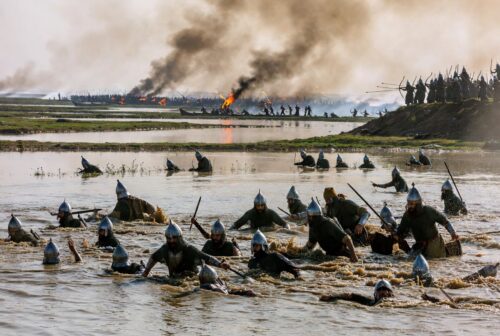 ### The Road to Dayr al-‘Aqul: Floods, Defections, and a Caliph’s Curse
Ya‘qub entered Iraq via Khuzistan in early 876. He picked up a key defector: the former Abbasid general Abi’l-Saj Devdad. Caliphal forces under Masrur al-Balkhi tried to slow him by flooding the lowlands outside Wasit. It bought time but didn’t stop him. On March 24, 876, Ya‘qub’s army marched into Wasit.
Meanwhile in Baghdad, panic. Caliph al-Mu‘tamid—never the strongest ruler—left Samarra on March 7, formally cursed Ya‘qub in a public ceremony, left his son al-Mufawwad in charge up north, and raced to the capital. He set up camp at Kalwadha, then moved to Sib Bani Kuma. His brother and real power behind the throne, al-Muwaffaq (a capable military mind), took overall command. They patched things up with the Turkish generals like Musa ibn Bugha. The caliphate’s prestige was on the line.
Ya‘qub, confident, didn’t even expect a real fight. He thought the Abbasids would fold. He brought political prisoners—including the captured Tahirid Muhammad ibn Tahir—as bargaining chips. His army numbered around 10,000 core fighters (though some exaggerated accounts put it higher). They were tough easterners, but many were reluctant to fight the caliph directly. Loyalty to the symbolic Abbasid leader still mattered in the Islamic world.
The Abbasids assembled something like 150,000 troops—vastly superior numbers, plus home-field advantage. They knew the Tigris floodplains, the irrigation networks, every canal and village.
### April 8, 876: The Battle Itself—Palm Sunday Carnage at Istarband
The armies clashed at Istarband, a village between Dayr al-‘Aqul (the “Monastery of the River Bend”) and Sib Bani Kuma. Ya‘qub reviewed his troops that morning. Fighting started early and raged all day.
Abbasid commanders: al-Muwaffaq in the center, Musa ibn Bugha on the right, Masrur al-Balkhi on the left. They opened with an appeal to the Saffarids to remember their loyalty to the caliph. Some did waver.
The turning point came in the late afternoon. Abbasid forces, using their knowledge of the terrain, had quietly flooded the low-lying plains behind the Saffarid lines—creating a watery trap. Meanwhile, a mawla (client) named Nusayr led a detachment in boats down the Tigris, hit the Saffarid rear, and torched the baggage train. Panic spread like wildfire.
Saffarid soldiers broke and ran straight into the flooded fields. Thousands drowned in the stampede. Ya‘qub was wounded but stayed in the fight with his bodyguard. By evening the army was shattered. The Abbasids captured the baggage, freed the prisoners (including Muhammad ibn Tahir), and claimed victory. Saffarid losses: at least 7,000 dead. Abbasid casualties are unrecorded but heavy on both sides—commanders fell too.
Ya‘qub and a handful of loyalists fought on briefly before withdrawing. The invasion of Iraq was over. The caliphate breathed.
### Aftermath and Legacy: The Anvil Cracks, But the Spark Endures
Ya‘qub retreated to Persia. He never launched another major Iraq campaign. Three years later, in June 879, he died in Gundeshapur from that chronic colic. His brother Amr ibn al-Layth took over, made peace with the Abbasids, and ruled a reduced but still formidable realm until 900. The Saffarids lingered as a local power in Sistan into the 11th century, but their empire-building days were finished.
The Abbasids used the win to regroup. They finally crushed the Zanj in 883. Egypt and other provinces were brought back into the fold (temporarily). The victory bought the caliphate another couple of centuries of nominal existence.
Historians like al-Tabari, al-Mas‘udi, and later Persian chroniclers preserved the story. It’s a classic tale of hubris meeting geography: a self-made man who hammered his way across half the known world, only to be stopped by clever use of rivers and canals he didn’t control.
### The Road to Dayr al-‘Aqul: Floods, Defections, and a Caliph’s Curse
Ya‘qub entered Iraq via Khuzistan in early 876. He picked up a key defector: the former Abbasid general Abi’l-Saj Devdad. Caliphal forces under Masrur al-Balkhi tried to slow him by flooding the lowlands outside Wasit. It bought time but didn’t stop him. On March 24, 876, Ya‘qub’s army marched into Wasit.
Meanwhile in Baghdad, panic. Caliph al-Mu‘tamid—never the strongest ruler—left Samarra on March 7, formally cursed Ya‘qub in a public ceremony, left his son al-Mufawwad in charge up north, and raced to the capital. He set up camp at Kalwadha, then moved to Sib Bani Kuma. His brother and real power behind the throne, al-Muwaffaq (a capable military mind), took overall command. They patched things up with the Turkish generals like Musa ibn Bugha. The caliphate’s prestige was on the line.
Ya‘qub, confident, didn’t even expect a real fight. He thought the Abbasids would fold. He brought political prisoners—including the captured Tahirid Muhammad ibn Tahir—as bargaining chips. His army numbered around 10,000 core fighters (though some exaggerated accounts put it higher). They were tough easterners, but many were reluctant to fight the caliph directly. Loyalty to the symbolic Abbasid leader still mattered in the Islamic world.
The Abbasids assembled something like 150,000 troops—vastly superior numbers, plus home-field advantage. They knew the Tigris floodplains, the irrigation networks, every canal and village.
### April 8, 876: The Battle Itself—Palm Sunday Carnage at Istarband
The armies clashed at Istarband, a village between Dayr al-‘Aqul (the “Monastery of the River Bend”) and Sib Bani Kuma. Ya‘qub reviewed his troops that morning. Fighting started early and raged all day.
Abbasid commanders: al-Muwaffaq in the center, Musa ibn Bugha on the right, Masrur al-Balkhi on the left. They opened with an appeal to the Saffarids to remember their loyalty to the caliph. Some did waver.
The turning point came in the late afternoon. Abbasid forces, using their knowledge of the terrain, had quietly flooded the low-lying plains behind the Saffarid lines—creating a watery trap. Meanwhile, a mawla (client) named Nusayr led a detachment in boats down the Tigris, hit the Saffarid rear, and torched the baggage train. Panic spread like wildfire.
Saffarid soldiers broke and ran straight into the flooded fields. Thousands drowned in the stampede. Ya‘qub was wounded but stayed in the fight with his bodyguard. By evening the army was shattered. The Abbasids captured the baggage, freed the prisoners (including Muhammad ibn Tahir), and claimed victory. Saffarid losses: at least 7,000 dead. Abbasid casualties are unrecorded but heavy on both sides—commanders fell too.
Ya‘qub and a handful of loyalists fought on briefly before withdrawing. The invasion of Iraq was over. The caliphate breathed.
### Aftermath and Legacy: The Anvil Cracks, But the Spark Endures
Ya‘qub retreated to Persia. He never launched another major Iraq campaign. Three years later, in June 879, he died in Gundeshapur from that chronic colic. His brother Amr ibn al-Layth took over, made peace with the Abbasids, and ruled a reduced but still formidable realm until 900. The Saffarids lingered as a local power in Sistan into the 11th century, but their empire-building days were finished.
The Abbasids used the win to regroup. They finally crushed the Zanj in 883. Egypt and other provinces were brought back into the fold (temporarily). The victory bought the caliphate another couple of centuries of nominal existence.
Historians like al-Tabari, al-Mas‘udi, and later Persian chroniclers preserved the story. It’s a classic tale of hubris meeting geography: a self-made man who hammered his way across half the known world, only to be stopped by clever use of rivers and canals he didn’t control. ### From the Tigris to Your Tuesday: Applying the Outcome to Your Individual Life
The outcome of April 8, 876, wasn’t just an Abbasid win—it was proof that raw ambition without terrain awareness, alliance management, and smart defense gets you drowned in your own overreach. Ya‘qub’s fall shows that even unstoppable conquerors can be halted when the defender turns the battlefield against them. Today, that translates directly to your personal empire: your career, relationships, health goals, side hustles—whatever “territory” you’re claiming.
Here’s how you benefit, in very specific ways:
- **You learn to map your own “floodplains” before charging.** Ya‘qub ignored the Tigris irrigation network. In your life, that means auditing your vulnerabilities (time sinks, toxic colleagues, financial leaks) before launching big moves like job switches or investments. Spot the hidden canals that can flood your retreat.
- **You stop treating your “troops” like disposable ayyars.** Ya‘qub’s men wavered when asked to fight the caliph. Build genuine loyalty in your network—family, team, mentors—by sharing spoils and respecting their codes, not just issuing orders.
- **You master the baggage-train raid.** The sneaky boat attack won the day. In modern terms: identify the one weak logistical point in a competitor’s or bad-habit’s operation (that one app draining your focus, that one expense category) and hit it surgically instead of frontal assaults.
- **You embrace the “Anvil” mindset without becoming brittle.** Ya‘qub was tough but refused medicine. Know when to treat the colic (burnout, small health issues) so you stay in the fight longer.
- **You recognize when the caliph’s offer is a trap.** The Abbasids tried buying him off. Today that’s the golden-handcuff job or the “safe” compromise. Sometimes rejecting it is right—but only if you’ve got the terrain scouted.
- **You use Palm Sunday timing.** The battle happened on a symbolically loaded day. Align your decisive actions with natural rhythms—tax season deadlines, fiscal quarters, personal anniversaries—for psychological edge.
### The Saffarid Siege-Breaker Protocol: Your Unique 7-Day Quick Plan (Nothing Like the Self-Help Noise Online)
Most self-help is vague positivity or hustle porn. This is different: a military-derived, terrain-first protocol inspired directly by Dayr al-‘Aqul. It’s quick (one week to install, then maintain), unique (uses irrigation metaphors and ayyar vigilance), and actionable against real overreach. Do it once, then run the “daily patrol” forever.
**Day 1: Scout the Floodplains (Terrain Audit)**
List your current “advance” (big goal). Then map three potential flood zones behind it—things that could drown your retreat if it fails (e.g., maxed credit cards, neglected family time, untested assumptions). Write them down in one paragraph. Flood them deliberately: create small barriers now (emergency fund top-up, scheduled off-grid evening).
**Day 2: Review the Ayyars (Loyalty Check)**
Identify your five key “troops” (people or habits that support your empire). Rate each 1–10 on loyalty and shared spoils. For any below 7, do one concrete thing today that shows you value their code (public credit, shared win, honest feedback). No generic “thank you”—make it tactical.
**Day 3: Launch the Baggage-Train Raid (Surgical Strike)**
Pick one logistical weakness in your biggest obstacle (bad habit, competitor, procrastination trigger). Hit it with a Nusayr-style boat raid: one 15-minute action that burns their supply line (delete the app, cancel the subscription, block the time-waster contact). Document the immediate effect.
**Day 4: Hammer the Anvil (Personal Resilience Test)**
Do one hard thing Ya‘qub-style: cold shower, 5-mile run, or uncomfortable conversation you’ve been avoiding. Then treat any “colic”—eat the vegetable, take the rest day, fix the small pain point you’ve ignored. Balance the unbreakable with the sustainable.
**Day 5: Reject or Accept the Caliph’s Offer (Decision Gate)**
Write the “governorship” offer you’re tempted by (safe job, compromise goal). Decide: accept only if it strengthens your core territory without flooding future options. If rejecting, draft the one-sentence “I’m coming to the capital” response that commits you fully.
**Day 6: Simulate the Palm Sunday Charge (Full Dry Run)**
Role-play your next big move for 30 minutes: visualize the battlefield, the flooded retreat paths, the baggage raid. Then execute one small forward step (send the email, make the call, book the class) while keeping the escape routes clear.
**Day 7: Claim the Monastery at the Bend (Consolidation)**
Review the week. Celebrate what held (like the Abbasids did). Adjust one floodplain barrier. Lock in the daily patrol: every Sunday evening for 10 minutes, repeat the terrain audit and loyalty check. That’s it—no apps, no journals required after week one.
Run this protocol and you won’t become the next Ya‘qub who charges too far and drowns. You’ll become the al-Muwaffaq who uses the ground he already controls to turn ambition into lasting power. The coppersmith hammered empires across half the world before April 8, 876 taught everyone a better way to win: know the rivers, guard the baggage, and never forget that even the strongest anvil can crack if the flood comes from behind.
History doesn’t repeat, but the Tigris still flows. Your move—don’t get caught without a boat.
### From the Tigris to Your Tuesday: Applying the Outcome to Your Individual Life
The outcome of April 8, 876, wasn’t just an Abbasid win—it was proof that raw ambition without terrain awareness, alliance management, and smart defense gets you drowned in your own overreach. Ya‘qub’s fall shows that even unstoppable conquerors can be halted when the defender turns the battlefield against them. Today, that translates directly to your personal empire: your career, relationships, health goals, side hustles—whatever “territory” you’re claiming.
Here’s how you benefit, in very specific ways:
- **You learn to map your own “floodplains” before charging.** Ya‘qub ignored the Tigris irrigation network. In your life, that means auditing your vulnerabilities (time sinks, toxic colleagues, financial leaks) before launching big moves like job switches or investments. Spot the hidden canals that can flood your retreat.
- **You stop treating your “troops” like disposable ayyars.** Ya‘qub’s men wavered when asked to fight the caliph. Build genuine loyalty in your network—family, team, mentors—by sharing spoils and respecting their codes, not just issuing orders.
- **You master the baggage-train raid.** The sneaky boat attack won the day. In modern terms: identify the one weak logistical point in a competitor’s or bad-habit’s operation (that one app draining your focus, that one expense category) and hit it surgically instead of frontal assaults.
- **You embrace the “Anvil” mindset without becoming brittle.** Ya‘qub was tough but refused medicine. Know when to treat the colic (burnout, small health issues) so you stay in the fight longer.
- **You recognize when the caliph’s offer is a trap.** The Abbasids tried buying him off. Today that’s the golden-handcuff job or the “safe” compromise. Sometimes rejecting it is right—but only if you’ve got the terrain scouted.
- **You use Palm Sunday timing.** The battle happened on a symbolically loaded day. Align your decisive actions with natural rhythms—tax season deadlines, fiscal quarters, personal anniversaries—for psychological edge.
### The Saffarid Siege-Breaker Protocol: Your Unique 7-Day Quick Plan (Nothing Like the Self-Help Noise Online)
Most self-help is vague positivity or hustle porn. This is different: a military-derived, terrain-first protocol inspired directly by Dayr al-‘Aqul. It’s quick (one week to install, then maintain), unique (uses irrigation metaphors and ayyar vigilance), and actionable against real overreach. Do it once, then run the “daily patrol” forever.
**Day 1: Scout the Floodplains (Terrain Audit)**
List your current “advance” (big goal). Then map three potential flood zones behind it—things that could drown your retreat if it fails (e.g., maxed credit cards, neglected family time, untested assumptions). Write them down in one paragraph. Flood them deliberately: create small barriers now (emergency fund top-up, scheduled off-grid evening).
**Day 2: Review the Ayyars (Loyalty Check)**
Identify your five key “troops” (people or habits that support your empire). Rate each 1–10 on loyalty and shared spoils. For any below 7, do one concrete thing today that shows you value their code (public credit, shared win, honest feedback). No generic “thank you”—make it tactical.
**Day 3: Launch the Baggage-Train Raid (Surgical Strike)**
Pick one logistical weakness in your biggest obstacle (bad habit, competitor, procrastination trigger). Hit it with a Nusayr-style boat raid: one 15-minute action that burns their supply line (delete the app, cancel the subscription, block the time-waster contact). Document the immediate effect.
**Day 4: Hammer the Anvil (Personal Resilience Test)**
Do one hard thing Ya‘qub-style: cold shower, 5-mile run, or uncomfortable conversation you’ve been avoiding. Then treat any “colic”—eat the vegetable, take the rest day, fix the small pain point you’ve ignored. Balance the unbreakable with the sustainable.
**Day 5: Reject or Accept the Caliph’s Offer (Decision Gate)**
Write the “governorship” offer you’re tempted by (safe job, compromise goal). Decide: accept only if it strengthens your core territory without flooding future options. If rejecting, draft the one-sentence “I’m coming to the capital” response that commits you fully.
**Day 6: Simulate the Palm Sunday Charge (Full Dry Run)**
Role-play your next big move for 30 minutes: visualize the battlefield, the flooded retreat paths, the baggage raid. Then execute one small forward step (send the email, make the call, book the class) while keeping the escape routes clear.
**Day 7: Claim the Monastery at the Bend (Consolidation)**
Review the week. Celebrate what held (like the Abbasids did). Adjust one floodplain barrier. Lock in the daily patrol: every Sunday evening for 10 minutes, repeat the terrain audit and loyalty check. That’s it—no apps, no journals required after week one.
Run this protocol and you won’t become the next Ya‘qub who charges too far and drowns. You’ll become the al-Muwaffaq who uses the ground he already controls to turn ambition into lasting power. The coppersmith hammered empires across half the world before April 8, 876 taught everyone a better way to win: know the rivers, guard the baggage, and never forget that even the strongest anvil can crack if the flood comes from behind.
History doesn’t repeat, but the Tigris still flows. Your move—don’t get caught without a boat.