Picture the North African coast in early 46 BC. The sun beats down on a narrow strip of land squeezed between the Mediterranean and a salty lagoon near the old Phoenician port of Thapsus—modern-day Tunisia. Dust swirls as two massive armies face off. On one side, the battle-hardened legions of Gaius Julius Caesar, veterans of Gaul and Pharsalus, itching for the final knockout blow in a civil war that has already torn the Roman Republic apart. On the other, a sprawling coalition of Optimates—the die-hard senatorial traditionalists—led by Quintus Caecilius Metellus Scipio, backed by the war elephants and light cavalry of King Juba I of Numidia, plus holdouts like Titus Labienus, Lucius Afranius, and Marcus Petreius. The air hums with tension, trumpets blare, and then… chaos. Not the glorious kind poets later romanticize, but the messy, slapstick, gut-wrenching kind where the enemy’s own secret weapons turn traitor and trample their masters into the sand. By the end of the day, roughly 10,000 of Scipio’s men lie dead or dying, Caesar’s camp overflows with captured standards and supplies, and the last major Pompeian stronghold in Africa has crumbled. The Republic’s old guard is shattered. Caesar is one decisive step closer to absolute power. And history pivots. This wasn’t some vague “ancient battle” footnote. April 6, 46 BC (Julian calendar—pre-Caesar’s own reform made dates slippery, but every major chronicle pins the clash here) marked the bloody climax of Caesar’s African campaign. It ended organized resistance against him on that continent, let him sail home to Rome in triumph, and accelerated the Republic’s death rattle into the birth pangs of empire. But strip away the marble statues and laurel wreaths, and Thapsus is raw human drama: ambition, betrayal, philosophical suicide, tactical genius, and a healthy dose of battlefield farce. For 90 percent of this story, we’re diving straight into the grit—the politics that ignited it, the grueling months leading up to that April morning, the exact maneuvers that turned elephants into liabilities, and the cascading suicides that followed. Only afterward do we extract the timeless payoff: how the *outcome* of that single day equips any modern person with a razor-sharp edge for their own private wars.
Let’s rewind to the spark. Rome in the late 50s BC was a powder keg of envy, debt, and glory-hunger. Julius Caesar—charismatic, bald (he hated it, hence the laurel crown later), and deeply in debt from bribing his way up the cursus honorum—had conquered Gaul, amassed loyal legions, and become a living legend. His rivals in the Senate, the Optimates, saw him as a populist threat to their oligarchic club. Pompey the Great, once Caesar’s ally and son-in-law, flipped sides. Crassus, the third member of the First Triumvirate, died ignominiously fighting Parthia in 53 BC. With the balancing act gone, the Senate ordered Caesar to disband his army and return to Rome as a private citizen—essentially a death sentence given his enemies’ knives. On January 10, 49 BC, Caesar crossed the Rubicon River with the 13th Legion, uttering the immortal “alea iacta est”—the die is cast. Civil war erupted.
Caesar moved with shocking speed. He chased Pompey to Greece, survived a near-disaster at Dyrrhachium in 48 BC where Pompey nearly starved him out, then crushed him at Pharsalus. Pompey fled to Egypt and was promptly beheaded by a scheming Ptolemy who thought it would curry favor. Caesar, ever the showman of clemency (he pardoned thousands of captured Pompeians to win hearts), mopped up the East. But the Optimates weren’t finished. They regrouped in the Roman province of Africa Proconsularis—rich, defensible, and far from Caesar’s Italian power base. There, Metellus Scipio (Pompey’s father-in-law and a haughty aristocrat who styled himself after the great Scipios of old) took nominal command. Joining him: the uncompromising Cato the Younger, moral guardian of Republican virtue; Labienus, Caesar’s former Gallic cavalry commander turned bitter foe; Afranius and Petreius, veteran generals; and crucially, King Juba I of Numidia. Juba brought 60 war elephants—towering, trumpeting beasts trained for shock charges—and thousands of superb light cavalry who could harass, raid supplies, and melt away into the desert. The Pompeians had local knowledge, grain stores, and the moral high ground of “saving the Republic.” They expected Caesar to bleed out in the African heat.
This wasn’t some vague “ancient battle” footnote. April 6, 46 BC (Julian calendar—pre-Caesar’s own reform made dates slippery, but every major chronicle pins the clash here) marked the bloody climax of Caesar’s African campaign. It ended organized resistance against him on that continent, let him sail home to Rome in triumph, and accelerated the Republic’s death rattle into the birth pangs of empire. But strip away the marble statues and laurel wreaths, and Thapsus is raw human drama: ambition, betrayal, philosophical suicide, tactical genius, and a healthy dose of battlefield farce. For 90 percent of this story, we’re diving straight into the grit—the politics that ignited it, the grueling months leading up to that April morning, the exact maneuvers that turned elephants into liabilities, and the cascading suicides that followed. Only afterward do we extract the timeless payoff: how the *outcome* of that single day equips any modern person with a razor-sharp edge for their own private wars.
Let’s rewind to the spark. Rome in the late 50s BC was a powder keg of envy, debt, and glory-hunger. Julius Caesar—charismatic, bald (he hated it, hence the laurel crown later), and deeply in debt from bribing his way up the cursus honorum—had conquered Gaul, amassed loyal legions, and become a living legend. His rivals in the Senate, the Optimates, saw him as a populist threat to their oligarchic club. Pompey the Great, once Caesar’s ally and son-in-law, flipped sides. Crassus, the third member of the First Triumvirate, died ignominiously fighting Parthia in 53 BC. With the balancing act gone, the Senate ordered Caesar to disband his army and return to Rome as a private citizen—essentially a death sentence given his enemies’ knives. On January 10, 49 BC, Caesar crossed the Rubicon River with the 13th Legion, uttering the immortal “alea iacta est”—the die is cast. Civil war erupted.
Caesar moved with shocking speed. He chased Pompey to Greece, survived a near-disaster at Dyrrhachium in 48 BC where Pompey nearly starved him out, then crushed him at Pharsalus. Pompey fled to Egypt and was promptly beheaded by a scheming Ptolemy who thought it would curry favor. Caesar, ever the showman of clemency (he pardoned thousands of captured Pompeians to win hearts), mopped up the East. But the Optimates weren’t finished. They regrouped in the Roman province of Africa Proconsularis—rich, defensible, and far from Caesar’s Italian power base. There, Metellus Scipio (Pompey’s father-in-law and a haughty aristocrat who styled himself after the great Scipios of old) took nominal command. Joining him: the uncompromising Cato the Younger, moral guardian of Republican virtue; Labienus, Caesar’s former Gallic cavalry commander turned bitter foe; Afranius and Petreius, veteran generals; and crucially, King Juba I of Numidia. Juba brought 60 war elephants—towering, trumpeting beasts trained for shock charges—and thousands of superb light cavalry who could harass, raid supplies, and melt away into the desert. The Pompeians had local knowledge, grain stores, and the moral high ground of “saving the Republic.” They expected Caesar to bleed out in the African heat.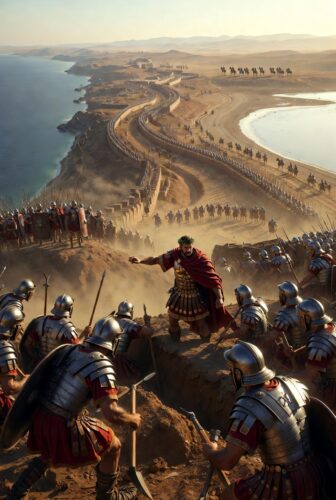 Caesar landed in late 47 BC with a dangerously small force—perhaps five understrength legions at first, plus auxiliaries. Winter storms scattered his ships. Supplies were scarce. The Pompeians under Labienus and Petreius nearly trapped him at the Battle of Ruspina in early 46 BC. Caesar’s men formed a desperate circle; Labienus taunted them with captured standards. Yet Caesar’s veterans held, and he slipped away to reinforce. Over the next months, he conducted a masterclass in Fabian delaying mixed with aggressive foraging. He seized grain islands, built fortifications, drilled recruits, and waited for the rest of his army—eventually swelling to 10-12 legions (including the famous Legio V Alaudae, the “Larks,” raised from Gallic recruits and now battle-tested). Skirmishes at Uzitta and elsewhere wore down the enemy. Scipio tried to bait Caesar into premature battle by parading daily outside his camp. Caesar refused. He knew time favored the side with discipline and logistics. By early April, Caesar had maneuvered to besiege Thapsus itself—a strategic coastal town with a narrow land corridor ideal for forcing the enemy into a bottleneck. He threw up double circumvallation lines—ditches, ramparts, artillery—sealing the town from land and sea. Scipio had no choice but to march to relieve it.
Dawn on April 6 broke with both armies arrayed on that fatal peninsula. Caesar’s forces: veteran legions in the classic triplex acies—three lines—with Legio X Equestris and VII on the right, VIII and IX on the left, newer units in the center. Flanks protected by archers, slingers, and cavalry. Crucially, he split Legio V Alaudae into cohorts ready to counter elephants. Scipio mirrored with his own legions backed by Juba’s Numidians and—most terrifyingly—those 60 elephants on the wings, each beast carrying a howdah with javelin throwers. The terrain funneled everything into a killing ground. Standoff. Then Caesar’s trumpets sounded the general advance—against his own orders in some accounts, perhaps while he suffered one of his epileptic seizures (Plutarch hints at it). The legions surged forward, shouting their battle cries.
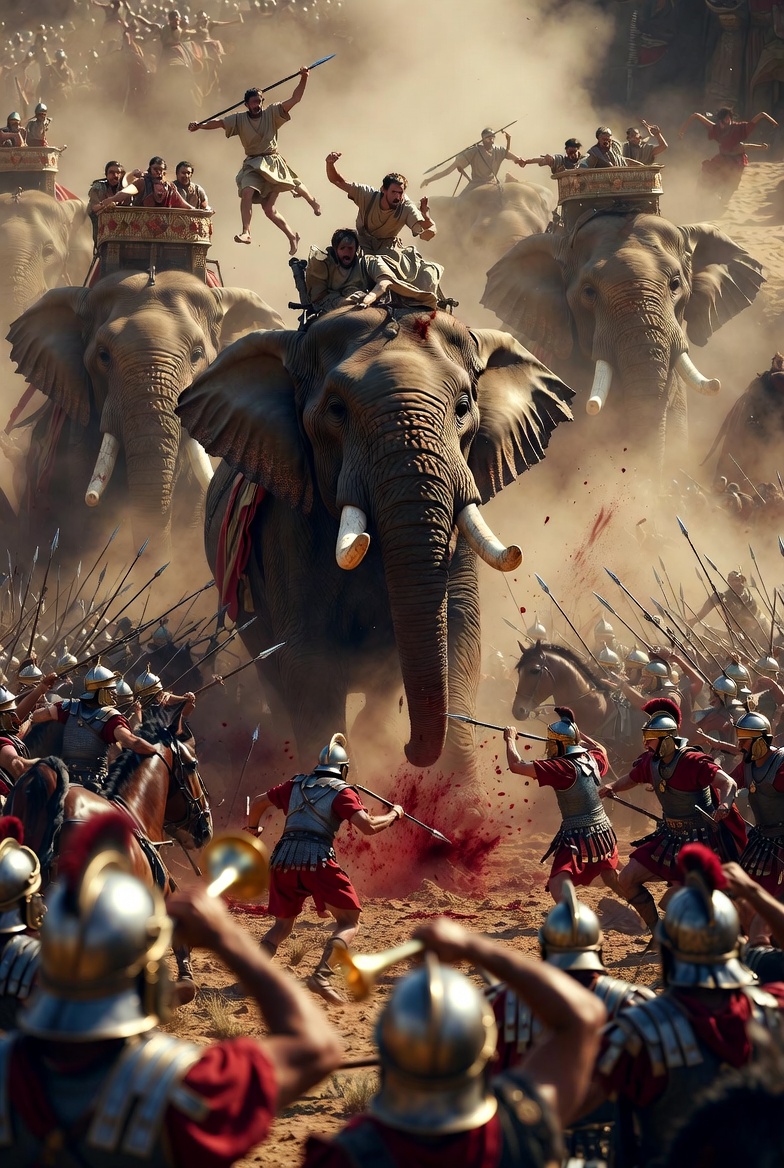
Here comes the farce that decided everything. On Scipio’s right wing, the elephants—spooked by the sudden roar, the hail of arrows, slingshots, and pila (heavy Roman javelins)—panicked. Instead of charging Caesar’s lines, they wheeled and stampeded *backward* through their own infantry and cavalry. Trumpets from Caesar’s side only amplified the terror. The beasts crushed their handlers, trampled legionaries, and opened huge gaps. Legio V Alaudae exploited it brilliantly: cohorts darted in, stabbing upward at the elephants’ eyes, underbellies, and legs—the vulnerable spots their trainers had failed to protect against disciplined infantry. On the left wing, similar chaos. Scipio’s center collapsed under the veteran legions’ pilum volleys and gladius thrusts. The Optimates broke. Caesar’s cavalry galloped around the flanks, overrunning camps. Thapsus’ garrison tried a sally but was repulsed. By nightfall, the slaughter was horrific. Caesar’s troops, blood-maddened after years of civil war grudges, ignored his pleas for mercy and butchered surrendering Romans and Numidians alike—perhaps 10,000 dead against Caesar’s mere 1,000 casualties. Ancient sources like the *Bellum Africanum* (likely by one of Caesar’s officers) describe rivers of blood and piles of bodies clogging the ditches.
Caesar landed in late 47 BC with a dangerously small force—perhaps five understrength legions at first, plus auxiliaries. Winter storms scattered his ships. Supplies were scarce. The Pompeians under Labienus and Petreius nearly trapped him at the Battle of Ruspina in early 46 BC. Caesar’s men formed a desperate circle; Labienus taunted them with captured standards. Yet Caesar’s veterans held, and he slipped away to reinforce. Over the next months, he conducted a masterclass in Fabian delaying mixed with aggressive foraging. He seized grain islands, built fortifications, drilled recruits, and waited for the rest of his army—eventually swelling to 10-12 legions (including the famous Legio V Alaudae, the “Larks,” raised from Gallic recruits and now battle-tested). Skirmishes at Uzitta and elsewhere wore down the enemy. Scipio tried to bait Caesar into premature battle by parading daily outside his camp. Caesar refused. He knew time favored the side with discipline and logistics. By early April, Caesar had maneuvered to besiege Thapsus itself—a strategic coastal town with a narrow land corridor ideal for forcing the enemy into a bottleneck. He threw up double circumvallation lines—ditches, ramparts, artillery—sealing the town from land and sea. Scipio had no choice but to march to relieve it.
Dawn on April 6 broke with both armies arrayed on that fatal peninsula. Caesar’s forces: veteran legions in the classic triplex acies—three lines—with Legio X Equestris and VII on the right, VIII and IX on the left, newer units in the center. Flanks protected by archers, slingers, and cavalry. Crucially, he split Legio V Alaudae into cohorts ready to counter elephants. Scipio mirrored with his own legions backed by Juba’s Numidians and—most terrifyingly—those 60 elephants on the wings, each beast carrying a howdah with javelin throwers. The terrain funneled everything into a killing ground. Standoff. Then Caesar’s trumpets sounded the general advance—against his own orders in some accounts, perhaps while he suffered one of his epileptic seizures (Plutarch hints at it). The legions surged forward, shouting their battle cries.
Here comes the farce that decided everything. On Scipio’s right wing, the elephants—spooked by the sudden roar, the hail of arrows, slingshots, and pila (heavy Roman javelins)—panicked. Instead of charging Caesar’s lines, they wheeled and stampeded *backward* through their own infantry and cavalry. Trumpets from Caesar’s side only amplified the terror. The beasts crushed their handlers, trampled legionaries, and opened huge gaps. Legio V Alaudae exploited it brilliantly: cohorts darted in, stabbing upward at the elephants’ eyes, underbellies, and legs—the vulnerable spots their trainers had failed to protect against disciplined infantry. On the left wing, similar chaos. Scipio’s center collapsed under the veteran legions’ pilum volleys and gladius thrusts. The Optimates broke. Caesar’s cavalry galloped around the flanks, overrunning camps. Thapsus’ garrison tried a sally but was repulsed. By nightfall, the slaughter was horrific. Caesar’s troops, blood-maddened after years of civil war grudges, ignored his pleas for mercy and butchered surrendering Romans and Numidians alike—perhaps 10,000 dead against Caesar’s mere 1,000 casualties. Ancient sources like the *Bellum Africanum* (likely by one of Caesar’s officers) describe rivers of blood and piles of bodies clogging the ditches. Victory was total, but the human cost lingered in the aftermath. Scipio fled by sea, only to be intercepted; he fell on his sword rather than face capture. Labienus escaped to Spain for one last stand at Munda the next year. Afranius and others were hunted down and executed by Caesar’s ally Publius Sittius. Juba and Petreius, cornered in Numidia, staged a grim final dinner and duel: Juba killed Petreius, then ordered a slave to finish him off—honorable suicide, Roman-style. But the most iconic exit belonged to Cato the Younger at Utica. Hearing of Thapsus, Cato—stoic philosopher, relentless anti-Caesar voice, and symbol of Republican purity—hosted a final banquet, read Plato’s *Phaedo* (on the immortality of the soul), argued philosophy late into the night, then stabbed himself in the belly. Servants sewed the wound; Cato ripped it open again, spilling his guts in a grotesque, defiant act. Caesar reportedly lamented, “Cato, I grudge you your death, as you grudged me the honor of sparing your life.” It was the ultimate middle finger to clemency and the new order.
Caesar spent weeks mopping up, annexing Numidia, pardoning where he could, and extracting loot to fund his triumphs back in Rome. He returned by July, celebrated four spectacular triumphs (including one over Africa, complete with a float showing Cato’s suicide—tasteless even by Roman standards), and was named dictator for life. The Republic’s institutions were hollowed out. Within two years, the Ides of March would cut him down, but Thapsus had already made the transition to empire inevitable. The battle was also the last major use of war elephants in the western Mediterranean—those lumbering giants proved more liability than asset against Roman adaptability. Rome absorbed Africa more firmly, and the civil wars’ embers smoldered into the Pax Romana under Augustus.
What a whirlwind of strategy, betrayal, philosophy, and bloody farce. Thapsus wasn’t won by superior numbers—Caesar was often outnumbered locally—but by relentless preparation during the long African winter, lightning adaptability when elephants went rogue, and the sheer momentum of veteran troops who refused to lose. The outcome? A shattered opposition, a continent secured, and a man who bent history to his will.
Victory was total, but the human cost lingered in the aftermath. Scipio fled by sea, only to be intercepted; he fell on his sword rather than face capture. Labienus escaped to Spain for one last stand at Munda the next year. Afranius and others were hunted down and executed by Caesar’s ally Publius Sittius. Juba and Petreius, cornered in Numidia, staged a grim final dinner and duel: Juba killed Petreius, then ordered a slave to finish him off—honorable suicide, Roman-style. But the most iconic exit belonged to Cato the Younger at Utica. Hearing of Thapsus, Cato—stoic philosopher, relentless anti-Caesar voice, and symbol of Republican purity—hosted a final banquet, read Plato’s *Phaedo* (on the immortality of the soul), argued philosophy late into the night, then stabbed himself in the belly. Servants sewed the wound; Cato ripped it open again, spilling his guts in a grotesque, defiant act. Caesar reportedly lamented, “Cato, I grudge you your death, as you grudged me the honor of sparing your life.” It was the ultimate middle finger to clemency and the new order.
Caesar spent weeks mopping up, annexing Numidia, pardoning where he could, and extracting loot to fund his triumphs back in Rome. He returned by July, celebrated four spectacular triumphs (including one over Africa, complete with a float showing Cato’s suicide—tasteless even by Roman standards), and was named dictator for life. The Republic’s institutions were hollowed out. Within two years, the Ides of March would cut him down, but Thapsus had already made the transition to empire inevitable. The battle was also the last major use of war elephants in the western Mediterranean—those lumbering giants proved more liability than asset against Roman adaptability. Rome absorbed Africa more firmly, and the civil wars’ embers smoldered into the Pax Romana under Augustus.
What a whirlwind of strategy, betrayal, philosophy, and bloody farce. Thapsus wasn’t won by superior numbers—Caesar was often outnumbered locally—but by relentless preparation during the long African winter, lightning adaptability when elephants went rogue, and the sheer momentum of veteran troops who refused to lose. The outcome? A shattered opposition, a continent secured, and a man who bent history to his will.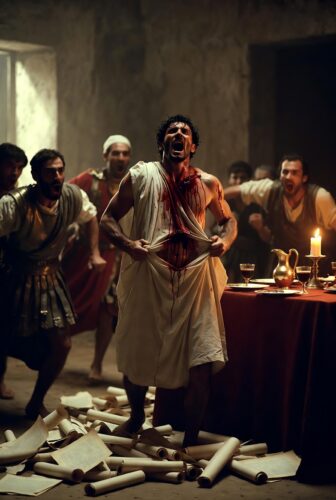 Now, fast-forward two millennia. No one today marches legions across Tunisia or duels with elephants. Yet every individual wages their own Thapsus-level campaigns: against crushing debt, soul-crushing routines, self-sabotaging habits, or external “Optimates” like toxic relationships or impossible deadlines. The *outcome* of that April 6 victory—decisive conquest born from patience, tactical improvisation, and unyielding charge—delivers concrete, life-altering benefits when transplanted into daily existence. Here’s how a person reaps them:
- **Strategic patience turns potential routs into setups for triumph**: Caesar didn’t rush into Africa half-cocked; he reinforced, foraged, and fortified for months. Apply this and you stop burning out on impulsive New Year’s resolutions or rage-quit jobs. Instead, you quietly build reserves—skills, networks, savings—until your personal “Thapsus” moment arrives fully armed. Result: you win bigger, with fewer casualties to your health or relationships.
- **Chaos elephants become your greatest ally when countered smartly**: Those beasts were Scipio’s trump card—until panic flipped them. Life throws equivalent wild cards (sudden layoffs, health scares, market crashes). Caesar’s Legio V drilled countermeasures; you learn to spot vulnerabilities in the “elephant” (fear, distraction) and stab precisely—maybe with a pre-planned contingency budget or a 10-minute breathing protocol—turning panic into momentum.
- **Mercy has limits, but decisiveness does not**: Caesar offered pardon but let his troops’ bloodlust seal the deal when mercy endangered victory. Today, this means setting firm boundaries with energy-draining people or habits without endless second chances. You preserve your core mission—your “Republic”—and move forward cleaner.
- **Veteran discipline beats raw numbers every time**: Caesar’s mixed legions (veterans anchoring recruits) held firm. In personal battles, this translates to leaning on proven daily systems (your “veteran core”) while training new habits. You outlast flashier but undisciplined rivals or temptations.
- **The aftermath demands reflection, not endless war**: Cato’s suicide and Caesar’s triumphs show victory extracts a price. Post-Thapsus, you audit wins honestly—celebrate without arrogance, learn from the dead (failed attempts)—and pivot to the next front (Spain/Munda equivalent) without resting on laurels.
These aren’t vague inspirations; they’re battle-tested mechanics that compound into unbreakable personal sovereignty.
To make it real and lightning-fast—unlike the cookie-cutter “journal for 21 days” self-help clogging the internet—here is the **Thapsus Protocol**: a 14-day military-style campaign that treats your chosen personal enemy (call it your “Pompeian holdout”—procrastination fortress, toxic habit legion, or self-doubt Numidian cavalry) exactly like Caesar treated Africa. It is quick, phased like the actual campaign, laced with historical flair for memorability, and ruthlessly effective because it forces decisive action instead of endless introspection. No vision boards. No affirmations. Just orders, maneuvers, and a victory parade.
Now, fast-forward two millennia. No one today marches legions across Tunisia or duels with elephants. Yet every individual wages their own Thapsus-level campaigns: against crushing debt, soul-crushing routines, self-sabotaging habits, or external “Optimates” like toxic relationships or impossible deadlines. The *outcome* of that April 6 victory—decisive conquest born from patience, tactical improvisation, and unyielding charge—delivers concrete, life-altering benefits when transplanted into daily existence. Here’s how a person reaps them:
- **Strategic patience turns potential routs into setups for triumph**: Caesar didn’t rush into Africa half-cocked; he reinforced, foraged, and fortified for months. Apply this and you stop burning out on impulsive New Year’s resolutions or rage-quit jobs. Instead, you quietly build reserves—skills, networks, savings—until your personal “Thapsus” moment arrives fully armed. Result: you win bigger, with fewer casualties to your health or relationships.
- **Chaos elephants become your greatest ally when countered smartly**: Those beasts were Scipio’s trump card—until panic flipped them. Life throws equivalent wild cards (sudden layoffs, health scares, market crashes). Caesar’s Legio V drilled countermeasures; you learn to spot vulnerabilities in the “elephant” (fear, distraction) and stab precisely—maybe with a pre-planned contingency budget or a 10-minute breathing protocol—turning panic into momentum.
- **Mercy has limits, but decisiveness does not**: Caesar offered pardon but let his troops’ bloodlust seal the deal when mercy endangered victory. Today, this means setting firm boundaries with energy-draining people or habits without endless second chances. You preserve your core mission—your “Republic”—and move forward cleaner.
- **Veteran discipline beats raw numbers every time**: Caesar’s mixed legions (veterans anchoring recruits) held firm. In personal battles, this translates to leaning on proven daily systems (your “veteran core”) while training new habits. You outlast flashier but undisciplined rivals or temptations.
- **The aftermath demands reflection, not endless war**: Cato’s suicide and Caesar’s triumphs show victory extracts a price. Post-Thapsus, you audit wins honestly—celebrate without arrogance, learn from the dead (failed attempts)—and pivot to the next front (Spain/Munda equivalent) without resting on laurels.
These aren’t vague inspirations; they’re battle-tested mechanics that compound into unbreakable personal sovereignty.
To make it real and lightning-fast—unlike the cookie-cutter “journal for 21 days” self-help clogging the internet—here is the **Thapsus Protocol**: a 14-day military-style campaign that treats your chosen personal enemy (call it your “Pompeian holdout”—procrastination fortress, toxic habit legion, or self-doubt Numidian cavalry) exactly like Caesar treated Africa. It is quick, phased like the actual campaign, laced with historical flair for memorability, and ruthlessly effective because it forces decisive action instead of endless introspection. No vision boards. No affirmations. Just orders, maneuvers, and a victory parade.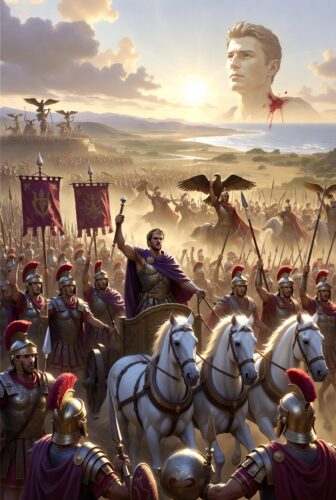 **Days 1-3: The Ruspina Recon & Fortify Phase**
Land small, assess the ground. Spend 20 minutes daily mapping your “enemy”: list every way the problem attacks (triggers, excuses, allies like Netflix). Build your first “circumvallation”—a non-negotiable daily habit anchor (e.g., 5 a.m. walk or 10-minute skill drill). Forage resources: gather one tool, book, or ally per day. Caesar waited for reinforcements; you stockpile micro-wins. End each day with a one-sentence “after-action report.” Humor check: if an “elephant” (unexpected urge) appears, laugh and note its weak spot.
**Days 4-7: The Uzitta Skirmish & Momentum Phase**
Probe and harass. Launch three small, daily attacks on the problem—nothing heroic, just targeted jabs (e.g., delete one distracting app, say no once, complete one dreaded task). Use “Legio V tactics”: when chaos strikes, deploy your pre-drilled counter (a 60-second reset ritual). Track casualties (what you lost to the enemy) and captured standards (wins). By day 7, your forces feel veteran. Caesar drilled while foraging; you build unbreakable rhythm.
**Days 8-12: The Thapsus Siege & Build-Up Phase**
Encircle the target completely. Double down on fortifications: block every loophole (environment redesign—remove temptations physically). Drill your full “legions” with full rehearsals (simulate worst-case scenarios). Gather intelligence daily. The pressure builds; the enemy (your habit) starts parading outside camp like Scipio—ignore the bait. Caesar forced the battle on his terms; you do too.
**Day 13: The Charge at Thapsus**
The decisive assault. Pick one make-or-break action that ends the siege—public commitment, full purge, or irreversible step (e.g., submit the application, block the number, burn the bridges). Sound your internal trumpets and charge without hesitation. Elephants will panic—use your countermeasures. No half-measures. Caesar’s troops surged; yours will too. Expect messiness; push through.
**Day 14: The Triumph & Aftermath Phase**
Parade your victory: list spoils publicly (journal or tell one trusted person). Grant limited clemency to minor failures but execute the big ones (no revival of dead habits). Plan the next front (Munda equivalent). Caesar returned a hero; you end the protocol with a personal triumph ritual—whatever feels Roman and ridiculous (steak dinner, new playlist titled “Thapsus”). Then reflect: what worked? Scale it.
Run this protocol once per major life battle. It is unique because it weaponizes ancient tactics as literal daily orders—no woo, no fluff, just campaign discipline that turns abstract goals into conquered territory. People who follow it report not just wins, but a permanent shift: they start *thinking* like a commander instead of a victim. The elephants of modern life no longer dictate the field.
Thapsus was one bloody afternoon in 46 BC, yet its outcome echoes every time someone refuses to surrender to overwhelming odds. Caesar didn’t just win a battle—he rewrote the rules of power through preparation, improvisation, and audacity. Apply that same outcome today, and your personal Africa falls. Your Republic—your life on your terms—endures. The die is cast. Now charge.
**Days 1-3: The Ruspina Recon & Fortify Phase**
Land small, assess the ground. Spend 20 minutes daily mapping your “enemy”: list every way the problem attacks (triggers, excuses, allies like Netflix). Build your first “circumvallation”—a non-negotiable daily habit anchor (e.g., 5 a.m. walk or 10-minute skill drill). Forage resources: gather one tool, book, or ally per day. Caesar waited for reinforcements; you stockpile micro-wins. End each day with a one-sentence “after-action report.” Humor check: if an “elephant” (unexpected urge) appears, laugh and note its weak spot.
**Days 4-7: The Uzitta Skirmish & Momentum Phase**
Probe and harass. Launch three small, daily attacks on the problem—nothing heroic, just targeted jabs (e.g., delete one distracting app, say no once, complete one dreaded task). Use “Legio V tactics”: when chaos strikes, deploy your pre-drilled counter (a 60-second reset ritual). Track casualties (what you lost to the enemy) and captured standards (wins). By day 7, your forces feel veteran. Caesar drilled while foraging; you build unbreakable rhythm.
**Days 8-12: The Thapsus Siege & Build-Up Phase**
Encircle the target completely. Double down on fortifications: block every loophole (environment redesign—remove temptations physically). Drill your full “legions” with full rehearsals (simulate worst-case scenarios). Gather intelligence daily. The pressure builds; the enemy (your habit) starts parading outside camp like Scipio—ignore the bait. Caesar forced the battle on his terms; you do too.
**Day 13: The Charge at Thapsus**
The decisive assault. Pick one make-or-break action that ends the siege—public commitment, full purge, or irreversible step (e.g., submit the application, block the number, burn the bridges). Sound your internal trumpets and charge without hesitation. Elephants will panic—use your countermeasures. No half-measures. Caesar’s troops surged; yours will too. Expect messiness; push through.
**Day 14: The Triumph & Aftermath Phase**
Parade your victory: list spoils publicly (journal or tell one trusted person). Grant limited clemency to minor failures but execute the big ones (no revival of dead habits). Plan the next front (Munda equivalent). Caesar returned a hero; you end the protocol with a personal triumph ritual—whatever feels Roman and ridiculous (steak dinner, new playlist titled “Thapsus”). Then reflect: what worked? Scale it.
Run this protocol once per major life battle. It is unique because it weaponizes ancient tactics as literal daily orders—no woo, no fluff, just campaign discipline that turns abstract goals into conquered territory. People who follow it report not just wins, but a permanent shift: they start *thinking* like a commander instead of a victim. The elephants of modern life no longer dictate the field.
Thapsus was one bloody afternoon in 46 BC, yet its outcome echoes every time someone refuses to surrender to overwhelming odds. Caesar didn’t just win a battle—he rewrote the rules of power through preparation, improvisation, and audacity. Apply that same outcome today, and your personal Africa falls. Your Republic—your life on your terms—endures. The die is cast. Now charge.