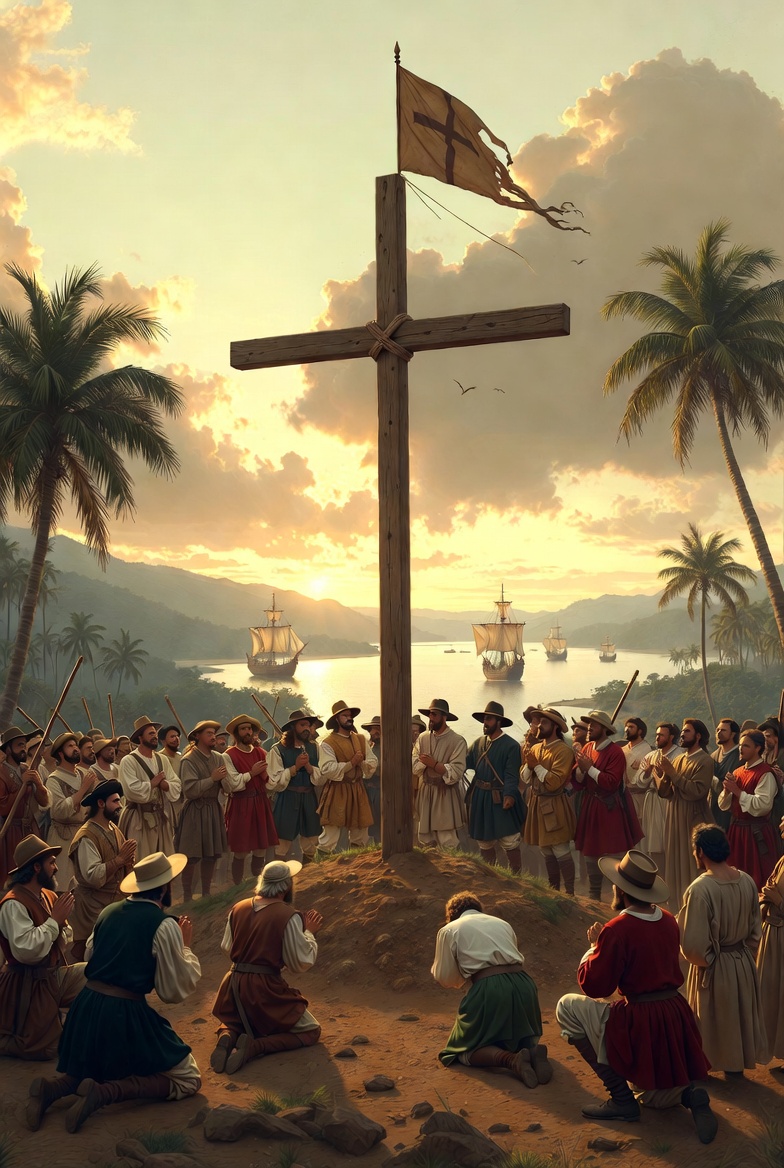
Imagine this: five rickety wooden ships, battered by months of endless ocean, limping into a tropical paradise after nearly starving to death. The crew—gaunt, scorched by sun, gums bleeding from scurvy—drops anchor off a tiny island called Limasawa. It’s Easter Sunday, March 31, 1521. A priest sets up a makeshift altar on the beach under swaying palms. Local rajahs in colorful loincloths and gold earrings watch, wide-eyed, as Latin chants rise into the humid air for the very first Catholic Mass ever recorded in what would become the Philippines—and one of the earliest in all of Asia. Ferdinand Magellan, the Portuguese captain sailing for Spain, kneels with his ragged men while the locals mimic the gestures, thinking the Europeans might be gods or just very strange visitors from beyond the horizon. A wooden cross is planted. Alliances are sealed with blood. And a new chapter in human history quietly begins amid the coconut groves.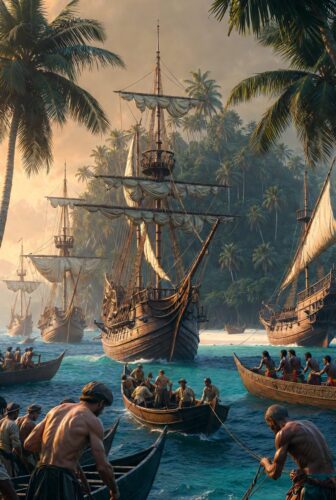 That single morning on a speck of an island most people have never heard of wasn’t just a religious ceremony. It was the climax of one of the most insane, grueling, and world-altering voyages ever attempted: the first circumnavigation of the globe. For over 90% of this story we’re going deep into the gritty, hilarious, heartbreaking, and awe-inspiring details of how that day happened—because history this rich deserves every salty, sweat-soaked fact. Only at the end will we flip it into something practical for your own life: a quick, wildly original plan that no generic self-help guru has ever cooked up. No vision boards, no morning routines copied from billionaires, no “manifest your destiny” fluff. Just a rebel explorer’s protocol modeled on Magellan’s madness that you can run in under three weeks and actually feel in your bones.
Let’s sail backward first, because no epic ends without the brutal beginning.
The year is 1519. Europe is obsessed with spices—pepper, cloves, nutmeg—that cost more than gold because they come from the mysterious East Indies. Portugal has the eastern route around Africa locked down. Spain wants in. Enter Ferdinand Magellan, a battle-scarred Portuguese noble who’s already sailed to India and Morocco, lost friends to cannon fire, and been wounded so badly he walks with a limp for life. He begs King Manuel of Portugal for ships to find a western route to the spices. The king laughs him out of the palace. Humiliated, Magellan defects to Spain, marries a Spanish woman, and pitches the crazy idea to young King Charles I (soon to be Holy Roman Emperor Charles V). The pitch works. Spain funds five ships: the Trinidad (Magellan’s flagship), San Antonio, Concepción, Victoria, and Santiago. Crew totals about 270 men from at least nine nations—Spaniards, Portuguese, Italians, Greeks, French, Germans, even a few Africans and Asians. The official chronicler is Antonio Pigafetta, a young Italian noble whose detailed journal becomes our time machine.
Departure from Seville on August 10, 1519, is pure pageantry—flags waving, priests blessing the fleet, crowds cheering. By the time they clear the Guadalquivir River and hit the Atlantic from Sanlúcar de Barrameda, reality bites. Supplies are already rotting. Storms hammer them. The Atlantic crossing is miserable but survivable. They reach the coast of Brazil in December, then push south along South America looking for a passage through the continent. Summer turns to brutal winter. They hunker down in a freezing bay in Patagonia they name Port St. Julian. That’s when the real drama explodes.
The Spanish captains—jealous of a Portuguese commander—mutiny on April 1, 1520. They seize three ships, try to kill Magellan, and plan to sail home. Magellan, outnumbered but cunning, sends loyal men aboard the Victoria at night. A bloody fight erupts. The mutineers are crushed. Magellan executes the ringleaders, strands two others on the desolate shore with a warning note, and marooned a priest who sided with them. One ship, the Santiago, is wrecked exploring ahead. But Magellan presses on. In October 1520, after months of probing inlets, they find it—the narrow, treacherous strait that now bears his name. The San Antonio deserts and sails back to Spain mid-passage, taking precious supplies. The remaining three ships (Trinidad, Concepción, Victoria) emerge into a vast, unknown ocean on November 28, 1520. Magellan names it the Pacific because it looks calm. It is anything but.
That single morning on a speck of an island most people have never heard of wasn’t just a religious ceremony. It was the climax of one of the most insane, grueling, and world-altering voyages ever attempted: the first circumnavigation of the globe. For over 90% of this story we’re going deep into the gritty, hilarious, heartbreaking, and awe-inspiring details of how that day happened—because history this rich deserves every salty, sweat-soaked fact. Only at the end will we flip it into something practical for your own life: a quick, wildly original plan that no generic self-help guru has ever cooked up. No vision boards, no morning routines copied from billionaires, no “manifest your destiny” fluff. Just a rebel explorer’s protocol modeled on Magellan’s madness that you can run in under three weeks and actually feel in your bones.
Let’s sail backward first, because no epic ends without the brutal beginning.
The year is 1519. Europe is obsessed with spices—pepper, cloves, nutmeg—that cost more than gold because they come from the mysterious East Indies. Portugal has the eastern route around Africa locked down. Spain wants in. Enter Ferdinand Magellan, a battle-scarred Portuguese noble who’s already sailed to India and Morocco, lost friends to cannon fire, and been wounded so badly he walks with a limp for life. He begs King Manuel of Portugal for ships to find a western route to the spices. The king laughs him out of the palace. Humiliated, Magellan defects to Spain, marries a Spanish woman, and pitches the crazy idea to young King Charles I (soon to be Holy Roman Emperor Charles V). The pitch works. Spain funds five ships: the Trinidad (Magellan’s flagship), San Antonio, Concepción, Victoria, and Santiago. Crew totals about 270 men from at least nine nations—Spaniards, Portuguese, Italians, Greeks, French, Germans, even a few Africans and Asians. The official chronicler is Antonio Pigafetta, a young Italian noble whose detailed journal becomes our time machine.
Departure from Seville on August 10, 1519, is pure pageantry—flags waving, priests blessing the fleet, crowds cheering. By the time they clear the Guadalquivir River and hit the Atlantic from Sanlúcar de Barrameda, reality bites. Supplies are already rotting. Storms hammer them. The Atlantic crossing is miserable but survivable. They reach the coast of Brazil in December, then push south along South America looking for a passage through the continent. Summer turns to brutal winter. They hunker down in a freezing bay in Patagonia they name Port St. Julian. That’s when the real drama explodes.
The Spanish captains—jealous of a Portuguese commander—mutiny on April 1, 1520. They seize three ships, try to kill Magellan, and plan to sail home. Magellan, outnumbered but cunning, sends loyal men aboard the Victoria at night. A bloody fight erupts. The mutineers are crushed. Magellan executes the ringleaders, strands two others on the desolate shore with a warning note, and marooned a priest who sided with them. One ship, the Santiago, is wrecked exploring ahead. But Magellan presses on. In October 1520, after months of probing inlets, they find it—the narrow, treacherous strait that now bears his name. The San Antonio deserts and sails back to Spain mid-passage, taking precious supplies. The remaining three ships (Trinidad, Concepción, Victoria) emerge into a vast, unknown ocean on November 28, 1520. Magellan names it the Pacific because it looks calm. It is anything but.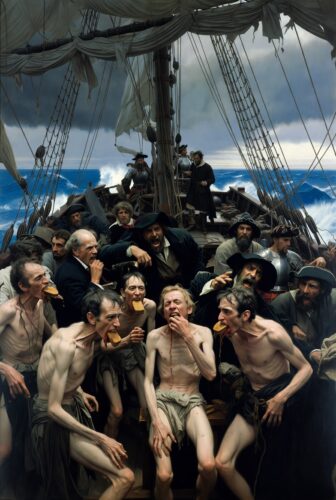 The next 98 days are hell on water. No land. No fresh food. Water turns green and stinking. Biscuits crumble into worm-infested powder. Crews eat the powder mixed with sawdust just to fill their stomachs. They chew ox hides that once covered the masts—first soaking them in seawater for days to soften the leather, then grilling them over open flames until they’re edible (barely). Rats become gourmet: one sold for half a ducat of gold, more than a sailor’s monthly wage. Scurvy ravages them. Gums swell and bleed, teeth fall out, legs bloat and turn black. Men die screaming in agony or simply slip over the side too weak to live. Pigafetta writes that they were so hungry they would have eaten the leather wrapping the yards if they hadn’t already. The Pacific crossing is the longest any European fleet had ever endured without resupply. By the time they sight the Marianas (Guam) on March 6, 1521, the survivors look like walking skeletons. Locals paddle out in proas, stealing everything not nailed down—including the flagship’s small boat. Magellan dubs them the “Islands of Thieves” and fires cannons to scare them off, then trades for fresh food and water. The crew revives just enough to keep sailing west.
March 16, 1521: landfall at the island of Homonhon in the eastern Philippines. The locals are friendly, bring coconuts, bananas, and sweet potatoes. Magellan calls the archipelago the “Islands of St. Lazarus” (later renamed the Philippines after Prince Philip). They move to Limasawa (Mazaua) by March 28. Two local rajahs—Kolambu of Limasawa and his brother Siagu of Butuan—row out in ornate boats. Communication is magic: Magellan’s Malay slave, Enrique of Malacca (who had sailed with him years earlier in the opposite direction), can actually speak to them. It’s the first moment the world has literally come full circle in language. The rajahs are impressed by the Europeans’ armor, cannons, and mirrors. Magellan shows them a globe and explains the voyage. They exchange gifts—silk, velvet, and European trinkets for gold, pearls, and local delicacies.
On March 29, the famous “blood compact” seals friendship. Rajah Kolambu and Magellan each prick their chests, mix a few drops of blood in wine or coconut milk, and drink it. It’s a ritual pact of brotherhood that binds them in loyalty. The rajahs convert (or at least pretend to) to Christianity on the spot. Magellan promises military help against rival islands.
Then comes March 31—Easter Sunday. The crew, still weak but overjoyed to be alive and on solid ground, prepares the grandest ceremony they can manage after 18 months at sea. Father Pedro de Valderrama, the fleet’s priest, erects an altar on the highest point of the island. They hang embroidered cloths, set out candles, and place a cross made from local wood. Mass begins at dawn. Pigafetta describes the scene in vivid detail: the Europeans in their tattered finery kneel, the rajahs and dozens of their warriors sit cross-legged on the grass, mimicking every gesture. The Latin chants echo across the beach. The locals are fascinated—some try to join in the singing, others touch the cross in awe. After the service, Magellan has the large wooden cross planted on the hilltop. He explains (through Enrique) that it marks the land as under the protection of the King of Spain and the Christian God. The rajahs seem pleased; it becomes a symbol of alliance rather than conquest that day. Feasting follows—roast pig, fish, rice, coconut wine. The Europeans finally eat like kings again.
The next 98 days are hell on water. No land. No fresh food. Water turns green and stinking. Biscuits crumble into worm-infested powder. Crews eat the powder mixed with sawdust just to fill their stomachs. They chew ox hides that once covered the masts—first soaking them in seawater for days to soften the leather, then grilling them over open flames until they’re edible (barely). Rats become gourmet: one sold for half a ducat of gold, more than a sailor’s monthly wage. Scurvy ravages them. Gums swell and bleed, teeth fall out, legs bloat and turn black. Men die screaming in agony or simply slip over the side too weak to live. Pigafetta writes that they were so hungry they would have eaten the leather wrapping the yards if they hadn’t already. The Pacific crossing is the longest any European fleet had ever endured without resupply. By the time they sight the Marianas (Guam) on March 6, 1521, the survivors look like walking skeletons. Locals paddle out in proas, stealing everything not nailed down—including the flagship’s small boat. Magellan dubs them the “Islands of Thieves” and fires cannons to scare them off, then trades for fresh food and water. The crew revives just enough to keep sailing west.
March 16, 1521: landfall at the island of Homonhon in the eastern Philippines. The locals are friendly, bring coconuts, bananas, and sweet potatoes. Magellan calls the archipelago the “Islands of St. Lazarus” (later renamed the Philippines after Prince Philip). They move to Limasawa (Mazaua) by March 28. Two local rajahs—Kolambu of Limasawa and his brother Siagu of Butuan—row out in ornate boats. Communication is magic: Magellan’s Malay slave, Enrique of Malacca (who had sailed with him years earlier in the opposite direction), can actually speak to them. It’s the first moment the world has literally come full circle in language. The rajahs are impressed by the Europeans’ armor, cannons, and mirrors. Magellan shows them a globe and explains the voyage. They exchange gifts—silk, velvet, and European trinkets for gold, pearls, and local delicacies.
On March 29, the famous “blood compact” seals friendship. Rajah Kolambu and Magellan each prick their chests, mix a few drops of blood in wine or coconut milk, and drink it. It’s a ritual pact of brotherhood that binds them in loyalty. The rajahs convert (or at least pretend to) to Christianity on the spot. Magellan promises military help against rival islands.
Then comes March 31—Easter Sunday. The crew, still weak but overjoyed to be alive and on solid ground, prepares the grandest ceremony they can manage after 18 months at sea. Father Pedro de Valderrama, the fleet’s priest, erects an altar on the highest point of the island. They hang embroidered cloths, set out candles, and place a cross made from local wood. Mass begins at dawn. Pigafetta describes the scene in vivid detail: the Europeans in their tattered finery kneel, the rajahs and dozens of their warriors sit cross-legged on the grass, mimicking every gesture. The Latin chants echo across the beach. The locals are fascinated—some try to join in the singing, others touch the cross in awe. After the service, Magellan has the large wooden cross planted on the hilltop. He explains (through Enrique) that it marks the land as under the protection of the King of Spain and the Christian God. The rajahs seem pleased; it becomes a symbol of alliance rather than conquest that day. Feasting follows—roast pig, fish, rice, coconut wine. The Europeans finally eat like kings again.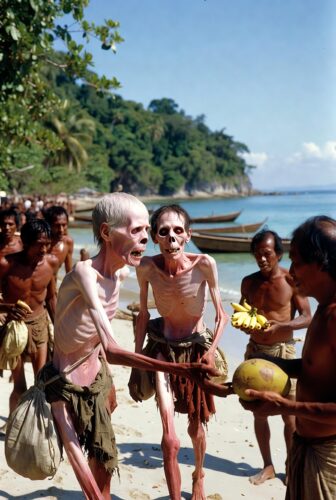 That Mass wasn’t some footnote. It was the spark that ignited centuries of Spanish influence in Southeast Asia. Magellan’s fleet moved on to Cebu a week later. There, more mass conversions, more alliances. But hubris struck: Magellan got involved in a local war on Mactan island against Rajah Lapu-Lapu. On April 27, 1521, he led 60 armored men against thousands of warriors fighting in shallow water. The Europeans’ guns jammed in the surf, arrows and spears pierced armor gaps, and Magellan was cut down—stabbed in the leg, then overwhelmed. He died fighting in the surf, yelling for his men to retreat. The survivors limped back to the ships. The Concepción was burned for lack of crew. The remaining two ships fled, eventually reaching the Moluccas (Spice Islands). The Victoria, under Juan Sebastián Elcano, limped around Africa and arrived back in Spain on September 6, 1522, with just 18 survivors out of the original 270. They had circumnavigated the globe—the first humans proven to do so. The spices they brought back paid for the entire voyage many times over.
The long-term ripples are staggering. Spain colonized the Philippines, naming them after King Philip II. Christianity took root, blending with local beliefs in ways that still define Filipino culture today—fiestas, saints, family-centered faith. The voyage proved the Earth was round and much larger than anyone imagined, smashed Portuguese monopoly, and opened the Pacific to global trade. Pigafetta’s journal became a bestseller, inspiring explorers for centuries. Yet the human cost was obscene: starvation, mutiny, betrayal, battle. And that single Easter Mass on Limasawa? It stands as the quiet, hopeful heartbeat in the middle of the chaos—a moment when starving men on the edge of the world paused to celebrate something bigger than survival.
Now, here’s where the history stops being dusty textbook and starts being rocket fuel for your own life. The outcome of that day—and the entire insane voyage—wasn’t perfect glory. Magellan never made it home. Most of his crew died horribly. Yet that tiny ritual on a remote island turned desperate wanderers into world-changers. They faced the unknown with grit, forged unbreakable bonds in blood and ceremony, and planted a flag (literally a cross) that declared “we were here and we claim this new chapter.” You don’t need a fleet or a globe-spanning quest to steal the same power. You can run your own Mazaua Mission—a quick, irreverent, history-steeped 21-day protocol that no self-help cookie-cutter plan online dares to copy. It’s built on four historical pillars turned into raw, do-it-now actions: endure the Pacific crossing of your doubts, forge blood compacts with real humans, perform a personal “first mass” ritual that feels sacred, and plant an irreversible cross that forces you forward.
That Mass wasn’t some footnote. It was the spark that ignited centuries of Spanish influence in Southeast Asia. Magellan’s fleet moved on to Cebu a week later. There, more mass conversions, more alliances. But hubris struck: Magellan got involved in a local war on Mactan island against Rajah Lapu-Lapu. On April 27, 1521, he led 60 armored men against thousands of warriors fighting in shallow water. The Europeans’ guns jammed in the surf, arrows and spears pierced armor gaps, and Magellan was cut down—stabbed in the leg, then overwhelmed. He died fighting in the surf, yelling for his men to retreat. The survivors limped back to the ships. The Concepción was burned for lack of crew. The remaining two ships fled, eventually reaching the Moluccas (Spice Islands). The Victoria, under Juan Sebastián Elcano, limped around Africa and arrived back in Spain on September 6, 1522, with just 18 survivors out of the original 270. They had circumnavigated the globe—the first humans proven to do so. The spices they brought back paid for the entire voyage many times over.
The long-term ripples are staggering. Spain colonized the Philippines, naming them after King Philip II. Christianity took root, blending with local beliefs in ways that still define Filipino culture today—fiestas, saints, family-centered faith. The voyage proved the Earth was round and much larger than anyone imagined, smashed Portuguese monopoly, and opened the Pacific to global trade. Pigafetta’s journal became a bestseller, inspiring explorers for centuries. Yet the human cost was obscene: starvation, mutiny, betrayal, battle. And that single Easter Mass on Limasawa? It stands as the quiet, hopeful heartbeat in the middle of the chaos—a moment when starving men on the edge of the world paused to celebrate something bigger than survival.
Now, here’s where the history stops being dusty textbook and starts being rocket fuel for your own life. The outcome of that day—and the entire insane voyage—wasn’t perfect glory. Magellan never made it home. Most of his crew died horribly. Yet that tiny ritual on a remote island turned desperate wanderers into world-changers. They faced the unknown with grit, forged unbreakable bonds in blood and ceremony, and planted a flag (literally a cross) that declared “we were here and we claim this new chapter.” You don’t need a fleet or a globe-spanning quest to steal the same power. You can run your own Mazaua Mission—a quick, irreverent, history-steeped 21-day protocol that no self-help cookie-cutter plan online dares to copy. It’s built on four historical pillars turned into raw, do-it-now actions: endure the Pacific crossing of your doubts, forge blood compacts with real humans, perform a personal “first mass” ritual that feels sacred, and plant an irreversible cross that forces you forward.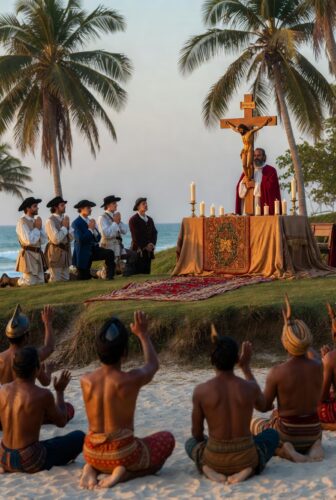 Here’s the exact, unique plan—no apps, no journals full of affirmations, no vague “journal your feelings.” You’ll do this in three weeks flat, and it will feel like you actually sailed through hell and came out blessed.
**Week 1: Assemble Your Skeleton Crew and Survive the “Pacific Crossing” (Days 1-7)**
List every “mutiny” in your life right now—the doubts, bad habits, or toxic voices telling you to turn back (just like the Spanish captains who tried to mutiny). Write each one on a slip of paper. Then “execute” them Magellan-style: burn or shred them publicly in front of one witness (a friend or family member you trust). Next, recruit exactly four “crew members” who will sail with you—no more, no less. One is your Navigator (a mentor who’s already reached a similar goal). One is your Quartermaster (the accountability partner who will call you out weekly with zero sugarcoating). One is your Ship’s Doctor (someone who keeps your physical or mental health in check—gym buddy, therapist, or nutritionist). One is your Lookout (the wild-card friend who spots opportunities you miss). Meet them all in person or on a group call and tell them the exact date you will “return to Spain” with your goal completed. Stock your “ship” literally: buy one ridiculous, cheap item that symbolizes endurance (a pack of beef jerky for the leather-eating days, or a coconut for Limasawa vibes) and keep it on your desk as a daily reminder.
**Week 2: The Blood Compact Ritual and First Mass Ceremony (Days 8-14)**
Pick one living, breathing ally (could be one of your crew or someone new) and perform a modern blood-compact lite: prick your fingers (or just use red food coloring if you’re squeamish), mix a drop in a shot of coconut water or wine, and drink while swearing a single, crystal-clear mutual oath out loud. Example: “I will help you launch your side hustle every Friday, and you will drag me to the gym three times a week—no excuses.” Make it reciprocal and measurable. Then stage your own “first mass” on day 14. No church required. Set up a literal altar on your kitchen table or backyard: candles, a printed photo of your goal, and something from nature (a rock, plant, or stick). Invite at least two witnesses. Read your goal aloud like a sermon, kneel or bow for 60 seconds of silence, then declare it “claimed.” End with a feast—cook something ridiculous and celebratory. The ceremony locks the commitment in your brain the way that Easter service locked hope into starving sailors.
Here’s the exact, unique plan—no apps, no journals full of affirmations, no vague “journal your feelings.” You’ll do this in three weeks flat, and it will feel like you actually sailed through hell and came out blessed.
**Week 1: Assemble Your Skeleton Crew and Survive the “Pacific Crossing” (Days 1-7)**
List every “mutiny” in your life right now—the doubts, bad habits, or toxic voices telling you to turn back (just like the Spanish captains who tried to mutiny). Write each one on a slip of paper. Then “execute” them Magellan-style: burn or shred them publicly in front of one witness (a friend or family member you trust). Next, recruit exactly four “crew members” who will sail with you—no more, no less. One is your Navigator (a mentor who’s already reached a similar goal). One is your Quartermaster (the accountability partner who will call you out weekly with zero sugarcoating). One is your Ship’s Doctor (someone who keeps your physical or mental health in check—gym buddy, therapist, or nutritionist). One is your Lookout (the wild-card friend who spots opportunities you miss). Meet them all in person or on a group call and tell them the exact date you will “return to Spain” with your goal completed. Stock your “ship” literally: buy one ridiculous, cheap item that symbolizes endurance (a pack of beef jerky for the leather-eating days, or a coconut for Limasawa vibes) and keep it on your desk as a daily reminder.
**Week 2: The Blood Compact Ritual and First Mass Ceremony (Days 8-14)**
Pick one living, breathing ally (could be one of your crew or someone new) and perform a modern blood-compact lite: prick your fingers (or just use red food coloring if you’re squeamish), mix a drop in a shot of coconut water or wine, and drink while swearing a single, crystal-clear mutual oath out loud. Example: “I will help you launch your side hustle every Friday, and you will drag me to the gym three times a week—no excuses.” Make it reciprocal and measurable. Then stage your own “first mass” on day 14. No church required. Set up a literal altar on your kitchen table or backyard: candles, a printed photo of your goal, and something from nature (a rock, plant, or stick). Invite at least two witnesses. Read your goal aloud like a sermon, kneel or bow for 60 seconds of silence, then declare it “claimed.” End with a feast—cook something ridiculous and celebratory. The ceremony locks the commitment in your brain the way that Easter service locked hope into starving sailors.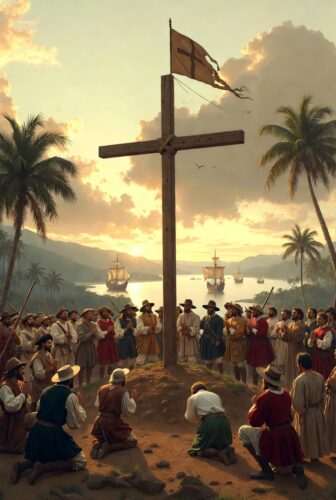 **Week 3: Plant Your Wooden Cross and Navigate Home (Days 15-21)**
Physically plant something permanent and public that screams “this new territory is mine.” It could be a real wooden cross or plaque in your yard, a tattoo (small and meaningful), a framed public declaration on social media with your crew tagged, or a contract nailed to your office wall. Once planted, it cannot be removed. Every single day for the final week, write one Pigafetta-style log entry—not feelings, but facts: “Today I navigated the strait by cold-calling three clients” or “Lost one man to the scurvy of procrastination but saved him with a 5 a.m. run.” At the end of day 21, throw a tiny “return to Spain” party with your crew. Present them each with a symbolic spice (peppercorns, cloves) and declare victory—no matter how small. The goal isn’t perfection; it’s completing the loop so you can immediately plan the next voyage.
That’s it. Three weeks. Four pillars stolen straight from March 31, 1521. No one else online is telling you to prick fingers in coconut water or plant literal crosses while eating jerky as a reminder of leather rations. It’s weird, tactile, hilarious in execution, and ridiculously effective because it hijacks your brain’s love of ritual, story, and public shame/reward—the same forces that kept Magellan’s survivors going.
The men on Limasawa that Easter morning didn’t know they were changing the world. They just knew they had survived the impossible and now stood on new ground with full bellies and a shared purpose. You can stand on your own new ground tomorrow. The Pacific is waiting. The altar is ready. Grab your crew, endure the crossing, and plant the damn cross. History didn’t wait for perfect conditions—it happened when half-dead explorers decided a random island was worth blessing. Your life is that island. Go claim it. Deus vult… or in this case, sail on.
**Week 3: Plant Your Wooden Cross and Navigate Home (Days 15-21)**
Physically plant something permanent and public that screams “this new territory is mine.” It could be a real wooden cross or plaque in your yard, a tattoo (small and meaningful), a framed public declaration on social media with your crew tagged, or a contract nailed to your office wall. Once planted, it cannot be removed. Every single day for the final week, write one Pigafetta-style log entry—not feelings, but facts: “Today I navigated the strait by cold-calling three clients” or “Lost one man to the scurvy of procrastination but saved him with a 5 a.m. run.” At the end of day 21, throw a tiny “return to Spain” party with your crew. Present them each with a symbolic spice (peppercorns, cloves) and declare victory—no matter how small. The goal isn’t perfection; it’s completing the loop so you can immediately plan the next voyage.
That’s it. Three weeks. Four pillars stolen straight from March 31, 1521. No one else online is telling you to prick fingers in coconut water or plant literal crosses while eating jerky as a reminder of leather rations. It’s weird, tactile, hilarious in execution, and ridiculously effective because it hijacks your brain’s love of ritual, story, and public shame/reward—the same forces that kept Magellan’s survivors going.
The men on Limasawa that Easter morning didn’t know they were changing the world. They just knew they had survived the impossible and now stood on new ground with full bellies and a shared purpose. You can stand on your own new ground tomorrow. The Pacific is waiting. The altar is ready. Grab your crew, endure the crossing, and plant the damn cross. History didn’t wait for perfect conditions—it happened when half-dead explorers decided a random island was worth blessing. Your life is that island. Go claim it. Deus vult… or in this case, sail on.