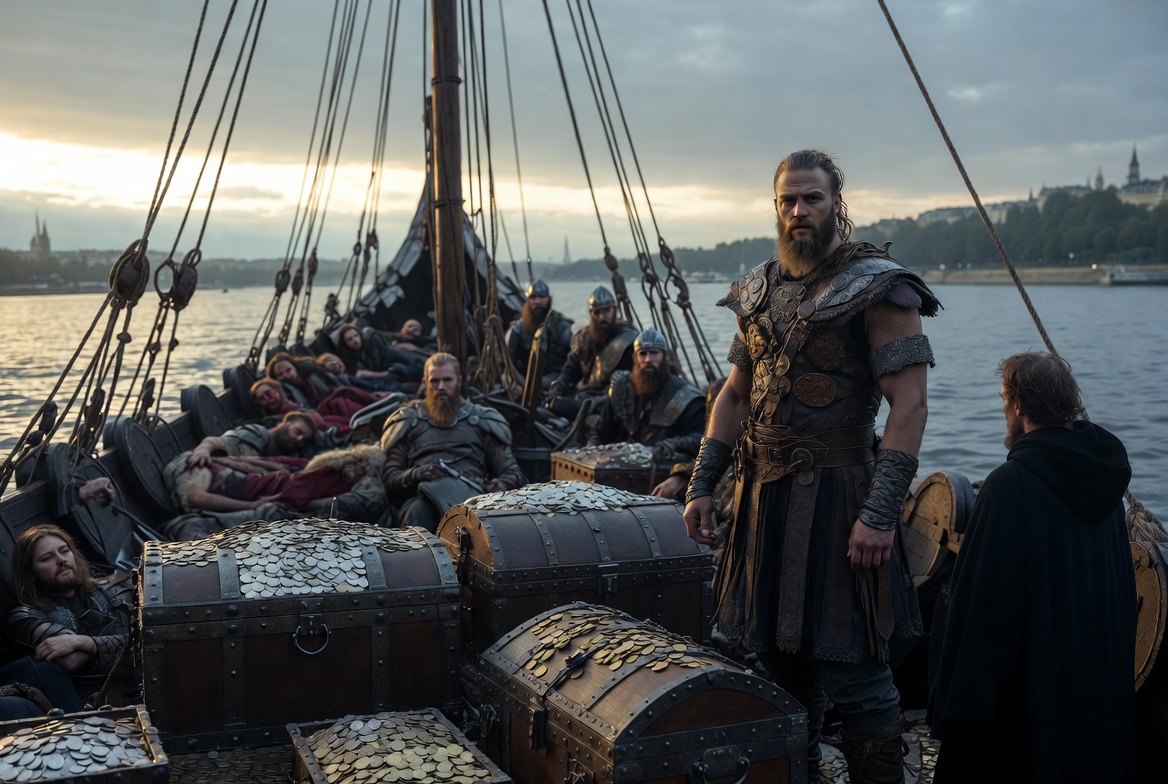
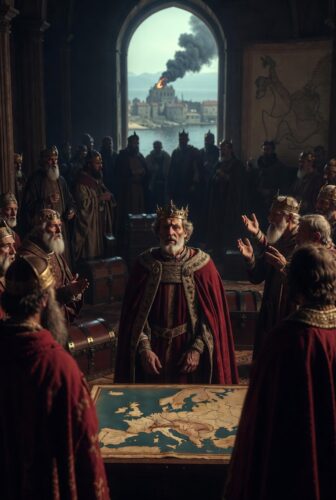
Picture this: it’s Easter Sunday, March 29, 845. The bells of Paris are ringing for the resurrection of Christ, but instead of pious processions winding through the narrow streets of the Île de la Cité, a fleet of 120 sleek Viking longships is gliding up the Seine like a pack of wolves that just learned the sheep have left the barn door wide open. At the helm is a chieftain the Franks called Reginherus – history’s best guess for the semi-legendary Ragnar Lodbrok, the guy whose name would later inspire sagas, TV shows, and every heavy-metal album cover with horns on it. These weren’t polite tourists with gift-shop axes. They were 5,000-plus hardened Norse warriors who had just turned the heart of the Frankish kingdom into their personal Black Friday sale. By the time they sailed away, King Charles the Bald had forked over 7,000 livres of silver and gold – roughly 2,570 kilograms, or enough to make a dragon’s hoard look like pocket change. Paris was sacked, the Franks were humiliated, and the Viking Age kicked into high gear with a lesson in audacity that still echoes louder than a berserker’s battle cry.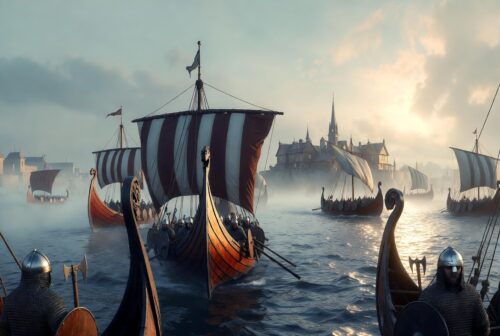 To understand why this random Tuesday-turned-Easter blood-and-silver bonanza on March 29 matters, we have to rewind the tape on the chaotic ninth-century world that made it possible. The once-mighty Carolingian Empire was crumbling faster than a poorly baked loaf of Frankish bread. Charlemagne, the guy who had basically invented the idea of a united Christian Europe by conquering half the continent and getting crowned Holy Roman Emperor on Christmas Day 800, had died in 814. His son Louis the Pious tried to hold it together, but after Louis kicked the bucket in 840, his three surviving sons went full Game of Thrones on each other. The Treaty of Verdun in 843 sliced the empire like a bad divorce settlement: Lothair got the middle strip (Lotharingia), Louis the German took the east, and Charles the Bald – yes, that was his actual nickname, because medieval chroniclers had zero chill – inherited West Francia, roughly modern France minus some bits. Charles was only about twenty when he got the crown, and he was already juggling revolting nobles, bickering brothers, and a treasury that looked like it had been raided by… well, Vikings.
 The Vikings themselves weren’t some cartoon barbarians in horned helmets (they didn’t even wear those). They were Scandinavian seafarers, traders, farmers, and occasional pirates whose longships were engineering marvels: shallow-draft, clinker-built vessels that could zip up rivers, beach on any shore, and carry dozens of men plus cargo. By the 830s, Danish fleets had been probing the Frankish coasts like aggressive door-to-door salesmen. They hit Dorestad in 834, sacked Rouen in 841, and turned Nantes into a slaughterhouse in 842. Why? The Franks were rich, their monasteries stuffed with gold relics and silver plate, and their political infighting made them look like easy marks. Viking raids were often tied to Scandinavian power struggles – ambitious jarls needed loot and glory to buy loyalty back home. Plus, word traveled fast along trade routes: “Hey, the Franks are too busy stabbing each other to guard the Seine properly.”
Enter Reginherus/Ragnar. Around 841, Charles the Bald had actually granted this guy land in Turholt, Flanders – a rare moment of “let’s try diplomacy instead of dying.” But the favor evaporated. Whether it was a broken oath, a political flip-flop, or just Ragnar deciding the king was a chump, the chieftain nursed a grudge. Revenge, they say, is a dish best served with 120 longships and a side of Odin worship. In early March 845, the fleet slipped into the mouth of the Seine. They weren’t sneaking; they were announcing. First stop: Rouen. The city fell quickly, its markets and churches stripped. The Vikings moved methodically upriver, using the current and their oars to outpace any land-based pursuit.
Charles the Bald, hearing the news, panicked in the most Frankish way possible: he called up an army and immediately divided it in two, one contingent on each bank of the Seine. Brilliant strategy, Your Baldness – split your forces so the enemy can pick them off like grapes. The Vikings, smelling weakness, slammed into one division near the river. The Franks fought, but numbers and surprise weren’t enough. Over a hundred prisoners were taken. In a move straight out of psychological warfare 101, the raiders hanged all 111 on a single island in the Seine, dangling them as a message to the other half of Charles’s army and, legend has it, as sacrifices to Odin. Imagine standing on the opposite bank, watching your comrades swing in the breeze while the Vikings cheered. The surviving Franks scattered. Morale: officially in the Seine.
The longships pressed on. Easter was approaching, and Paris – not yet the grand capital of later centuries, but still a vital island city on the Seine with the royal Abbey of Saint-Denis just upstream – sat vulnerable. Many residents had already fled, taking what they could. On Easter Sunday, March 29, 845, the Vikings arrived. They poured ashore, stormed the Île de la Cité, and turned the place into a plunder party. Churches were looted, relics carted off or melted down, homes ransacked. The Franks had no effective defense ready. Charles’s remaining forces hovered uselessly downstream. It was over almost before it began.
The Vikings themselves weren’t some cartoon barbarians in horned helmets (they didn’t even wear those). They were Scandinavian seafarers, traders, farmers, and occasional pirates whose longships were engineering marvels: shallow-draft, clinker-built vessels that could zip up rivers, beach on any shore, and carry dozens of men plus cargo. By the 830s, Danish fleets had been probing the Frankish coasts like aggressive door-to-door salesmen. They hit Dorestad in 834, sacked Rouen in 841, and turned Nantes into a slaughterhouse in 842. Why? The Franks were rich, their monasteries stuffed with gold relics and silver plate, and their political infighting made them look like easy marks. Viking raids were often tied to Scandinavian power struggles – ambitious jarls needed loot and glory to buy loyalty back home. Plus, word traveled fast along trade routes: “Hey, the Franks are too busy stabbing each other to guard the Seine properly.”
Enter Reginherus/Ragnar. Around 841, Charles the Bald had actually granted this guy land in Turholt, Flanders – a rare moment of “let’s try diplomacy instead of dying.” But the favor evaporated. Whether it was a broken oath, a political flip-flop, or just Ragnar deciding the king was a chump, the chieftain nursed a grudge. Revenge, they say, is a dish best served with 120 longships and a side of Odin worship. In early March 845, the fleet slipped into the mouth of the Seine. They weren’t sneaking; they were announcing. First stop: Rouen. The city fell quickly, its markets and churches stripped. The Vikings moved methodically upriver, using the current and their oars to outpace any land-based pursuit.
Charles the Bald, hearing the news, panicked in the most Frankish way possible: he called up an army and immediately divided it in two, one contingent on each bank of the Seine. Brilliant strategy, Your Baldness – split your forces so the enemy can pick them off like grapes. The Vikings, smelling weakness, slammed into one division near the river. The Franks fought, but numbers and surprise weren’t enough. Over a hundred prisoners were taken. In a move straight out of psychological warfare 101, the raiders hanged all 111 on a single island in the Seine, dangling them as a message to the other half of Charles’s army and, legend has it, as sacrifices to Odin. Imagine standing on the opposite bank, watching your comrades swing in the breeze while the Vikings cheered. The surviving Franks scattered. Morale: officially in the Seine.
The longships pressed on. Easter was approaching, and Paris – not yet the grand capital of later centuries, but still a vital island city on the Seine with the royal Abbey of Saint-Denis just upstream – sat vulnerable. Many residents had already fled, taking what they could. On Easter Sunday, March 29, 845, the Vikings arrived. They poured ashore, stormed the Île de la Cité, and turned the place into a plunder party. Churches were looted, relics carted off or melted down, homes ransacked. The Franks had no effective defense ready. Charles’s remaining forces hovered uselessly downstream. It was over almost before it began.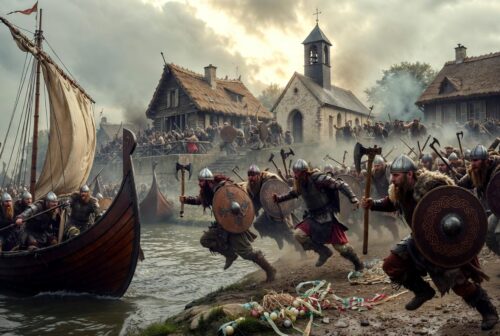 But the gods – or maybe bad river water and crowded camps – had other plans. A plague ripped through the Viking ranks. Men dropped dead in droves. Ragnar and his warriors first did the pagan thing: they prayed to Thor, Odin, and whoever else was on duty. No luck. Then a Christian captive (probably a monk who figured “better alive than dead”) suggested they try fasting and invoking the Christian God. Desperate, the Vikings gave it a shot. Miraculously – or coincidentally, depending on your theology – the plague eased. The raiders, now a bit more respectful of Saint Germain (the local holy man whose abbey they’d menaced), decided they’d pressed their luck far enough.
Charles the Bald, staring at the smoking ruins of his prestige and the very real threat to Saint-Denis (the burial place of Frankish kings and a major symbol of legitimacy), did what any cash-strapped medieval monarch would do: he negotiated. A huge ransom was agreed upon – 7,000 French livres in gold and silver. That’s about 2,570 kilograms, or over five and a half thousand pounds of precious metal. The equivalent today would be tens of millions in bullion value alone, not counting the economic ripple effects. It was the first major “Danegeld” payment in Frankish history – a bribe with a fancy Latin name that would become a terrible precedent. The Vikings loaded their ships and sailed away, but not before doing a victory lap of coastal pillaging, including the Abbey of Saint Bertin on the way home.
The chroniclers, especially the Annals of Saint-Bertin (our main eyewitness-level source compiled at the Frankish court), recorded the humiliation in grim detail. They noted the exact ransom figure and the timing on Easter, which must have felt like divine irony. Later legends embroidered the tale: Ragnar supposedly boasted to King Horik of Denmark about conquering Paris “easily,” only to collapse in tears claiming a dead saint (Germain) had cursed them. Horik, spooked, supposedly executed survivors and freed Christian captives. Whether true or not, the story shows how the raid rattled the Norse world too. Charles faced backlash from his nobles for paying instead of fighting, but he had bigger problems – brothers still scheming, regional revolts brewing, and the constant need to keep the empire from flying apart. The Vikings, meanwhile, learned a valuable lesson: the Franks would pay through the nose to avoid a prolonged fight.
But the gods – or maybe bad river water and crowded camps – had other plans. A plague ripped through the Viking ranks. Men dropped dead in droves. Ragnar and his warriors first did the pagan thing: they prayed to Thor, Odin, and whoever else was on duty. No luck. Then a Christian captive (probably a monk who figured “better alive than dead”) suggested they try fasting and invoking the Christian God. Desperate, the Vikings gave it a shot. Miraculously – or coincidentally, depending on your theology – the plague eased. The raiders, now a bit more respectful of Saint Germain (the local holy man whose abbey they’d menaced), decided they’d pressed their luck far enough.
Charles the Bald, staring at the smoking ruins of his prestige and the very real threat to Saint-Denis (the burial place of Frankish kings and a major symbol of legitimacy), did what any cash-strapped medieval monarch would do: he negotiated. A huge ransom was agreed upon – 7,000 French livres in gold and silver. That’s about 2,570 kilograms, or over five and a half thousand pounds of precious metal. The equivalent today would be tens of millions in bullion value alone, not counting the economic ripple effects. It was the first major “Danegeld” payment in Frankish history – a bribe with a fancy Latin name that would become a terrible precedent. The Vikings loaded their ships and sailed away, but not before doing a victory lap of coastal pillaging, including the Abbey of Saint Bertin on the way home.
The chroniclers, especially the Annals of Saint-Bertin (our main eyewitness-level source compiled at the Frankish court), recorded the humiliation in grim detail. They noted the exact ransom figure and the timing on Easter, which must have felt like divine irony. Later legends embroidered the tale: Ragnar supposedly boasted to King Horik of Denmark about conquering Paris “easily,” only to collapse in tears claiming a dead saint (Germain) had cursed them. Horik, spooked, supposedly executed survivors and freed Christian captives. Whether true or not, the story shows how the raid rattled the Norse world too. Charles faced backlash from his nobles for paying instead of fighting, but he had bigger problems – brothers still scheming, regional revolts brewing, and the constant need to keep the empire from flying apart. The Vikings, meanwhile, learned a valuable lesson: the Franks would pay through the nose to avoid a prolonged fight.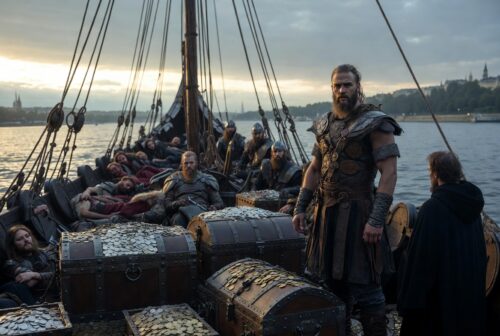 This wasn’t the end of Viking trouble for Paris – they’d be back in force in 885–886 – but the 845 raid marked a turning point. It proved that even the symbolic heart of West Francia could be reached and ransomed. It accelerated the cycle of raids and payments across the ninth century. It exposed the fragility of the post-Charlemagne order. And it cemented Ragnar’s (or Reginherus’s) place in legend as the ultimate opportunist. Historians still debate whether this was the same Ragnar Lodbrok of the sagas – the one who supposedly wore hairy breeches to defeat a giant serpent and fathered the Great Heathen Army that later terrorized England. The timelines are fuzzy, the sources partisan, but the name stuck because it fit the myth perfectly: a daring leader who turned river navigation, terror tactics, and smart negotiation into a fortune.
Zoom out further and the raid fits the broader Viking Age pattern. These weren’t mindless destroyers; they were shrewd businessmen with swords. They traded when it suited them, settled when land was available, and raided when defenses looked soft. The Seine offered a perfect highway – deep enough for longships but narrow enough to control. Paris itself was no Constantinople, but its position made it a juicy target. The plague incident highlights another truth: even the toughest warriors adapted on the fly. Fasting? Sure, if it saves the crew. The hanging of prisoners? Brutal theater designed to break enemy will before the real fight. The ransom? Pure profit with minimal further risk.
Archaeology backs the scale. While no direct artifacts from this exact raid survive (Vikings didn’t exactly file expense reports), ship finds like the Gokstad and Oseberg vessels show the technology: flexible hulls, square sails, and oar power that let small crews punch way above their weight. Skeletal evidence from other Viking sites reveals battle-hardened men who lived short, violent lives but reaped rewards when luck and planning aligned. Frankish chronicles, biased as they are, still give us the blow-by-blow: the divided army, the island gallows, the Easter arrival, the plague, the payoff. No footnotes needed here – the story stands on its own bloody, shiny merits.
Fast-forward eleven centuries and change. March 29, 845, feels like ancient history, but its outcome – a small, determined force using surprise, psychology, adaptability, and strategic exit to extract massive value – is pure gold for anyone staring down modern “Franks”: overwhelming goals, skeptical bosses, financial droughts, or personal plateaus. The Vikings didn’t conquer Paris permanently; they didn’t need to. They raided smart, cashed out big, and sailed home richer. You can do the exact same thing in your own life without ever picking up an axe (or a longship, unless your hobby is extremely on-brand).
This wasn’t the end of Viking trouble for Paris – they’d be back in force in 885–886 – but the 845 raid marked a turning point. It proved that even the symbolic heart of West Francia could be reached and ransomed. It accelerated the cycle of raids and payments across the ninth century. It exposed the fragility of the post-Charlemagne order. And it cemented Ragnar’s (or Reginherus’s) place in legend as the ultimate opportunist. Historians still debate whether this was the same Ragnar Lodbrok of the sagas – the one who supposedly wore hairy breeches to defeat a giant serpent and fathered the Great Heathen Army that later terrorized England. The timelines are fuzzy, the sources partisan, but the name stuck because it fit the myth perfectly: a daring leader who turned river navigation, terror tactics, and smart negotiation into a fortune.
Zoom out further and the raid fits the broader Viking Age pattern. These weren’t mindless destroyers; they were shrewd businessmen with swords. They traded when it suited them, settled when land was available, and raided when defenses looked soft. The Seine offered a perfect highway – deep enough for longships but narrow enough to control. Paris itself was no Constantinople, but its position made it a juicy target. The plague incident highlights another truth: even the toughest warriors adapted on the fly. Fasting? Sure, if it saves the crew. The hanging of prisoners? Brutal theater designed to break enemy will before the real fight. The ransom? Pure profit with minimal further risk.
Archaeology backs the scale. While no direct artifacts from this exact raid survive (Vikings didn’t exactly file expense reports), ship finds like the Gokstad and Oseberg vessels show the technology: flexible hulls, square sails, and oar power that let small crews punch way above their weight. Skeletal evidence from other Viking sites reveals battle-hardened men who lived short, violent lives but reaped rewards when luck and planning aligned. Frankish chronicles, biased as they are, still give us the blow-by-blow: the divided army, the island gallows, the Easter arrival, the plague, the payoff. No footnotes needed here – the story stands on its own bloody, shiny merits.
Fast-forward eleven centuries and change. March 29, 845, feels like ancient history, but its outcome – a small, determined force using surprise, psychology, adaptability, and strategic exit to extract massive value – is pure gold for anyone staring down modern “Franks”: overwhelming goals, skeptical bosses, financial droughts, or personal plateaus. The Vikings didn’t conquer Paris permanently; they didn’t need to. They raided smart, cashed out big, and sailed home richer. You can do the exact same thing in your own life without ever picking up an axe (or a longship, unless your hobby is extremely on-brand).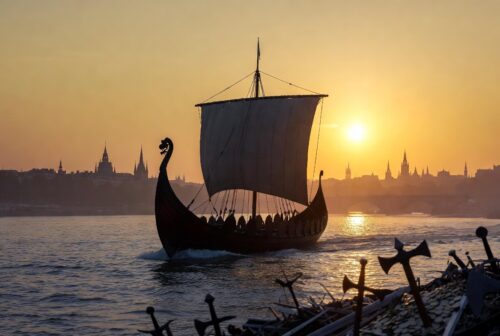 Here’s how the 845 outcome translates into tangible benefits for any individual today. The Vikings turned vulnerability into leverage, division into opportunity, and crisis into cash. Apply that mindset and watch your personal “Paris” start paying dividends:
- **Bold river navigation beats brute force every time.** Instead of grinding against every obstacle, map the “Seine” – the path of least resistance to your biggest goal – and strike when the current is with you. The result? You bypass years of wasted effort and arrive at the payoff faster than anyone expects.
- **Psychological warfare works on your inner critic too.** Those 111 hanged prisoners weren’t just bodies; they were a message. In your life, publicly “hang” your excuses (tell a friend your deadline, post your commitment online) to create external pressure that keeps you moving when motivation fades.
- **Adaptability turns plagues into temporary pauses.** When the Viking camp got sick, they didn’t quit – they experimented with a new tactic and survived. Your setbacks (health dips, market crashes, project fails) become the same: test one small change, observe results, and keep the fleet afloat instead of abandoning ship.
- **Negotiation from strength extracts ransoms, not endless wars.** Charles paid because fighting looked worse. You learn to walk away from bad deals or grind sessions with a clear “ransom” demand – a raise, a boundary, a completed milestone – that leaves everyone (including you) better off without burning bridges.
- **A small, coordinated fleet outperforms a divided army.** Ragnar’s 5,000 didn’t need the whole Scandinavian population; they needed disciplined ships working together. In your world, a tiny group of focused habits or allies beats a scattered to-do list every single time, delivering outsized results with minimal resources.
Now for the part that separates this from every cookie-cutter self-help post online: the **Ragnar Ransom Protocol** – a detailed, quick, five-day action plan that is deliberately weird, historically faithful, and nothing like the generic “journal and meditate” nonsense clogging the internet. This isn’t manifestation or hustle culture. This is Viking river-raid engineering applied to your individual life with absurd specificity. You will literally treat your next big goal like Paris in 845. Do it in any week you choose (bonus points if it starts near March 29). It takes under 30 minutes a day. No apps, no vision boards, just longship logic.
**Day 1: Assemble the Fleet (Preparation Phase – Load Your Longships)**
Pick your “Paris” – one specific, measurable thing you want to extract value from (a promotion conversation, a side-hustle launch, a fitness milestone, whatever). List exactly five “longships”: these are your core resources (skill, contact, tool, habit, or asset). For each, write one ridiculously concrete prep task tied to the 845 raid. Example: if your goal is a salary bump, Ship 1 = “research boss’s pain points like Vikings scouted Rouen” – spend 20 minutes listing three problems only you can solve. Ship 2 = “sharpen oars” – update your resume with one new metric. Do all five tasks. End by naming your chieftain (your own nickname for the day – mine’s “Reginherus the Relentless”). This builds the exact coordinated force Ragnar used.
**Day 2: Enter the Seine (Route Mapping – Choose the Path of Least Resistance)**
Draw (yes, on actual paper) a simple river diagram: left bank = easy obstacles, right bank = hard ones, island in middle = your payoff target. Plot the route upriver like the fleet did – mark three “raiding points” (small actions) that bypass the hardest defenses. Example: if launching a business, one point = “email three warm contacts instead of cold-calling 100 strangers.” Time each action to under 15 minutes. Then raid Rouen in miniature: complete one easy win today (buy the domain, make the call, do the workout). This mirrors the Vikings’ efficient upstream progress and prevents you from splitting your own forces like Charles the Bald.
**Day 3: Easter Strike (Timing and Psychological Theater – Hit on the “Holy” Moment)**
Today is your March 29. Identify the single highest-leverage “Easter Sunday” window in your goal – the moment when resistance is lowest (boss in a good mood after lunch, market open for your launch, energy peak after coffee). At that exact time, execute the bold move: make the ask, post the offer, run the 5K, whatever. Before you do, perform the “hanging” ritual: write your top three excuses on sticky notes and literally tape them to a wall or throw them in the trash while saying out loud, “Odin demands this.” It sounds ridiculous; it works because it externalizes fear exactly like the island gallows broke Frankish morale. Strike once, hard.
**Day 4: Survive the Plague (Adaptation Drill – Test One Christian Fast Tactic)**
Setbacks always hit. Today, force one. Deliberately create a mini-crisis (skip your usual caffeine, block social media for four hours, or say no to a distraction). Then apply the captive’s advice: adopt one counter-intuitive fix from the opposite of your normal habit. Vikings fasted and prayed to a foreign god; you might “fast” from perfectionism by shipping a messy first draft or asking for help you’d normally refuse. Track what happens in one sentence. The plague subsides. Your fleet stays intact. This day proves adaptability isn’t theory – it’s a repeatable hack.
**Day 5: Claim the Ransom and Sail Home (Extraction and Celebration – Cash Out Smart)**
Demand your payoff explicitly: write the exact number, outcome, or boundary you will accept (the raise amount, the client signature, the scale number on the scale). Negotiate or declare it today – send the email, have the talk, measure the result. If you get it, celebrate like Vikings loading gold: treat yourself to something tangible that represents the 7,000 livres (a nice meal, a tool for the next raid). If not fully there yet, set the follow-up date and sail anyway – partial ransom is still victory. End by planning your next “return voyage”: list one way you’ll use today’s spoils to fund future raids. Pack up the diagram from Day 2 as a trophy.
Run this protocol once and you’ll have turned one vague ambition into a sacked-and-paid-for result. Run it quarterly and your life starts looking like a Viking saga instead of a Frankish tax ledger. The 845 raid wasn’t about conquering forever; it was about winning big, adapting fast, and leaving richer than you arrived. That’s the secret Charles the Bald never learned but you just did.
So next time March 29 rolls around, raise a glass (or a horn of mead) to Ragnar and his longships. Somewhere on the Seine of your own making, another ransom is waiting to be claimed. The fleet is ready. The river is open. Row.
Here’s how the 845 outcome translates into tangible benefits for any individual today. The Vikings turned vulnerability into leverage, division into opportunity, and crisis into cash. Apply that mindset and watch your personal “Paris” start paying dividends:
- **Bold river navigation beats brute force every time.** Instead of grinding against every obstacle, map the “Seine” – the path of least resistance to your biggest goal – and strike when the current is with you. The result? You bypass years of wasted effort and arrive at the payoff faster than anyone expects.
- **Psychological warfare works on your inner critic too.** Those 111 hanged prisoners weren’t just bodies; they were a message. In your life, publicly “hang” your excuses (tell a friend your deadline, post your commitment online) to create external pressure that keeps you moving when motivation fades.
- **Adaptability turns plagues into temporary pauses.** When the Viking camp got sick, they didn’t quit – they experimented with a new tactic and survived. Your setbacks (health dips, market crashes, project fails) become the same: test one small change, observe results, and keep the fleet afloat instead of abandoning ship.
- **Negotiation from strength extracts ransoms, not endless wars.** Charles paid because fighting looked worse. You learn to walk away from bad deals or grind sessions with a clear “ransom” demand – a raise, a boundary, a completed milestone – that leaves everyone (including you) better off without burning bridges.
- **A small, coordinated fleet outperforms a divided army.** Ragnar’s 5,000 didn’t need the whole Scandinavian population; they needed disciplined ships working together. In your world, a tiny group of focused habits or allies beats a scattered to-do list every single time, delivering outsized results with minimal resources.
Now for the part that separates this from every cookie-cutter self-help post online: the **Ragnar Ransom Protocol** – a detailed, quick, five-day action plan that is deliberately weird, historically faithful, and nothing like the generic “journal and meditate” nonsense clogging the internet. This isn’t manifestation or hustle culture. This is Viking river-raid engineering applied to your individual life with absurd specificity. You will literally treat your next big goal like Paris in 845. Do it in any week you choose (bonus points if it starts near March 29). It takes under 30 minutes a day. No apps, no vision boards, just longship logic.
**Day 1: Assemble the Fleet (Preparation Phase – Load Your Longships)**
Pick your “Paris” – one specific, measurable thing you want to extract value from (a promotion conversation, a side-hustle launch, a fitness milestone, whatever). List exactly five “longships”: these are your core resources (skill, contact, tool, habit, or asset). For each, write one ridiculously concrete prep task tied to the 845 raid. Example: if your goal is a salary bump, Ship 1 = “research boss’s pain points like Vikings scouted Rouen” – spend 20 minutes listing three problems only you can solve. Ship 2 = “sharpen oars” – update your resume with one new metric. Do all five tasks. End by naming your chieftain (your own nickname for the day – mine’s “Reginherus the Relentless”). This builds the exact coordinated force Ragnar used.
**Day 2: Enter the Seine (Route Mapping – Choose the Path of Least Resistance)**
Draw (yes, on actual paper) a simple river diagram: left bank = easy obstacles, right bank = hard ones, island in middle = your payoff target. Plot the route upriver like the fleet did – mark three “raiding points” (small actions) that bypass the hardest defenses. Example: if launching a business, one point = “email three warm contacts instead of cold-calling 100 strangers.” Time each action to under 15 minutes. Then raid Rouen in miniature: complete one easy win today (buy the domain, make the call, do the workout). This mirrors the Vikings’ efficient upstream progress and prevents you from splitting your own forces like Charles the Bald.
**Day 3: Easter Strike (Timing and Psychological Theater – Hit on the “Holy” Moment)**
Today is your March 29. Identify the single highest-leverage “Easter Sunday” window in your goal – the moment when resistance is lowest (boss in a good mood after lunch, market open for your launch, energy peak after coffee). At that exact time, execute the bold move: make the ask, post the offer, run the 5K, whatever. Before you do, perform the “hanging” ritual: write your top three excuses on sticky notes and literally tape them to a wall or throw them in the trash while saying out loud, “Odin demands this.” It sounds ridiculous; it works because it externalizes fear exactly like the island gallows broke Frankish morale. Strike once, hard.
**Day 4: Survive the Plague (Adaptation Drill – Test One Christian Fast Tactic)**
Setbacks always hit. Today, force one. Deliberately create a mini-crisis (skip your usual caffeine, block social media for four hours, or say no to a distraction). Then apply the captive’s advice: adopt one counter-intuitive fix from the opposite of your normal habit. Vikings fasted and prayed to a foreign god; you might “fast” from perfectionism by shipping a messy first draft or asking for help you’d normally refuse. Track what happens in one sentence. The plague subsides. Your fleet stays intact. This day proves adaptability isn’t theory – it’s a repeatable hack.
**Day 5: Claim the Ransom and Sail Home (Extraction and Celebration – Cash Out Smart)**
Demand your payoff explicitly: write the exact number, outcome, or boundary you will accept (the raise amount, the client signature, the scale number on the scale). Negotiate or declare it today – send the email, have the talk, measure the result. If you get it, celebrate like Vikings loading gold: treat yourself to something tangible that represents the 7,000 livres (a nice meal, a tool for the next raid). If not fully there yet, set the follow-up date and sail anyway – partial ransom is still victory. End by planning your next “return voyage”: list one way you’ll use today’s spoils to fund future raids. Pack up the diagram from Day 2 as a trophy.
Run this protocol once and you’ll have turned one vague ambition into a sacked-and-paid-for result. Run it quarterly and your life starts looking like a Viking saga instead of a Frankish tax ledger. The 845 raid wasn’t about conquering forever; it was about winning big, adapting fast, and leaving richer than you arrived. That’s the secret Charles the Bald never learned but you just did.
So next time March 29 rolls around, raise a glass (or a horn of mead) to Ragnar and his longships. Somewhere on the Seine of your own making, another ransom is waiting to be claimed. The fleet is ready. The river is open. Row.