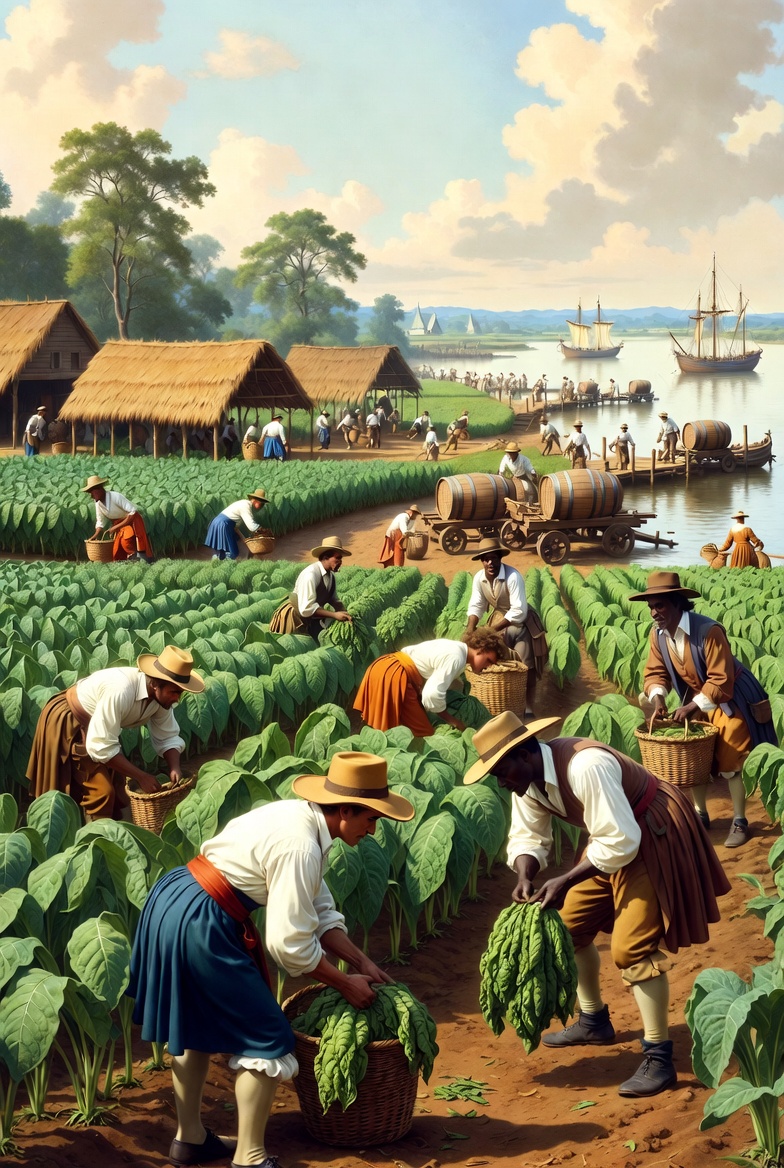
Picture this: a bright spring morning in colonial Virginia. The year is 1622. English settlers are going about their business—tending tobacco fields, repairing thatched roofs, chatting with the same Native neighbors who’ve been trading deer meat and corn for weeks. Then, without warning, those “friends” grab the very axes and hoes the colonists just handed them and start swinging. By sunset, 347 men, women, and children—roughly one-quarter of the entire English population in the New World—are dead. Blood soaks the James River plantations. Bodies lie hacked in fields and doorways. It’s Good Friday, of all days. And yet, from this absolute bloodbath, the survivors didn’t quit. They regrouped, struck back smarter, rewrote the rules of survival, and turned a near-extinction event into the foundation of what became the United States.
That’s not hype. That’s history. And buried in the gruesome details of March 22, 1622, is a raw, battle-tested framework for handling life’s own surprise attacks—whether it’s a job loss, a betrayal, a health scare, or a dream that just got tomahawked. We’re diving 90 percent into the unfiltered historical meat: the backstabbing politics, the naive mistakes, the heroic saves, the savage payback, and the long-game genius that saved the colony. Only at the end do we flip it into a hyper-specific, zero-fluff plan you won’t find in any generic self-help book. No vision boards. No “manifest your destiny.” Just colonial-grade tactics adapted for your 21st-century battles. Buckle up—this story is wild, educational, and weirdly hilarious in its tragic irony. Let’s travel back to the swampy edge of empire.
### Jamestown’s Rocky Birth: From Swamp Hell to “We Might Actually Survive This”
To understand the massacre, you first have to grasp how insanely fragile Jamestown was. On May 14, 1607, three ships—the Susan Constant, Godspeed, and Discovery—dumped 104 weary Englishmen (and a few boys) onto a marshy peninsula 60 miles up the James River. The Virginia Company of London, a profit-hungry joint-stock outfit backed by King James I, had one goal: gold, glory, and a shortcut to the Indies. What they got was malaria, dysentery, and hostile locals.
The site was terrible on purpose—deep water for ships, but mosquito-infested swamp. Within months, the “seasoning” (disease) killed half. The Powhatan Confederacy, a powerful alliance of over 30 tribes under paramount chief Wahunsenacah (known to the English as Powhatan), watched these pale intruders with deep suspicion. The Powhatans weren’t pushovers. They controlled 8,000 square miles, grew corn surpluses that could feed armies, and had a sophisticated political structure with tribute systems and war captains. Chief Powhatan himself was a master strategist who had united the tribes through conquest and marriage alliances. He famously told the English, “Your coming hither is not for trade, but to invade my people and possess my country.”
Enter Captain John Smith, the cocky, red-bearded adventurer who basically saved the place in 1608. Smith imposed martial law: “He that will not work shall not eat.” He explored, traded aggressively, and got captured by Powhatan warriors. Legend (fueled by Smith’s own writings) says Powhatan’s daughter Pocahontas dramatically intervened to save him from clubbing. Historians debate if it was a ritual adoption or real mercy, but the point stands—early relations were a tense mix of trade and terror. Smith’s maps and reports kept investors happy back in London, but the real killer came in the winter of 1609-1610: the “Starving Time.” After Smith left for England (blown up in a gunpowder accident), the colony shrank from 500 to 60 survivors. People ate dogs, horses, rats, and—rumors say—each other. One man was executed for cannibalizing his wife. When relief ships finally arrived in June 1610, the survivors were loading the last boat to abandon the place. Lord De La Warr’s fleet turned them around at the mouth of the James. Jamestown lived… barely.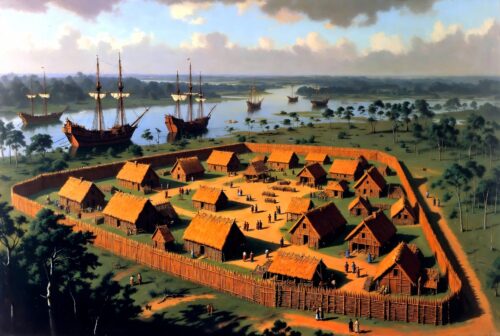 ### Tobacco, Love, and a Fragile Peace: How One Crop and One Wedding Bought Time
By 1612, a guy named John Rolfe changed everything. He imported sweet West Indian tobacco seeds and boom—the “brown gold” made Virginia profitable. Exports skyrocketed. Suddenly, land was king. Settlers pushed outward from the fort into plantations along the James River. The Virginia Company shifted strategy: send more settlers, give them “headrights” (50 acres per person), and encourage private enterprise. By 1619, they even shipped in the first Africans (though slavery as we know it wasn’t fully locked in yet) and held the first representative assembly—the House of Burgesses.
Peace? Sort of. In 1613, English captain Samuel Argall kidnapped Pocahontas during the First Anglo-Powhatan War. She converted to Christianity, took the name Rebecca, and married Rolfe in 1614. It was diplomatic love—Rolfe wrote he married for “the good of the plantation, the honor of our country, and the glory of God.” Chief Powhatan accepted the marriage (grudgingly), and a shaky truce held. Settlers and Powhatans traded openly. Indians wandered into English homes with food; colonists left tools and muskets lying around. Edward Waterhouse, the Virginia Company secretary, later admitted the English had grown so complacent that “such was the conceit of firme peace… that we used to goe without peeces [guns] or swords.”
### Tobacco, Love, and a Fragile Peace: How One Crop and One Wedding Bought Time
By 1612, a guy named John Rolfe changed everything. He imported sweet West Indian tobacco seeds and boom—the “brown gold” made Virginia profitable. Exports skyrocketed. Suddenly, land was king. Settlers pushed outward from the fort into plantations along the James River. The Virginia Company shifted strategy: send more settlers, give them “headrights” (50 acres per person), and encourage private enterprise. By 1619, they even shipped in the first Africans (though slavery as we know it wasn’t fully locked in yet) and held the first representative assembly—the House of Burgesses.
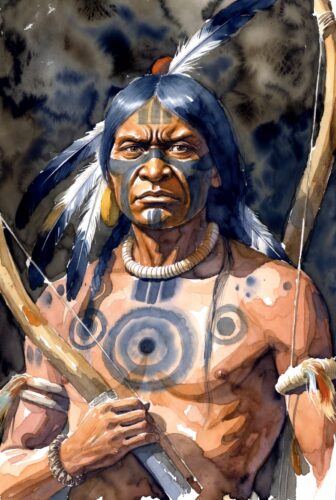
Peace? Sort of. In 1613, English captain Samuel Argall kidnapped Pocahontas during the First Anglo-Powhatan War. She converted to Christianity, took the name Rebecca, and married Rolfe in 1614. It was diplomatic love—Rolfe wrote he married for “the good of the plantation, the honor of our country, and the glory of God.” Chief Powhatan accepted the marriage (grudgingly), and a shaky truce held. Settlers and Powhatans traded openly. Indians wandered into English homes with food; colonists left tools and muskets lying around. Edward Waterhouse, the Virginia Company secretary, later admitted the English had grown so complacent that “such was the conceit of firme peace… that we used to goe without peeces [guns] or swords.”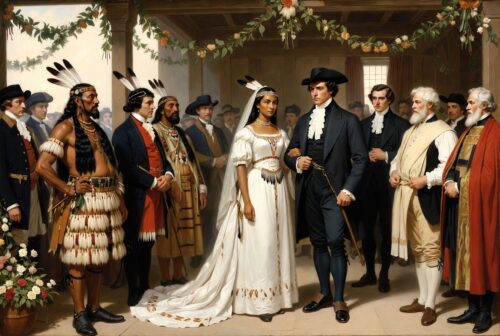 Then, in 1618, Chief Powhatan died. His brother Opitchapam took the nominal title, but real power shifted to another brother: Opechancanough, a fierce warrior in his late 50s (or older—he lived to nearly 100). Opechancanough had fought the English before. He hated the land grab, the cultural arrogance, and the threat of Christian conversion. He watched the tobacco fields spread like cancer across Powhatan hunting grounds. His advisor and war captain Nemattanew (sometimes called “Jack of the Feathers” for his flashy attire) pushed hard for war. The English, meanwhile, kept expanding. New plantations popped up at Henricus, Martin’s Hundred, Wolstenholme Towne, and Falling Creek. The stage was set.
 ### The Spark and the Plot: Nemattanew’s Death Lights the Fuse
Tensions boiled in early 1622. Nemattanew killed an English trader named Morgan over a dispute, then tried to cover it up. English settlers shot him. The great war chief died whispering defiance. Opechancanough saw his moment. He and Opitchapam orchestrated one of the most coordinated surprise attacks in colonial history. Warriors from dozens of tribes were mobilized in secret. The plan: strike simultaneously across 31 scattered settlements on the same day, using the colonists’ own trust against them. No massive army—just small groups infiltrating as friendly traders. The goal wasn’t total extermination (they hoped the English would flee back across the ocean). It was psychological terror to halt expansion forever.
### March 22, 1622: The Morning the Sky Fell
Dawn broke clear and deceptively peaceful. Warriors arrived at English homes and fields carrying baskets of corn, turkeys, fish, and deer meat—the usual friendly barter. They chatted, laughed, even helped with chores. Then, at a prearranged signal, they grabbed whatever lay handy: the settler’s own axes, spades, hoes, or knives. The slaughter began.
At Martin’s Hundred, 73 died—over half the population. Wolstenholme Towne was nearly wiped out; only two houses and part of a church survived. Henricus and its fledgling college for Native and English children were hit hard. Falling Creek ironworks was destroyed. Settlers were killed in their beds, in fields, at breakfast tables. Women and children weren’t spared. Bodies were mutilated in some accounts. Twenty English women were taken captive and integrated into Powhatan life (some lived among them for years). Total dead: 347 out of roughly 1,200-1,400 colonists. One quarter of the entire English presence in America gone in hours.
The attacks stretched from present-day Richmond down to Hampton Roads. Yet Jamestown proper—the original fort—was spared. Why? Pure luck and one incredible act of courage. A young Powhatan man (known in legend as Chanco, though records suggest an older figure named Chauco or similar) had been living with settler Richard Pace. That night, he woke Pace and revealed the plot: “We are all dead men if we stay.” Pace secured his family, rowed frantically across the James River in the dark, and warned the main settlement. Guns were loaded, gates barred. When warriors arrived at Jamestown, they were met with armed resistance and retreated. Other isolated settlers fought back or fled to the woods. But most plantations never got the memo.
### The Spark and the Plot: Nemattanew’s Death Lights the Fuse
Tensions boiled in early 1622. Nemattanew killed an English trader named Morgan over a dispute, then tried to cover it up. English settlers shot him. The great war chief died whispering defiance. Opechancanough saw his moment. He and Opitchapam orchestrated one of the most coordinated surprise attacks in colonial history. Warriors from dozens of tribes were mobilized in secret. The plan: strike simultaneously across 31 scattered settlements on the same day, using the colonists’ own trust against them. No massive army—just small groups infiltrating as friendly traders. The goal wasn’t total extermination (they hoped the English would flee back across the ocean). It was psychological terror to halt expansion forever.
### March 22, 1622: The Morning the Sky Fell
Dawn broke clear and deceptively peaceful. Warriors arrived at English homes and fields carrying baskets of corn, turkeys, fish, and deer meat—the usual friendly barter. They chatted, laughed, even helped with chores. Then, at a prearranged signal, they grabbed whatever lay handy: the settler’s own axes, spades, hoes, or knives. The slaughter began.
At Martin’s Hundred, 73 died—over half the population. Wolstenholme Towne was nearly wiped out; only two houses and part of a church survived. Henricus and its fledgling college for Native and English children were hit hard. Falling Creek ironworks was destroyed. Settlers were killed in their beds, in fields, at breakfast tables. Women and children weren’t spared. Bodies were mutilated in some accounts. Twenty English women were taken captive and integrated into Powhatan life (some lived among them for years). Total dead: 347 out of roughly 1,200-1,400 colonists. One quarter of the entire English presence in America gone in hours.
The attacks stretched from present-day Richmond down to Hampton Roads. Yet Jamestown proper—the original fort—was spared. Why? Pure luck and one incredible act of courage. A young Powhatan man (known in legend as Chanco, though records suggest an older figure named Chauco or similar) had been living with settler Richard Pace. That night, he woke Pace and revealed the plot: “We are all dead men if we stay.” Pace secured his family, rowed frantically across the James River in the dark, and warned the main settlement. Guns were loaded, gates barred. When warriors arrived at Jamestown, they were met with armed resistance and retreated. Other isolated settlers fought back or fled to the woods. But most plantations never got the memo.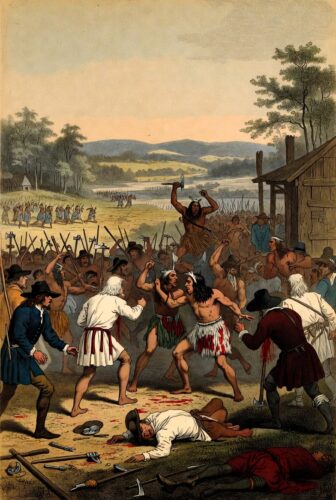 Opechancanough’s warriors melted back into the forests, confident the English would pack up and sail home. He told neutral tribes the English would be gone “within two moons.” He was wrong.
### The English Strike Back: Poison, Fire, and Total War
The survivors—starving, terrified, leaderless at first—did something brilliant: they consolidated. They abandoned outlying plantations and pulled everyone into defensible clusters. Governor Sir Francis Wyatt rallied them. The Virginia Company spun the news in London as a call for more settlers and revenge. John Smith, safe in England, wrote that the colony should now use a “running Army” to hunt the Powhatans relentlessly.
Revenge came fast and dirty. In 1623, during fake peace talks, Captain William Tucker and Dr. John Pott offered poisoned wine to Powhatan leaders. Two hundred to 250 Indians died screaming as the English muskets finished the job. Opechancanough escaped, but the message was clear. From May to November 1623, English raids burned Powhatan cornfields “in great abundance,” starving entire villages. Warriors were chased with mastiffs and bloodhounds. Canoes and weirs were destroyed. The Second Anglo-Powhatan War raged until 1632, with periodic flare-ups until the Third War in 1644 (when the nearly blind, 90-something Opechancanough was finally captured and shot in Jamestown by a vengeful guard).
The massacre gave the English the perfect excuse under “just war” doctrine: the Powhatans had broken the peace, so their land was forfeit. Expansion accelerated. In 1624, King James revoked the Virginia Company’s charter and made Virginia a royal colony—direct Crown control meant more military support and fewer corporate screw-ups. By the 1630s, tobacco wealth poured in. The colony that nearly died on Good Friday 1622 became the seed of British America.
Opechancanough’s warriors melted back into the forests, confident the English would pack up and sail home. He told neutral tribes the English would be gone “within two moons.” He was wrong.
### The English Strike Back: Poison, Fire, and Total War
The survivors—starving, terrified, leaderless at first—did something brilliant: they consolidated. They abandoned outlying plantations and pulled everyone into defensible clusters. Governor Sir Francis Wyatt rallied them. The Virginia Company spun the news in London as a call for more settlers and revenge. John Smith, safe in England, wrote that the colony should now use a “running Army” to hunt the Powhatans relentlessly.
Revenge came fast and dirty. In 1623, during fake peace talks, Captain William Tucker and Dr. John Pott offered poisoned wine to Powhatan leaders. Two hundred to 250 Indians died screaming as the English muskets finished the job. Opechancanough escaped, but the message was clear. From May to November 1623, English raids burned Powhatan cornfields “in great abundance,” starving entire villages. Warriors were chased with mastiffs and bloodhounds. Canoes and weirs were destroyed. The Second Anglo-Powhatan War raged until 1632, with periodic flare-ups until the Third War in 1644 (when the nearly blind, 90-something Opechancanough was finally captured and shot in Jamestown by a vengeful guard).
The massacre gave the English the perfect excuse under “just war” doctrine: the Powhatans had broken the peace, so their land was forfeit. Expansion accelerated. In 1624, King James revoked the Virginia Company’s charter and made Virginia a royal colony—direct Crown control meant more military support and fewer corporate screw-ups. By the 1630s, tobacco wealth poured in. The colony that nearly died on Good Friday 1622 became the seed of British America.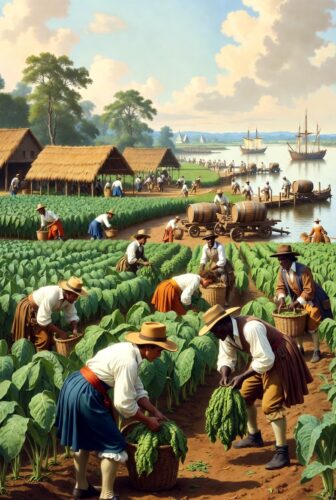 ### Long Shadow: Why March 22, 1622 Still Echoes
The massacre didn’t just kill people—it killed illusions. The fantasy of easy coexistence died with those 347 souls. English policy hardened into permanent vigilance and aggression. Powhatan power never fully recovered; disease and war whittled the confederacy down. Yet the English learned resilience the hard way. They adapted their tactics, centralized defense, weaponized intelligence (that warning from Chanco), and turned crisis into opportunity. Without the 1622 shock, Virginia might have collapsed like Roanoke. Instead, it endured and shaped everything from representative government to the plantation economy that later defined the South.
Historians still debate Opechancanough’s motives—righteous resistance or power grab?—but the facts are brutal and clear: one coordinated ambush, one narrow escape, and a colony reborn tougher than before.
### Turning Blood into Bulletproof: How the 1622 Lessons Supercharge Your Life Today
The colony didn’t just survive the massacre—they weaponized it. They stopped being naive traders and became strategic survivors. You can do the exact same thing with your modern “ambushes”—those unexpected layoffs, betrayals, health crashes, or failed launches that feel like tomahawks to the gut. Here’s the raw benefit, spelled out in specific, actionable terms:
- **Vigilance beats blind trust every time.** The settlers learned too late that “friendly” neighbors could flip. Today, that means auditing your inner circle and daily routines for hidden threats before they strike—no more assuming your job, relationship, or health is “fine forever.”
- **Consolidation creates unbreakable strength.** After the attacks, survivors abandoned weak outposts and fortified the core. You stop spreading yourself thin across 17 half-baked goals and focus firepower on 3-4 high-leverage areas.
- **Intelligence wins wars.** One warning from an unlikely source saved Jamestown. You build personal “scouts”—systems that flag risks early instead of reacting after the blood flows.
- **Counterattack turns victims into victors.** The poisoned wine and crop raids weren’t pretty, but they flipped the power dynamic. You stop playing defense and launch smart, aggressive moves that seize new territory (opportunities) while enemies are off-balance.
- **Crisis revokes old charters.** The massacre killed the Virginia Company’s failed model and brought royal backing. You use your worst day to scrap outdated habits and install a new “crown-level” operating system for your life.
- **Long-game expansion beats short-term survival.** Virginia went from near-death to powerhouse. You treat every ambush as fertilizer for bigger growth—no victim mindset, just empire-building.
### Your Unique “Jamestown Iron Fist” Protocol: A 10-Day Battle Plan No Self-Help Book Has Ever Copied
This isn’t another “morning routine” or “gratitude journal” fluff. It’s a tactical, history-hacked system modeled directly on what actually saved the colony: warning intelligence, ruthless consolidation, poisoned-wine diplomacy, crop-raid offense, and crown-level restructuring. It’s quick, brutal, and designed to work even when life feels like March 22, 1622. Do it in 10 days. Repeat quarterly. Watch your personal empire expand while others stay scattered and surprised.
**Day 1-2: The Chanco Warning Scan**
Wake up and run a full “intelligence brief.” List every area of your life (career, health, finances, relationships, skills). For each, ask: “Who or what could tomahawk me right now if they flipped?” Write the names or habits (that flaky client, your sugar addiction, the toxic friend). Rate threat level 1-10. Then identify your “Chanco”—one unlikely ally or data source (a mentor, app, or even your own journal) who can deliver early warnings. Text or call them today with a specific ask: “Tell me the brutal truth about X.” Do this daily forever. No more surprise attacks.
**Day 3-4: The Wyatt Consolidation Decree**
Abandon your “outlying plantations.” Cut every weak or low-return commitment (side hustles draining energy, subscriptions you don’t use, people who only take). Move all resources into 3-4 fortified “core settlements.” Example: if fitness is one core, cancel the gym membership you never use and buy home equipment plus a trainer session. Physically move your workspace or schedule to one focused zone. Burn the boats—tell people publicly what you’re quitting so there’s no retreat. This is exactly how survivors pulled into defensible clusters and stopped bleeding men.
**Day 5-6: The Pace River Crossing Alert System**
Build automated scouts. Set up three “warning triggers”: a weekly 15-minute review meeting with yourself (or accountability partner) using a simple scorecard (health metrics, income trends, relationship temperature). Install phone alerts or apps that flag red zones (bank balance below X, missed workouts three days running). Every evening, ask: “What friendly trader showed up today that might grab my axe tomorrow?” Document it. This single habit saved Jamestown; it will save your weekends, your bank account, and your sanity.
**Day 7-8: The Tucker Poisoned Wine Counterstrike**
Launch one smart, disarming offensive move against each major threat identified earlier. Not violence—strategy. Example: that flaky client? Send a polite but firm contract revision that protects you (the “poison” that kills bad terms). That bad habit? Replace it with a competing reward so irresistible it starves the old one out. For every “Powhatan” in your life, create a move that looks like peace but actually seizes advantage. Do one per day. Feel the power flip.
**Day 9-10: The Royal Charter Reset & Expansion Raid**
Declare your old life “revoked.” Write a new personal “charter” on one page: your non-negotiable rules, top three goals, and daily operating system. Then raid new territory—apply for that job, launch that project, reach out to that dream contact—while your enemies (old habits, doubters) are still reeling. Stockpile resources like the tobacco boom: invest 10% of time/money/energy into one growth engine (skill course, network event, savings spike). End with a public declaration to three people: “I survived my March 22. Watch what happens next.”
Repeat the full protocol every 90 days. Track wins in a simple notebook titled “After the Ambush.” Within months, you’ll operate with colonial-level toughness: vigilant, consolidated, proactive, and expanding. No other plan ties historical survival tactics so directly to your daily grind. The 1622 survivors didn’t wish for better luck—they changed the game. You just got the playbook.
So the next time life pulls a Good Friday ambush, smile. You know exactly what to do. Grab your metaphorical musket, warn your fort, consolidate, counterstrike, and expand. The Powhatans thought they’d end Virginia that March morning. Instead, they made it immortal. Your worst day can do the same for you. Now go build the empire they couldn’t burn down.
### Long Shadow: Why March 22, 1622 Still Echoes
The massacre didn’t just kill people—it killed illusions. The fantasy of easy coexistence died with those 347 souls. English policy hardened into permanent vigilance and aggression. Powhatan power never fully recovered; disease and war whittled the confederacy down. Yet the English learned resilience the hard way. They adapted their tactics, centralized defense, weaponized intelligence (that warning from Chanco), and turned crisis into opportunity. Without the 1622 shock, Virginia might have collapsed like Roanoke. Instead, it endured and shaped everything from representative government to the plantation economy that later defined the South.
Historians still debate Opechancanough’s motives—righteous resistance or power grab?—but the facts are brutal and clear: one coordinated ambush, one narrow escape, and a colony reborn tougher than before.
### Turning Blood into Bulletproof: How the 1622 Lessons Supercharge Your Life Today
The colony didn’t just survive the massacre—they weaponized it. They stopped being naive traders and became strategic survivors. You can do the exact same thing with your modern “ambushes”—those unexpected layoffs, betrayals, health crashes, or failed launches that feel like tomahawks to the gut. Here’s the raw benefit, spelled out in specific, actionable terms:
- **Vigilance beats blind trust every time.** The settlers learned too late that “friendly” neighbors could flip. Today, that means auditing your inner circle and daily routines for hidden threats before they strike—no more assuming your job, relationship, or health is “fine forever.”
- **Consolidation creates unbreakable strength.** After the attacks, survivors abandoned weak outposts and fortified the core. You stop spreading yourself thin across 17 half-baked goals and focus firepower on 3-4 high-leverage areas.
- **Intelligence wins wars.** One warning from an unlikely source saved Jamestown. You build personal “scouts”—systems that flag risks early instead of reacting after the blood flows.
- **Counterattack turns victims into victors.** The poisoned wine and crop raids weren’t pretty, but they flipped the power dynamic. You stop playing defense and launch smart, aggressive moves that seize new territory (opportunities) while enemies are off-balance.
- **Crisis revokes old charters.** The massacre killed the Virginia Company’s failed model and brought royal backing. You use your worst day to scrap outdated habits and install a new “crown-level” operating system for your life.
- **Long-game expansion beats short-term survival.** Virginia went from near-death to powerhouse. You treat every ambush as fertilizer for bigger growth—no victim mindset, just empire-building.
### Your Unique “Jamestown Iron Fist” Protocol: A 10-Day Battle Plan No Self-Help Book Has Ever Copied
This isn’t another “morning routine” or “gratitude journal” fluff. It’s a tactical, history-hacked system modeled directly on what actually saved the colony: warning intelligence, ruthless consolidation, poisoned-wine diplomacy, crop-raid offense, and crown-level restructuring. It’s quick, brutal, and designed to work even when life feels like March 22, 1622. Do it in 10 days. Repeat quarterly. Watch your personal empire expand while others stay scattered and surprised.
**Day 1-2: The Chanco Warning Scan**
Wake up and run a full “intelligence brief.” List every area of your life (career, health, finances, relationships, skills). For each, ask: “Who or what could tomahawk me right now if they flipped?” Write the names or habits (that flaky client, your sugar addiction, the toxic friend). Rate threat level 1-10. Then identify your “Chanco”—one unlikely ally or data source (a mentor, app, or even your own journal) who can deliver early warnings. Text or call them today with a specific ask: “Tell me the brutal truth about X.” Do this daily forever. No more surprise attacks.
**Day 3-4: The Wyatt Consolidation Decree**
Abandon your “outlying plantations.” Cut every weak or low-return commitment (side hustles draining energy, subscriptions you don’t use, people who only take). Move all resources into 3-4 fortified “core settlements.” Example: if fitness is one core, cancel the gym membership you never use and buy home equipment plus a trainer session. Physically move your workspace or schedule to one focused zone. Burn the boats—tell people publicly what you’re quitting so there’s no retreat. This is exactly how survivors pulled into defensible clusters and stopped bleeding men.
**Day 5-6: The Pace River Crossing Alert System**
Build automated scouts. Set up three “warning triggers”: a weekly 15-minute review meeting with yourself (or accountability partner) using a simple scorecard (health metrics, income trends, relationship temperature). Install phone alerts or apps that flag red zones (bank balance below X, missed workouts three days running). Every evening, ask: “What friendly trader showed up today that might grab my axe tomorrow?” Document it. This single habit saved Jamestown; it will save your weekends, your bank account, and your sanity.
**Day 7-8: The Tucker Poisoned Wine Counterstrike**
Launch one smart, disarming offensive move against each major threat identified earlier. Not violence—strategy. Example: that flaky client? Send a polite but firm contract revision that protects you (the “poison” that kills bad terms). That bad habit? Replace it with a competing reward so irresistible it starves the old one out. For every “Powhatan” in your life, create a move that looks like peace but actually seizes advantage. Do one per day. Feel the power flip.
**Day 9-10: The Royal Charter Reset & Expansion Raid**
Declare your old life “revoked.” Write a new personal “charter” on one page: your non-negotiable rules, top three goals, and daily operating system. Then raid new territory—apply for that job, launch that project, reach out to that dream contact—while your enemies (old habits, doubters) are still reeling. Stockpile resources like the tobacco boom: invest 10% of time/money/energy into one growth engine (skill course, network event, savings spike). End with a public declaration to three people: “I survived my March 22. Watch what happens next.”
Repeat the full protocol every 90 days. Track wins in a simple notebook titled “After the Ambush.” Within months, you’ll operate with colonial-level toughness: vigilant, consolidated, proactive, and expanding. No other plan ties historical survival tactics so directly to your daily grind. The 1622 survivors didn’t wish for better luck—they changed the game. You just got the playbook.
So the next time life pulls a Good Friday ambush, smile. You know exactly what to do. Grab your metaphorical musket, warn your fort, consolidate, counterstrike, and expand. The Powhatans thought they’d end Virginia that March morning. Instead, they made it immortal. Your worst day can do the same for you. Now go build the empire they couldn’t burn down.