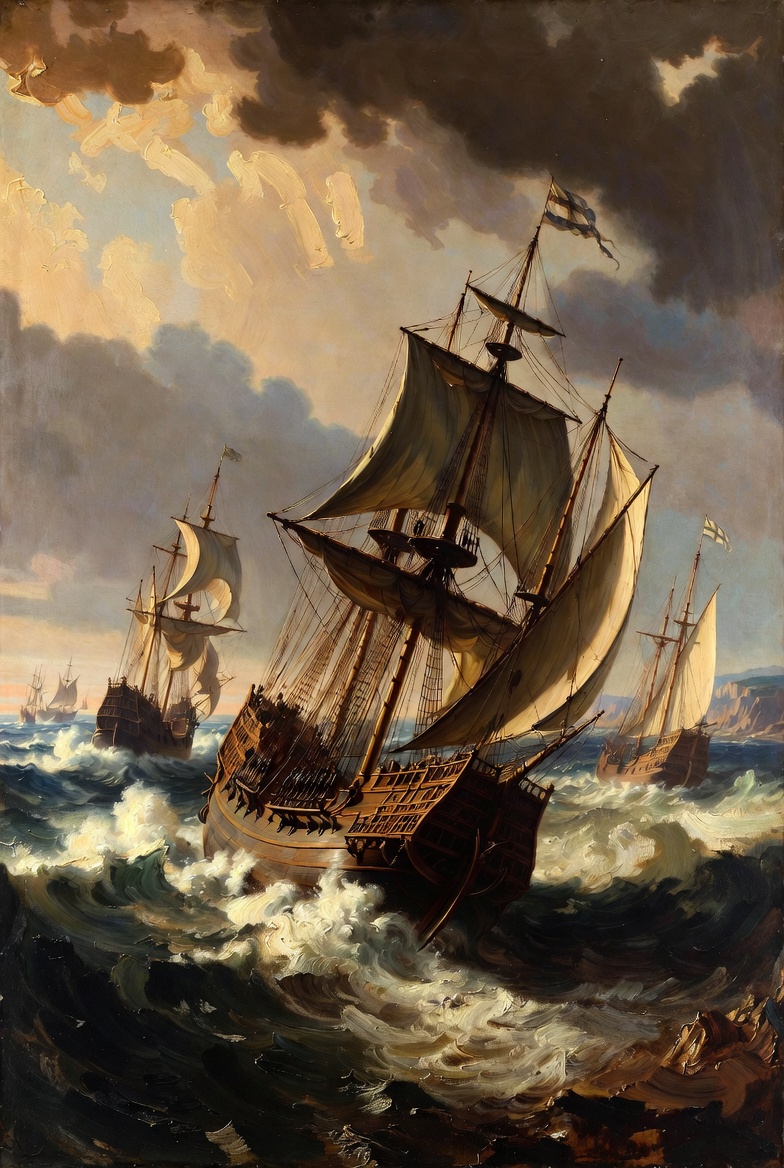
On March 20, 1602, in the gray, wind-swept chambers of the Dutch States-General in The Hague, a group of merchants, politicians, and sea captains did something that sounds boring on paper but changed human history forever. They signed a charter. Not for a new fishing boat or a guild of bakers. This was the birth certificate of the Vereenigde Oostindische Compagnie—the Dutch East India Company, or VOC. A single, government-backed trading monster that swallowed up every competing Dutch spice venture, armed itself like a navy, built forts like a kingdom, and proceeded to dominate global commerce for nearly two centuries.
This wasn't some dusty footnote. It was the exact moment the modern corporation was invented: joint-stock ownership, limited liability, tradable shares on the world's first real stock exchange, and a business model so powerful it let a tiny rebel republic of cheese-loving, dike-building underdogs outmaneuver the Portuguese, Spanish, and English empires. The VOC didn't just sell pepper and nutmeg; it shipped ideas, wealth, and the blueprint for globalization that still runs your smartphone supply chain today. And on this very date, 424 years ago, that machine roared to life.
To understand why March 20, 1602 matters more than most "on this day" trivia, you have to rewind to the messy, bloody, spice-obsessed world of the late 1500s. The Dutch were in the middle of the Eighty Years' War, fighting for independence from the Spanish Habsburgs under King Philip II. Philip also wore the Portuguese crown after 1580, which meant he controlled the flow of spices from the East Indies through Lisbon. Dutch merchants in Antwerp had grown fat reselling Portuguese imports—cloves from the Maluku Islands, nutmeg and mace from the tiny Banda archipelago, pepper from Java and Sumatra. Then Spain closed the ports. No more easy middleman profits. The Dutch had two choices: starve or sail east themselves.
They chose the second option with the stubbornness of a man refusing to fix a leaking dike. In 1595, a hot-headed merchant-adventurer named Cornelis de Houtman led four rickety ships out of Texel on what became known as the "First Voyage." They had terrible maps copied from Portuguese spies and a crew that included a secret Portuguese pilot who kept trying to sabotage them. The fleet fought storms around the Cape of Good Hope, dodged Portuguese patrols, and finally limped into Banten on Java's coast. Local sultans welcomed them—until they realized these cheeseheads wanted to undercut the Portuguese prices. Skirmishes erupted. Disease ripped through the ranks. More than half the crew died. De Houtman himself was captured, ransomed, and returned home a hero only because the holds still carried enough pepper to turn a profit. The voyage lost money overall, but the proof of concept was explosive. Suddenly every Dutch port town wanted its own spice fleet. What followed was chaos that would make any modern startup founder weep with recognition. Between 1595 and 1602, fourteen separate "pre-companies" or voorcompagnieën launched from Amsterdam, Rotterdam, Middelburg, Hoorn, Enkhuizen, and Delft. Each raised money from local investors, built ships, hired captains, and raced east. Competition was ferocious. In the Spice Islands, Dutch buyers bid against each other, driving purchase prices sky-high. Back in Europe, the sudden flood of pepper crashed selling prices. One fleet would return with 400% profits; the next barely broke even. Merchants watched their investments evaporate because their own countrymen were undercutting them. It was the ultimate self-own. As one contemporary observer noted with dry Dutch wit, the spice traders were behaving like "drunken sailors fighting over the same barrel of rum while the ship sank."
Enter Johan van Oldenbarnevelt, the brilliant, ruthless Advocate of Holland and the political mastermind behind the Dutch Republic. He saw the problem clearly: fragmented efforts were suicide when facing the Portuguese carracks and Spanish galleons. The English had just formed their own East India Company in 1600 with a royal monopoly. If the Dutch didn't unite, they'd be squeezed out. Van Oldenbarnevelt twisted arms, promised protections, and on March 20, 1602, the States-General issued the charter that merged the voorcompagnieën into one giant VOC. The date itself was no accident—it was timed to coincide with the expiration of some pre-company contracts and the sailing season.
What followed was chaos that would make any modern startup founder weep with recognition. Between 1595 and 1602, fourteen separate "pre-companies" or voorcompagnieën launched from Amsterdam, Rotterdam, Middelburg, Hoorn, Enkhuizen, and Delft. Each raised money from local investors, built ships, hired captains, and raced east. Competition was ferocious. In the Spice Islands, Dutch buyers bid against each other, driving purchase prices sky-high. Back in Europe, the sudden flood of pepper crashed selling prices. One fleet would return with 400% profits; the next barely broke even. Merchants watched their investments evaporate because their own countrymen were undercutting them. It was the ultimate self-own. As one contemporary observer noted with dry Dutch wit, the spice traders were behaving like "drunken sailors fighting over the same barrel of rum while the ship sank."
Enter Johan van Oldenbarnevelt, the brilliant, ruthless Advocate of Holland and the political mastermind behind the Dutch Republic. He saw the problem clearly: fragmented efforts were suicide when facing the Portuguese carracks and Spanish galleons. The English had just formed their own East India Company in 1600 with a royal monopoly. If the Dutch didn't unite, they'd be squeezed out. Van Oldenbarnevelt twisted arms, promised protections, and on March 20, 1602, the States-General issued the charter that merged the voorcompagnieën into one giant VOC. The date itself was no accident—it was timed to coincide with the expiration of some pre-company contracts and the sailing season.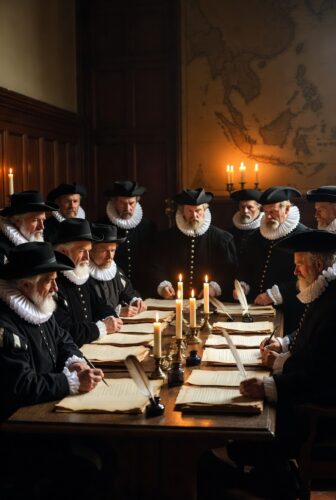 The charter was a masterpiece of legal and economic sorcery. It granted the VOC a 21-year monopoly on all Dutch trade east of the Cape of Good Hope and west of the Straits of Magellan—basically the entire Indian Ocean and beyond. Initial capital? A staggering 6,440,200 guilders, raised by public subscription across six "chambers" or regional offices: Amsterdam (over half the total at 3.7 million), Zeeland's Middelburg, and smaller ones in Delft, Rotterdam, Hoorn, and Enkhuizen. Shares were sold to anyone with cash—merchants, widows, even servants scraping together 3,000 guilders. This was revolutionary. Unlike earlier companies that liquidated after each voyage, the VOC had permanent capital. You couldn't demand your money back; you sold your shares on the new Amsterdam bourse. Limited liability protected investors from total ruin. For the first time, risk was pooled across thousands of strangers, and ownership could change hands daily. Historians call it the birth of modern capitalism, and they're not exaggerating.
Governance was pure genius wrapped in bureaucracy. The real power sat with the Heeren XVII—the "Gentlemen Seventeen"—a board of directors drawn from the chambers (eight from Amsterdam alone). They met four times a year, alternating between Amsterdam and Middelburg, setting policy on routes, prices, and wars. Each chamber handled its own shipbuilding, warehouses, and crews, but everything funneled through the Seventeen. The VOC wasn't just a business; it was a quasi-state. The charter let it build forts, maintain armies and navies, declare war, sign treaties with Asian rulers, execute criminals, and even mint its own coins. Imagine a corporation today with its own air force and diplomatic corps. That was the VOC from day one.
The early years read like a swashbuckling adventure novel crossed with a corporate thriller. The first fleets sailed under the new banner almost immediately. In 1603, Dutch ships captured the Portuguese carrack Santa Catarina off Singapore, hauling in cargo worth more than half the VOC's starting capital. Prize money flowed. Permanent factories (trading posts) sprang up in Banten and later Jayakarta on Java. Alliances were forged—and broken—with local sultans. The real prize, though, lay further east in the Maluku Islands, home of cloves, and the Banda Islands, the world's only source of nutmeg and mace.
The charter was a masterpiece of legal and economic sorcery. It granted the VOC a 21-year monopoly on all Dutch trade east of the Cape of Good Hope and west of the Straits of Magellan—basically the entire Indian Ocean and beyond. Initial capital? A staggering 6,440,200 guilders, raised by public subscription across six "chambers" or regional offices: Amsterdam (over half the total at 3.7 million), Zeeland's Middelburg, and smaller ones in Delft, Rotterdam, Hoorn, and Enkhuizen. Shares were sold to anyone with cash—merchants, widows, even servants scraping together 3,000 guilders. This was revolutionary. Unlike earlier companies that liquidated after each voyage, the VOC had permanent capital. You couldn't demand your money back; you sold your shares on the new Amsterdam bourse. Limited liability protected investors from total ruin. For the first time, risk was pooled across thousands of strangers, and ownership could change hands daily. Historians call it the birth of modern capitalism, and they're not exaggerating.
Governance was pure genius wrapped in bureaucracy. The real power sat with the Heeren XVII—the "Gentlemen Seventeen"—a board of directors drawn from the chambers (eight from Amsterdam alone). They met four times a year, alternating between Amsterdam and Middelburg, setting policy on routes, prices, and wars. Each chamber handled its own shipbuilding, warehouses, and crews, but everything funneled through the Seventeen. The VOC wasn't just a business; it was a quasi-state. The charter let it build forts, maintain armies and navies, declare war, sign treaties with Asian rulers, execute criminals, and even mint its own coins. Imagine a corporation today with its own air force and diplomatic corps. That was the VOC from day one.
The early years read like a swashbuckling adventure novel crossed with a corporate thriller. The first fleets sailed under the new banner almost immediately. In 1603, Dutch ships captured the Portuguese carrack Santa Catarina off Singapore, hauling in cargo worth more than half the VOC's starting capital. Prize money flowed. Permanent factories (trading posts) sprang up in Banten and later Jayakarta on Java. Alliances were forged—and broken—with local sultans. The real prize, though, lay further east in the Maluku Islands, home of cloves, and the Banda Islands, the world's only source of nutmeg and mace.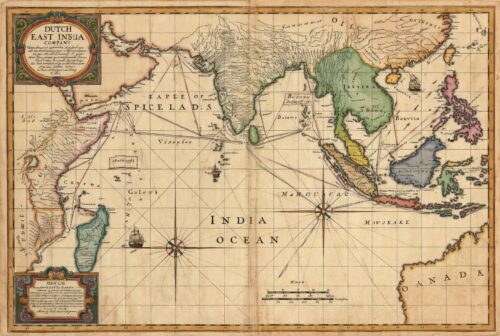 Enter Jan Pieterszoon Coen, the VOC's most brilliant and terrifying governor-general. Appointed in 1618, Coen was a merchant-soldier who believed trade and war were the same thing. His famous line: "We cannot carry on trade without war, nor war without trade." In May 1619, he stormed Jayakarta with nineteen ships, burned the town, slaughtered thousands of locals, and renamed the smoking ruins Batavia—now Jakarta, the VOC's Asian headquarters for 180 years. Batavia became a fortified multicultural boomtown: Dutch administrators, Javanese laborers, Chinese merchants, Indian traders, Japanese mercenaries, and African slaves all crammed behind cannon-studded walls. From there, Coen launched the campaign that secured the spice monopoly forever.
The Banda Islands story is equal parts triumph and nightmare fuel. These ten tiny volcanic specks produced 100% of the world's nutmeg. Local orangkaya (nobles) had been happily selling to anyone. Coen wouldn't tolerate that. In 1621, he arrived with warships, offered treaties the Bandanese couldn't refuse, then systematically destroyed resistance. Villages were razed. Over 2,800 people were killed outright, another 1,700 enslaved and shipped off. The population crashed from around 15,000 to barely 1,000. The VOC imported Dutch planters and thousands more slaves from elsewhere to work the nutmeg groves under brutal contracts. Nutmeg trees were guarded like gold mines; smuggling carried the death penalty. The payoff? In Europe, nutmeg sold for fourteen to seventeen times what it cost in Asia. Cloves from Ambon followed the same pattern. Pepper from Java and Sumatra filled the holds. The markups were so absurd that one successful voyage could pay for an entire fleet and still leave investors grinning like lottery winners.
Life aboard VOC ships was no luxury cruise. A typical fluyt—a revolutionary Dutch-designed merchant vessel that was cheap to build, fast, and carried twice the cargo of older ships—might hold 200-300 men crammed into spaces the size of a modern studio apartment. Scurvy, dysentery, and typhus were constant companions. Roughly one-third of the million Europeans who sailed east on 4,785 VOC vessels never returned. Sailors endured rotten food, brackish water, and captains who sometimes flogged men for sport. Yet the profits rolled in. The VOC paid dividends averaging 18% a year for nearly two centuries—sometimes in spices, sometimes cash, sometimes both. By 1669, the company owned 150 merchant ships, 40 warships, employed 50,000 people, and maintained 10,000 soldiers. It was richer and more powerful than many nations.
The VOC didn't stop at spices. They built an ingenious intra-Asian trade network that slashed the need for European silver. Japanese copper and silver bought Indian textiles and Chinese silk and porcelain. Those goods traded for spices or were shipped home for massive European markups. They seized Ceylon for its cinnamon, controlled Malacca and the Cape Colony as refreshment stations, and even ran a post in Dejima, Japan, when every other European was kicked out. Their logo—a simple VOC monogram—became one of the first global corporate brands, slapped on crates from Batavia to Amsterdam.
Enter Jan Pieterszoon Coen, the VOC's most brilliant and terrifying governor-general. Appointed in 1618, Coen was a merchant-soldier who believed trade and war were the same thing. His famous line: "We cannot carry on trade without war, nor war without trade." In May 1619, he stormed Jayakarta with nineteen ships, burned the town, slaughtered thousands of locals, and renamed the smoking ruins Batavia—now Jakarta, the VOC's Asian headquarters for 180 years. Batavia became a fortified multicultural boomtown: Dutch administrators, Javanese laborers, Chinese merchants, Indian traders, Japanese mercenaries, and African slaves all crammed behind cannon-studded walls. From there, Coen launched the campaign that secured the spice monopoly forever.
The Banda Islands story is equal parts triumph and nightmare fuel. These ten tiny volcanic specks produced 100% of the world's nutmeg. Local orangkaya (nobles) had been happily selling to anyone. Coen wouldn't tolerate that. In 1621, he arrived with warships, offered treaties the Bandanese couldn't refuse, then systematically destroyed resistance. Villages were razed. Over 2,800 people were killed outright, another 1,700 enslaved and shipped off. The population crashed from around 15,000 to barely 1,000. The VOC imported Dutch planters and thousands more slaves from elsewhere to work the nutmeg groves under brutal contracts. Nutmeg trees were guarded like gold mines; smuggling carried the death penalty. The payoff? In Europe, nutmeg sold for fourteen to seventeen times what it cost in Asia. Cloves from Ambon followed the same pattern. Pepper from Java and Sumatra filled the holds. The markups were so absurd that one successful voyage could pay for an entire fleet and still leave investors grinning like lottery winners.
Life aboard VOC ships was no luxury cruise. A typical fluyt—a revolutionary Dutch-designed merchant vessel that was cheap to build, fast, and carried twice the cargo of older ships—might hold 200-300 men crammed into spaces the size of a modern studio apartment. Scurvy, dysentery, and typhus were constant companions. Roughly one-third of the million Europeans who sailed east on 4,785 VOC vessels never returned. Sailors endured rotten food, brackish water, and captains who sometimes flogged men for sport. Yet the profits rolled in. The VOC paid dividends averaging 18% a year for nearly two centuries—sometimes in spices, sometimes cash, sometimes both. By 1669, the company owned 150 merchant ships, 40 warships, employed 50,000 people, and maintained 10,000 soldiers. It was richer and more powerful than many nations.
The VOC didn't stop at spices. They built an ingenious intra-Asian trade network that slashed the need for European silver. Japanese copper and silver bought Indian textiles and Chinese silk and porcelain. Those goods traded for spices or were shipped home for massive European markups. They seized Ceylon for its cinnamon, controlled Malacca and the Cape Colony as refreshment stations, and even ran a post in Dejima, Japan, when every other European was kicked out. Their logo—a simple VOC monogram—became one of the first global corporate brands, slapped on crates from Batavia to Amsterdam.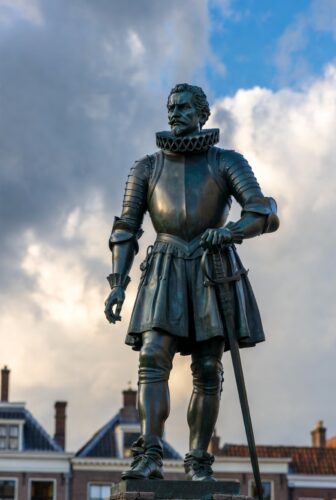 Of course, nothing lasts forever. The Gentlemen Seventeen grew complacent. Corruption seeped in—directors skimming, captains smuggling on the side. Endless wars with the English (four Anglo-Dutch wars) and later the French drained the treasury. By the 1730s, the company was paying dividends out of borrowed money. The Fourth Anglo-Dutch War in the 1780s was catastrophic: fleets captured, debts ballooned. In 1799, the Dutch government revoked the charter and nationalized the corpse. But the legacy endured. The VOC proved that a small, innovative group could outthink empires. It invented modern finance, global supply chains, and the idea that a corporation could act like a sovereign power. Amsterdam's stock exchange, the fluyt's efficient design, even the concept of diversified risk—all trace back to that March 20 charter.
The sheer scale still boggles the mind. Between 1602 and 1796, the VOC transported nearly a million Europeans and millions of tons of goods—more shipping tonnage than all other European companies combined. It reshaped diets (nutmeg in your pumpkin pie?), economies, and cultures from Indonesia to South Africa. It funded the Dutch Golden Age: Rembrandt painted while the spice money flowed. And it left darker marks—colonial exploitation, the transshipment of slaves, the near-destruction of entire island societies. History is never clean. But the lesson from the founding is crystal clear: when fragmented players stop fighting each other and unite under one smart charter, they become unstoppable.
Of course, nothing lasts forever. The Gentlemen Seventeen grew complacent. Corruption seeped in—directors skimming, captains smuggling on the side. Endless wars with the English (four Anglo-Dutch wars) and later the French drained the treasury. By the 1730s, the company was paying dividends out of borrowed money. The Fourth Anglo-Dutch War in the 1780s was catastrophic: fleets captured, debts ballooned. In 1799, the Dutch government revoked the charter and nationalized the corpse. But the legacy endured. The VOC proved that a small, innovative group could outthink empires. It invented modern finance, global supply chains, and the idea that a corporation could act like a sovereign power. Amsterdam's stock exchange, the fluyt's efficient design, even the concept of diversified risk—all trace back to that March 20 charter.
The sheer scale still boggles the mind. Between 1602 and 1796, the VOC transported nearly a million Europeans and millions of tons of goods—more shipping tonnage than all other European companies combined. It reshaped diets (nutmeg in your pumpkin pie?), economies, and cultures from Indonesia to South Africa. It funded the Dutch Golden Age: Rembrandt painted while the spice money flowed. And it left darker marks—colonial exploitation, the transshipment of slaves, the near-destruction of entire island societies. History is never clean. But the lesson from the founding is crystal clear: when fragmented players stop fighting each other and unite under one smart charter, they become unstoppable.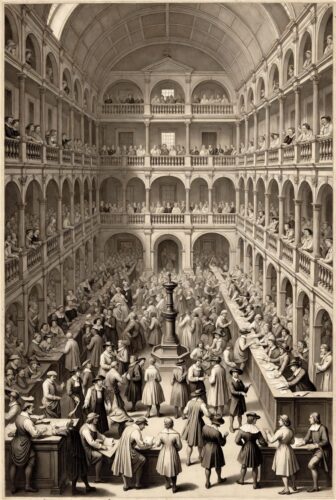 So here's where March 20, 1602 stops being dusty textbook stuff and starts mattering in your kitchen, your career, and your bank account today. The outcome of that charter wasn't just nutmeg monopolies or Batavia forts. It was proof that ordinary people—merchants who started as rebels with leaky ships—could pool resources, eliminate internal waste, secure exclusive rights to their strengths, innovate relentlessly, and build wealth that outlasted lifetimes. A ragtag republic under constant threat created the most powerful economic engine the world had ever seen. You don't need a navy or a distant archipelago to do the same in your own life.
Apply that outcome right now and watch what happens. Here are the exact ways one person benefits by living the VOC mindset:
- **Consolidate your personal voorcompagnieën**: Just as the competing Dutch fleets undercut each other into near-ruin, your scattered side hustles, half-finished habits, and random weekend projects are sabotaging your progress. Merge them under one "charter" and suddenly every hour compounds instead of cancels out—you stop leaking energy and start sailing with full holds.
- **Grant yourself a 21-year monopoly on your unique spice**: The VOC owned nutmeg because they controlled the only source. Identify the one skill, market niche, or creative edge no one else can replicate as cheaply or effectively as you, then defend it ruthlessly. Competitors (or your own distractions) can't touch it, and the dividends roll in for decades.
- **Raise permanent capital and trade shares internally**: Stop treating your time and money like one-voyage bets that liquidate every Sunday. Build lasting systems—automated savings, recurring skill investments, networks that keep paying out—so your "company" grows even when you're sleeping.
- **Arm your fluyt with real weapons**: The VOC ships weren't just cargo haulers; they carried cannons. Translate that to daily life by equipping your routines with accountability tools, boundary-setting scripts, and rapid-response plans that blast through obstacles instead of hoping they go away.
- **Build intra-Asian trade networks in your own world**: Coen didn't just ship spices home; he traded silver for silk for textiles for more spices. Link your strengths synergistically—one skill funds another, one relationship opens three doors—so your life becomes a self-reinforcing web instead of isolated islands.
- **Convene your own Heeren XVII weekly**: Those seventeen directors didn't guess; they met, argued, and decided with data. Schedule a fifteen-minute Sunday "board meeting" with yourself (or a tiny group of trusted allies) to review logs, adjust routes, and celebrate small dividends. No more aimless drifting.
- **Accept high mortality but demand higher returns**: VOC sailors died in droves, yet the survivors built fortunes. In modern terms, accept that some experiments will fail and some weeks will feel like scurvy, but keep the fleet moving because the average 18% annual return over two centuries beats playing it safe forever.
Now for the part no other self-help guru is doing because they're too busy with vision boards and gratitude journals. Here's your detailed, quick, unique plan—the **Heeren XVII Personal Charter Protocol**. It's a 21-day launch sequence modeled exactly on the VOC's founding mechanics, not generic goal-setting fluff. No affirmations. No apps promising miracles. Just a corporate-military-merchant framework that forces unity, monopoly power, and relentless execution. Do this once and your life operates like a well-armed fluyt instead of a leaky pre-company rowboat.
**Days 1-3: Draft and Sign Your Charter**
Write a one-page document titled "My VOC Charter – 21-Year Monopoly." List your single core "spice" (the one talent or offering you'll dominate). Define the waters you claim (specific market or life area—no more than three). Grant yourself sovereign powers: the right to say no to distractions, build "forts" (non-negotiable routines), and mint "coins" (reward systems). Sign it on Day 3 like it's March 20, 1602. Post it where you'll see it daily. This isn't a to-do list; it's your legal monopoly document.
**Days 4-7: Raise Capital and Form the Six Chambers**
Audit every hour and dollar you "invest" each week. Reallocate like the VOC chambers: Amsterdam gets 50% (your flagship project), Zeeland 20% (family/relationships), and the smaller four split the rest (health, learning, rest, legacy). Minimum "subscription" rule: at least 10% of waking hours and income must go to the monopoly spice. Track it in a simple ledger notebook. No fancy apps—just paper and honesty. This pools your fragmented resources into permanent capital.
**Days 8-12: Appoint Your Heeren XVII and Launch the First Fleet**
Pick seventeen specific "directors"—habits, people, or tools—that will meet weekly. Examples: 8am workout (Amsterdam chamber), weekly networking call (Zeeland), reading log, savings transfer, boundary script for saying no. Give each a "vote" on your Sunday board meeting. Then launch three expedition ships: one scouting new opportunities, one engaging existing networks, one conquering a bad habit by force (delete apps, cancel subscriptions, burn the bridges). Execute the launches with military precision—no delays.
**Days 13-17: Secure Your Spice Islands and Build Intra-Life Trade**
Ruthlessly eliminate internal competition. Identify three "Banda-style" distractions draining your energy and conquer them (block websites, renegotiate commitments, replace with VOC-approved alternatives). Then link your strengths: use one skill to fund another exactly like Japanese silver buying Indian cloth. Example: turn a side hustle profit directly into tools for your monopoly project. Measure weekly "markups"—how much more efficient or wealthy you are than last week.
**Days 18-21: Celebrate First Dividends and Set the Course for 200 Years**
Tally your wins. Pay yourself a literal dividend—cash, time off, a treat—equal to at least 18% of the value you created. Review the charter. Adjust the Heeren XVII if needed. Then schedule the next 21-day cycle. The VOC lasted because it never liquidated; your protocol doesn't end either. Repeat quarterly, scaling the monopoly wider each time.
This protocol is nothing like the recycled "rise at 5am" or "manifest abundance" noise online. It uses precise historical mechanics—merger, monopoly, armed governance, networked trade, permanent capital—to create a self-running empire in your daily life. Do it once and the dividends compound whether you're motivated or not. The Dutch started as underdog rebels eating herring and dodging Spanish pikes. Twenty years after that March 20 charter, they owned the oceans. You start with whatever chaos is on your desk right now. Twenty-one days from today, you own the monopoly on the best version of yourself.
The VOC's real gift wasn't nutmeg. It was the proof that unity, smart structure, and bold execution turn ordinary people into legends. On this anniversary of the greatest corporate birth in history, stop sailing alone. Charter your own company. Merge the mess. Defend your spice. And watch the dividends—financial, personal, legendary—roll in for the rest of your days. The Gentlemen Seventeen are waiting for your first board meeting. Don't keep them waiting. The fleet is ready. The wind is at your back. Sail.
So here's where March 20, 1602 stops being dusty textbook stuff and starts mattering in your kitchen, your career, and your bank account today. The outcome of that charter wasn't just nutmeg monopolies or Batavia forts. It was proof that ordinary people—merchants who started as rebels with leaky ships—could pool resources, eliminate internal waste, secure exclusive rights to their strengths, innovate relentlessly, and build wealth that outlasted lifetimes. A ragtag republic under constant threat created the most powerful economic engine the world had ever seen. You don't need a navy or a distant archipelago to do the same in your own life.
Apply that outcome right now and watch what happens. Here are the exact ways one person benefits by living the VOC mindset:
- **Consolidate your personal voorcompagnieën**: Just as the competing Dutch fleets undercut each other into near-ruin, your scattered side hustles, half-finished habits, and random weekend projects are sabotaging your progress. Merge them under one "charter" and suddenly every hour compounds instead of cancels out—you stop leaking energy and start sailing with full holds.
- **Grant yourself a 21-year monopoly on your unique spice**: The VOC owned nutmeg because they controlled the only source. Identify the one skill, market niche, or creative edge no one else can replicate as cheaply or effectively as you, then defend it ruthlessly. Competitors (or your own distractions) can't touch it, and the dividends roll in for decades.
- **Raise permanent capital and trade shares internally**: Stop treating your time and money like one-voyage bets that liquidate every Sunday. Build lasting systems—automated savings, recurring skill investments, networks that keep paying out—so your "company" grows even when you're sleeping.
- **Arm your fluyt with real weapons**: The VOC ships weren't just cargo haulers; they carried cannons. Translate that to daily life by equipping your routines with accountability tools, boundary-setting scripts, and rapid-response plans that blast through obstacles instead of hoping they go away.
- **Build intra-Asian trade networks in your own world**: Coen didn't just ship spices home; he traded silver for silk for textiles for more spices. Link your strengths synergistically—one skill funds another, one relationship opens three doors—so your life becomes a self-reinforcing web instead of isolated islands.
- **Convene your own Heeren XVII weekly**: Those seventeen directors didn't guess; they met, argued, and decided with data. Schedule a fifteen-minute Sunday "board meeting" with yourself (or a tiny group of trusted allies) to review logs, adjust routes, and celebrate small dividends. No more aimless drifting.
- **Accept high mortality but demand higher returns**: VOC sailors died in droves, yet the survivors built fortunes. In modern terms, accept that some experiments will fail and some weeks will feel like scurvy, but keep the fleet moving because the average 18% annual return over two centuries beats playing it safe forever.
Now for the part no other self-help guru is doing because they're too busy with vision boards and gratitude journals. Here's your detailed, quick, unique plan—the **Heeren XVII Personal Charter Protocol**. It's a 21-day launch sequence modeled exactly on the VOC's founding mechanics, not generic goal-setting fluff. No affirmations. No apps promising miracles. Just a corporate-military-merchant framework that forces unity, monopoly power, and relentless execution. Do this once and your life operates like a well-armed fluyt instead of a leaky pre-company rowboat.
**Days 1-3: Draft and Sign Your Charter**
Write a one-page document titled "My VOC Charter – 21-Year Monopoly." List your single core "spice" (the one talent or offering you'll dominate). Define the waters you claim (specific market or life area—no more than three). Grant yourself sovereign powers: the right to say no to distractions, build "forts" (non-negotiable routines), and mint "coins" (reward systems). Sign it on Day 3 like it's March 20, 1602. Post it where you'll see it daily. This isn't a to-do list; it's your legal monopoly document.
**Days 4-7: Raise Capital and Form the Six Chambers**
Audit every hour and dollar you "invest" each week. Reallocate like the VOC chambers: Amsterdam gets 50% (your flagship project), Zeeland 20% (family/relationships), and the smaller four split the rest (health, learning, rest, legacy). Minimum "subscription" rule: at least 10% of waking hours and income must go to the monopoly spice. Track it in a simple ledger notebook. No fancy apps—just paper and honesty. This pools your fragmented resources into permanent capital.
**Days 8-12: Appoint Your Heeren XVII and Launch the First Fleet**
Pick seventeen specific "directors"—habits, people, or tools—that will meet weekly. Examples: 8am workout (Amsterdam chamber), weekly networking call (Zeeland), reading log, savings transfer, boundary script for saying no. Give each a "vote" on your Sunday board meeting. Then launch three expedition ships: one scouting new opportunities, one engaging existing networks, one conquering a bad habit by force (delete apps, cancel subscriptions, burn the bridges). Execute the launches with military precision—no delays.
**Days 13-17: Secure Your Spice Islands and Build Intra-Life Trade**
Ruthlessly eliminate internal competition. Identify three "Banda-style" distractions draining your energy and conquer them (block websites, renegotiate commitments, replace with VOC-approved alternatives). Then link your strengths: use one skill to fund another exactly like Japanese silver buying Indian cloth. Example: turn a side hustle profit directly into tools for your monopoly project. Measure weekly "markups"—how much more efficient or wealthy you are than last week.
**Days 18-21: Celebrate First Dividends and Set the Course for 200 Years**
Tally your wins. Pay yourself a literal dividend—cash, time off, a treat—equal to at least 18% of the value you created. Review the charter. Adjust the Heeren XVII if needed. Then schedule the next 21-day cycle. The VOC lasted because it never liquidated; your protocol doesn't end either. Repeat quarterly, scaling the monopoly wider each time.
This protocol is nothing like the recycled "rise at 5am" or "manifest abundance" noise online. It uses precise historical mechanics—merger, monopoly, armed governance, networked trade, permanent capital—to create a self-running empire in your daily life. Do it once and the dividends compound whether you're motivated or not. The Dutch started as underdog rebels eating herring and dodging Spanish pikes. Twenty years after that March 20 charter, they owned the oceans. You start with whatever chaos is on your desk right now. Twenty-one days from today, you own the monopoly on the best version of yourself.
The VOC's real gift wasn't nutmeg. It was the proof that unity, smart structure, and bold execution turn ordinary people into legends. On this anniversary of the greatest corporate birth in history, stop sailing alone. Charter your own company. Merge the mess. Defend your spice. And watch the dividends—financial, personal, legendary—roll in for the rest of your days. The Gentlemen Seventeen are waiting for your first board meeting. Don't keep them waiting. The fleet is ready. The wind is at your back. Sail.