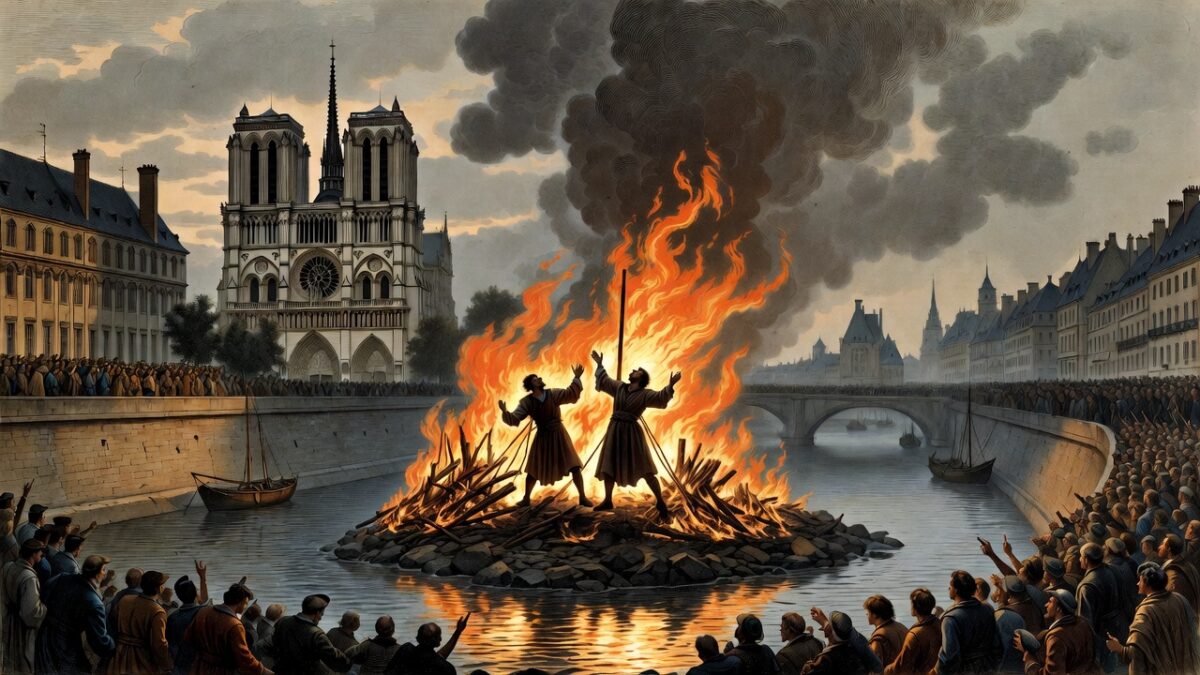
On March 18, 1314, in the heart of Paris, a man stood chained to a wooden stake on a tiny island in the Seine River known as the Île aux Juifs—the Island of the Jews. Flames licked at his feet. Smoke curled into the gray sky. Crowds pressed against the banks near the newly rising Notre-Dame Cathedral, straining to hear his final words. This was no ordinary execution. The victim was Jacques de Molay, the 23rd and final Grand Master of the Knights Templar, the most feared, wealthy, and mysterious military order the medieval world had ever known. As the fire consumed him and his companion Geoffroi de Charney, de Molay did something extraordinary: he recanted every tortured confession he had made under years of agony, proclaimed the innocence of his order, and—according to legend—cursed the two men who had destroyed it: King Philip IV of France and Pope Clement V. Both would be dead within months. The order was officially dissolved two years earlier, but on that pyre something refused to die. A legend was born that still echoes through secret societies, blockbuster movies, and conspiracy podcasts today.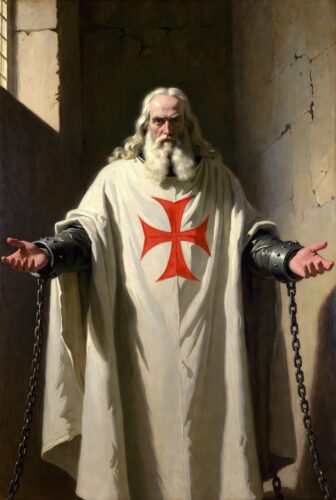 This wasn’t just another medieval barbecue. It was the dramatic climax of a centuries-long saga of holy warriors, innovative bankers, political betrayal, and one man’s stubborn refusal to break. And here’s the wild part: buried in that 712-year-old smoke is a practical, no-fluff way for any regular person today to build a life that outlasts bosses who throw you under the bus, trends that mock your values, and doubts that try to torch your dreams. But first—because 90 percent of this story deserves the deep dive it never gets in quick “on this day” lists—let’s ride back through the full, blood-and-gold history of the Templars and the man who refused to let their fire go out.
The story begins almost two centuries earlier, in the dusty aftermath of the First Crusade. In 1099, Christian knights from Western Europe had stormed Jerusalem, turning the Holy City into a Crusader stronghold. Pilgrims poured in by the thousands, but the roads from the ports of Jaffa and Acre were bandit country. Muslim raiders, local warlords, and general chaos made the journey to the sacred sites a death sentence. Enter a small band of French knights led by Hugues de Payens, a minor noble from Champagne. Around 1119, Payens and eight companions—Godfrey de Saint-Omer, André de Montbard, and a handful of others—approached King Baldwin II of Jerusalem with a radical idea: a new kind of monk. These men would take the traditional monastic vows of poverty, chastity, and obedience, but they would also strap on swords and armor to protect pilgrims. No more soft prayers in monasteries; these were warrior-monks living on the front lines.
Baldwin loved it. He gave them quarters in the Al-Aqsa Mosque on the Temple Mount—the very spot where Solomon’s Temple had supposedly stood. The “Poor Fellow-Soldiers of Christ and of the Temple of Solomon” were born. Their emblem? Two knights riding a single horse, symbolizing their vowed poverty (one horse for two men—talk about medieval carpooling). At first, they were broke and obscure. Donations trickled in. Then came the game-changer: Bernard of Clairvaux, the rock-star Cistercian abbot and nephew of one of the founders. In 1129, Bernard wrote a fiery manifesto called *In Praise of the New Knighthood*. He painted the Templars as the perfect fusion of monk and knight—killing infidels without sin because it was holy work. The Council of Troyes officially recognized the order that same year, giving them a formal rule of 72 clauses (later expanded). Pope Innocent II sealed the deal in 1139 with the bull *Omne datum optimum*, granting them breathtaking privileges: they answered to no king or bishop, only the Pope; they were tax-exempt; they could build their own churches; they could cross borders freely. Suddenly, the Templars were untouchable.
Membership exploded. Nobles across Europe signed over their lands, sons, and fortunes. By the peak in the 13th century, the order numbered between 15,000 and 20,000 men—knights in gleaming white mantles with a bold red cross, sergeants in black or brown, chaplains handling prayers, and turcopoles (local auxiliaries) for light cavalry. They operated nearly 1,000 commanderies—fortified farms, banks, and training grounds—from England to Jerusalem. Daily life was no party. The Latin Rule demanded silence at meals, meat only three times a week, no gambling, no swearing, no pointy shoes (yes, really), and absolutely no kissing your mother goodbye when you left for Crusade. Prayers followed the canonical hours. Beards were mandatory. Women were forbidden. It was austerity on steroids, backed by the promise of instant heaven if you died fighting.
This wasn’t just another medieval barbecue. It was the dramatic climax of a centuries-long saga of holy warriors, innovative bankers, political betrayal, and one man’s stubborn refusal to break. And here’s the wild part: buried in that 712-year-old smoke is a practical, no-fluff way for any regular person today to build a life that outlasts bosses who throw you under the bus, trends that mock your values, and doubts that try to torch your dreams. But first—because 90 percent of this story deserves the deep dive it never gets in quick “on this day” lists—let’s ride back through the full, blood-and-gold history of the Templars and the man who refused to let their fire go out.
The story begins almost two centuries earlier, in the dusty aftermath of the First Crusade. In 1099, Christian knights from Western Europe had stormed Jerusalem, turning the Holy City into a Crusader stronghold. Pilgrims poured in by the thousands, but the roads from the ports of Jaffa and Acre were bandit country. Muslim raiders, local warlords, and general chaos made the journey to the sacred sites a death sentence. Enter a small band of French knights led by Hugues de Payens, a minor noble from Champagne. Around 1119, Payens and eight companions—Godfrey de Saint-Omer, André de Montbard, and a handful of others—approached King Baldwin II of Jerusalem with a radical idea: a new kind of monk. These men would take the traditional monastic vows of poverty, chastity, and obedience, but they would also strap on swords and armor to protect pilgrims. No more soft prayers in monasteries; these were warrior-monks living on the front lines.
Baldwin loved it. He gave them quarters in the Al-Aqsa Mosque on the Temple Mount—the very spot where Solomon’s Temple had supposedly stood. The “Poor Fellow-Soldiers of Christ and of the Temple of Solomon” were born. Their emblem? Two knights riding a single horse, symbolizing their vowed poverty (one horse for two men—talk about medieval carpooling). At first, they were broke and obscure. Donations trickled in. Then came the game-changer: Bernard of Clairvaux, the rock-star Cistercian abbot and nephew of one of the founders. In 1129, Bernard wrote a fiery manifesto called *In Praise of the New Knighthood*. He painted the Templars as the perfect fusion of monk and knight—killing infidels without sin because it was holy work. The Council of Troyes officially recognized the order that same year, giving them a formal rule of 72 clauses (later expanded). Pope Innocent II sealed the deal in 1139 with the bull *Omne datum optimum*, granting them breathtaking privileges: they answered to no king or bishop, only the Pope; they were tax-exempt; they could build their own churches; they could cross borders freely. Suddenly, the Templars were untouchable.
Membership exploded. Nobles across Europe signed over their lands, sons, and fortunes. By the peak in the 13th century, the order numbered between 15,000 and 20,000 men—knights in gleaming white mantles with a bold red cross, sergeants in black or brown, chaplains handling prayers, and turcopoles (local auxiliaries) for light cavalry. They operated nearly 1,000 commanderies—fortified farms, banks, and training grounds—from England to Jerusalem. Daily life was no party. The Latin Rule demanded silence at meals, meat only three times a week, no gambling, no swearing, no pointy shoes (yes, really), and absolutely no kissing your mother goodbye when you left for Crusade. Prayers followed the canonical hours. Beards were mandatory. Women were forbidden. It was austerity on steroids, backed by the promise of instant heaven if you died fighting.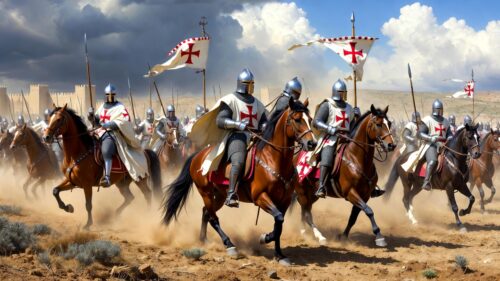 But the Templars weren’t just praying and swinging swords. They invented medieval fintech. Pilgrims could deposit gold or valuables at a commandery in London or Paris and receive a letter of credit. Show up in Acre or Jerusalem, present the document, and withdraw the exact amount—minus a small fee. No carrying heavy chests through bandit territory. Kings borrowed from them. The French crown stored its treasury in the Paris Temple. The Templars owned vineyards, wheat fields, fleets of ships, and even the entire island of Cyprus at one point. They were the Western Union and JPMorgan Chase of the 12th century rolled into one chainmail-clad package. Historians still debate whether they were truly “poor” given their wealth, but their banking genius kept the Crusader states afloat longer than anyone expected.
Militarily, they were the special forces of the Crusades. Heavy cavalry on massive destrier horses, they charged in disciplined wedges, forbidden from retreating unless outnumbered three-to-one. They fought at the Battle of Montgisard in 1177, where 500 Templars helped crush Saladin’s 26,000-man army. They defended fortresses like Safed and Baghras. They took part in the disastrous Battle of Hattin in 1187, which cost the Crusaders Jerusalem. When Acre fell in 1291 after a brutal eight-month siege by the Mamluk sultan Al-Ashraf Khalil—catapults hurling Greek fire, towers collapsing, streets running with blood—the Templars were among the last to evacuate. Grand Master William of Beaujeu died fighting on the walls. The surviving Templars retreated to Cyprus, their new headquarters, and clung to the dream of one more Crusade.
Enter Jacques de Molay. Born around 1244–1250 in Molay, a tiny village in the County of Burgundy (now eastern France), he came from minor nobility. At about age 21, in 1265, he was received into the order at the Beaune commandery by Humbert de Pairaud. Witnesses included Amaury de la Roche. He shipped out to the East around 1270. For the next two decades, records are sparse—he was likely fighting, training, and rising through the ranks. When Grand Master Thibaud Gaudin died around 1292 on Cyprus (right after the fall of Acre), de Molay was elected the 23rd Grand Master. The order was in crisis. The Holy Land was lost. European support was drying up. De Molay spent the rest of his life trying to fix it.
In 1293 he toured the West, begging kings and the Pope for money, men, and a new Crusade. He met Pope Boniface VIII, Edward I of England, James I of Aragon, and Charles II of Naples. Support was lukewarm at best. He returned to Cyprus in 1296 and spent years plotting. In 1299–1303 he coordinated with the Mongol Ilkhan Ghazan, the king of Cilician Armenia, and Cypriot forces for a grand alliance against the Mamluks. In 1300 a Cypriot fleet raided Egyptian coasts—Rosetta, Alexandria, Acre, Tortosa. They even briefly held the tiny island of Ruad off Tortosa as a forward base. But the Mongols never showed up in force. Ruad fell in 1302 after a siege. De Molay kept pushing. He wrote memoranda to Pope Clement V in 1306 opposing any merger with the rival Knights Hospitaller and arguing for a massive new Crusade instead. He backed a coup on Cyprus in 1306, helping Amalric of Tyre oust his brother King Henry II.
But the Templars weren’t just praying and swinging swords. They invented medieval fintech. Pilgrims could deposit gold or valuables at a commandery in London or Paris and receive a letter of credit. Show up in Acre or Jerusalem, present the document, and withdraw the exact amount—minus a small fee. No carrying heavy chests through bandit territory. Kings borrowed from them. The French crown stored its treasury in the Paris Temple. The Templars owned vineyards, wheat fields, fleets of ships, and even the entire island of Cyprus at one point. They were the Western Union and JPMorgan Chase of the 12th century rolled into one chainmail-clad package. Historians still debate whether they were truly “poor” given their wealth, but their banking genius kept the Crusader states afloat longer than anyone expected.
Militarily, they were the special forces of the Crusades. Heavy cavalry on massive destrier horses, they charged in disciplined wedges, forbidden from retreating unless outnumbered three-to-one. They fought at the Battle of Montgisard in 1177, where 500 Templars helped crush Saladin’s 26,000-man army. They defended fortresses like Safed and Baghras. They took part in the disastrous Battle of Hattin in 1187, which cost the Crusaders Jerusalem. When Acre fell in 1291 after a brutal eight-month siege by the Mamluk sultan Al-Ashraf Khalil—catapults hurling Greek fire, towers collapsing, streets running with blood—the Templars were among the last to evacuate. Grand Master William of Beaujeu died fighting on the walls. The surviving Templars retreated to Cyprus, their new headquarters, and clung to the dream of one more Crusade.
Enter Jacques de Molay. Born around 1244–1250 in Molay, a tiny village in the County of Burgundy (now eastern France), he came from minor nobility. At about age 21, in 1265, he was received into the order at the Beaune commandery by Humbert de Pairaud. Witnesses included Amaury de la Roche. He shipped out to the East around 1270. For the next two decades, records are sparse—he was likely fighting, training, and rising through the ranks. When Grand Master Thibaud Gaudin died around 1292 on Cyprus (right after the fall of Acre), de Molay was elected the 23rd Grand Master. The order was in crisis. The Holy Land was lost. European support was drying up. De Molay spent the rest of his life trying to fix it.
In 1293 he toured the West, begging kings and the Pope for money, men, and a new Crusade. He met Pope Boniface VIII, Edward I of England, James I of Aragon, and Charles II of Naples. Support was lukewarm at best. He returned to Cyprus in 1296 and spent years plotting. In 1299–1303 he coordinated with the Mongol Ilkhan Ghazan, the king of Cilician Armenia, and Cypriot forces for a grand alliance against the Mamluks. In 1300 a Cypriot fleet raided Egyptian coasts—Rosetta, Alexandria, Acre, Tortosa. They even briefly held the tiny island of Ruad off Tortosa as a forward base. But the Mongols never showed up in force. Ruad fell in 1302 after a siege. De Molay kept pushing. He wrote memoranda to Pope Clement V in 1306 opposing any merger with the rival Knights Hospitaller and arguing for a massive new Crusade instead. He backed a coup on Cyprus in 1306, helping Amalric of Tyre oust his brother King Henry II.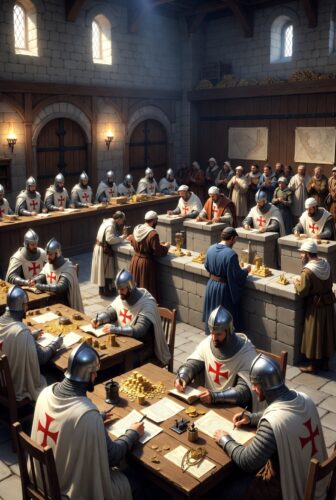 Meanwhile, back in France, trouble was brewing. King Philip IV—Philip the Fair, tall, handsome, and utterly ruthless—had a cash-flow problem. He’d spent fortunes on wars with England and Flanders. He’d debased the currency (clipping coins and causing inflation riots). He’d expelled the Jews in 1306 and seized their assets, but it wasn’t enough. The Templars held massive deposits for the crown and had refused Philip’s requests for more loans or a merger under his personal command (he fancied himself the “Rex Bellator,” the warrior king who would lead a united order). Philip also hated Pope Boniface VIII, whom he’d had kidnapped and possibly killed. When a disgruntled ex-Templar named Esquin de Floyac fed him wild accusations—denying Christ, spitting on the cross, idolatry with a head called Baphomet, secret homosexual rites—Philip saw his chance.
On September 14, 1307, Philip secretly ordered the mass arrest of every Templar in France. At dawn on Friday, October 13, 1307—yes, the original Friday the 13th—royal troops stormed the Paris Temple and every commandery. Jacques de Molay, in Paris for the funeral of Catherine of Courtenay, was arrested along with hundreds of others. The charges were a medieval fever dream: heresy, blasphemy, sodomy, financial corruption. Under horrific torture— strappado (arms tied behind back and hoisted), burning feet, the rack—many broke. De Molay himself confessed on October 24–25 that he had denied Christ and spat on the cross during his initiation years earlier. He wrote letters urging other Templars to confess. Philip paraded the confessions publicly and pressured Pope Clement V (a Frenchman Philip had helped elect) to order arrests across Europe.
But de Molay wasn’t done. In December 1307, before papal cardinals, he retracted everything. The trials dragged on for years. Clement tried to steer a middle course with the bull *Pastoralis praeeminentiae* ordering arrests, but Philip kept pushing. In 1308 at Chinon, de Molay and other leaders were questioned again and re-confessed under royal pressure. The papal commission in 1309–1311 heard hundreds of testimonies—some defending the order, many recanting under duress. Fifty-four Templars were burned outside Paris in May 1310 for refusing to stick to their confessions. The Council of Vienne in 1312 finally gave in; Clement issued *Vox in excelso* suppressing the order “by way of provision” (not condemnation). Assets mostly went to the Hospitallers, though Philip skimmed plenty.
By early 1314, only the top leaders remained. On March 18 (or possibly the 11th according to some chroniclers, but the date that has stuck in popular memory), cardinals pronounced sentence on de Molay, Geoffroi de Charney, Hugues de Pairaud, and Godefroi de Gonneville before Notre-Dame. The verdict: perpetual imprisonment. But when the four men were led onto the platform, de Molay and de Charney shocked everyone. They loudly proclaimed the order’s innocence. All charges were lies. They had only confessed because of unbearable torture. The cardinals, stunned, handed them over to Philip’s men as relapsed heretics. By evening, two pyres were built on the Île aux Juifs. De Molay and de Charney climbed them calmly. Witnesses said de Molay asked to face the cathedral and have his hands free to pray. As flames rose, he cried out that God would avenge the Templars and that the guilty parties would meet Him soon. Legend adds the precise curse: “Pope Clement, King Philip—within a year!” Clement died of illness on April 20, 1314. Philip suffered a stroke while hunting on November 29, 1314. The Capetian dynasty itself ended without male heirs by 1328. Coincidence? Medieval chroniclers didn’t think so. The Chinon Parchment, rediscovered in 2001 in the Vatican archives, proves Clement had privately absolved the leaders in 1308 anyway. The whole thing was political theater.
Meanwhile, back in France, trouble was brewing. King Philip IV—Philip the Fair, tall, handsome, and utterly ruthless—had a cash-flow problem. He’d spent fortunes on wars with England and Flanders. He’d debased the currency (clipping coins and causing inflation riots). He’d expelled the Jews in 1306 and seized their assets, but it wasn’t enough. The Templars held massive deposits for the crown and had refused Philip’s requests for more loans or a merger under his personal command (he fancied himself the “Rex Bellator,” the warrior king who would lead a united order). Philip also hated Pope Boniface VIII, whom he’d had kidnapped and possibly killed. When a disgruntled ex-Templar named Esquin de Floyac fed him wild accusations—denying Christ, spitting on the cross, idolatry with a head called Baphomet, secret homosexual rites—Philip saw his chance.
On September 14, 1307, Philip secretly ordered the mass arrest of every Templar in France. At dawn on Friday, October 13, 1307—yes, the original Friday the 13th—royal troops stormed the Paris Temple and every commandery. Jacques de Molay, in Paris for the funeral of Catherine of Courtenay, was arrested along with hundreds of others. The charges were a medieval fever dream: heresy, blasphemy, sodomy, financial corruption. Under horrific torture— strappado (arms tied behind back and hoisted), burning feet, the rack—many broke. De Molay himself confessed on October 24–25 that he had denied Christ and spat on the cross during his initiation years earlier. He wrote letters urging other Templars to confess. Philip paraded the confessions publicly and pressured Pope Clement V (a Frenchman Philip had helped elect) to order arrests across Europe.
But de Molay wasn’t done. In December 1307, before papal cardinals, he retracted everything. The trials dragged on for years. Clement tried to steer a middle course with the bull *Pastoralis praeeminentiae* ordering arrests, but Philip kept pushing. In 1308 at Chinon, de Molay and other leaders were questioned again and re-confessed under royal pressure. The papal commission in 1309–1311 heard hundreds of testimonies—some defending the order, many recanting under duress. Fifty-four Templars were burned outside Paris in May 1310 for refusing to stick to their confessions. The Council of Vienne in 1312 finally gave in; Clement issued *Vox in excelso* suppressing the order “by way of provision” (not condemnation). Assets mostly went to the Hospitallers, though Philip skimmed plenty.
By early 1314, only the top leaders remained. On March 18 (or possibly the 11th according to some chroniclers, but the date that has stuck in popular memory), cardinals pronounced sentence on de Molay, Geoffroi de Charney, Hugues de Pairaud, and Godefroi de Gonneville before Notre-Dame. The verdict: perpetual imprisonment. But when the four men were led onto the platform, de Molay and de Charney shocked everyone. They loudly proclaimed the order’s innocence. All charges were lies. They had only confessed because of unbearable torture. The cardinals, stunned, handed them over to Philip’s men as relapsed heretics. By evening, two pyres were built on the Île aux Juifs. De Molay and de Charney climbed them calmly. Witnesses said de Molay asked to face the cathedral and have his hands free to pray. As flames rose, he cried out that God would avenge the Templars and that the guilty parties would meet Him soon. Legend adds the precise curse: “Pope Clement, King Philip—within a year!” Clement died of illness on April 20, 1314. Philip suffered a stroke while hunting on November 29, 1314. The Capetian dynasty itself ended without male heirs by 1328. Coincidence? Medieval chroniclers didn’t think so. The Chinon Parchment, rediscovered in 2001 in the Vatican archives, proves Clement had privately absolved the leaders in 1308 anyway. The whole thing was political theater.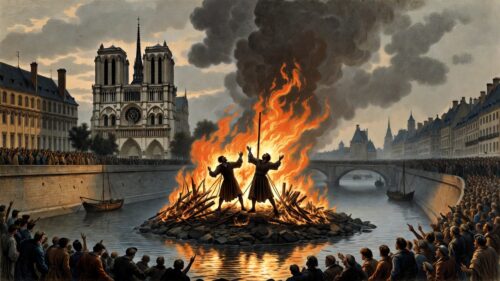 De Molay’s body was ashes, but the story exploded. Within decades, Templar myths fueled everything from secret survival theories to later Masonic orders claiming descent. The 19th-century Larmenius Charter (almost certainly a forgery) pretended to list 22 secret Grand Masters after de Molay. In the 20th century, the DeMolay youth organization in the U.S. took his name as a symbol of fidelity. Novels like Maurice Druon’s *The Accursed Kings* and Dan Brown’s conspiracies kept the fire alive. Today, every time someone jokes about Friday the 13th or wonders about hidden treasure under Rosslyn Chapel, they’re still feeling the heat from that March 18 pyre.
So what’s the takeaway for you in the 21st century? The outcome of de Molay’s stand wasn’t the survival of the Templars as an organization. It was the survival of their *spirit*—unbreakable integrity in the face of overwhelming power, false confessions, and certain death. He spent seven years in prison, confessed under torture, retracted, confessed again, then at the last possible moment chose truth over safety. That final defiance turned a political execution into a martyrdom that outlived his executioners by centuries. Here’s exactly how that ancient outcome hands you a modern edge:
- When a boss or company demands you “confess” to something you know is wrong (cutting corners, throwing a colleague under the bus, signing off on shady numbers), you recant like de Molay on the platform—publicly, calmly, and at the right moment—preserving your reputation and watching the “king” who pressured you stumble later.
- In personal relationships where friends or family pressure you into compromising your core values (the modern equivalent of spitting on the cross), you hold the line until the fire is lit, then declare your truth—turning temporary discomfort into lifelong respect and a legacy your kids will actually admire.
- During financial or career “arrests” (layoffs, lawsuits, market crashes), you remember the Templar banking system: quietly build parallel “commanderies” of skills, networks, and side assets so you can withdraw value anywhere, anytime, without depending on one fickle throne.
- When public opinion or social media piles on with absurd accusations (the medieval Baphomet of cancel culture), you endure the “torture” phase privately, gather your evidence, and choose your platform moment—turning victimhood into a story that inspires others for generations.
- In building anything meaningful (business, family mission, creative project), you copy de Molay’s post-Acre persistence: keep planning new “Crusades” even after the last stronghold falls, because the legend you leave behind matters more than the organization chart.
Now, here’s the part no other self-help guru online is giving you—the quick, unique plan that turns this 1314 history into your personal superpower. It’s not “journal your feelings” or “do affirmations in the mirror.” It’s called **The De Molay Pyre Protocol**—a 7-day defiance forge that uses the exact sequence of de Molay’s life (confession under pressure, private retraction, public stand, legacy fire) to burn away what’s holding you back and cast an unbreakable mantle around your future. Do it once, and it becomes your repeatable ritual for any crisis. It takes 20–30 minutes a day, needs only paper, a safe place to burn (or shred dramatically), and zero woo-woo crystals.
De Molay’s body was ashes, but the story exploded. Within decades, Templar myths fueled everything from secret survival theories to later Masonic orders claiming descent. The 19th-century Larmenius Charter (almost certainly a forgery) pretended to list 22 secret Grand Masters after de Molay. In the 20th century, the DeMolay youth organization in the U.S. took his name as a symbol of fidelity. Novels like Maurice Druon’s *The Accursed Kings* and Dan Brown’s conspiracies kept the fire alive. Today, every time someone jokes about Friday the 13th or wonders about hidden treasure under Rosslyn Chapel, they’re still feeling the heat from that March 18 pyre.
So what’s the takeaway for you in the 21st century? The outcome of de Molay’s stand wasn’t the survival of the Templars as an organization. It was the survival of their *spirit*—unbreakable integrity in the face of overwhelming power, false confessions, and certain death. He spent seven years in prison, confessed under torture, retracted, confessed again, then at the last possible moment chose truth over safety. That final defiance turned a political execution into a martyrdom that outlived his executioners by centuries. Here’s exactly how that ancient outcome hands you a modern edge:
- When a boss or company demands you “confess” to something you know is wrong (cutting corners, throwing a colleague under the bus, signing off on shady numbers), you recant like de Molay on the platform—publicly, calmly, and at the right moment—preserving your reputation and watching the “king” who pressured you stumble later.
- In personal relationships where friends or family pressure you into compromising your core values (the modern equivalent of spitting on the cross), you hold the line until the fire is lit, then declare your truth—turning temporary discomfort into lifelong respect and a legacy your kids will actually admire.
- During financial or career “arrests” (layoffs, lawsuits, market crashes), you remember the Templar banking system: quietly build parallel “commanderies” of skills, networks, and side assets so you can withdraw value anywhere, anytime, without depending on one fickle throne.
- When public opinion or social media piles on with absurd accusations (the medieval Baphomet of cancel culture), you endure the “torture” phase privately, gather your evidence, and choose your platform moment—turning victimhood into a story that inspires others for generations.
- In building anything meaningful (business, family mission, creative project), you copy de Molay’s post-Acre persistence: keep planning new “Crusades” even after the last stronghold falls, because the legend you leave behind matters more than the organization chart.
Now, here’s the part no other self-help guru online is giving you—the quick, unique plan that turns this 1314 history into your personal superpower. It’s not “journal your feelings” or “do affirmations in the mirror.” It’s called **The De Molay Pyre Protocol**—a 7-day defiance forge that uses the exact sequence of de Molay’s life (confession under pressure, private retraction, public stand, legacy fire) to burn away what’s holding you back and cast an unbreakable mantle around your future. Do it once, and it becomes your repeatable ritual for any crisis. It takes 20–30 minutes a day, needs only paper, a safe place to burn (or shred dramatically), and zero woo-woo crystals.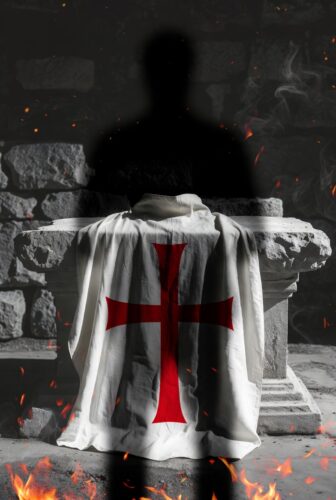 **Day 1 – The Arrest Audit**: List every “confession” you’ve made under modern pressure—things you’ve agreed to that violate your values (staying in a toxic job “for the money,” pretending to like a friend’s terrible decisions, watering down your dreams to fit in). Write them on one side of a paper like a medieval charge sheet. On the other side, write the truth you know in your gut. Feel the weight. No burning yet—just audit.
**Day 2 – The Torture Recant**: Take the false confessions from Day 1 and rewrite them as “I recant.” For each one, add one piece of evidence why it’s false (exactly like de Molay before the cardinals). Read them aloud in private. This is your Chinon moment—absolving yourself internally before anyone else hears.
**Day 3 – The Commandery Build**: Like the Templars’ banking network, create three “letters of credit” to your future self: one career asset (skill to learn this month), one relationship deposit (conversation you’ll have), one legacy item (something small you’ll plant that outlives you—photo album, letter to future kid, community project). Seal them in envelopes. These are your portable wealth no king can seize.
**Day 4 – The Platform Rehearsal**: Stand in front of a mirror or record yourself declaring the recantations from Day 2 out loud, ending with de Molay’s spirit: “God (or the universe or your own conscience) knows who is right.” Practice the calm defiance. This is rehearsal for the real moment when the pyre is lit.
**Day 5 – The Pyre Burn**: Safely burn (or ceremonially shred and scatter) the original false confessions from Day 1. As the paper disappears, say out loud: “These chains are ash.” Watch the smoke. Feel the lightness. This is your Île aux Juifs moment—turning pain into power.
**Day 6 – The Curse Cast**: Write the names of the “Philip and Clement” in your life—the people or forces that tried to break you—and beside each one, write one positive outcome that will happen because you stood firm (they’ll stumble, you’ll rise, your story will outlive theirs). Fold the paper and store it. You don’t need actual bad luck to fall on them; the psychological shift is the real curse reversal.
**Day 7 – The Mantle Claim**: Design your personal “white mantle”—three non-negotiable rules for the next 90 days (your version of the Templar Rule). Examples: “I charge forward unless outnumbered three-to-one in evidence,” “I protect my pilgrims (family and true friends) first,” “I bank value every week.” Write them on a card, carry it, and tell one trusted person. You are now Grand Master of your own order.
Repeat the protocol any time life drags you to a new stake. It’s quick, it’s repeatable, it’s rooted in real history instead of vague positivity, and it leaves a legacy that, like de Molay’s, refuses to die. The Templars as an organization ended on that March 18 pyre. But the man who stood on it made sure the fire lit something eternal. You can do the same—starting today. Light your own pyre of principles, watch the old chains burn, and step into a life that outlasts every adversary. The legend is yours now. Go write the next chapter.
**Day 1 – The Arrest Audit**: List every “confession” you’ve made under modern pressure—things you’ve agreed to that violate your values (staying in a toxic job “for the money,” pretending to like a friend’s terrible decisions, watering down your dreams to fit in). Write them on one side of a paper like a medieval charge sheet. On the other side, write the truth you know in your gut. Feel the weight. No burning yet—just audit.
**Day 2 – The Torture Recant**: Take the false confessions from Day 1 and rewrite them as “I recant.” For each one, add one piece of evidence why it’s false (exactly like de Molay before the cardinals). Read them aloud in private. This is your Chinon moment—absolving yourself internally before anyone else hears.
**Day 3 – The Commandery Build**: Like the Templars’ banking network, create three “letters of credit” to your future self: one career asset (skill to learn this month), one relationship deposit (conversation you’ll have), one legacy item (something small you’ll plant that outlives you—photo album, letter to future kid, community project). Seal them in envelopes. These are your portable wealth no king can seize.
**Day 4 – The Platform Rehearsal**: Stand in front of a mirror or record yourself declaring the recantations from Day 2 out loud, ending with de Molay’s spirit: “God (or the universe or your own conscience) knows who is right.” Practice the calm defiance. This is rehearsal for the real moment when the pyre is lit.
**Day 5 – The Pyre Burn**: Safely burn (or ceremonially shred and scatter) the original false confessions from Day 1. As the paper disappears, say out loud: “These chains are ash.” Watch the smoke. Feel the lightness. This is your Île aux Juifs moment—turning pain into power.
**Day 6 – The Curse Cast**: Write the names of the “Philip and Clement” in your life—the people or forces that tried to break you—and beside each one, write one positive outcome that will happen because you stood firm (they’ll stumble, you’ll rise, your story will outlive theirs). Fold the paper and store it. You don’t need actual bad luck to fall on them; the psychological shift is the real curse reversal.
**Day 7 – The Mantle Claim**: Design your personal “white mantle”—three non-negotiable rules for the next 90 days (your version of the Templar Rule). Examples: “I charge forward unless outnumbered three-to-one in evidence,” “I protect my pilgrims (family and true friends) first,” “I bank value every week.” Write them on a card, carry it, and tell one trusted person. You are now Grand Master of your own order.
Repeat the protocol any time life drags you to a new stake. It’s quick, it’s repeatable, it’s rooted in real history instead of vague positivity, and it leaves a legacy that, like de Molay’s, refuses to die. The Templars as an organization ended on that March 18 pyre. But the man who stood on it made sure the fire lit something eternal. You can do the same—starting today. Light your own pyre of principles, watch the old chains burn, and step into a life that outlasts every adversary. The legend is yours now. Go write the next chapter.