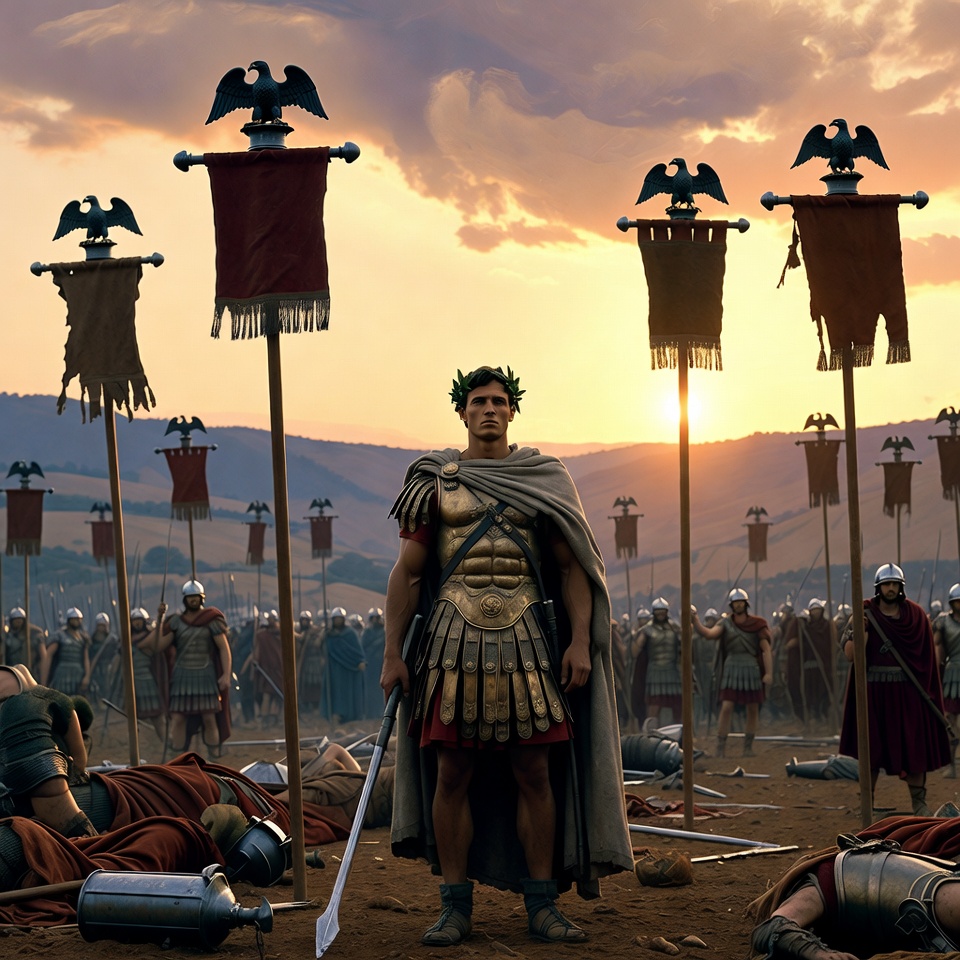
Picture this: It's March 17, 45 BC, in the dusty, sun-baked hills of southern Spain near a sleepy town called Munda. The air reeks of sweat-soaked leather, horse manure, and the metallic tang of fear. Two colossal Roman armies—brothers-in-arms turned blood enemies—face off across a gentle but treacherous slope. On one side, Julius Caesar, the bald-headed, epileptic genius who's conquered Gaul, crossed the Rubicon, and basically rewritten the rules of Roman power. On the other, the desperate remnants of Pompey the Great's old guard, led by his hot-headed sons Gnaeus and Sextus, plus the ultimate traitor: Titus Labienus, Caesar's former star lieutenant from the Gallic Wars who's now swinging swords against his old boss.
Thirteen legions against eight. Pompeians perched on high ground like smug hillbillies at a barbecue. Caesar's veterans, exhausted from years of nonstop campaigning, staring uphill at certain death. This isn't some tidy Hollywood skirmish. This is eight straight hours of screaming, shield-bashing, sword-gouging slaughter—the final, messy gasp of the Roman Republic's death throes. By day's end, 30,000 Pompeians lie dead in the mud, their thirteen legion standards captured like trophies in a bad divorce. Caesar loses maybe a thousand men and utters one of history's most raw lines: "I have fought many times for victory, but today I fought for my life."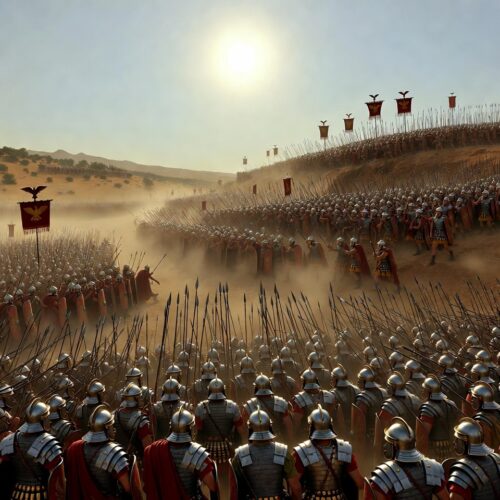 Welcome to the Battle of Munda, the random, razor-sharp turning point that slammed the door on five years of brutal civil war and handed Caesar the keys to absolute power. No parades for foreign foes here—this was Romans butchering Romans in a Spanish backwater. Yet from this muddy chaos emerged the blueprint for the Roman Empire itself. And here's the kicker: the same raw ingredients that turned Caesar's desperate uphill brawl into total domination can hand you a victory over whatever "Pompeian hill" is blocking your path today. Not with some fluffy self-help mantra or vision-board nonsense. We're talking a quick, gritty, history-hacked protocol that feels like you're role-playing a Roman general in your own life—minus the toga and the inevitable knife in the back.
To understand why March 17, 45 BC, still echoes like a thunderclap, we have to rewind the whole bloody reel of the Roman Civil War. It all kicked off in 49 BC when Caesar, fresh from slaughtering Gauls and building his legend, stood at the Rubicon River—the legal boundary between his province and Italy proper. The Senate, those stuffy optimates (the old-money conservatives who hated his populist vibe), had ordered him to disband his army or face treason charges. Caesar, never one to back down from a dare, supposedly muttered "Alea iacta est"—the die is cast—and marched his legions across the shallow stream. Boom. Civil war.
The optimates fled south, led by Pompey Magnus, the once-great general who'd crushed pirates and conquered the East but now looked like a has-been next to Caesar's machine. Caesar chased them with lightning speed, grabbing Rome itself in weeks. He showed his famous clemency—pardoning enemies left and right instead of executing them like Sulla had done a generation earlier. It was smart politics: it won hearts, but it also planted seeds of resentment among hardliners who saw mercy as weakness. Pompey regrouped in Greece with a massive army. Caesar followed, starving his own troops across the Adriatic in winter, then clashing at Pharsalus in 48 BC.
That battle was a masterclass in audacity. Pompey had twice Caesar's numbers and cavalry superiority, but Caesar's veterans—toughened by Gaul—held firm. Caesar personally led a hidden fourth line of cohorts that smashed Pompey's cavalry flank. Pompey fled the field like a scolded puppy, eventually getting assassinated in Egypt by some opportunistic locals who figured currying favor with Caesar was smarter than hosting a Roman fugitive. Caesar rolled into Alexandria, hooked up with Cleopatra (because why not mix politics with romance?), and even found time for a quick victory at Zela in Asia Minor. He summed that one up in three immortal words: "Veni, vidi, vici"—I came, I saw, I conquered. Short, cocky, perfect.
Welcome to the Battle of Munda, the random, razor-sharp turning point that slammed the door on five years of brutal civil war and handed Caesar the keys to absolute power. No parades for foreign foes here—this was Romans butchering Romans in a Spanish backwater. Yet from this muddy chaos emerged the blueprint for the Roman Empire itself. And here's the kicker: the same raw ingredients that turned Caesar's desperate uphill brawl into total domination can hand you a victory over whatever "Pompeian hill" is blocking your path today. Not with some fluffy self-help mantra or vision-board nonsense. We're talking a quick, gritty, history-hacked protocol that feels like you're role-playing a Roman general in your own life—minus the toga and the inevitable knife in the back.
To understand why March 17, 45 BC, still echoes like a thunderclap, we have to rewind the whole bloody reel of the Roman Civil War. It all kicked off in 49 BC when Caesar, fresh from slaughtering Gauls and building his legend, stood at the Rubicon River—the legal boundary between his province and Italy proper. The Senate, those stuffy optimates (the old-money conservatives who hated his populist vibe), had ordered him to disband his army or face treason charges. Caesar, never one to back down from a dare, supposedly muttered "Alea iacta est"—the die is cast—and marched his legions across the shallow stream. Boom. Civil war.
The optimates fled south, led by Pompey Magnus, the once-great general who'd crushed pirates and conquered the East but now looked like a has-been next to Caesar's machine. Caesar chased them with lightning speed, grabbing Rome itself in weeks. He showed his famous clemency—pardoning enemies left and right instead of executing them like Sulla had done a generation earlier. It was smart politics: it won hearts, but it also planted seeds of resentment among hardliners who saw mercy as weakness. Pompey regrouped in Greece with a massive army. Caesar followed, starving his own troops across the Adriatic in winter, then clashing at Pharsalus in 48 BC.
That battle was a masterclass in audacity. Pompey had twice Caesar's numbers and cavalry superiority, but Caesar's veterans—toughened by Gaul—held firm. Caesar personally led a hidden fourth line of cohorts that smashed Pompey's cavalry flank. Pompey fled the field like a scolded puppy, eventually getting assassinated in Egypt by some opportunistic locals who figured currying favor with Caesar was smarter than hosting a Roman fugitive. Caesar rolled into Alexandria, hooked up with Cleopatra (because why not mix politics with romance?), and even found time for a quick victory at Zela in Asia Minor. He summed that one up in three immortal words: "Veni, vidi, vici"—I came, I saw, I conquered. Short, cocky, perfect.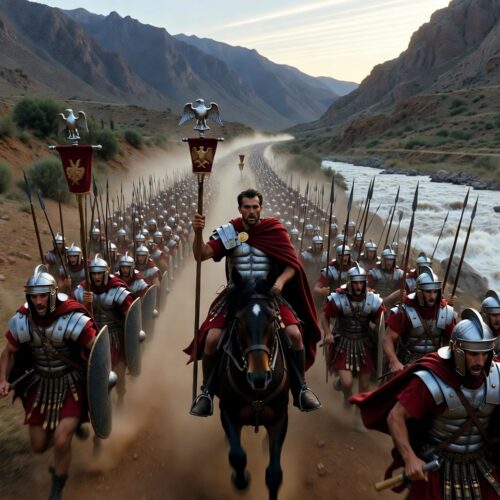 But the Pompeian embers refused to die. In 46 BC, Caesar crushed the last big African holdout at Thapsus. There, the optimates under Metellus Scipio and the die-hard Cato the Younger made their stand. Caesar's troops went berserk, ignoring orders and slaughtering surrendered enemies. Cato, the ultimate Republican purist, committed suicide rather than live under Caesar's thumb—stabbing himself dramatically after reading Plato's Phaedo one last time. (Talk about going out like a philosopher-king.) Thapsus should have ended it. But no. The surviving Pompeians—Gnaeus and Sextus Pompeius, plus Labienus—slipped away to Hispania (Spain), the last untamed province where old Pompeian veterans and local recruits could rally.
Enter the Spanish campaign, the grueling prelude to Munda. By late 46 BC, two of Caesar's own legions in Hispania Ulterior had mutinied and declared for the Pompey boys. These weren't fresh recruits; many were battle-hardened survivors who'd switched sides multiple times, pardoned by Caesar only to bolt again because they feared he'd eventually purge them. Gnaeus Pompeius (the elder son, hot-tempered and ambitious) and Sextus (the smarter, sneakier one) linked up with Publius Attius Varus and—most painfully for Caesar—Titus Labienus. Labienus had been Caesar's right-hand man in Gaul, a brilliant cavalry commander who'd helped win everything from the Helvetii campaign to Alesia. But politics and ego fractured them; Labienus threw in with the optimates, becoming the strategic brain of the Spanish resistance.
The Pompeians quickly seized Corduba (modern Córdoba), the provincial capital, and most of the region. They raised thirteen legions—over 70,000 men including 6,000 cavalry and light troops—by squeezing locals and promising revenge. Caesar's lieutenants Quintus Fabius Maximus and Quintus Pedius hunkered down at Obulco, refusing open battle while begging for reinforcements. Caesar, back in Rome dealing with Senate drama and reforms, got the news and did what Caesar does best: he moved like lightning.
From Rome to Obulco was roughly 1,500 miles through mountains, rivers, and hostile territory. Caesar covered it in under a month—some accounts say 24 days—writing a cheeky little poem called *Iter* (The Journey) along the way to pass the time. He brought his elite veterans: the legendary Tenth Legion (Equestris, his personal favorites who'd marched with him since Gaul), the Fifth Alaudae (the "Larks," recruited from Transalpine Gaul), the Sixth Ferrata ("Ironclad"), and others, plus fresh levies and Mauretanian allies under King Bogud. His great-nephew Octavian (future Augustus) was supposed to join but got sick and arrived late. Caesar showed up in early December 46 BC (Julian calendar) and immediately turned the tables.
But the Pompeian embers refused to die. In 46 BC, Caesar crushed the last big African holdout at Thapsus. There, the optimates under Metellus Scipio and the die-hard Cato the Younger made their stand. Caesar's troops went berserk, ignoring orders and slaughtering surrendered enemies. Cato, the ultimate Republican purist, committed suicide rather than live under Caesar's thumb—stabbing himself dramatically after reading Plato's Phaedo one last time. (Talk about going out like a philosopher-king.) Thapsus should have ended it. But no. The surviving Pompeians—Gnaeus and Sextus Pompeius, plus Labienus—slipped away to Hispania (Spain), the last untamed province where old Pompeian veterans and local recruits could rally.
Enter the Spanish campaign, the grueling prelude to Munda. By late 46 BC, two of Caesar's own legions in Hispania Ulterior had mutinied and declared for the Pompey boys. These weren't fresh recruits; many were battle-hardened survivors who'd switched sides multiple times, pardoned by Caesar only to bolt again because they feared he'd eventually purge them. Gnaeus Pompeius (the elder son, hot-tempered and ambitious) and Sextus (the smarter, sneakier one) linked up with Publius Attius Varus and—most painfully for Caesar—Titus Labienus. Labienus had been Caesar's right-hand man in Gaul, a brilliant cavalry commander who'd helped win everything from the Helvetii campaign to Alesia. But politics and ego fractured them; Labienus threw in with the optimates, becoming the strategic brain of the Spanish resistance.
The Pompeians quickly seized Corduba (modern Córdoba), the provincial capital, and most of the region. They raised thirteen legions—over 70,000 men including 6,000 cavalry and light troops—by squeezing locals and promising revenge. Caesar's lieutenants Quintus Fabius Maximus and Quintus Pedius hunkered down at Obulco, refusing open battle while begging for reinforcements. Caesar, back in Rome dealing with Senate drama and reforms, got the news and did what Caesar does best: he moved like lightning.
From Rome to Obulco was roughly 1,500 miles through mountains, rivers, and hostile territory. Caesar covered it in under a month—some accounts say 24 days—writing a cheeky little poem called *Iter* (The Journey) along the way to pass the time. He brought his elite veterans: the legendary Tenth Legion (Equestris, his personal favorites who'd marched with him since Gaul), the Fifth Alaudae (the "Larks," recruited from Transalpine Gaul), the Sixth Ferrata ("Ironclad"), and others, plus fresh levies and Mauretanian allies under King Bogud. His great-nephew Octavian (future Augustus) was supposed to join but got sick and arrived late. Caesar showed up in early December 46 BC (Julian calendar) and immediately turned the tables.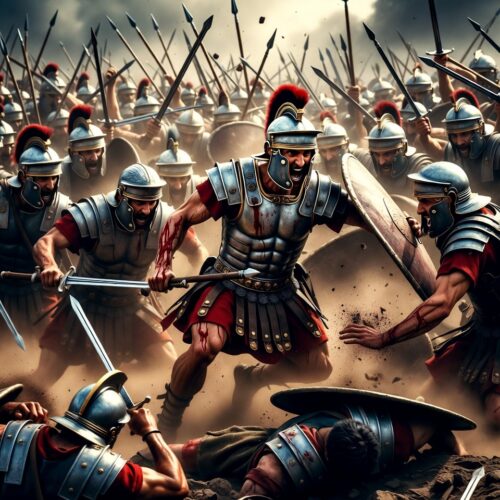 The Spanish campaign wasn't one big fight; it was a chess match of sieges, river crossings, and supply-line knife fights that wore everyone down. The Pompeians were besieging the loyal town of Ulia. Caesar feinted toward Corduba, then slipped past at night in a storm, crossed the Baetis River (Guadalquivir), and besieged Ategua instead—a fortified Pompeian stronghold. The defenders inside Ategua turned savage: when some troops tried to surrender, the Pompeian garrison executed the would-be traitors and even killed civilians suspected of disloyalty. Internal bloodletting weakened them. Ategua fell after weeks of brutal assaults and starvation. Caesar's troops, furious at the Pompeians' cruelty, showed no mercy in return.
From there, the armies danced around southern Spain: skirmishes at Salsum River, maneuvers near Soricaria. Gnaeus Pompeius, heeding Labienus's advice at first, avoided pitched battle, trying to starve Caesar or lure him into traps. But Caesar's veterans—grumbling about endless marching but loyal to the man who'd shared their hardships—forced the issue. By mid-March 45 BC, the Pompeians couldn't dodge anymore. They dug in on a low hill less than a mile from Munda's walls, daring Caesar to come get them. Thirteen legions on high ground, cavalry on the flanks, light troops screening. It looked impregnable.
Dawn on March 17 broke with Caesar's army arrayed on the plain below. He tried the classic lure—advancing then halting to tempt the Pompeians downhill where his veterans could exploit flat ground. No dice. The Pompeians stayed put, smirking. Caesar gave the order: frontal assault anyway. Watchword? "Venus"—invoking his claimed ancestor, the goddess of love and victory. (Because nothing says "I'm divinely destined" like naming your battle cry after your fake family tree.)
The fighting erupted in a grinding, eight-hour meat grinder. Legions formed in triple lines: front ranks hurling pila (heavy javelins) to disorder shields, then closing with gladius short swords for brutal stabbing over shield rims. Shields locked in the famous testudo formation against missiles. The slope favored the defenders—Pompeians could rain blows downward while Caesar's men slogged uphill, slipping in blood and mud. Hours dragged with no breakthrough. Both commanders left their command posts and waded into the fray like common grunts. Caesar rode straight to his right wing, where the beloved Tenth Legion was getting hammered. He grabbed a shield from a wounded soldier, pushed to the front, and rallied them personally. Legend says he shamed the troops: "Are you going to let these two boys (the Pompey sons) defeat me after all we've done?" His presence electrified the veterans. They pushed back yard by bloody yard.
Meanwhile, on the Pompeian side, Gnaeus Pompeius panicked under pressure on his left and pulled a legion from his right wing to reinforce—weakening that flank fatally. Caesar spotted the gap. He signaled King Bogud's Mauretanian cavalry for the decisive strike. Those horsemen thundered into the exposed Pompeian right, slicing through and threatening the rear. Labienus, ever the cavalry expert, rushed troops to counter the flank attack. But in the chaos of dust, screams, and clashing steel, the Pompeian infantry misinterpreted Labienus's move as a full retreat. Panic rippled like wildfire. Standards wavered. Lines crumbled. The whole Pompeian host broke and ran for Munda's walls in total rout.
Caesar's men pursued without mercy. Bodies piled so thick the ground became slippery with gore. Thirteen legion eagles and standards fell into Caesarian hands—symbol of utter annihilation. Labienus died on the field, cut down by his former comrades. Publius Attius Varus perished too. Gnaeus Pompeius escaped wounded but was hunted down days later near Lauro, beheaded, and his head paraded. Sextus slipped away to fight another day (and another war later), but the organized resistance was finished. Caesar claimed 1,000 of his own dead (probably understated) and 30,000 Pompeians slain. He left Fabius Maximus to finish the sieges of Munda and Corduba. Corduba surrendered after more internal executions—armed slaves mostly slaughtered—and paid a crushing indemnity. Munda held out briefly before caving with 14,000 prisoners.
The Spanish campaign wasn't one big fight; it was a chess match of sieges, river crossings, and supply-line knife fights that wore everyone down. The Pompeians were besieging the loyal town of Ulia. Caesar feinted toward Corduba, then slipped past at night in a storm, crossed the Baetis River (Guadalquivir), and besieged Ategua instead—a fortified Pompeian stronghold. The defenders inside Ategua turned savage: when some troops tried to surrender, the Pompeian garrison executed the would-be traitors and even killed civilians suspected of disloyalty. Internal bloodletting weakened them. Ategua fell after weeks of brutal assaults and starvation. Caesar's troops, furious at the Pompeians' cruelty, showed no mercy in return.
From there, the armies danced around southern Spain: skirmishes at Salsum River, maneuvers near Soricaria. Gnaeus Pompeius, heeding Labienus's advice at first, avoided pitched battle, trying to starve Caesar or lure him into traps. But Caesar's veterans—grumbling about endless marching but loyal to the man who'd shared their hardships—forced the issue. By mid-March 45 BC, the Pompeians couldn't dodge anymore. They dug in on a low hill less than a mile from Munda's walls, daring Caesar to come get them. Thirteen legions on high ground, cavalry on the flanks, light troops screening. It looked impregnable.
Dawn on March 17 broke with Caesar's army arrayed on the plain below. He tried the classic lure—advancing then halting to tempt the Pompeians downhill where his veterans could exploit flat ground. No dice. The Pompeians stayed put, smirking. Caesar gave the order: frontal assault anyway. Watchword? "Venus"—invoking his claimed ancestor, the goddess of love and victory. (Because nothing says "I'm divinely destined" like naming your battle cry after your fake family tree.)
The fighting erupted in a grinding, eight-hour meat grinder. Legions formed in triple lines: front ranks hurling pila (heavy javelins) to disorder shields, then closing with gladius short swords for brutal stabbing over shield rims. Shields locked in the famous testudo formation against missiles. The slope favored the defenders—Pompeians could rain blows downward while Caesar's men slogged uphill, slipping in blood and mud. Hours dragged with no breakthrough. Both commanders left their command posts and waded into the fray like common grunts. Caesar rode straight to his right wing, where the beloved Tenth Legion was getting hammered. He grabbed a shield from a wounded soldier, pushed to the front, and rallied them personally. Legend says he shamed the troops: "Are you going to let these two boys (the Pompey sons) defeat me after all we've done?" His presence electrified the veterans. They pushed back yard by bloody yard.
Meanwhile, on the Pompeian side, Gnaeus Pompeius panicked under pressure on his left and pulled a legion from his right wing to reinforce—weakening that flank fatally. Caesar spotted the gap. He signaled King Bogud's Mauretanian cavalry for the decisive strike. Those horsemen thundered into the exposed Pompeian right, slicing through and threatening the rear. Labienus, ever the cavalry expert, rushed troops to counter the flank attack. But in the chaos of dust, screams, and clashing steel, the Pompeian infantry misinterpreted Labienus's move as a full retreat. Panic rippled like wildfire. Standards wavered. Lines crumbled. The whole Pompeian host broke and ran for Munda's walls in total rout.
Caesar's men pursued without mercy. Bodies piled so thick the ground became slippery with gore. Thirteen legion eagles and standards fell into Caesarian hands—symbol of utter annihilation. Labienus died on the field, cut down by his former comrades. Publius Attius Varus perished too. Gnaeus Pompeius escaped wounded but was hunted down days later near Lauro, beheaded, and his head paraded. Sextus slipped away to fight another day (and another war later), but the organized resistance was finished. Caesar claimed 1,000 of his own dead (probably understated) and 30,000 Pompeians slain. He left Fabius Maximus to finish the sieges of Munda and Corduba. Corduba surrendered after more internal executions—armed slaves mostly slaughtered—and paid a crushing indemnity. Munda held out briefly before caving with 14,000 prisoners.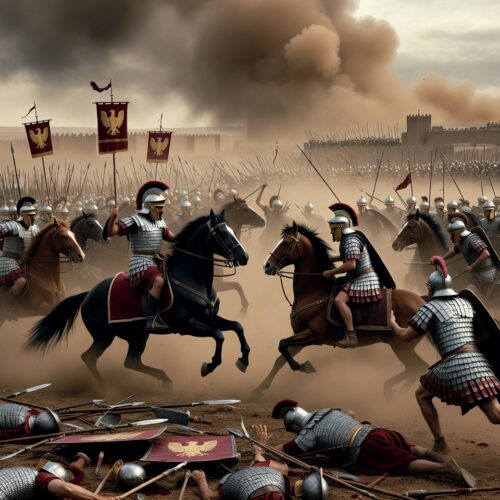 The victory was total, but the taste was bitter. This wasn't conquering barbarians; it was Romans killing Romans. Back in Rome, Caesar celebrated not one but four triumphs—over Gaul, Egypt, Asia, and Africa. The Spanish one was awkward; the Senate and people muttered that parading Pompey's sons' defeat felt like gloating over civil blood. Caesar reformed the calendar (introducing the Julian system we still roughly use), passed land laws for veterans, expanded citizenship, and centralized power. In February 44 BC he was named dictator perpetuo—dictator for life. Reforms poured out: debt relief, building projects, even plans for a new forum. But the old Republican guard seethed. Senators whispered of kingship and tyranny. Barely a year later, on the Ides of March 44 BC, Brutus, Cassius, and the conspirators struck—literally stabbing the man who'd pardoned many of them. The Republic died anyway, birthing the Empire under Octavian/Augustus. Munda's win didn't just end a war; it accelerated the Republic's funeral.
Roman soldiers at Munda weren't faceless extras. These were hardened professionals: citizen-farmers turned pros, paid in land and loot, drilled to perfection. Each legion had about 5,000 men in cohorts of 480, centuries of 80. They carried the pilum (javelin that bent on impact to disable shields), gladius (deadly 20-inch stabbing blade), and scutum (curved plywood-and-leather shield). Armor: chain mail or segmented plate for officers, helmets with cheek guards. They sang marching songs, griped about pay and booty, and followed charismatic leaders like Caesar who ate the same rations and shared tents. The Pompeians' desperation added fury—they'd been pardoned once and knew Caesar might not be merciful forever. Labienus's betrayal stung personally; Caesar reportedly granted burial to his old comrade's body anyway, showing that famous clemency even in victory. Politics? The populares (Caesar's people-power faction) versus optimates (Senate traditionalists) boiled down to class warfare dressed in togas: land reform, debt, citizenship for provincials. Caesar's genius was blending military brilliance with political savvy—he wrote his own Commentaries on the Gallic Wars as propaganda masterpieces, full of third-person flair that made him look modest while bragging.
The battle's location is still debated—near modern La Lantejuela or Osuna in Andalusia, backed by slingshot bullets and inscriptions. Ancient writers like Appian and Plutarch paint it vividly: Caesar fighting "for his life," the cavalry deciding everything. No grand strategy at the end—just raw guts meeting opportunity. Pompey's sons thought high ground and numbers would save them. Labienus's tactical adjustment backfired spectacularly. Caesar's willingness to charge uphill, rally personally, and exploit the tiniest enemy slip turned potential disaster into legacy-sealing triumph.
Now, fast-forward 2,071 years. That single day's outcome—total victory snatched from the jaws of exhaustion by one man's bold personal leadership, relentless pressure after years of attrition, and a perfectly timed flanking surprise—offers something far more useful than dusty dates. It proves that even after endless grinding campaigns (your career dead-ends, health plateaus, relationship ruts, or that "one more year" procrastination loop), one decisive, all-in charge can end the war and rewrite your map. Caesar didn't win by waiting for perfect conditions or outmaneuvering forever. He charged the hill, led from the absolute front, and pounced when the enemy blinked. You can do the exact same in your individual life—without needing legions or Spain.
The victory was total, but the taste was bitter. This wasn't conquering barbarians; it was Romans killing Romans. Back in Rome, Caesar celebrated not one but four triumphs—over Gaul, Egypt, Asia, and Africa. The Spanish one was awkward; the Senate and people muttered that parading Pompey's sons' defeat felt like gloating over civil blood. Caesar reformed the calendar (introducing the Julian system we still roughly use), passed land laws for veterans, expanded citizenship, and centralized power. In February 44 BC he was named dictator perpetuo—dictator for life. Reforms poured out: debt relief, building projects, even plans for a new forum. But the old Republican guard seethed. Senators whispered of kingship and tyranny. Barely a year later, on the Ides of March 44 BC, Brutus, Cassius, and the conspirators struck—literally stabbing the man who'd pardoned many of them. The Republic died anyway, birthing the Empire under Octavian/Augustus. Munda's win didn't just end a war; it accelerated the Republic's funeral.
Roman soldiers at Munda weren't faceless extras. These were hardened professionals: citizen-farmers turned pros, paid in land and loot, drilled to perfection. Each legion had about 5,000 men in cohorts of 480, centuries of 80. They carried the pilum (javelin that bent on impact to disable shields), gladius (deadly 20-inch stabbing blade), and scutum (curved plywood-and-leather shield). Armor: chain mail or segmented plate for officers, helmets with cheek guards. They sang marching songs, griped about pay and booty, and followed charismatic leaders like Caesar who ate the same rations and shared tents. The Pompeians' desperation added fury—they'd been pardoned once and knew Caesar might not be merciful forever. Labienus's betrayal stung personally; Caesar reportedly granted burial to his old comrade's body anyway, showing that famous clemency even in victory. Politics? The populares (Caesar's people-power faction) versus optimates (Senate traditionalists) boiled down to class warfare dressed in togas: land reform, debt, citizenship for provincials. Caesar's genius was blending military brilliance with political savvy—he wrote his own Commentaries on the Gallic Wars as propaganda masterpieces, full of third-person flair that made him look modest while bragging.
The battle's location is still debated—near modern La Lantejuela or Osuna in Andalusia, backed by slingshot bullets and inscriptions. Ancient writers like Appian and Plutarch paint it vividly: Caesar fighting "for his life," the cavalry deciding everything. No grand strategy at the end—just raw guts meeting opportunity. Pompey's sons thought high ground and numbers would save them. Labienus's tactical adjustment backfired spectacularly. Caesar's willingness to charge uphill, rally personally, and exploit the tiniest enemy slip turned potential disaster into legacy-sealing triumph.
Now, fast-forward 2,071 years. That single day's outcome—total victory snatched from the jaws of exhaustion by one man's bold personal leadership, relentless pressure after years of attrition, and a perfectly timed flanking surprise—offers something far more useful than dusty dates. It proves that even after endless grinding campaigns (your career dead-ends, health plateaus, relationship ruts, or that "one more year" procrastination loop), one decisive, all-in charge can end the war and rewrite your map. Caesar didn't win by waiting for perfect conditions or outmaneuvering forever. He charged the hill, led from the absolute front, and pounced when the enemy blinked. You can do the exact same in your individual life—without needing legions or Spain.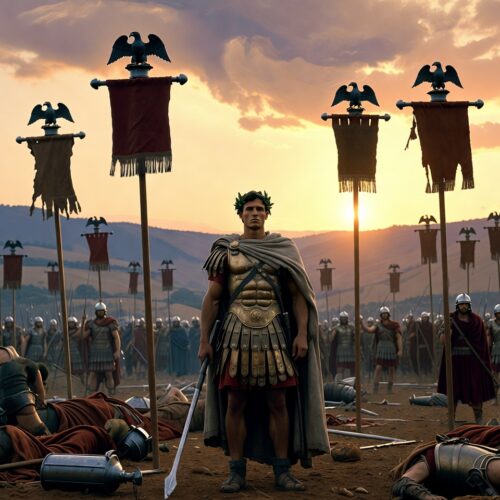 Here's how the Munda outcome delivers real, tangible benefits when you apply it personally:
- **Rapid-deployment decisiveness crushes paralysis**: Caesar covered impossible distances in record time because hesitation wasn't an option. In your life, this means when a "Pompeian" problem (that stalled promotion, ignored health goal, or toxic habit) finally forces confrontation, you move immediately—no more "I'll start Monday" delays. Result: momentum you can't buy, turning months of stagnation into weeks of progress.
- **Personal frontline leadership builds unbreakable loyalty**: Caesar didn't bark orders from safety; he grabbed a shield and waded in with the Tenth Legion. Translate that to your world: stop delegating your hardest tasks (the tough conversation, the workout, the side-hustle grind) and dive in yourself first. Your "legions" (family, team, inner circle) will rally harder because they see you bleeding alongside them.
- **Exploiting enemy missteps turns defense into rout**: The Pompeians' panicked misread of Labienus's move won the day. In daily life, this teaches spotting the tiny openings—your boss's offhand comment signaling promotion potential, a friend's availability for accountability, or a market shift—and hitting them with everything you've got instead of overthinking.
- **Committing to the "fight for your life" mindset ends half-measures**: Caesar admitted this wasn't about glory anymore; it was survival. Apply it when your back's against the wall (debt mountain, burnout cliff, dream fading)—go all-in with zero escape hatches. The desperation fuels superhuman effort that polite "balanced" approaches never deliver.
- **Clemency after victory prevents future wars**: Caesar buried even his traitor Labienus. In personal terms, after conquering a challenge (quitting a bad job, repairing a relationship), extend grace to your old "enemy" self or others involved. No gloating or grudges; it frees energy for the next campaign instead of endless revenge cycles.
- **High-ground rejection builds character muscle**: Pompeians clung to their hill advantage and lost. You stop waiting for ideal conditions (perfect timing, more money, "when kids are older") and attack from wherever you stand. The uphill struggle itself forges the resilience that flat-ground wins never could.
- **Watchword clarity focuses chaotic energy**: Shouting "Venus" reminded everyone of their why. Pin your own core value or "ancestor" motivation (family legacy, personal freedom) and invoke it daily amid the slog. Chaos becomes directed fury.
- **Accepting controversial triumph ownership**: Caesar paraded a win over fellow Romans anyway. Own your victories even if they're messy or "politically incorrect" in your circle—no apologizing for outgrowing old patterns. It cements the new empire of your life.
These aren't vague inspirations. They're direct downloads from Munda's blood-soaked soil, proven in the ultimate high-stakes arena.
Now, here's the part no other self-help guru online dares copy because it feels too raw, too historical, too *you* pretending to be a Roman conqueror in sweatpants: the **Munda Charge Protocol**. This is a dead-simple, five-day blitz you run whenever a personal "civil war" drags on too long—whether it's launching that business, overhauling your fitness, or finally confronting that family Pompey who's holding you back. It's not a 30-day challenge, not a journal full of gratitude fluff, not affirmations in the mirror. It's a tactical campaign simulation: you treat your life like Caesar's Spanish theater, log it like his Commentaries, and end with captured "standards" (tangible proof). Do it once and it becomes your repeatable weapon. Takes 15-30 minutes daily. No apps, no groups, just you, a notebook, and Roman grit.
**Day 1: Cast the Die (Irreversible Commitment)**
Like Caesar at the Rubicon, pick one hill (your Munda) and cross your personal river with zero retreat option. Write a single-sentence "Alea iacta est" declaration in your notebook: "I am charging [specific goal, e.g., 'run my first 5K without walking'] starting now—no more scouting." Burn or delete all your old "maybe later" excuses list. Recruit your first "cohort"—tell one trusted person the exact deadline. Caesar's speed came from commitment; yours will too. End the day with a 10-minute walk visualizing the hill.
**Day 2: Assemble Veteran Legions (Core Support Network)**
Caesar brought his battle-tested Tenth. Identify your three "veteran" allies or habits (a workout buddy, a skill you've mastered before, even your past small wins). Contact them today with a specific ask: "Hold me to X by Friday." Write a one-paragraph "Commentaries" entry describing why these are your elite troops. No vague "support group"—this is targeted recruitment. Funny twist: nickname them after real legions ("My Tenth is my morning run streak").
**Day 3: Personal Vanguard Charge (Lead from the Front)**
Channel Caesar grabbing the shield. Tackle the single hardest micro-task of your hill *yourself first*—no delegation. If it's writing the business plan, write the opener. If it's the workout, do the first set without music or excuses. Log it in brutal honesty: "Fought for my life today on the right wing—slipped once but pushed." Rate the slog on a 1-10 "blood and mud" scale. This builds the muscle that turns followers into fanatics.
**Day 4: Flank Maneuver (Exploit the Blink)**
Pompey weakened his right; Bogud pounced. Today, scan for one unexpected opening (a forgotten contact, a free resource, a habit loophole) and hit it hard. Use creativity Caesar-style—no brute force. Example: instead of cold-calling for clients, message one old colleague with a "Venus" value reminder. Log the misstep you spotted and how you turned it. Celebrate small routs with a literal "standard captured" sticker in your notebook.
**Day 5: Claim the Triumph and Clemency Close (Own It, Then Release)**
Like Caesar after the slaughter, review your week: tally "dead Pompeians" (habits slain) and "standards taken" (wins logged). Write your full "Commentaries" summary—one page max, third-person for fun ("The general charged the hill and..."). Then extend clemency: forgive your old self or one person involved in the struggle. Parade your triumph internally—no humblebrag on social media unless it serves the next campaign. Schedule the next Munda run for your new hill. You've just ended a war.
Run this protocol every time life feels like endless Spanish sieges. It's unique because it weaponizes actual Roman tactics as metaphors—no one else is making you write fake military dispatches or nickname your habits after legions. It's quick (five focused days resets momentum), detailed (every step has a historical anchor), and anti-generic (rejects passive reflection for active simulation). Caesar didn't journal his feelings at Munda; he charged, adapted, won, and moved on. You won't either.
The Republic fell after Munda, sure—but Caesar's personal empire of influence lasted because he refused to let the war drag forever. Your life can do the same. Pick your hill today. Charge it like it's March 17, 45 BC. Shout your own "Venus" watchword. Grab the shield. The Pompeians of procrastination, doubt, and delay don't stand a chance. You've got the Tenth Legion inside you already. Now go make them proud—and capture those standards.
Here's how the Munda outcome delivers real, tangible benefits when you apply it personally:
- **Rapid-deployment decisiveness crushes paralysis**: Caesar covered impossible distances in record time because hesitation wasn't an option. In your life, this means when a "Pompeian" problem (that stalled promotion, ignored health goal, or toxic habit) finally forces confrontation, you move immediately—no more "I'll start Monday" delays. Result: momentum you can't buy, turning months of stagnation into weeks of progress.
- **Personal frontline leadership builds unbreakable loyalty**: Caesar didn't bark orders from safety; he grabbed a shield and waded in with the Tenth Legion. Translate that to your world: stop delegating your hardest tasks (the tough conversation, the workout, the side-hustle grind) and dive in yourself first. Your "legions" (family, team, inner circle) will rally harder because they see you bleeding alongside them.
- **Exploiting enemy missteps turns defense into rout**: The Pompeians' panicked misread of Labienus's move won the day. In daily life, this teaches spotting the tiny openings—your boss's offhand comment signaling promotion potential, a friend's availability for accountability, or a market shift—and hitting them with everything you've got instead of overthinking.
- **Committing to the "fight for your life" mindset ends half-measures**: Caesar admitted this wasn't about glory anymore; it was survival. Apply it when your back's against the wall (debt mountain, burnout cliff, dream fading)—go all-in with zero escape hatches. The desperation fuels superhuman effort that polite "balanced" approaches never deliver.
- **Clemency after victory prevents future wars**: Caesar buried even his traitor Labienus. In personal terms, after conquering a challenge (quitting a bad job, repairing a relationship), extend grace to your old "enemy" self or others involved. No gloating or grudges; it frees energy for the next campaign instead of endless revenge cycles.
- **High-ground rejection builds character muscle**: Pompeians clung to their hill advantage and lost. You stop waiting for ideal conditions (perfect timing, more money, "when kids are older") and attack from wherever you stand. The uphill struggle itself forges the resilience that flat-ground wins never could.
- **Watchword clarity focuses chaotic energy**: Shouting "Venus" reminded everyone of their why. Pin your own core value or "ancestor" motivation (family legacy, personal freedom) and invoke it daily amid the slog. Chaos becomes directed fury.
- **Accepting controversial triumph ownership**: Caesar paraded a win over fellow Romans anyway. Own your victories even if they're messy or "politically incorrect" in your circle—no apologizing for outgrowing old patterns. It cements the new empire of your life.
These aren't vague inspirations. They're direct downloads from Munda's blood-soaked soil, proven in the ultimate high-stakes arena.
Now, here's the part no other self-help guru online dares copy because it feels too raw, too historical, too *you* pretending to be a Roman conqueror in sweatpants: the **Munda Charge Protocol**. This is a dead-simple, five-day blitz you run whenever a personal "civil war" drags on too long—whether it's launching that business, overhauling your fitness, or finally confronting that family Pompey who's holding you back. It's not a 30-day challenge, not a journal full of gratitude fluff, not affirmations in the mirror. It's a tactical campaign simulation: you treat your life like Caesar's Spanish theater, log it like his Commentaries, and end with captured "standards" (tangible proof). Do it once and it becomes your repeatable weapon. Takes 15-30 minutes daily. No apps, no groups, just you, a notebook, and Roman grit.
**Day 1: Cast the Die (Irreversible Commitment)**
Like Caesar at the Rubicon, pick one hill (your Munda) and cross your personal river with zero retreat option. Write a single-sentence "Alea iacta est" declaration in your notebook: "I am charging [specific goal, e.g., 'run my first 5K without walking'] starting now—no more scouting." Burn or delete all your old "maybe later" excuses list. Recruit your first "cohort"—tell one trusted person the exact deadline. Caesar's speed came from commitment; yours will too. End the day with a 10-minute walk visualizing the hill.
**Day 2: Assemble Veteran Legions (Core Support Network)**
Caesar brought his battle-tested Tenth. Identify your three "veteran" allies or habits (a workout buddy, a skill you've mastered before, even your past small wins). Contact them today with a specific ask: "Hold me to X by Friday." Write a one-paragraph "Commentaries" entry describing why these are your elite troops. No vague "support group"—this is targeted recruitment. Funny twist: nickname them after real legions ("My Tenth is my morning run streak").
**Day 3: Personal Vanguard Charge (Lead from the Front)**
Channel Caesar grabbing the shield. Tackle the single hardest micro-task of your hill *yourself first*—no delegation. If it's writing the business plan, write the opener. If it's the workout, do the first set without music or excuses. Log it in brutal honesty: "Fought for my life today on the right wing—slipped once but pushed." Rate the slog on a 1-10 "blood and mud" scale. This builds the muscle that turns followers into fanatics.
**Day 4: Flank Maneuver (Exploit the Blink)**
Pompey weakened his right; Bogud pounced. Today, scan for one unexpected opening (a forgotten contact, a free resource, a habit loophole) and hit it hard. Use creativity Caesar-style—no brute force. Example: instead of cold-calling for clients, message one old colleague with a "Venus" value reminder. Log the misstep you spotted and how you turned it. Celebrate small routs with a literal "standard captured" sticker in your notebook.
**Day 5: Claim the Triumph and Clemency Close (Own It, Then Release)**
Like Caesar after the slaughter, review your week: tally "dead Pompeians" (habits slain) and "standards taken" (wins logged). Write your full "Commentaries" summary—one page max, third-person for fun ("The general charged the hill and..."). Then extend clemency: forgive your old self or one person involved in the struggle. Parade your triumph internally—no humblebrag on social media unless it serves the next campaign. Schedule the next Munda run for your new hill. You've just ended a war.
Run this protocol every time life feels like endless Spanish sieges. It's unique because it weaponizes actual Roman tactics as metaphors—no one else is making you write fake military dispatches or nickname your habits after legions. It's quick (five focused days resets momentum), detailed (every step has a historical anchor), and anti-generic (rejects passive reflection for active simulation). Caesar didn't journal his feelings at Munda; he charged, adapted, won, and moved on. You won't either.
The Republic fell after Munda, sure—but Caesar's personal empire of influence lasted because he refused to let the war drag forever. Your life can do the same. Pick your hill today. Charge it like it's March 17, 45 BC. Shout your own "Venus" watchword. Grab the shield. The Pompeians of procrastination, doubt, and delay don't stand a chance. You've got the Tenth Legion inside you already. Now go make them proud—and capture those standards.