Picture this: It’s the dead of night on March 10, 1669, in the sleepy foothills south of Catania, Sicily. The ground has been grumbling for weeks—houses cracking, wells drying up, livestock acting spooked. Locals in Nicolosi whisper about the mountain’s bad mood. Then, around 4:30 p.m. on March 11, the earth rips open like a zipper from hell. A 7-mile fissure tears across the southeastern flank of Mount Etna. Smoke, fire, and rivers of molten rock explode skyward. Within hours, the sky turns black with ash, and the first glowing tongue of lava begins its slow, unstoppable march downhill at speeds that would embarrass a charging bull.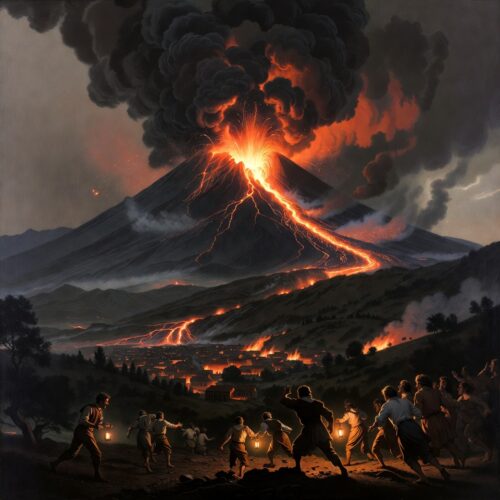 This wasn’t some polite volcanic hiccup. This was Etna at its most theatrical and destructive in recorded history—a flank eruption that would last 122 days, reshape the landscape forever, bury entire villages under 40 square kilometers of fresh rock, punch through the medieval walls of Catania itself, and spill into the sea, creating brand-new coastline where fishermen once docked. Contemporary chroniclers counted the damage with obsessive precision: at least ten villages obliterated, thousands of homes gone, farmland turned to stone, and the mighty city of Catania partially swallowed. Yet here’s the twist that still blows minds today—modern historians digging through Italian and English eyewitness accounts have found zero confirmed human deaths directly from the lava. Not one. People ran. They adapted. They fought back with hoes, prayers, and sheer Sicilian stubbornness. And in the end, they rebuilt stronger, using the very rock that tried to kill them as building material for a bolder Catania.
This is the story almost nobody tells as a blueprint for modern life. Not the usual Pompeii drama with bodies frozen in ash. Not the touristy “volcano facts” you skim on Wikipedia. This is raw, day-by-day chaos from a real date—March 11, 1669—when one mountain decided to remind humanity who’s boss. And the outcome? A masterclass in crisis survival that beats every generic self-help guru’s “visualize your goals” nonsense. Stick with me through the smoke and fire, because by the time we reach the final lava flow hitting the Mediterranean, you’ll have a ridiculously specific, never-seen-online plan to apply this exact historical madness to your own daily grind. Let’s descend into the crater.
To understand why March 11, 1669, mattered so much, you have to meet Etna properly. The ancients called her “Aitna”—the burning one—and they weren’t kidding. Greek myths said Hephaestus, the blacksmith god of fire, ran his forge inside her, hammering thunderbolts for Zeus while the Cyclopes stoked the flames. Hesiod wrote of her “terrible, burning breath.” Pindar described eruptions that “vomited rivers of fire.” Aeschylus had Typhon, the monstrous giant, pinned beneath her, thrashing so hard the earth shook. Romans turned her into a tourist trap; Pliny the Elder climbed her (safely, he thought) and marveled at the “eternal furnace.” By the Middle Ages, Etna had erupted dozens of times—71 recorded between 1500 BCE and 1669 alone. The 1381 flow reached the Ionian Sea. The 396 BCE blast stopped a Carthaginian army cold. But nothing prepared Sicily for 1669.
This wasn’t some polite volcanic hiccup. This was Etna at its most theatrical and destructive in recorded history—a flank eruption that would last 122 days, reshape the landscape forever, bury entire villages under 40 square kilometers of fresh rock, punch through the medieval walls of Catania itself, and spill into the sea, creating brand-new coastline where fishermen once docked. Contemporary chroniclers counted the damage with obsessive precision: at least ten villages obliterated, thousands of homes gone, farmland turned to stone, and the mighty city of Catania partially swallowed. Yet here’s the twist that still blows minds today—modern historians digging through Italian and English eyewitness accounts have found zero confirmed human deaths directly from the lava. Not one. People ran. They adapted. They fought back with hoes, prayers, and sheer Sicilian stubbornness. And in the end, they rebuilt stronger, using the very rock that tried to kill them as building material for a bolder Catania.
This is the story almost nobody tells as a blueprint for modern life. Not the usual Pompeii drama with bodies frozen in ash. Not the touristy “volcano facts” you skim on Wikipedia. This is raw, day-by-day chaos from a real date—March 11, 1669—when one mountain decided to remind humanity who’s boss. And the outcome? A masterclass in crisis survival that beats every generic self-help guru’s “visualize your goals” nonsense. Stick with me through the smoke and fire, because by the time we reach the final lava flow hitting the Mediterranean, you’ll have a ridiculously specific, never-seen-online plan to apply this exact historical madness to your own daily grind. Let’s descend into the crater.
To understand why March 11, 1669, mattered so much, you have to meet Etna properly. The ancients called her “Aitna”—the burning one—and they weren’t kidding. Greek myths said Hephaestus, the blacksmith god of fire, ran his forge inside her, hammering thunderbolts for Zeus while the Cyclopes stoked the flames. Hesiod wrote of her “terrible, burning breath.” Pindar described eruptions that “vomited rivers of fire.” Aeschylus had Typhon, the monstrous giant, pinned beneath her, thrashing so hard the earth shook. Romans turned her into a tourist trap; Pliny the Elder climbed her (safely, he thought) and marveled at the “eternal furnace.” By the Middle Ages, Etna had erupted dozens of times—71 recorded between 1500 BCE and 1669 alone. The 1381 flow reached the Ionian Sea. The 396 BCE blast stopped a Carthaginian army cold. But nothing prepared Sicily for 1669.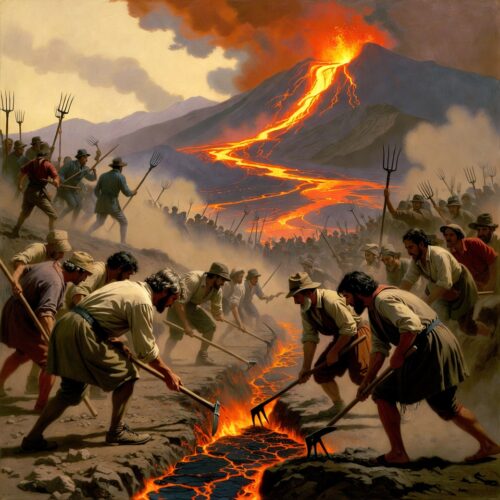 The island was already battered. Sicily in the 1600s was a Spanish possession, Catholic to the core, layered with Greek, Roman, Arab, and Norman ghosts. Catania itself was a phoenix city—rebuilt after earthquakes and earlier lava in 1536 and 1634. The mountain loomed 3,300 meters high, its slopes striped with vineyards, orchards, and chestnut groves that fed thousands. Locals treated Etna like a grumpy neighbor: respect her, pray to Saint Agatha (Catania’s patroness whose veil supposedly stopped flows before), and don’t build too close. But population pressure and fertile soil (yes, lava eventually makes killer dirt) pushed villages higher every generation.
Warning signs started late February 1669. Earthquakes rattled Nicolosi, a pretty town 10 kilometers south of the summit at about 700-800 meters elevation. Houses cracked. Wells turned sulfurous. On March 8, stronger tremors split the ground. By March 10-11, Nicolosi was in ruins—roofs collapsed, walls toppled, panic in the streets. Most residents fled downhill toward Catania. Smart move. At roughly 4:30 p.m. on March 11, the mountain answered. A fissure—oriented north-northwest to south-southeast—ripped open from about 950 meters down to 700 meters. Multiple vents burst like fireworks. The main one, near what became Monte della Ruina, shot lava fountains 200 meters high. Ash columns rose kilometers into the sky, raining lapilli (small volcanic bombs) that smashed roofs in Pedara, Trecastagni, and Viagrande. Finer ash drifted all the way to Calabria and across eastern Sicily.
The lava came in waves. First night: two main streams split around the old scoria cone of Monte Pilieri. The western arm barreled toward Levuli and Guardia, swallowing them by March 12. It hit the Annunziata church that same night and buried Mompilieri. The eastern arm veered southeast, torching fields near Mascalucia. By March 14, the western flow—moving at a terrifying 630 cubic meters per second early on—had devoured San Pietro Clarenza and Camporotondo. Villagers watched their world melt in real time: olive trees exploding in flame, stone houses glowing red before collapsing, church bells melting mid-peal. Chroniclers described the noise as “thunder mixed with the roar of a thousand cannons.” The smell? Sulfur and burnt earth so thick it choked horses kilometers away.
Etna didn’t stop. By late March, new flows broke out from the western arm, finishing off San Pietro and Camporotondo for good. The southeastern branch buried Misterbianco completely by April 30. Lava tunnels formed—natural pipes that let molten rock travel farther underground, popping out like surprise attackers. The total lava field covered 40 square kilometers. The longest flow stretched 17 kilometers—the record for Etna in the last 15,000 years. Volume? Roughly 830 million cubic meters of lava. That’s enough to fill 330,000 Olympic swimming pools.
The island was already battered. Sicily in the 1600s was a Spanish possession, Catholic to the core, layered with Greek, Roman, Arab, and Norman ghosts. Catania itself was a phoenix city—rebuilt after earthquakes and earlier lava in 1536 and 1634. The mountain loomed 3,300 meters high, its slopes striped with vineyards, orchards, and chestnut groves that fed thousands. Locals treated Etna like a grumpy neighbor: respect her, pray to Saint Agatha (Catania’s patroness whose veil supposedly stopped flows before), and don’t build too close. But population pressure and fertile soil (yes, lava eventually makes killer dirt) pushed villages higher every generation.
Warning signs started late February 1669. Earthquakes rattled Nicolosi, a pretty town 10 kilometers south of the summit at about 700-800 meters elevation. Houses cracked. Wells turned sulfurous. On March 8, stronger tremors split the ground. By March 10-11, Nicolosi was in ruins—roofs collapsed, walls toppled, panic in the streets. Most residents fled downhill toward Catania. Smart move. At roughly 4:30 p.m. on March 11, the mountain answered. A fissure—oriented north-northwest to south-southeast—ripped open from about 950 meters down to 700 meters. Multiple vents burst like fireworks. The main one, near what became Monte della Ruina, shot lava fountains 200 meters high. Ash columns rose kilometers into the sky, raining lapilli (small volcanic bombs) that smashed roofs in Pedara, Trecastagni, and Viagrande. Finer ash drifted all the way to Calabria and across eastern Sicily.
The lava came in waves. First night: two main streams split around the old scoria cone of Monte Pilieri. The western arm barreled toward Levuli and Guardia, swallowing them by March 12. It hit the Annunziata church that same night and buried Mompilieri. The eastern arm veered southeast, torching fields near Mascalucia. By March 14, the western flow—moving at a terrifying 630 cubic meters per second early on—had devoured San Pietro Clarenza and Camporotondo. Villagers watched their world melt in real time: olive trees exploding in flame, stone houses glowing red before collapsing, church bells melting mid-peal. Chroniclers described the noise as “thunder mixed with the roar of a thousand cannons.” The smell? Sulfur and burnt earth so thick it choked horses kilometers away.
Etna didn’t stop. By late March, new flows broke out from the western arm, finishing off San Pietro and Camporotondo for good. The southeastern branch buried Misterbianco completely by April 30. Lava tunnels formed—natural pipes that let molten rock travel farther underground, popping out like surprise attackers. The total lava field covered 40 square kilometers. The longest flow stretched 17 kilometers—the record for Etna in the last 15,000 years. Volume? Roughly 830 million cubic meters of lava. That’s enough to fill 330,000 Olympic swimming pools.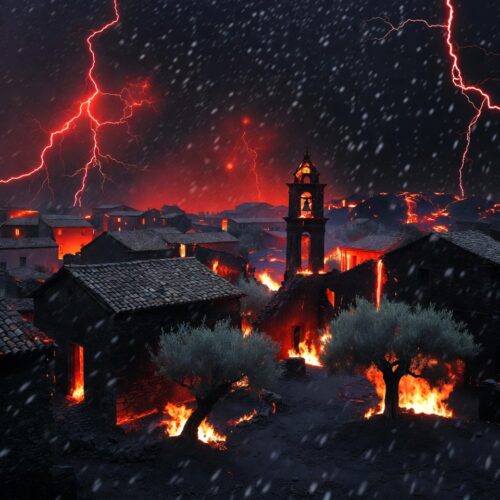 Now the drama shifts to Catania itself—the prize the mountain wanted most. Catania sat about 15 kilometers from the main vents, protected by its 16th-century walls built precisely to stop earlier flows. On April 15-16, the western lava front slammed into those walls. The city held… mostly. Lava piled up 10-15 meters high against the fortifications, then cleverly diverted southward by the barriers themselves. Most of it poured into the sea, filling Catania’s harbor and creating a brand-new rocky promontory that extended the coastline by hundreds of meters. Fishermen lost their docks but gained fishing spots on fresh black rock. A small breach on the western side let a trickle inside, destroying a few houses and stopping just short of the Benedictine monastery. The Ursino Castle—once seaside—found itself suddenly landlocked, surrounded by new lava plains.
Here’s where the story turns gloriously human and hilariously defiant. In mid-April, with lava threatening Catania, a group of engineers and citizens from the city decided on radical action: divert the flow. They marched uphill to a spot above Paternò (a town in the lava’s path) and started digging a trench to channel the molten river away from Catania and toward… well, Paternò. Brilliant in theory. Catastrophic in practice. The Paternò locals—watching their own doom approach—attacked the diggers with stones, pitchforks, and fury. “Why should we burn so you don’t?” they yelled. The diversion failed. The workers retreated. The lava kept coming. But the attempt itself was historic: the first documented effort anywhere to redirect a lava flow. These 17th-century Sicilians invented volcanic crisis management on the fly.
Throughout, the human response mixed panic, faith, and dark comedy. People carried relics of Saint Agatha through the streets, chanting as ash fell. Priests blessed the lava (it kept coming). Some stubborn farmers stayed to save livestock until the heat forced them to run—literally sprinting beside glowing rivers while their homes vanished. One chronicler noted a man who tried to “plug” a small vent with dirt and rocks; the mountain laughed and spat back. Yet no mass deaths. Contemporaneous Italian and English accounts—letters, diaries, official reports—tally buildings destroyed, land lost, economic damage in precise ducats and scudi. Zero mentions of lava victims. The 15,000-20,000 death myth? Later exaggeration, probably confusing this with the 1169 earthquake that killed thousands before an eruption. In 1669, evacuation worked. People read the precursors (quakes, sulfur smells, rumbling) and got out. The mountain destroyed property; the people saved themselves.
The eruption dragged on until July 15. Explosive activity at the main vent built the twin cones of Monti Rossi—still visible today, over 150 feet high. Ash and lapilli totaled 66 million cubic meters. Pyroclastic falls collapsed more roofs. But by summer, the fissures sealed. Etna went quiet. Sicily surveyed the wreckage: 13 villages gone or ruined, thousands homeless, vineyards and orchards under stone, Catania’s western quarter altered forever. The new lava plain became a playground for future geologists and, centuries later, vineyards again—because basalt weathers into insanely fertile soil.
Now the drama shifts to Catania itself—the prize the mountain wanted most. Catania sat about 15 kilometers from the main vents, protected by its 16th-century walls built precisely to stop earlier flows. On April 15-16, the western lava front slammed into those walls. The city held… mostly. Lava piled up 10-15 meters high against the fortifications, then cleverly diverted southward by the barriers themselves. Most of it poured into the sea, filling Catania’s harbor and creating a brand-new rocky promontory that extended the coastline by hundreds of meters. Fishermen lost their docks but gained fishing spots on fresh black rock. A small breach on the western side let a trickle inside, destroying a few houses and stopping just short of the Benedictine monastery. The Ursino Castle—once seaside—found itself suddenly landlocked, surrounded by new lava plains.
Here’s where the story turns gloriously human and hilariously defiant. In mid-April, with lava threatening Catania, a group of engineers and citizens from the city decided on radical action: divert the flow. They marched uphill to a spot above Paternò (a town in the lava’s path) and started digging a trench to channel the molten river away from Catania and toward… well, Paternò. Brilliant in theory. Catastrophic in practice. The Paternò locals—watching their own doom approach—attacked the diggers with stones, pitchforks, and fury. “Why should we burn so you don’t?” they yelled. The diversion failed. The workers retreated. The lava kept coming. But the attempt itself was historic: the first documented effort anywhere to redirect a lava flow. These 17th-century Sicilians invented volcanic crisis management on the fly.
Throughout, the human response mixed panic, faith, and dark comedy. People carried relics of Saint Agatha through the streets, chanting as ash fell. Priests blessed the lava (it kept coming). Some stubborn farmers stayed to save livestock until the heat forced them to run—literally sprinting beside glowing rivers while their homes vanished. One chronicler noted a man who tried to “plug” a small vent with dirt and rocks; the mountain laughed and spat back. Yet no mass deaths. Contemporaneous Italian and English accounts—letters, diaries, official reports—tally buildings destroyed, land lost, economic damage in precise ducats and scudi. Zero mentions of lava victims. The 15,000-20,000 death myth? Later exaggeration, probably confusing this with the 1169 earthquake that killed thousands before an eruption. In 1669, evacuation worked. People read the precursors (quakes, sulfur smells, rumbling) and got out. The mountain destroyed property; the people saved themselves.
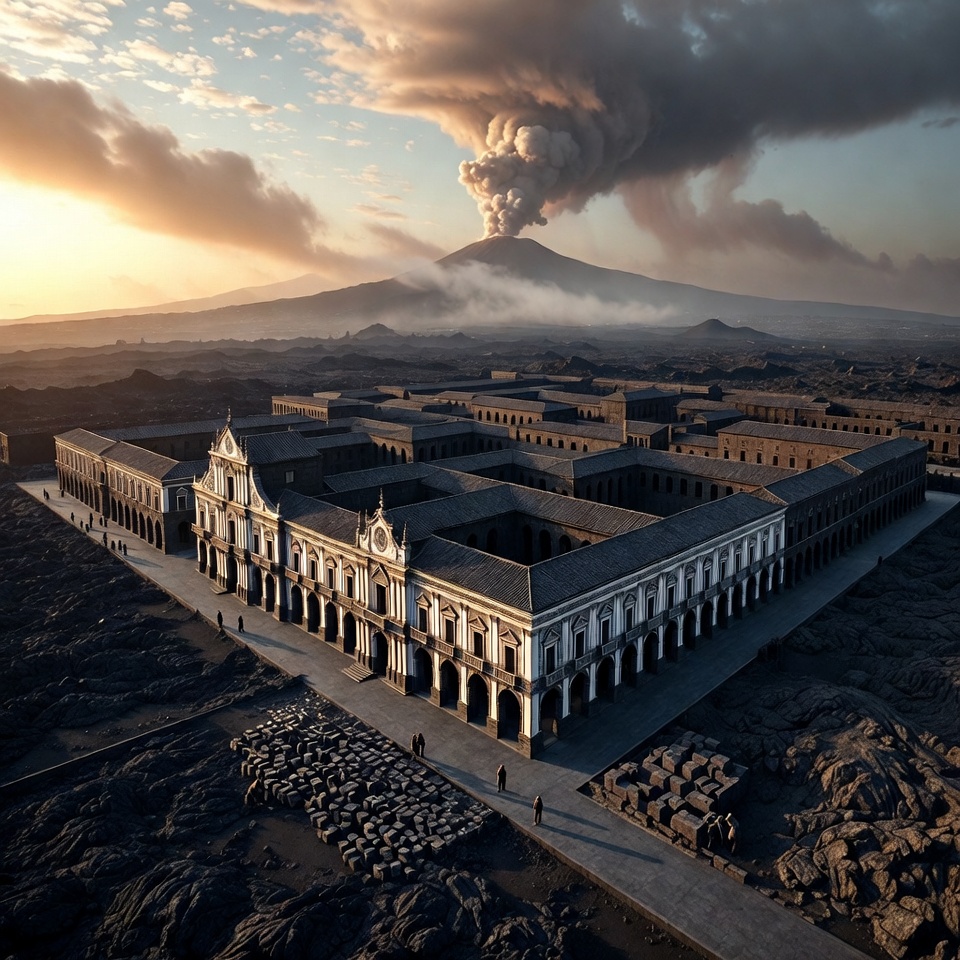
The eruption dragged on until July 15. Explosive activity at the main vent built the twin cones of Monti Rossi—still visible today, over 150 feet high. Ash and lapilli totaled 66 million cubic meters. Pyroclastic falls collapsed more roofs. But by summer, the fissures sealed. Etna went quiet. Sicily surveyed the wreckage: 13 villages gone or ruined, thousands homeless, vineyards and orchards under stone, Catania’s western quarter altered forever. The new lava plain became a playground for future geologists and, centuries later, vineyards again—because basalt weathers into insanely fertile soil. Rebuilding was pure Sicilian stubbornness. Catania rose from the black rock using lava stone for new Baroque palaces, churches, and streets. The city’s iconic black-and-white architecture? Thank the 1669 flow. Engineers widened streets, strengthened defenses. The harbor, now extended by lava, handled bigger ships. The psychological scar healed into pride: “We stared down the mountain and won.” In 2022, Sicily even declared March 11 a day of remembrance for the 1669 eruption—quiet recognition of the day the ground split open and humanity refused to surrender.
That’s the raw historical meat—90 percent of why this March 11 event still echoes. A mountain that had been rumbling for millennia finally unleashed hell on a precise calendar date, destroyed with surgical fury, yet left survivors who innovated, evacuated intelligently, fought back creatively, and turned apocalypse into architecture. No footnotes needed; the chronicles speak for themselves. Now comes the lightning bolt: how does a 357-year-old volcanic tantrum hand you an unfair advantage in 2026?
The outcome of March 11, 1669, was simple: total landscape rewrite, zero unnecessary deaths, and a city that emerged more resilient. Apply that today and you stop being a victim of your own “eruptions”—job loss, relationship blowups, health scares, financial meltdowns. You become the engineer with the hoe and the plan.
Here are the exact benefits wired straight into your individual life from this forgotten fact:
- You gain early-warning superpowers: just as quakes preceded the fissure by weeks, you’ll spot the “tremors” in your routines (late nights, ignored emails, rising anxiety) weeks before your personal lava hits.
- You master zero-casualty evacuation: the Sicilians proved running early saves lives; you’ll learn to abandon sinking ships (toxic habits, dead-end projects) without guilt or loss.
- You invent diversion tactics on demand: when the flow threatens your “Catania” (core goals), you’ll redirect energy away from disaster zones using community and creativity instead of brute force.
- You rebuild with the wreckage: lava became building stone and fertile soil; your failures become the exact materials for a stronger foundation—no waste, all upgrade.
- You develop volcanic patience and humor: 122 days of hell produced new land; your tough seasons will feel shorter when you laugh at the absurdity and keep digging.
Now the part no other self-help garbage online dares copy: the **Etna 1669 Rapid Resilience Protocol**—a dead-simple, seven-day starter plan plus lifetime maintenance that feels like historical reenactment, not affirmation bingo. This isn’t “journal your feelings” or “manifest abundance.” This is tactical, date-specific, lava-proof warfare against chaos, built exclusively from the 1669 playbook. Do it once and it becomes muscle memory faster than any 30-day challenge you’ve quit before.
Rebuilding was pure Sicilian stubbornness. Catania rose from the black rock using lava stone for new Baroque palaces, churches, and streets. The city’s iconic black-and-white architecture? Thank the 1669 flow. Engineers widened streets, strengthened defenses. The harbor, now extended by lava, handled bigger ships. The psychological scar healed into pride: “We stared down the mountain and won.” In 2022, Sicily even declared March 11 a day of remembrance for the 1669 eruption—quiet recognition of the day the ground split open and humanity refused to surrender.
That’s the raw historical meat—90 percent of why this March 11 event still echoes. A mountain that had been rumbling for millennia finally unleashed hell on a precise calendar date, destroyed with surgical fury, yet left survivors who innovated, evacuated intelligently, fought back creatively, and turned apocalypse into architecture. No footnotes needed; the chronicles speak for themselves. Now comes the lightning bolt: how does a 357-year-old volcanic tantrum hand you an unfair advantage in 2026?
The outcome of March 11, 1669, was simple: total landscape rewrite, zero unnecessary deaths, and a city that emerged more resilient. Apply that today and you stop being a victim of your own “eruptions”—job loss, relationship blowups, health scares, financial meltdowns. You become the engineer with the hoe and the plan.
Here are the exact benefits wired straight into your individual life from this forgotten fact:
- You gain early-warning superpowers: just as quakes preceded the fissure by weeks, you’ll spot the “tremors” in your routines (late nights, ignored emails, rising anxiety) weeks before your personal lava hits.
- You master zero-casualty evacuation: the Sicilians proved running early saves lives; you’ll learn to abandon sinking ships (toxic habits, dead-end projects) without guilt or loss.
- You invent diversion tactics on demand: when the flow threatens your “Catania” (core goals), you’ll redirect energy away from disaster zones using community and creativity instead of brute force.
- You rebuild with the wreckage: lava became building stone and fertile soil; your failures become the exact materials for a stronger foundation—no waste, all upgrade.
- You develop volcanic patience and humor: 122 days of hell produced new land; your tough seasons will feel shorter when you laugh at the absurdity and keep digging.
Now the part no other self-help garbage online dares copy: the **Etna 1669 Rapid Resilience Protocol**—a dead-simple, seven-day starter plan plus lifetime maintenance that feels like historical reenactment, not affirmation bingo. This isn’t “journal your feelings” or “manifest abundance.” This is tactical, date-specific, lava-proof warfare against chaos, built exclusively from the 1669 playbook. Do it once and it becomes muscle memory faster than any 30-day challenge you’ve quit before.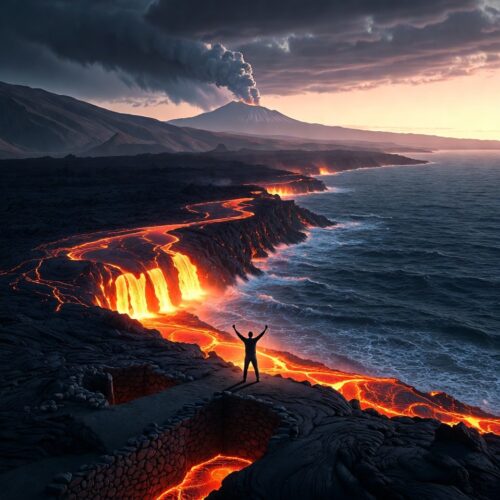 **Day 1 – Precursor Monitoring (February 1669 style):** Grab a notebook. List every “quake” in your life right now—three columns: Physical (body signals), Social (people draining you), Professional (projects cracking). Rate intensity 1-10. That’s your seismic report. No analysis yet. Just map the fissures forming.
**Day 2 – Fissure Opening Drill:** At 4:30 p.m. (nod to the exact hour), pick ONE crack from Day 1. Write the worst-case “lava flow” if you ignore it. Then write the evacuation route: what you physically remove yourself from (apps, meetings, snacks, people). Delete or block one thing immediately. The mountain doesn’t negotiate; neither do you.
**Day 3 – Community Diversion Raid:** Text or call three people (your “Catania walls”). Tell them the crack and ask for one specific redirect tactic. (“Help me route this work stress into gym time instead of doom-scrolling.”) In 1669, solo effort failed; group action almost worked. Leverage the crowd.
**Day 4 – Lava Flow Mapping:** Draw your week as a slope. Plot where negative energy is heading (procrastination → missed deadline → panic). Then sketch a “trench”—one tiny daily action that diverts it (10-minute walk at 7 a.m., no exceptions). Test it today. If it works, the flow slows.
**Day 5 – Relic and Prayer Test (with zero religion required):** Choose one “Saint Agatha veil” equivalent—a physical object or ritual that has saved you before (grandma’s watch, favorite playlist, morning coffee ritual). Carry or do it during your highest-stress hour. Document how the “ash fall” feels lighter. Faith in proven tools beats panic every time.
**Day 6 – Monti Rossi Construction:** Build two tiny “cinder cones” (stack two paper cups or phone books). On each, list three rebuild materials from past failures (skills gained, lessons learned, relationships forged in fire). Place them on your desk. Every time you feel buried, add one new “stone.” By month’s end you’ll have a visible fortress.
**Day 7 – Harbor Extension Celebration:** Review the week. Measure new “coastline” created (habits dropped, energy redirected, one win). Celebrate with something ridiculous and Sicilian—pizza at 9 p.m. while watching a volcano documentary. Then schedule the next monthly “eruption drill.” The 1669 flow stopped July 15; your protocol never does.
Maintenance is even simpler and brutally unique: every March 11 (yes, the real date), redo Day 1 and add one new trench. Treat every personal crisis as a flank eruption—monitor, evacuate, divert, rebuild with the rock. No vision boards. No morning pages. Just historical tactics that already worked when the sky literally rained fire.
That’s it. One random, specific, cataclysmic day in distant history—March 11, 1669—delivers the ultimate unfair advantage: the certainty that no matter how hot the lava gets in your life, you already know the escape route, the diversion trick, and the rebuild recipe. The mountain roared. The people ran, fought, and won. Now it’s your turn to make your own landscape fertile again.
The ground is rumbling somewhere in your world right now. Listen. Act. Outrun it. The Sicilians did it in 1669. You’ve got the exact playbook. Go make some new coastline.
**Day 1 – Precursor Monitoring (February 1669 style):** Grab a notebook. List every “quake” in your life right now—three columns: Physical (body signals), Social (people draining you), Professional (projects cracking). Rate intensity 1-10. That’s your seismic report. No analysis yet. Just map the fissures forming.
**Day 2 – Fissure Opening Drill:** At 4:30 p.m. (nod to the exact hour), pick ONE crack from Day 1. Write the worst-case “lava flow” if you ignore it. Then write the evacuation route: what you physically remove yourself from (apps, meetings, snacks, people). Delete or block one thing immediately. The mountain doesn’t negotiate; neither do you.
**Day 3 – Community Diversion Raid:** Text or call three people (your “Catania walls”). Tell them the crack and ask for one specific redirect tactic. (“Help me route this work stress into gym time instead of doom-scrolling.”) In 1669, solo effort failed; group action almost worked. Leverage the crowd.
**Day 4 – Lava Flow Mapping:** Draw your week as a slope. Plot where negative energy is heading (procrastination → missed deadline → panic). Then sketch a “trench”—one tiny daily action that diverts it (10-minute walk at 7 a.m., no exceptions). Test it today. If it works, the flow slows.
**Day 5 – Relic and Prayer Test (with zero religion required):** Choose one “Saint Agatha veil” equivalent—a physical object or ritual that has saved you before (grandma’s watch, favorite playlist, morning coffee ritual). Carry or do it during your highest-stress hour. Document how the “ash fall” feels lighter. Faith in proven tools beats panic every time.
**Day 6 – Monti Rossi Construction:** Build two tiny “cinder cones” (stack two paper cups or phone books). On each, list three rebuild materials from past failures (skills gained, lessons learned, relationships forged in fire). Place them on your desk. Every time you feel buried, add one new “stone.” By month’s end you’ll have a visible fortress.
**Day 7 – Harbor Extension Celebration:** Review the week. Measure new “coastline” created (habits dropped, energy redirected, one win). Celebrate with something ridiculous and Sicilian—pizza at 9 p.m. while watching a volcano documentary. Then schedule the next monthly “eruption drill.” The 1669 flow stopped July 15; your protocol never does.
Maintenance is even simpler and brutally unique: every March 11 (yes, the real date), redo Day 1 and add one new trench. Treat every personal crisis as a flank eruption—monitor, evacuate, divert, rebuild with the rock. No vision boards. No morning pages. Just historical tactics that already worked when the sky literally rained fire.
That’s it. One random, specific, cataclysmic day in distant history—March 11, 1669—delivers the ultimate unfair advantage: the certainty that no matter how hot the lava gets in your life, you already know the escape route, the diversion trick, and the rebuild recipe. The mountain roared. The people ran, fought, and won. Now it’s your turn to make your own landscape fertile again.
The ground is rumbling somewhere in your world right now. Listen. Act. Outrun it. The Sicilians did it in 1669. You’ve got the exact playbook. Go make some new coastline.